Subsidiary Guaranty Agreement
About this form
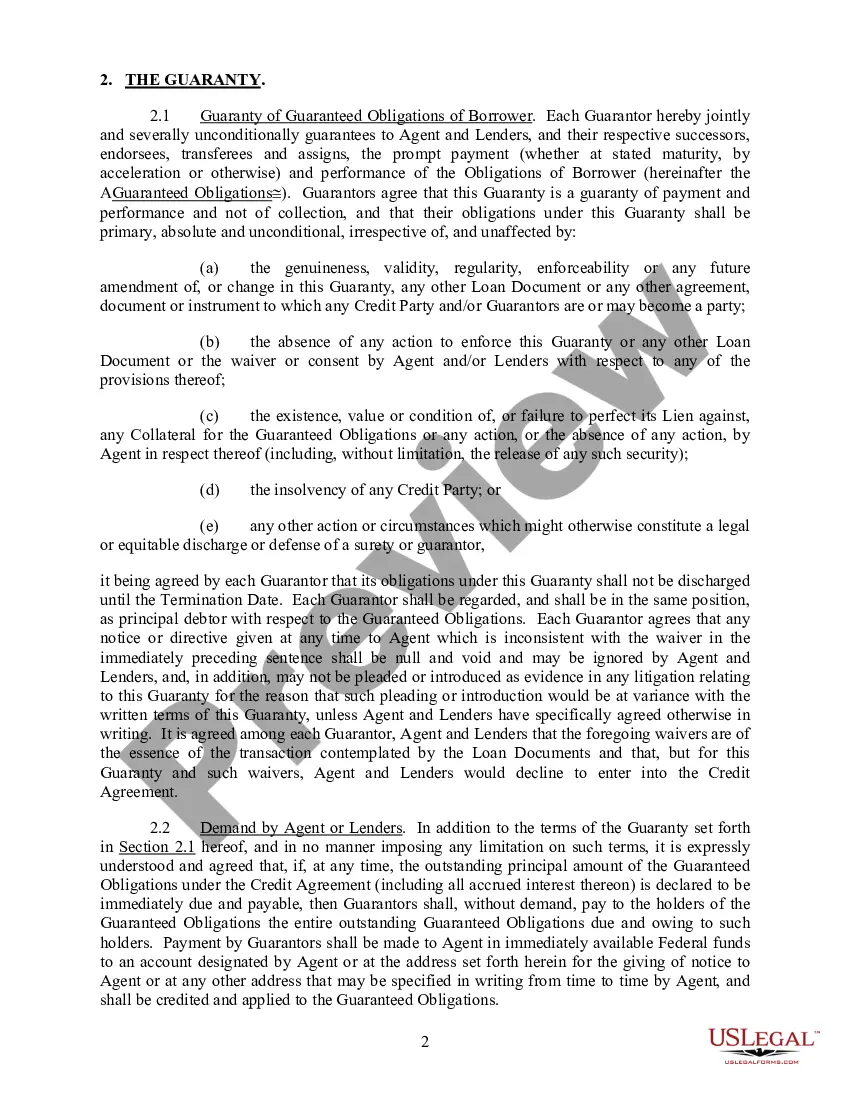
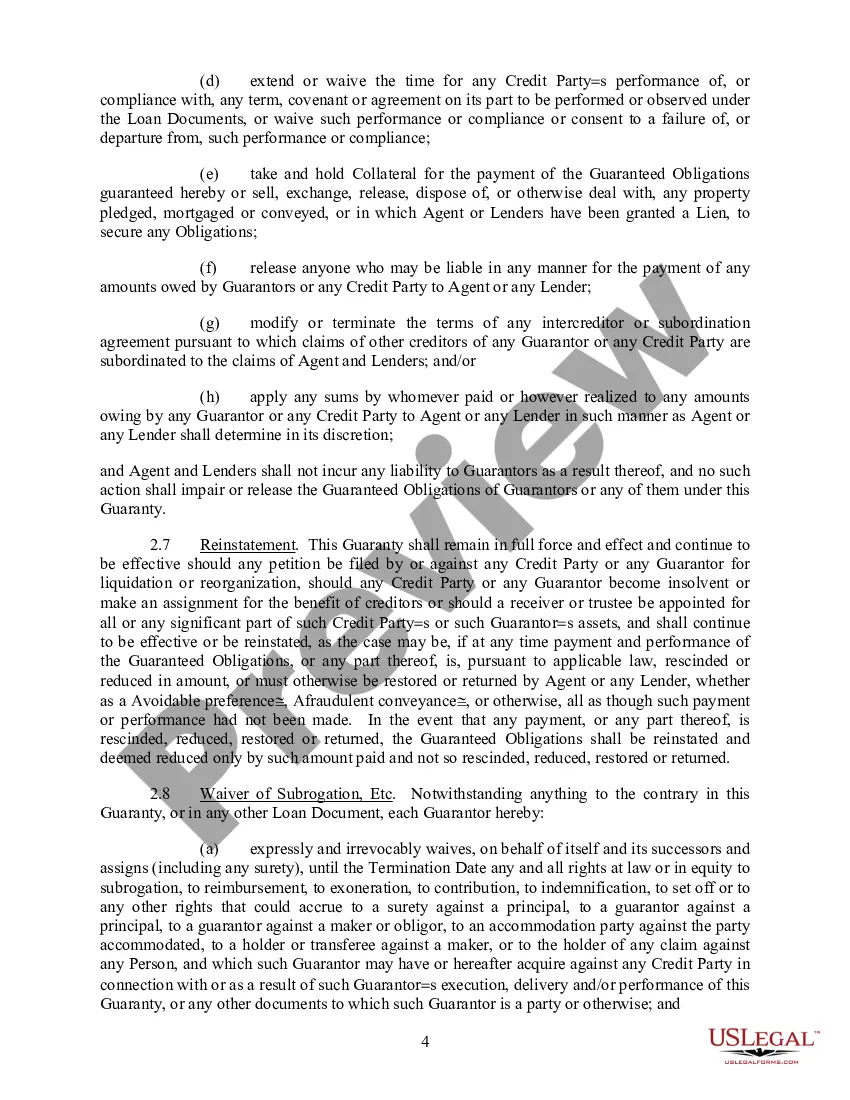
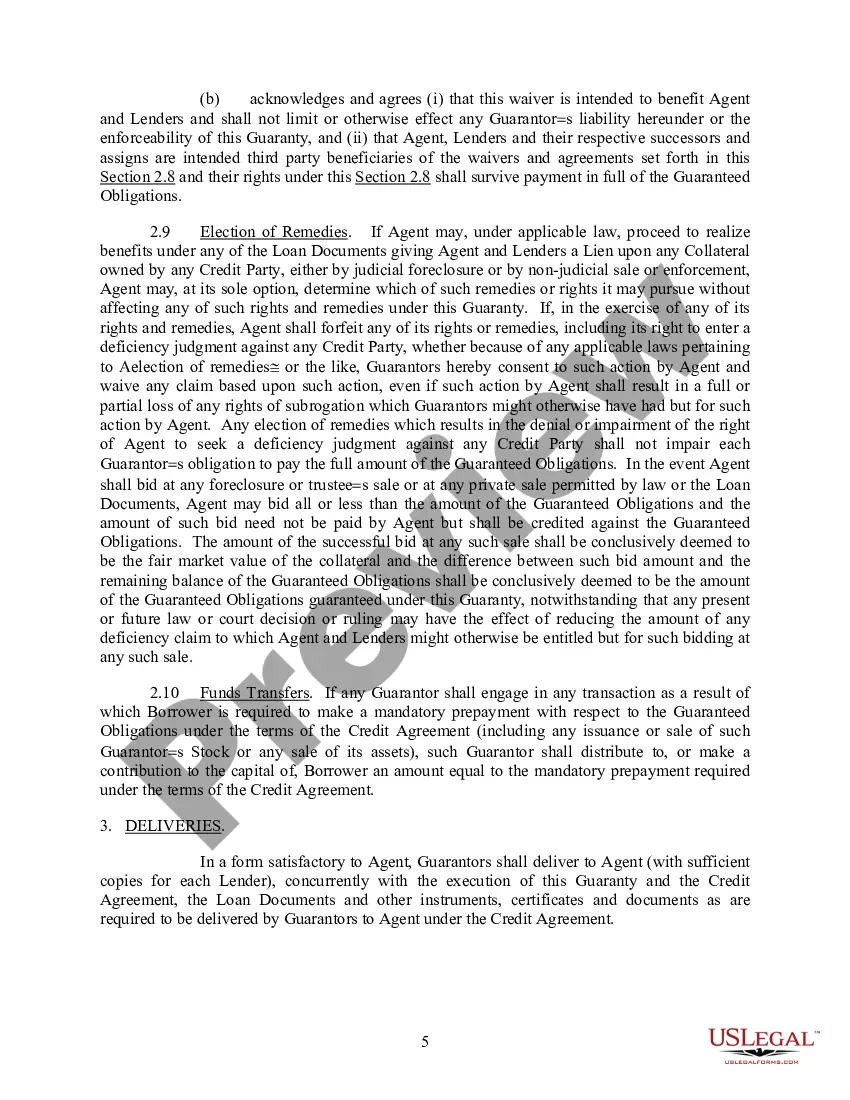
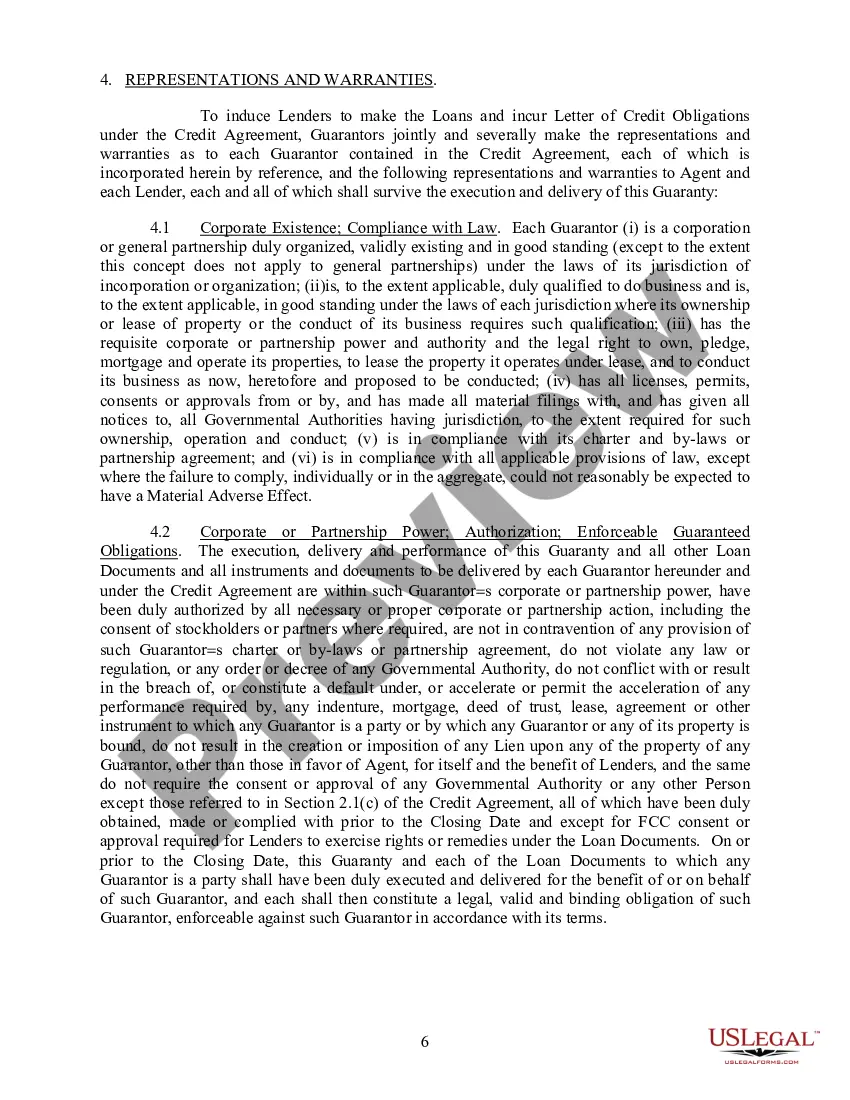
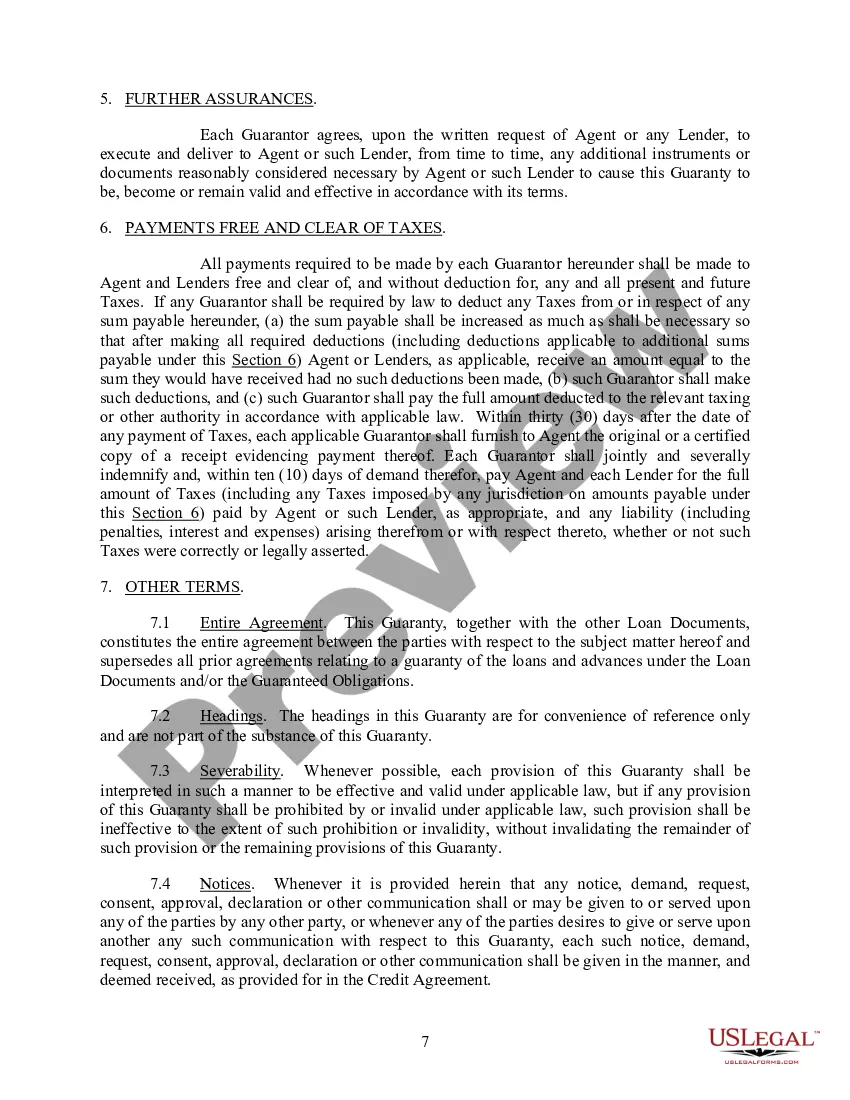
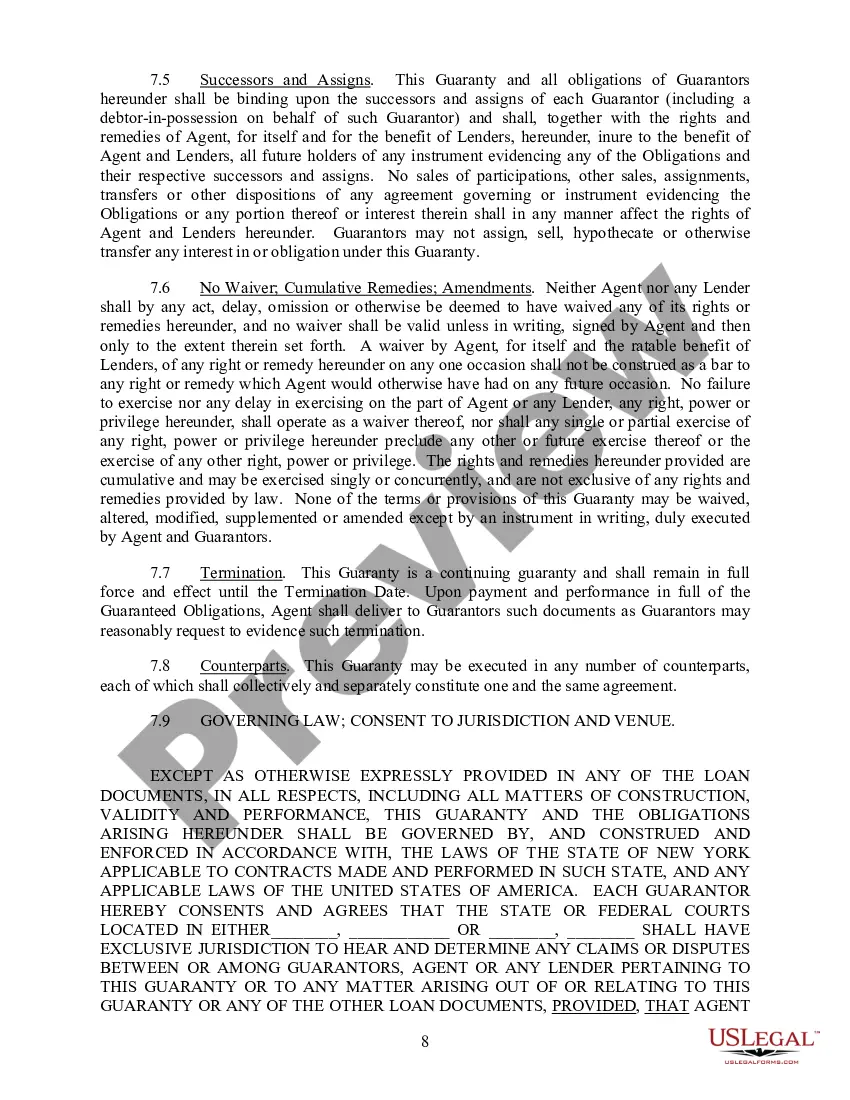
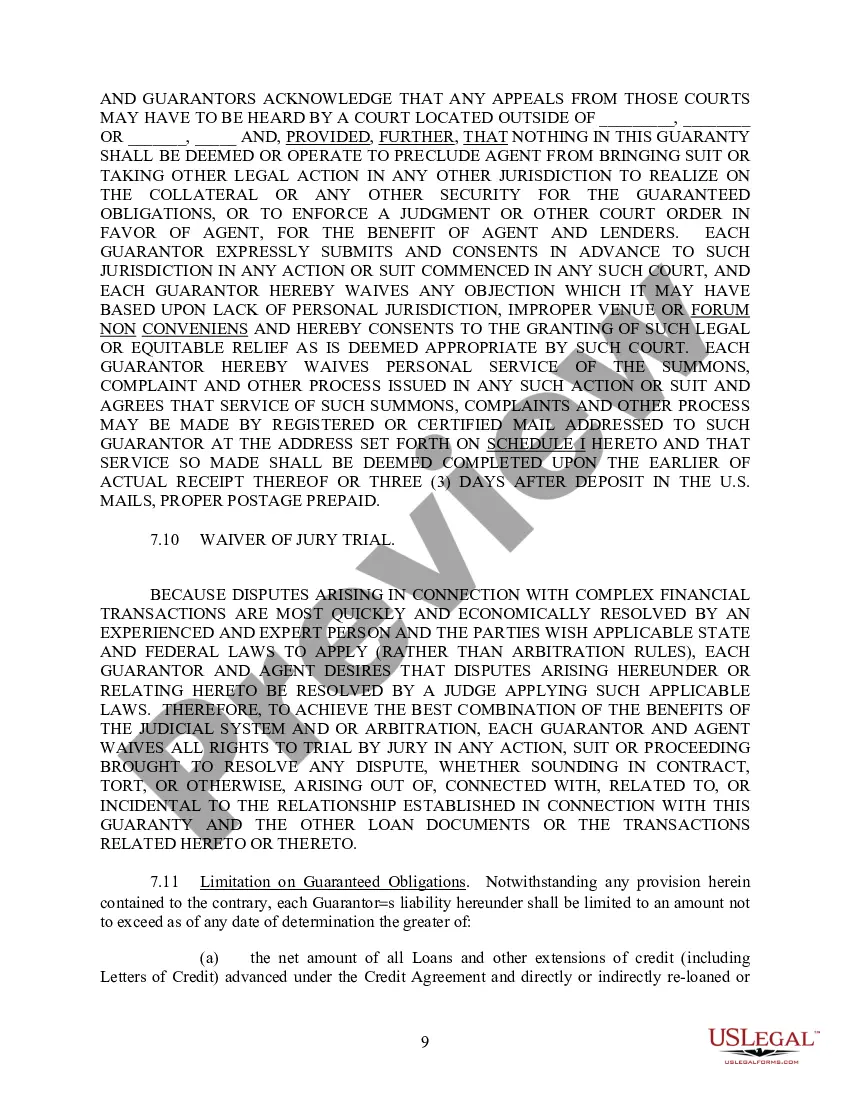
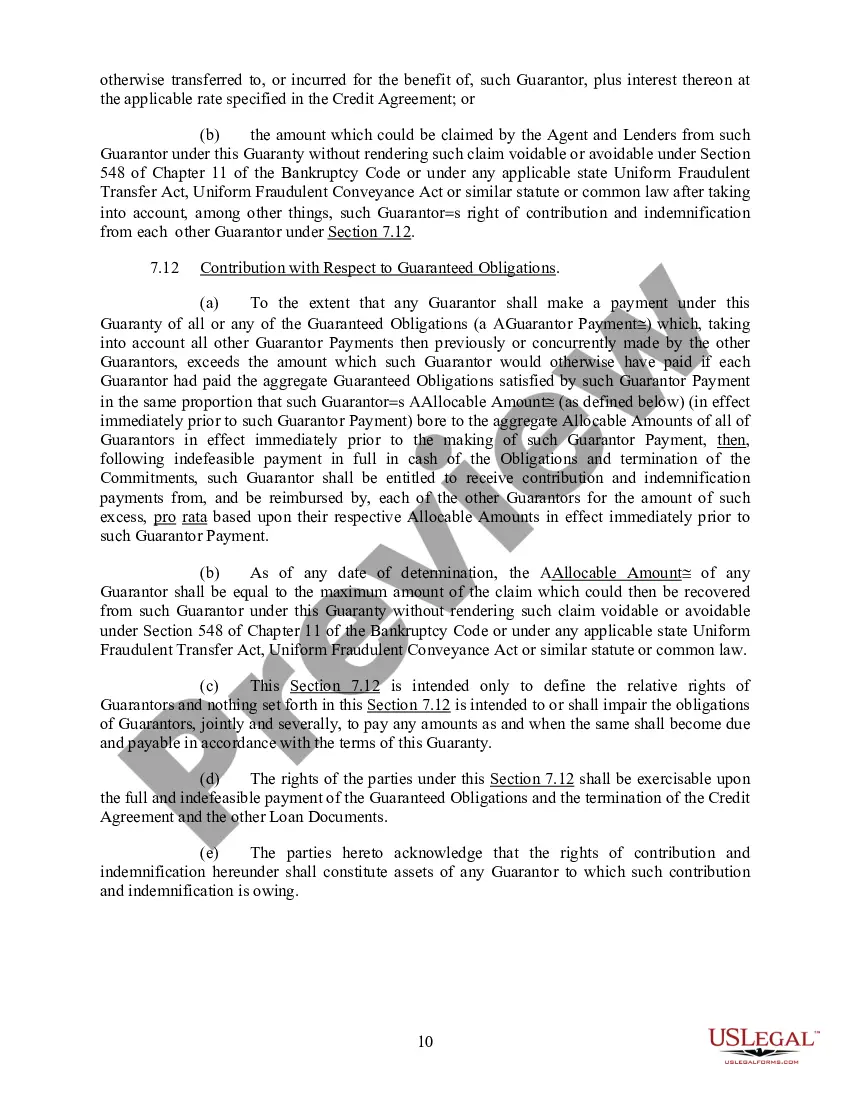
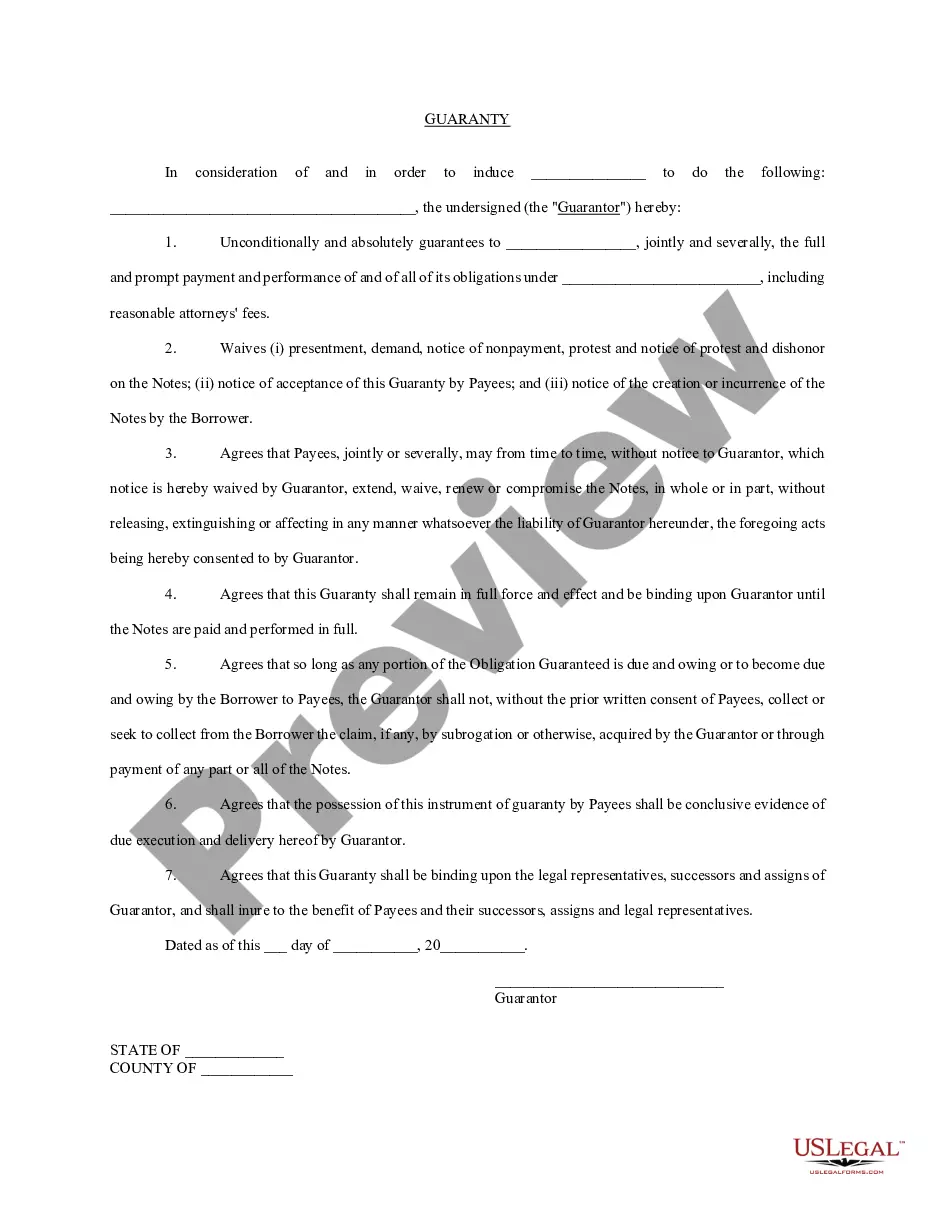
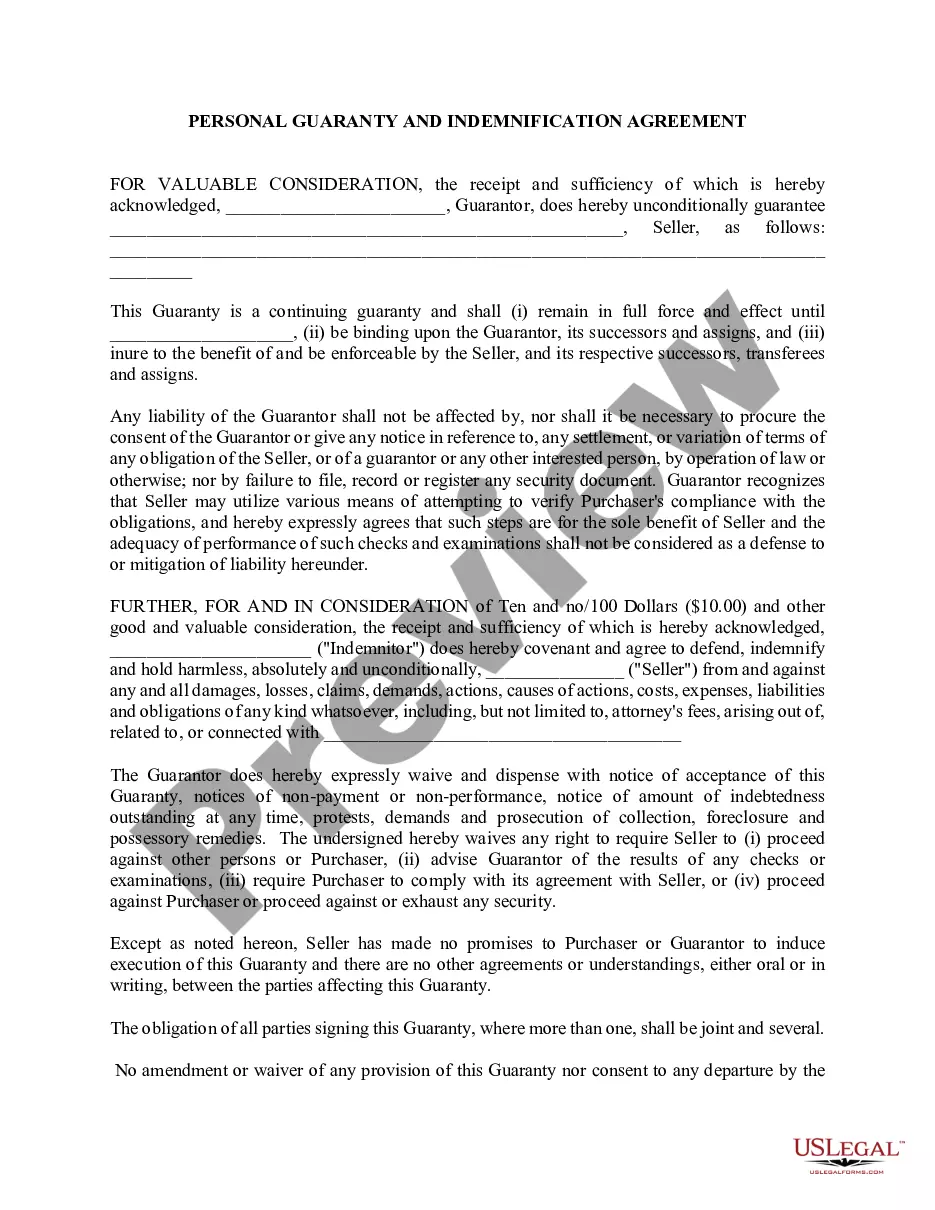
The Subsidiary Guaranty Agreement is a legal document in which one or more subsidiaries (the Guarantors) agree to guarantee the obligations of their parent company (the Borrower) under a credit agreement. This form serves to provide lenders with additional security and assurance that the loans extended to the Borrower will be repaid. Unlike other guaranty agreements, this specific form addresses obligations incurred under a credit agreement, ensuring that the Guarantors' commitments are clearly defined and enforceable.
Form components explained
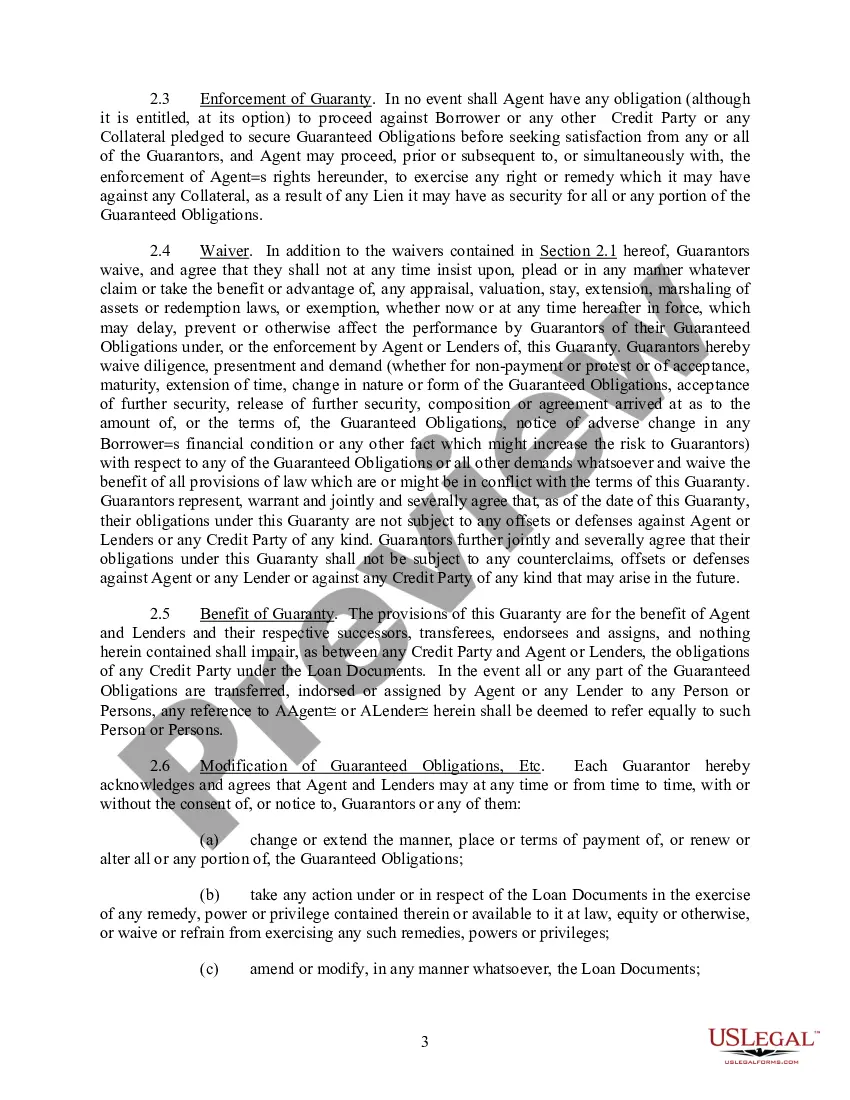
- Guaranty Clause: This section outlines the unconditional guarantee made by the Guarantors regarding the Borrower's obligations.
- Definitions: Key terms used in the agreement are defined for clarity, ensuring all parties understand their rights and responsibilities.
- Payment Obligations: Details the responsibilities of the Guarantors in the event of default by the Borrower.
- Rights and Remedies: Specifies the actions that lenders can take if the Borrower fails to meet its obligations.
- Representations and Warranties: Guarantees made by the Guarantors regarding their authority and the legality of the agreement.

When this form is needed
This form is typically used when a parent company seeks financing and needs to assure lenders of repayment. It is particularly useful when the financial strength of the parent is complemented by the financial strength of its subsidiaries. For instance, if a parent company is applying for a significant loan but requires additional backing from its subsidiaries to enhance credibility with the lenders, this form can be utilized to formalize that agreement.
Who should use this form
- Corporate entities with subsidiaries looking to secure loans or lines of credit.
- Financial institutions that require additional security to grant loans to a parent corporation.
- Legal professionals representing businesses in need of drafting or reviewing such agreements.
Instructions for completing this form
- Identify all parties involved, including the parent company, subsidiaries, and lenders.
- Specify the date of execution and the effective date of the guaranty.
- Complete the definitions section by ensuring all key terms are clearly defined.
- Ensure that the payment obligations clause accurately reflects the responsibilities of the Guarantors.
- Obtain signatures from all Guarantors and ensure they are duly authorized to enter into the agreement.
Does this document require notarization?
Notarization is generally not required for this form. However, certain states or situations might demand it. You can complete notarization online through US Legal Forms, powered by Notarize, using a verified video call available anytime.
Get your form ready online
Our built-in tools help you complete, sign, share, and store your documents in one place.
Make edits, fill in missing information, and update formatting in US Legal Forms—just like you would in MS Word.
Download a copy, print it, send it by email, or mail it via USPS—whatever works best for your next step.
Sign and collect signatures with our SignNow integration. Send to multiple recipients, set reminders, and more. Go Premium to unlock E-Sign.
If this form requires notarization, complete it online through a secure video call—no need to meet a notary in person or wait for an appointment.
We protect your documents and personal data by following strict security and privacy standards.

Make edits, fill in missing information, and update formatting in US Legal Forms—just like you would in MS Word.

Download a copy, print it, send it by email, or mail it via USPS—whatever works best for your next step.

Sign and collect signatures with our SignNow integration. Send to multiple recipients, set reminders, and more. Go Premium to unlock E-Sign.

If this form requires notarization, complete it online through a secure video call—no need to meet a notary in person or wait for an appointment.

We protect your documents and personal data by following strict security and privacy standards.
Common mistakes
- Failing to clearly define all terms used in the agreement, leading to ambiguities.
- Not obtaining all necessary signatures from authorized representatives of the Guarantors.
- Overlooking state-specific requirements that may alter the enforceability of the agreement.
Why complete this form online
- Convenience of accessing and filling out the form from anywhere, without the need for physical paperwork.
- Editable formats allow for easy adjustments as per specific needs before finalizing.
- Legal templates drafted by licensed attorneys ensure compliance with current laws and regulations.
Main things to remember
- The Subsidiary Guaranty Agreement creates a legal obligation for subsidiaries to cover their parent company's debts.
- Completing the form accurately is crucial to ensure its enforceability.
- This agreement serves as a protective measure for lenders, reducing risk associated with extending credit to the parent company.
Looking for another form?
Form popularity
FAQ
A personal guaranty is not enforceable without consideration In fact, no contract is enforceable without consideration. A personal guaranty is a type of contract. A contract is an enforceable promise. The enforceability of a contract comes from one party's giving of consideration to the other party.
A guarantee is a secondary obligation guaranteeing the obligations of another party (usually a borrower) and depends on that other having defaulted.The main technical requirement for a guarantee to be valid is that it must be in writing and signed by the guarantor or a person authorised on the guarantor's behalf.
An upstream guarantee, also known as a subsidiary guarantee, is a financial guarantee in which the subsidiary guarantees its parent company's debt.
Warranty, a promise or guarantee made by a seller or lessor about the characteristics or quality of property, goods, or services.In the event that a warranty is breached, the law provides the injured party with the right to monetary damages, repair of the original good, or replacement with substitute goods.
It's relatively common for a business owner to file individual bankruptcy to get rid of a personal guaranteeand most personal guarantees will qualify for discharge.Also, keep in mind that filing on behalf of the business won't get rid of your personal obligation to pay back the guaranteed loan.
A guaranty of payment is an independent agreement by a person or an entity to pay the loan when it goes into default. Even if the borrower is unable or unwilling to pay back the loan, the Bank can require the guarantor to pay it back.
This is a tripartite agreement between the borrower, the lender, and the guarantor.It is the responsibility of the guarantor to ensure that the loan is repaid if the borrower of the loan fails to meet the commitment.
Guaranty Agreement a two-party contract in which the first party agrees to perform in the event that a second party fails to perform. Unlike a surety, a guarantor is only required to perform after the obligee has made every reasonable and legal effort to force the principal's performance.
Guarantees are a promise by a person not responsible for performance of the contract. Guarantors receive no benefit from the contract.So guarantees create a secondary obligation to perform the contract on the guarantor, where the primary obligor (often a debtor) fails to deliver on their contractual obligations.