Corporate Guaranty - General
What this document covers
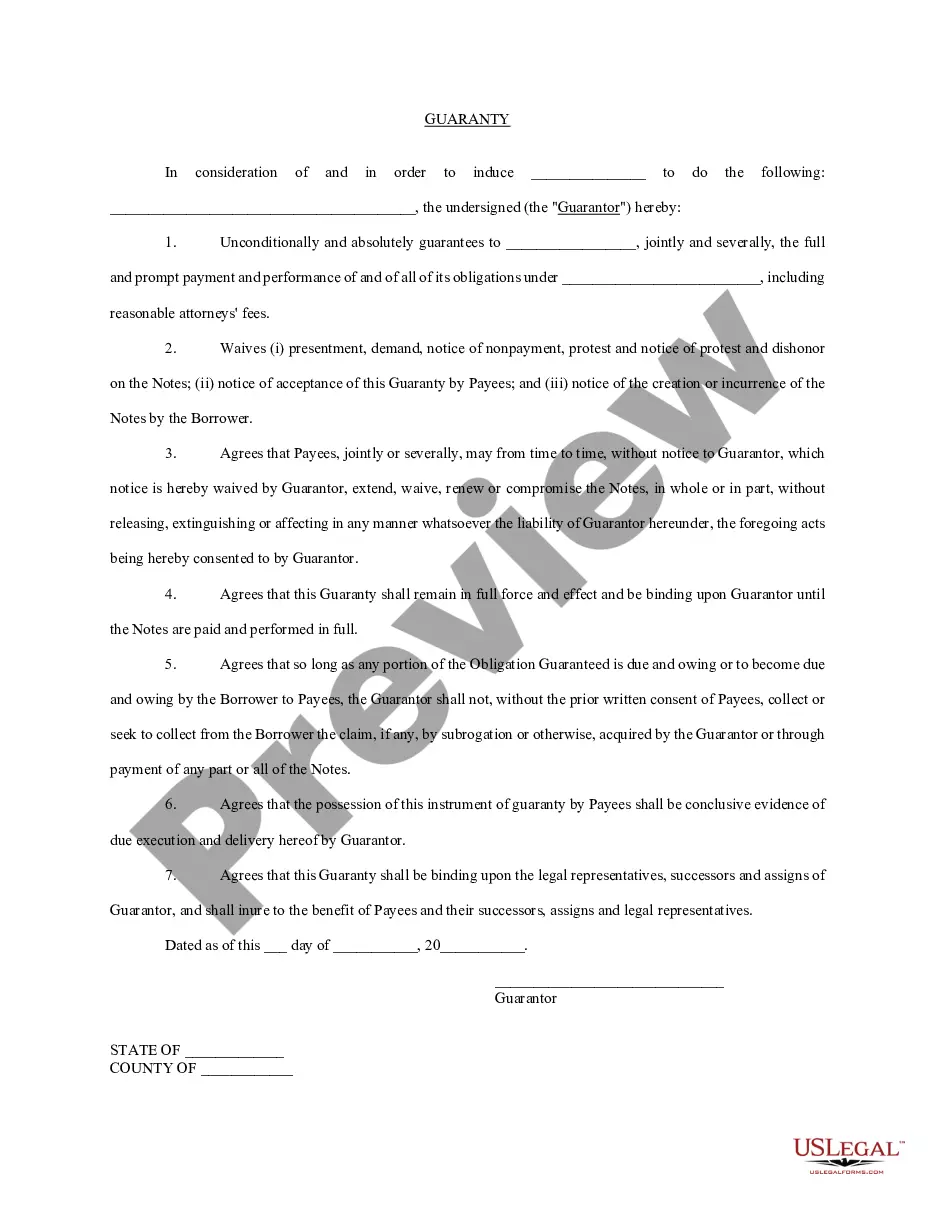
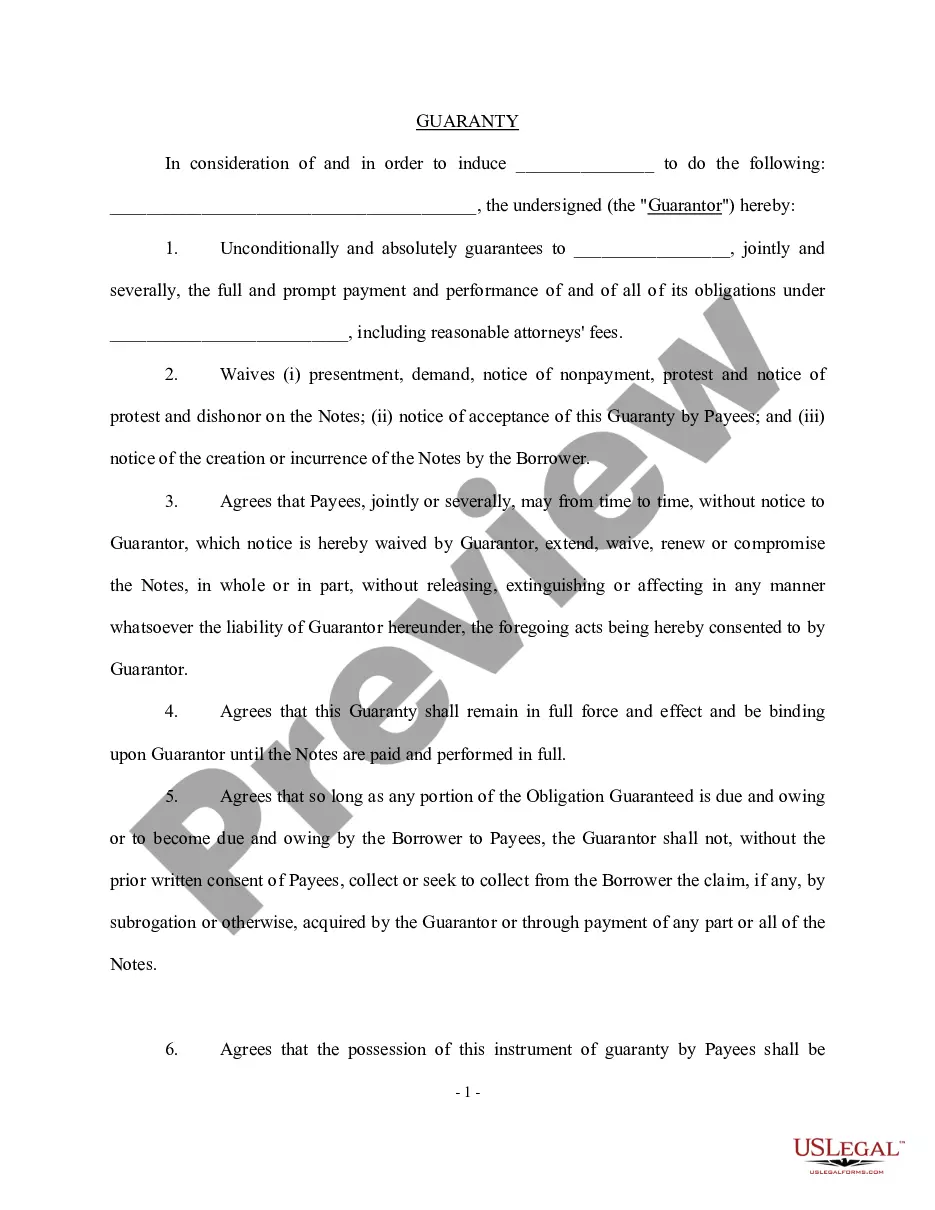
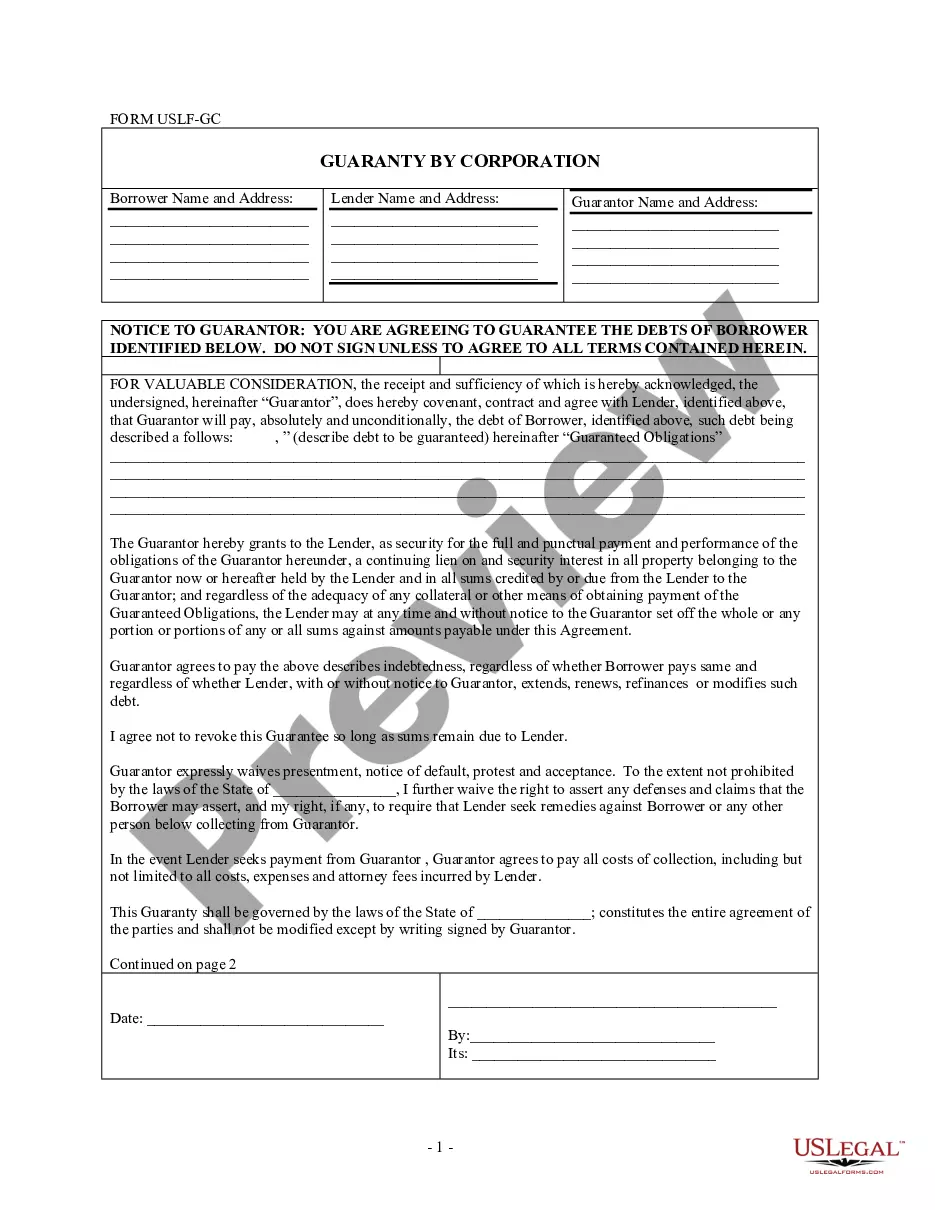
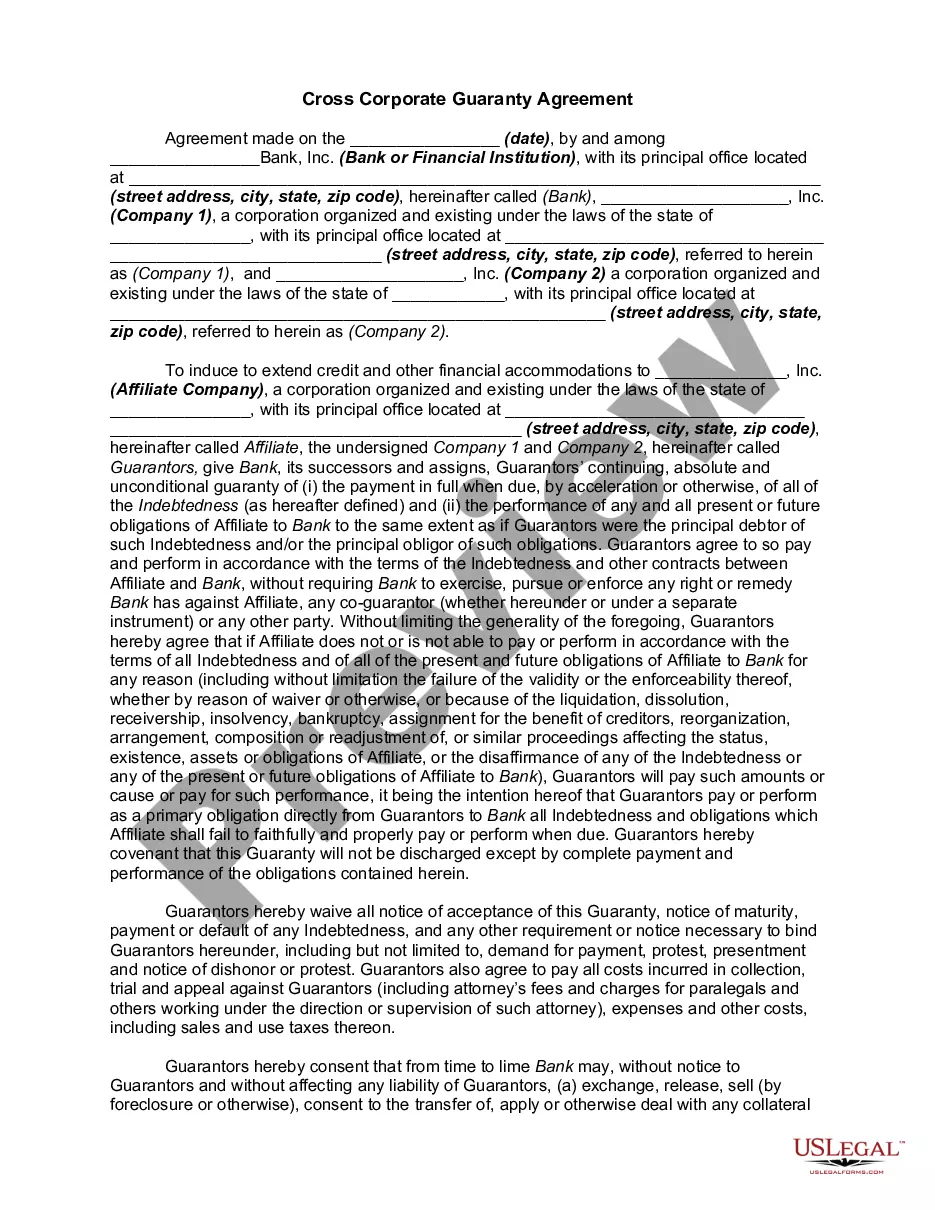
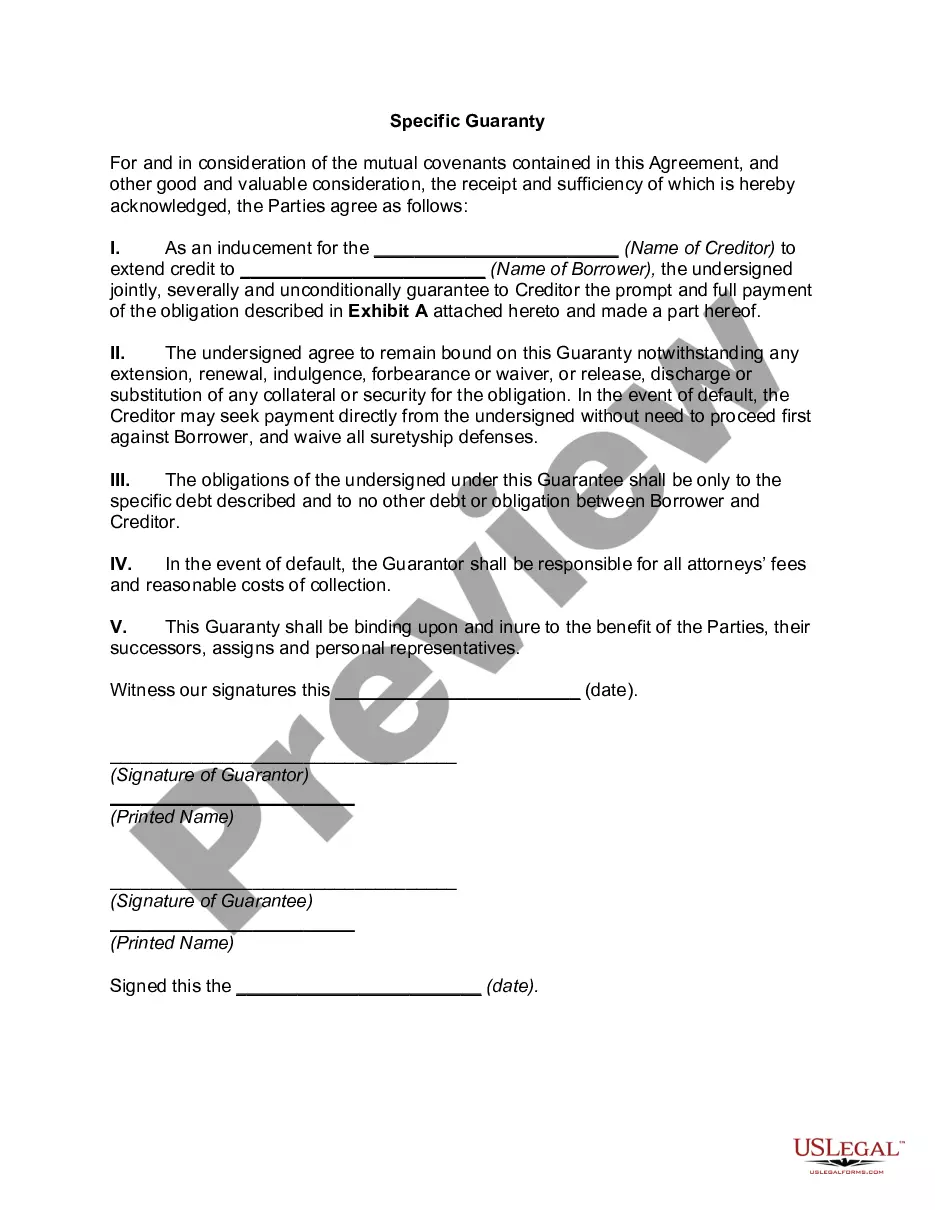
The Corporate Guaranty - General is a legal document where a guarantor promises to be responsible for fulfilling the obligations of a borrower under a contract. This form ensures that the third-party lender or payee has a reliable source of repayment should the borrower fail to meet their commitments. This form differs from similar agreements by its unconditional nature, meaning the guarantor cannot refuse responsibility even if the borrower defaults or special circumstances arise. It is commonly used in financial transactions that require additional security for repayment.
Main sections of this form
- Identification of the payee and the guarantor.
- Unconditional guarantee of payment and performance of obligations.
- Waiver of certain legal notices related to nonpayment and contract acceptance.
- Binding agreement on the guarantor until all obligations are fulfilled.
- Prohibition on seeking to collect from the borrower prior to obligations being met.
- Requirement for notarization to validate the document.

Situations where this form applies
This form is applicable in scenarios where a business requires additional security for a loan or credit arrangement. It is particularly useful when a lender deems the financial standing of the borrower insufficient. By completing this guaranty, the guarantor provides assurance to the payee that the obligations will be met, thereby facilitating smoother financial transactions.
Intended users of this form
- Businesses looking to secure loans or contracts with third parties.
- Individuals acting as guarantors for a corporation or partnership.
- Lenders or payees who require assurance of payment from a reliable source.
- Attorneys or legal representatives preparing financial documents.
How to prepare this document
- Identify and enter the names of the payees and the guarantor.
- Provide details about the specific obligations being guaranteed.
- Include dates relevant to the contract and signature of the guarantor.
- Ensure all necessary waivers and agreements are acknowledged by checking the appropriate clauses.
- Sign the form in the presence of a notary public to validate it.
Is notarization required?
Notarization is required for this form to take effect. Our online notarization service, powered by Notarize, lets you verify and sign documents remotely through an encrypted video session, available 24/7.
Get your form ready online
Our built-in tools help you complete, sign, share, and store your documents in one place.
Make edits, fill in missing information, and update formatting in US Legal Forms—just like you would in MS Word.
Download a copy, print it, send it by email, or mail it via USPS—whatever works best for your next step.
Sign and collect signatures with our SignNow integration. Send to multiple recipients, set reminders, and more. Go Premium to unlock E-Sign.
If this form requires notarization, complete it online through a secure video call—no need to meet a notary in person or wait for an appointment.
We protect your documents and personal data by following strict security and privacy standards.

Make edits, fill in missing information, and update formatting in US Legal Forms—just like you would in MS Word.

Download a copy, print it, send it by email, or mail it via USPS—whatever works best for your next step.

Sign and collect signatures with our SignNow integration. Send to multiple recipients, set reminders, and more. Go Premium to unlock E-Sign.

If this form requires notarization, complete it online through a secure video call—no need to meet a notary in person or wait for an appointment.

We protect your documents and personal data by following strict security and privacy standards.
Common mistakes
- Failing to properly identify all parties involved.
- Not signing the form in the presence of a notary, if required.
- Leaving out essential details regarding the obligations being guaranteed.
- Assuming the form is valid without checking state-specific requirements.
Benefits of using this form online
- Convenience of immediate access and download from anywhere.
- Editability to tailor the form to fit specific needs before printing.
- Reliability as the forms are drafted by licensed attorneys.
Quick recap
- The Corporate Guaranty - General is essential for ensuring repayment obligations under a contract.
- This form is binding and requires notarization for legal validity.
- Common users include businesses, individuals acting as guarantors, and financial institutions.
- Complete the form accurately to avoid potential enforcement issues.
Looking for another form?


Form popularity
FAQ
A corporate guarantee is a legal agreement between a borrower, lender, and guarantor, whereby a corporation (e.g., an insurance company) takes responsibility for the debt repayment of the borrower provided it faced bankruptcy.
1 : an undertaking to answer for the payment of a debt or the performance of a duty of another in case of the other's default or miscarriage. 2 : guarantee sense 3. 3 : guarantor. 4 : something given as security (see security sense 2) : pledge used our house as a guaranty for the loan.
As per Section 186 a company cannot give any loan or guarantee or provide security in connection with a loan to any other body corporate or person: exceeding sixty per cent. of its paid-up share capital, free reserves and securities premium account or one hundred per cent.
Guarantee can refer to the agreement itself as a noun, and the act of making the agreement as a verb. Guaranty is a specific type of guarantee that is only used as a noun.
Corporate Guarantee does not create any Charge per-se, unless mortgage or hypothecation etc is created on assets/undertaking.
The main difference between a bank guarantee and corporate guarantee is, in a bank guarantee the bank is providing assurance for repayment in defaults but in a corporate guarantee, the guarantor has the responsibility of repayment in defaults.
Guarantee is a security in form of a right of action against a third party called the surety or the guarantor. In simple terms, a Guarantee means the promise to pay another's debt or fulfill another person's contractual obligation, if that other person fails to pay his debt or perform his obligation.
A corporate guarantee is used when a corporation agrees to be held responsible for completing the duties and obligations of debtor to a lender, in case the debtor fails to comply with the terms of the debtor- lender contract.