Road and Utility Easement Agreement
Understanding this form
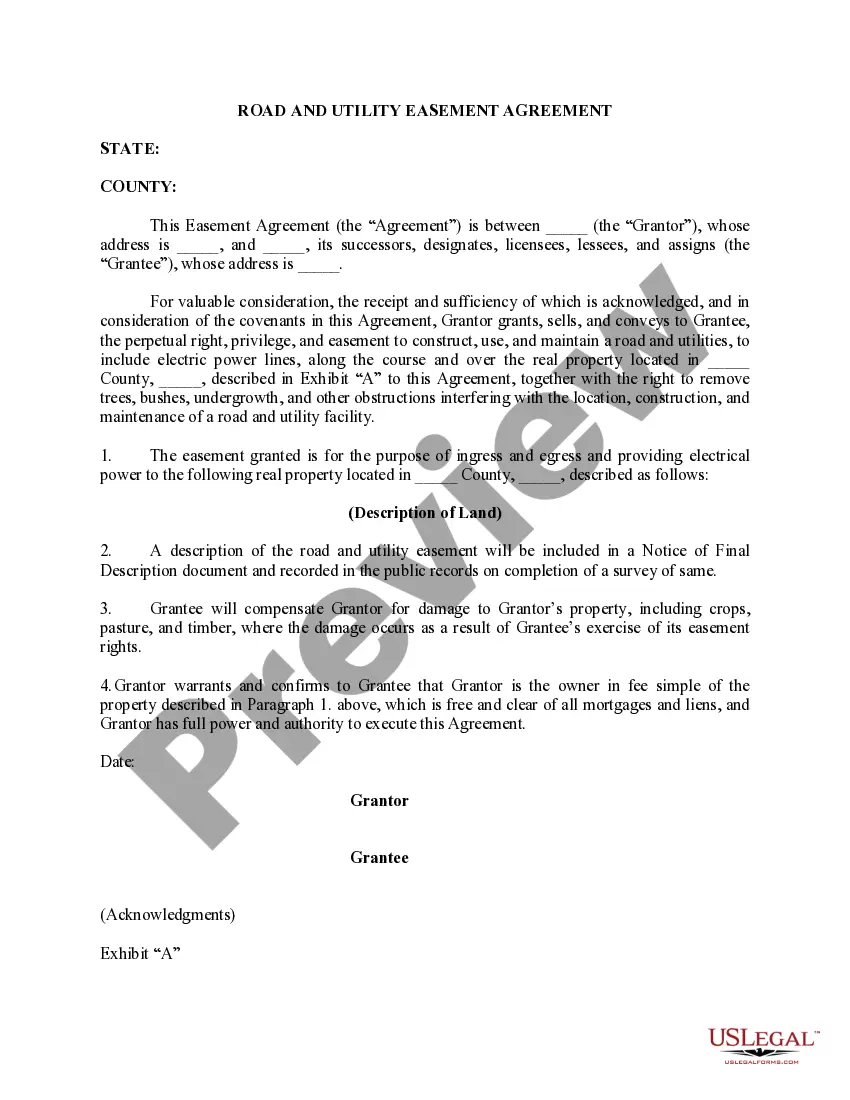
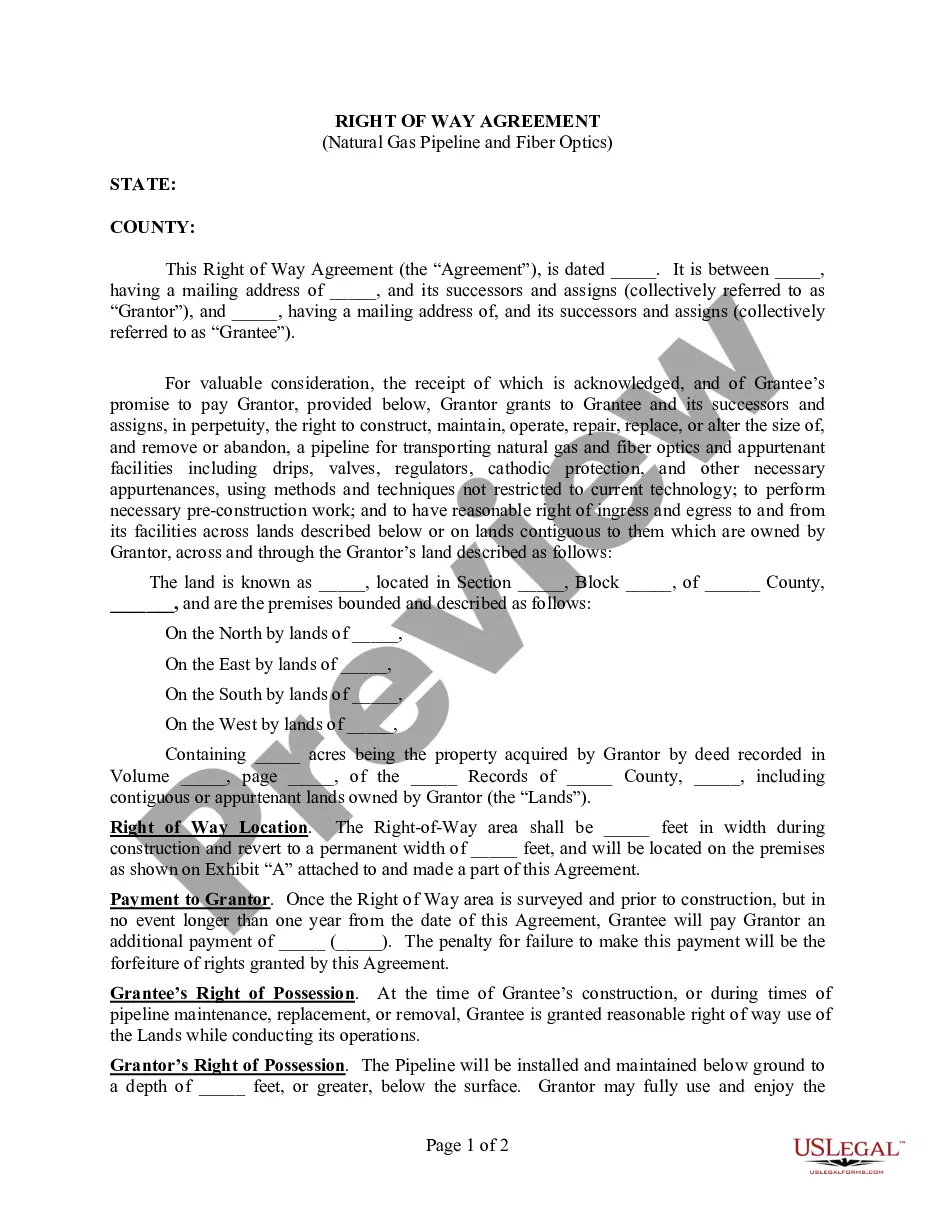
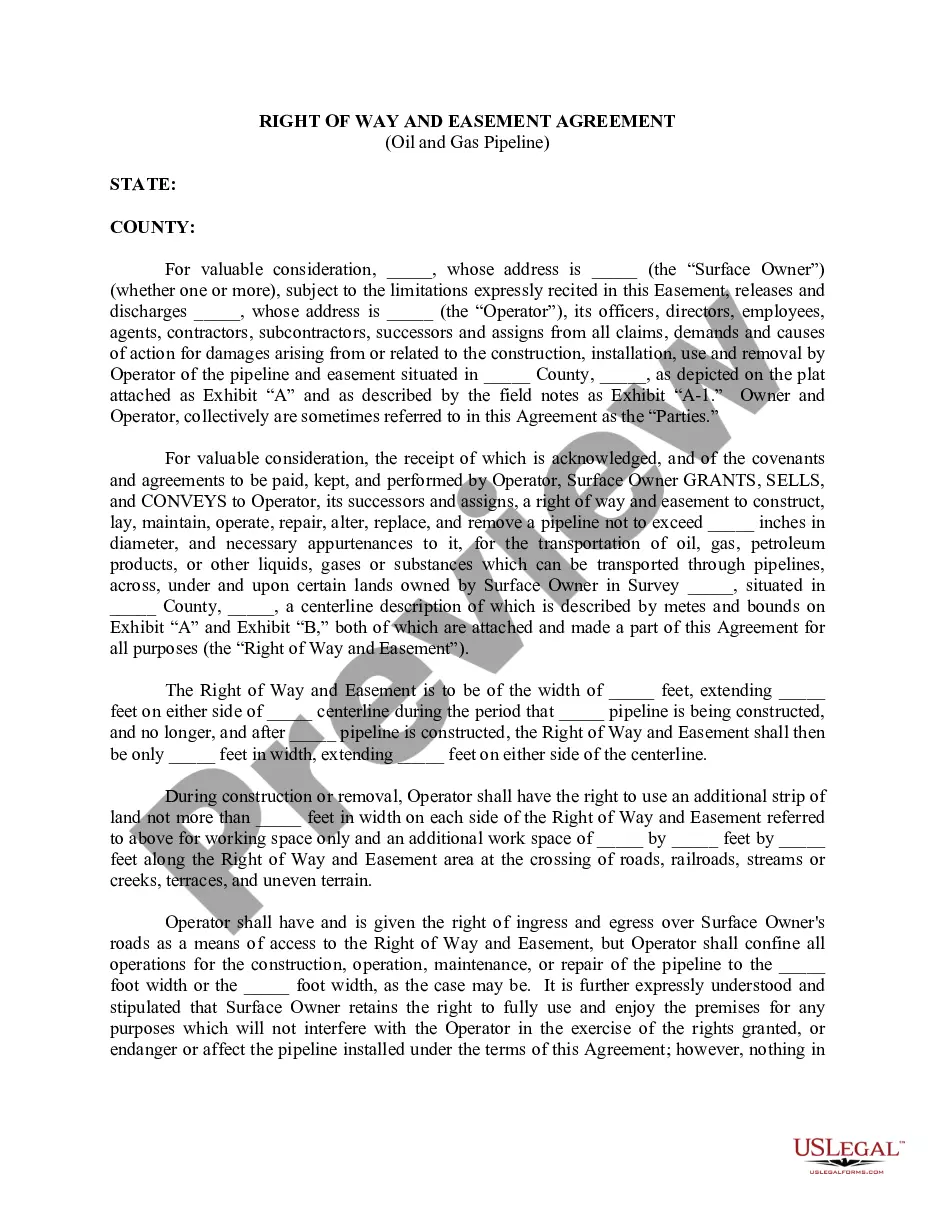
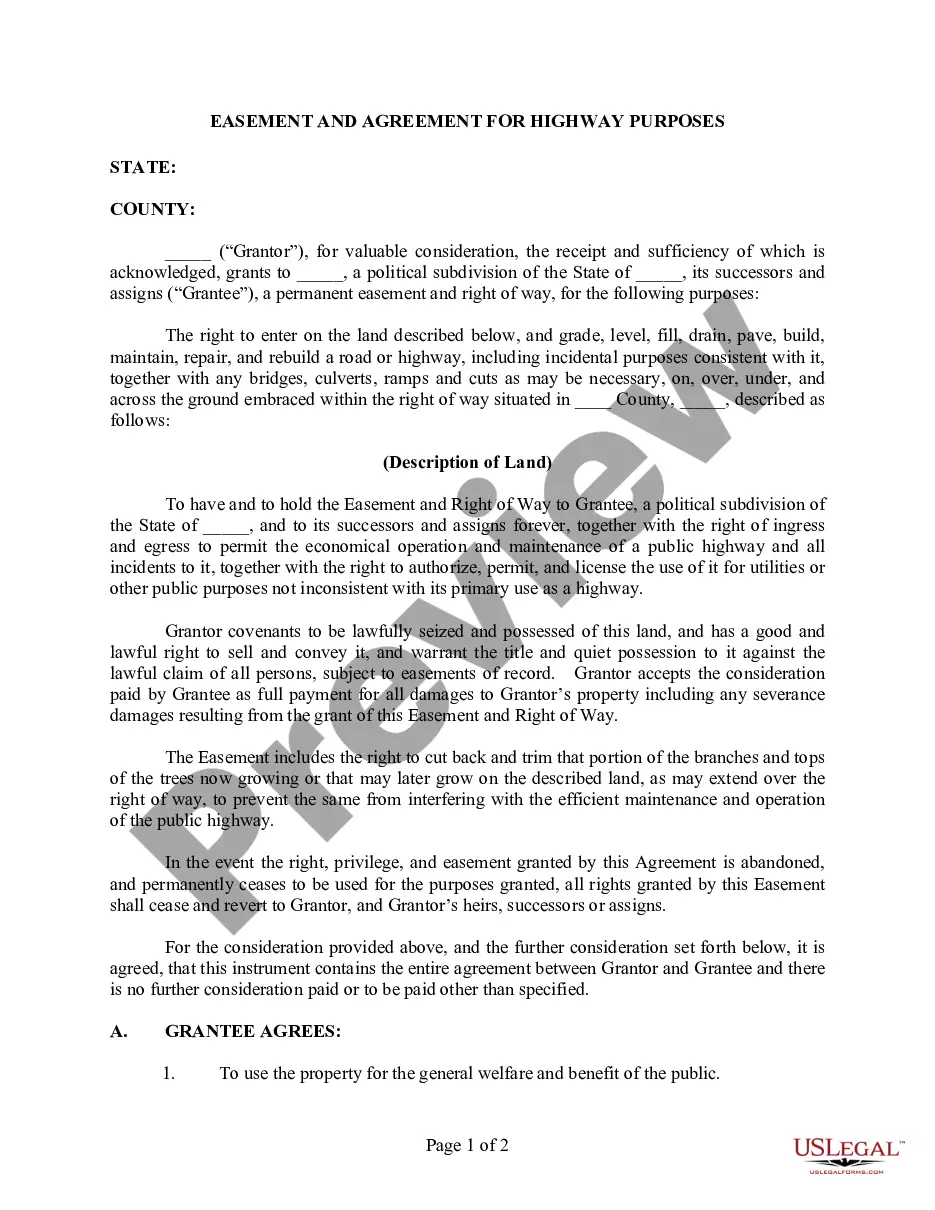
The Road and Utility Easement Agreement is a legal document that allows a property owner (the Grantor) to grant specific rights to another party (the Grantee) for the construction, use, and maintenance of a road and necessary utility services on their property. This form differs from other property agreements by providing a perpetual easement for access and utility installation, which is essential for ensuring service delivery to the Grantee's properties or developments.
Main sections of this form
- Identification of the Grantor and Grantee, including their addresses.
- A detailed description of the easement area and its intended use.
- Provisions for compensation to the Grantor for any property damage during the use of the easement.
- A warranty from the Grantor regarding ownership and authority over the property.
- Inclusion of an Exhibit A that describes the easement area in detail.
Situations where this form applies
This form should be used when a property owner needs to grant access rights to another party for constructing and maintaining a road and utility lines on their property. Common scenarios include developments that require utility installations or access roads to enhance property usage or to service neighboring properties. Using this agreement ensures both parties have clear rights and responsibilities, thereby reducing potential conflicts.
Who should use this form
This agreement is suitable for:
- Landowners who intend to allow utility companies or developers to access their property.
- Developers needing to create roads or install utilities on private land.
- Property managers coordinating utility access for buildings or communities.
- Homeowners seeking to formalize easements with neighbors for road access.
Steps to complete this form
- Identify and enter the names and addresses of the Grantor and Grantee.
- Detail the property description where the easement will be located.
- Outline the specific rights granted to the Grantee regarding road and utility use.
- Include any compensation terms for damages incurred during the exercise of the easement.
- Sign and date the agreement to validate both parties' acceptance.
Notarization requirements for this form
This form needs to be notarized to ensure legal validity. US Legal Forms provides secure online notarization powered by Notarize, allowing you to complete the process through a verified video call, available anytime.
Get your form ready online
Our built-in tools help you complete, sign, share, and store your documents in one place.
Make edits, fill in missing information, and update formatting in US Legal Forms—just like you would in MS Word.
Download a copy, print it, send it by email, or mail it via USPS—whatever works best for your next step.
Sign and collect signatures with our SignNow integration. Send to multiple recipients, set reminders, and more. Go Premium to unlock E-Sign.
If this form requires notarization, complete it online through a secure video call—no need to meet a notary in person or wait for an appointment.
We protect your documents and personal data by following strict security and privacy standards.

Make edits, fill in missing information, and update formatting in US Legal Forms—just like you would in MS Word.

Download a copy, print it, send it by email, or mail it via USPS—whatever works best for your next step.

Sign and collect signatures with our SignNow integration. Send to multiple recipients, set reminders, and more. Go Premium to unlock E-Sign.

If this form requires notarization, complete it online through a secure video call—no need to meet a notary in person or wait for an appointment.

We protect your documents and personal data by following strict security and privacy standards.
Typical mistakes to avoid
- Not providing a clear description of the easement area, leading to potential disputes.
- Failing to outline compensation for damages, which can result in misunderstandings later.
- Neglecting to include all required signatures or dates on the document.
- Using vague language that may lead to differing interpretations of the easement rights.
Why use this form online
- Convenience of downloading and completing the form from anywhere.
- Editable fields to tailor the document to your specific needs.
- Access to professionally drafted templates ensuring legal compliance.
- Easy storage and retrieval of your legal forms for future reference.
Looking for another form?
Form popularity
FAQ
Generally speaking, an easement is a more serious property right; it is the legal right to use someone else's land for a particular purpose. Easements are often recorded at the county clerk's office and encumber your property's title.Here, however, you probably do not need to take the step of granting an easement.
The bottom line is that developers and builders who are presented with utility company easement forms should not just sign them, but think about the kinds of issues they can present. It is easier to negotiate these concessions up front before the lines go in, than to ask the utility company to amend its easement later.
An easement is a nonpossessory right to use and/or enter onto the real property of another without possessing it. It is "best typified in the right of way which one landowner, A, may enjoy over the land of another, B".
Nine Essential Property Easement Agreement Considerations. Legal Description of Properties. Depiction of the Easement Area. Covenant Not to Disturb the Use of the Easement. Determination of Maintenance Obligations. Payment of Property Taxes.
An easement can decrease the value of a real estate, increase the value of the real estate or it can have no impact on the value of the real estate at all. The most important fact is that each property and situation should be evaluated on individual basis, taking into account all the circumstances.
An easement deed allows a party that is not the owner to use a portion of the land. It is a written agreement between two parties that spells out what part of the property is available for access and how it may be used. Since you are granting an easement to your land, you can set any terms and conditions you like.
When termed as a utility easement, it means a utility company's right to access and control the portion of another person's land that is located near utility facilities and structures (i.e. utility poles, transformers, overhead or underground electrical lines).
An easement is a limited right to use another person's land for a stated purpose. Examples of easements include the use of private roads and paths, or the use of a landowner's property to lay railroad tracks or electrical wires.
Give the document a simple title: Grant of Easement is sufficient. Identify the parties. You need to explain who the parties are to the agreement. The person granting the easement to his property is the Grantor and the person gaining access to the property is the Grantee.