Employee Evaluation Form for Sole Trader
Overview of this form
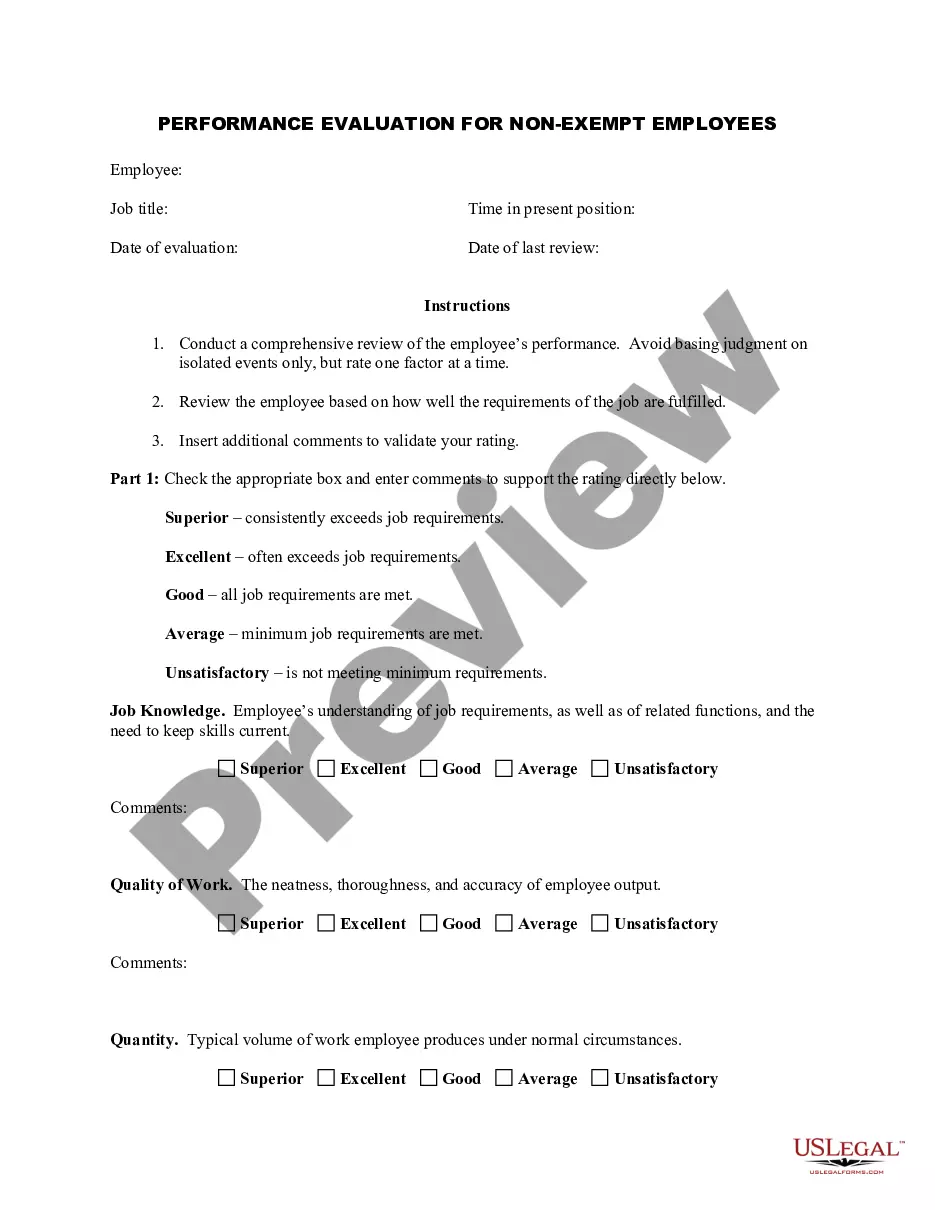
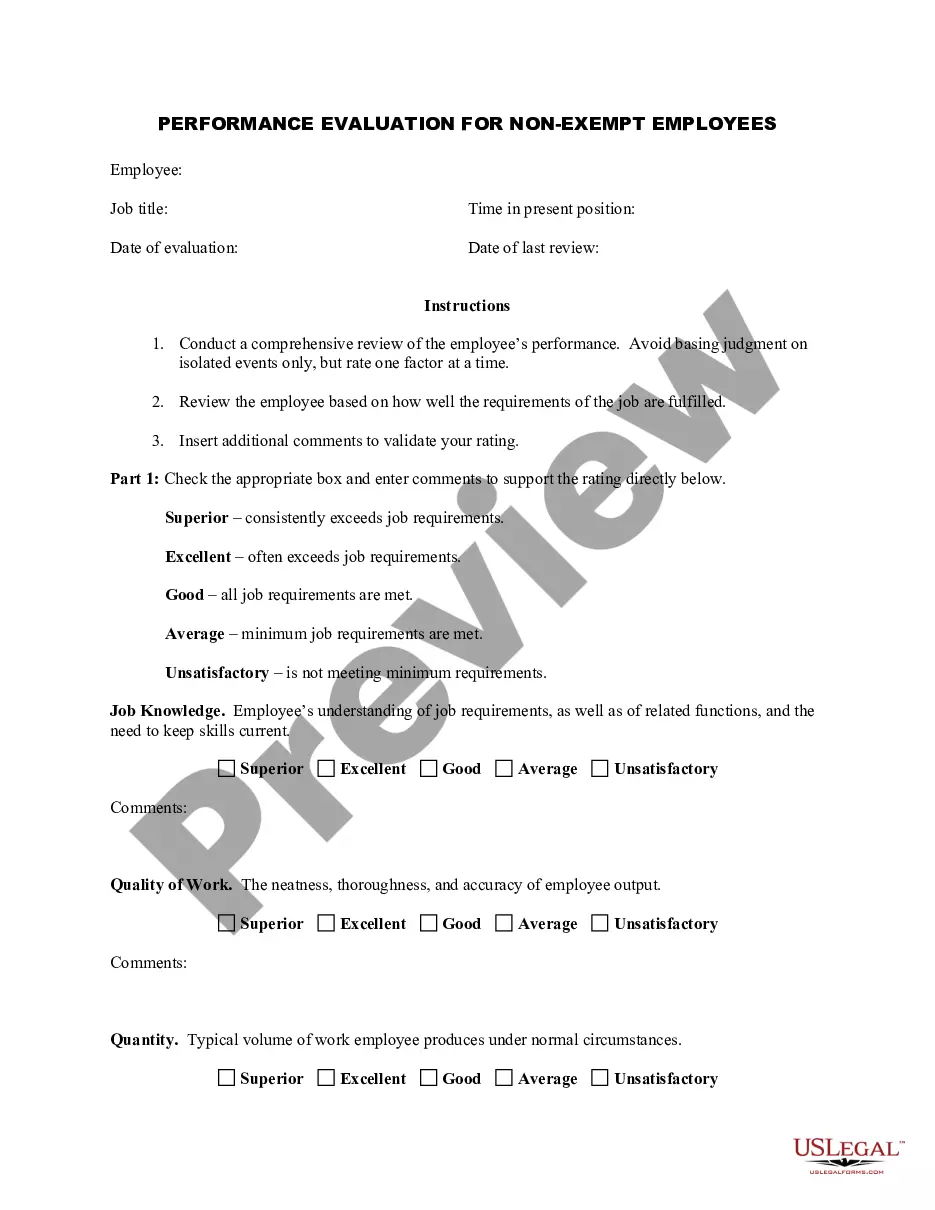
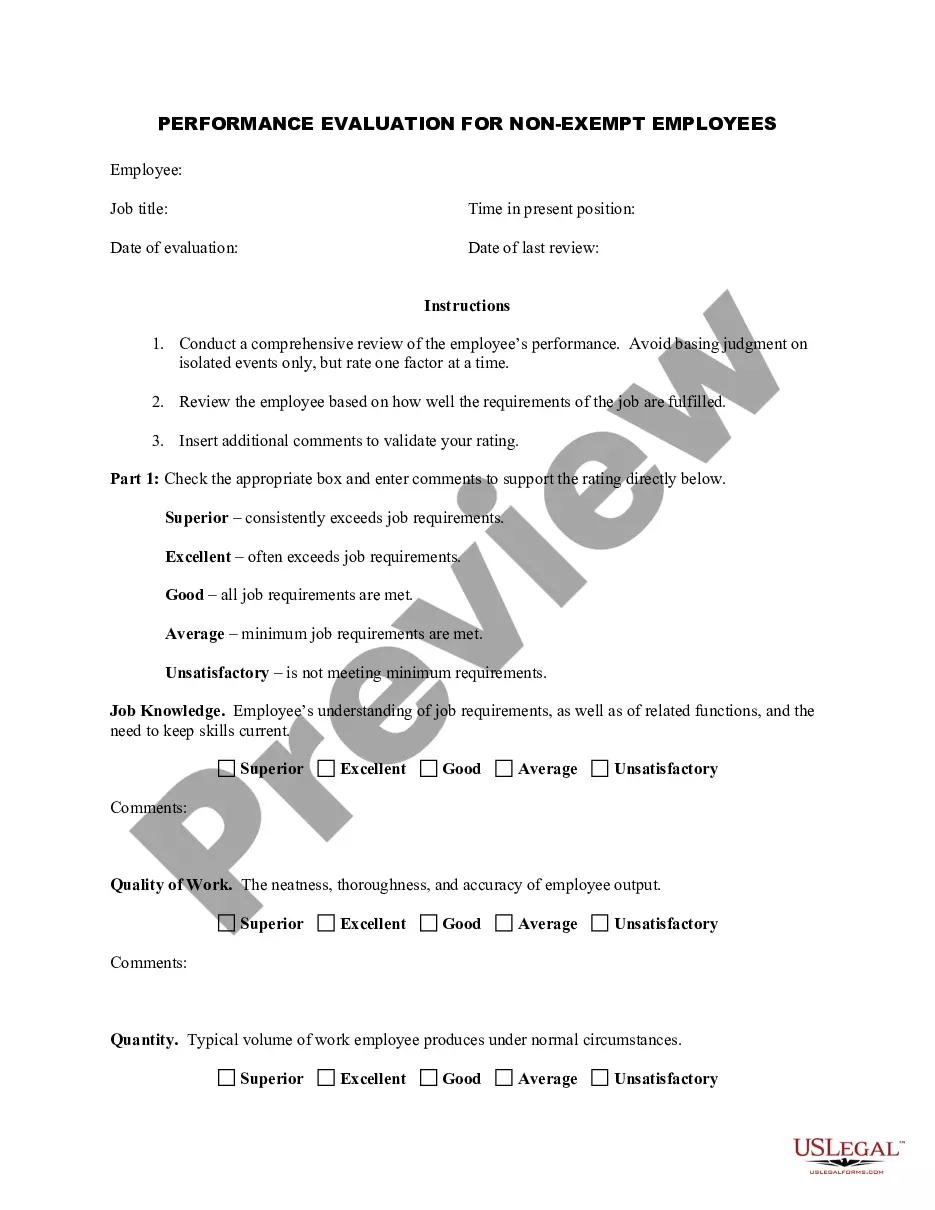
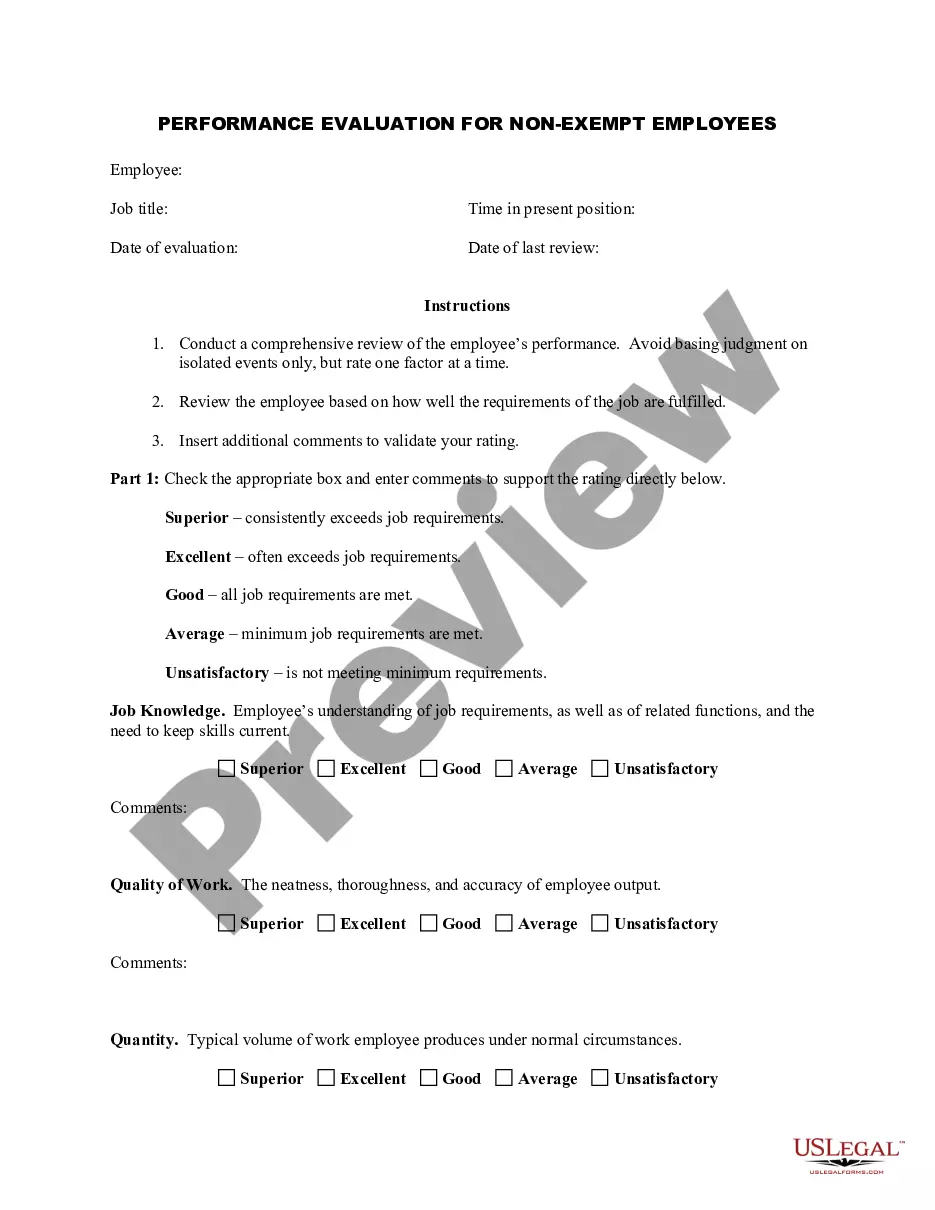
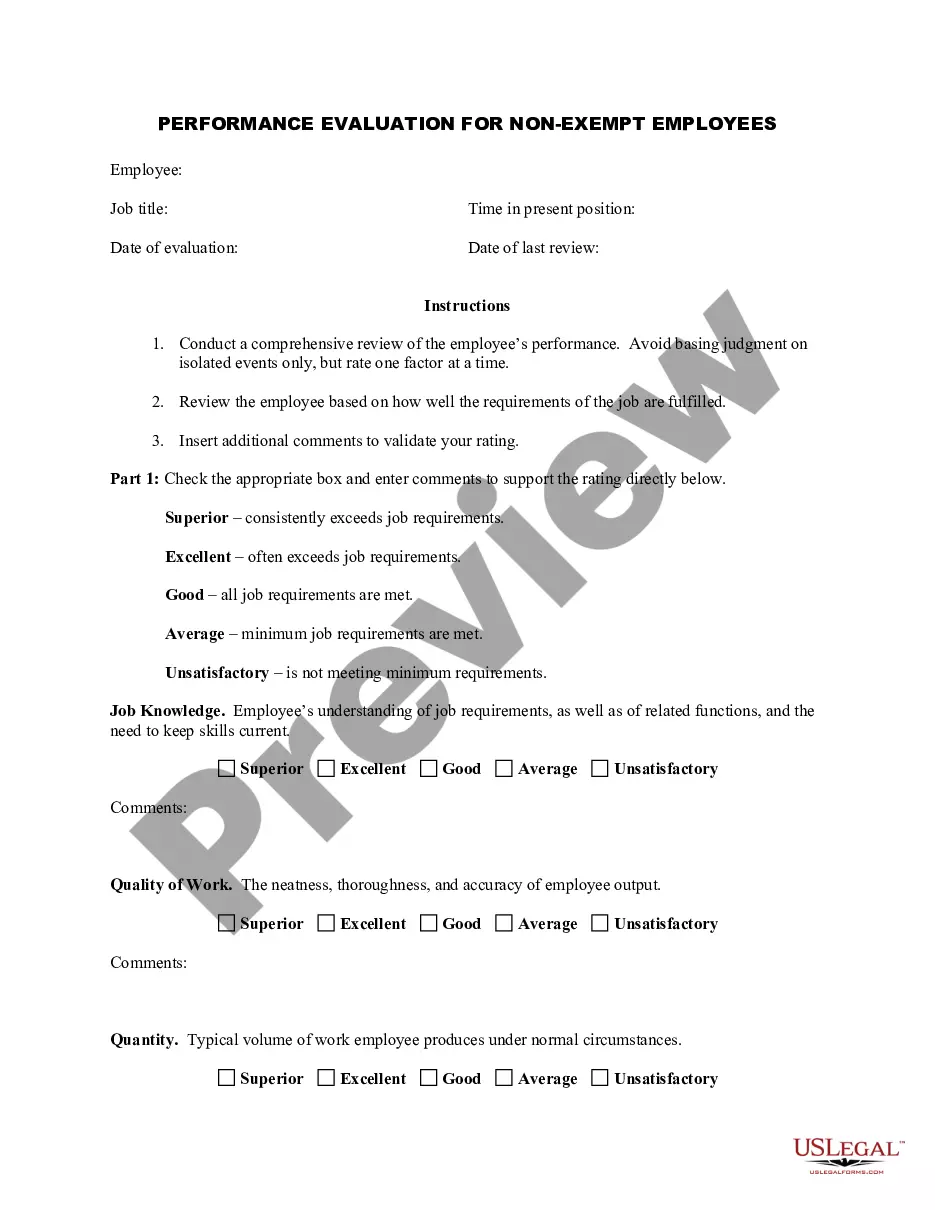
The Employee Evaluation Form for Sole Trader is a structured tool designed to assess the performance of employees in a sole proprietorship and provides a comprehensive review of their job fulfillment. This form enables employers to objectively evaluate how well employees meet their job requirements while facilitating constructive feedback and developmental guidance. Unlike general performance reviews, this form is specifically tailored for sole traders, ensuring relevance to unique operational contexts.
Main sections of this form
- Employee details: Identification of the employee being evaluated.
- Date of evaluation: The date when the evaluation occurs.
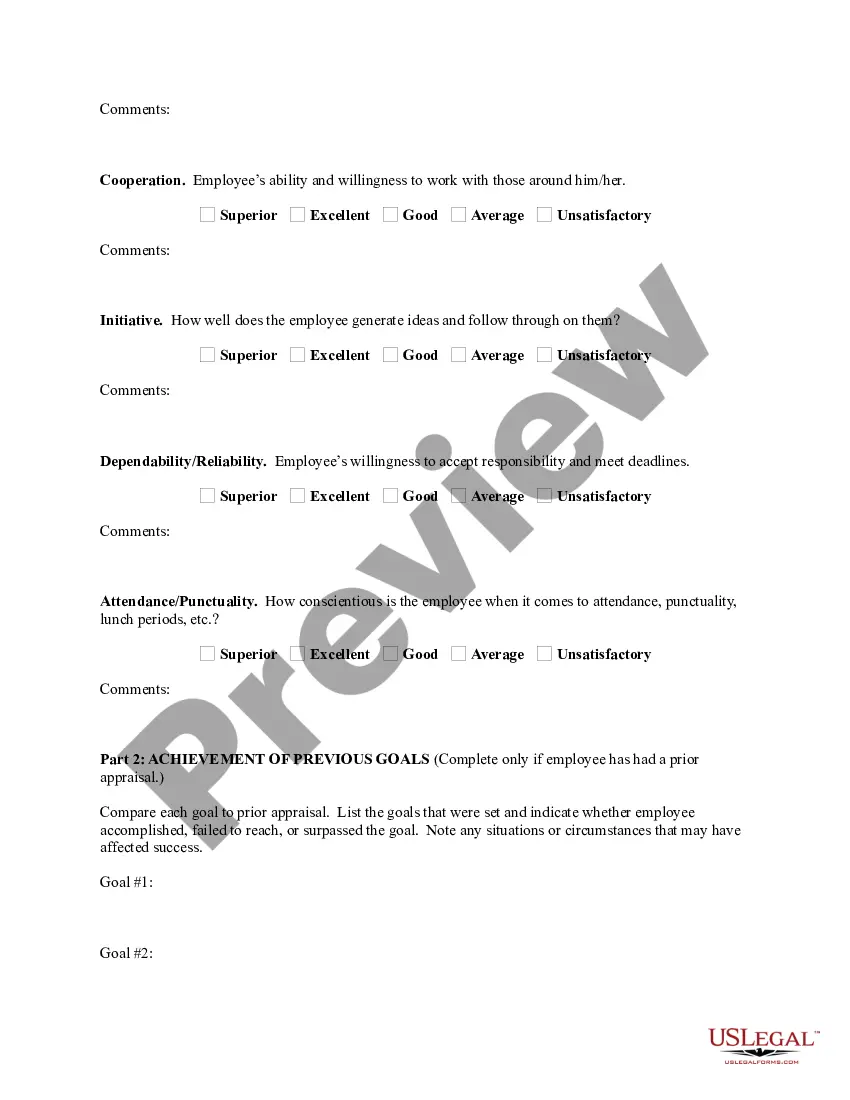
- Performance ratings: A scale to rate various performance areas including job knowledge and quality of work.
- Comments section: Space for feedback on specific performance aspects and any observed behaviors.
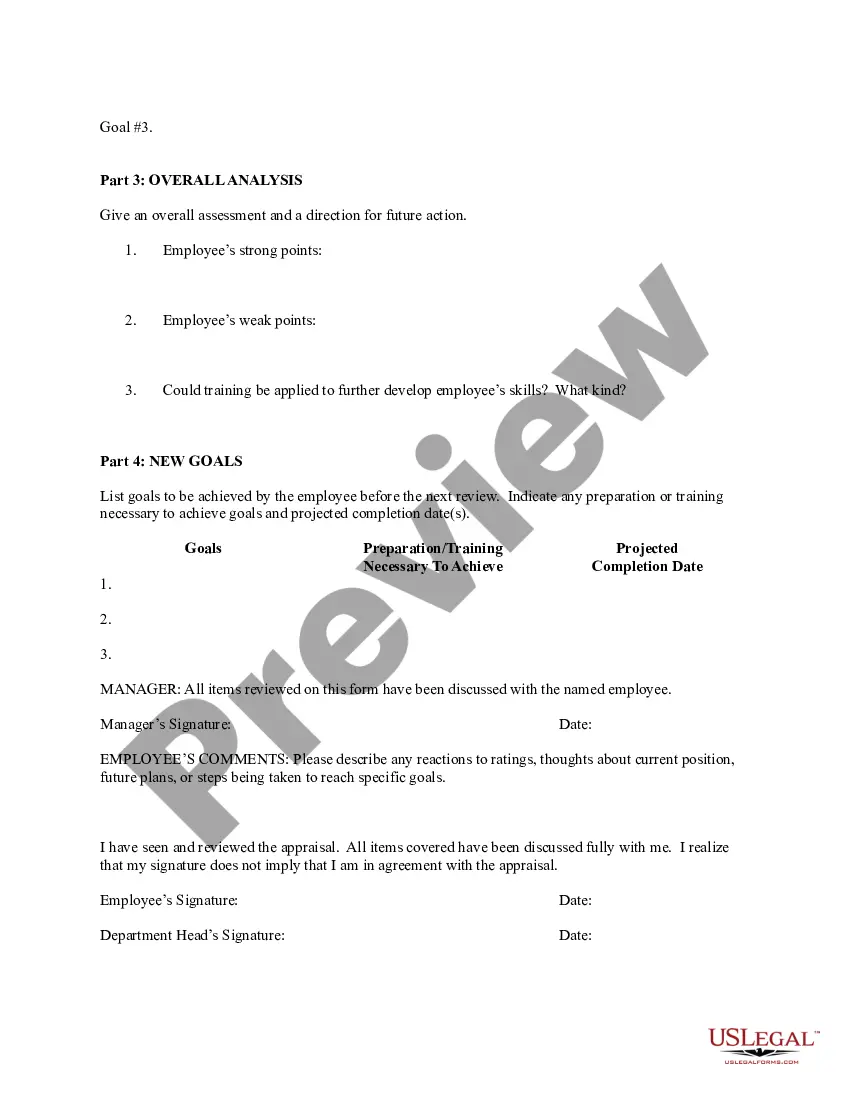
- Goals tracking: Review of previously set goals and establishment of new targets for further development.
- Signatures: Sealing the evaluation with both the evaluator's and employee's signatures for acknowledgment.

Situations where this form applies
This form is utilized during scheduled employee evaluations, typically conducted annually or biannually. It is particularly useful when assessing new employees after their probationary period, or when significant changes in job roles, responsibilities, or performance levels need formal documentation. Using this form ensures that evaluations are consistent, structured, and thorough, which aids in fair employee management practices.
Who needs this form
- Sole traders looking to establish a formal evaluation process for their employees.
- Business owners who want to provide clear performance feedback to help employees develop professionally.
- Managers overseeing non-exempt employees within a sole proprietorship.
Steps to complete this form
- Fill in the employee's details and the date of evaluation at the top of the form.
- Rate the employee's performance across designated categories using the provided scale.
- Provide comments justifying the ratings assigned in each category.
- Review the employeeâs past goals and note any new goals for development.
- Both the manager and employee should sign the form to acknowledge the evaluation process.
Notarization requirements for this form
This form does not typically require notarization unless specified by local law. It's advisable to check local regulations to ensure compliance.
Get your form ready online
Our built-in tools help you complete, sign, share, and store your documents in one place.
Make edits, fill in missing information, and update formatting in US Legal Forms—just like you would in MS Word.
Download a copy, print it, send it by email, or mail it via USPS—whatever works best for your next step.
Sign and collect signatures with our SignNow integration. Send to multiple recipients, set reminders, and more. Go Premium to unlock E-Sign.
If this form requires notarization, complete it online through a secure video call—no need to meet a notary in person or wait for an appointment.
We protect your documents and personal data by following strict security and privacy standards.

Make edits, fill in missing information, and update formatting in US Legal Forms—just like you would in MS Word.

Download a copy, print it, send it by email, or mail it via USPS—whatever works best for your next step.

Sign and collect signatures with our SignNow integration. Send to multiple recipients, set reminders, and more. Go Premium to unlock E-Sign.

If this form requires notarization, complete it online through a secure video call—no need to meet a notary in person or wait for an appointment.

We protect your documents and personal data by following strict security and privacy standards.
Common mistakes to avoid
- Failing to provide specific examples when justifying performance ratings.
- Neglecting to review and discuss previous goals before assigning new ones.
- Not allowing sufficient time for discussion with the employee during the evaluation.
Benefits of completing this form online
- Convenient access: Easily fill out online, eliminating the need for paper forms.
- Editability: Quickly make adjustments and provide comments without hassle.
- Secure storage: Digital copies can be securely stored and easily retrieved for future reference.
Looking for another form?





Form popularity
FAQ
The only proof that you will get that you have registered as a sole trader is a Unique Tax Reference (UTR) number. HMRC will send this to you around 10 days after your sole trader registration has been completed.
As the owner of a sole proprietorship you're not considered an employee of your own business. This means you don't receive a paycheck or W-2 Form or have taxes withheld from your self-employment income.
A sole proprietor can hire employees. There is no limit to the number of workers you can employ. As an employer, you are responsible for all employment administration, recordkeeping, and taxes. You have the same responsibilities as any other employer.
If you think you'll earn above the trading allowance from your sole trader business in a single tax year, you need to register as self-employed in order to file a tax return and pay tax on your earnings. To register you simply need to tell HMRC that it can expect a Self Assessment tax return from you.
As a sole proprietor, you don't pay yourself a salary and you cannot deduct your salary as a business expense. Technically, your pay is the profit (sales minus expenses) the business makes at the end of the year. You can hire other employees and pay them a salary.
The good news is that you can employ people and remain a sole trader. There's no need to set up a limited company if you don't want to. While sole traders operate the business on their own, that doesn't mean they have to work alone. The term sole trader just means that you are trading as yourself, under your own name.
You don't need to report BAS. However, you will still need to report your business income and expenses in your annual Tax Return - so ensure you still keep adequate records of your business activity. You can do this via Airtax through the income tax service, which includes a custom-built sole trader module.
Register for Self Assessment You have to register with HMRC for Self Assessment by 5 October in your business's second tax year. HMRC might fine you if you don't register by this deadline, so don't delay. To register for Self Assessment, you need to visit the gov.uk registration page and submit your details.
The good news is that you can employ people and remain a sole trader. There's no need to set up a limited company if you don't want to. While sole traders operate the business on their own, that doesn't mean they have to work alone. The term sole trader just means that you are trading as yourself, under your own name.