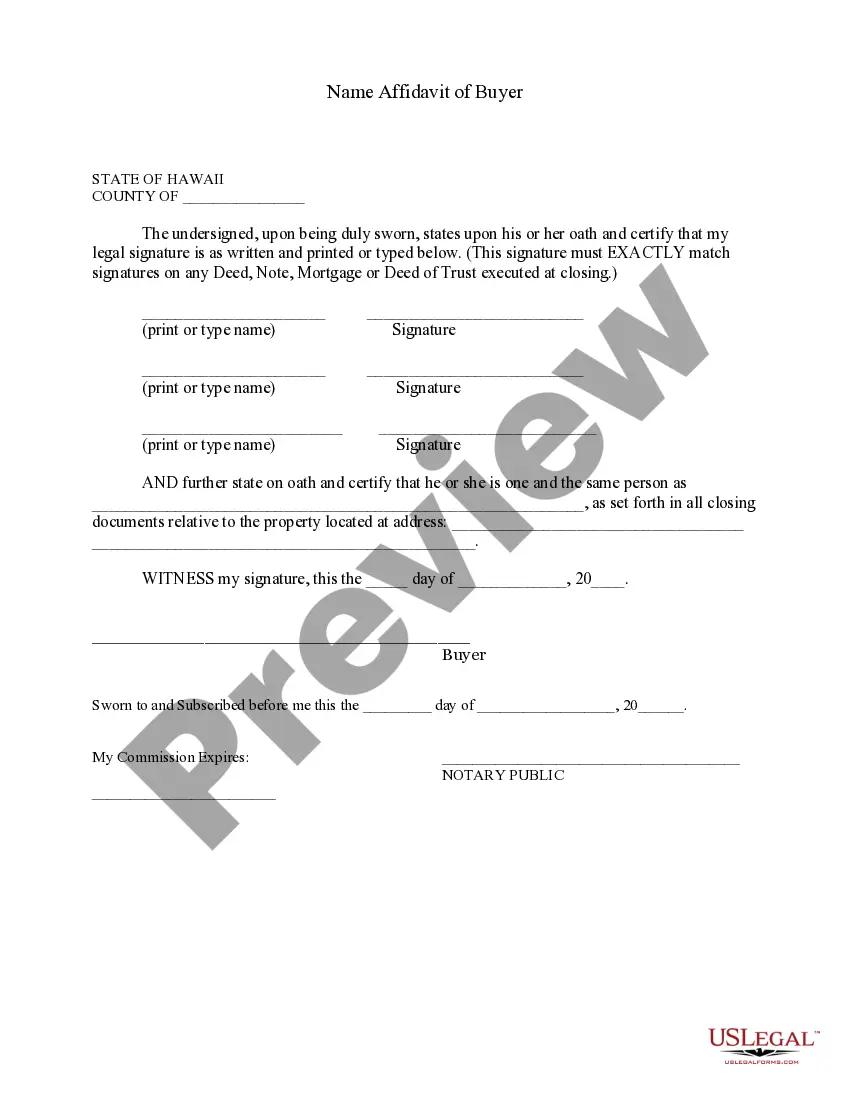
Gift Agreement with Institution
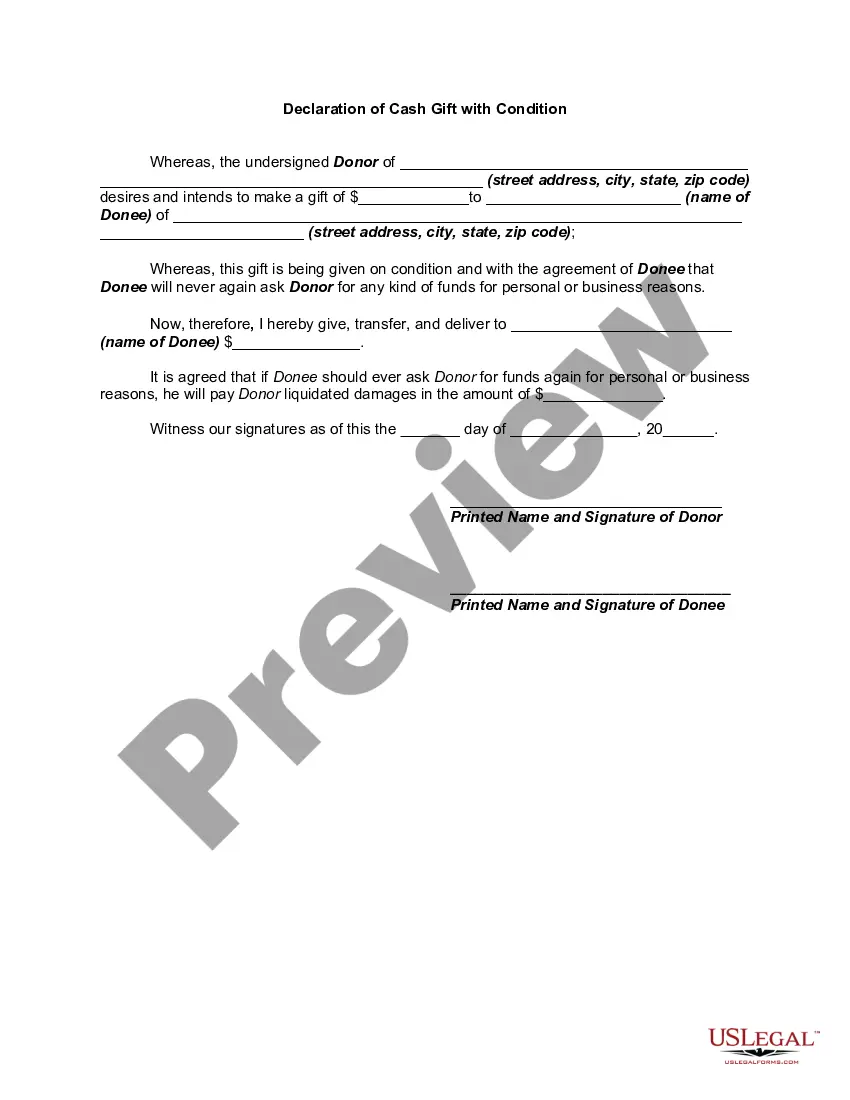
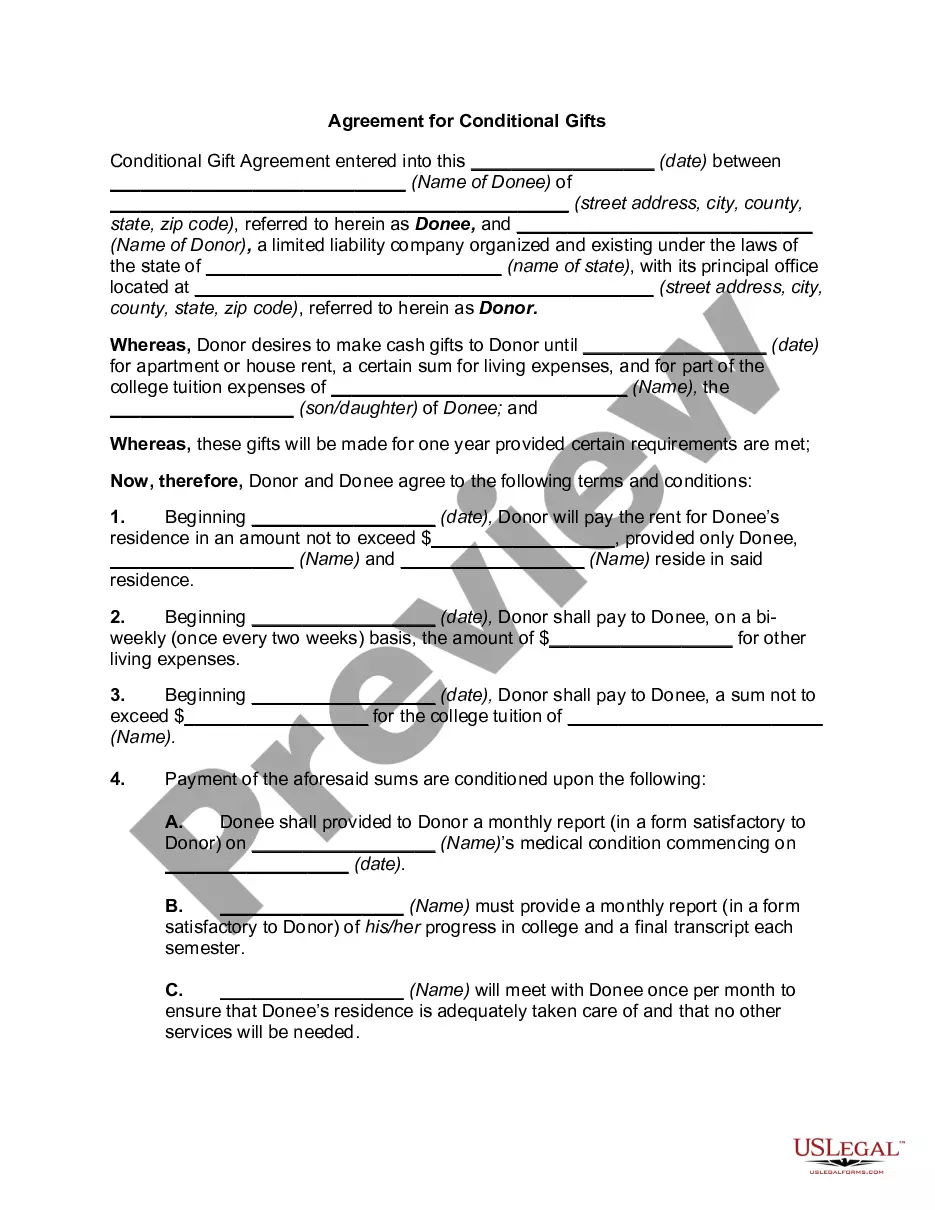
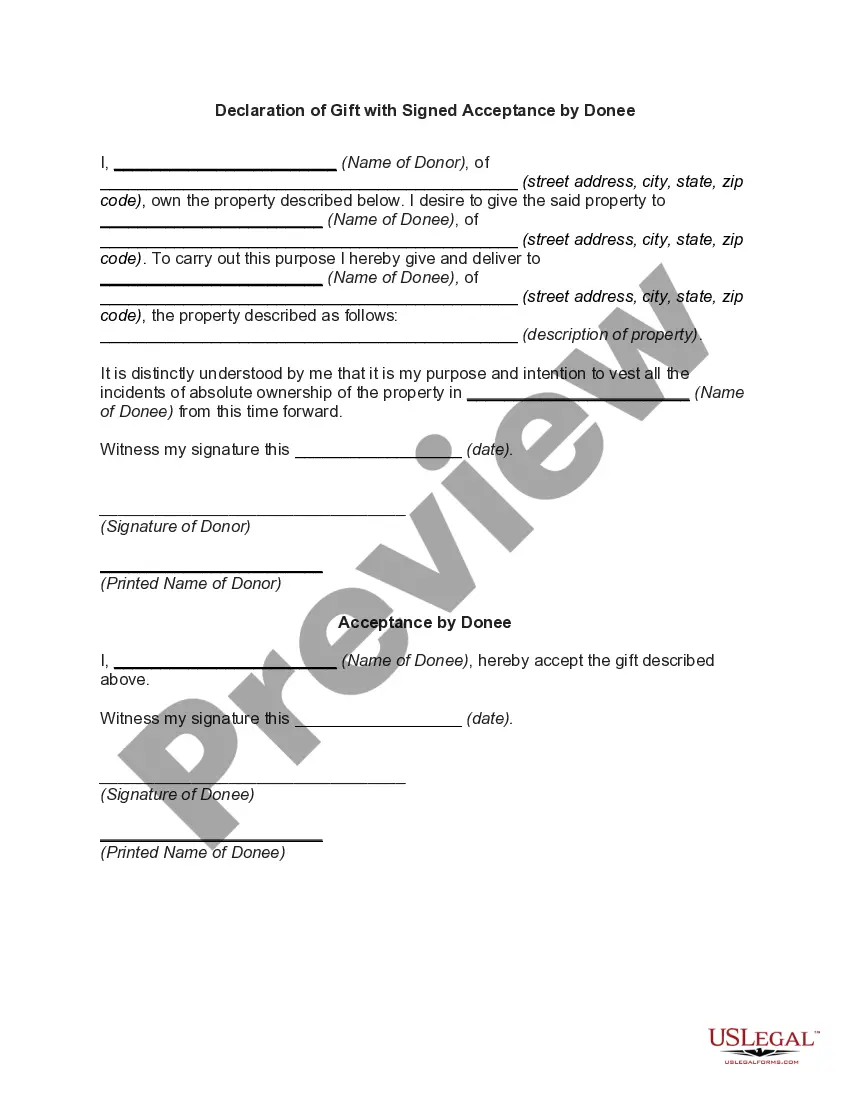
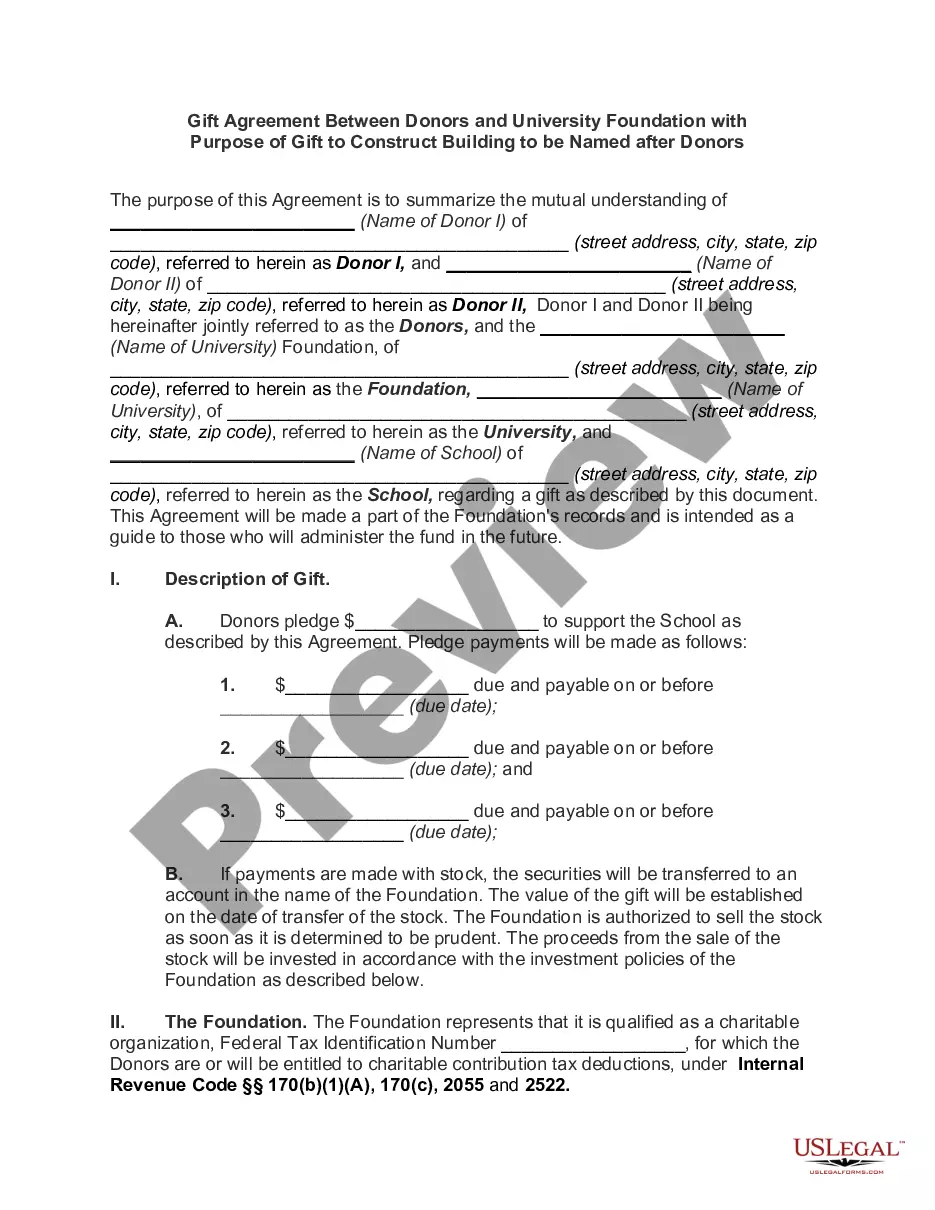
About this form
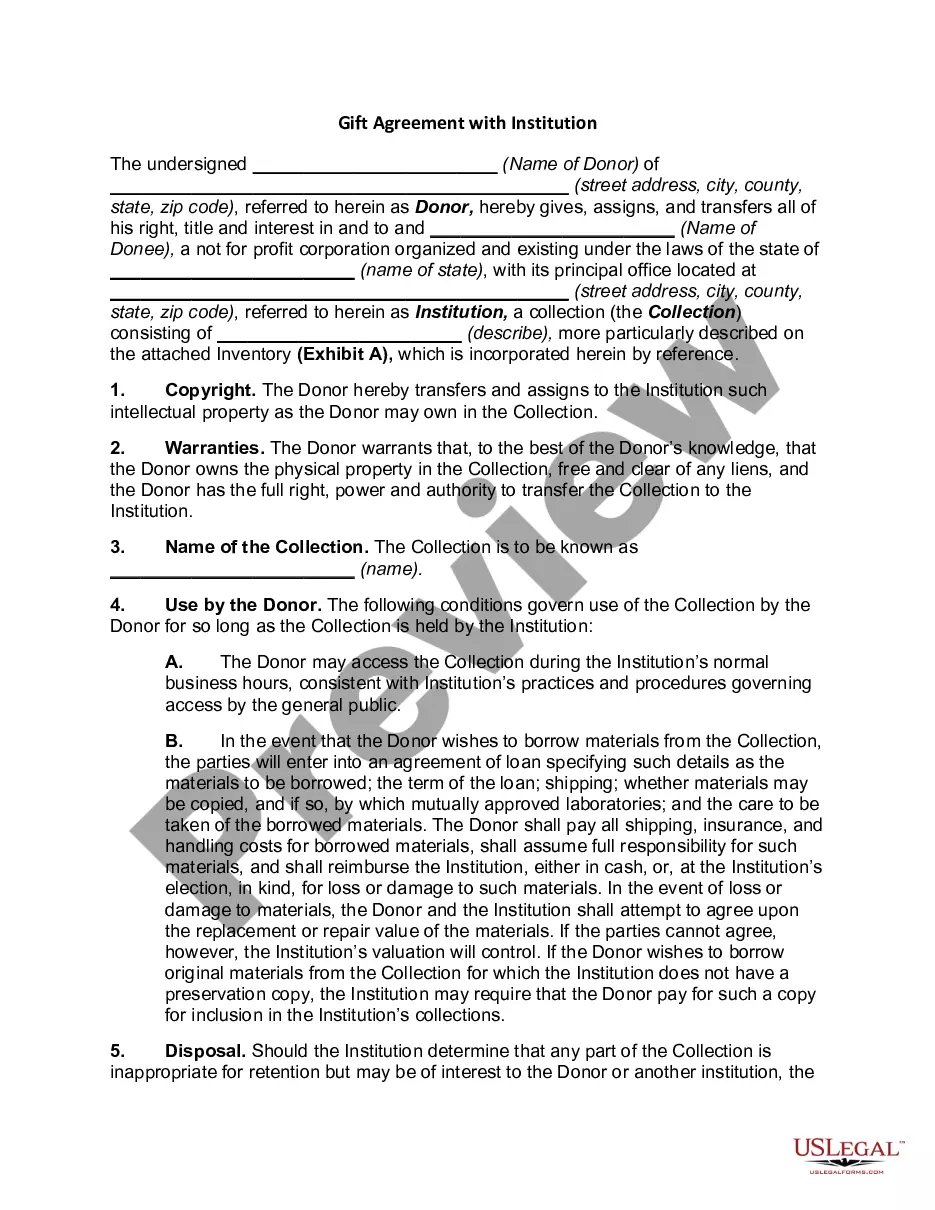
The Gift Agreement with Institution is a legal document that formalizes the donation of property, typically a collection of items, from an individual (the Donor) to a nonprofit organization (the Institution). This form outlines the terms of the gift, including ownership rights, responsibilities, and usage conditions. It differs from similar forms by specifically establishing rights related to intellectual property within the donation, ensuring clarity about the donor's intent and the institution's responsibilities.
Key components of this form
- Donor identification including name and address
- Institution identification including name and address
- Description of the property being donated, referred to as "the Collection"
- Intellectual property rights assignment
- Warranties from the Donor regarding ownership and clear title
- Conditions for the Donor's access to the Collection
- Provisions for the disposal of any part of the Collection that may be deemed inappropriate by the Institution
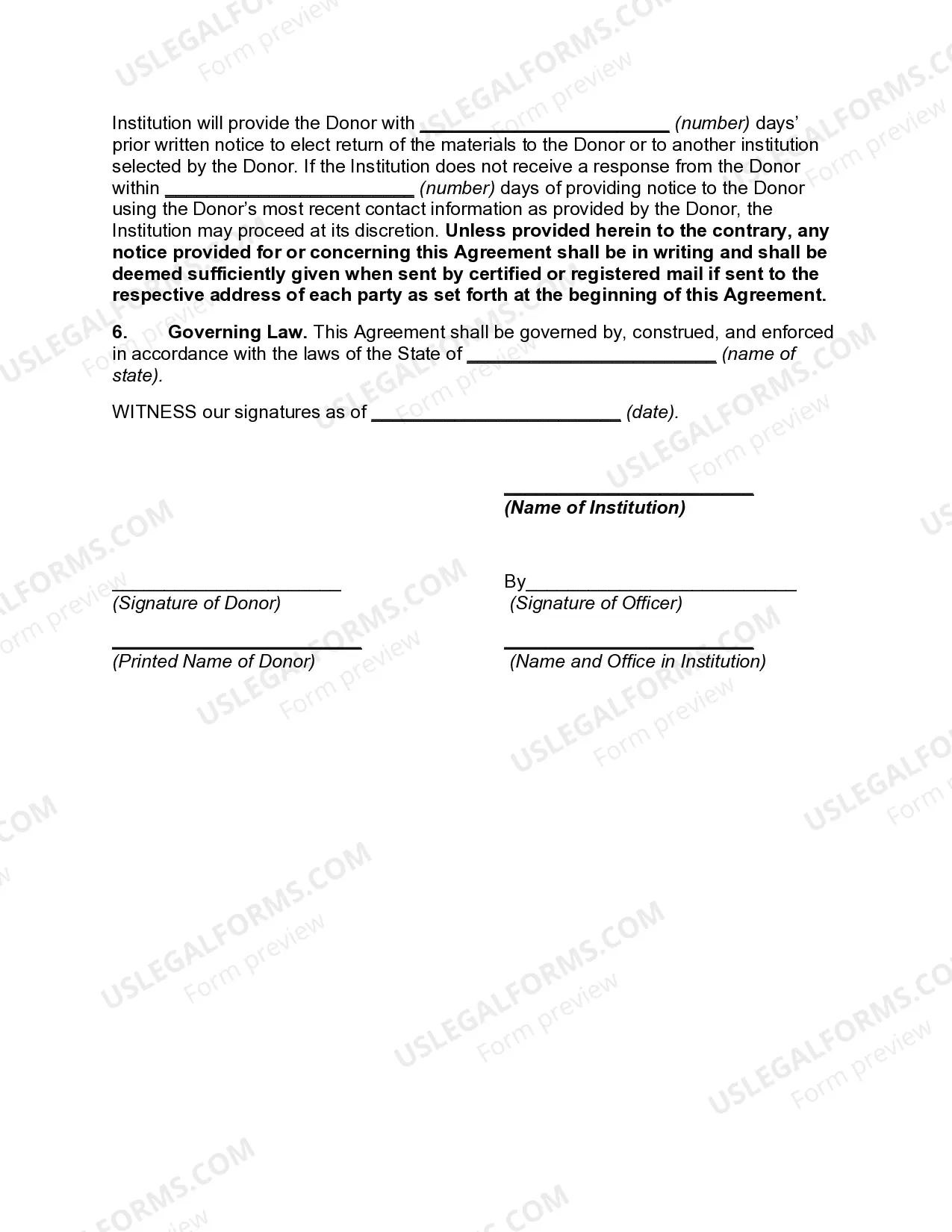
- Governing law for the agreement
When this form is needed
This form should be used when an individual wishes to donate items or a collection to a nonprofit organization. It is particularly useful when the donation involves intellectual property rights or when specific conditions about the use and access of the Collection by the Donor are needed.
Intended users of this form
- Individuals looking to make a formal gift of property to a nonprofit organization
- Nonprofit organizations receiving donations and needing to establish clear terms of agreement
- Donors who want to retain certain rights to access or use the donated Collection
Steps to complete this form
- Identify the parties by entering the Donor's and Institution's names and addresses.
- Detail the nature of the Collection being donated, including an inventory of items attached as Exhibit A.
- Specify any conditions under which the Donor may access the Collection.
- Enter the governing law by filling in the appropriate state name.
- Obtain signatures from both parties to finalize the agreement.
Does this document require notarization?
This form does not typically require notarization unless specified by local law. Ensure you check applicable state statutes for any additional requirements.
Get your form ready online
Our built-in tools help you complete, sign, share, and store your documents in one place.
Make edits, fill in missing information, and update formatting in US Legal Forms—just like you would in MS Word.
Download a copy, print it, send it by email, or mail it via USPS—whatever works best for your next step.
Sign and collect signatures with our SignNow integration. Send to multiple recipients, set reminders, and more. Go Premium to unlock E-Sign.
If this form requires notarization, complete it online through a secure video call—no need to meet a notary in person or wait for an appointment.
We protect your documents and personal data by following strict security and privacy standards.

Make edits, fill in missing information, and update formatting in US Legal Forms—just like you would in MS Word.

Download a copy, print it, send it by email, or mail it via USPS—whatever works best for your next step.

Sign and collect signatures with our SignNow integration. Send to multiple recipients, set reminders, and more. Go Premium to unlock E-Sign.

If this form requires notarization, complete it online through a secure video call—no need to meet a notary in person or wait for an appointment.

We protect your documents and personal data by following strict security and privacy standards.
Typical mistakes to avoid
- Failing to clearly describe the Collection being donated.
- Neglecting to include conditions of use for the Donor.
- Not entering correct contact information for both parties.
- Omitting necessary signatures, which could invalidate the form.
Benefits of using this form online
- Convenience of completing the form at any time.
- Editability allows for customization based on unique donation circumstances.
- Reliability of having a legally vetted document prepared by licensed attorneys.
Legal use & context
- This agreement serves as a binding contract between the donor and the institution, safeguarding the interests of both parties.
- Once signed, it formalizes the donation and outlines the donor's rights regarding the collection.
- Ensuring compliance with state laws helps prevent future disputes over ownership and usage of the collection.
Summary of main points
- The Gift Agreement with Institution is vital for formalizing the donation process.
- Properly completing the form ensures that both parties understand their rights and responsibilities.
- Review state-specific regulations to ensure compliance and validity of the agreement.
Looking for another form?




Form popularity
FAQ
It is a unilateral promise without consideration. California Civil Code Section 1146 defines a gift as follows: A gift is a transfer of personal property, made voluntarily, and without consideration. Section 1147 says that a verbal gift is generally unenforceable unless the means of obtaining possession and control
Enforceable Contracts A legally binding agreement is any contract with agreed upon terms which include actions that are required or prohibited. Traditionally, contracts address providing goods and services in exchange for payment, although they can also reflect barter situations that trade services or goods.
In California, a pledge is enforceable as a binding contract only if there is consideration.So the law remains the way California judges have ruled on this issue consistently over the years: There must be a legally sufficient amount of consideration.
It is a unilateral promise without consideration. California Civil Code Section 1146 defines a gift as follows: A gift is a transfer of personal property, made voluntarily, and without consideration. Section 1147 says that a verbal gift is generally unenforceable unless the means of obtaining possession and control
2.1. A gift is a contract without valid consideration, and, to be valid, must be executed. A valid gift is therefore a contract executed.
Gift agreements are completed and signed to prevent misunderstandings, and show your donor that you care and that they are valued and important. As a nonprofit organization must keep accurate records on donations received, so must a donor keep records of donations they've made especially when it comes to tax time.