Agreement for Conditional Gifts
About this form
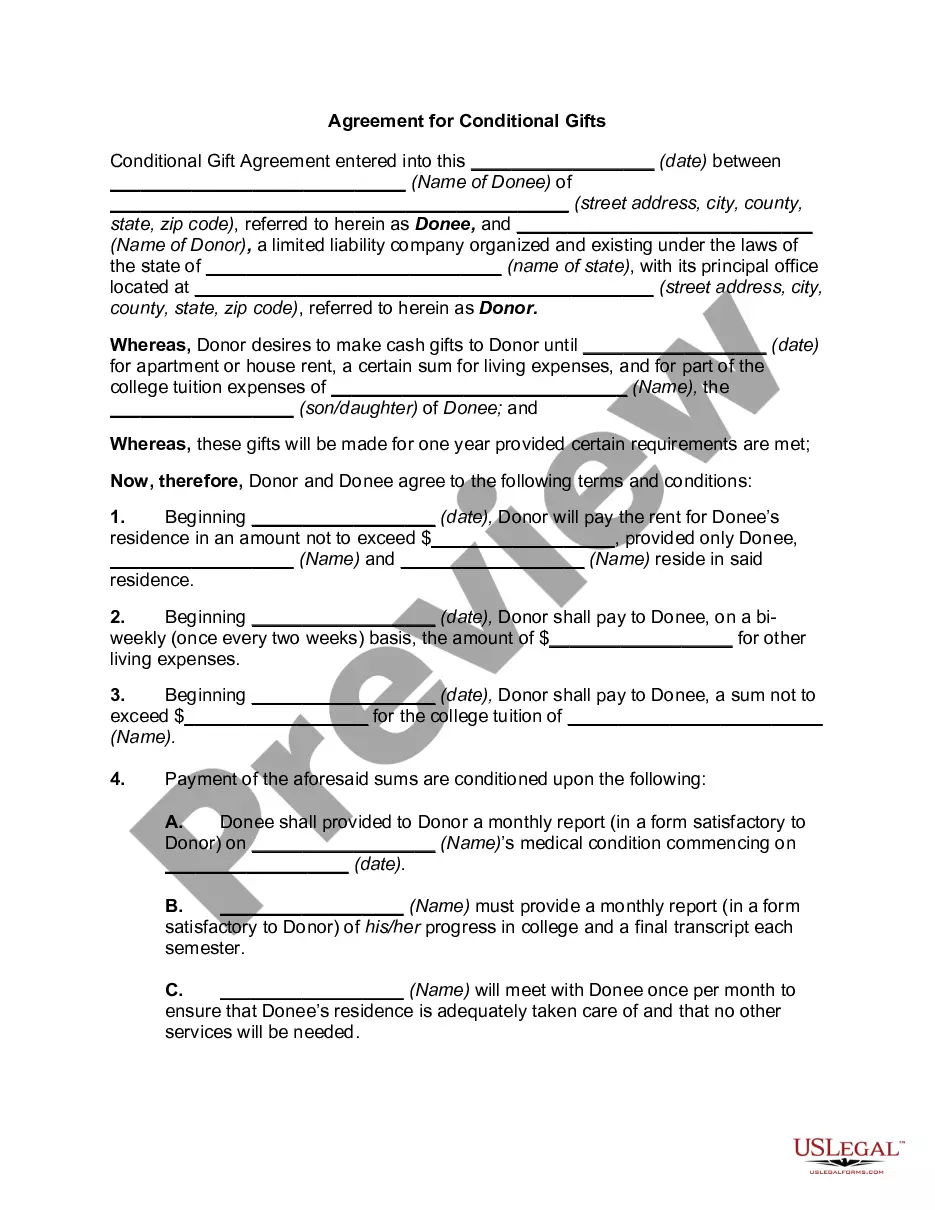
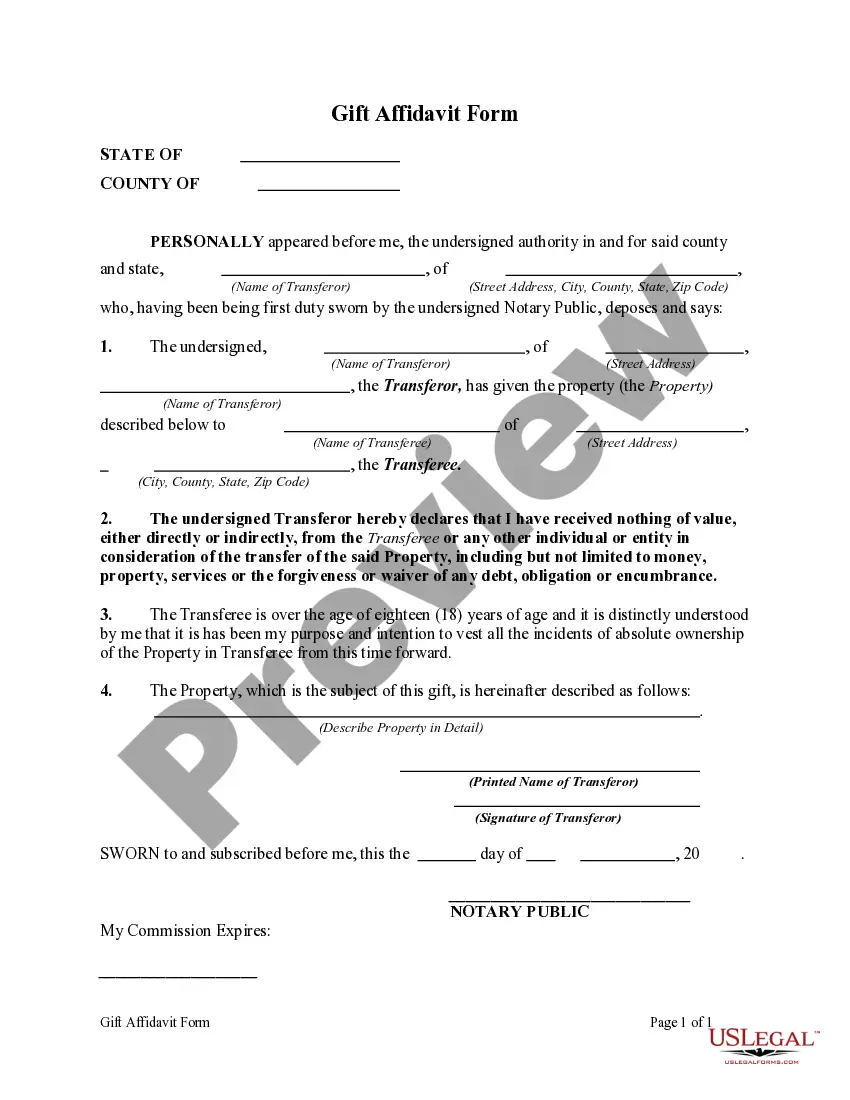
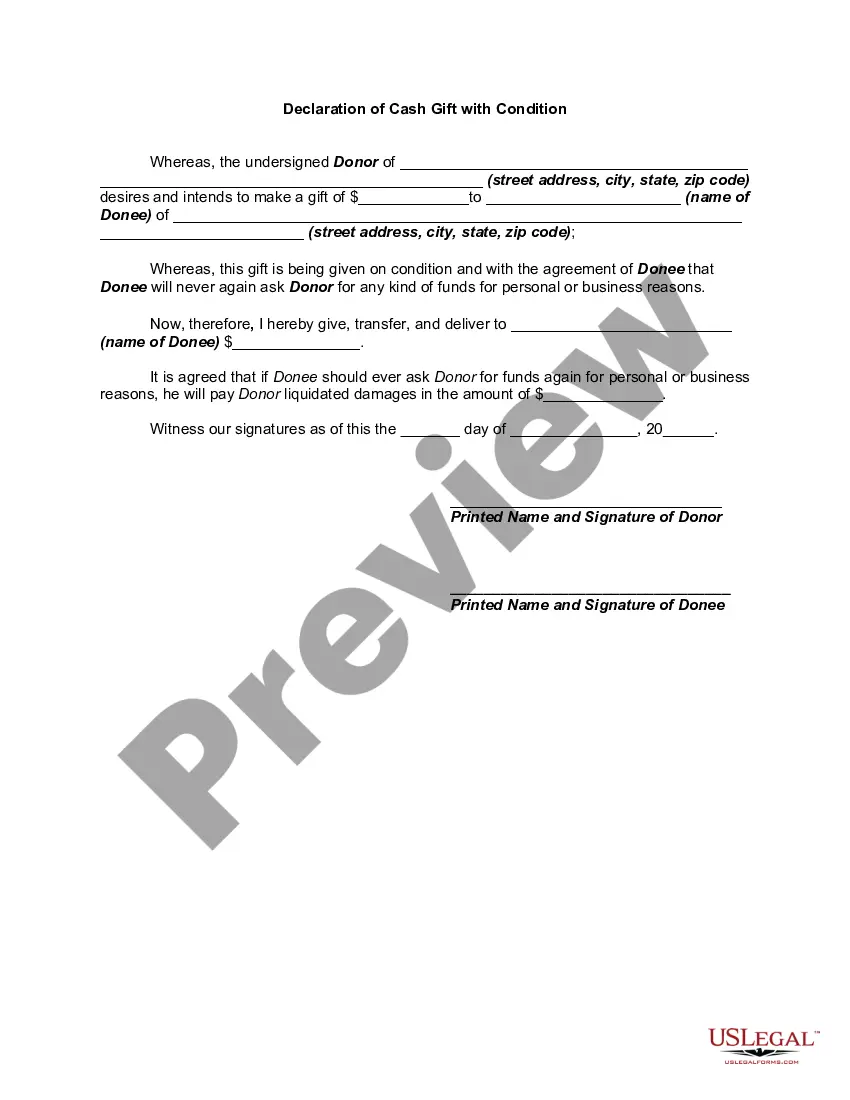
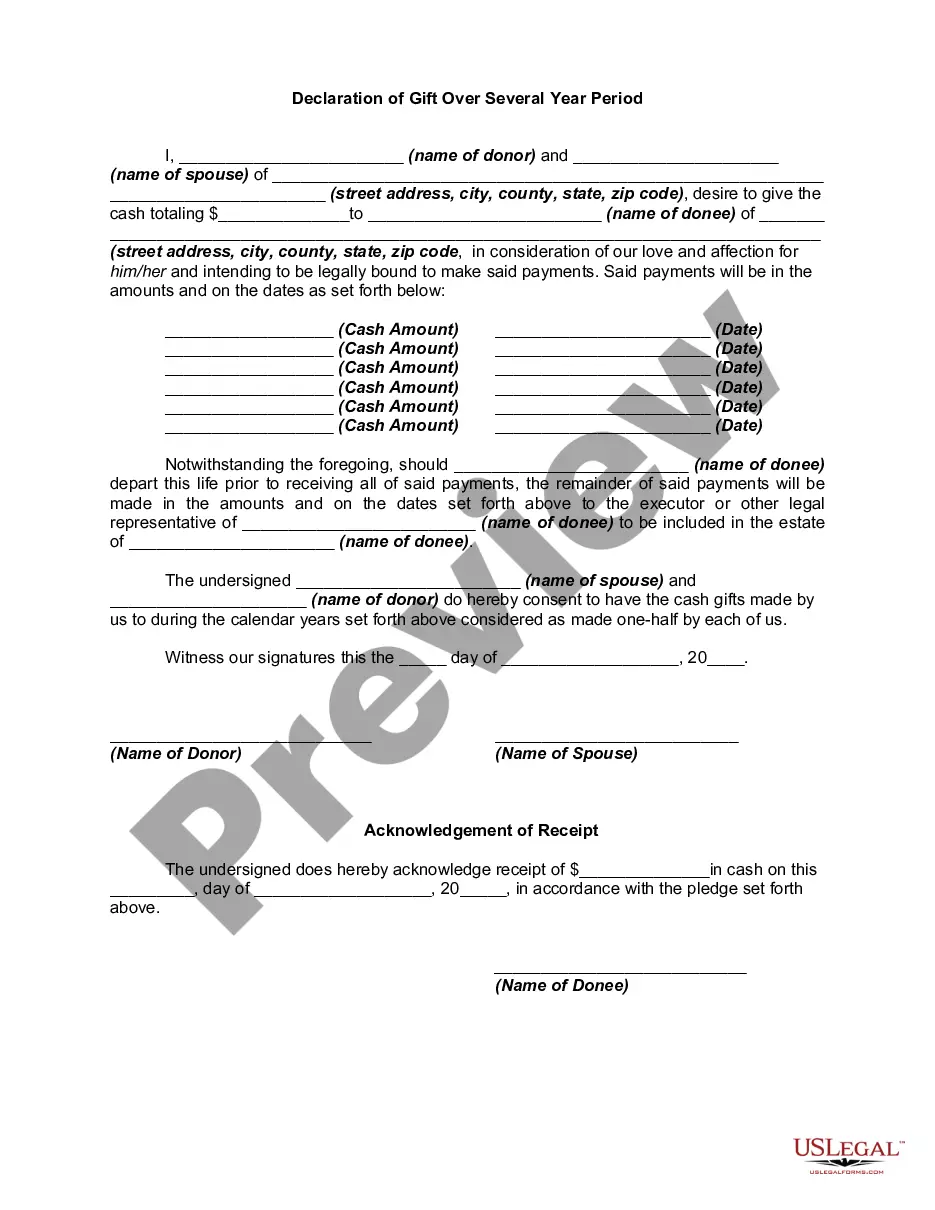
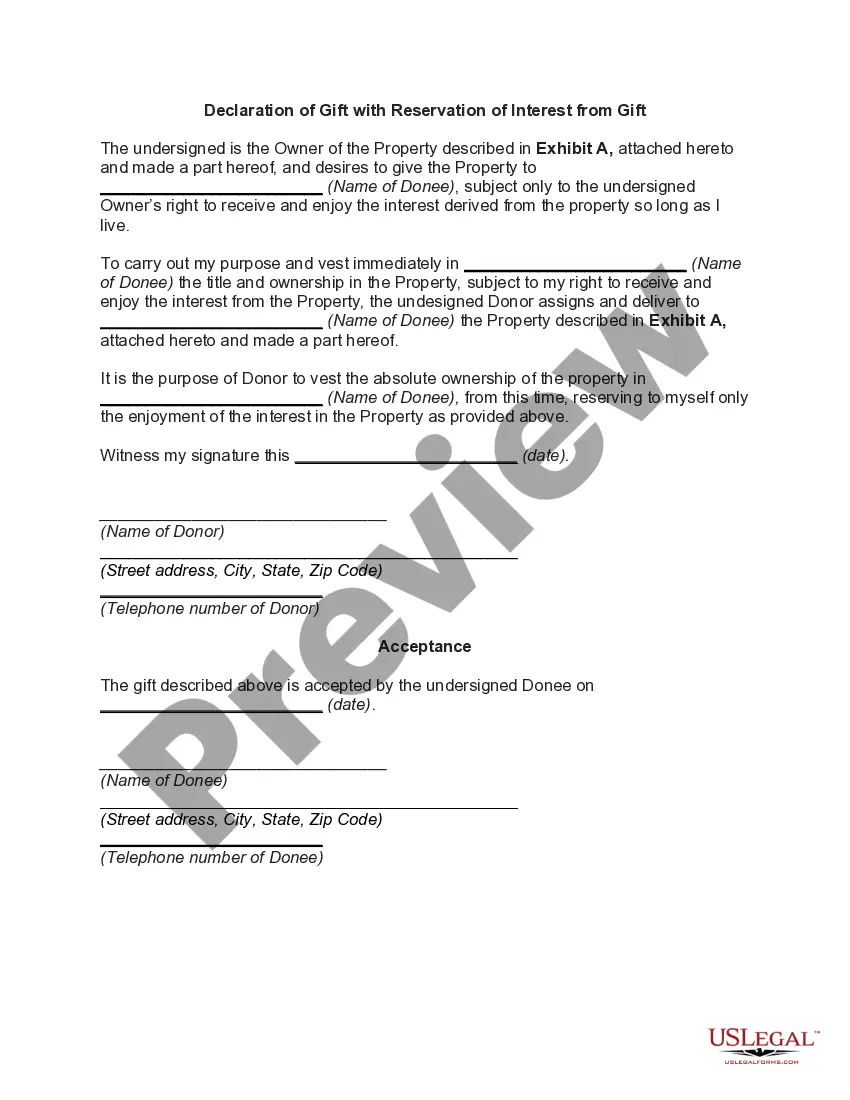
The Agreement for Conditional Gifts is a legal document that outlines the terms under which a donor agrees to provide gifts to a recipient, contingent upon specific conditions being met. Unlike unconditional gifts, a conditional gift can be revoked if the recipient fails to fulfill the agreed-upon conditions. This agreement is essential for establishing clarity and accountability in financial gifting relationships, particularly when ongoing support is linked to the recipient's actions or responsibilities.
Key components of this form
- Date of the agreement
- Name and address of the donee (recipient)
- Name and address of the donor (giver)
- Details of the gifts, including amounts and purposes
- Conditions that must be met by the donee
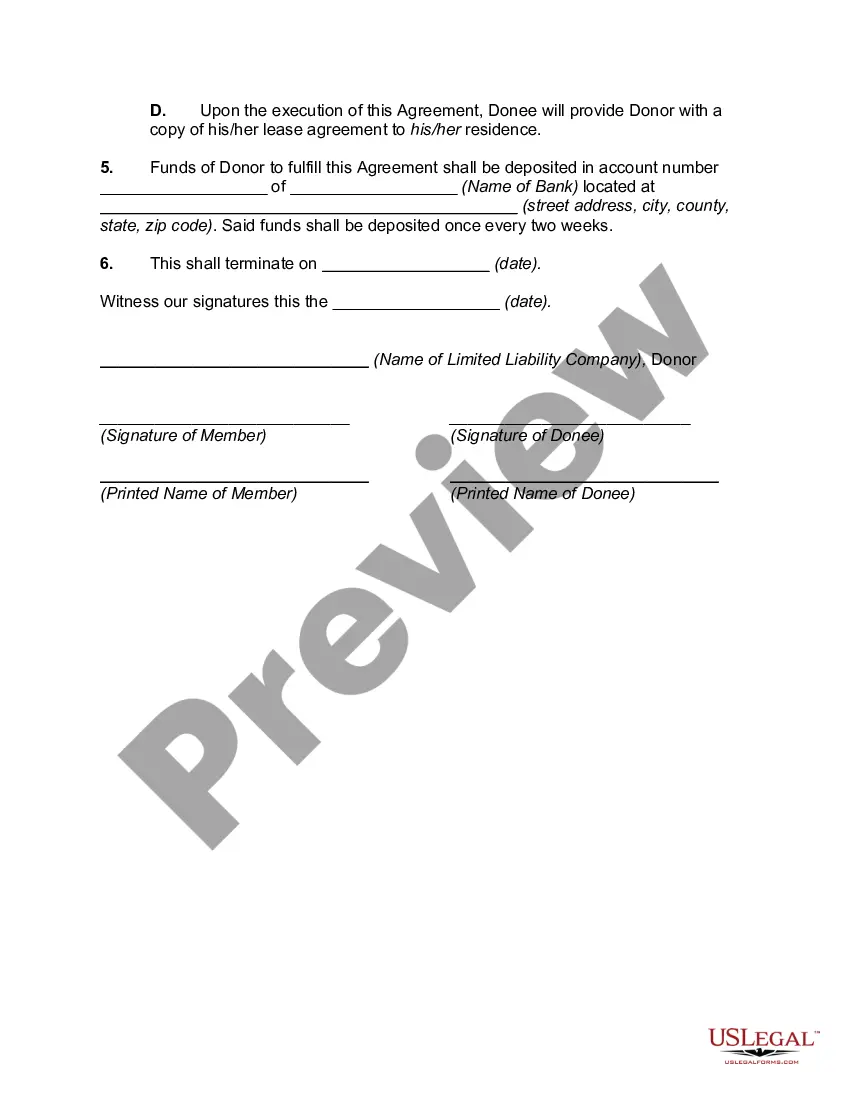
- Termination date of the agreement
- Signatures of parties involved
When to use this document
This form should be used in situations where a donor wishes to provide gifts that are conditional upon certain obligations being fulfilled by the donee. Common scenarios include financial support for college tuition, living expenses, or housing, where the donor wants to ensure that the recipient meets specific requirements before receiving the funds.
Who needs this form
This Agreement for Conditional Gifts is intended for:
- Individuals providing financial support to family members, such as parents to children.
- Limited liability companies or entities making conditional gifts to individuals.
- Donors seeking to clarify the terms of their financial contributions to ensure accountability.
Instructions for completing this form
- Identify the parties involved by filling in the names and addresses of both the donor and donee.
- Specify the dates relevant to the agreement, including the start and termination dates.
- Enter the amounts and purposes of the gifts being offered.
- Detail the conditions the donee must fulfill in order to retain the gifts.
- Ensure both parties sign and print their names to make the agreement legally binding.
Is notarization required?
Notarization is not commonly needed for this form. However, certain documents or local rules may make it necessary. Our notarization service, powered by Notarize, allows you to finalize it securely online anytime, day or night.
Get your form ready online
Our built-in tools help you complete, sign, share, and store your documents in one place.
Make edits, fill in missing information, and update formatting in US Legal Forms—just like you would in MS Word.
Download a copy, print it, send it by email, or mail it via USPS—whatever works best for your next step.
Sign and collect signatures with our SignNow integration. Send to multiple recipients, set reminders, and more. Go Premium to unlock E-Sign.
If this form requires notarization, complete it online through a secure video call—no need to meet a notary in person or wait for an appointment.
We protect your documents and personal data by following strict security and privacy standards.

Make edits, fill in missing information, and update formatting in US Legal Forms—just like you would in MS Word.

Download a copy, print it, send it by email, or mail it via USPS—whatever works best for your next step.

Sign and collect signatures with our SignNow integration. Send to multiple recipients, set reminders, and more. Go Premium to unlock E-Sign.

If this form requires notarization, complete it online through a secure video call—no need to meet a notary in person or wait for an appointment.

We protect your documents and personal data by following strict security and privacy standards.
Avoid these common issues
- Failing to clearly outline the conditions for the gifts.
- Not including specific amounts or timeframes for payments.
- Omitting signatures or failing to date the agreement.
- Ignoring local laws regarding conditional gifts.
Advantages of online completion
- Convenience of editing and filling out the form from home.
- Access to templates drafted by licensed attorneys for reliability.
- Immediate download of the form for quick use.
- Ability to customize the agreement to meet specific needs.
Quick recap
- The Agreement for Conditional Gifts ensures that gifts are provided only when specific conditions are met.
- It promotes accountability and clarity regarding the use of financial support.
- Proper completion includes detailing conditions and ensuring all parties are informed and consent to the terms.
Looking for another form?
Form popularity
FAQ
The Agreement for Conditional Gifts is a written document that records gifts from a donor to a donee only if certain conditions are met. It establishes the gifts, the specific conditions, and a termination date, and notes signatures of both parties. It should be used when a donor wants ongoing support that depends on the recipient meeting defined obligations (tuition, living expenses, housing, etc.).
Yes, conditional gifts can be legally enforceable when the conditions are clearly stated, the gifts and parties are documented, and both sides sign the agreement. The form records the gifts, the required conditions, and a termination date to guide enforcement. Enforceability also depends on applicable state contract principles, so consider professional legal advice for your situation.
A promise to make a conditional gift is an agreement by the donor to provide funds or property if the donee meets defined conditions. This form formalizes that promise by listing the gifts, the conditions, and signatures, creating a contract-like arrangement that clarifies when the gift occurs and when it may be revoked if conditions aren’t met.
Yes, for conditional gifts the donor may revoke the gift if the donee fails to meet the stated conditions. The form records the conditions and the termination terms to govern revocation. If the donee satisfies all conditions, ownership transfers; in many cases, the donor cannot revoke after the conditions are met.
A conditional gift contract is a written agreement in which a donor promises to give money or property to a donee only if the donee satisfies defined conditions. The Agreement for Conditional Gifts specifies the gifts, the conditions, any termination terms, and requires signatures, creating a binding plan that governs when the gift occurs and how it can be revoked if conditions aren’t met.
The main difference is that this agreement ties the transfer of gifts to defined conditions and allows revocation if those conditions are not met, whereas an unconditional gift is typically irrevocable once made. The form documents the gifts, the conditions, termination terms, and signatures to support enforcement.