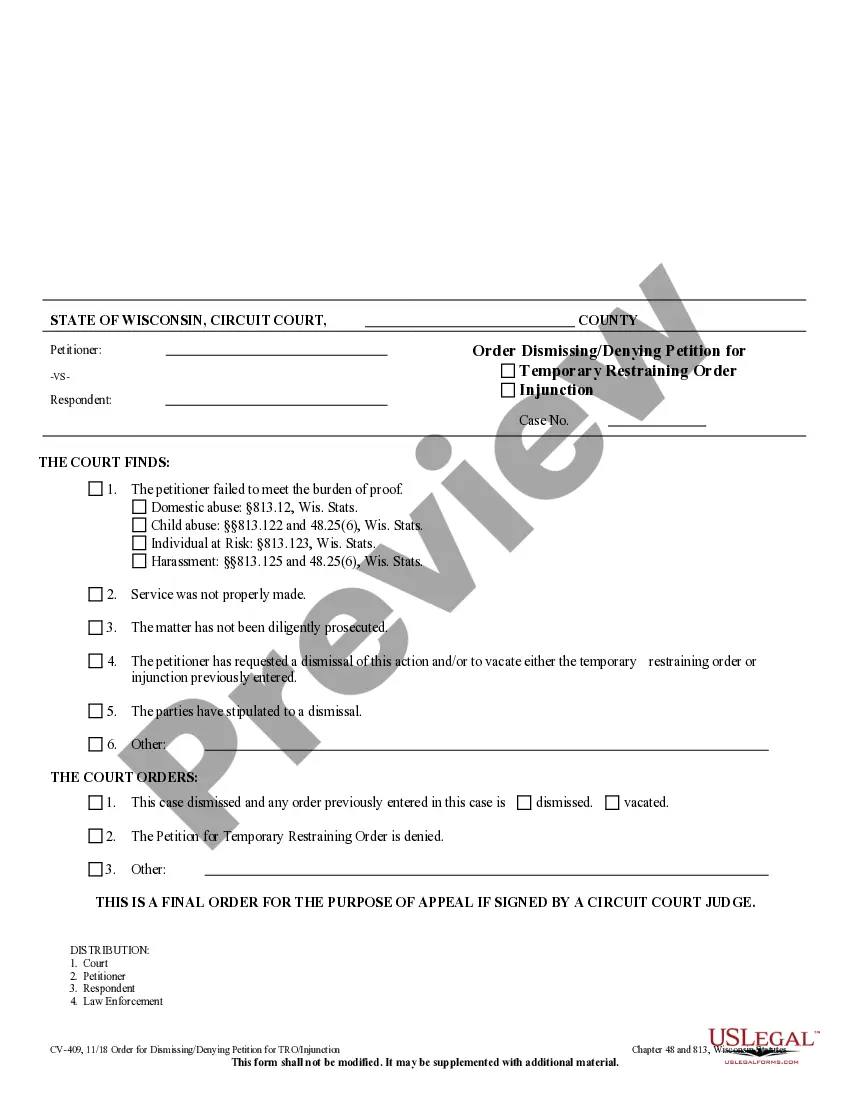
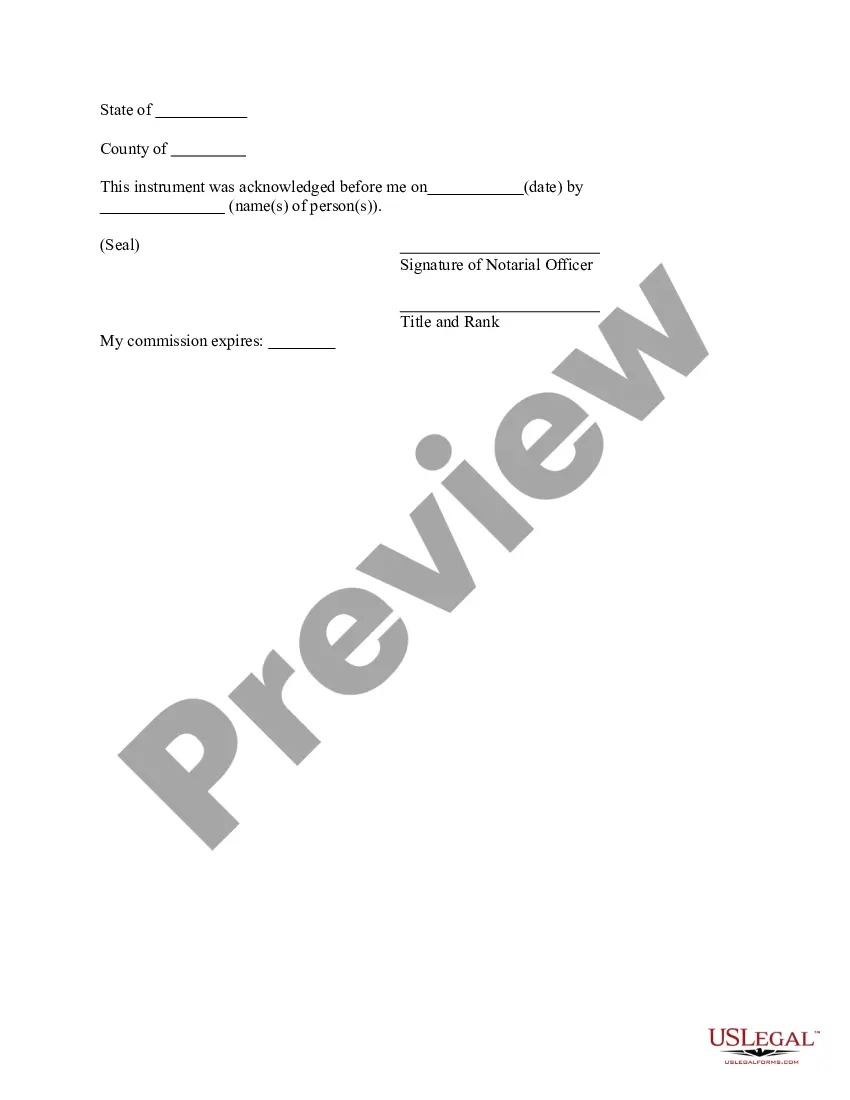
Wyoming Acknowledgment for an individual
Understanding this form
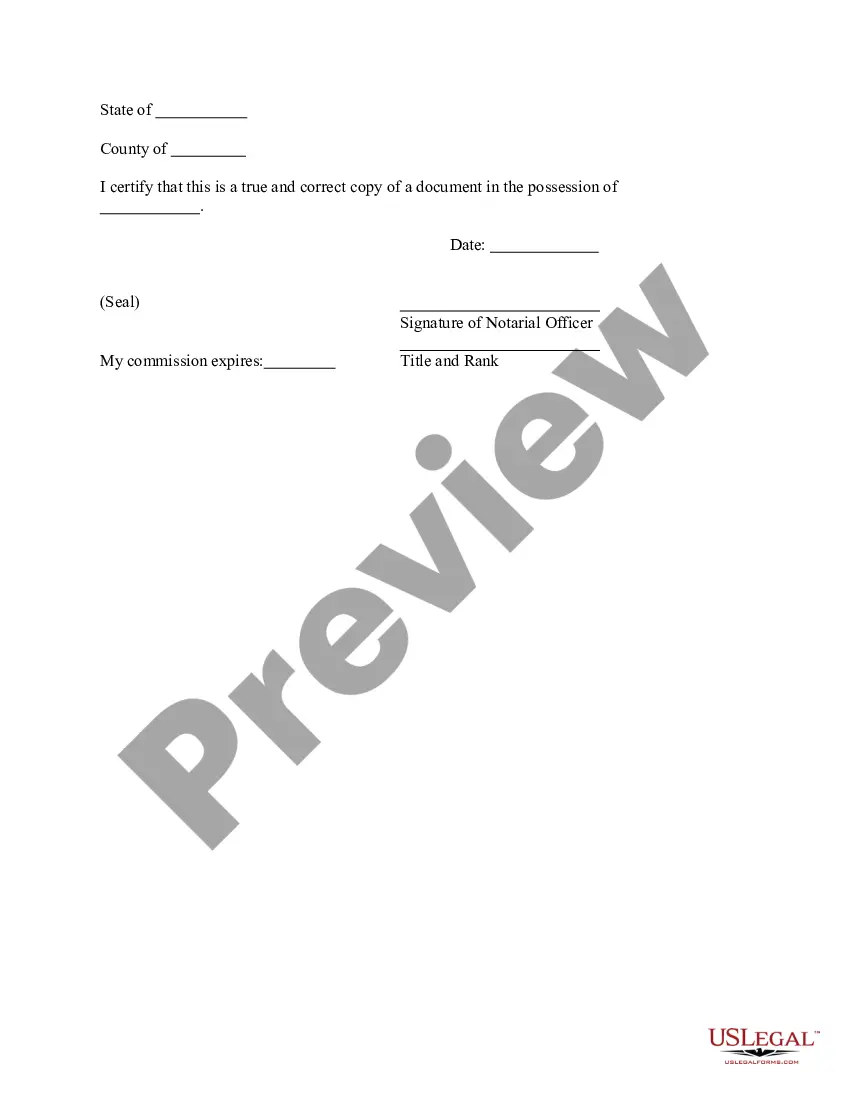
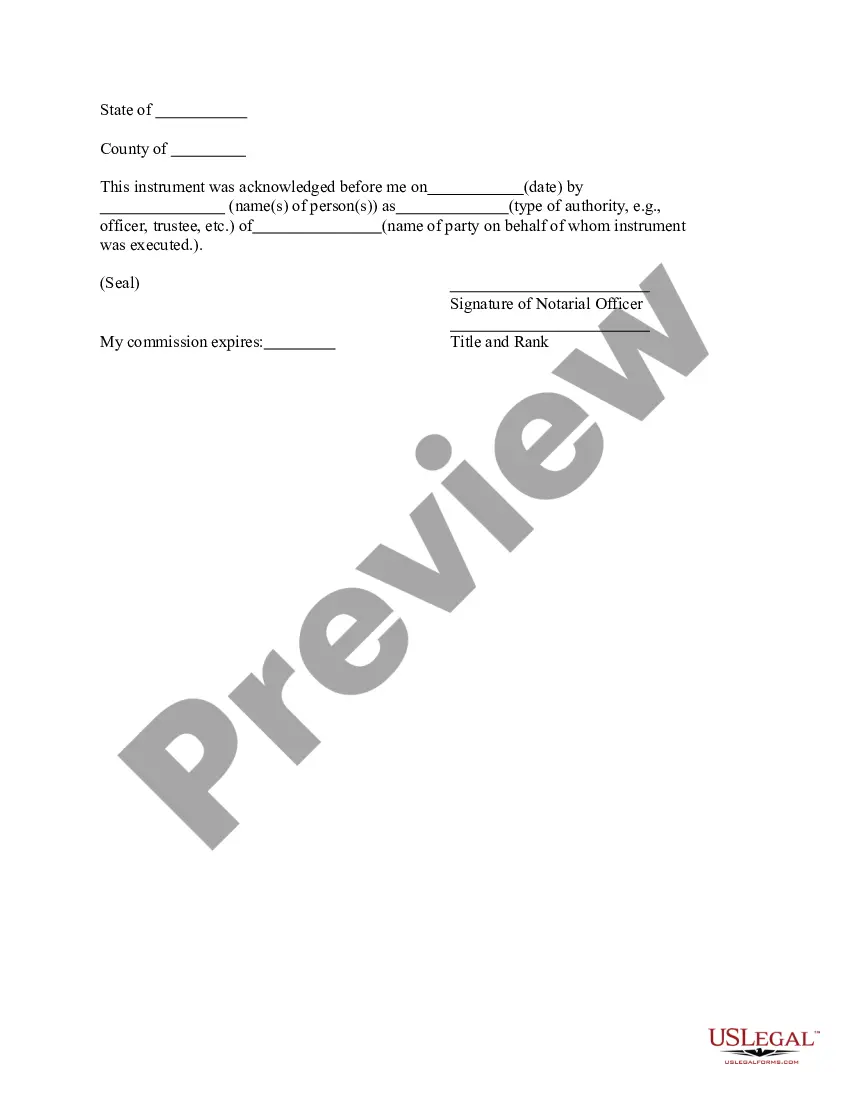
The acknowledgment for an individual is a legal document that certifies the identity of a person signing a document. This form is essential in validating the authenticity of signatures, particularly in legal agreements or contracts. Unlike other forms, which may merely document agreements, this acknowledgment specifically attests to the identity of the signer, serving as a safeguard against fraud.
What’s included in this form
- Identification of the individual acknowledging the document.
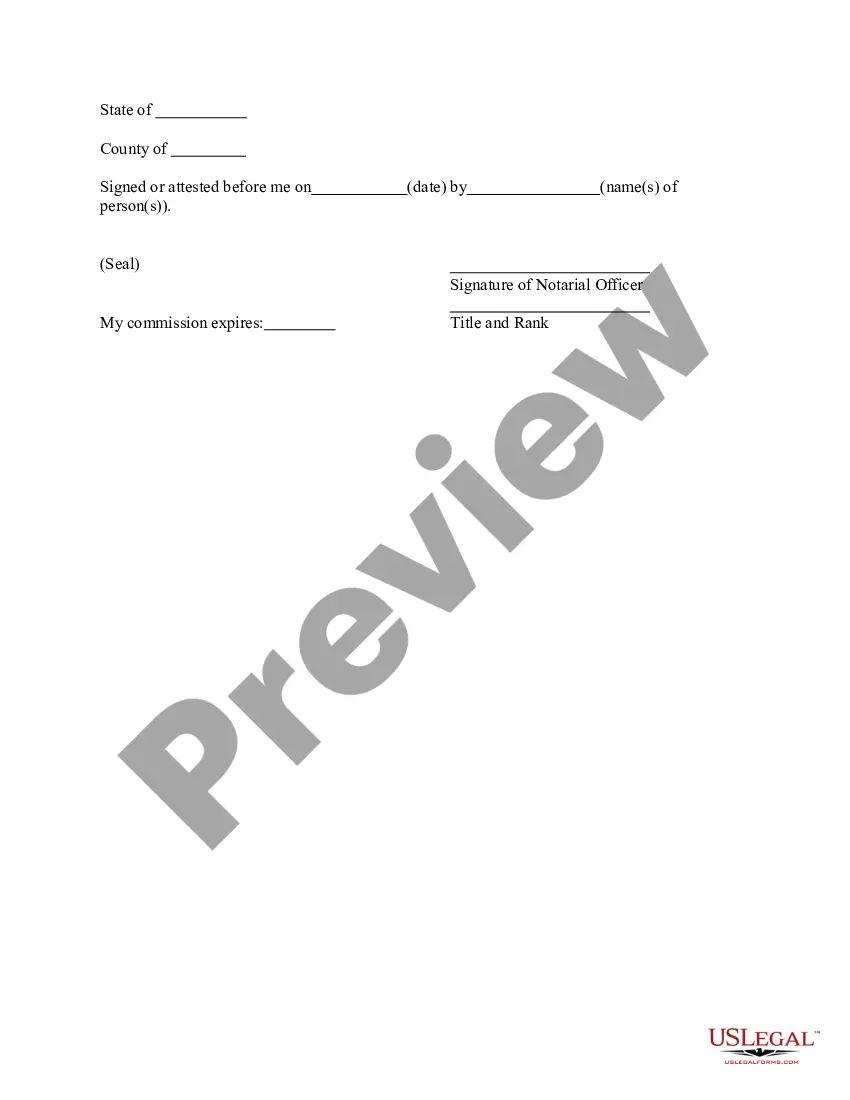
- Space for the date of acknowledgment.
- Signature of the notarial officer.
- Fields to indicate the title and rank of the notarial officer.
- Seal for verification.
When to use this form
The acknowledgment for an individual is typically used when a person is signing a document that requires verification of identity. It is commonly employed in situations involving real estate transactions, legal contracts, or other formal documents that necessitate authenticated signatures.
Intended users of this form
- Individuals signing legal documents who need their signature verified.
- Notaries public who are responsible for witnessing and certifying signatures.
- Parties involved in real estate transactions requiring acknowledgment of signatures.
How to complete this form
- Identify the name(s) of the individual(s) involved.
- Fill in the date of acknowledgment.
- Have the individual(s) sign the document in the presence of a notarial officer.
- The notarial officer should complete their information, including title and rank.
- Add the notarial seal to the document for validation.
Does this document require notarization?
Yes, this form must be notarized to be legally valid. Using US Legal Forms, you can take advantage of integrated online notarization services available 24/7, providing secure video calls with licensed notaries, making the process simple and efficient.
Get your form ready online
Our built-in tools help you complete, sign, share, and store your documents in one place.
Make edits, fill in missing information, and update formatting in US Legal Forms—just like you would in MS Word.
Download a copy, print it, send it by email, or mail it via USPS—whatever works best for your next step.
Sign and collect signatures with our SignNow integration. Send to multiple recipients, set reminders, and more. Go Premium to unlock E-Sign.
If this form requires notarization, complete it online through a secure video call—no need to meet a notary in person or wait for an appointment.
We protect your documents and personal data by following strict security and privacy standards.

Make edits, fill in missing information, and update formatting in US Legal Forms—just like you would in MS Word.

Download a copy, print it, send it by email, or mail it via USPS—whatever works best for your next step.

Sign and collect signatures with our SignNow integration. Send to multiple recipients, set reminders, and more. Go Premium to unlock E-Sign.

If this form requires notarization, complete it online through a secure video call—no need to meet a notary in person or wait for an appointment.

We protect your documents and personal data by following strict security and privacy standards.
Common mistakes
- Failing to sign in the presence of the notary.
- Omitting the date of acknowledgment.
- Not providing the notary's title or rank.
Why use this form online
- Convenient access to templates that can be easily downloaded.
- Editability allows for quick customization to fit specific needs.
- Reliability through forms drafted by licensed attorneys.
Looking for another form?

Form popularity
FAQ
The Individual Acknowledgment certificate is used when an individual is signing and acknowledging on his or her own behalf.
What Is An Acknowledgment? The purpose of an acknowledgment is for a signer, whose identity has been verified, to declare to a Notary or notarial officer that he or she has willingly signed a document.The signer may either sign the document before appearing before you, or in your presence.
An acknowledgment is a formal declaration before an authorized official such as a notary, by a person who has signed a document, that the document is his or her act. Acknowledgments are governed by the Uniform Acknowledgment Act. The person acknowledging the document must personally appear before the notary.
This is a form that shows that a notary public has established the identity of the signer(s) and witnessed the signature of a document. It only demonstrates that the document has been signed and does not make any claims about the information in the document.
The purpose of an acknowledgment is for a signer, whose identity has been verified, to declare to a Notary or notarial officer that he or she has willingly signed a document.The signer may either sign the document before appearing before you, or in your presence.
Unlike jurats, an acknowledgment does not need to be signed in the presence of a notary. However, the affiant does need to swear or affirm that they signed under their own free will.
What Is An Acknowledgment? The purpose of an acknowledgment is for a signer, whose identity has been verified, to declare to a Notary or notarial officer that he or she has willingly signed a document.The signer may either sign the document before appearing before you, or in your presence.
They key difference is that for a signature witnessing, the signer must always sign the document in the Notary's presence.An acknowledgment, on the other hand, does not require the Notary to witness the signature in most states (one exception is Maryland).
Stelk, known to me to be the person nained in and who executed the above Mutual Release and Settlement Agreement, and he acknowledged to me that he executed the same as his free act and deed.