California Authorization for Deduction from Pay for a Specific Debt
What is this form?
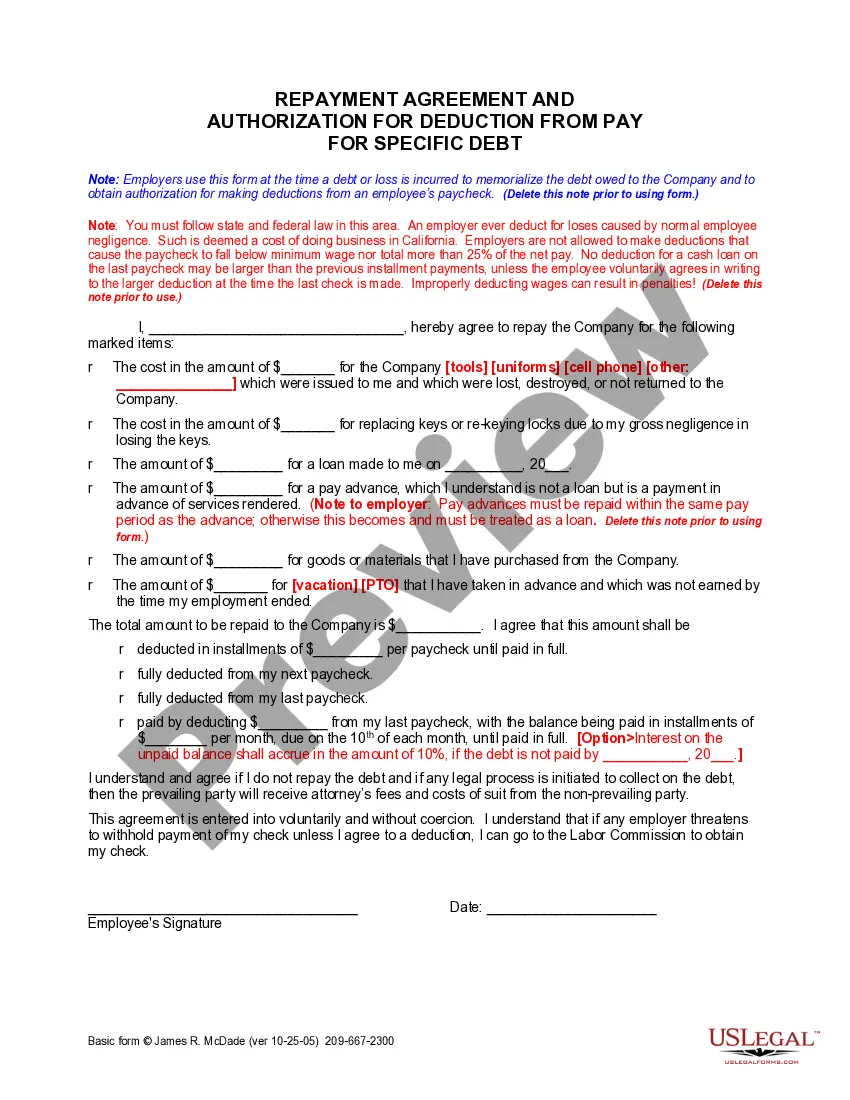
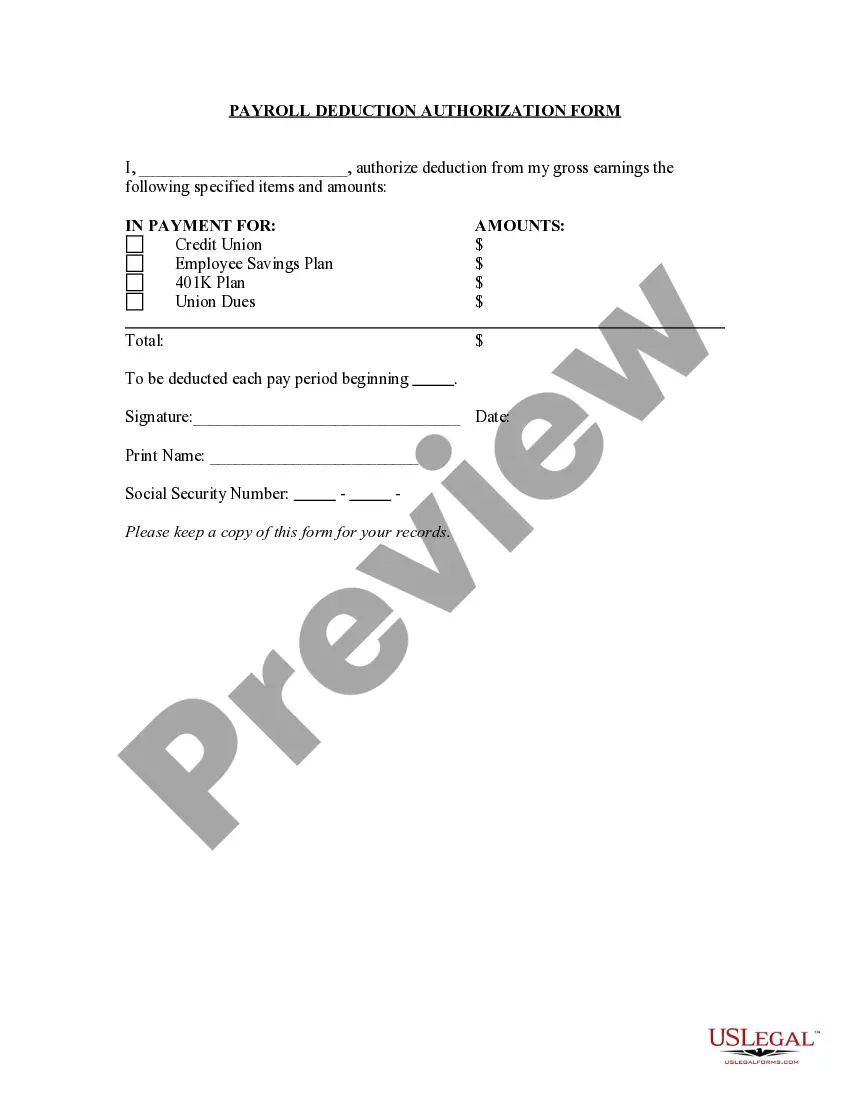
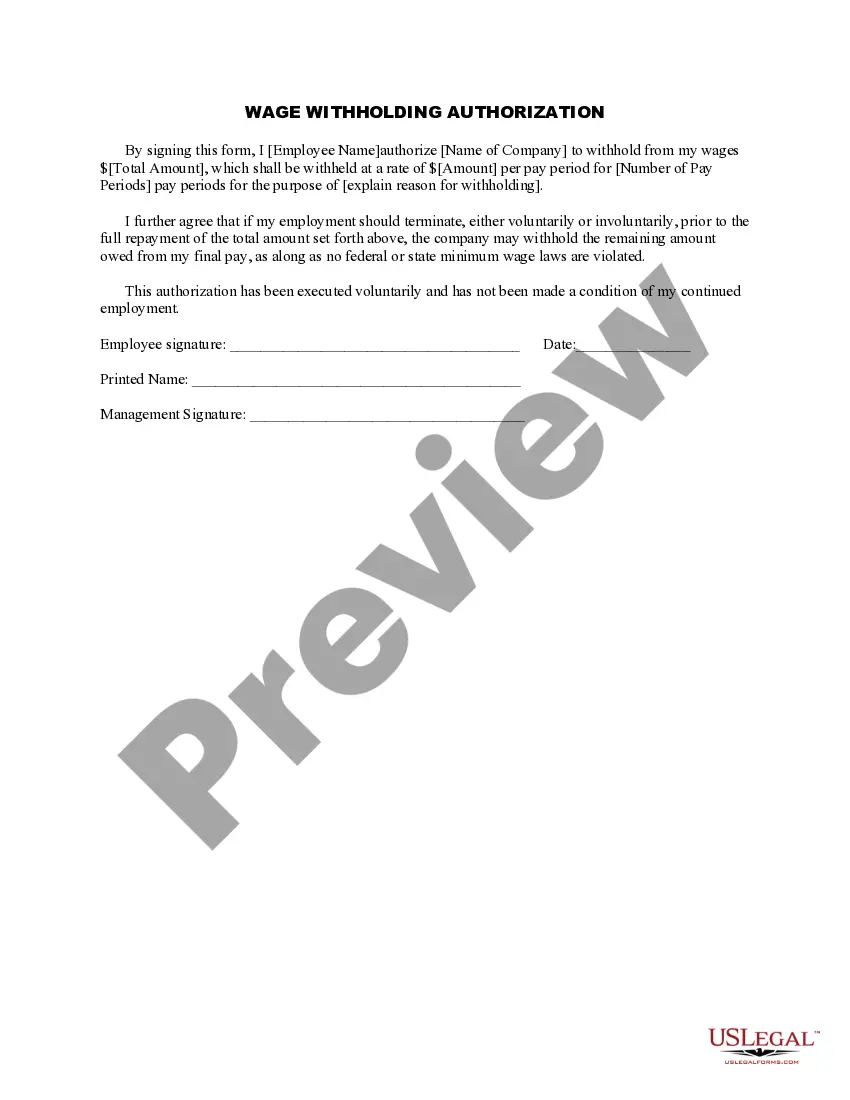
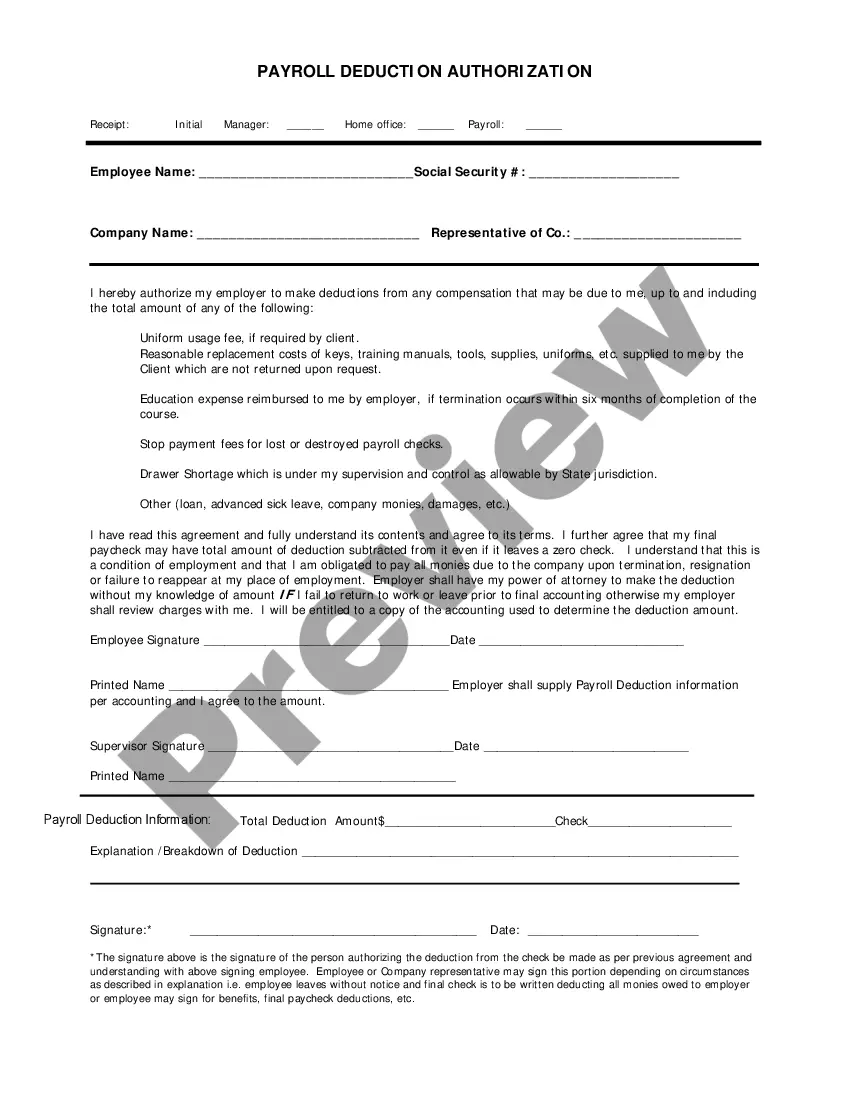
The Authorization for Deduction from Pay for a Specific Debt is a form used by employers to document a debt owed by an employee and secure permission to withhold amounts from the employee's paycheck. This form helps to clarify the terms of repayment and ensure compliance with applicable laws regarding wage deductions, distinguishing it from other payroll forms that may not specifically address debt repayments.
Key components of this form
- Employee details: Name and signature of the employee authorizing deductions.
- Debt description: Specific items or amounts the employee agrees to repay.
- Repayment terms: Options for how the deductions will be made from paychecks.
- Legal acknowledgment: A statement that the employee understands their rights regarding the deductions.
- Interest clause: Conditions under which interest may accrue on unpaid amounts.
Situations where this form applies
This form should be used when an employee has incurred a debt to the employer, such as for lost or damaged company property, cash loans, or pay advances. It is important to document these agreements at the time the debt is established to ensure clarity and compliance with legal regulations on wage deductions.
Intended users of this form
- Employers looking to formalize an agreement with an employee regarding repayment of a debt.
- HR personnel responsible for managing employee payroll and deductions.
- Employees who have agreed to repay the company for items lost, damaged, or for cash loans received.
Completing this form step by step
- Fill in the employee's name at the top of the form.
- Specify the debts being repaid, detailing each item and its associated cost.
- Indicate the total amount to be repaid to the company.
- Select the method for deduction (installments, full payment, etc.).
- Ensure the employee signs and dates the form to acknowledge understanding and agreement.
Does this form need to be notarized?
Notarization is not commonly needed for this form. However, certain documents or local rules may make it necessary. Our notarization service, powered by Notarize, allows you to finalize it securely online anytime, day or night.
Get your form ready online
Our built-in tools help you complete, sign, share, and store your documents in one place.
Make edits, fill in missing information, and update formatting in US Legal Forms—just like you would in MS Word.
Download a copy, print it, send it by email, or mail it via USPS—whatever works best for your next step.
Sign and collect signatures with our SignNow integration. Send to multiple recipients, set reminders, and more. Go Premium to unlock E-Sign.
If this form requires notarization, complete it online through a secure video call—no need to meet a notary in person or wait for an appointment.
We protect your documents and personal data by following strict security and privacy standards.

Make edits, fill in missing information, and update formatting in US Legal Forms—just like you would in MS Word.

Download a copy, print it, send it by email, or mail it via USPS—whatever works best for your next step.

Sign and collect signatures with our SignNow integration. Send to multiple recipients, set reminders, and more. Go Premium to unlock E-Sign.

If this form requires notarization, complete it online through a secure video call—no need to meet a notary in person or wait for an appointment.

We protect your documents and personal data by following strict security and privacy standards.
Avoid these common issues
- Failing to provide a clear description of the debt and its justification.
- Not obtaining the employee's signature, which is crucial for the validity of the agreement.
- Not adhering to state laws regarding maximum deductions from paychecks.
Why use this form online
- Easy access to legal forms anytime, anywhere, ensuring convenience for both employer and employee.
- Editable templates allow for personalized details to be filled in swiftly.
- Reliable formats drafted by licensed attorneys ensure legal compliance and minimize errors.
Legal use & context
- This form acts as a legally binding agreement once signed, creating an obligation for the employee to repay the stated debts.
- Improper deductions can lead to legal penalties for the employer, so adherence to the guidelines is critical.
- Both parties should retain copies of this agreement for their records, enhancing transparency.
Summary of main points
- Understanding how to use this form helps ensure compliance with labor laws.
- It clarifies the repayment process for debts owed by the employee.
- Utilizing this form properly can prevent disputes over payroll deductions.
Looking for another form?
Form popularity
FAQ
It is a document that records an employee’s written authorization for an employer to withhold a defined amount from wages to repay a specific debt. It is used when a debt has been incurred and the employer and employee formalize repayment terms, including how deductions will occur and the employee’s rights regarding these deductions.
A payroll deduction authorization is a document or clause that authorizes an employer to withhold a specified amount from an employee’s wages to satisfy a debt. In this form, the authorization is tied to a specific debt, describes the debt, and sets repayment terms, ensuring the deduction is agreed to in writing.
An authorized deduction is a wage deduction approved by the employee to repay a specific debt. For this form, it includes a debt description, repayment terms, and the employee’s legal acknowledgment of rights, plus any interest conditions if the debt remains unpaid.
To complete it, fill in the employee’s name and signature; describe the debt and the repayment terms; specify how much will be deducted and how often; include the legal acknowledgment that the employee understands their rights; and note any interest conditions if applicable.
In California, deductions from wages for a specific debt generally require the employee’s written consent and must be for a stated, repayable amount. This form provides the required documentation and terms, helping ensure deductions are made in line with the employee’s agreement and standard wage-deduction practices.
This form is specifically for a debt owed by the employee and includes a debt description, repayment terms, and an interest clause, whereas a general payroll deduction authorization may cover ongoing or unspecified deductions (such as benefits or taxes). It ensures a defined repayment plan for a named debt.