California Advance Authorization for Pay Deduction
What this document covers
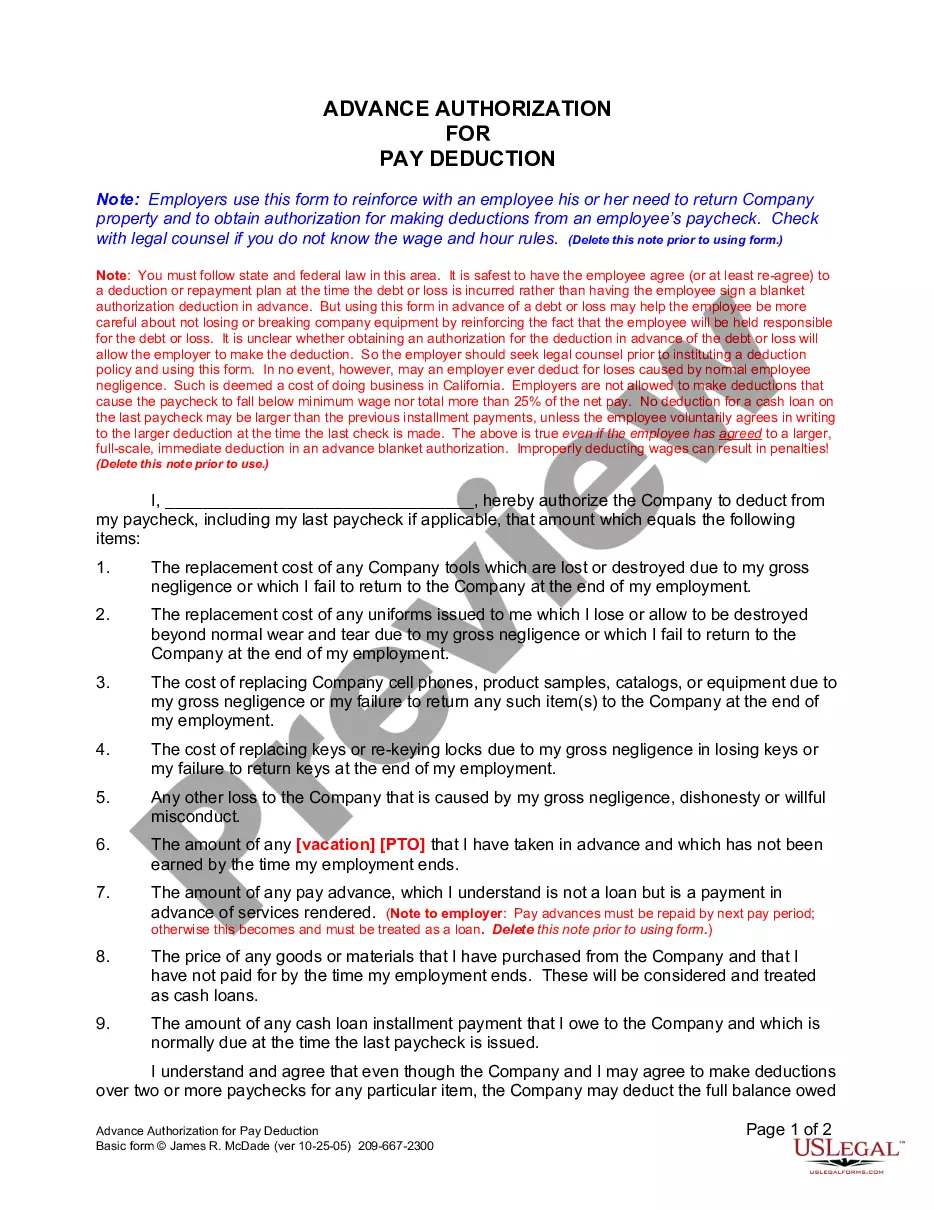
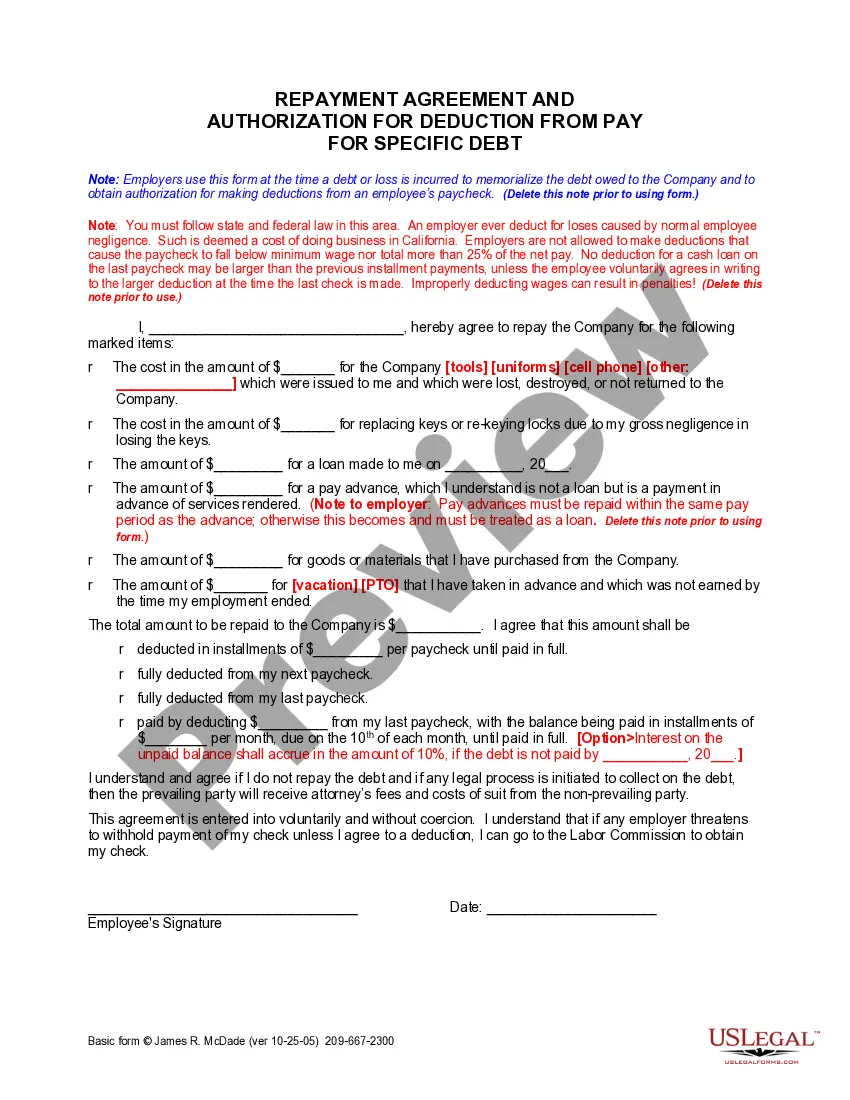
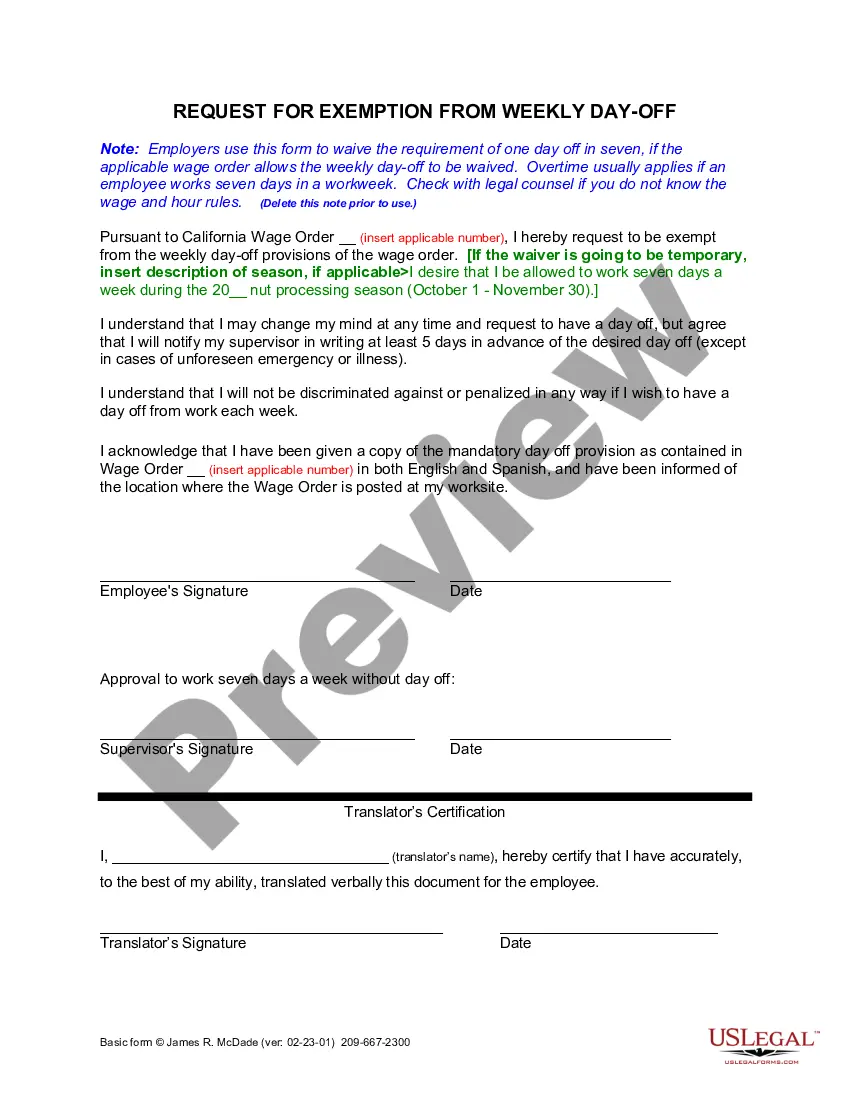
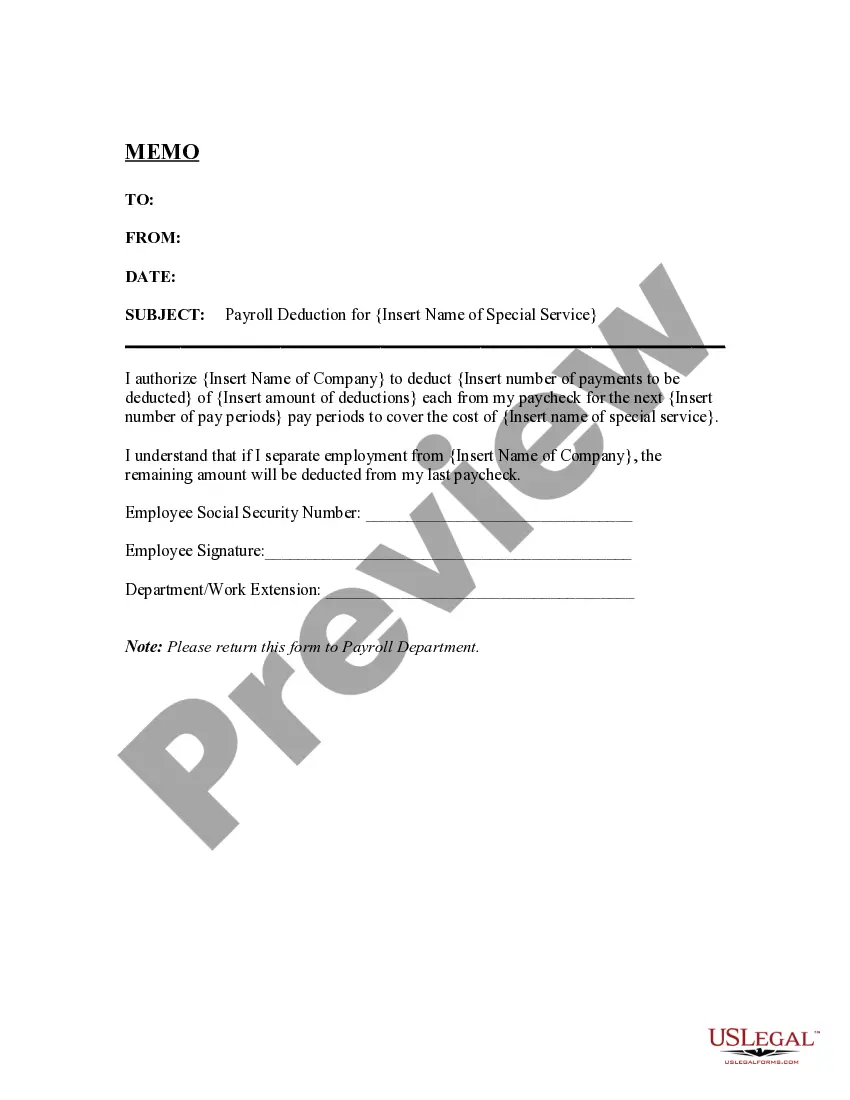
The Advance Authorization for Pay Deduction form is a legal document used by employers to obtain an employee's consent to make deductions from their paycheck for certain specific losses or costs incurred during their employment. This form clarifies the conditions under which deductions may occur, distinguishing it from other payroll forms by emphasizing accountability for lost or damaged company property.
Key parts of this document
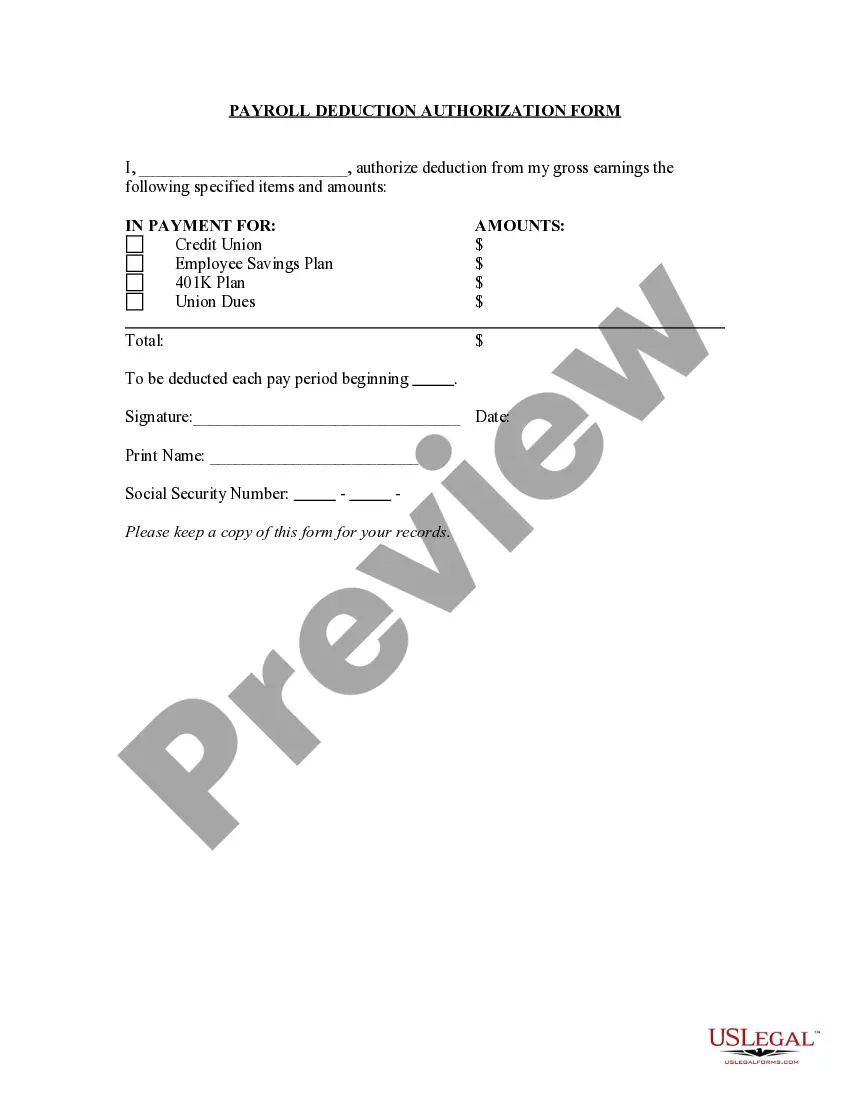
- Employee's authorization for deductions from their paycheck.
- Clarification on the types of losses covered (e.g., lost tools, uniforms, equipment).
- Terms related to company property and employee negligence.
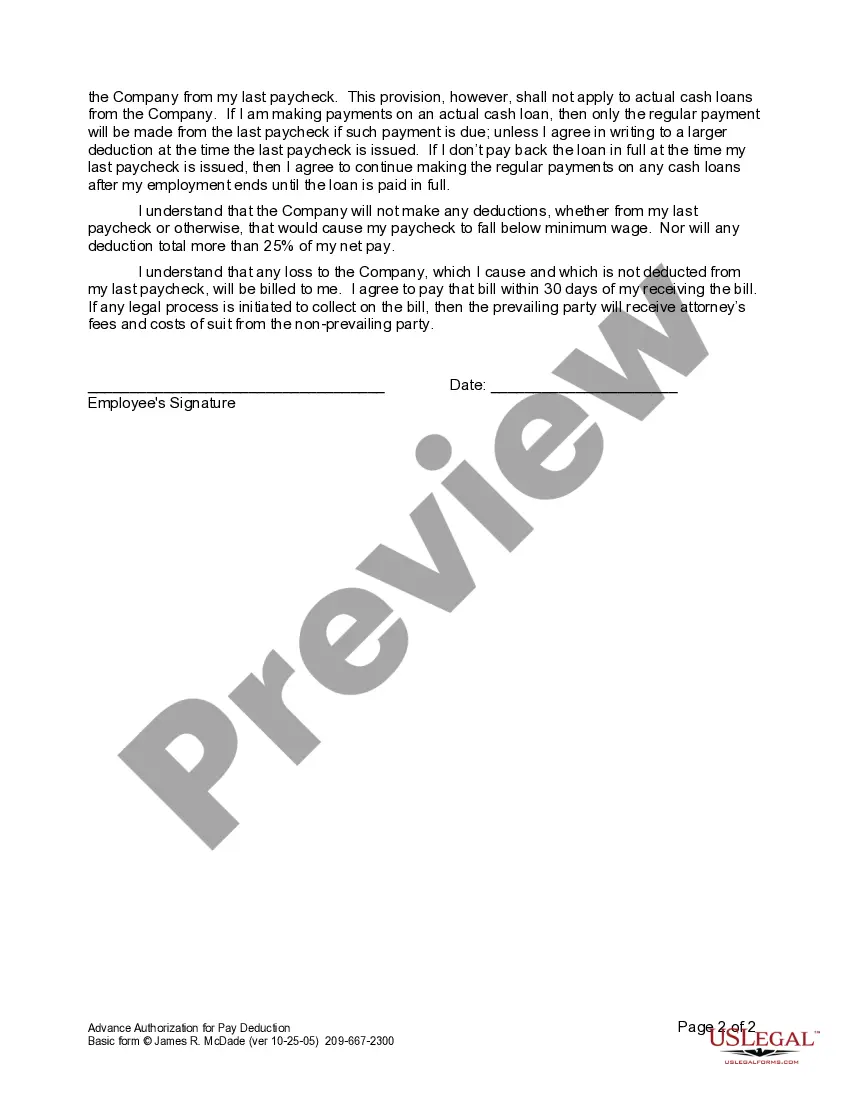
- Limits on deductions to ensure compliance with wage laws.
- Employee's agreement to settle any outstanding amounts after termination.
When this form is needed
This form should be used when an employer needs formal consent from an employee to deduct amounts from their paycheck for company property that is lost, destroyed, or not returned at the end of employment. It is particularly relevant when employees are issued tools, uniforms, or other company items, and the employer wishes to ensure that they are accountable for those items.
Who should use this form
- Employers who want to protect company assets from loss or damage caused by employees.
- Human resource departments handling employment contracts.
- Employees who are provided with company resources and need to understand their responsibilities regarding them.
Completing this form step by step
- Fill in the employee's full name and the company's name at the top of the form.
- Clearly specify each type of deduction that may be taken from the employee's paycheck.
- Ensure the employee signs and dates the form to confirm their consent.
- Consult with legal counsel prior to using the form to ensure compliance with relevant laws.
- Retain a copy of the signed form for company records.
Does this form need to be notarized?
Notarization is generally not required for this form. However, certain states or situations might demand it. You can complete notarization online through US Legal Forms, powered by Notarize, using a verified video call available anytime.
Get your form ready online
Our built-in tools help you complete, sign, share, and store your documents in one place.
Make edits, fill in missing information, and update formatting in US Legal Forms—just like you would in MS Word.
Download a copy, print it, send it by email, or mail it via USPS—whatever works best for your next step.
Sign and collect signatures with our SignNow integration. Send to multiple recipients, set reminders, and more. Go Premium to unlock E-Sign.
If this form requires notarization, complete it online through a secure video call—no need to meet a notary in person or wait for an appointment.
We protect your documents and personal data by following strict security and privacy standards.

Make edits, fill in missing information, and update formatting in US Legal Forms—just like you would in MS Word.

Download a copy, print it, send it by email, or mail it via USPS—whatever works best for your next step.

Sign and collect signatures with our SignNow integration. Send to multiple recipients, set reminders, and more. Go Premium to unlock E-Sign.

If this form requires notarization, complete it online through a secure video call—no need to meet a notary in person or wait for an appointment.

We protect your documents and personal data by following strict security and privacy standards.
Avoid these common issues
- Failing to specify the items that may incur deductions, leading to misunderstandings.
- Not securing signatures before deductions are made.
- Inadequately informing employees about the implications of signing the authorization.
Benefits of using this form online
- Quick and easy access to legal templates at any time.
- Editable online forms allow for customization to fit specific employment situations.
- Reliable legal language provided by licensed attorneys ensures compliance with regulations.
Legal use & context
- This form is a legal agreement between the employer and employee regarding payroll deductions.
- It helps clarify conditions under which deductions will occur to prevent disputes.
- Employers must ensure compliance with relevant state laws to avoid potential legal penalties.
Quick recap
- The Advance Authorization for Pay Deduction helps protect company assets while outlining employee responsibilities.
- Employers should use this form to clearly establish grounds for deductions related to negligence.
- Compliance with state and federal laws is crucial when implementing deduction policies.
Looking for another form?
Form popularity
FAQ
California Advance Authorization for Pay Deduction is a form used by employers to obtain an employee’s written consent to deduct specified amounts from their paycheck for losses or costs related to company property. It outlines what losses are covered, sets deduction limits, and includes an agreement to settle any outstanding amounts after termination; it’s used when accountability for property is needed.
A payroll deduction authorization is a signed agreement that lets an employer subtract specific amounts from an employee’s wages. In this form’s context, the authorization covers deductions for lost, damaged, or unreturned company property, and it sets defined limits to stay within wage‑law guidelines.
For payroll deductions tied to company property, the California Advance Authorization for Pay Deduction is the form to complete. It records the employee’s consent to deductions for items like tools, uniforms, or equipment and notes the employee’s agreement to settle any outstanding balance after employment ends.
Deductions from earnings generally require the employee’s authorization and must comply with wage laws. The California Advance Authorization for Pay Deduction provides this consent and explains the kinds of losses covered, the limits on deductions, and the post‑termination settlement obligation.
A payroll advance deduction refers to deducting an amount from wages in advance to cover a specified loss or cost. The California Advance Authorization for Pay Deduction implements this concept by obtaining the employee’s consent to deductions for lost, damaged, or not returned company property.
This form specifically governs deductions for losses or costs tied to company property, and it includes explicit deduction limits plus an obligation to settle any remaining balance after termination, whereas a generic payroll deduction form may not address property losses or post‑termination reconciliation.