Wisconsin Summary Settlement Package for Estates under $50,000 - Small Estates
Small Estates General Summary: Small Estate laws were enacted in order to enable heirs to obtain property of the deceased without probate, or with shortened probate proceedings, provided certain conditions are met. Small estates can be administered with less time and cost. If the deceased had conveyed most property to a trust but there remains some property, small estate laws may also be available. Small Estate procedures may generally be used regardless of whether there was a Will. In general, the two forms of small estate procedures are recognized:
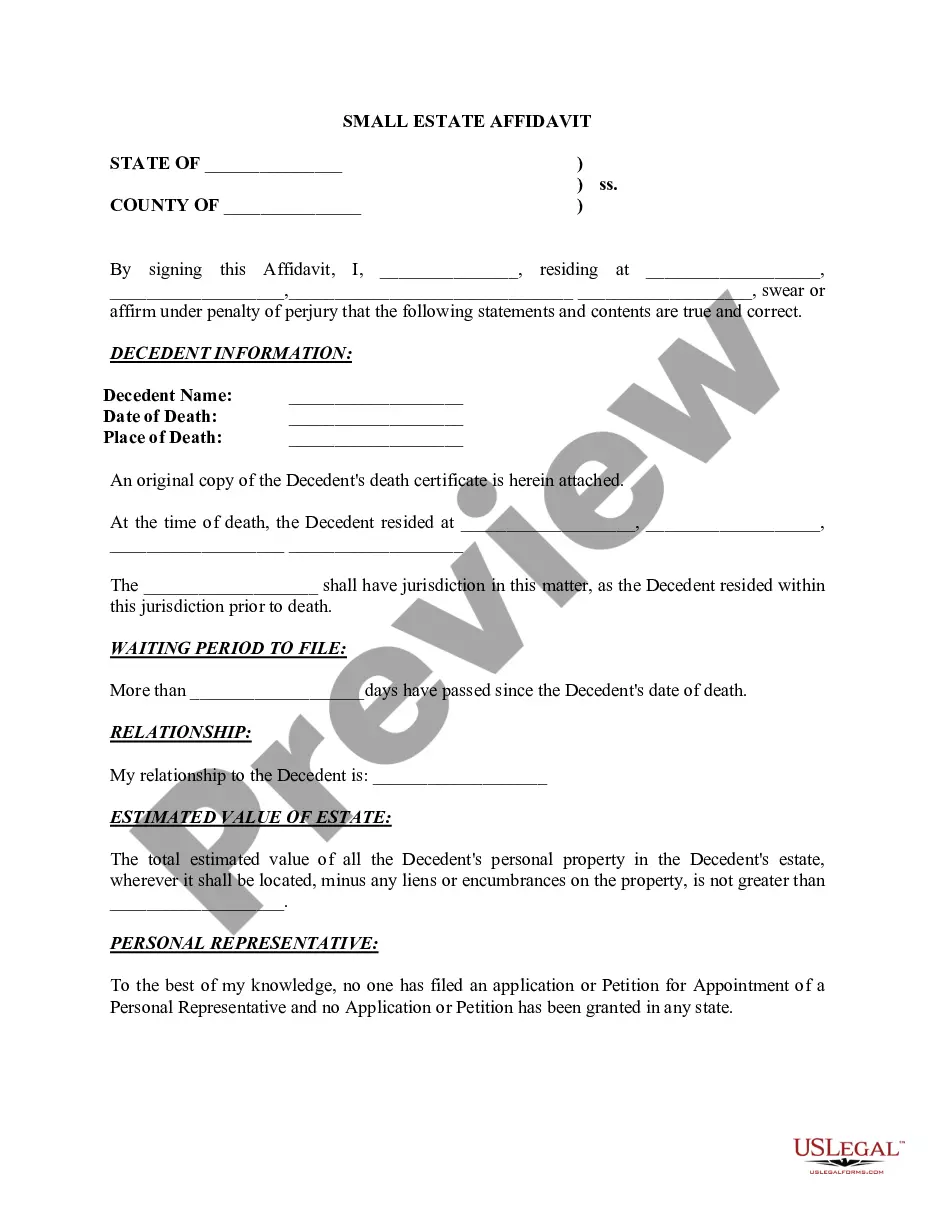
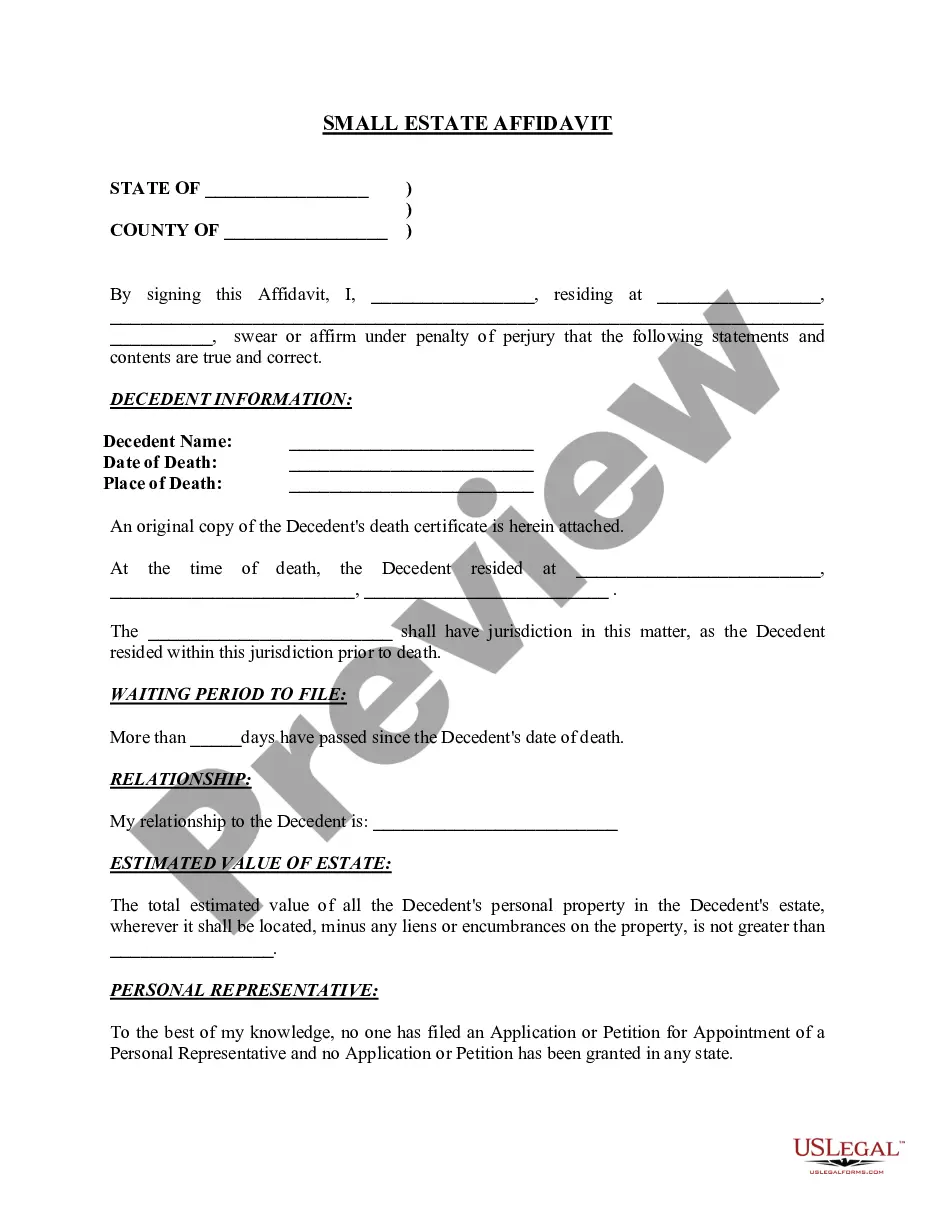
1. Small Estate Affidavit -Some States allow an affidavit to be executed by the spouse and/or heirs of the deceased and present the affidavit to the holder of property such as a bank to obtain property of the deceased. Other states require that the affidavit be filed with the Court. The main requirement before you may use an affidavit is that the value of the personal and/or real property of the estate not exceed a certain value.
2. Summary Administration -Some states allow a Summary administration. Some States recognize both the Small Estate affidavit and Summary Administration, basing the requirement of which one to use on the value of the estate. Example: If the estate value is 10,000 or less an affidavit is allowed but if the value is between 10,000 to 20,000 a summary administration is allowed.
Wisconsin Summary:
Caution:The Wisconsin statute on small estates is lengthy and complex. Extra care should be taken to read and understand the many statutory provisions below.
As a general proposition, pursuant to §867.03, when an estate is valued at less than $50,000, an interested party may issue an affidavit, described in §867.03(1g)(b), to any party who owes a debt to the decedent for purposes of collecting said debt.
Wisconsin Requirements:
Wisconsin requirements are set forth in the statutes below.
867.01 Summary settlement of small estates.
(1) AVAILABILITY. The court shall summarily settle the estate of a deceased person without the appointment of a personal representative:
(a) Whenever the estate, less the amount of the debts for which any property in the estate is security, does not exceed in value the costs, expenses, allowances and claims under s. 859.25 (1) (a) to (g).
(b) Whenever the estate, less the amount of the debts for which any property in the estate is security, does not exceed $50,000 in value and the decedent is survived by a spouse or domestic partner, or one or more minor children or both.
(2) WHEN COMMENCED UNDER OTHER PROCEDURE. An estate, administration of which has been commenced under ch. 856, may be terminated under this section at any time that it is found to meet the requirements of this section.
(3) PROCEDURE.
(ac) Who may petition. A person who has standing to petition for administration of the estate under s. 856.07 has standing to petition for summary settlement.
(am) Petition contents. The petition shall contain the following information:
1. The facts required by sub. (1).
2. A detailed statement of all property subject to administration, including any encumbrance, lien, or other charge upon each item.
3. The names and post-office addresses of all persons interested, so far as known to the petitioner or ascertainable by the petitioner with reasonable diligence. The petition shall indicate those who are minors or otherwise under disability and the names and post-office addresses of their guardians.
4. Whether the decedent or the decedent's spouse received services provided as a benefit under a long-term care program, as defined in s. 49.496 (1) (bk), medical assistance under subch. IV of ch. 49, long-term community support services funded under s. 46.27 (7), or aid under s. 49.68, 49.683, 49.685, or 49.785.
(b) Special administrator may be appointed. If the court deems it necessary, it may at any time during the proceeding appoint a special administrator to aid in the settlement.
(c) Bond. Before making any order, the court may require a bond of the petitioner in an amount the court deems sufficient, conditioned to indemnify any person who may be aggrieved thereby.
(d) Notice. The court may hear the matter without notice or order notice to be given under s. 879.03. If the decedent or the decedent's spouse received services provided as a benefit under a long-term care program, as defined in s. 49.496 (1) (bk), medical assistance under subch. IV of ch. 49, long-term community support services funded under s. 46.27 (7), or aid under s. 49.68, 49.683, 49.685, or 49.785, the petitioner shall give notice by certified mail to the department of health services as soon as practicable after filing the petition with the court.
(f) Order. If the court is satisfied that the estate may be settled under this section, after 30 days have elapsed since notice to the department of health services under par. (d), if that notice is required, the court shall assign the property to the persons entitled to it. If the estate may be settled under sub. (1) (b), any property not otherwise assigned shall be assigned to the surviving spouse or surviving domestic partner, or minor children or both as an allowance under s. 861.31. The court shall order any person indebted to or holding money or other property of the decedent to pay the indebtedness or deliver the property to the persons found to be entitled to receive it. The court shall order the transfer of interests in real estate, stocks or bonds registered in the name of the decedent, the title of a licensed motor vehicle, or any other form of property. If the decedent immediately prior to death had an estate for life or an interest as a joint tenant in any property in regard to which a certificate of termination in accordance with s. 867.04 has not been issued, the order shall set forth the termination of that life estate or the right of survivorship of any joint tenant. Every tract of real property in which an interest is assigned or terminated or which is security for a debt in which an interest is assigned or terminated shall be specifically described.
(g) Information to unsatisfied creditors. The court may order the petitioner to inform known unsatisfied creditors as to the final disposition of the estate.
(h) Recording required. Whenever the order relates to an interest in real property or to a debt which is secured by an interest in real property, a certified copy or duplicate original of such order shall be recorded by the petitioner in the office of the register of deeds in each county in this state in which such real property is located.
(4) RELEASE OF LIABILITY OF TRANSFEROR. Upon the payment, delivery, transfer or issuance in accordance with the order of the court, the persons making such delivery, transfer or issuance are released to the same extent as if the same had been made to a personal representative of the estate of the decedent.
(5) PROCEEDING WITH OR WITHOUT ATTORNEY. Any party to a proceeding under this section may commence or appear at such proceeding in his or her own behalf, by an attorney or, if in the military service, by an attorney-in-fact, but not otherwise.<br />
History: 1971 c. 40 s. 93; 1973 c. 42, 90; 1975 c. 331, 421; 1977 c. 449; 1985 a. 278; 1987 a. 27; 1989 a. 234; 1991 a. 220; 1993 a. 16, 437, 486; 1995 a. 27 ss. 7193b to 7194c, 9126 (19); 1999 a. 9, 94; 2005 a. 216; 2007 a. 20 s. 9121 (6) (a); 2009 a. 28; 2013 a. 20; 2015 a. 55.<br />
<br />
867.02 Summary assignment of small estates subject to claims of creditors.<br />
<br />
(1) AVAILABILITY. The court shall summarily assign the estate of a deceased person without the appointment of a personal representative if the estate, less the amount of the debts for which any property in the estate is security, does not exceed $50,000 in value and the estate cannot be summarily settled under s. 867.01. An estate, administration of which has been commenced under ch. 856, or a summary settlement commenced under s. 867.01 may be terminated under this section at any time that it is found to meet the requirements of this section.<br />
<br />
(2) PROCEDURE.<br />
<br />
(ac) Who may petition. Any person who has standing to petition for administration of the estate under s. 856.07 has standing to petition for summary assignment.<br />
<br />
(am) Petition contents. The petition shall contain the following information, except that the petitioner may omit from the petition the information in subds. 3. and 4. and include it in an affidavit filed with the court prior to the signing of the order assigning the estate:<br />
<br />
1. A statement that the estate does not exceed $50,000 in value and cannot be summarily settled under s. 867.01.<br />
<br />
2. A statement as to whether, after the exercise of reasonable diligence, the petitioner has been able to locate the will of the decedent.<br />
<br />
3. A detailed statement of all property subject to administration, including any encumbrance, lien, or other charge upon each item.<br />
<br />
4. The names and post-office addresses of all creditors of the decedent or the decedent’s estate of whom the petitioner has knowledge and the amount claimed by each.<br />
<br />
5. The names and post-office addresses of all persons interested, so far as known to petitioner or ascertainable by the petitioner with reasonable diligence. The petition shall indicate those who are minors or otherwise under disability and the names and post-office addresses of their guardians.<br />
<br />
6. Whether the decedent or the decedent’s spouse received services provided as a benefit under a long-term care program, as defined in s. 49.496 (1) (bk), medical assistance under subch. IV of ch. 49, long-term community support services funded under s. 46.27 (7), or aid under s. 49.68, 49.683, 49.685, or 49.785.<br />
<br />
(b) Will. The will of the decedent shall be filed with the petition.<br />
<br />
(c) Bond. Before making any order, the court may require a bond of the petitioner in an amount the court deems sufficient, conditioned to indemnify any person who may be aggrieved by the order. Before assigning property, the court may require assignees to give bond for the satisfaction of their liability to creditors or persons interested in the estate.<br />
<br />
(d) Notice. The court may hear the matter, including the proof of the will, without notice to interested persons or order notice to be given under s. 879.03. As soon as practicable after filing the petition with the court, the petitioner shall give notice by certified mail to the department of health services. After the filing of the petition with the court, the petitioner shall publish notice to creditors as a class 1 notice, under ch. 985, in a newspaper published in the county.<br />
(f) Special administrator may be appointed. If the court deems it necessary, it may at any time during the proceeding appoint a special administrator to aid in the proceeding.<br />
<br />
(g) Order. If the court is satisfied that the estate may be settled by this section, after filing of the petition and proof of the will and after 30 days have elapsed since publication under par. (d), it shall decide all claims and assign the property to the creditors and persons interested who are entitled to it. The assignment shall be subject to the unknown rights of creditors or persons interested in the estate as limited in sub. (4). The court shall order any person indebted to or holding money or other property of the decedent to pay the indebtedness or deliver the property to the persons found to be entitled to receive it. It shall order the transfer of interests in real estate, stocks or bonds registered in the name of the decedent, the title of a licensed motor vehicle or any other form of property. If the decedent immediately prior to death had an estate for life or an interest as a joint tenant in any property in regard to which a certificate of termination under s. 867.04 has not been issued, the order shall set forth the termination of the life estate or the right of survivorship of any joint tenant. Every tract of real property in which an interest is assigned or terminated or which is security for a debt in which an interest is assigned or terminated shall be specifically described.<br />
<br />
(h) Recording required. Whenever the order relates to an interest in real property or to a debt which is secured by an interest in real property, a certified copy or duplicate original of the order shall be recorded by the petitioner in the office of the register of deeds in each county in this state in which the real property is located.<br />
<br />
(i) Mailing or delivery required. The petitioner shall mail or deliver a copy of the order to all persons interested in the estate whose post-office address is known to the petitioner or can with reasonable diligence be ascertained.<br />
<br />
(3) RELEASE OF LIABILITY OF TRANSFEROR. Upon the payment, delivery, transfer or issuance in accordance with the order of the court, the persons making the payment, delivery, transfer or issuance are released to the same extent as if the same had been made to a personal representative of the estate of the decedent.<br />
<br />
(4) RIGHTS OF CREDITORS AND PERSONS INTERESTED; STATUTES OF LIMITATION. Creditors and persons interested in the estate who were not assigned the property to which they were entitled from the estate may recover against those assignees, or their respective bondsmen whose assigned shares have been increased by reason of the fact that the creditor or person interested was not assigned the share of the estate to which the creditor or person interested was entitled. No assignee or assignee’s bondsman shall be liable for an amount greater than the value of the property which was assigned to the assignee from the estate, the value to be determined as of the time of the assignment. No action for the recovery of any property assigned in the proceeding or for the value of such property shall be brought by any creditor more than 3 months after the publication. No action for the recovery of any property assigned in the proceeding or for the value of such property may be brought by any person interested more than 3 months after a copy of the order assigning the estate was mailed or delivered to the person, or if the person’s name or post-office address could not have been ascertained by the exercise of reasonable diligence on the part of the petitioner, then more than 3 months after a copy of the order assigning the estate was mailed or delivered to any person interested.<br />
<br />
(5) PROCEEDING WITH OR WITHOUT ATTORNEY. Any party to a proceeding under this section may commence or appear at such proceeding in his or her own behalf, by an attorney or, if in the military service, by an attorney-in-fact, but not otherwise.<br />
History: 1971 c. 40 s. 93; 1973 c. 90, 243; 1975 c. 331, 421; 1977 c. 449; 1985 a. 278; 1987 a. 27 ss. 2160w, 2170d, 3200 (47); 1989 a. 234; 1991 a. 220; 1993 a. 16, 437, 486; 1995 a. 27 ss. 7195b to 7196, 9126 (19); 1999 a. 9, 94; 2005 a. 216; 2007 a. 20 s. 9121 (6) (a); 2013 a. 20; 2015 a. 55.<br />
<br />
867.03 Transfer by Affidavit<br />
<br />
(1c) DEFINITION. In this section, “guardian” has the meaning given in s. 54.01(10) or s. 880.01(3), 2003 stats.<br />
<br />
(1g) GENERALLY. (intro.) Except as provided in sub. (1h) and subject to sub. (1j), when a decedent leaves property subject to administration in this state which does not exceed $50,000 in value, any heir of the decedent, trustee of a revocable trust created by the decedent, a person named in the will to act as personal representative, or person who was guardian of the decedent at the time of the decedent’s death may collect any money due the decedent, receive the property of the decedent, and have any evidence of interest, obligation to, or right of the decedent transferred to the affiant if the heir, trustee, person named in the will to act a personal representative,or guardian provides to the person owing the money, having custody of the property, or acting as registrar or transfer agent of the evidences of interest, obligation to, or right, or, if the property is an interest in or lien on real property, provides to the register of deeds preliminary to the recording required under sub. (2m), proof of prior mailed notice under sub. (1m) if applicable and an affidavit in duplicate showing all of the following:<br />
<br />
(a) A description of and the value of the property to be transferred.<br />
<br />
(b) The total value of the decedent’s property subject to administration in this state at the date of decedent’s death.<br />
<br />
(c) Whether the decedent or the decedent’s spouse ever received services provided as a benefit under a long-term care program, as defined in s. 49.496(1) (bk), medical assistance under subch. IV of ch. 49, long-term community support services funded under s. 46.27(7), or aid under s. 49.68, 49.683 , 49.685, or 49.875.<br />
<br />
(1h) EXCEPTION FOR REAL PROPERTY. A person named in the will as personal representative may not receive any real property of the decedent by providing an affidavit under sub. (1g) or have any evidence of interest, obligation to, or right of the decedent in any real property of the decedent transferred to the person named in the will as personal representative by providing an affidavit under sub. (1g).<br />
<br />
(1j) TRANSFERS TO A PERSON NAMED TO ACT AS PERSONAL REPRESENTATIVE. A person who receives an affidavit under sub. (1g) from a person named in the will to act as personal representative may not transfer any money due the decedent, the property of the decedent, or any evidence of interest, obligation to, or right of the decedent to the affiant until 30 days after the day on which the affidavit is received. If, during the 30day period, the person who received the affidavit receives an affidavit under sub. (1g) for the same decedent from another person, the person who received the affidavits may not transfer any money due the decedent, the property of the decedent, or any evidence of interest, obligation to, or right of the decedent under this section unless ordered to do so by a court. Subsection (2) does not apply to a transfer if the transferor did not comply with this subsection.<br />
<br />
(1m)<br />
<br />
(a) Whenever an heir, trustee, person named in the will to act as personal representative, or person who was guardian of the decedent at the time of the decedent’s death intends to transfer a decedent’s property by affidavit under sub. (1g) and the decedent or the decedent’s spouse ever received services provided as a benefit under a long-term care program, as defined in s. 49.496(1) (bk), medical assistance under subch. IV of ch. 49, long-term community support services funded under s. 46.27(7), or aid under s. 49.68, 49.683, 49.685, or 49.785, the heir, trustee, person named in the will to act as personal representative, or person who was guardian of the decedent at the time of the decedent’s death shall give notice to the department of health services of his or her intent. The notice shall include the information in the affidavit under sub. (1g) and the heir, trustee, person named in the will to act as personal representative, or person who was guardian of the decedent at the time of the decedent’s death shall give the notice by certified mail, return receipt requested.<br />
<br />
(b) An heir, trustee, person named in the will to act as personal representative, or person who was guardian of the decedent at the time of the decedent’s death who files an affidavit under sub. (1g) that states that the decedent or the decedent’s spouse received services provided as a benefit under a long-term care program, as defined in s. 49.496(1) (bk), medical assistance under subch. IV of ch. 49, long-term community support services funded under s. 46.27(7), or aid under s. 49.68, 49.683, 49.685, or 49.785 shall attach to the affidavit the proof of mail delivery of the notice required under par. (a) showing the delivery date.<br />
<br />
(2) RELEASE OF LIABILITY OF TRANSFEROR. Except as provided in sub. (1j) and subject to sub. (1h), upon the transfer to the heir, trustee, person named in the will to act as personal representative, or person who was guardian of the decedent at the time of the decedent’s death furnishing the affidavit with an attached proof of mail delivery if required under sub. (1m) (b), the transferor is released to the same extent as if the transfer had been made to the personal representative of the estate of the decedent.<br />
<br />
(2g)<br />
<br />
(a) By accepting the decedent’s property under this section the heir, trustee, person named in the will to act as personal representative, or person who was guardian of the decedent at the time of the decedent’s death assumes a duty to apply the property transferred for the payment of obligations according to priorities established under s. 859.25 and to distribute any balance to those persons designated in the appropriate governing instrument, as defined in s. 854.01, of the decedent or if there is no governing instrument, according to the rules of intestate succession under ch. 852, subject to par. (b). An heir, person named in the will to act as personal representative, or person who was guardian of the decedent at the time of the decedent’s death may publish a notice to creditors in the same manner and with the same effect as a trustee under s.701.0508. This paragraph does not prohibit any appropriate person from requesting administration of the decedent’s estate under s. 856.07 or ch. 865.<br />
<br />
(b) Property transferred under this section to or by an heir, trustee, person named in the will to act as personal representative, or person who was guardian of the decedent at the time of the decedent’s death is subject to the right of the department of health services to recover under s. 46.27(7g), 49.496, 49.682, or 49.849 an amount equal to the medical assistance that is recoverable under s. 49.496(3) (a), an amount equal to aid under s. 49.68 , 49.683, 49.685, or 49.785 that is recoverable under s. 49.682(2) (a) or (am), or an amount equal to long-term community support services under s. 46.27 that is recoverable under s. 46.27(7g) (c) 1.and that was paid on behalf of the decedent or the decedent’s spouse. Upon request, the heir, trustee, person named in the will to act as personal representative, or person who was guardian of the decedent at the time of the decedent’s death shall provide to the department of health services information about any of the decedent’s property that the heir, trustee, person named in the will to act a personal representative, or person who was guardian of the decedent at the time of the decedent’s death has distributed and information about the persons to whom the property was distributed.<br />
<br />
(2m) RECORDING OF AFFIDAVIT.<br />
<br />
(a) If an affidavit under sub. (1g) describes an interest in or lien on real property a certified copy or duplicate original of the affidavit shall be recorded in the office of the register of deeds in each county in this state in which the real property is located.<br />
<br />
(b) For purposes of a transfer under this section of an interest in or lien on real property, the recording of the affidavit copy or duplicate original constitutes the transfer to the affiant under sub. (1g) of the evidence of the interest in or lien on real property.<br />
<br />
(3) APPLICABILITY. This section is additional to s. 109.03(3) for payment of decedent’s wages by an employer directly to the decedent’s dependents.<br />
<br />
Cite as Wis. Stat. § 867.03<br />
<br />
History. Amended by Acts 2017 ch, 90, s 2, eff. 12/2/2017.<br />
<br />
Amended by Acts 2017 ch, 90, s 1m, eff. 12/2/2017.<br />
<br />
Amended by Acts 2017 ch, 90, s 1g, eff. 12/2/2017.<br />
<br />
Amended by Acts 2017 ch, 90, s 1, eff. 12/2/2017.<br />
<br />
Amended by Acts 2015 ch, 55, s 4630, eff. 7/14/2015.<br />
<br />
Amended by Acts 2015 ch, 55, s 4629, eff. 7/14/2015.<br />
<br />
Amended by Acts 2015 ch, 55, s 4628, eff. 7/14/2015.<br />
<br />
Amended by Acts 2015 ch, 55, s 4627, eff. 7/14/2015.<br />
<br />
Amended by Acts 2013SP1 ch, 92, s 340, eff. 12/15/2013.<br />
<br />
Amended by Acts 2013 ch, 20, s 2299, eff. 10/1/2013.<br />
<br />
1973 c. 43; 1975 c. 380 s. 5; 1979 c. 29; 1989 a. 234; 1993 a. 16, 205, 437; 1995 a. 27 ss. 7197b to 7199c, 9126 (19); 1997 a. 27; 1999 a. 9, 94; 2005 a. 216, 387; 2007 a. 20 s. 9121 (6) (a).<br />
<br />
867.04 Termination of joint tenancy and life estate.<br />
<br />
If a domiciliary of this state dies who immediately prior to death had an estate for life or an interest as a joint tenant in any property, or if a person not domiciled in this state dies having such an interest in property in this state, upon petition of any person interested in the property to the court of the county of domicile of the decedent, or if the decedent was not domiciled in this state, of any county where the property is situated, the court shall issue a certificate, under the seal of the court. The certificate shall set forth the fact of the death of the life or joint tenant, the termination of the life estate or joint tenancy interest, the right of survivorship of any joint tenant and any other facts essential to a determination of the rights of persons interested. The certificate is prima facie evidence of the facts recited, and if the certificate relates to an interest in real property or to a debt that is secured by an interest in real property, a certified copy or duplicate original of the certificate shall be recorded by the petitioner in the office of the register of deeds in each county in this state in which the real property is located.<br />
History: 1977 c. 449; 1999 a. 85.<br />
<br />
867.05 Determination of descent of property.<br />
<br />
(1) PETITION. Six years or more after any person dies intestate, leaving an estate which a court in this state has jurisdiction to administer, any person interested in the estate or in any property in the estate may petition the court which has jurisdiction to administer the estate, to determine the descent of the property in the estate. The petition shall be verified and shall show, as particularly as known or can with due diligence be ascertained, the time and place of death and domicile of the decedent, that the estate has not been administered and the other facts which authorize the proceeding, the names, post-office addresses and relationship to the decedent of all heirs and their grantees entitled to any interest in the property, stating who are minors or under legal disability, and the names and addresses of their guardians, and a description of all property for which a determination of descent is sought.<br />
<br />
(2) CERTIFICATE AFTER HEARING WITHOUT NOTICE. The court may hear the petition without notice, and after hearing the evidence, if the court is satisfied who the heirs of the decedent are and what their respective rights and interests in the property are, the court shall certify the same and in its certificate shall name the persons entitled to interests therein and the property to which each is entitled. The certificate is prima facie evidence of the facts recited.<br />
<br />
(3) JUDGMENT AFTER HEARING ON NOTICE. The court may hear the petition after notice of hearing given under s. 879.03, and after hearing the evidence, if the court is satisfied who the heirs of the decedent are and what their respective rights and interests in the property are, the court shall determine the same and in its judgment shall name the persons entitled to interests therein and the property to which each is entitled.<br />
<br />
(4) RECORDING REQUIRED. Whenever the certificate or judgment relates to an interest in real property or to a debt which is secured by an interest in real property, a certified copy or duplicate original of the certificate or judgment shall be recorded by the petitioner in the office of the register of deeds in each county in this state in which such real property is located.<br />
<br />
(5) SPECIAL ADMINISTRATION. When no administration proceeding has been commenced or no complete tax return has been filed, any person, including the department of revenue, interested in the property, the transfer of which is subject to tax under ch. 72, may petition for appointment of a special administrator with powers to determine the tax, if:<br />
<br />
(a) No petition for administration of property of a decedent is made within 60 days after the decedent’s death and the property’s transfer appears to be taxable under ch. 72;<br />
<br />
(b) Administration has been completed without determining the tax;<br />
<br />
(c) No tax is due and that fact has not been formally determined;<br />
<br />
(d) A certificate of survivorship, heirship or assignment has been issued under s. 867.04, 867.05 or 868.05;<br />
<br />
(e) Assets upon the transfer of which no tax has been paid are discovered; or<br />
<br />
(f) Property was transferred in contemplation of the death of the transferor and no application for the adjustment or payment of the tax has been made within 60 days of the transferor’s death.<br />
<br />
(6) PROCEDURE.<br />
<br />
(a) Prior to acting under sub. (5), the special administrator shall, by certified mail, notify the distributee of the basis of his or her authority under sub. (5).<br />
<br />
(c) Costs and expenses properly incurred by a special administrator shall be paid out of the subject property or by the distributee thereof.<br />
History: 1971 c. 310; 1973 c. 90; 1987 a. 27 s. 1531m.<br />
<br />
867.07 Grounds for appointment of special administrator.<br />
<br />
Whenever it appears by petition to the court that a person has died and the court would have jurisdiction for the administration of the person’s estate, the court may appoint a special administrator if it appears that:<br />
<br />
(1) There is no estate to be administered and an act should be performed on the part of the decedent, the performance of which affects or is of importance to the petitioner or any other person.<br />
<br />
(2) The final judgment of distribution in the estate has been entered and an act remains unperformed in the estate, or that unadministered assets have been found or may be found belonging to the estate.<br />
<br />
(3) The estate can be settled under s. 867.01 or 867.02.<br />
<br />
(4) It is necessary to conserve or administer the estate of a decedent before letters can be issued to a personal representative.<br />
<br />
(5) Circumstances provided for in s. 867.05 (5) and (6) exist.<br />
<br />
(6) A cause of action exists for or against the decedent or the decedent’s estate and that it is necessary that some act be performed before letters can be issued to a personal representative.<br />
<br />
(7) Other circumstances exist which in the discretion of the court require the appointment of a special administrator.<br />
History: 1971 c. 307 s. 118; 1977 c. 449; 1987 a. 27 s. 3202 (47) (a); 1993 a. 486.<br />
<br />
867.09 Who may petition for appointment of special administrator.<br />
<br />
Petition for the appointment of a special administrator may be made by any person who has standing to petition for administration of the estate under s. 856.07, and waiting periods stated in that section do not apply.<br />
<br />
867.11 Notice of hearing on petition for appointment of special administrator.<br />
<br />
The court shall determine whether notice of the hearing for the appointment of a special administrator need be given. If the court deems notice unnecessary or inexpedient or if the appointment should be made without delay, the court shall proceed to hear the matter without notice. If notice of hearing is required, it shall be given under s. 879.03.<br />
<br />
867.13 Bond of special administrator.<br />
<br />
If it appears that anything of value will come into the hands of the special administrator, the court may require the special administrator to give bond in the amount the court deems reasonable, except that no bond shall be required of any trust company bank, state bank or national banking association which is authorized to exercise trust powers and which has complied with s. 220.09 or 223.02. If the person appointed special administrator is subsequently appointed personal representative, the person’s bond given as special administrator continues in effect as the person’s bond as personal representative unless otherwise ordered by the court. Section 895.345 does not apply to bonds of special administrators.<br />
History: 1993 a. 486.<br />
<br />
867.15 Letters of special administration; no appeal.<br />
<br />
Upon the appointment of a special administrator, letters of special administration shall be issued to the special administrator by the court. An order appointing a special administrator is a nonappealable order.<br />
<br />
867.17 Powers, duties and liabilities of special administrator.<br />
<br />
A special administrator who is appointed without notice of hearing shall have only those powers and duties that are specifically granted to the special administrator by order of the court. The court may, following a hearing on notice to or waiver of notice by all interested parties, grant the special administrator by general order the same powers, duties and liabilities as a personal representative, except as expressly limited by the order of the court. By order the court may expressly grant the special administrator powers and impose duties in addition to those granted by statute to personal representatives as may be necessary to accomplish the purpose for which the special administrator is appointed.<br />
History: 1971 c. 40; 1993 a. 486.<br />
<br />
867.19 Compensation of special administrator.<br />
<br />
The special administrator shall be allowed all necessary expenses incurred in the care and management of the estate and the performance of the special administrator’s duties; for the special administrator’s services the special administrator shall be allowed the compensation the court deems reasonable. If a special administrator is subsequently appointed personal representative, his or her compensation as special administrator may be considered and fixed at the time his or her compensation as personal representative is determined.<br />
History: 1993 a. 486.<br />
<br />
867.21 Termination of authority and discharge of special administrator.<br />
<br />
(1) WHEN NO PERSONAL REPRESENTATIVE IS TO BE APPOINTED. The special administrator shall be discharged whenever the court is satisfied that the special administrator has properly performed his or her duties. Before discharging the special administrator the court may require the special administrator to file any accounts or reports which the court deems necessary. Discharge may be granted with or without notice as the court determines. If notice of hearing upon the application for discharge is required, it shall be given under s. 879.03.<br />
<br />
(2) UPON GRANTING LETTERS TO A PERSONAL REPRESENTATIVE. Upon the granting of letters to a personal representative of the estate of the decedent, the power of the special administrator ceases and the special administrator shall forthwith file the special administrator’s account and deliver to the personal representative all property of the estate which the special administrator has in his or her possession. The court may accept the written receipt of the personal representative as evidence of delivery and upon approving the special administrator’s account shall discharge the special administrator. If the special administrator is appointed personal representative, the special administrator need not file an account as special administrator unless the special administrator’s bond is not continued as his or her bond as personal representative. If no accounting as special administrator is made the special administrator shall account for the special administration in his or her account as personal representative.<br />
History: 1993 a. 486.<br />
<br />
867.045 Administrative joint tenancy or life estate termination for certain property.<br />
<br />
(1) Upon the death of any person having an interest as a joint tenant or life tenant in any real property or in the vendor’s interest in a land contract or a mortgagee’s interest in a mortgage, any person interested in the property may obtain evidence of the termination of that interest of the decedent by providing to the register of deeds of the county in which such property is located a certified copy of the death certificate for the decedent and by providing, on applications supplied by the register of deeds for that purpose, the name and address of the decedent and of the surviving joint tenant or remainder beneficiary, the date of the decedent’s death, and the applicant’s interest in the property. The applicant shall provide to the register of deeds the following information:<br />
<br />
(j) In the case of real property, a copy of the property tax bill for the year preceding the year of the decedent’s death and a legal description of the property, which description shall be imprinted on or attached to the application. The register of deeds shall record the bill. The required recording of the property tax bill may be waived by an agreement between the register of deeds and the county real property lister.<br />
<br />
(k) In the case of a joint tenancy or life estate, a copy of the deed that creates the interest.<br />
<br />
(2) The register of deeds or other person authorized under s. 706.06 or 706.07 shall complete a statement at the foot of the application, declaring that the applicant appeared before him or her and verified, under oath, the correctness of the information required by sub. (1).<br />
<br />
(4) Upon the recording, the application shall be presumed to be evidence of the facts recited and shall terminate the joint tenancy or life estate, all with the same force and effect as if issued by the court assigned to exercise probate jurisdiction for the county of domicile of the decedent under s. 867.04. This application shall not constitute evidence of payment of any death tax which may be due, the payment for which shall remain an obligation of the surviving joint tenant or remainder beneficiary.<br />
History: 1973 c. 41, 84, 90; 1975 c. 127, 200, 262, 421; 1977 c. 449 ss. 422, 497; 1981 c. 299, 376, 391; 1987 a. 27; 1991 a. 133; 1995 a. 182; 2005 a. 41, 216; 2015 a. 48.<br />
<br />
867.046 Summary confirmation of interest in property.<br />
<br />
(1) DEFINITIONS. In this section:<br />
<br />
(a) “Beneficiary of a marital property agreement” means a designated person, trust or other entity having an interest in property passing by nontestamentary disposition under s. 766.58 (3) (f).<br />
<br />
(b) “Survivorship marital property” means property held under s. 766.60 (5) (a).<br />
<br />
(c) “TOD beneficiary” means a person designated on a deed as a transfer on death beneficiary under s. 705.15.<br />
<br />
(1m) UPON DEATH; GENERALLY. If a domiciliary of this state dies who immediately prior to death had an interest in property in this state, including an interest in survivorship marital property or an interest in property passing under s. 705.10 (1), or if a person not domiciled in this state dies having an interest in property in this state, including an interest in survivorship marital property or an interest in property passing under s. 705.10 (1), upon petition of the decedent’s spouse, a beneficiary of a marital property agreement, a TOD beneficiary, or a beneficiary of a transfer under s. 705.10 (1) to the court of the county of domicile of the decedent or, if the decedent was not domiciled in this state, of any county where the property is situated, the court shall issue a certificate under the seal of the court. The certificate shall set forth the fact of the death of the decedent, the termination or transfer of the decedent’s interest in the property, the interest of the petitioner in the property and any other facts essential to a determination of the rights of persons interested. The certificate is prima facie evidence of the facts recited, and if the certificate relates to an interest in real property or to a debt secured by an interest in real property, the petitioner shall record a certified copy or duplicate original of the certificate in the office of the register of deeds in each county in this state in which the real property is located.<br />
<br />
(2) UPON DEATH; INTEREST IN PROPERTY. As an alternative to sub. (1m), upon the death of any person having an interest in any real property, a vendor’s interest in a land contract, an interest in a savings or checking account, an interest in a security, a mortgagee’s interest in a mortgage, or an interest in property passing under s. 705.10 (1), including an interest in survivorship marital property, the decedent’s spouse, a beneficiary of a marital property agreement, a TOD beneficiary, or a beneficiary of a transfer under s. 705.10 (1) may obtain evidence of the termination of that interest of the decedent and confirmation of the petitioner’s interest in the property by providing to the register of deeds of the county in which the property is located the certified death certificate for the decedent and, on applications supplied by the register of deeds for that purpose, all of the following information:<br />
<br />
(a) The name, residence and post-office addresses of the decedent and the applicant.<br />
<br />
(b) The date of decedent’s death.<br />
<br />
(i) In the case of real property, a copy of the property tax bill for the year preceding the year of the decedent’s death and a legal description of the property, which description shall be imprinted on or attached to the application. The register of deeds shall record the bill. The required recording of the property tax bill may be waived by an agreement between the register of deeds and the county real property lister.<br />
<br />
(j) In the case of a joint tenancy, life estate, or TOD beneficiary designation, a copy of the deed that creates the interest.<br />
<br />
(k) In the case of a transfer under s. 705.10 (1), except as described in par. (i) or (j), a copy of the document described in s. 705.10 (1).<br />
<br />
(2m) THIRD-PARTY CONFIRMATION. If the personal representative or decedent’s spouse or a beneficiary of a marital property agreement or TOD beneficiary does not commence proceedings to confirm an interest under this section or s. 863.27 or 865.201 within 90 days after the decedent’s death, any interested person may petition or apply under this section.<br />
<br />
(3) COMPLETION OF APPLICATION. The register of deeds or other person authorized under s. 706.06 or 706.07 shall complete a statement at the foot of the application, declaring that the applicant or, if the applicant is not an individual, a representative of the applicant appeared before him or her and verified, under oath, the correctness of the information required by sub. (2).<br />
(4) DELIVERY OF APPLICATION. The register of deeds shall mail or deliver a copy of the application to the circuit court for the county of residence of the decedent, unless the clerk of courts notifies the register of deeds in writing that this procedure is not necessary.<br />
<br />
(5) RECORDING; TERMINATION OF PROPERTY INTEREST. Upon the recording, the application constitutes prima facie evidence of the facts recited and constitutes the termination of the property interest, with the same force and effect as if issued by the court assigned to exercise probate jurisdiction for the county of domicile of the decedent under s. 867.04.<br />
<br />
(6) PURCHASERS FROM PETITIONERS PROTECTED. If an interest in property transferred under this section is acquired from the petitioner by a purchaser or lender in good faith, for value and without actual notice that the transfer was improper, the purchaser or lender takes title free of any claims of the decedent’s estate and incurs no personal liability to the estate, whether or not the transfer was proper. Purchasers and lenders have no duty to inquire whether a transfer was proper.<br />
History: 1983 a. 186; 1985 a. 37; 1991 a. 133, 301; 1995 a. 182, 355; 2005 a. 41, 206, 216; 2007 a. 97.