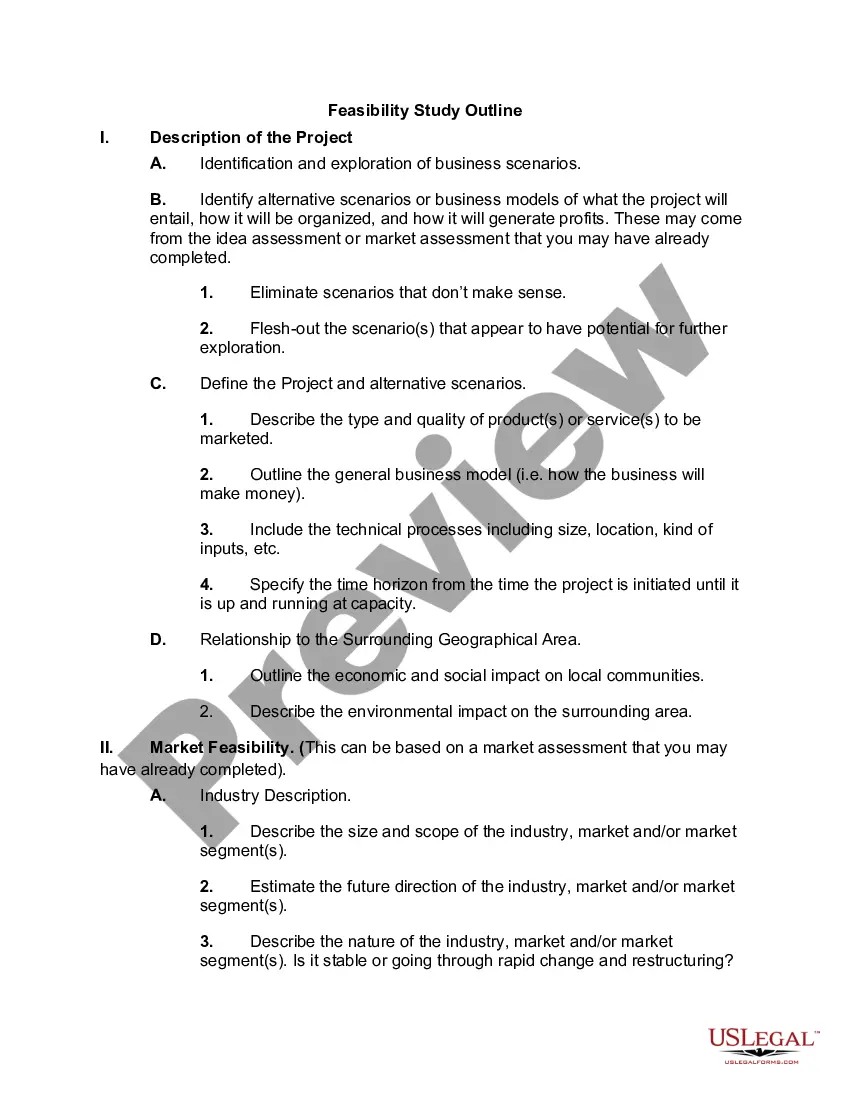
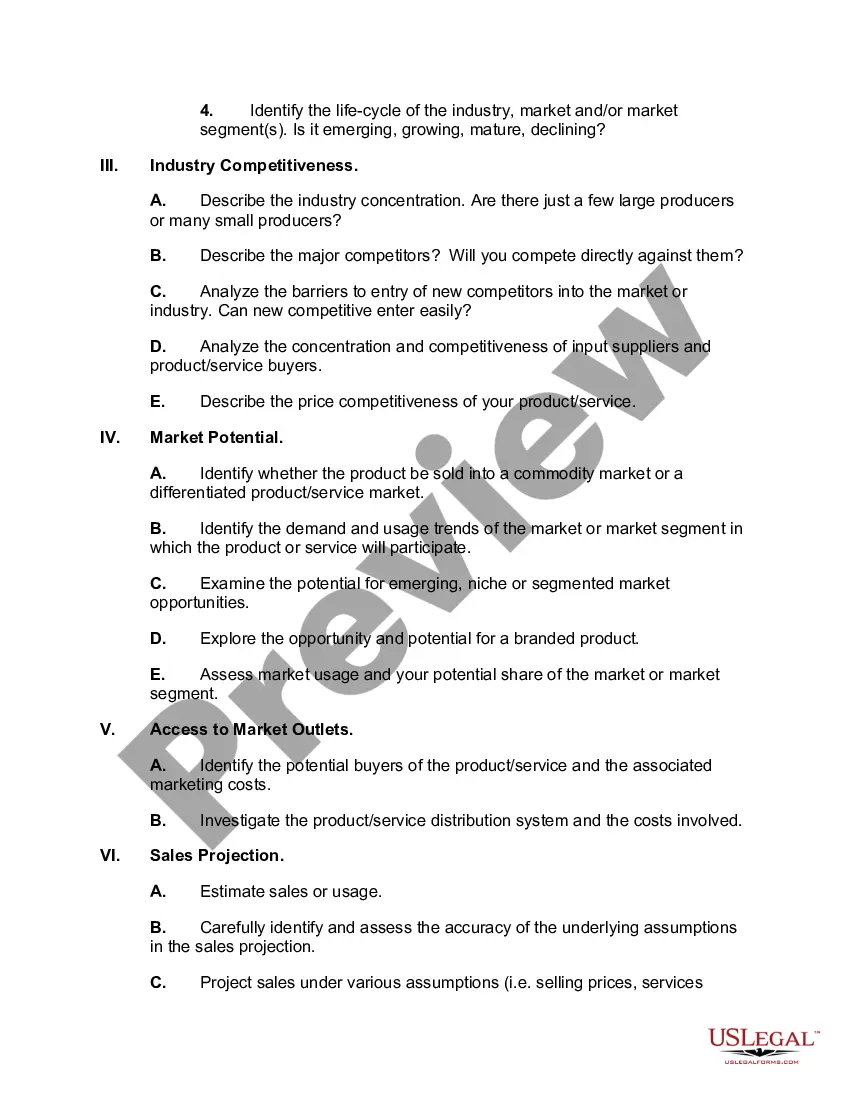
Feasibility Study Outline
What this document covers
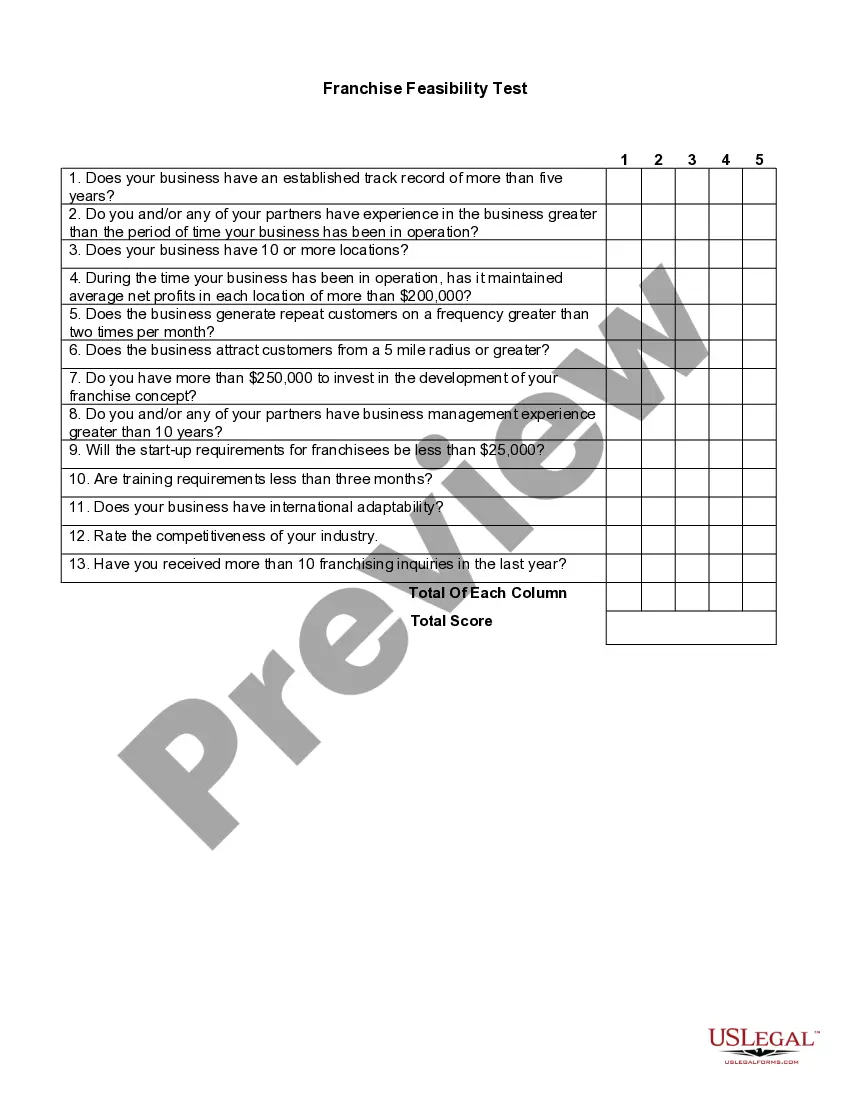
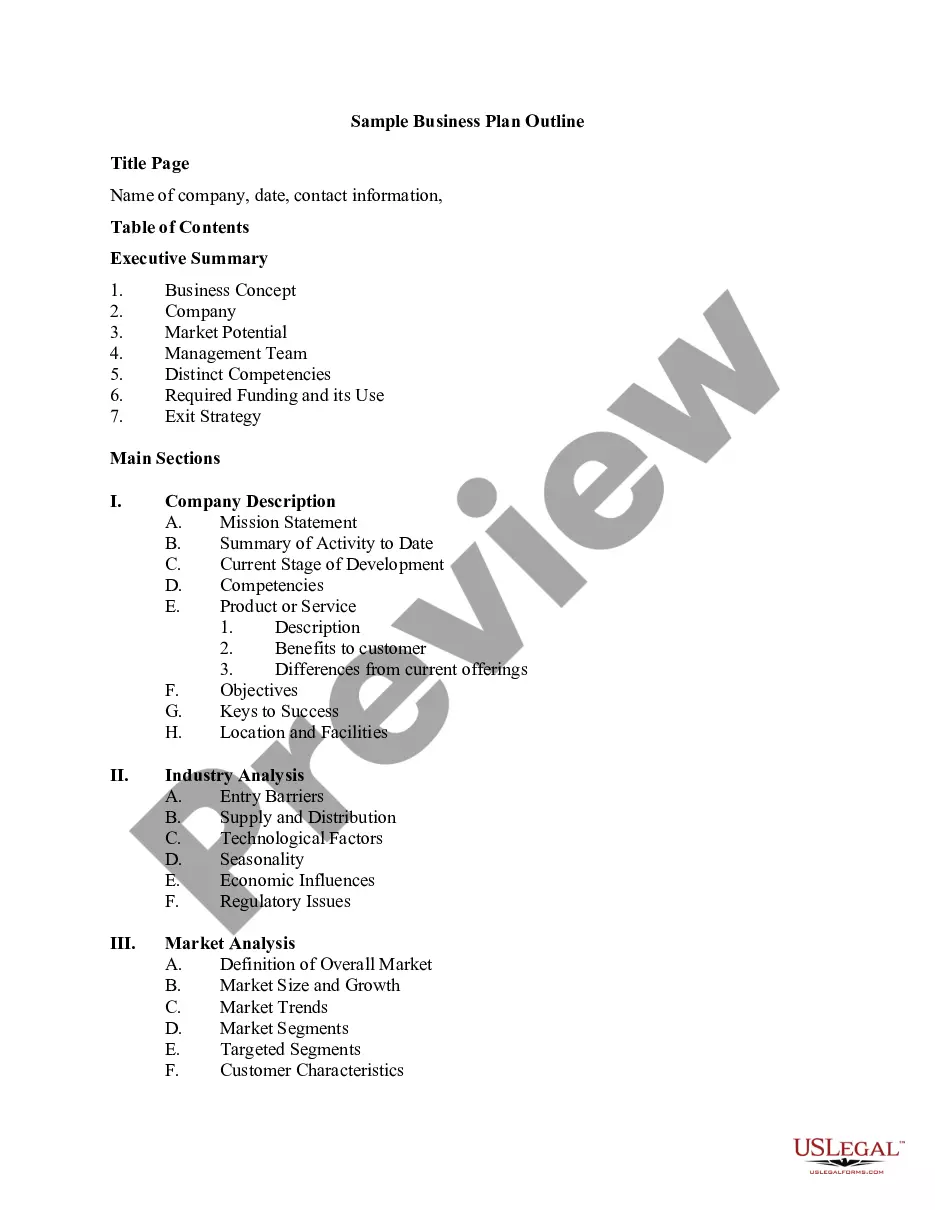
The feasibility study outline is a comprehensive tool for evaluating the viability of a business project. It provides a structured framework to assess various aspects including market, technical, and financial feasibility. Unlike other business forms, this outline is specifically designed to help entrepreneurs and businesses systematically explore different scenarios and make informed decisions about their project. By using this form, you can ensure that you cover all necessary details to determine whether to proceed with a business idea.
Key components of this form
- Description of the project and potential business scenarios.
- Assessment of market feasibility including industry description and market potential.
- Analysis of industry competitiveness and barriers to entry.
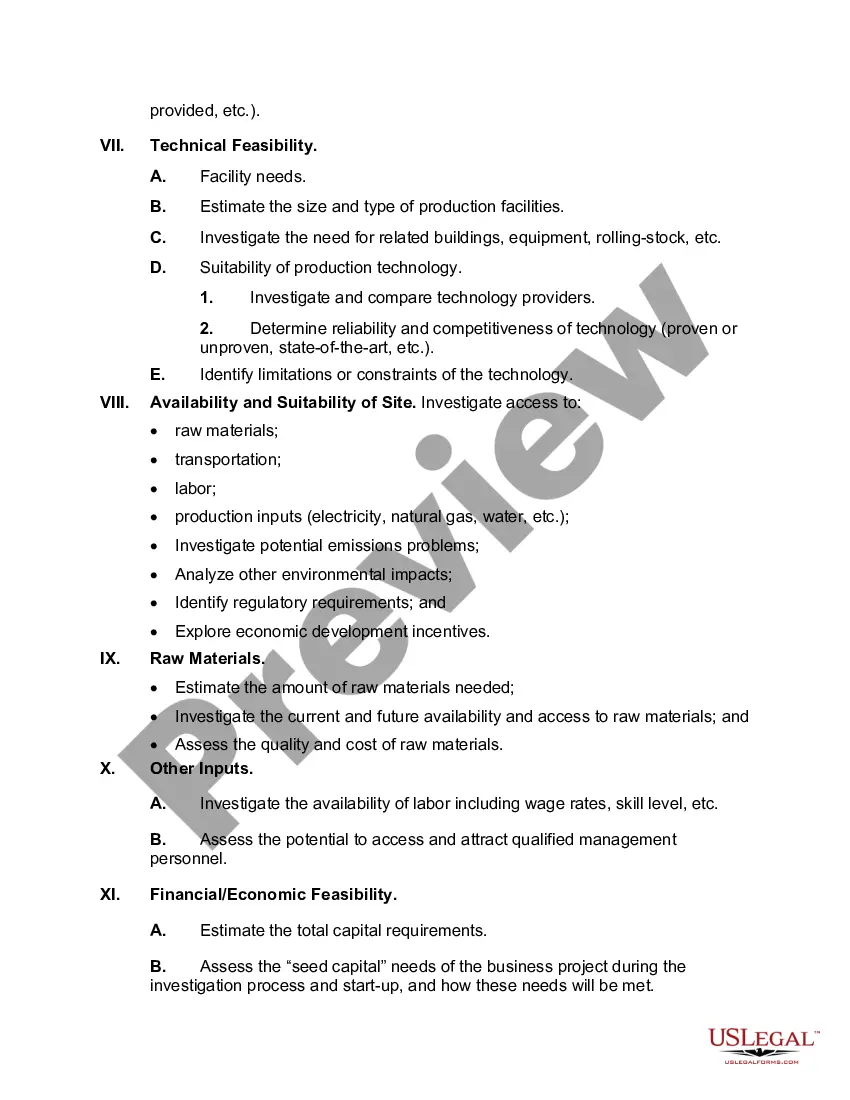
- Evaluation of technical feasibility and facility needs.
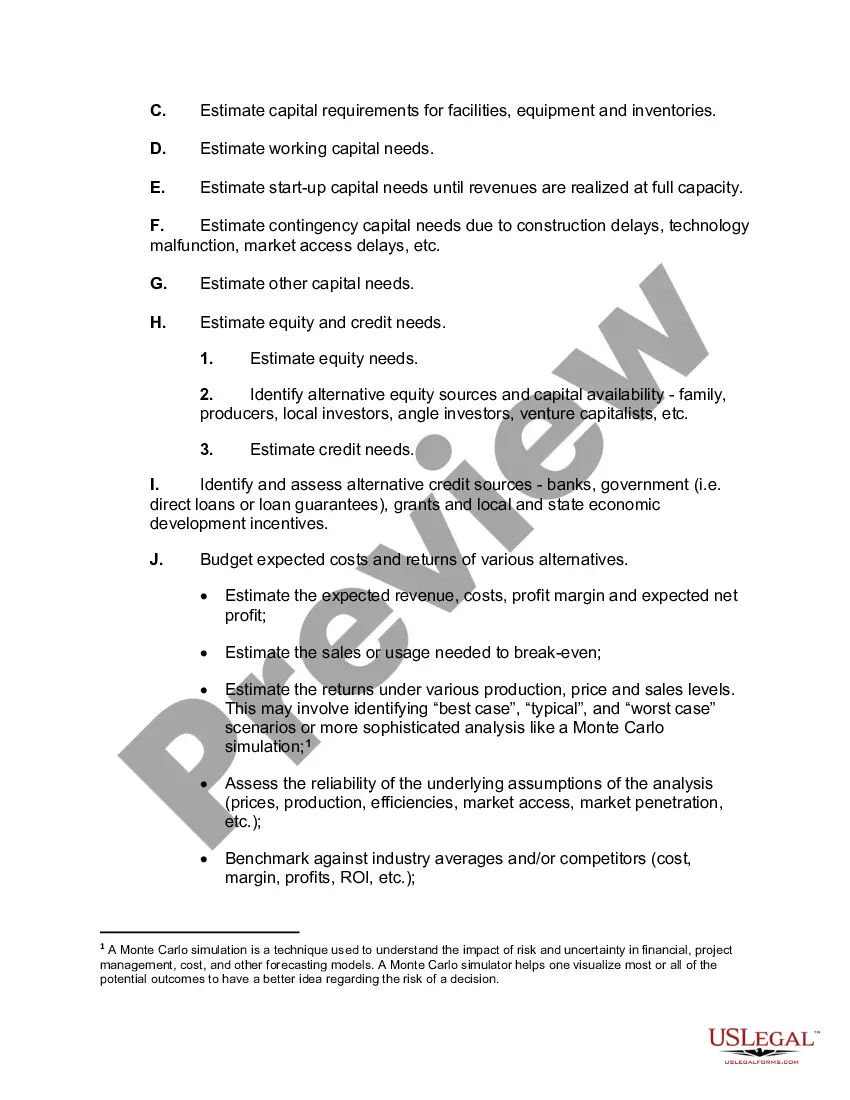
- Financial projections including capital requirements and expected returns.
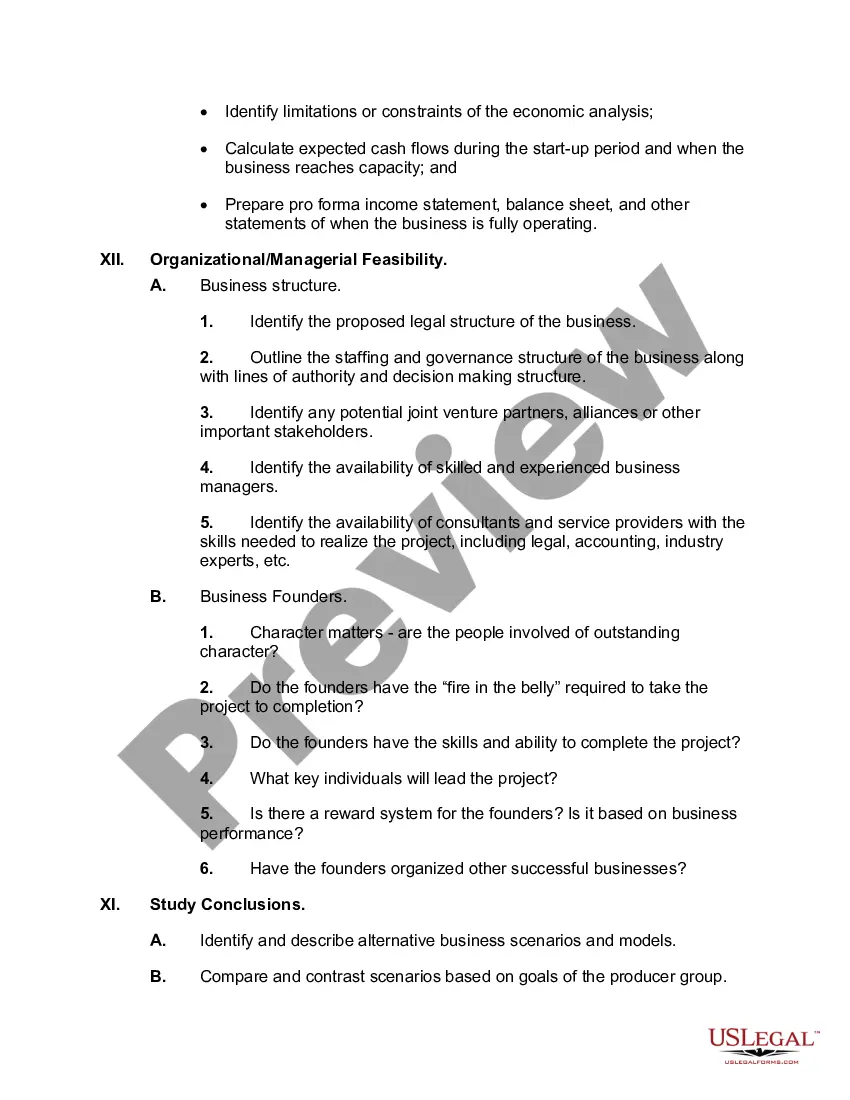
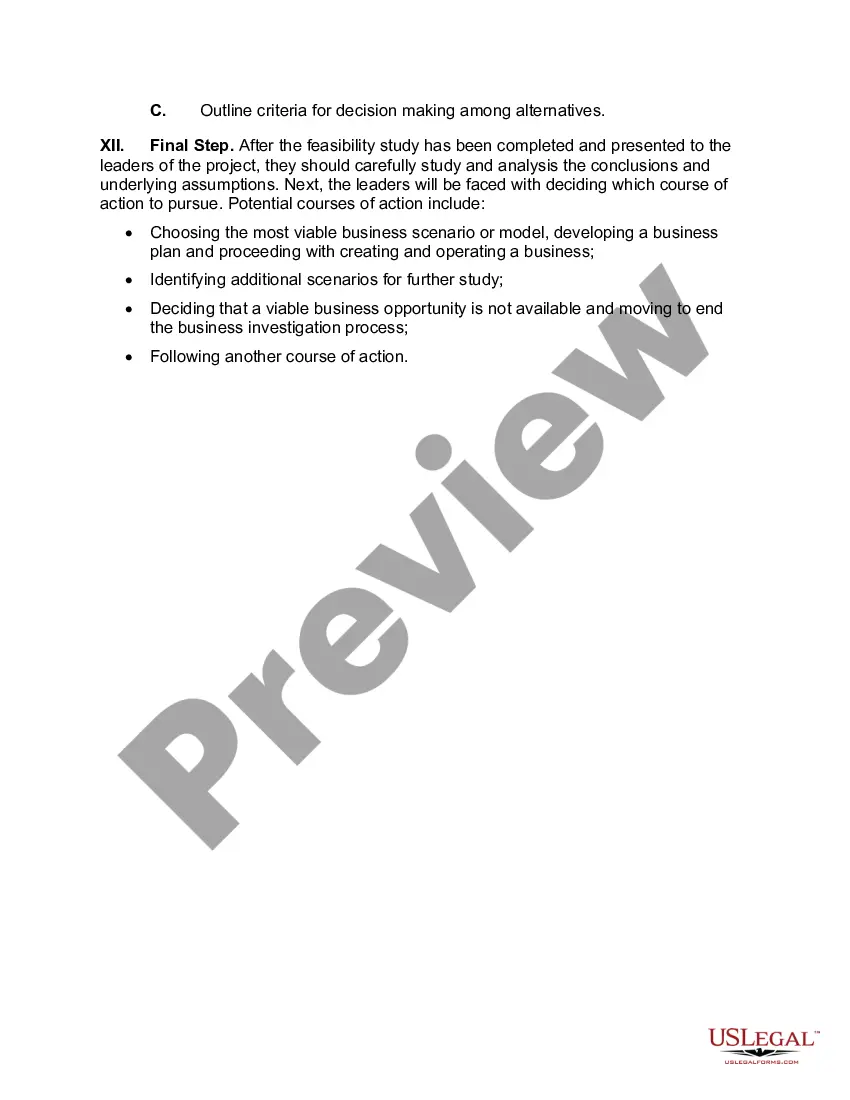
- Organizational feasibility and management structure assessment.
When this form is needed
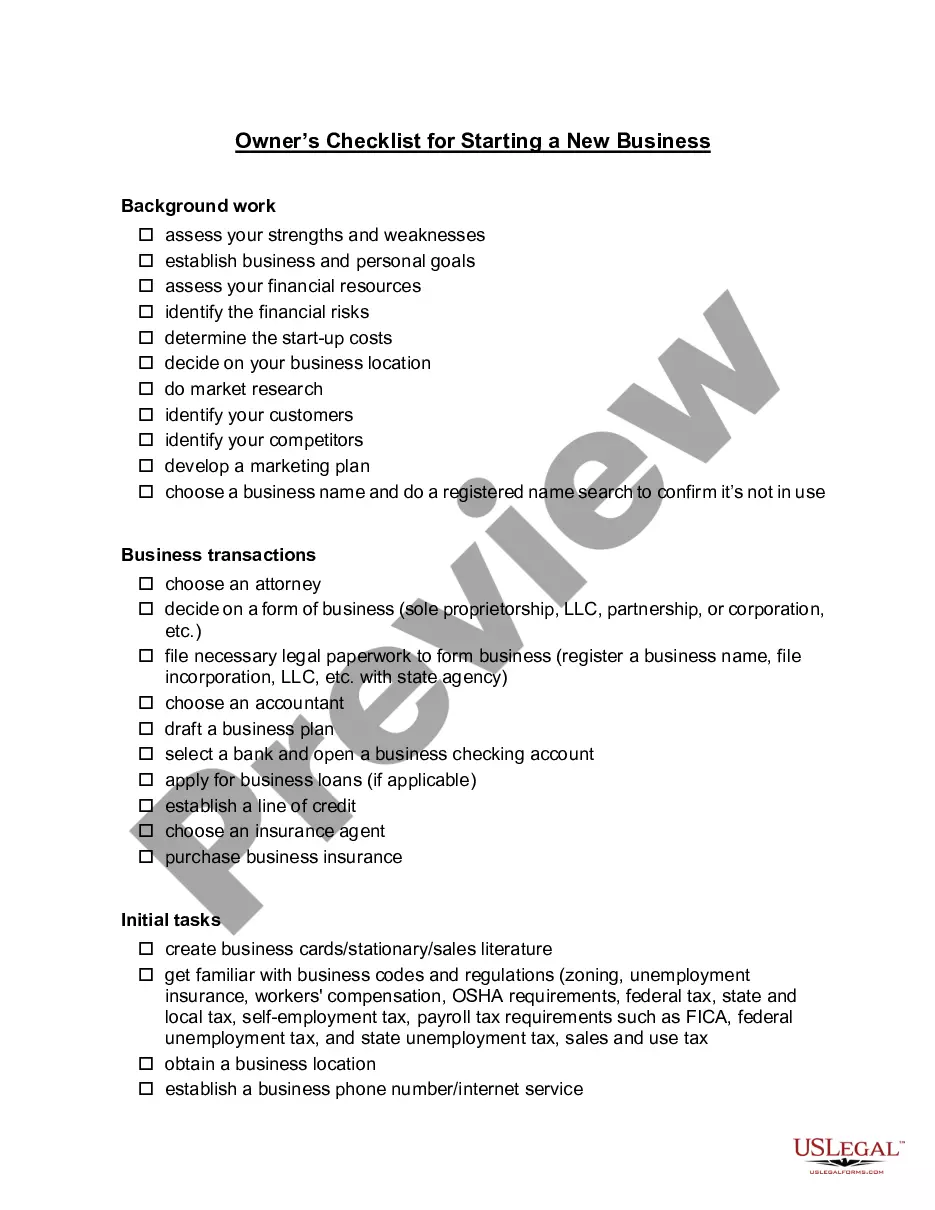
This feasibility study outline is essential when you are considering launching a new business or expanding an existing one. Use it to analyze project viability, understand market conditions, and determine the necessary resources before committing significant investments. This document is particularly useful for startups, entrepreneurs, and businesses facing new project opportunities or changes in the marketplace.
Who should use this form
- Entrepreneurs seeking to start a new business or venture.
- Business owners considering expansion or new product lines.
- Investors evaluating potential business opportunities.
- Consultants providing guidance on business strategy.
Completing this form step by step
- Begin by describing the project and exploring alternative business scenarios.
- Conduct a market feasibility analysis to evaluate industry size and competition.
- Assess technical and financial feasibility including needs for facilities and capital.
- Identify key market outlets and estimate potential sales projections.
- Review organizational and managerial aspects to ensure the right structure is in place.
Notarization requirements for this form
This form usually doesn’t need to be notarized. However, local laws or specific transactions may require it. Our online notarization service, powered by Notarize, lets you complete it remotely through a secure video session, available 24/7.
Get your form ready online
Our built-in tools help you complete, sign, share, and store your documents in one place.
Make edits, fill in missing information, and update formatting in US Legal Forms—just like you would in MS Word.
Download a copy, print it, send it by email, or mail it via USPS—whatever works best for your next step.
Sign and collect signatures with our SignNow integration. Send to multiple recipients, set reminders, and more. Go Premium to unlock E-Sign.
If this form requires notarization, complete it online through a secure video call—no need to meet a notary in person or wait for an appointment.
We protect your documents and personal data by following strict security and privacy standards.

Make edits, fill in missing information, and update formatting in US Legal Forms—just like you would in MS Word.

Download a copy, print it, send it by email, or mail it via USPS—whatever works best for your next step.

Sign and collect signatures with our SignNow integration. Send to multiple recipients, set reminders, and more. Go Premium to unlock E-Sign.

If this form requires notarization, complete it online through a secure video call—no need to meet a notary in person or wait for an appointment.

We protect your documents and personal data by following strict security and privacy standards.
Common mistakes
- Failing to thoroughly explore all business scenarios.
- Overlooking market trends and competitor analysis.
- Not properly estimating financial projections and capital needs.
- Ignoring environmental and social impacts on the community.
Why complete this form online
- Convenience: Access the form anytime and anywhere with internet connection.
- Editability: Easily modify sections to tailor the feasibility study to your specific project.
- Reliability: Utilizes legally vetted language and structure created by licensed attorneys.
Legal use & context
- The feasibility study outline provides a structured approach to assessing business viability.
- Documents created following this outline can serve as foundational legal basis for business planning.
- While this form is not legally binding, accurate completion increases the robustness of your business strategy.
Looking for another form?


Form popularity
FAQ
Six Essential Feasibility Study Steps. Executive Summary. Clear Project Description. Competitive Landscape. Operating Requirements. Financial Projections.
Technical Feasibility. This assessment focuses on the technical resources available to the organization. Economic Feasibility. Legal Feasibility. Operational Feasibility. Scheduling Feasibility.
Technical Feasibility. This assessment focuses on the technical resources available to the organization. Economic Feasibility. Legal Feasibility. Operational Feasibility. Scheduling Feasibility.
Feasibility is defined as the practical extent to which a project can be performed successfully.To evaluate feasibility, a feasibility study is performed, which determines whether the solution considered to accomplish the requirements is practical and workable in the software.
The five frames of analysis are: The frame of definition; the frame of contextual risks; the frame of potentiality; the parametric frame; the frame of dominant and contingency strategies. The four Ps are traditionally defined as Plan, Processes, People, and Power.
The Project Scope which is used to define the business problem and/or opportunity to be addressed. The Current Analysis is used to define and understand the current method of implementation, such as a system, a product, etc. Requirements and how requirements are defined depends on the object of the project's attention.
Defining the project scope. Determining current market trends and conducting detailed risk analysis. Defining and reviewing technical and organizational requirements for project viability. Evaluating a comprehensive cost analysis for the project.
These include areas such as background, project summary, description of operations, market research and legal and financial documents. Furthermore, a well-written feasibility study can help project leaders gain the approval they need to complete the project.