Employee Evaluation Form for Therapist
Overview of this form
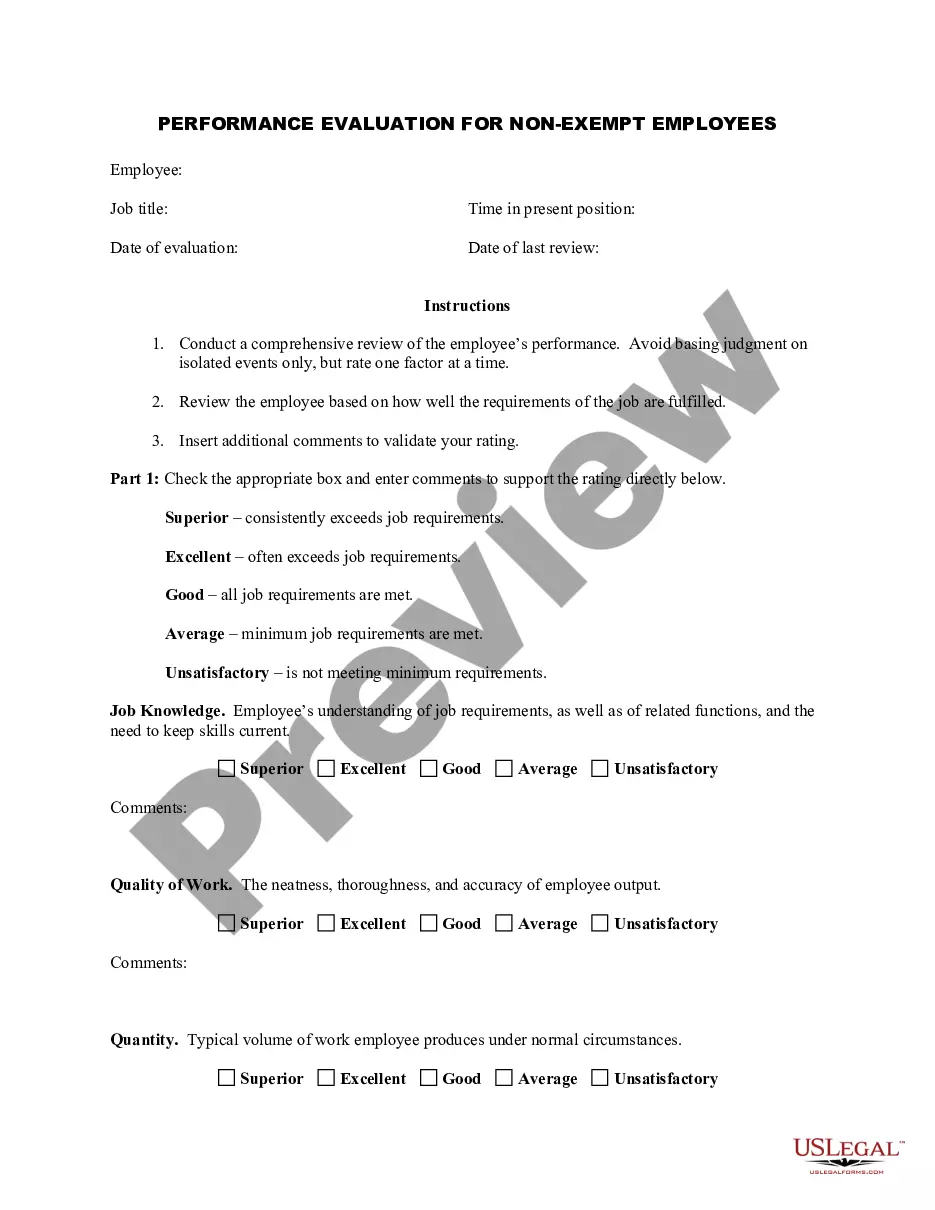
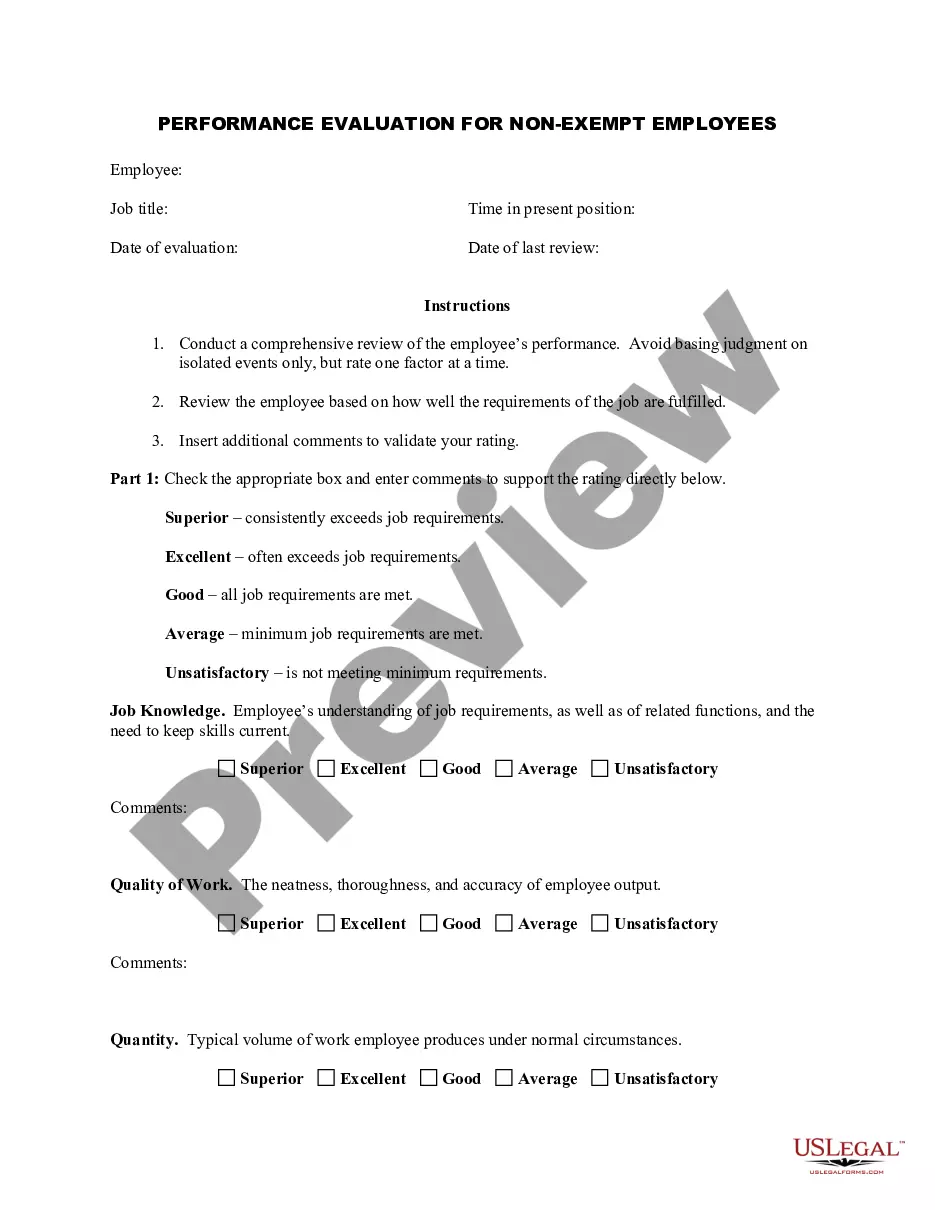
The Employee Evaluation Form for Therapist is a structured document used to assess the performance of non-exempt employees within a therapeutic setting. This form is designed to provide a comprehensive review of how well an employee fulfills their job requirements, integrating both qualitative and quantitative assessments. Unlike other performance evaluation forms, this specific template caters to therapists, allowing for tailored feedback based on the unique aspects of therapeutic practice.
Key components of this form
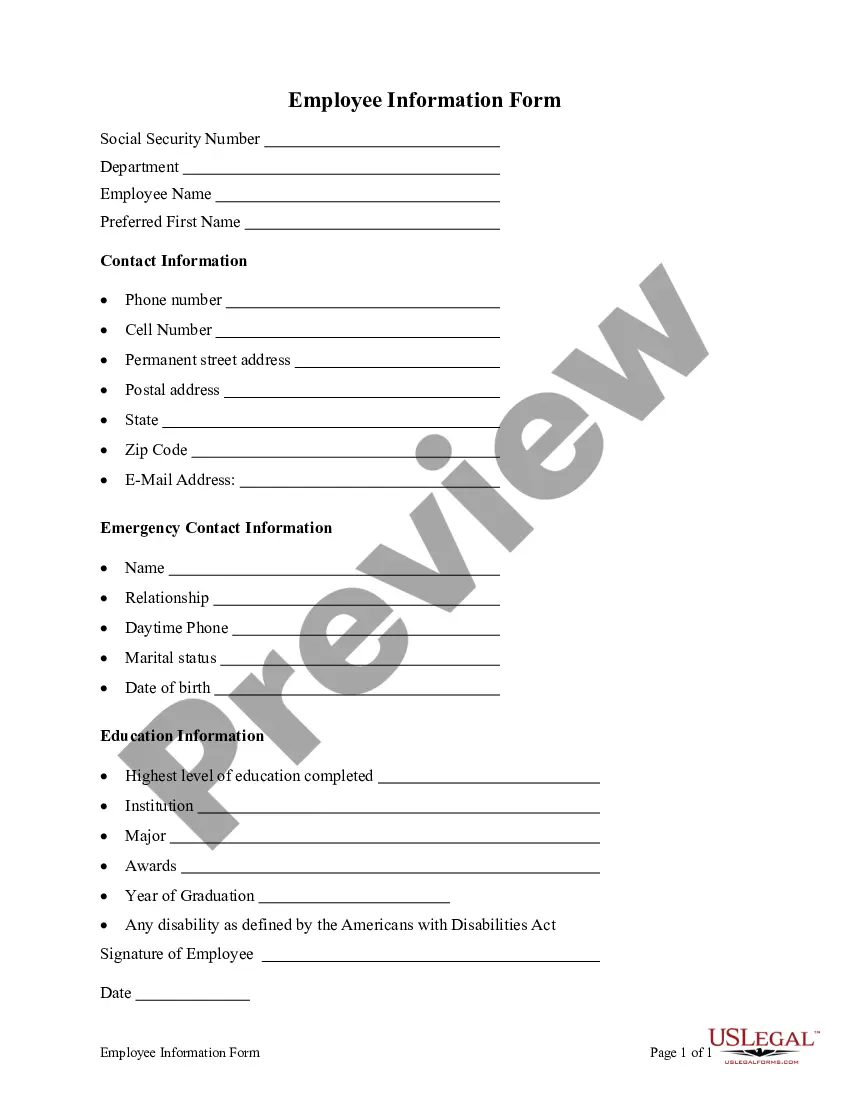
- Employee Information: Includes sections for the employee's name, job title, and evaluation date.
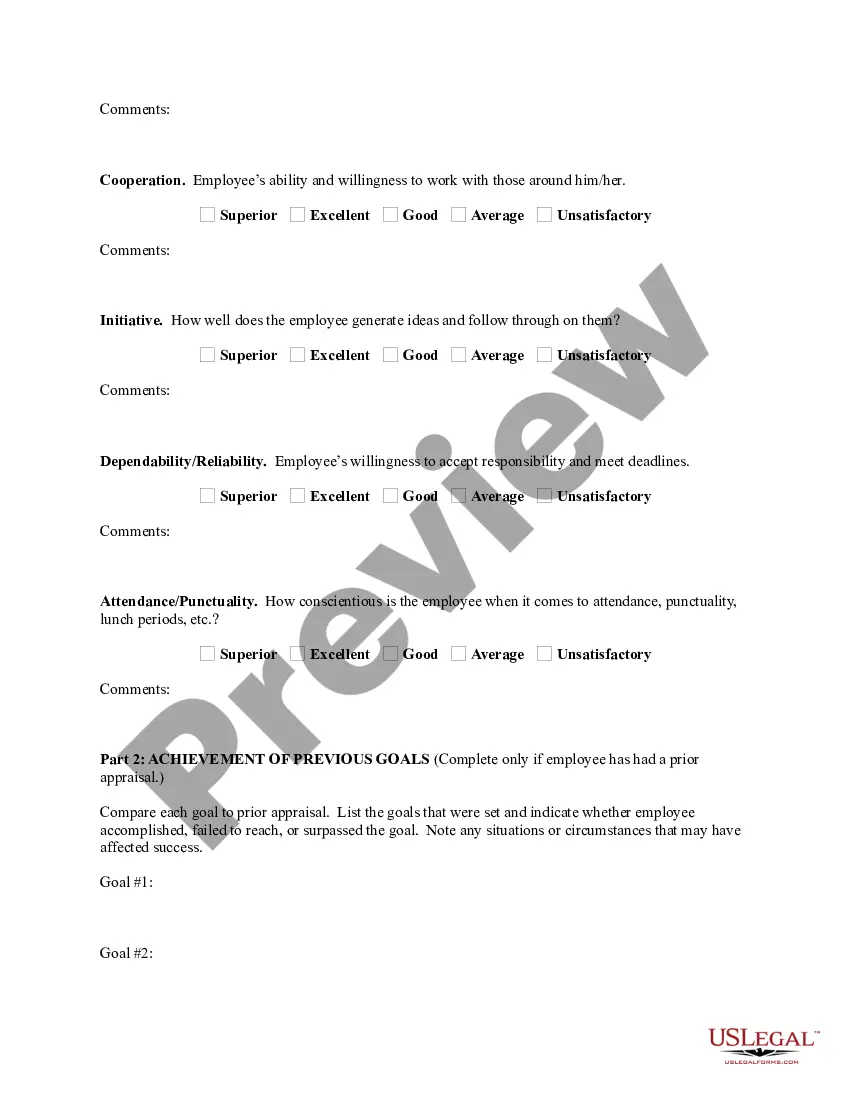
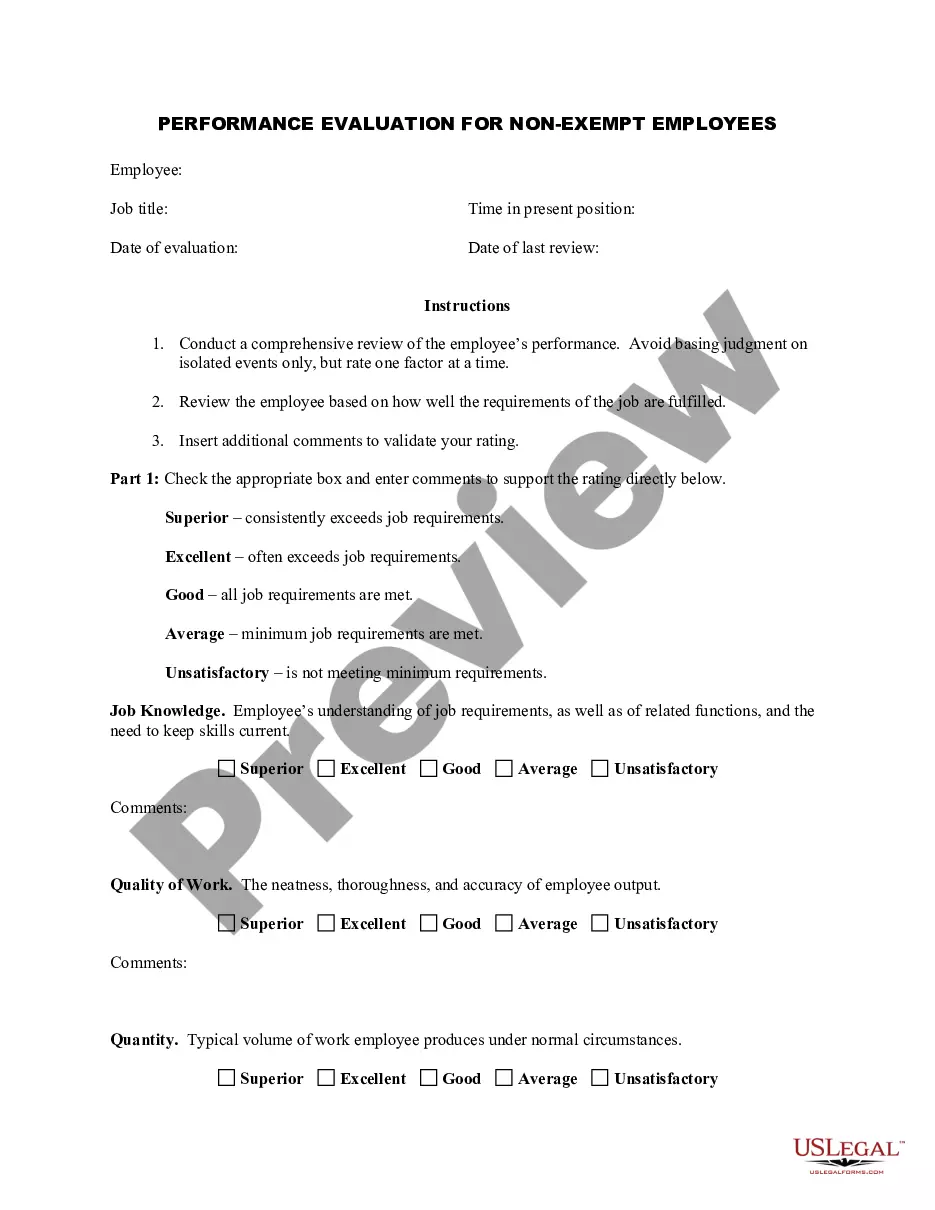
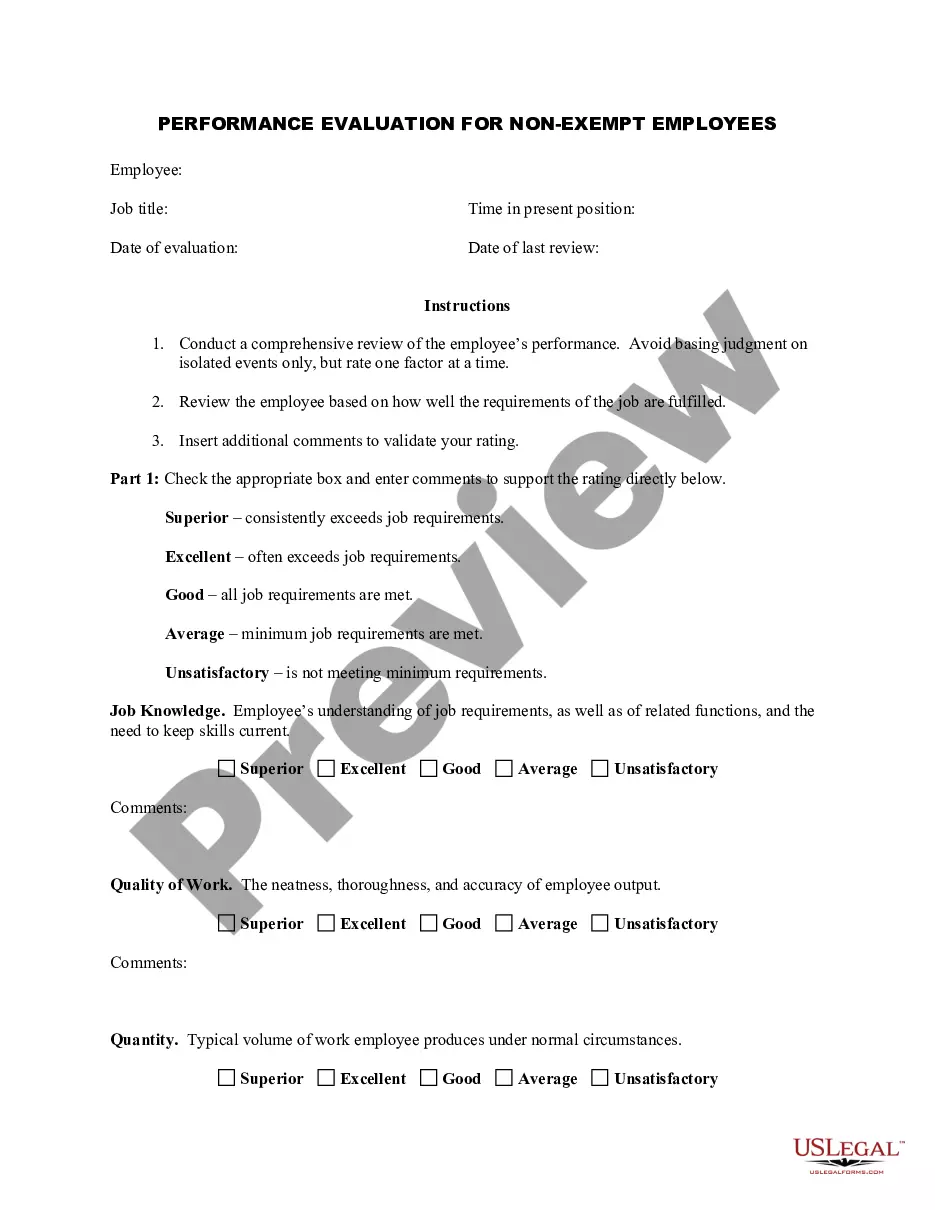
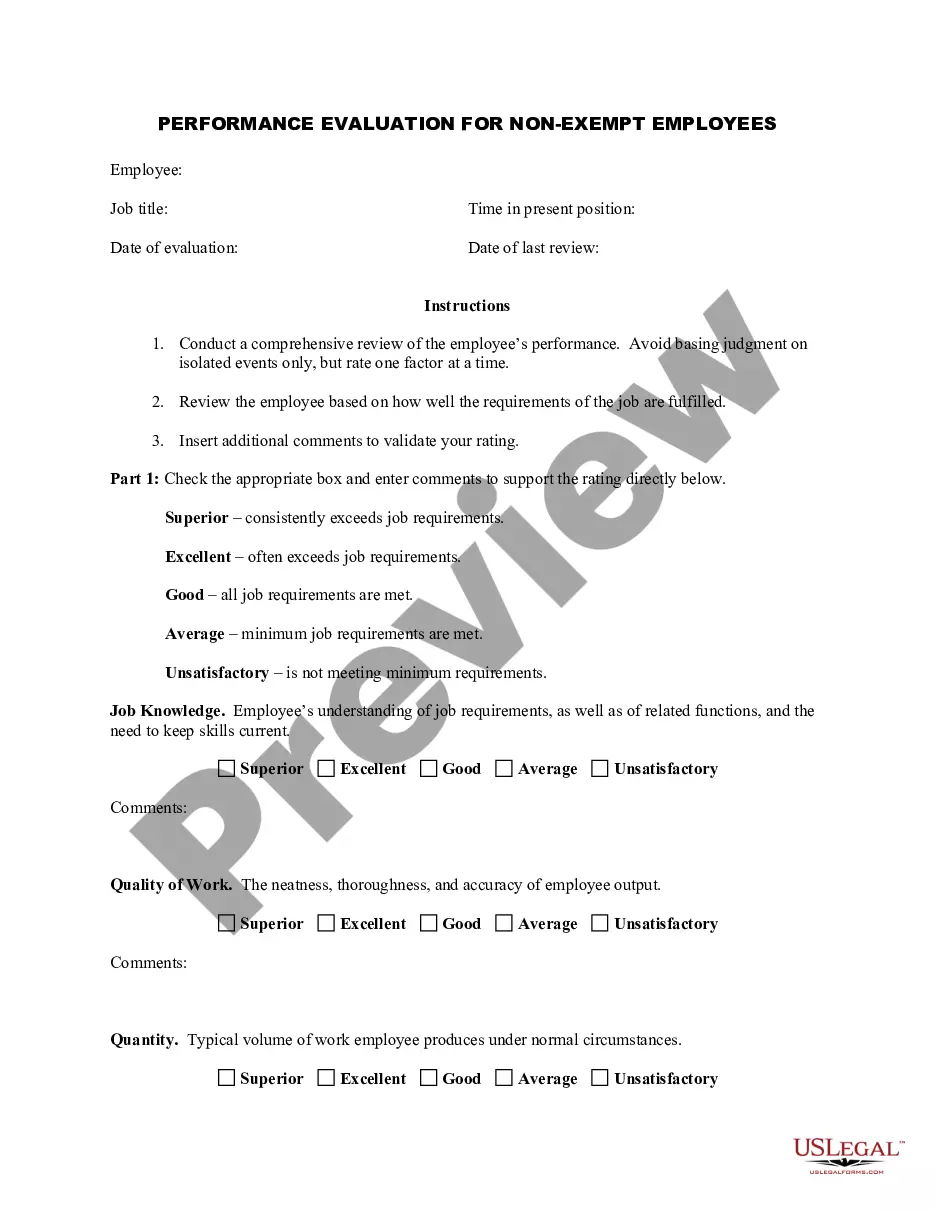
- Performance Ratings: A rating scale to assess categories such as job knowledge, quality of work, quantity, cooperation, initiative, dependability, and attendance.
- Comments Section: Space for evaluators to provide qualitative feedback and context for ratings.
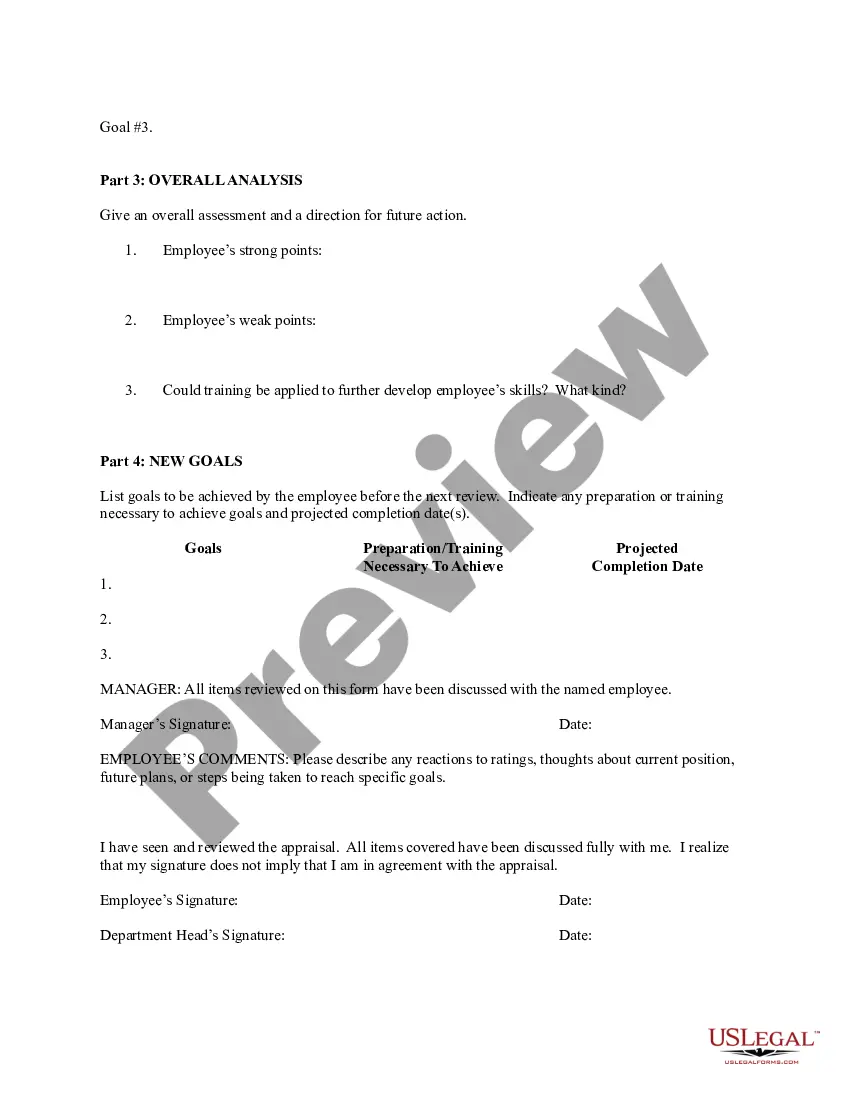
- Goal Achievement Review: Documentation of previously set goals and performance against them.
- Future Goals: Setting new objectives for the employee to achieve before the next review.
- Signature Section: Spaces for signatures from both the evaluator and employee to acknowledge discussion of the review results.
Situations where this form applies
This form should be used during regular performance evaluations, typically conducted annually or semi-annually. It is essential for organizations that employ therapists to ensure that staff members are meeting performance expectations, identifying areas for improvement and development. Utilizing this form can help align employee contributions with organizational goals and enhance overall performance quality in therapeutic settings.
Who should use this form
- Therapists who are employees within health or counseling settings.
- Managers or supervisors responsible for conducting employee evaluations.
- Human resources personnel involved in performance management processes.
Completing this form step by step
Follow these steps to complete the Employee Evaluation Form for Therapist:
- Identify the employee's details including name, job title, and evaluation date.
- Assess each performance category using the designated rating scale and provide justification in the comments section.
- Review the employeeâs previous goals and document their achievement status.
- Set new goals for the upcoming evaluation period, specifying necessary training or preparation.
- Obtain signatures from both the evaluator and employee to verify that the performance review has been discussed.
Notarization guidance
This form does not typically require notarization unless specified by local law.
Get your form ready online
Our built-in tools help you complete, sign, share, and store your documents in one place.
Make edits, fill in missing information, and update formatting in US Legal Forms—just like you would in MS Word.
Download a copy, print it, send it by email, or mail it via USPS—whatever works best for your next step.
Sign and collect signatures with our SignNow integration. Send to multiple recipients, set reminders, and more. Go Premium to unlock E-Sign.
If this form requires notarization, complete it online through a secure video call—no need to meet a notary in person or wait for an appointment.
We protect your documents and personal data by following strict security and privacy standards.

Make edits, fill in missing information, and update formatting in US Legal Forms—just like you would in MS Word.

Download a copy, print it, send it by email, or mail it via USPS—whatever works best for your next step.

Sign and collect signatures with our SignNow integration. Send to multiple recipients, set reminders, and more. Go Premium to unlock E-Sign.

If this form requires notarization, complete it online through a secure video call—no need to meet a notary in person or wait for an appointment.

We protect your documents and personal data by following strict security and privacy standards.
Common mistakes
- Relying solely on isolated incidents instead of a comprehensive review of performance over time.
- Neglecting to provide specific examples or evidence to support performance ratings.
- Failing to align new goals with previous performance discussions.
- Forgetting to share the evaluation results in a timely manner.
Benefits of using this form online
- Convenient online availability allows for easy access and immediate completion.
- Editable format permits customizations to suit specific evaluation needs.
- Reliable structure ensures that all important aspects of performance are addressed.
Looking for another form?

Form popularity
FAQ
Be specific. When you set goals and standards for your workers, spell out exactly what they will have to do to achieve them. Give deadlines. Be realistic. Be honest. Be complete. Evaluate performance, not personality. Listen to your employees.
You should make progress. You should get something new out of every session. You should be learning from your therapist. You shouldn't feel worried about your therapist's feelings it's the therapist's job to take care of themselves. You should feel your therapist likes and cares about you.
Not Listening or Responding. Judging You. Telling You What To Do. Imposing Religious, Spiritual, Political or Social Beliefs. Not Being Sensitive to Your Beliefs or Background. Breaking Confidentiality. Encouraging You to Blame Everyone for Your Issues. Shaming Mental Illness.
Graphic rating scales. A typical graphic scale uses sequential numbers, such as 1 to 5, or 1 to 10, to rate an employee's relative performance in specific areas. 360-degree feedback. Self-Evaluation. Management by Objectives (MBO). Checklists.
Performance Appraisals (often called reviews, evaluations, or assessments) are the measurement of a specific range of skills, knowledge, and attitudes in relation to certain objective standards. The ratings are based upon observations or empirical data in relationship to a set of predefined standards.
One of the most obvious signs that therapy is working is really simple: You start to feel better. If you're working on panic attacks or anxiety attacks, you should have fewer of them.
Communication. Collaboration and teamwork. Problem-solving. Quality and accuracy of work. Attendance, punctuality and reliability. The ability to accomplish goals and meet deadlines.
They actually listen to you. You feel validated. They want what's best for you. They're a strong communicator. They check in with you. They take the time to educate themselves. You view them as an ally. They earn your trust.
Interview with the patient, caregivers and/or the patient's family. observation of functional tasks. assessment specific to each discipline's scope of practice. review and interpretation of the patient's medical record. data collection to determine the root cause of the impairment.