Correspondent Agreement - Self-Employed Independent Contractor
About this form
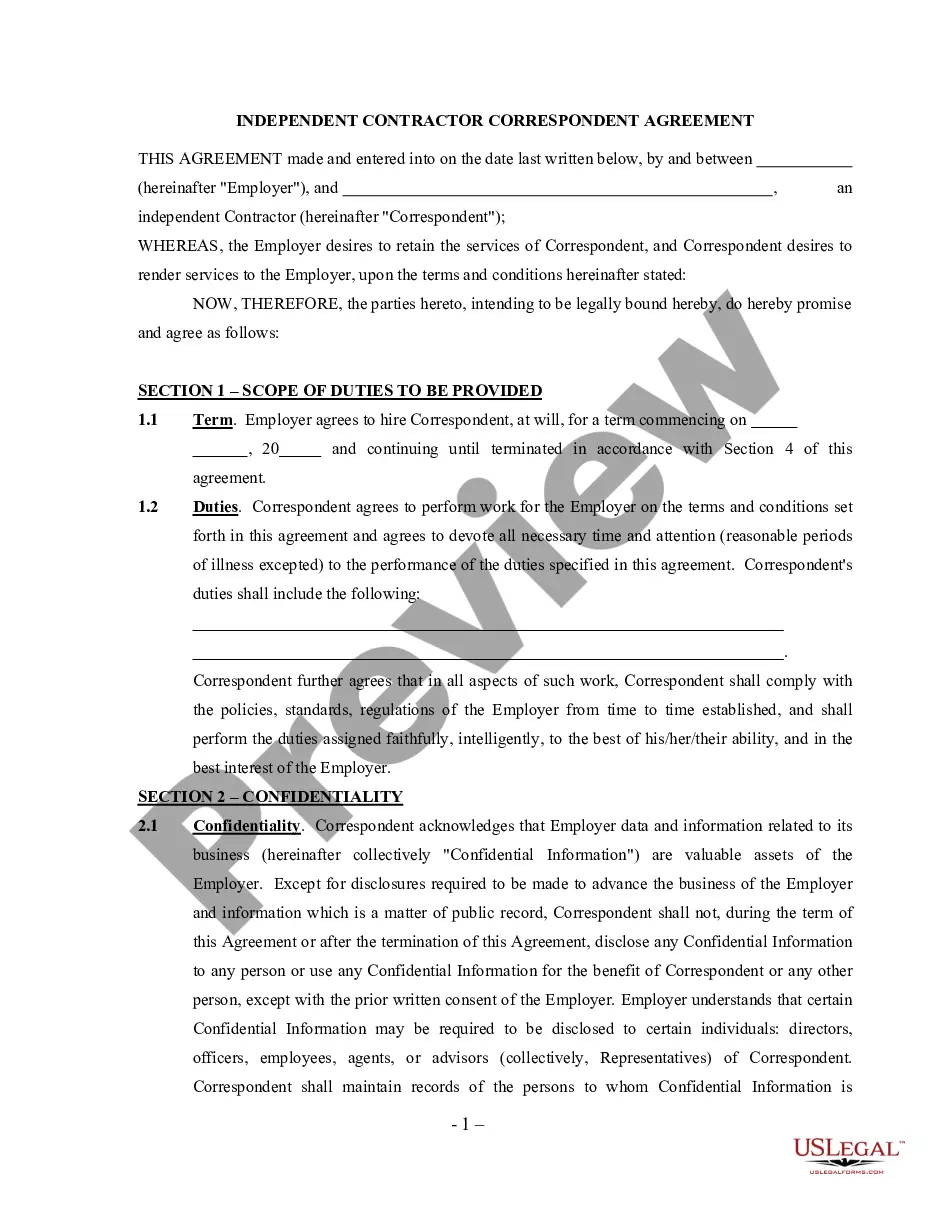
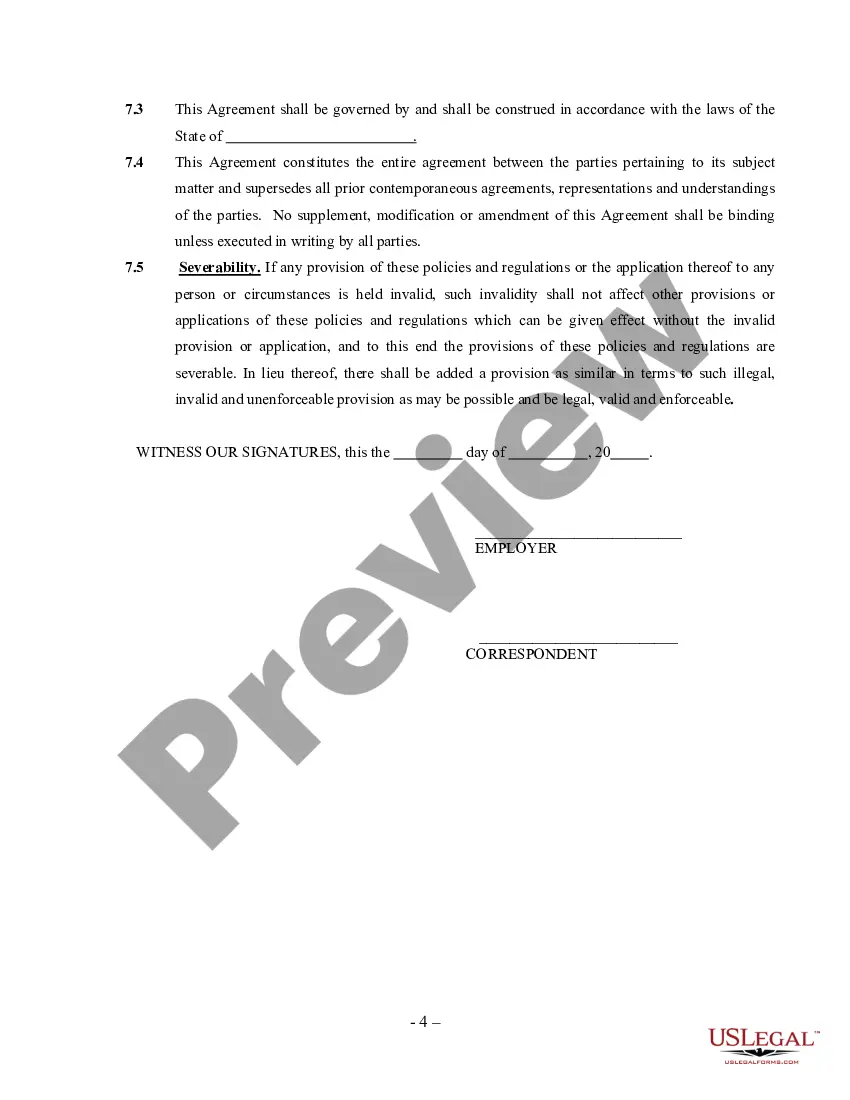
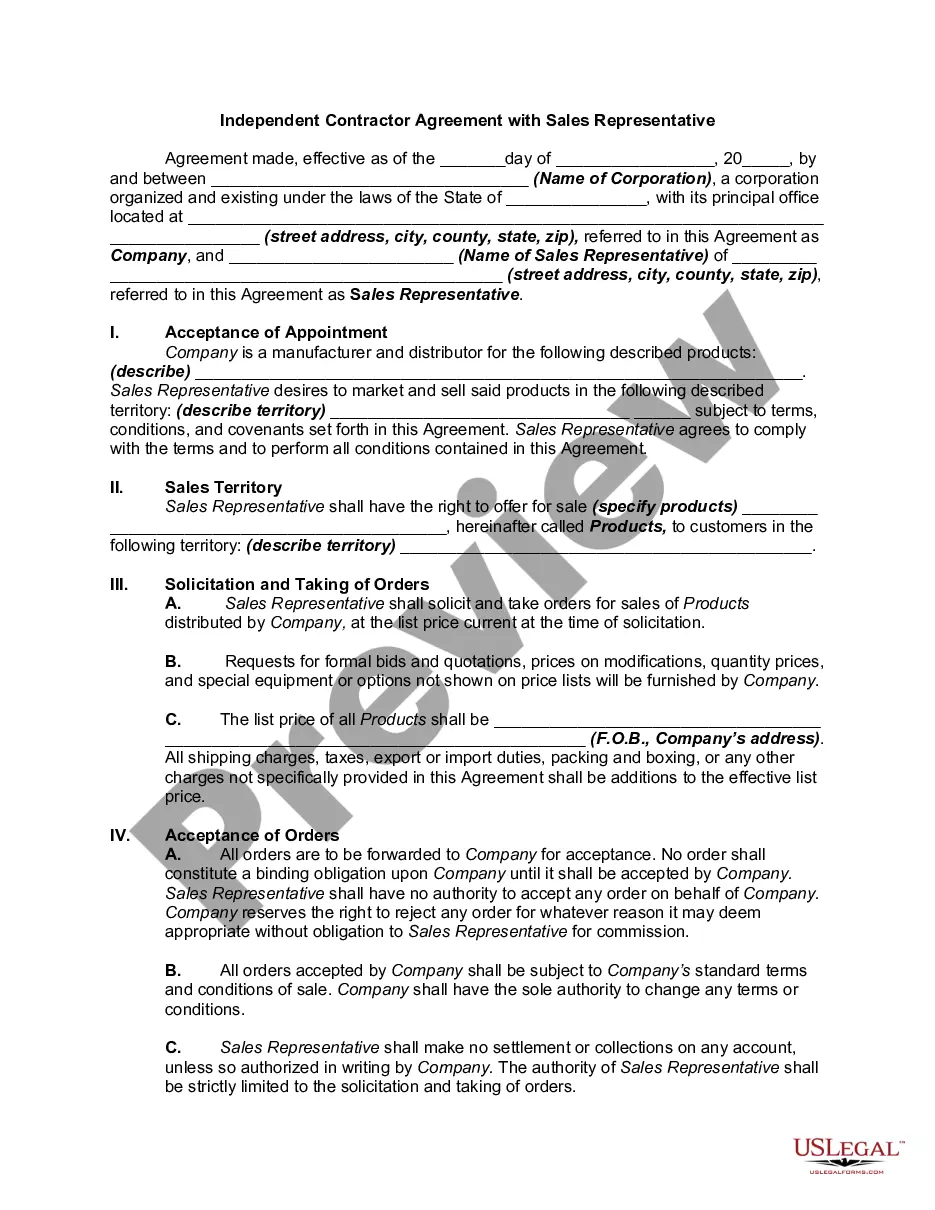
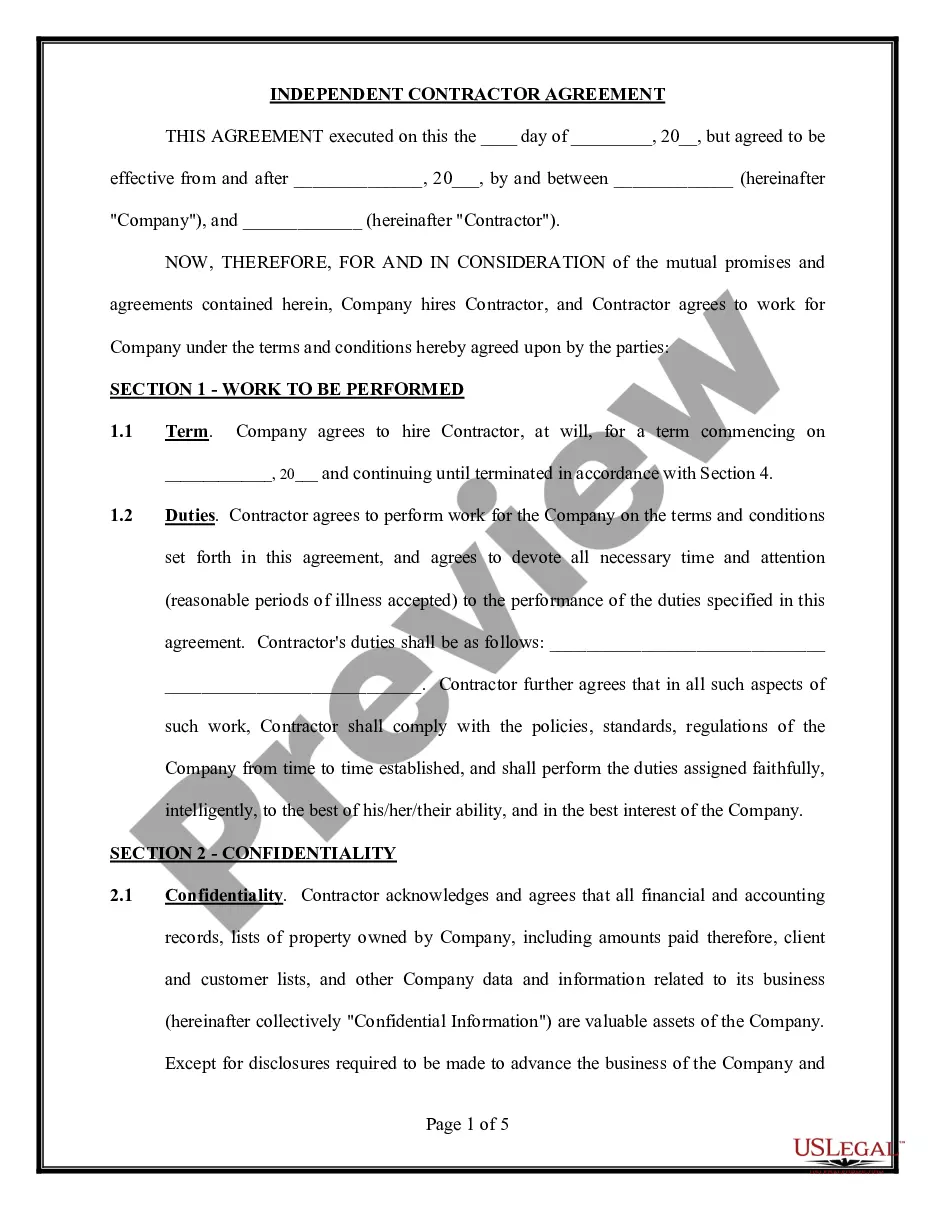
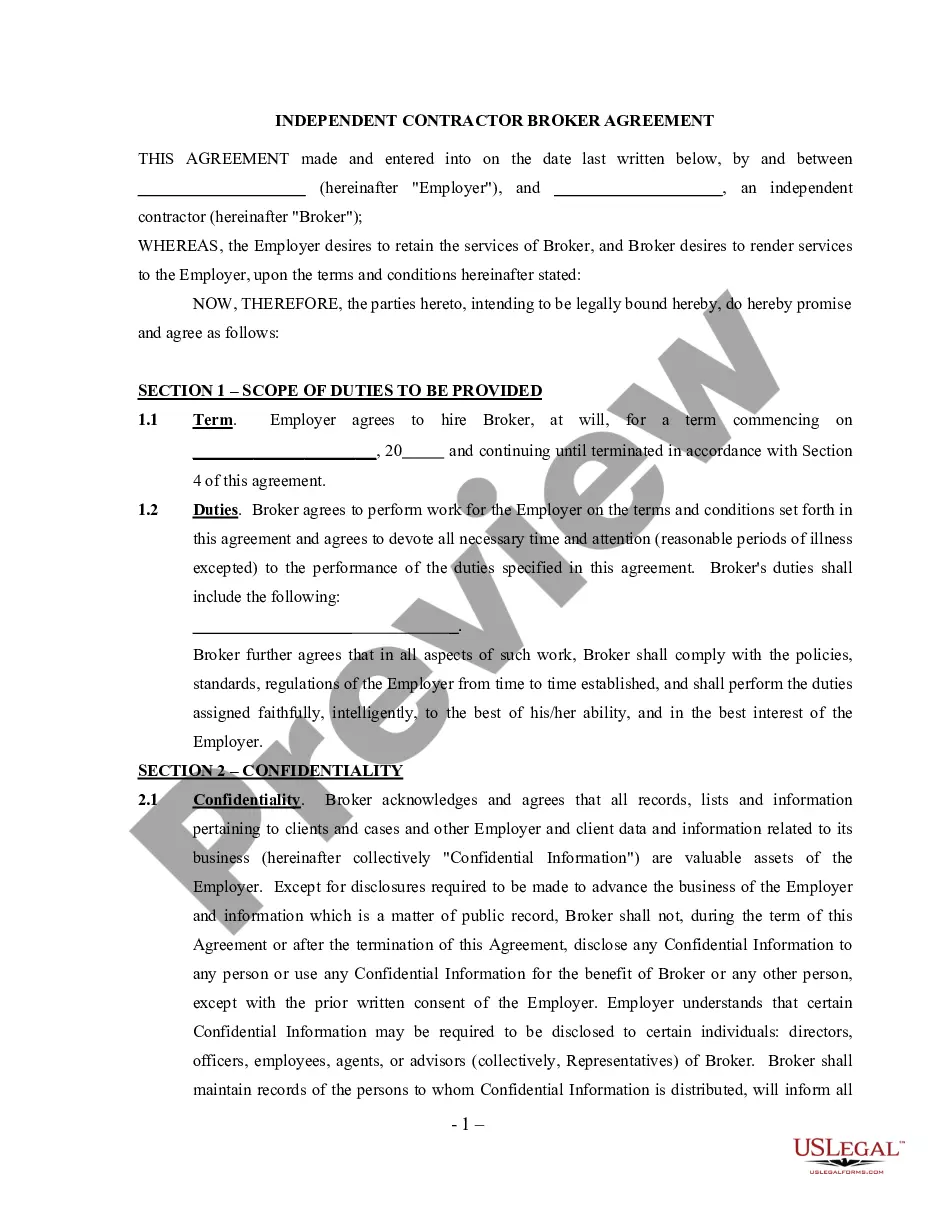
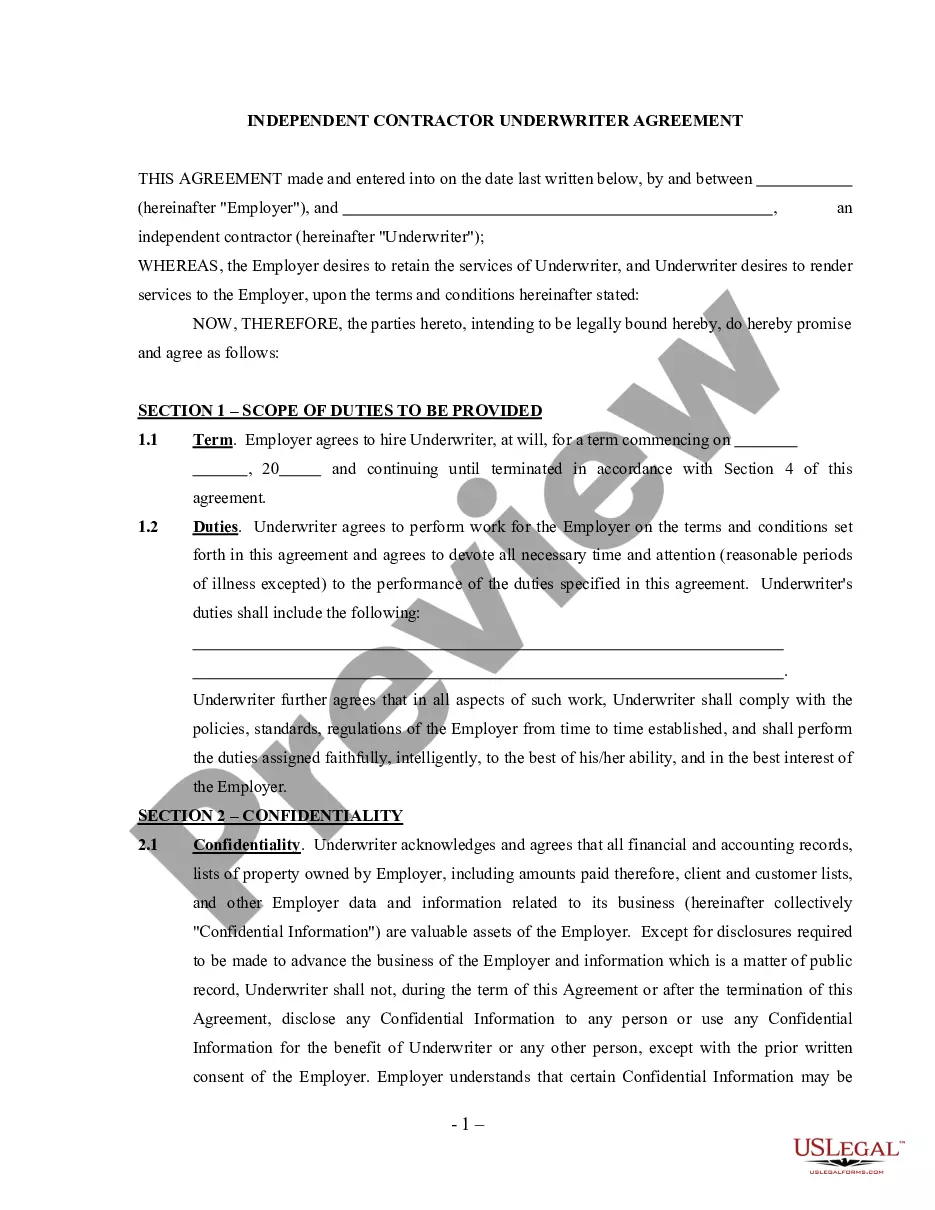
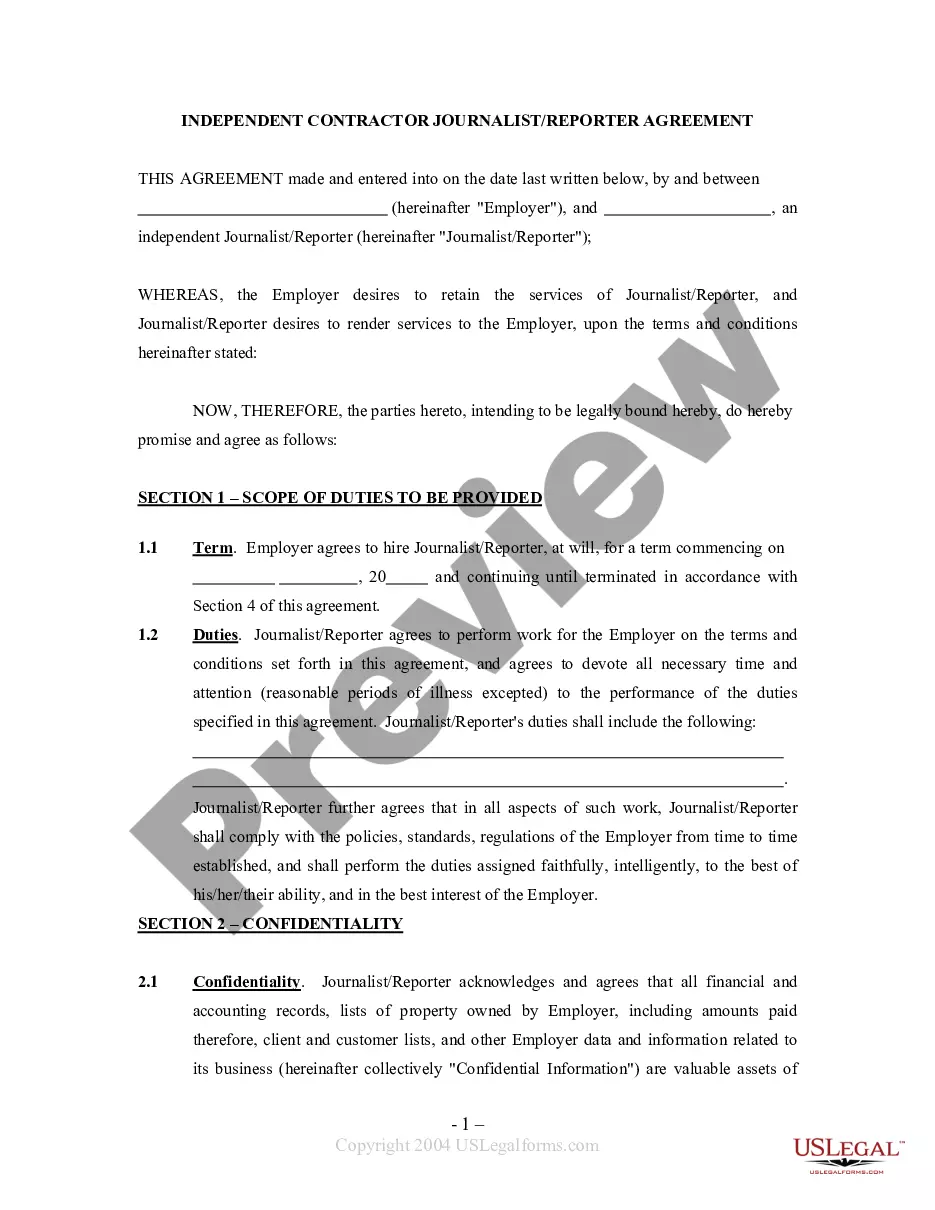
The Correspondent Agreement - Self-Employed Independent Contractor is a legal document that establishes a contractual relationship between an employer and a self-employed correspondent. This form is specifically designed for situations where the employer hires a correspondent for journalistic services. The agreement ensures that the correspondent follows confidentiality clauses and outlines the scope of duties and responsibilities, setting it apart from other general contractor agreements.
Form components explained
- Section 1: Describes the scope of duties the correspondent is expected to perform.
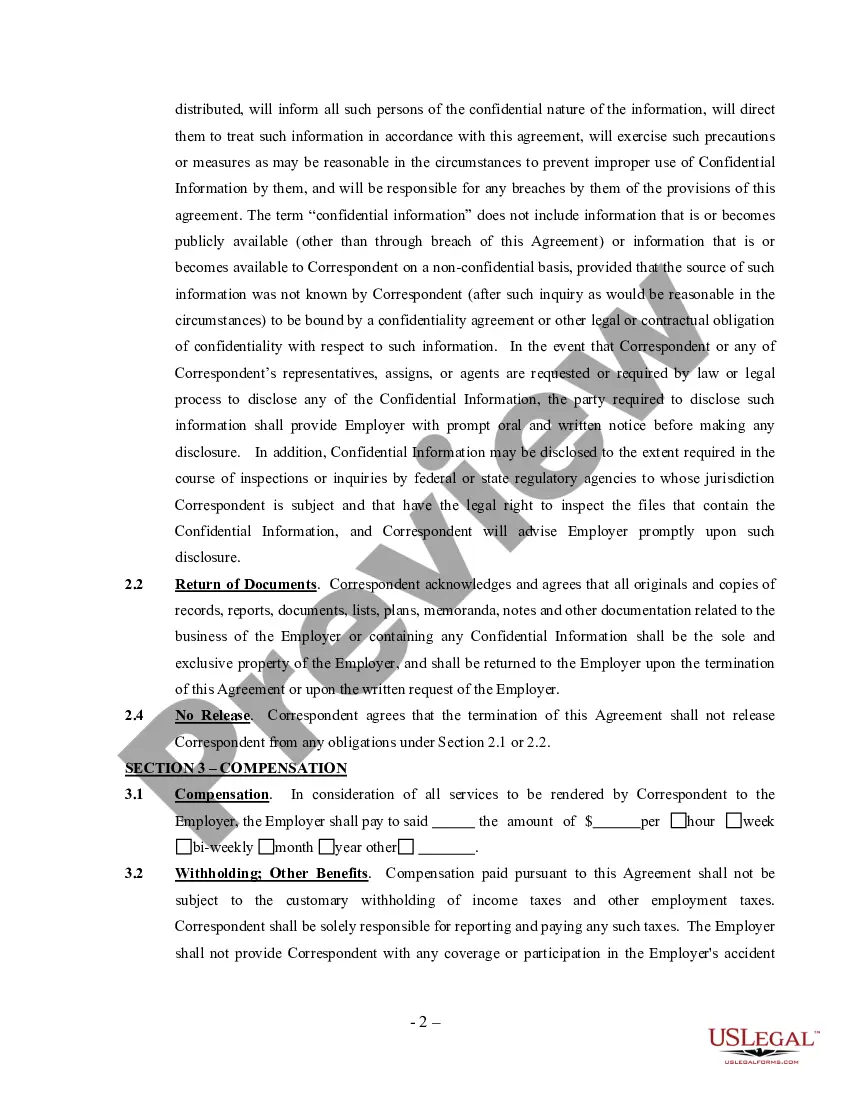
- Section 2: Includes confidentiality obligations regarding the employer's sensitive information.
- Section 3: Specifies the compensation structure for the correspondent's services.
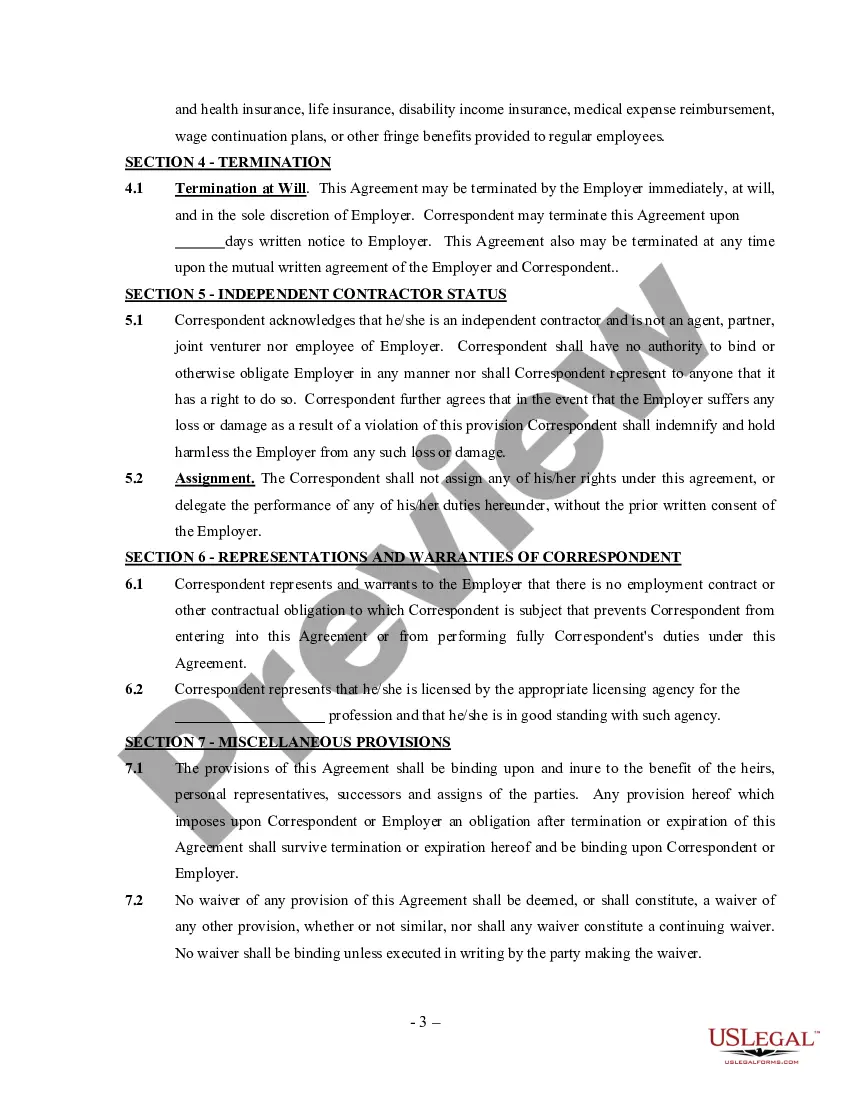
- Section 4: Details the terms under which the agreement may be terminated.
- Section 5: Outlines the assignment of rights and duties under the agreement.
- Section 6: Provides representations and warranties from the correspondent regarding their capabilities and obligations.
When to use this form
This form should be used when an employer is hiring a self-employed correspondent to provide journalistic or related services. It is essential in situations where the employer wants to ensure confidentiality regarding sensitive business information and clarify the duties expected of the correspondent. It is also useful when the parties wish to formalize the employment relationship and avoid misunderstandings.
Who can use this document
- Employers seeking to hire self-employed correspondents for journalistic work.
- Independent contractors who wish to provide correspondent services and require a formal agreement.
- Legal professionals needing a template for drafting correspondent agreements for clients.
Steps to complete this form
- Identify the parties involved, including the employer and the correspondent.
- Clearly define the scope of duties the correspondent will be responsible for.
- Specify the confidentiality obligations ensuring the protection of sensitive information.
- Detail the compensation terms, including payment structure and schedule.
- Include the terms for termination of the agreement and any specific conditions required.
Does this document require notarization?
This form does not typically require notarization unless specified by local law. It is advisable to check the specific regulations that apply in your jurisdiction regarding independent contractor agreements.
Get your form ready online
Our built-in tools help you complete, sign, share, and store your documents in one place.
Make edits, fill in missing information, and update formatting in US Legal Forms—just like you would in MS Word.
Download a copy, print it, send it by email, or mail it via USPS—whatever works best for your next step.
Sign and collect signatures with our SignNow integration. Send to multiple recipients, set reminders, and more. Go Premium to unlock E-Sign.
If this form requires notarization, complete it online through a secure video call—no need to meet a notary in person or wait for an appointment.
We protect your documents and personal data by following strict security and privacy standards.

Make edits, fill in missing information, and update formatting in US Legal Forms—just like you would in MS Word.

Download a copy, print it, send it by email, or mail it via USPS—whatever works best for your next step.

Sign and collect signatures with our SignNow integration. Send to multiple recipients, set reminders, and more. Go Premium to unlock E-Sign.

If this form requires notarization, complete it online through a secure video call—no need to meet a notary in person or wait for an appointment.

We protect your documents and personal data by following strict security and privacy standards.
Avoid these common issues
- Failing to clearly outline the scope of duties, leading to misunderstandings.
- Not specifying compensation terms, which can result in disputes over payment.
- Overlooking confidentiality clauses, risking breaches of sensitive information.
- Leaving out termination conditions, which may create complications if either party wants to end the agreement.
Why use this form online
- The convenience of downloading and printing the form for immediate use.
- Editability allows customizations to meet specific needs.
- Access to templates drafted by licensed attorneys ensuring legal validity.
- Secure online access available at any time, streamlining the process for users.
Quick recap
- The Correspondent Agreement establishes a professional relationship between an employer and a freelance journalist.
- It includes important provisions on confidentiality, duties, compensation, and termination.
- Using this form clarifies expectations and protects both parties involved.
Looking for another form?

Form popularity
FAQ
An independent contractor agreement is a document that an employer uses to hire a freelancer for a specific job. By extension, it distinguishes the independent contractor from an employee of the business for legal and tax purposes.
What's the Difference Between an Independent Contractor and an Employee?For the employee, the company withholds income tax, Social Security, and Medicare from wages paid. For the independent contractor, the company does not withhold taxes. Employment and labor laws also do not apply to independent contractors.
Form W-9. The IRS requires contractors to fill out a Form W-9, request for Taxpayer Identification Number and Certification, which you should keep on file for at least four years after the hiring. This form is used to request the correct name and Taxpayer Identification Number, or TIN, of the worker or their entity.
Independent contractors report their income on Schedule C (Form 1040), Profit or Loss from Business (Sole Proprietorship). Also file Schedule SE (Form 1040), Self-Employment Tax if net earnings from self-employment are $400 or more.
An independent contractor agreement, also known as a '1099 agreement', is a contract between a client willing to pay for the performance of services by a contractor.In most cases, the contractor is paid on a per-job basis and not by the hour, unless, the contractor is a lawyer, accountant, or equivalent.
Name of contractor and contact information. Name of homeowner and contact information. Describe property in legal terms. List attachments to the contract. The cost. Failure of homeowner to obtain financing. Description of the work and the completion date. Right to stop the project.
Workers who complete tasks or work on individual projects will fall under a 1099. An independent contractor is able to earn a living on his or her own rather than depending on an employer.
Terms. This is the first section of any agreement or contract and states the names and locations of the parties involved. Responsibilities & Deliverables. Payment-Related Details. Confidentiality Clause. Contract Termination. Choice of Law.
Get it in writing. Keep it simple. Deal with the right person. Identify each party correctly. Spell out all of the details. Specify payment obligations. Agree on circumstances that terminate the contract. Agree on a way to resolve disputes.