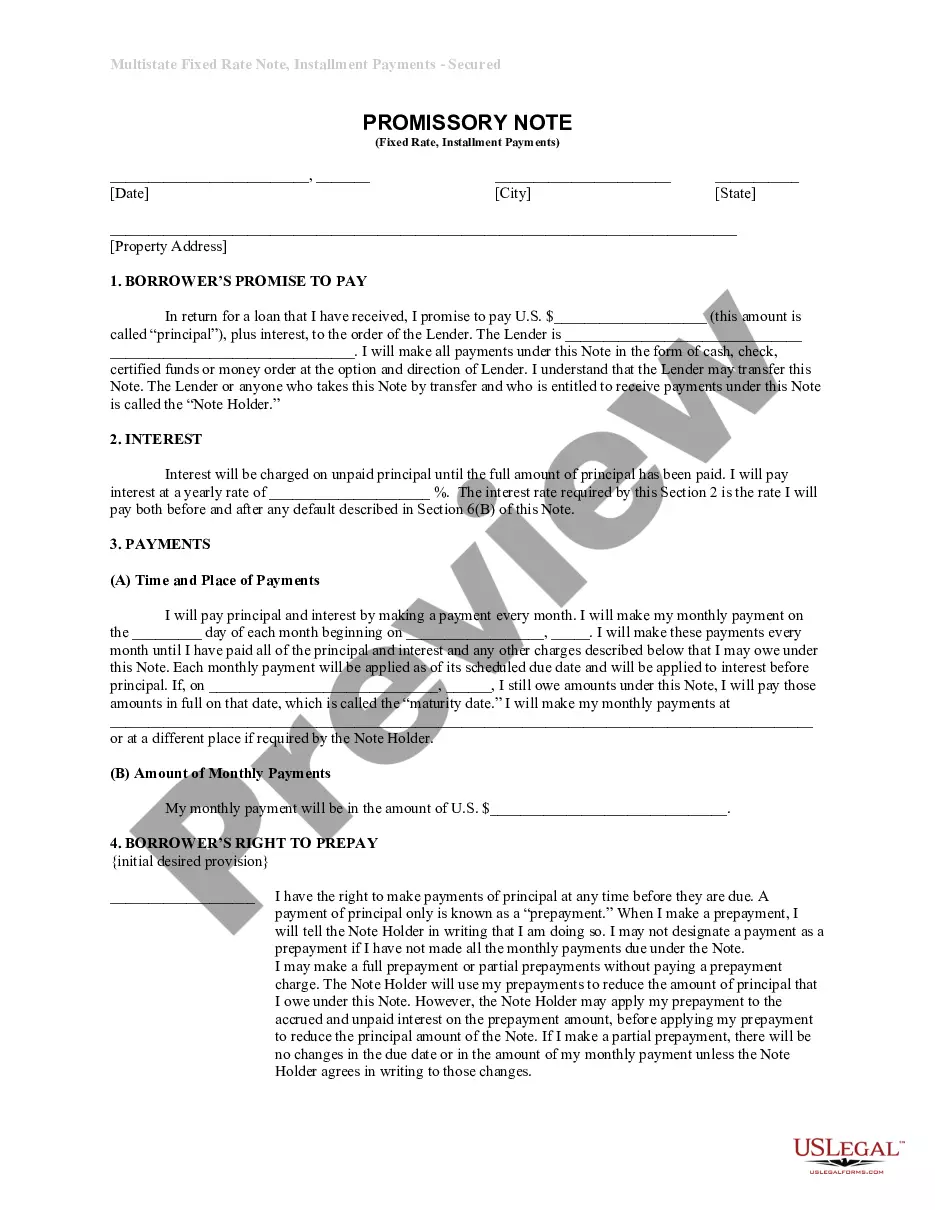
Fifth Amended Class Action Complaint
Overview of this form
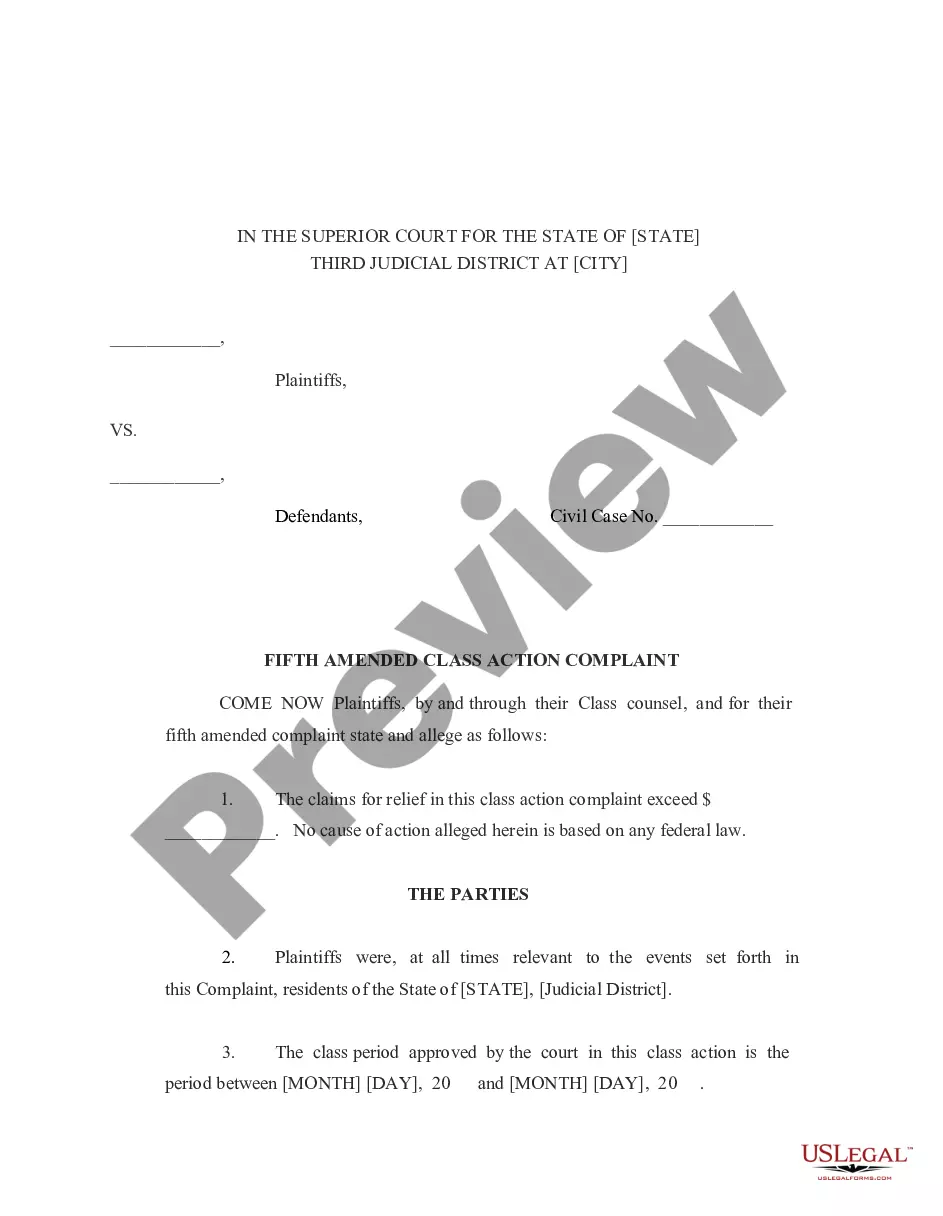
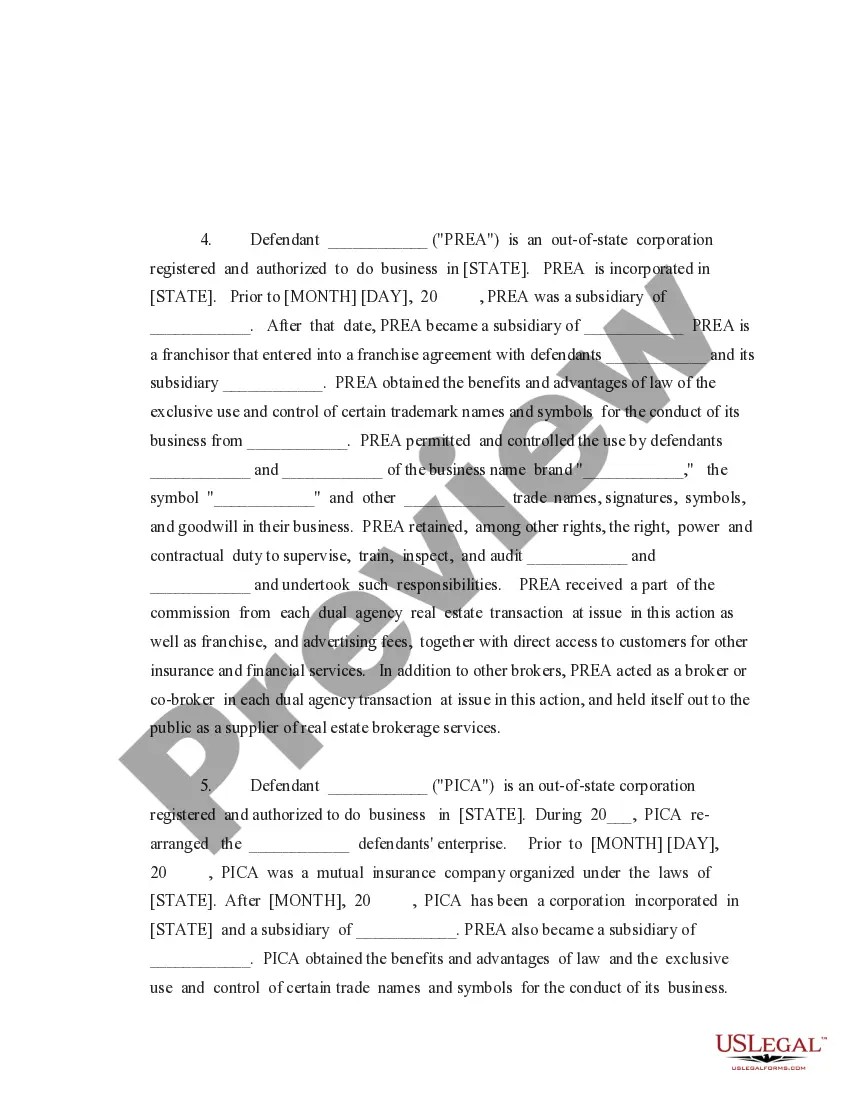
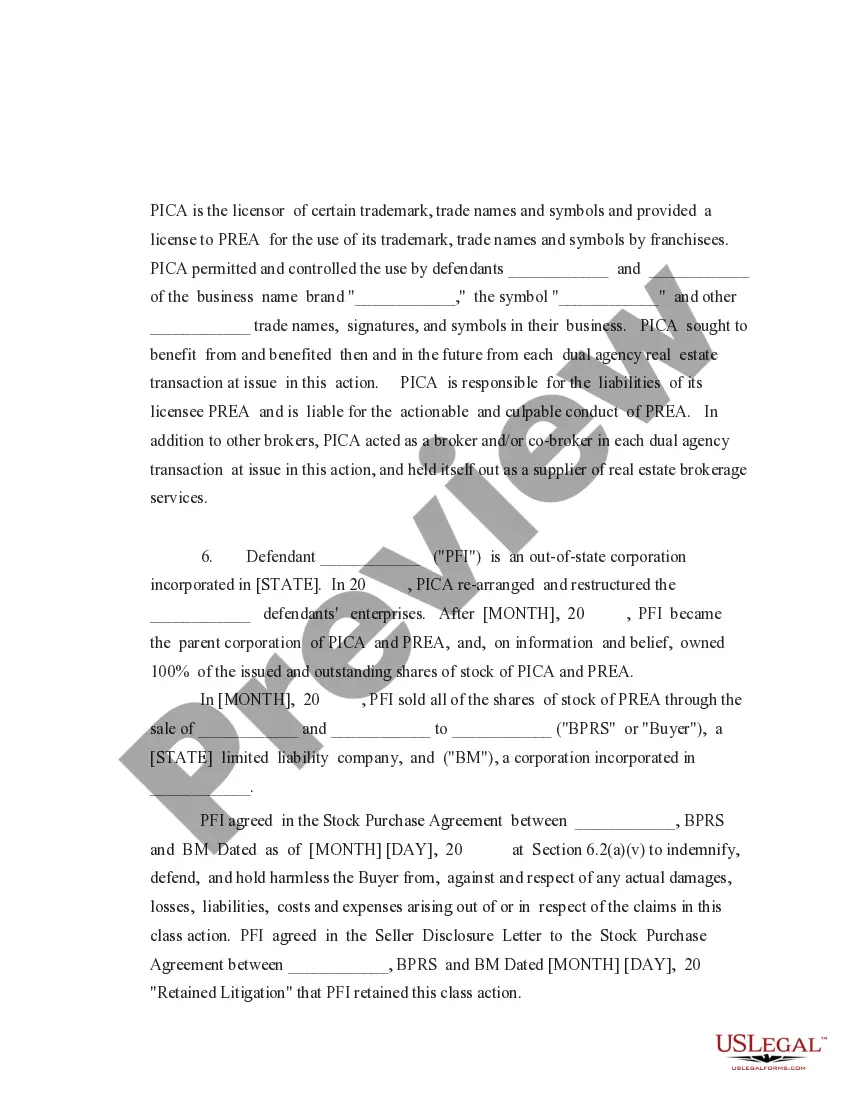
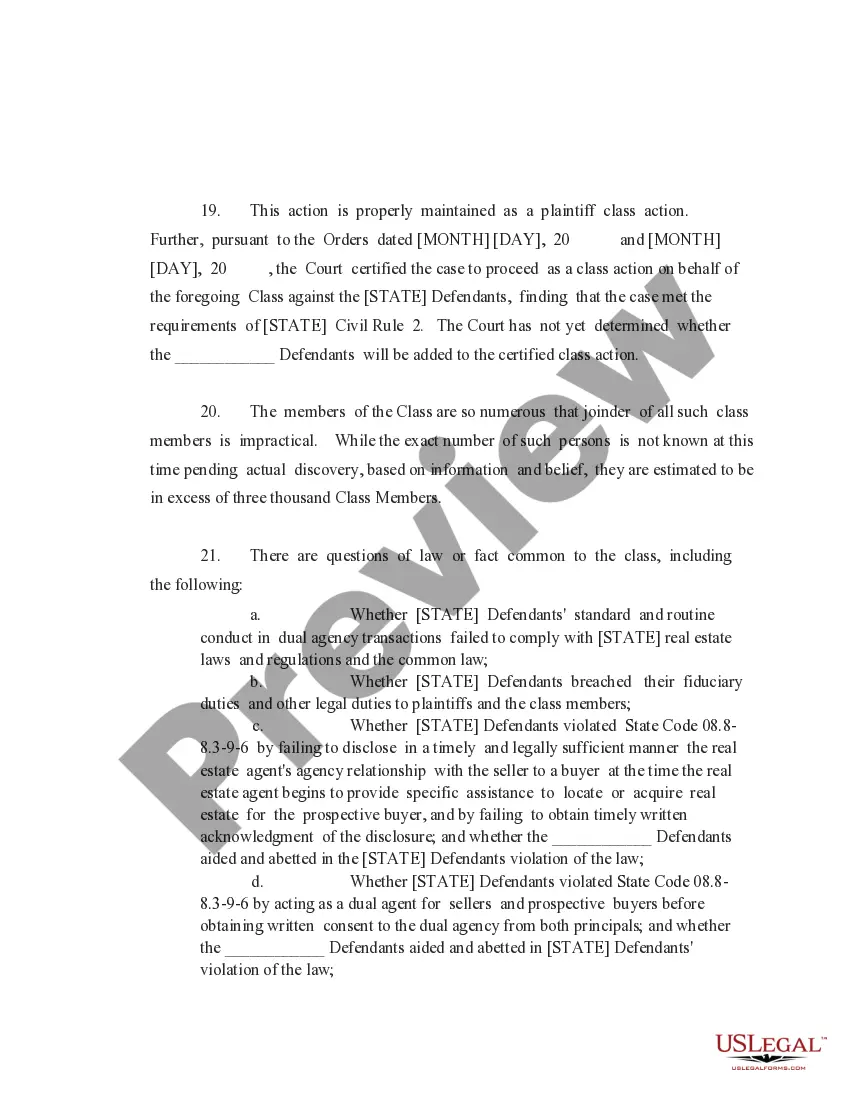
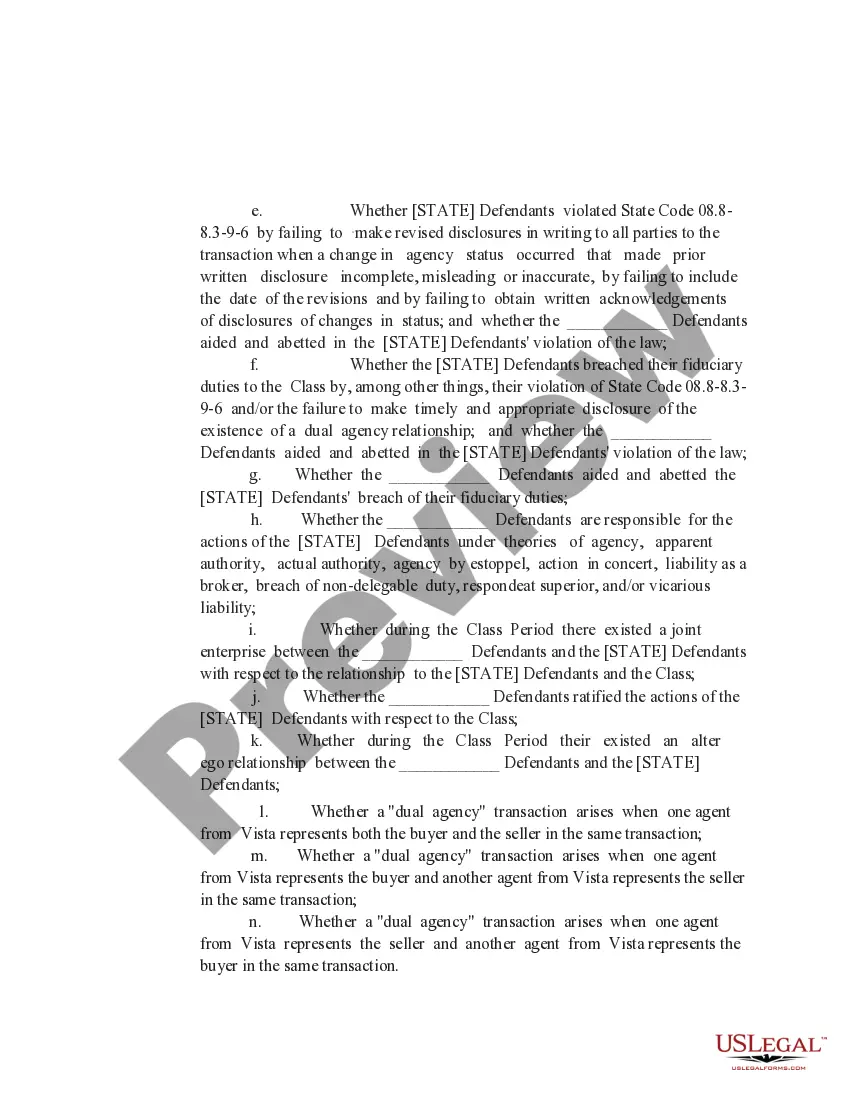
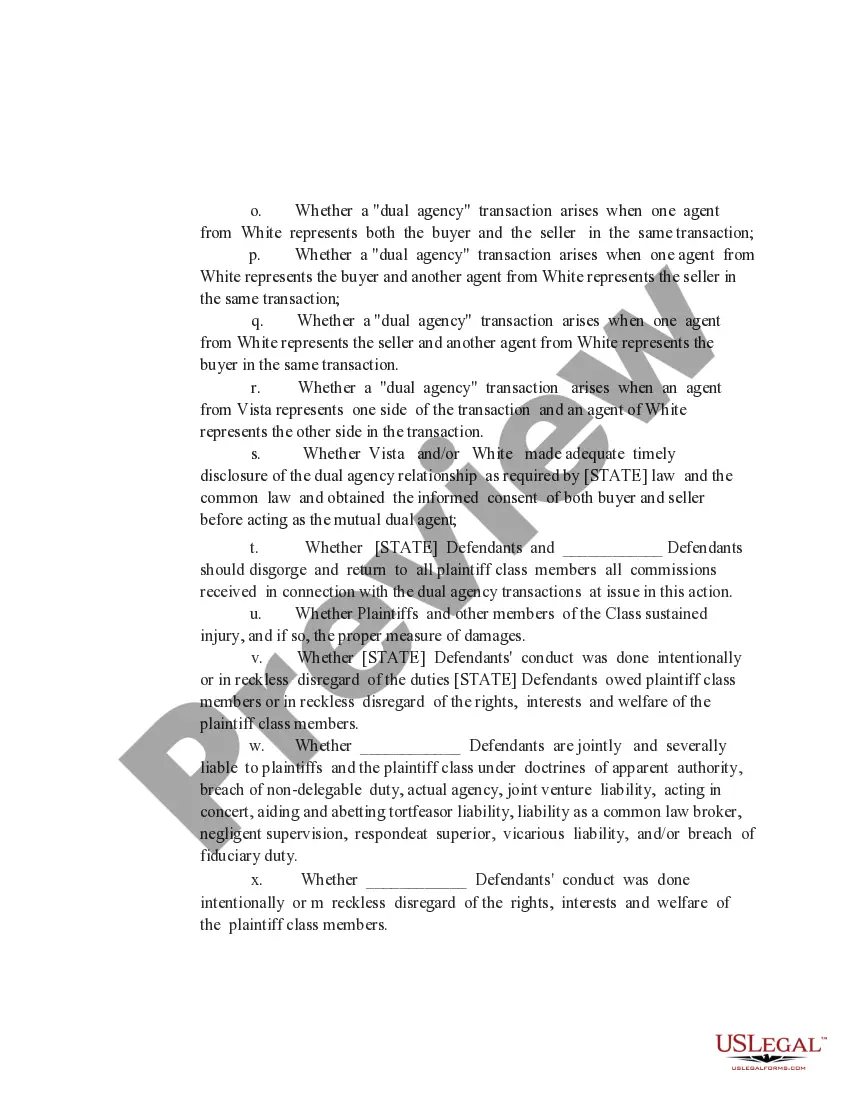
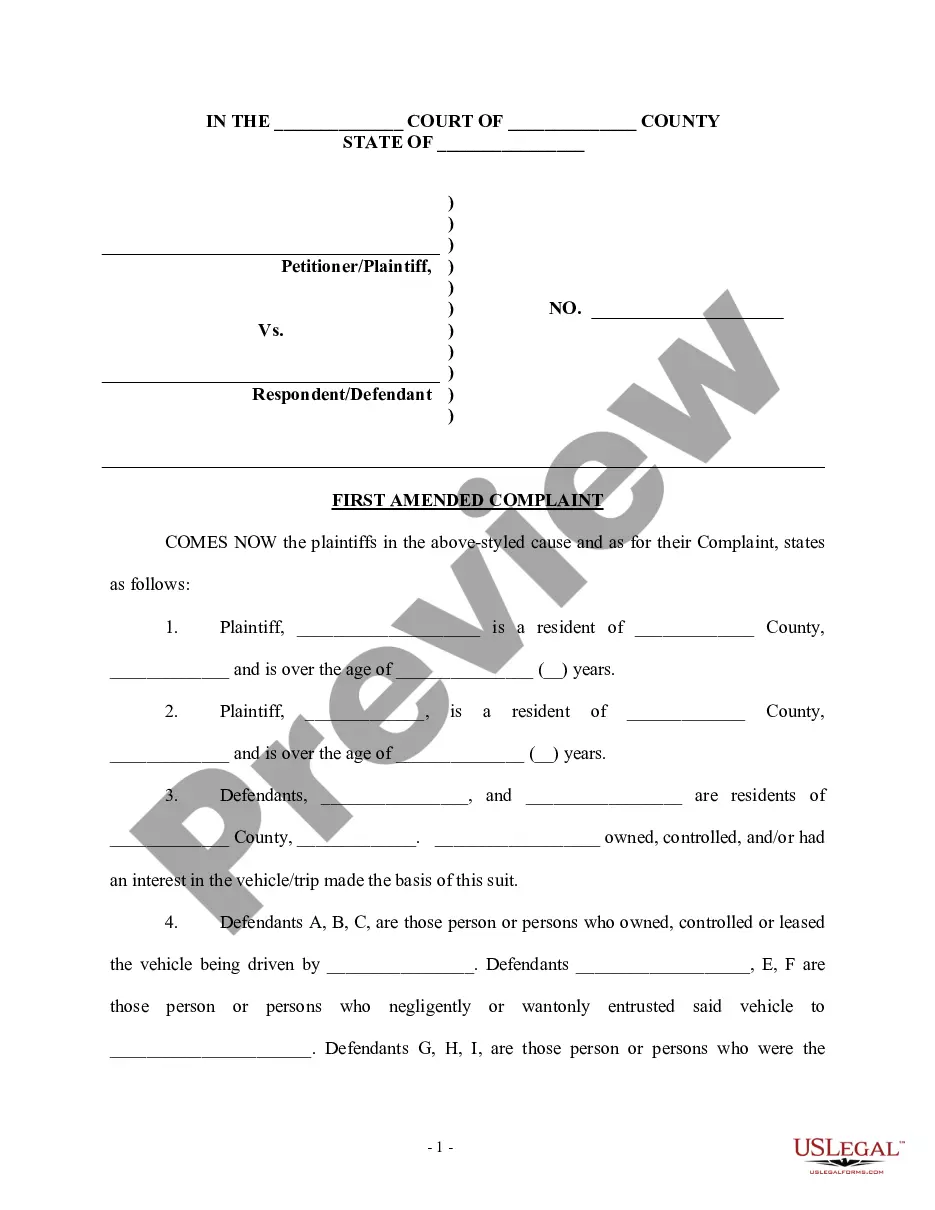
The Fifth Amended Class Action Complaint is a legal document used to outline claims in a class action lawsuit. It is utilized by plaintiffs who seek to challenge the actions of defendantsâin this case, in relation to dual agency transactions in real estate. Unlike previous amendments, this version incorporates additional claims and factual allegations to strengthen the case, helping to clarify the issues at hand and the legal basis for the plaintiffs' demands.
Key parts of this document
- Title and jurisdiction details, including the court and case number.
- Identification of plaintiffs and defendants with detailed allegations against each party.
- Claims for relief based on statutory violations and breach of fiduciary duties.
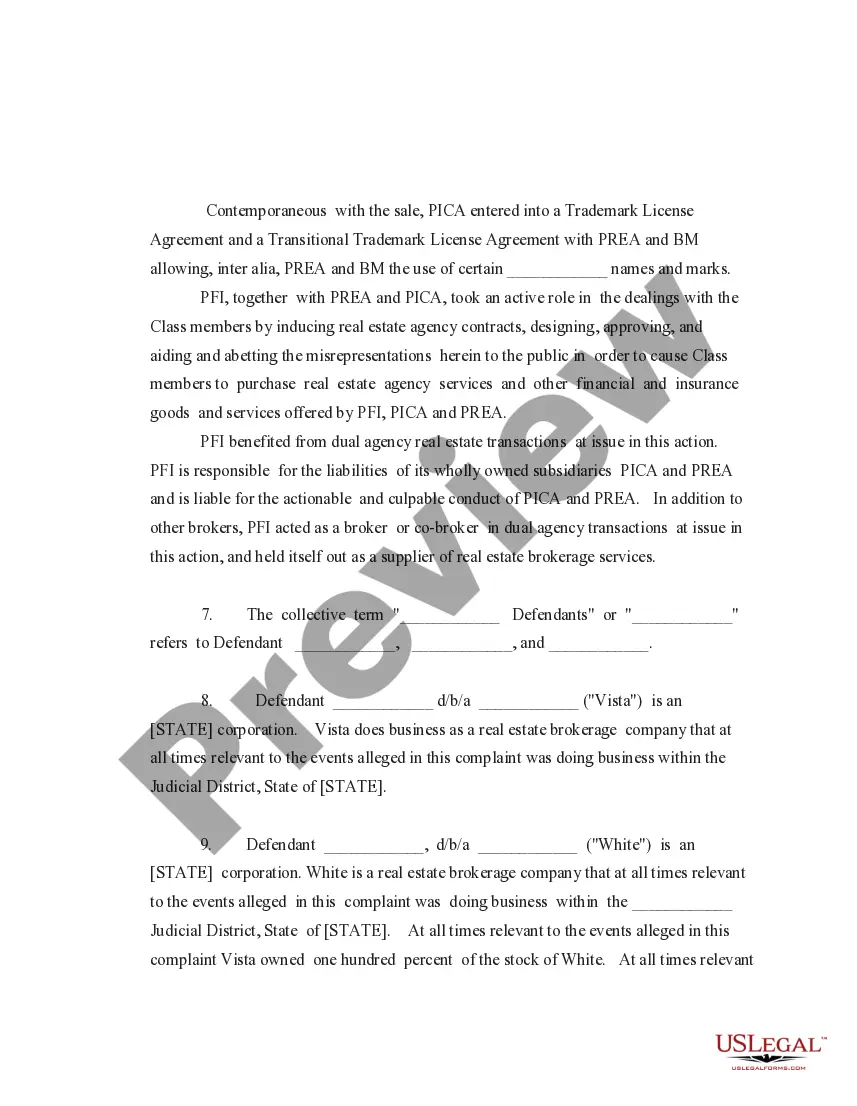
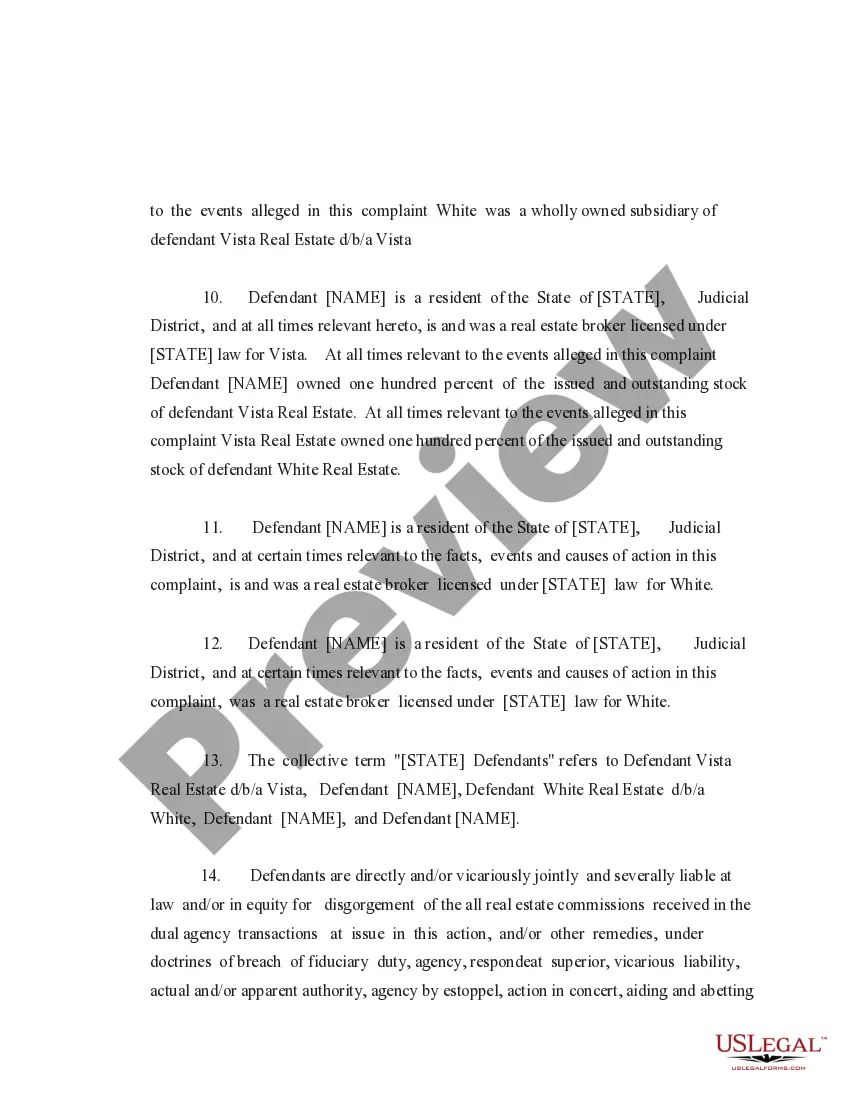
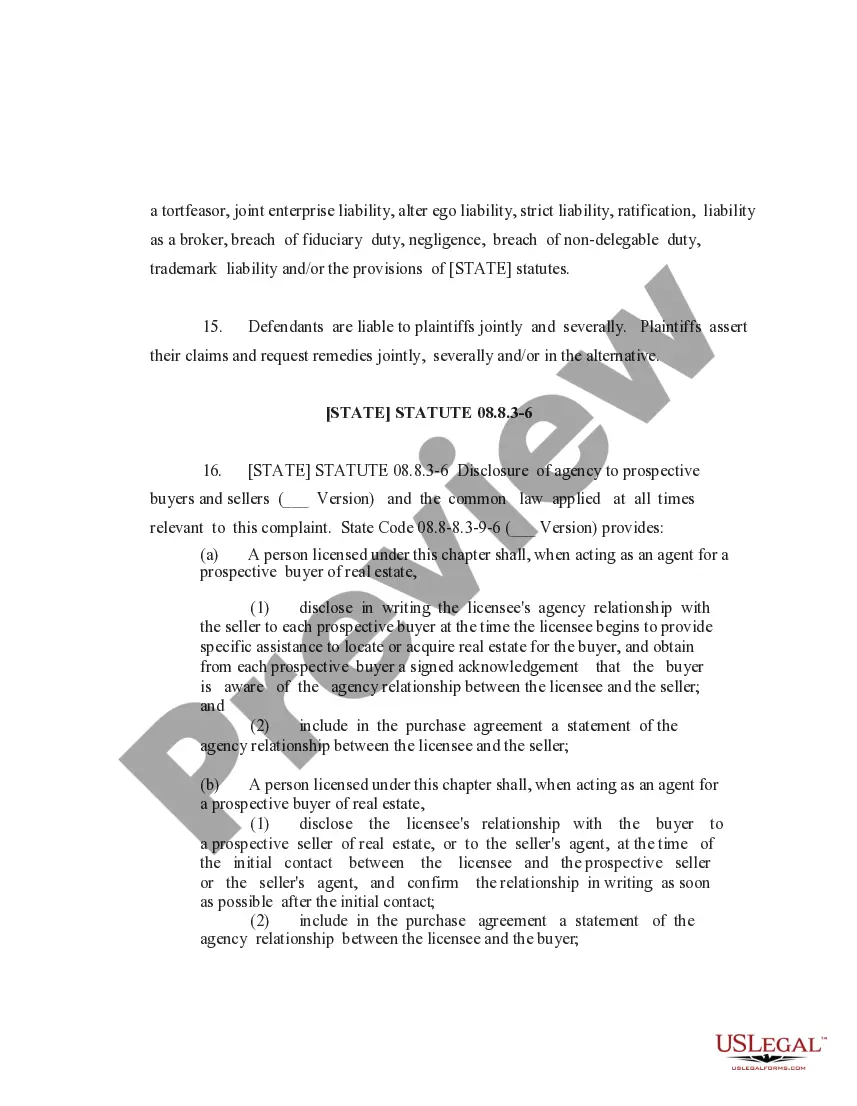
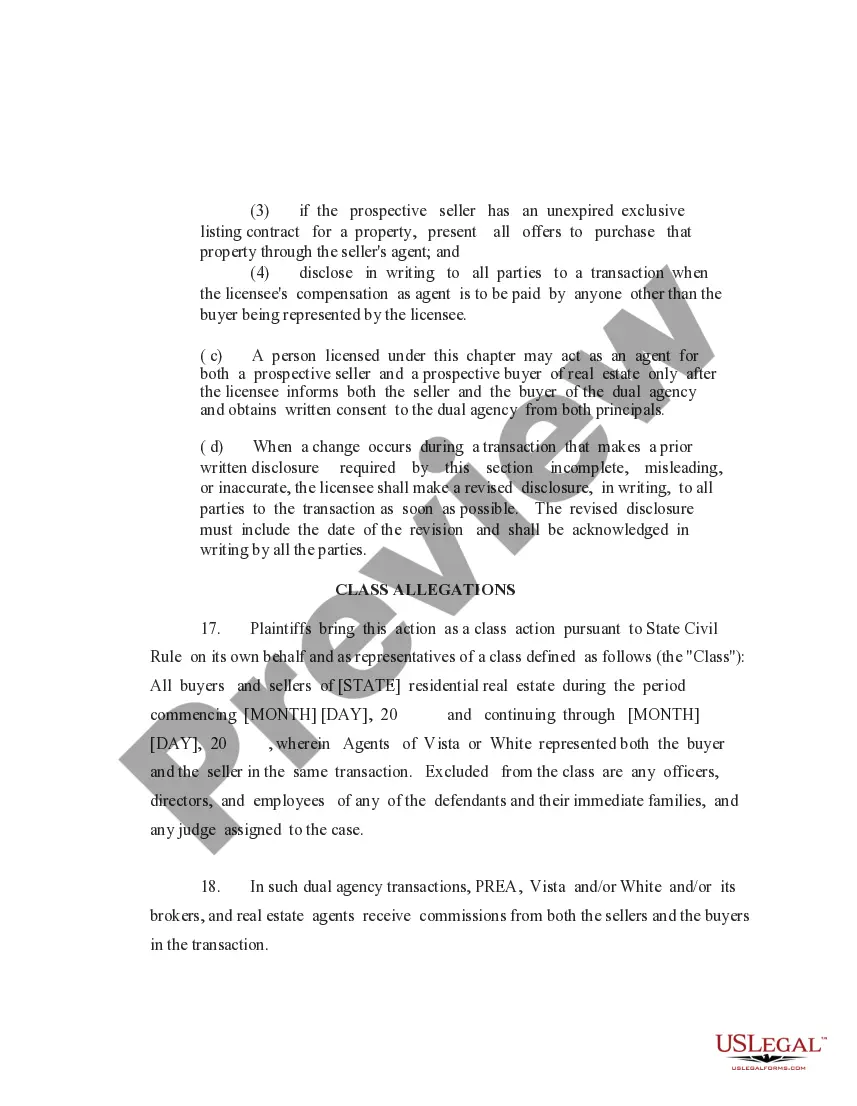
- Allegations regarding the failure to comply with State Code 08.8-8.3-9-6 concerning dual agency disclosures.
- Requests for remedies, including disgorgement of commissions and punitive damages.

Common use cases
This form is needed when individuals or groups believe they have been harmed by improper real estate practices, specifically in situations where real estate agents acted as dual agents without appropriate disclosures and consent. It is typically used in the context of class actions, allowing multiple plaintiffs to collectively address grievances against a common defendant regarding similar practices.
Who this form is for
- Individuals or groups involved in a class action regarding real estate transactions.
- Consumers who seek redress for harm caused by real estate agents' failure to disclose dual agency relationships.
- Legal representatives or attorneys acting on behalf of the plaintiffs in a class action lawsuit.
How to prepare this document
- Begin by identifying all parties involved, including plaintiffs and defendants.
- Detail the claims, outlining each violation of law or breach of duty clearly.
- Fill in the specific dates, names, and relevant transactional details that substantiate the claims.
- Ensure all allegations are consistent with the evidence collected and applicable laws.
- Include requests for specific remedies, such as restitution and punitive damages.
Is notarization required?
This form does not typically require notarization unless specified by local law. However, it is crucial to check the specific requirements for the jurisdiction in which the lawsuit is being filed, as some states may have unique stipulations regarding the execution of legal documents in class actions.
Get your form ready online
Our built-in tools help you complete, sign, share, and store your documents in one place.
Make edits, fill in missing information, and update formatting in US Legal Forms—just like you would in MS Word.
Download a copy, print it, send it by email, or mail it via USPS—whatever works best for your next step.
Sign and collect signatures with our SignNow integration. Send to multiple recipients, set reminders, and more. Go Premium to unlock E-Sign.
If this form requires notarization, complete it online through a secure video call—no need to meet a notary in person or wait for an appointment.
We protect your documents and personal data by following strict security and privacy standards.

Make edits, fill in missing information, and update formatting in US Legal Forms—just like you would in MS Word.

Download a copy, print it, send it by email, or mail it via USPS—whatever works best for your next step.

Sign and collect signatures with our SignNow integration. Send to multiple recipients, set reminders, and more. Go Premium to unlock E-Sign.

If this form requires notarization, complete it online through a secure video call—no need to meet a notary in person or wait for an appointment.

We protect your documents and personal data by following strict security and privacy standards.
Avoid these common issues
- Failing to list all parties involved or misidentifying defendants.
- Not providing sufficient factual support for claims made.
- Missing required signatures or improperly formatted information.
- Neglecting to address jurisdiction-specific requirements and statutes.
Benefits of using this form online
- Access to professionally drafted forms ensuring compliance with legal standards.
- Easy download and customization for individual cases.
- Immediate availability without the need for in-person visits to legal resources.
Looking for another form?


Form popularity
FAQ
The First Amendment guarantees freedoms concerning religion, expression, assembly, and the right to petition. It forbids Congress from both promoting one religion over others and also restricting an individual's religious practices.
The defendant shall answer the amendments, or the complaint as amended, within 30 days after service thereof, or such other time as the court may direct, and judgment by default may be entered upon failure to answer, as in other cases.
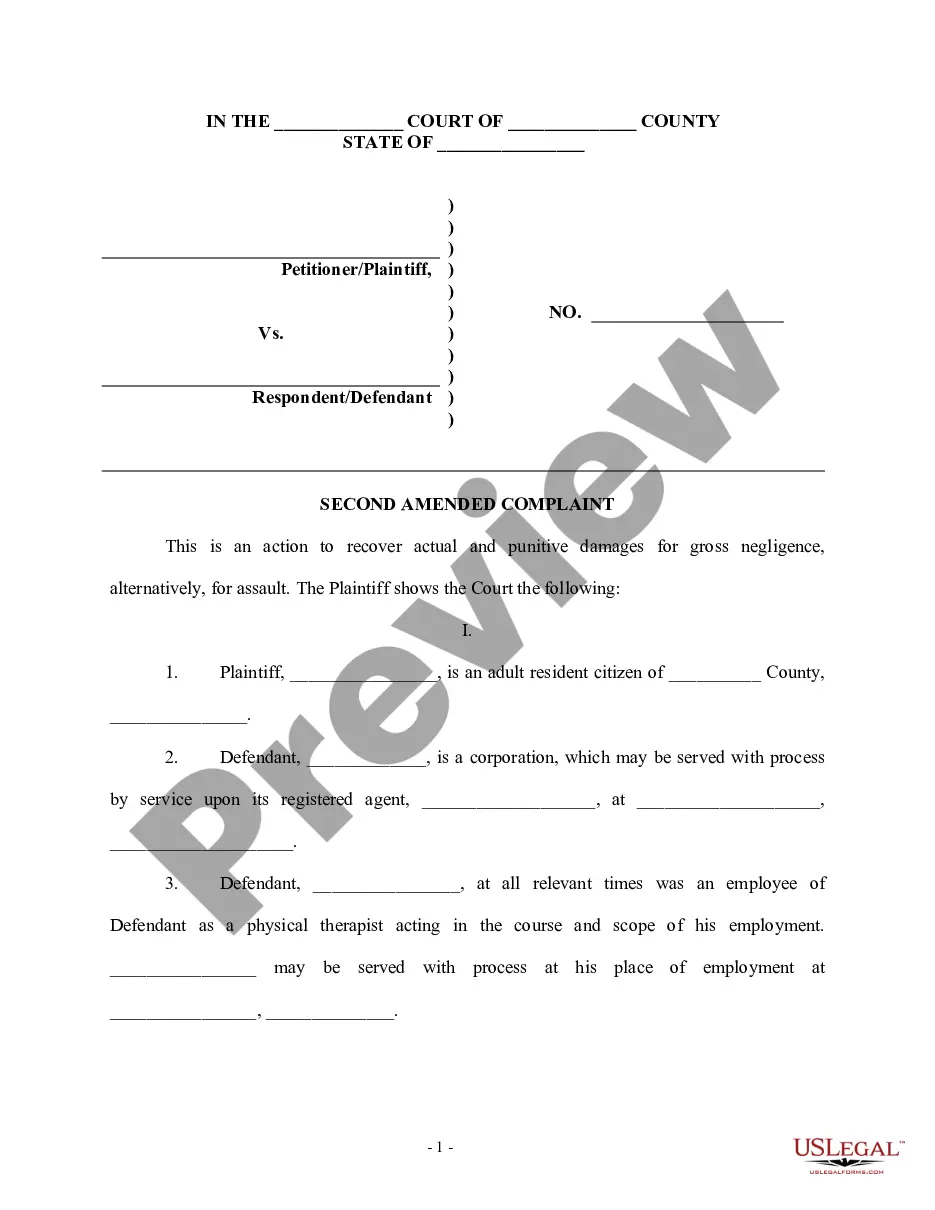
More Definitions of Second Amended Complaint Second Amended Complaint means the pleading to be filed prior to the Final Judgment defined below is entered and which will be the operative pleading for purposes of entering Final Judgment.
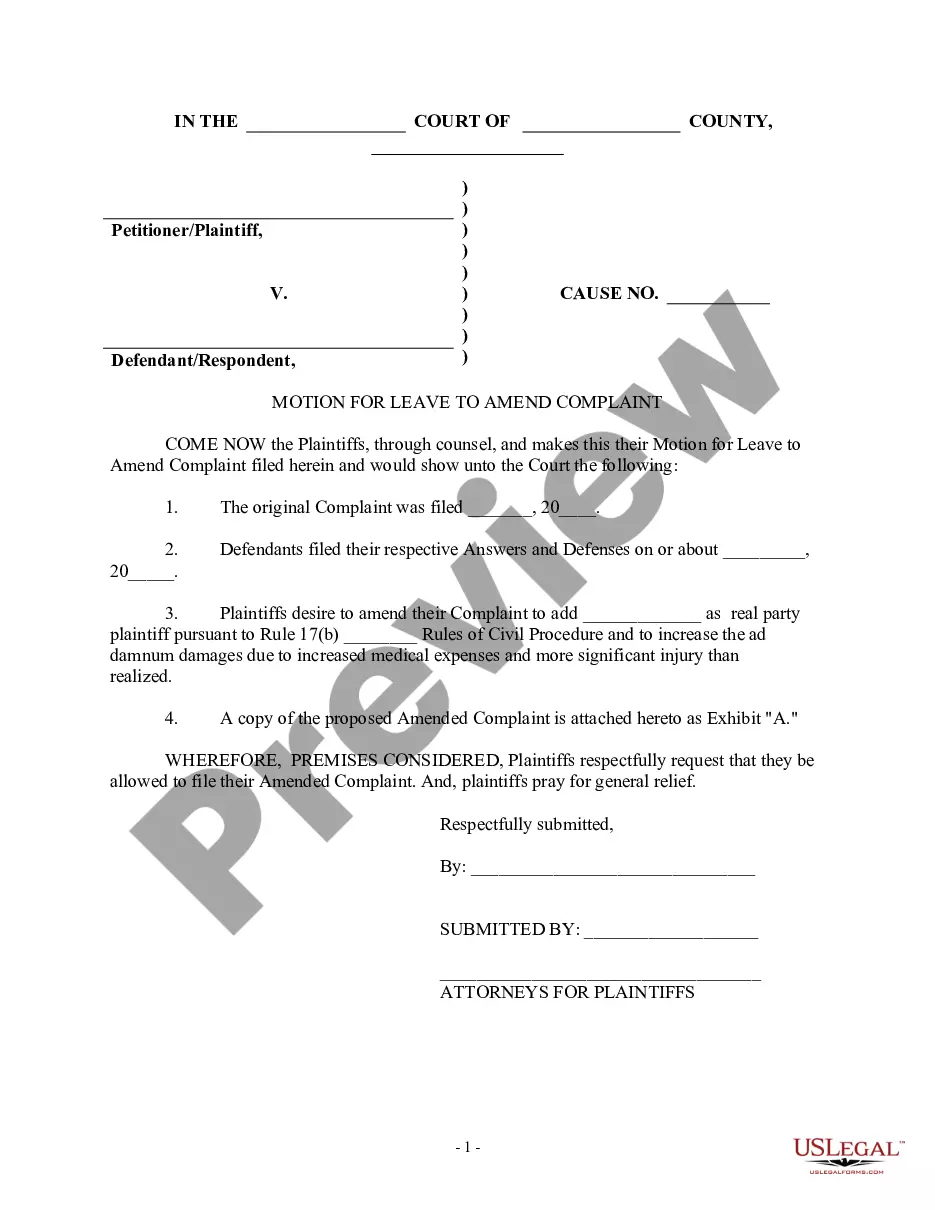
To amend is to make a change by adding, subtracting, or substituting. For example, one can amend a statute, a contract, the United States Constitution, or a pleading filed in a lawsuit.
A class action may be started by one individual, or a dozen. All that is necessary is that all potential plaintiffs have the same cause of action, i.e., the same specific complaint against the defendant.
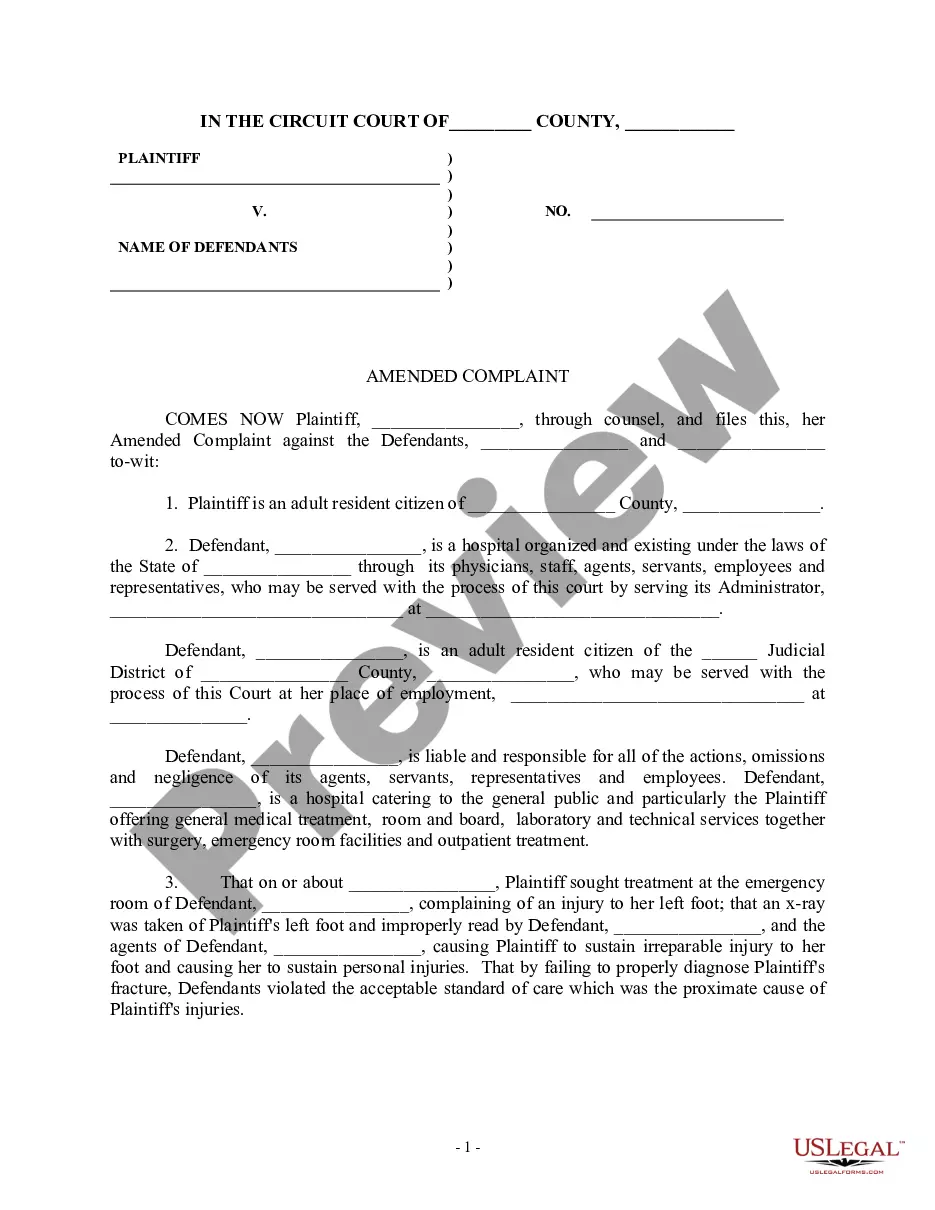
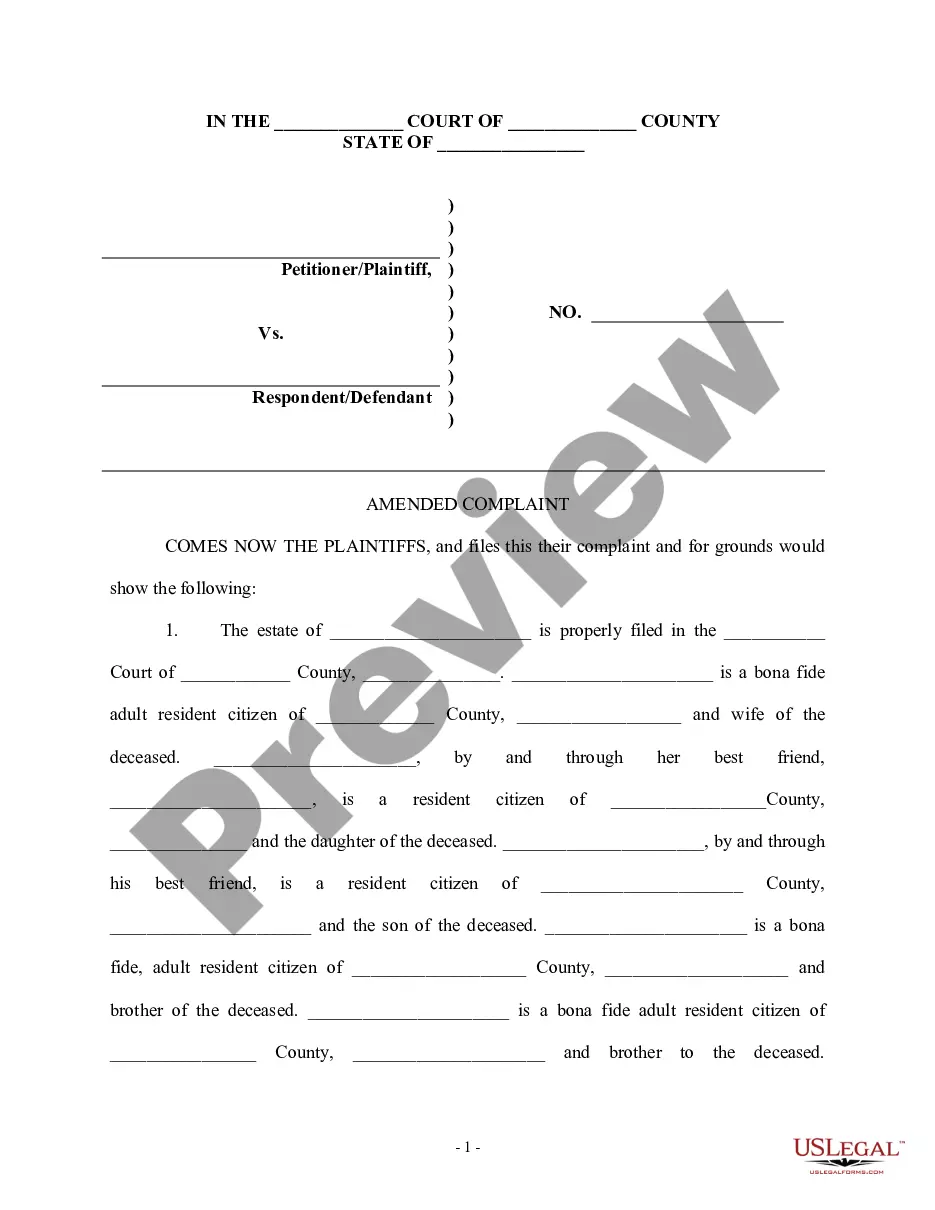
An amended complaint is a written revision of the original complaint filed by a plaintiff or petitioner. Rule 15 of the federal rules of civil procedure allows the plaintiff to amend their complaint one time within 21 days of serving the original complaint or at any point before the defendant answers the complaint.
Contrary to popular belief, class action settlements are not divided among class members evenly. Lead plaintiffs receive the most money in class action lawsuits. They typically have the worst injuries and the highest damages.
(3) Time to Respond. Unless the court orders otherwise, any required response to an amended pleading must be made within the time remaining to respond to the original pleading or within 14 days after service of the amended pleading, whichever is later.