Sample Questions, Voir Dire Examination
Understanding this form
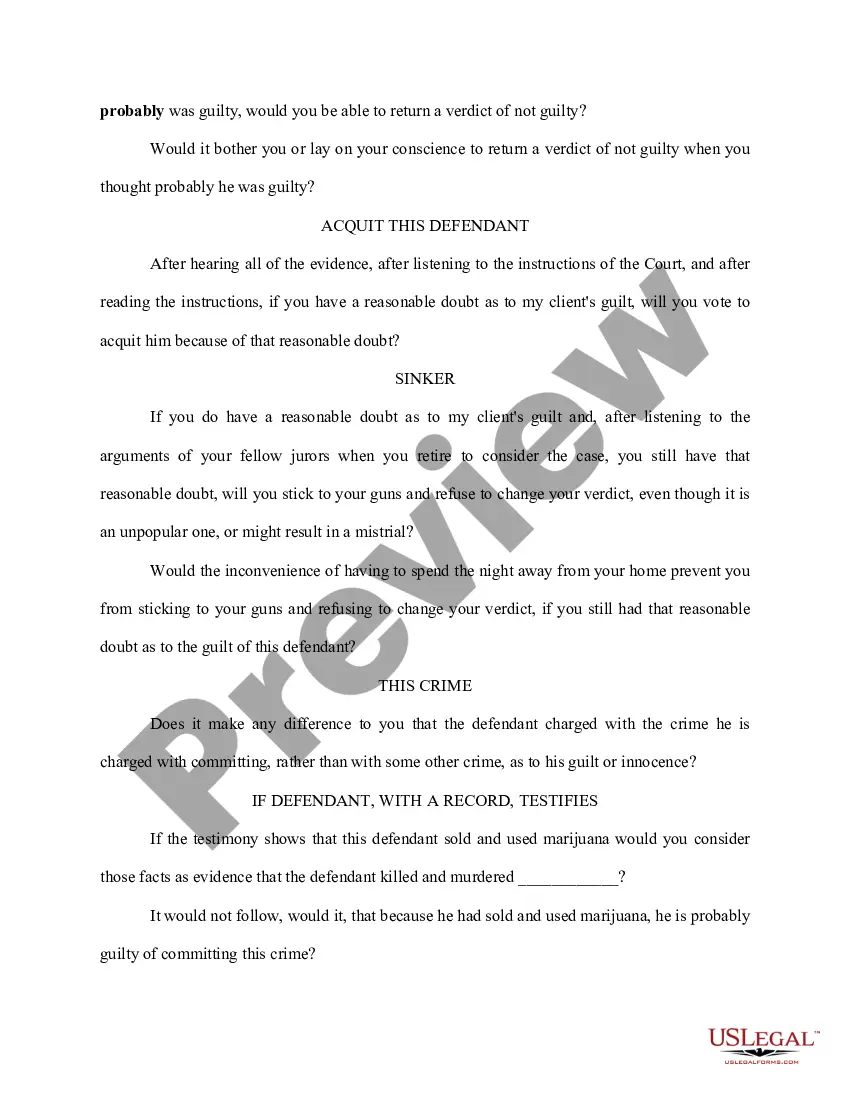
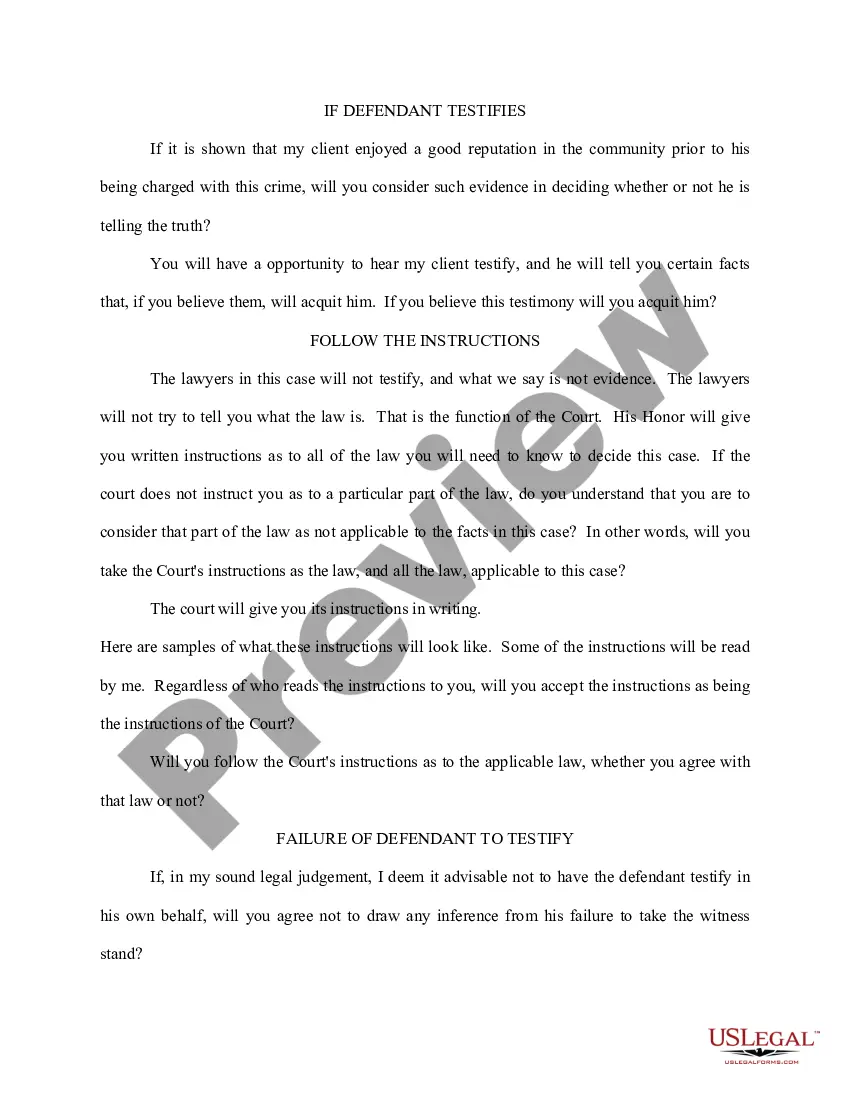
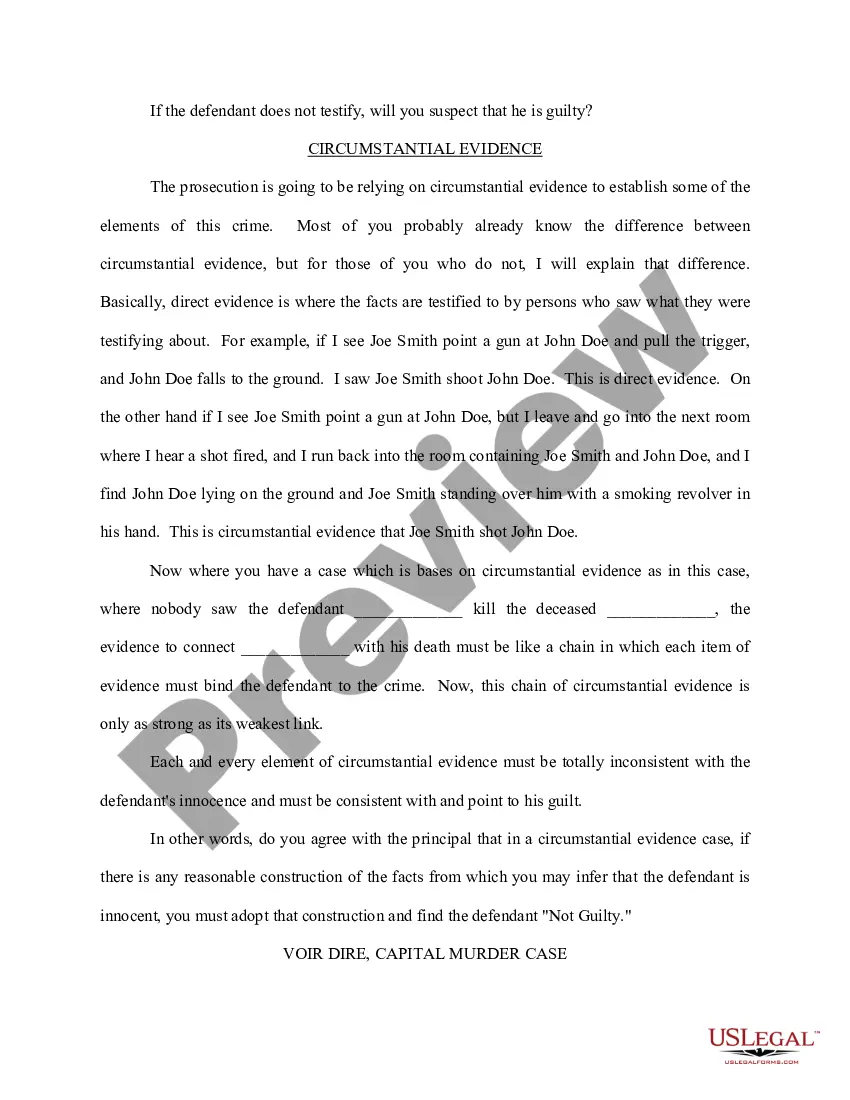
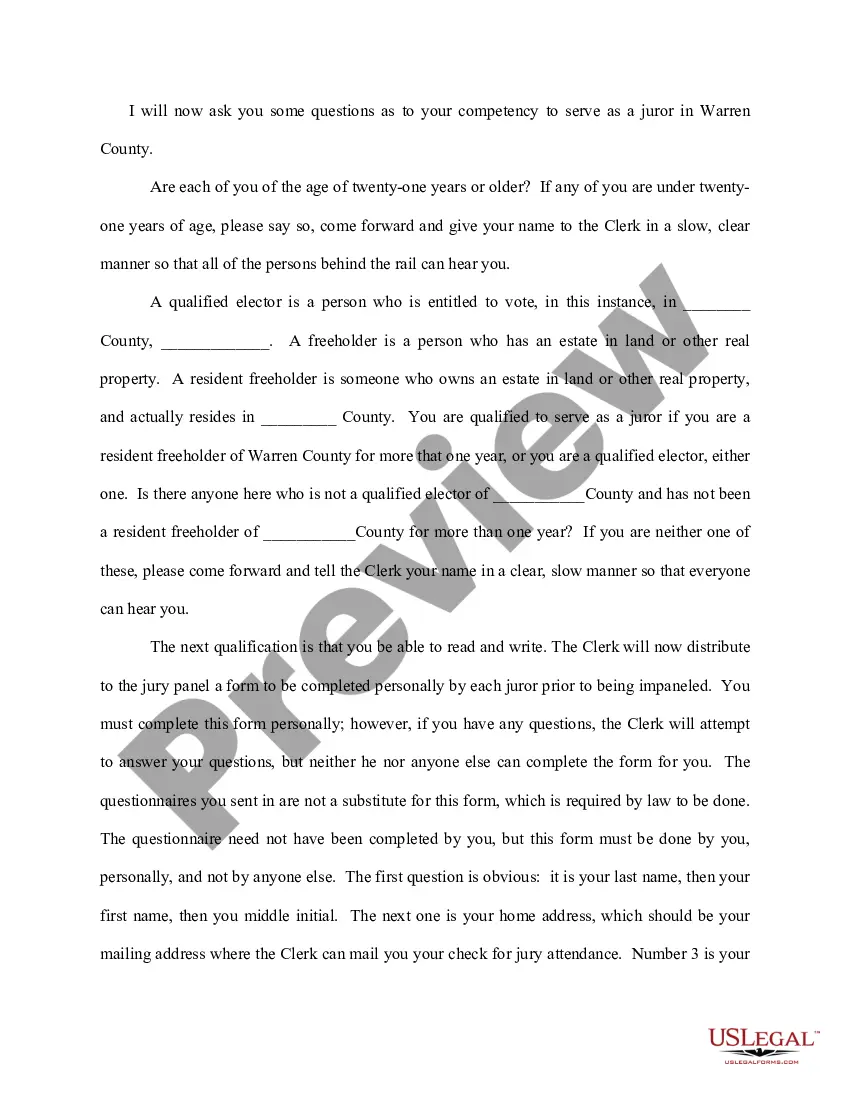
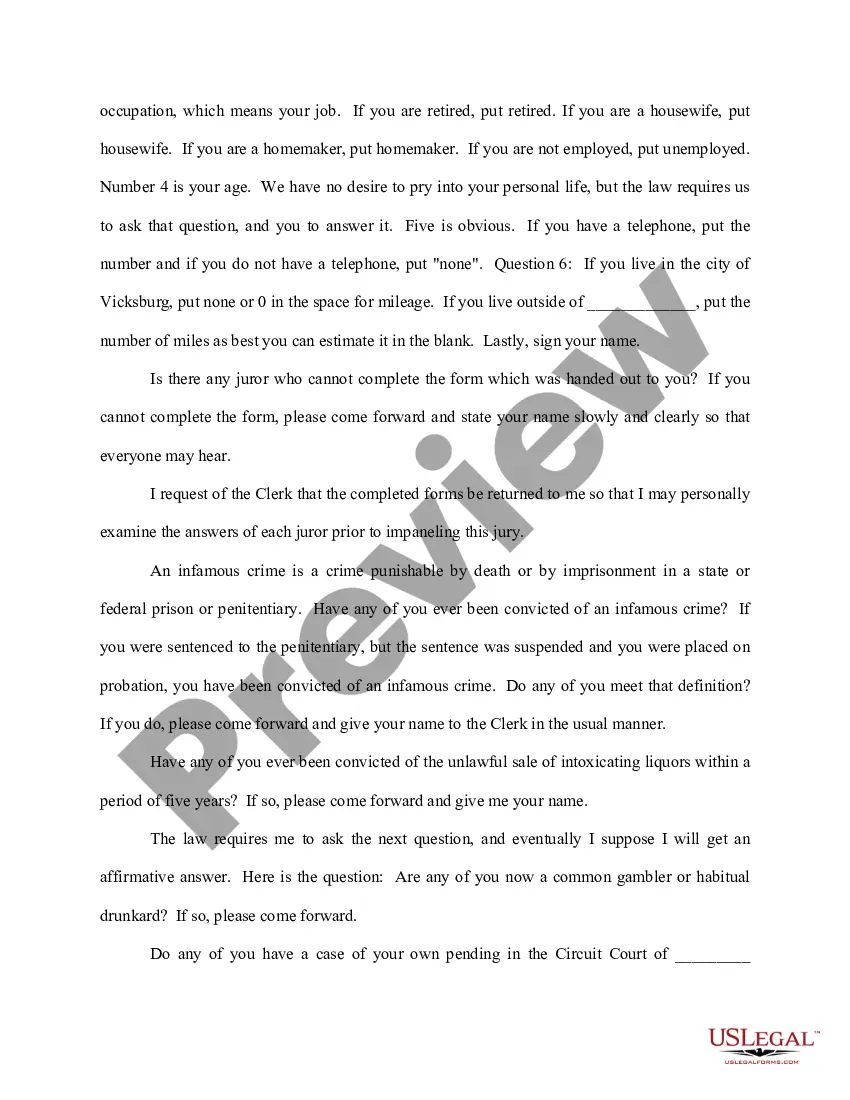
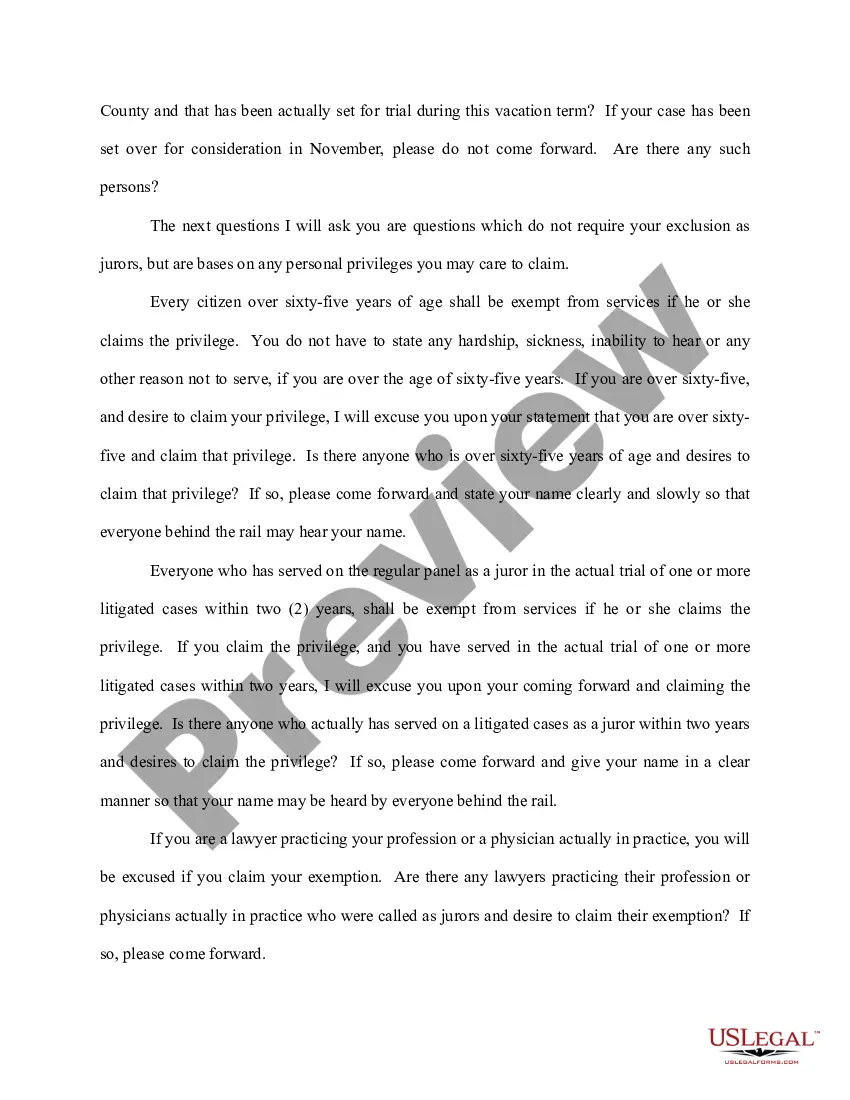
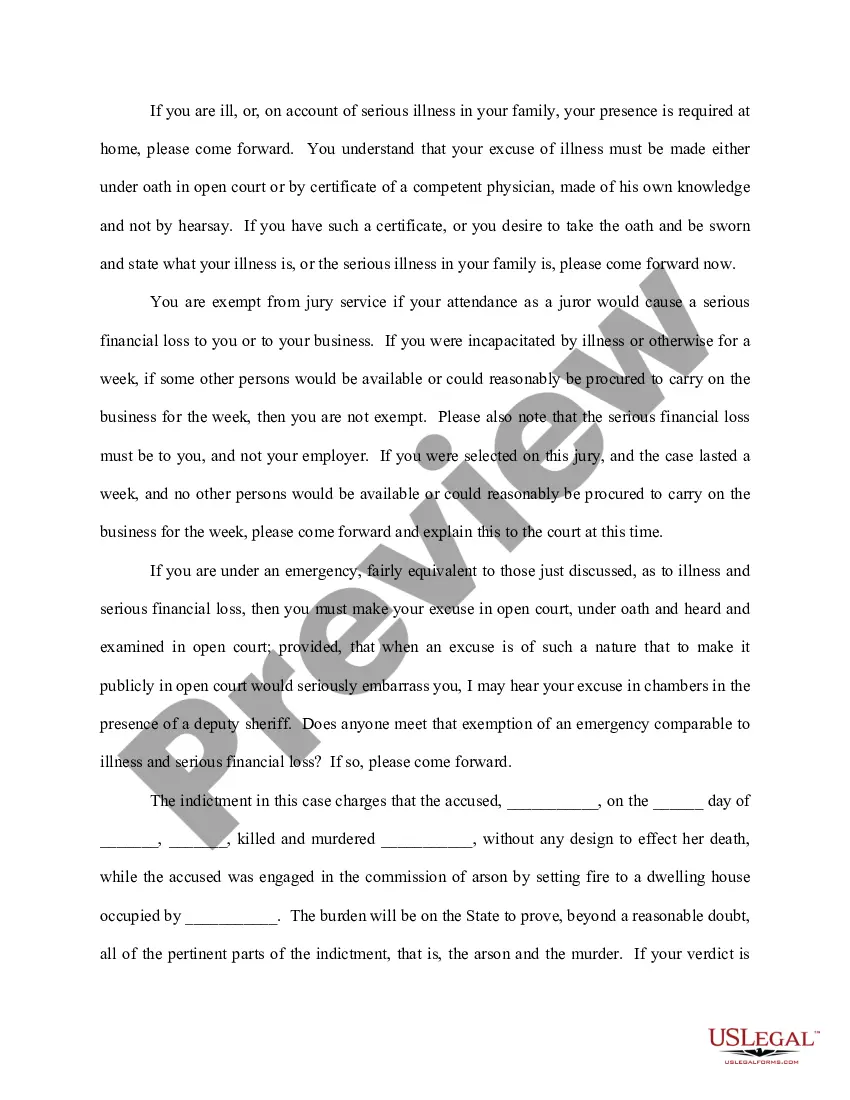
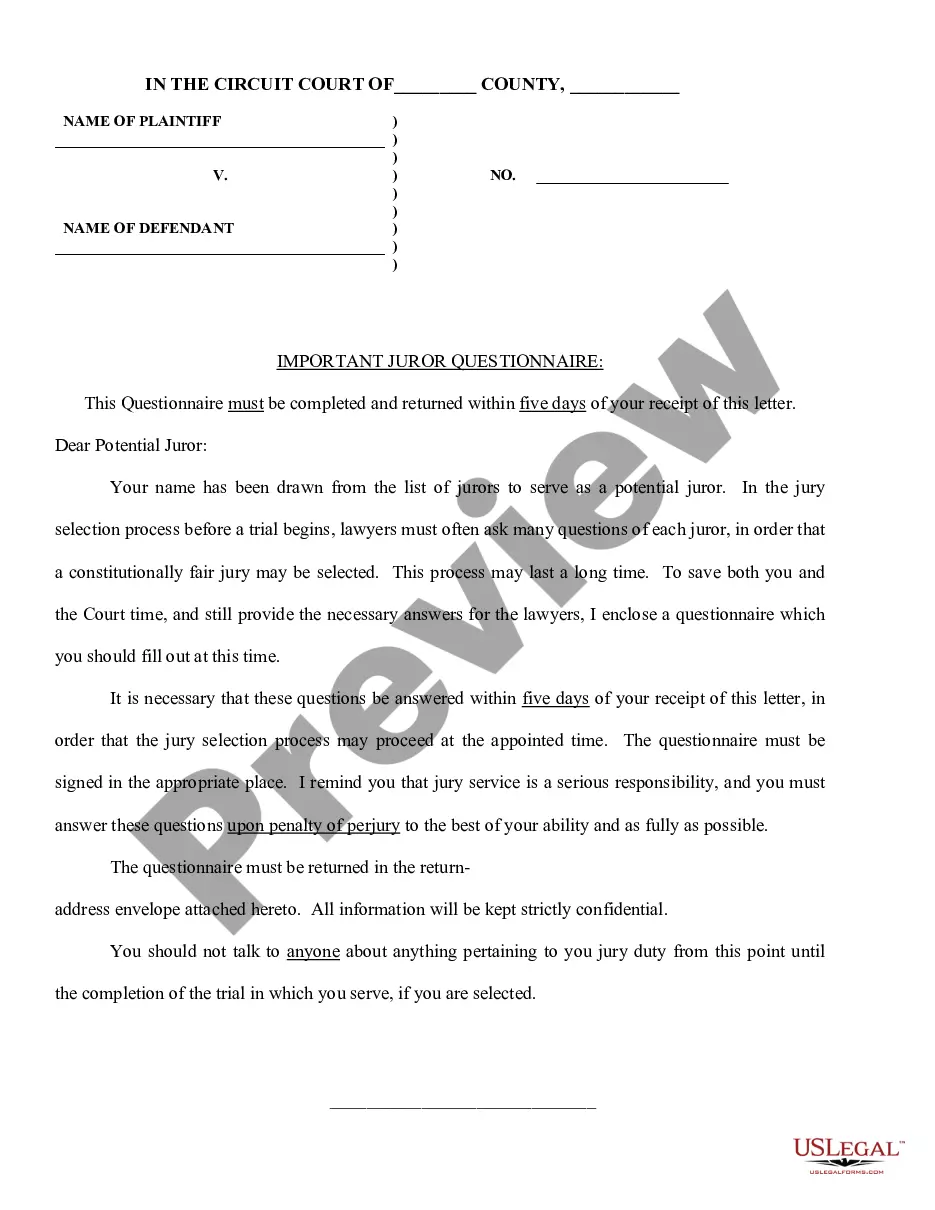
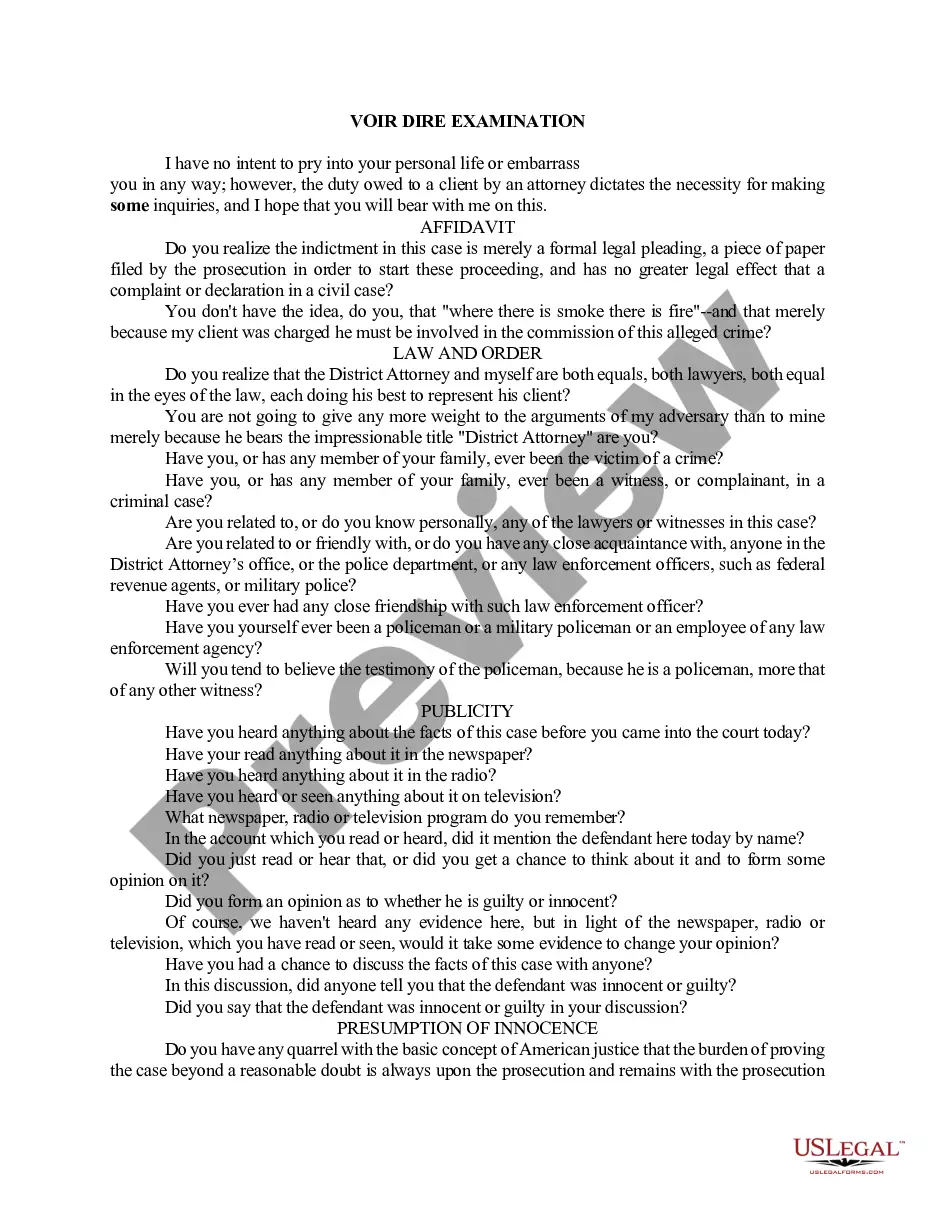
The Sample Questions for Voir Dire Examination is a resource used during jury selection in court. This set of sample questions helps attorneys determine the suitability of prospective jurors based on their backgrounds, beliefs, and experiences. Unlike generic questionnaires, this document is tailored for legal proceedings, ensuring that both prosecution and defense can evaluate potential biases that may affect the trial's impartiality.
Form components explained
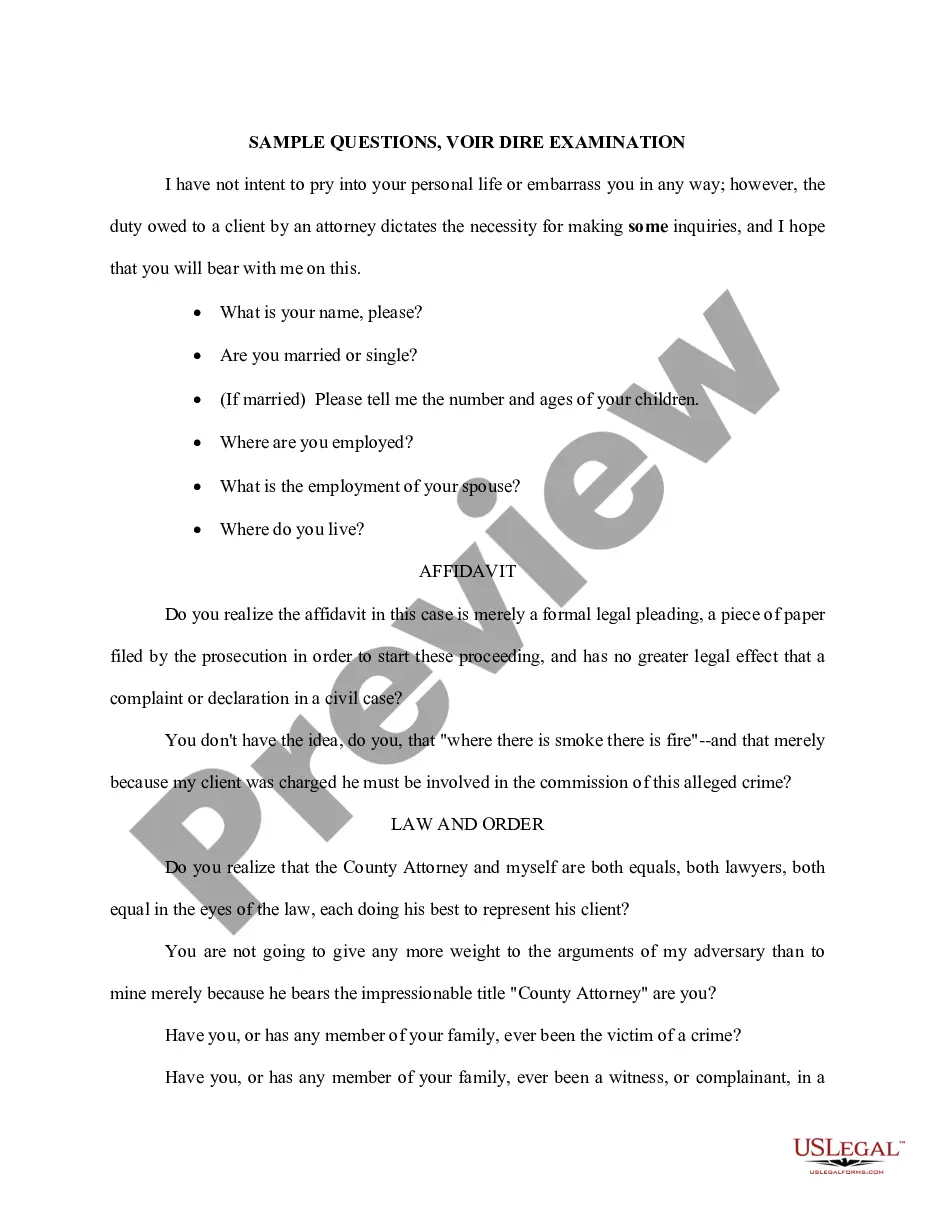
- Personal information section for jurors including name, marital status, and occupation.
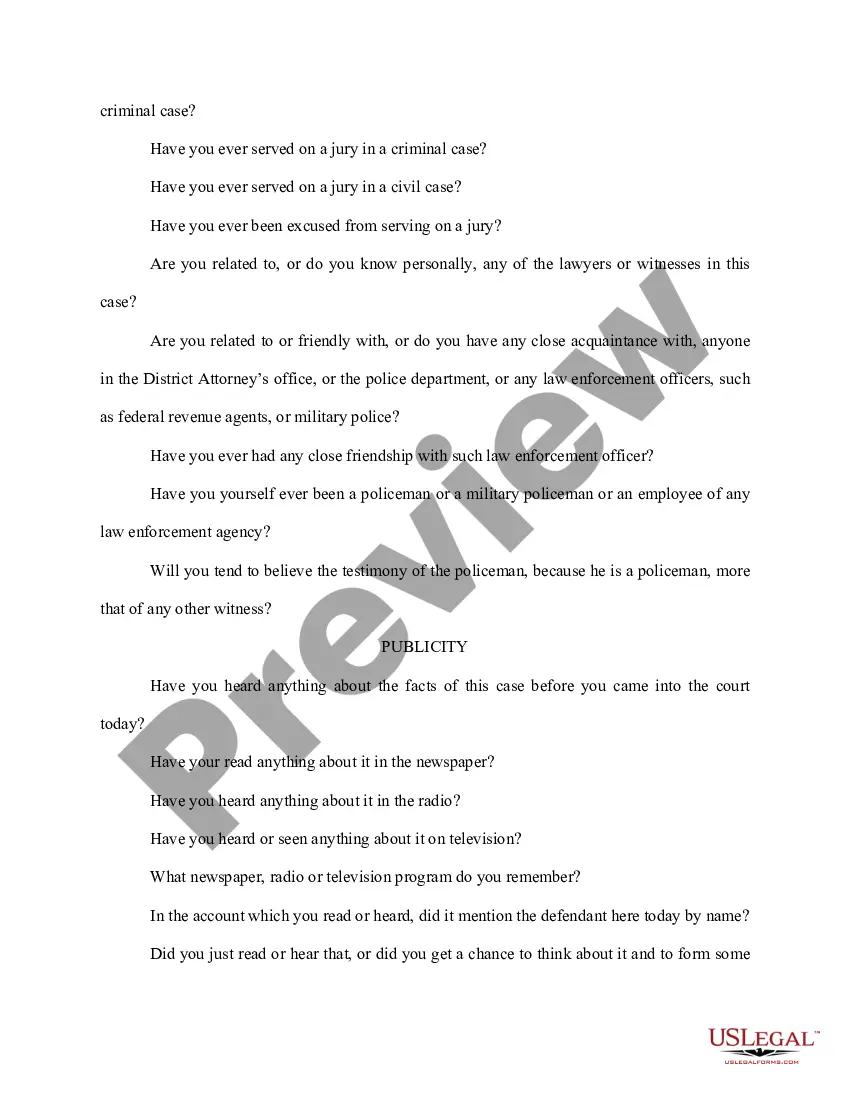
- Questions about prior jury service and any connections to law enforcement.
- Inquiries into potential biases from media coverage or personal experiences related to crime.
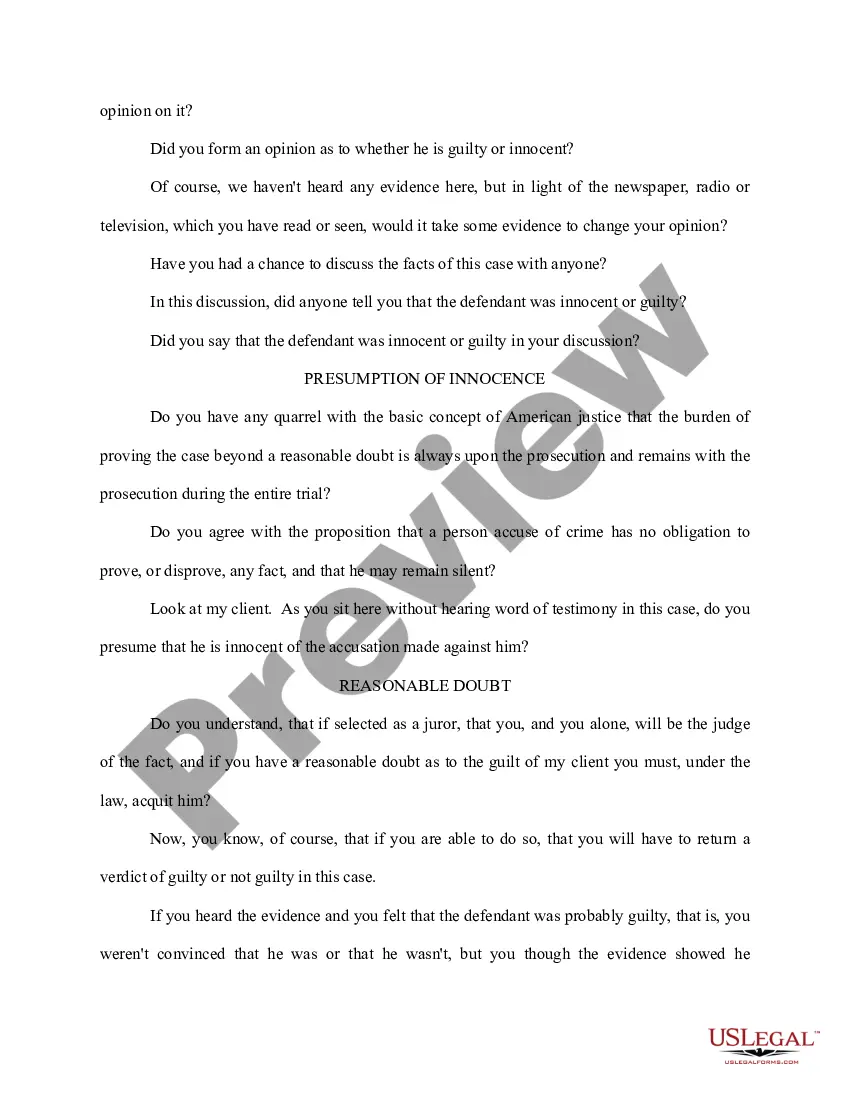
- Clarification of the presumption of innocence and the jury's obligation to uphold it.
- Affidavit section confirming understanding of the defendant's rights.

Situations where this form applies
This form is essential during the voir dire phase of a trial, where attorneys assess potential jurors. It is particularly useful in cases involving serious charges, such as capital murder, where bias could greatly influence the outcome. Utilizing these questions can help ensure a fair trial by identifying jurors who may not be impartial due to personal beliefs or experiences.
Who should use this form
- Attorneys involved in criminal defense or prosecution cases.
- Legal assistants and paralegals working on jury selection processes.
- Litigators preparing for trials where jury bias is a concern.
- Court officials tasked with managing juror inquiries during the selection process.
Instructions for completing this form
- Gather personal information from prospective jurors, including names and contact details.
- Ask each juror the sample questions in a clear and respectful manner to gauge their impartiality.
- Record answers carefully to assess potential biases or conflicts of interest.
- Ensure that each juror understands the presumption of innocence before proceeding with questions related to the case.
- Prepare to address responses, particularly those indicating prior knowledge or relationships that could impact unbiased decision-making.
Does this form need to be notarized?
This form usually doesn’t need to be notarized. However, local laws or specific transactions may require it. Our online notarization service, powered by Notarize, lets you complete it remotely through a secure video session, available 24/7.
Get your form ready online
Our built-in tools help you complete, sign, share, and store your documents in one place.
Make edits, fill in missing information, and update formatting in US Legal Forms—just like you would in MS Word.
Download a copy, print it, send it by email, or mail it via USPS—whatever works best for your next step.
Sign and collect signatures with our SignNow integration. Send to multiple recipients, set reminders, and more. Go Premium to unlock E-Sign.
If this form requires notarization, complete it online through a secure video call—no need to meet a notary in person or wait for an appointment.
We protect your documents and personal data by following strict security and privacy standards.

Make edits, fill in missing information, and update formatting in US Legal Forms—just like you would in MS Word.

Download a copy, print it, send it by email, or mail it via USPS—whatever works best for your next step.

Sign and collect signatures with our SignNow integration. Send to multiple recipients, set reminders, and more. Go Premium to unlock E-Sign.

If this form requires notarization, complete it online through a secure video call—no need to meet a notary in person or wait for an appointment.

We protect your documents and personal data by following strict security and privacy standards.
Typical mistakes to avoid
- Failing to adapt questions to the specifics of the case or the jurisdiction.
- Not allowing adequate time for jurors to process and answer the questions.
- Overlooking follow-up questions based on jurors' answers that could uncover biases.
- Neglecting to maintain a respectful tone, which may deter honest responses.
Why complete this form online
- Accessibility: Download and utilize the form instantly for any trial preparation needs.
- Editability: Customize the questions to fit the specific case or jurisdiction.
- Reliability: Ensure compliance with legal standards and practices developed by licensed attorneys.
Legal use & context
- This form serves as a guideline for attorneys during voir dire and is widely accepted in juror selection processes.
- It helps to maintain the integrity of the judicial process by identifying unbiased jurors.
- Understanding and adherence to the rules related to jury selection can significantly affect the trial's outcome.
Summary of main points
- Understanding voir dire is critical for fair jury selection.
- The form includes comprehensive sample questions to assess juror suitability.
- Knowledge of local laws is necessary for effective use of the form.
Looking for another form?

Form popularity
FAQ
Have you or any member of your family, or a close friend, ever made a claim for personal injuries?Have you or any member of your family, or a close friend, ever been a party in a legal proceeding?Do you believe there are too many lawsuits?Omaha Jury Duty: What Kinds Of Questions Will Lawyers Ask Me?\nwww.mgmillerlaw.com > jury-duty-questions
How long have you practiced criminal law? What are your educational and professional credentials? Have you handled cases like mine before? What is your success rate? Do you have any testimonials from past clients that I can read? How often do your cases go to trial?
Have you or any member of your family, or a close friend, ever made a claim for personal injuries? Have you or any member of your family, or a close friend, ever been a party in a legal proceeding? Do you believe there are too many lawsuits?
Thus, an effective juror must: (1) Be honest, forthcoming, and genuine; (2) Listen attentively and take good notes; (3) Ask questions if you do not understand; and (4) Listen to all the evidence prior to forming any conclusions about the case.
BREAK THE ICE: If you want jurors to open up, you have to make them feel comfortable. ENGAGE JURORS IN CONVERSATION: Do not talk at jurors, talk to and with them. BARROOM TALK, NOT COURTROOM TALK: Do not engage in lawyer speak.
1BREAK THE ICE: If you want jurors to open up, you have to make them feel comfortable.2ENGAGE JURORS IN CONVERSATION: Do not talk at jurors, talk to and with them.3BARROOM TALK, NOT COURTROOM TALK: Do not engage in lawyer speak.Effective Strategies for Voir Dire - Opveon Litigation Services\nwww.opveon.com > blog > effective-strategies-for-voir-dire
What type of cases and deals are distributed to new associates? What kind of tasks do new associates typically handle? What makes this firm stand apart from others? How do you consider the firm will grow in the next five years? Could you explain the firm's hierarchical structure?
What is your case about? What do you hope to accomplish? How do you want us to communicate? Why did you choose me? Are you comfortable with my rates?
Definition. An issue that is always resolved by a judge, not a jury, including: 1) An issue regarding the application or interpretation of a law. 2) An issue regarding what the relevant law is.