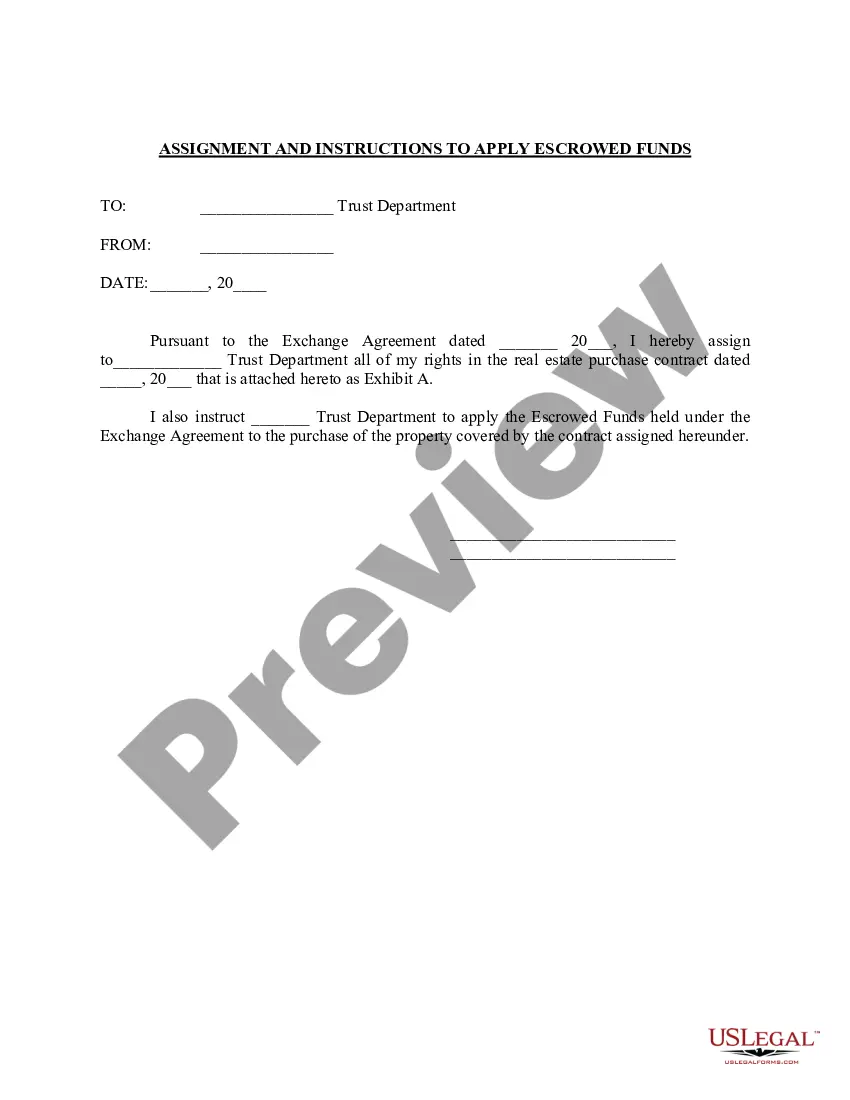
Assignment and Instruction to Apply Escrowed Funds
Overview of this form
The Assignment and Instruction to Apply Escrowed Funds is a legal document that allows a grantor to assign their rights in a real estate purchase contract to a trust department. This form also directs the trust department to utilize the escrowed funds held under an exchange agreement for purchasing the specified property. Unlike other forms used in real estate transactions, this form specifically focuses on the assignment of rights and the handling of escrowed funds.
Form components explained
- Identification of the trust department receiving the assignment.
- Details of the real estate purchase contract and accompanying exhibit.
- Instructions for the application of escrowed funds to the designated property purchase.
- Signatures of the grantor and witnesses, if required.
Common use cases
This form is necessary when a grantor wishes to transfer their contractual rights and direct the management of escrowed funds to a trust department as part of a real estate transaction. You would use this form in situations where a real estate purchase contract needs to be assigned due to a financial arrangement, or when the parties involved need to ensure that funds are appropriately allocated under an exchange agreement.
Who can use this document
- Real estate buyers or sellers who need to assign their rights in a purchase contract.
- Trust departments managing escrowed funds on behalf of clients.
- Individuals involved in real estate transactions requiring proper fund management.
How to complete this form
- Identify the trust department by entering the official name at the beginning of the form.
- Provide the date of the form's creation and the date of the underlying exchange agreement.
- Fill in the details of the assigned real estate purchase contract, including the date and any relevant attachments.
- Clearly instruct the trust department on how to apply the escrowed funds to the property purchase.
- Sign the document to finalize the assignment and ensure that any required witnesses sign as well.
Notarization guidance
This form must be notarized to be legally valid. US Legal Forms provides secure online notarization powered by Notarize, allowing you to complete the process through a verified video call.
Get your form ready online
Our built-in tools help you complete, sign, share, and store your documents in one place.
Make edits, fill in missing information, and update formatting in US Legal Forms—just like you would in MS Word.
Download a copy, print it, send it by email, or mail it via USPS—whatever works best for your next step.
Sign and collect signatures with our SignNow integration. Send to multiple recipients, set reminders, and more. Go Premium to unlock E-Sign.
If this form requires notarization, complete it online through a secure video call—no need to meet a notary in person or wait for an appointment.
We protect your documents and personal data by following strict security and privacy standards.

Make edits, fill in missing information, and update formatting in US Legal Forms—just like you would in MS Word.

Download a copy, print it, send it by email, or mail it via USPS—whatever works best for your next step.

Sign and collect signatures with our SignNow integration. Send to multiple recipients, set reminders, and more. Go Premium to unlock E-Sign.

If this form requires notarization, complete it online through a secure video call—no need to meet a notary in person or wait for an appointment.

We protect your documents and personal data by following strict security and privacy standards.
Mistakes to watch out for
- Failing to clearly identify the trust department can lead to confusion in fund application.
- Omitting the attachment of the real estate purchase contract as Exhibit A.
- Not including accurate dates for the contract and exchange agreement.
- Neglecting to sign the document may render it invalid.
Why complete this form online
- Convenience of downloading the form instantly.
- Editability to customize the form to specific needs.
- Reliability of having the form drafted by licensed attorneys.
Looking for another form?

Form popularity
FAQ
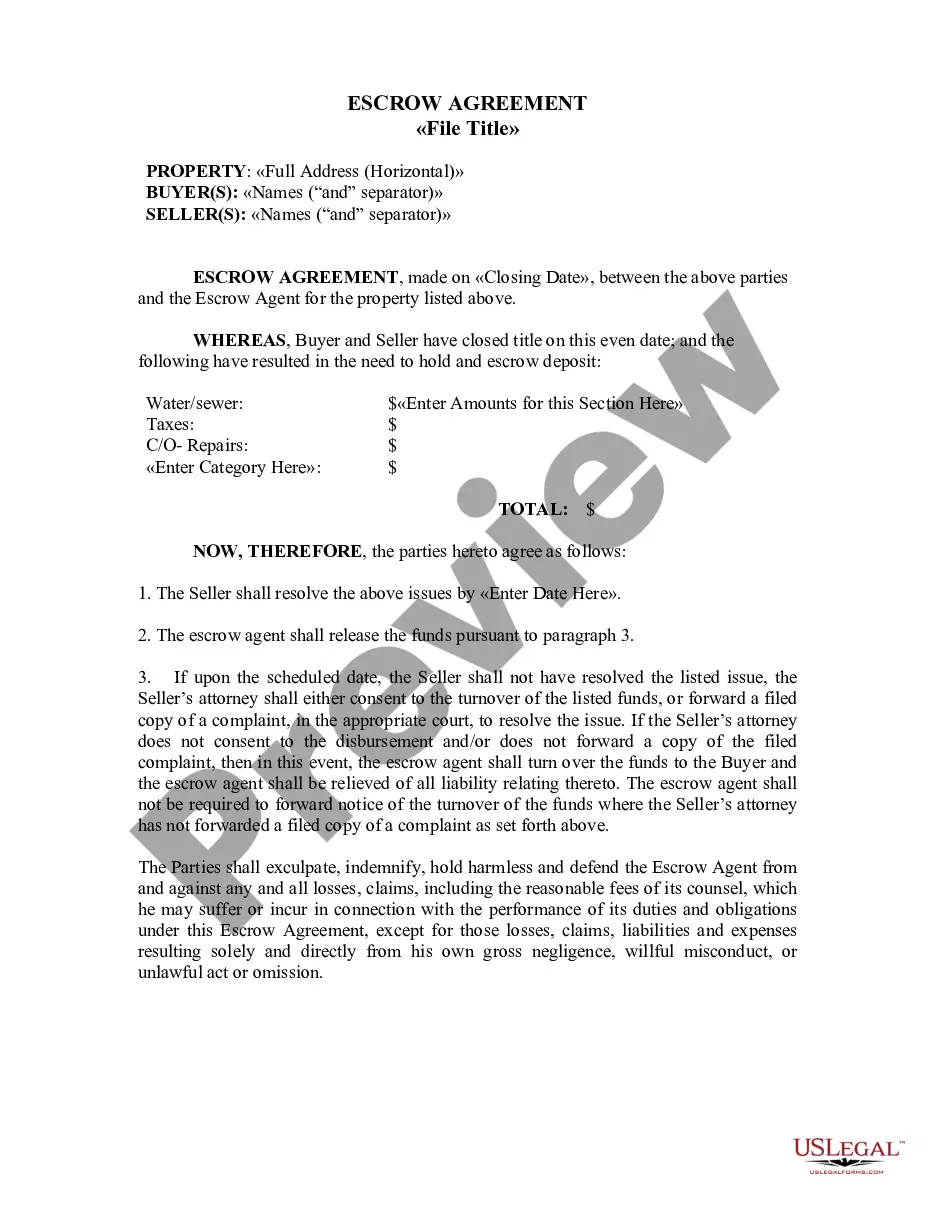
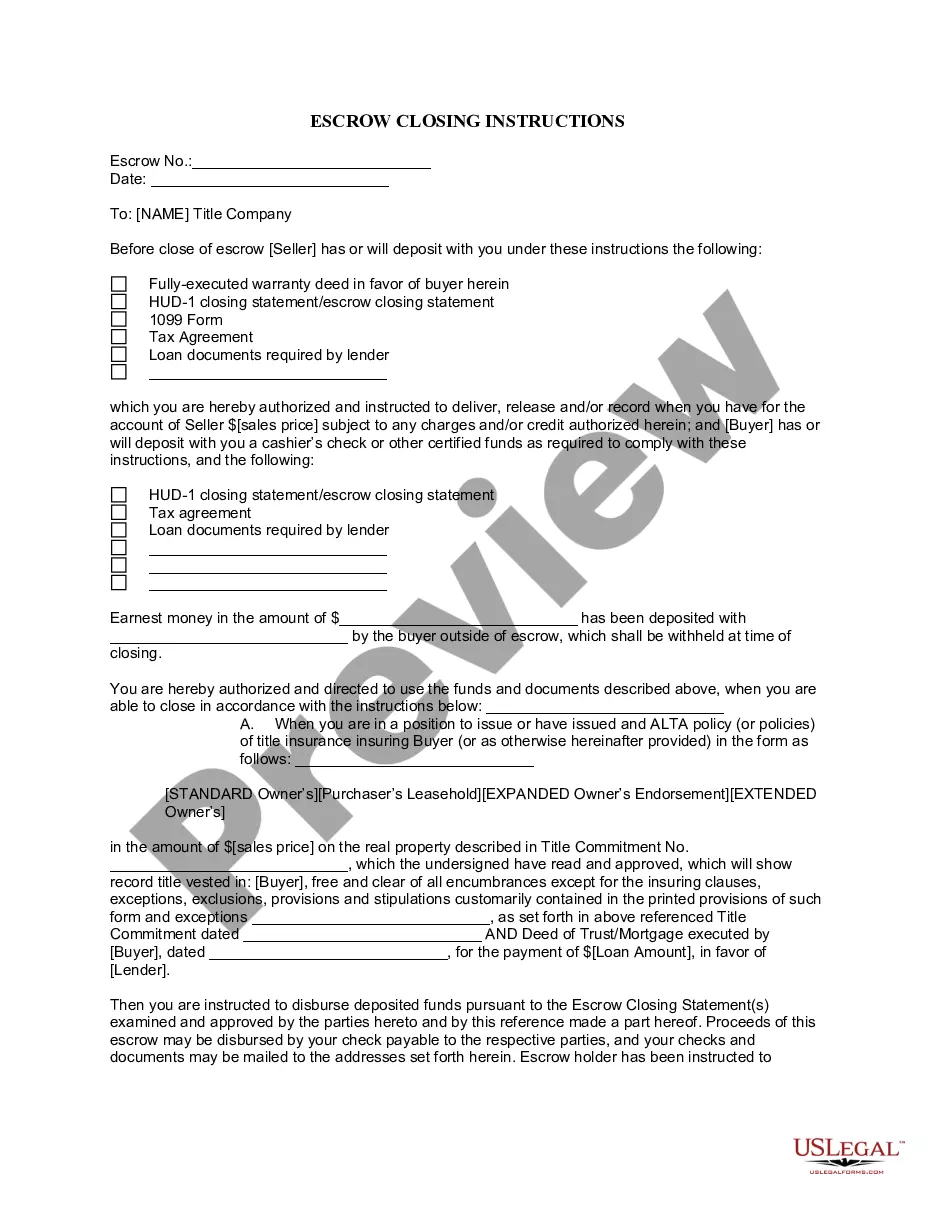
The principals to the escrow (buyer, seller, lender or borrower) or the real estate agents, if any, will provide the escrow officer with the information necessary for the escrow officer to prepare escrow instructions. Generally, a party holding real estate escrow funds requires the buyer and seller sign an escrow
- many cases, the purchase contract itself serves as the basis for the escrow instructions.
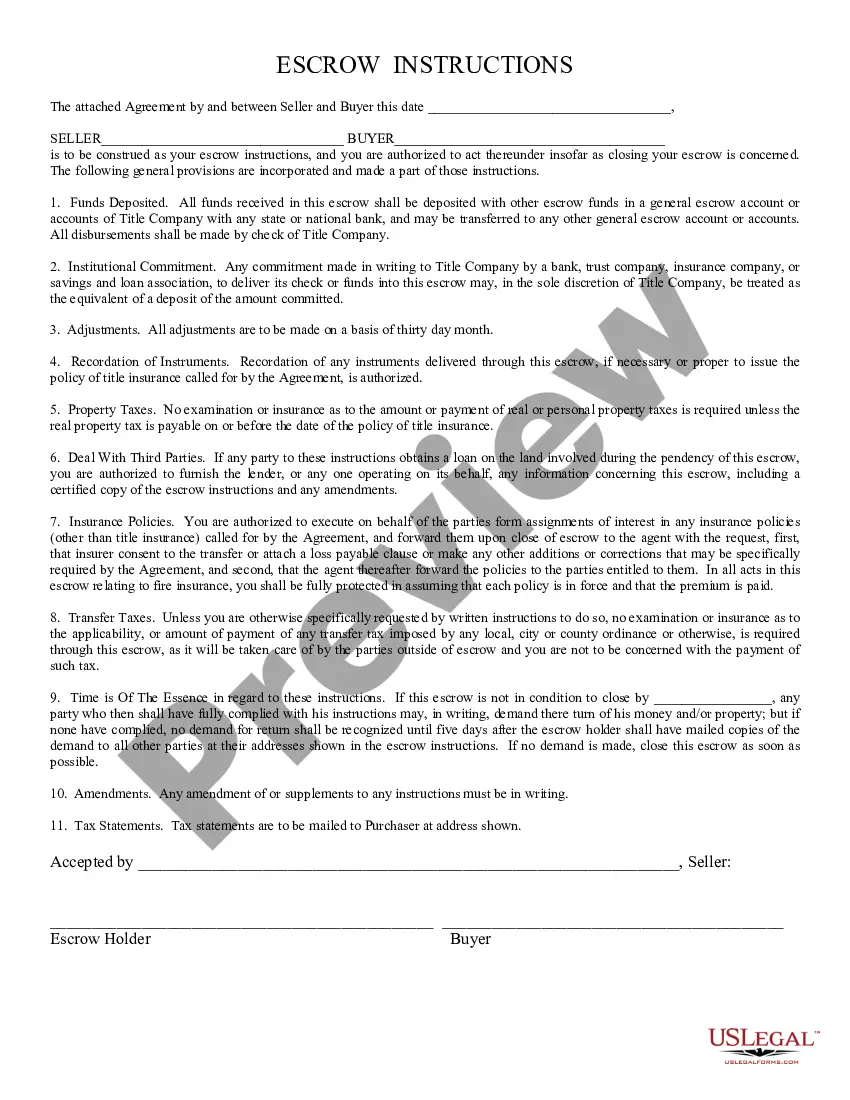
Escrow instructions. Written directions, signed by a seller and buyer, detailing the procedures necessary to close a transaction and directing the escrow officer how to proceed.
Escrow instructions define the events that must take place prior to an escrow closing. The escrow instructions are your written instructions to the escrow holder acknowledging the terms and conditions of the sale. An itemized statement is included with your instructions, reflecting all agreed upon debits and credits.
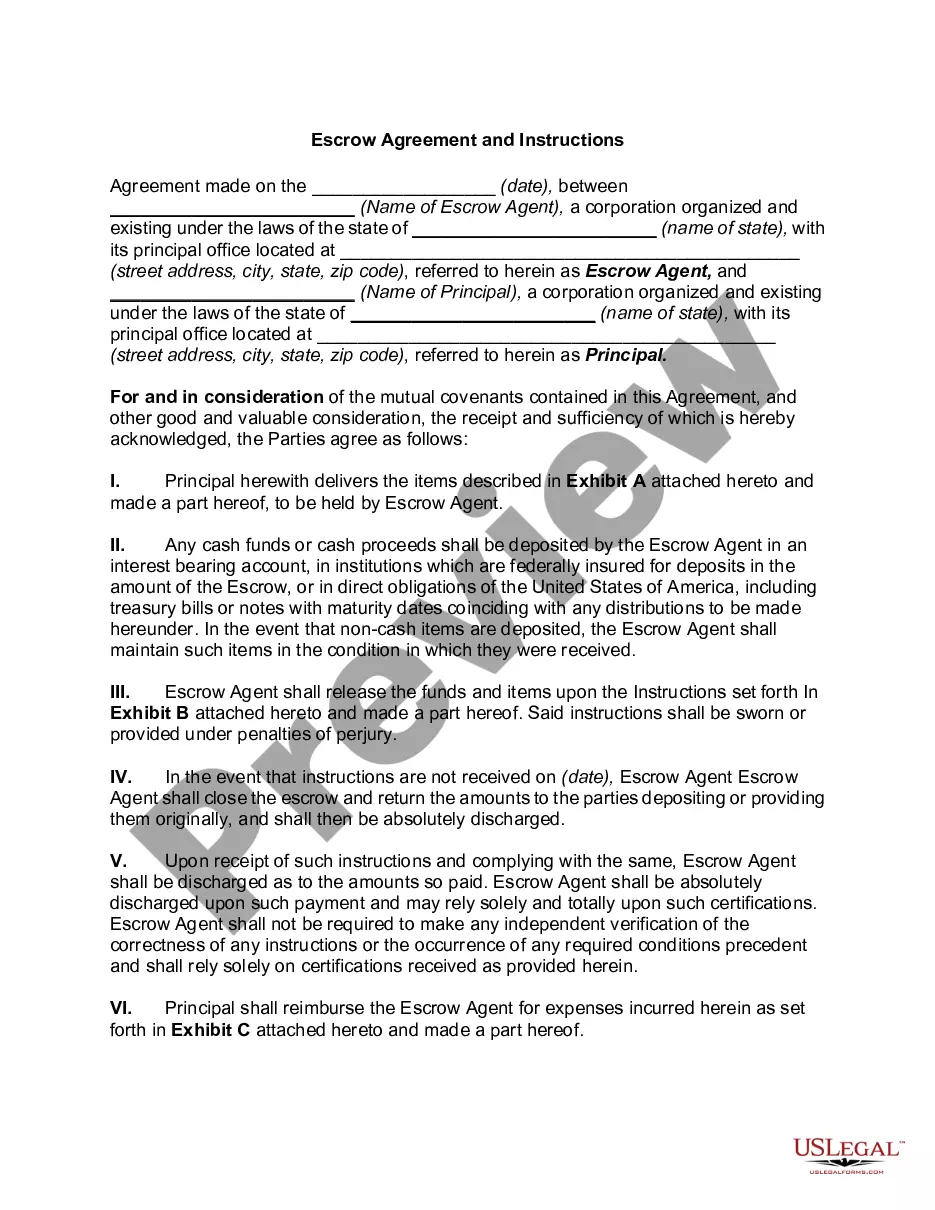
An escrow agreement is a contract that outlines the terms and conditions between parties involved, and the responsibility of each. Escrow agreements generally involve an independent third party, called an escrow agent, who holds an asset of value until the specified conditions of the contract are met.
8. When does escrow typically open and how does it work? In the typical escrow, the principals to the real estate transaction that requires an escrow (borrower, lender, buyer and/or seller) cause escrow instructions to be created, signed, and delivered to the escrow officer.
As such, an escrow holder is entitled to file an action of interpleader and for declaratory relief to ask a court of competent jurisdiction to resolve the controversies and to direct the escrow holder on how to proceed. Properly drawn and executed escrow instructions become an enforceable contract/agreement.
Contact the Department of Revenue or the appropriate local government department in your area that is in charge of property taxes for the payment due date. Select a bank to open an escrow account. If possible, get an escrow account at a bank that offers interest on funds deposited in the account.