Network Services Agreement
About this form
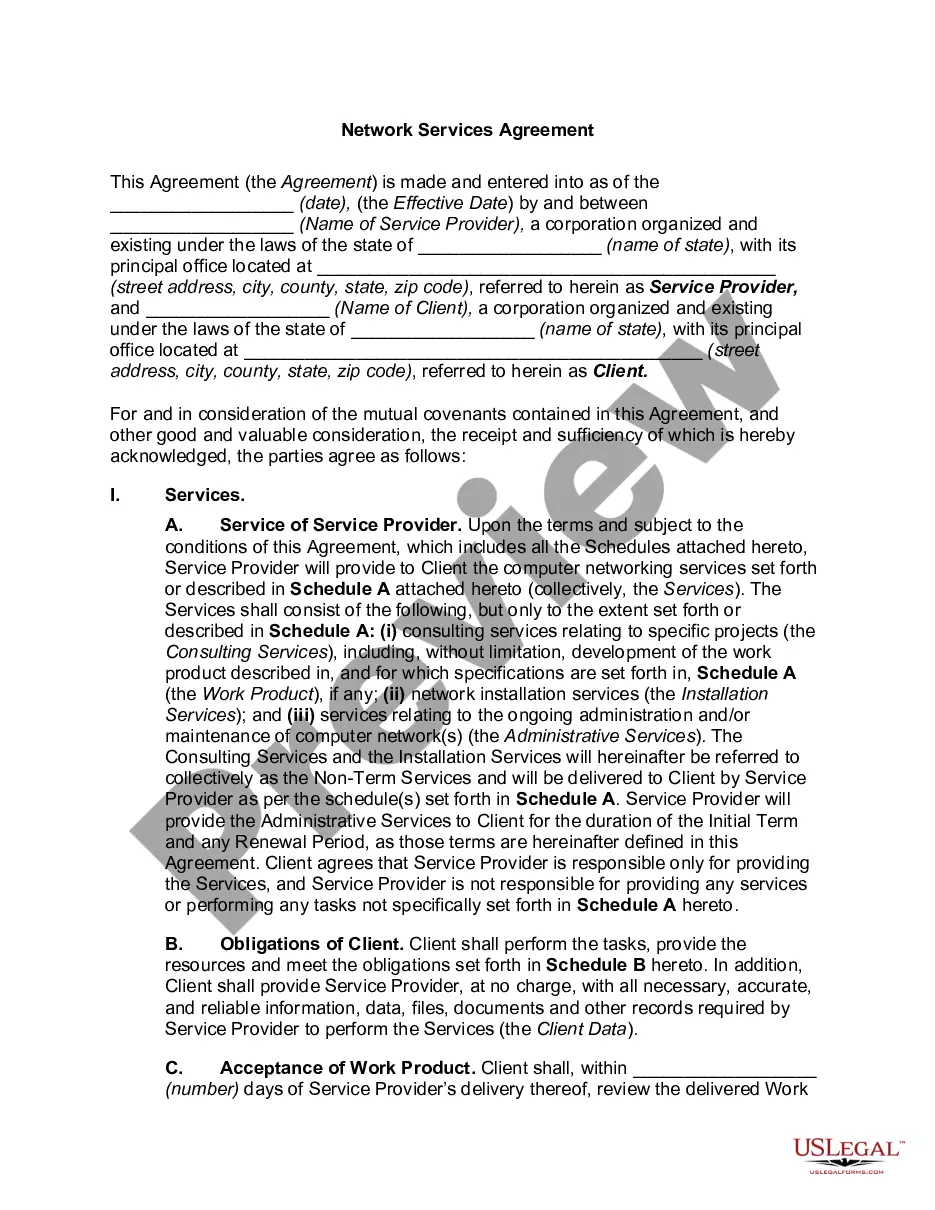
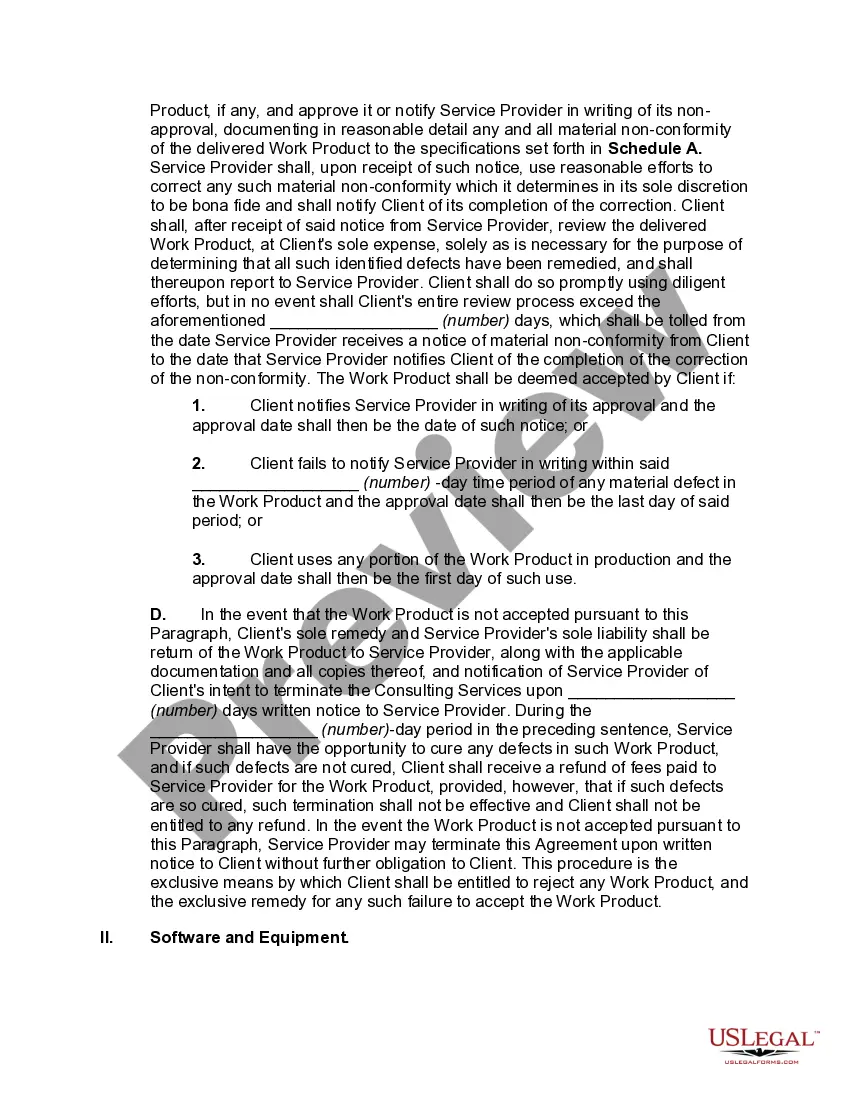
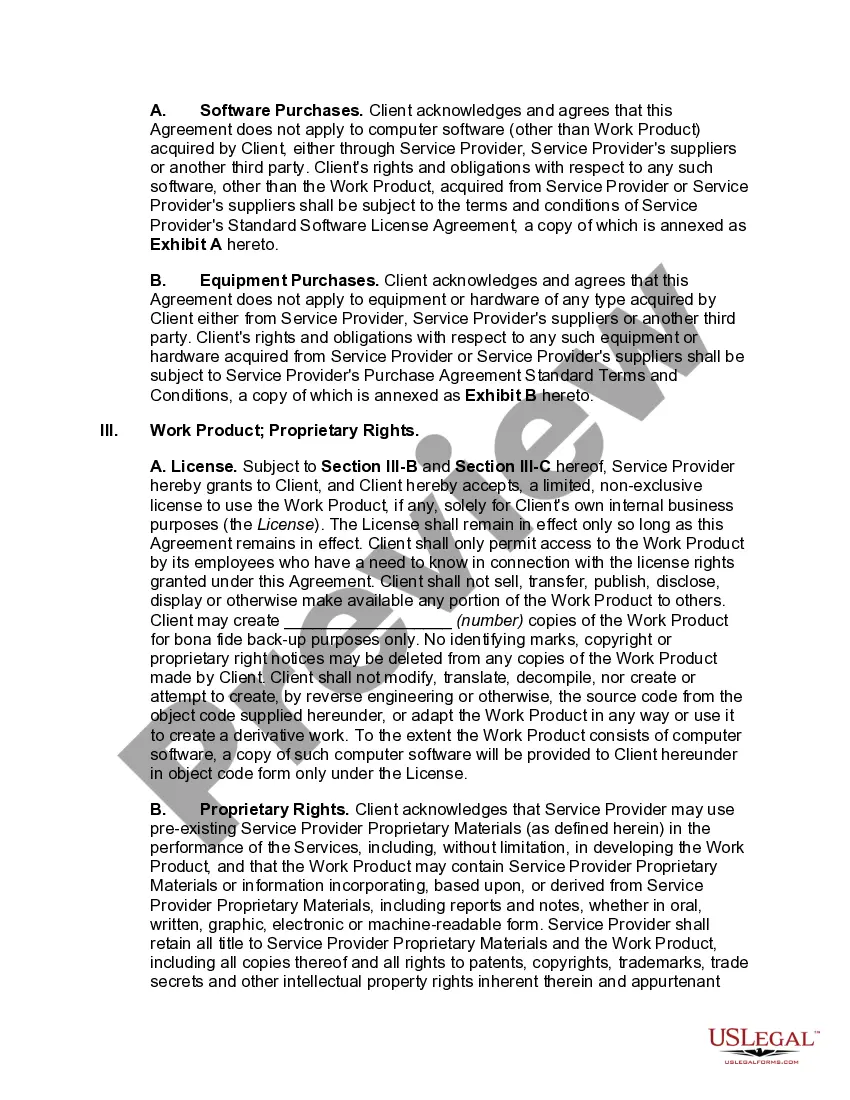
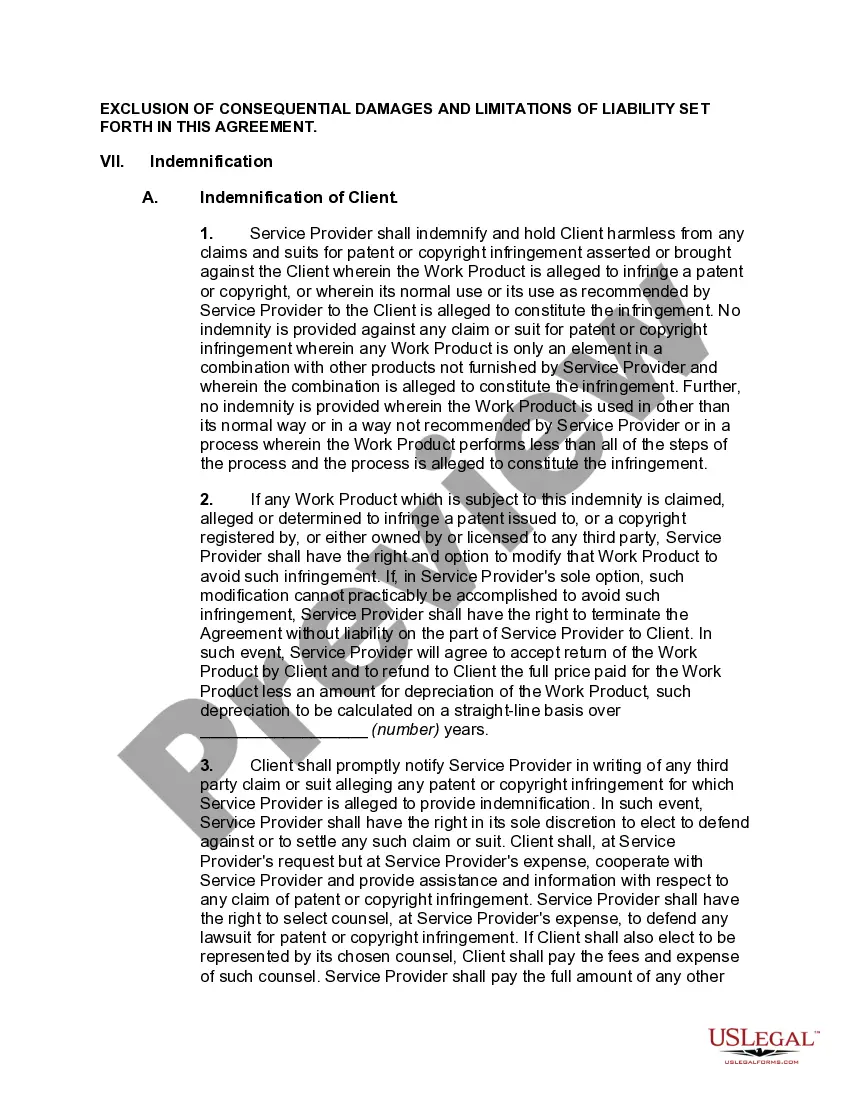
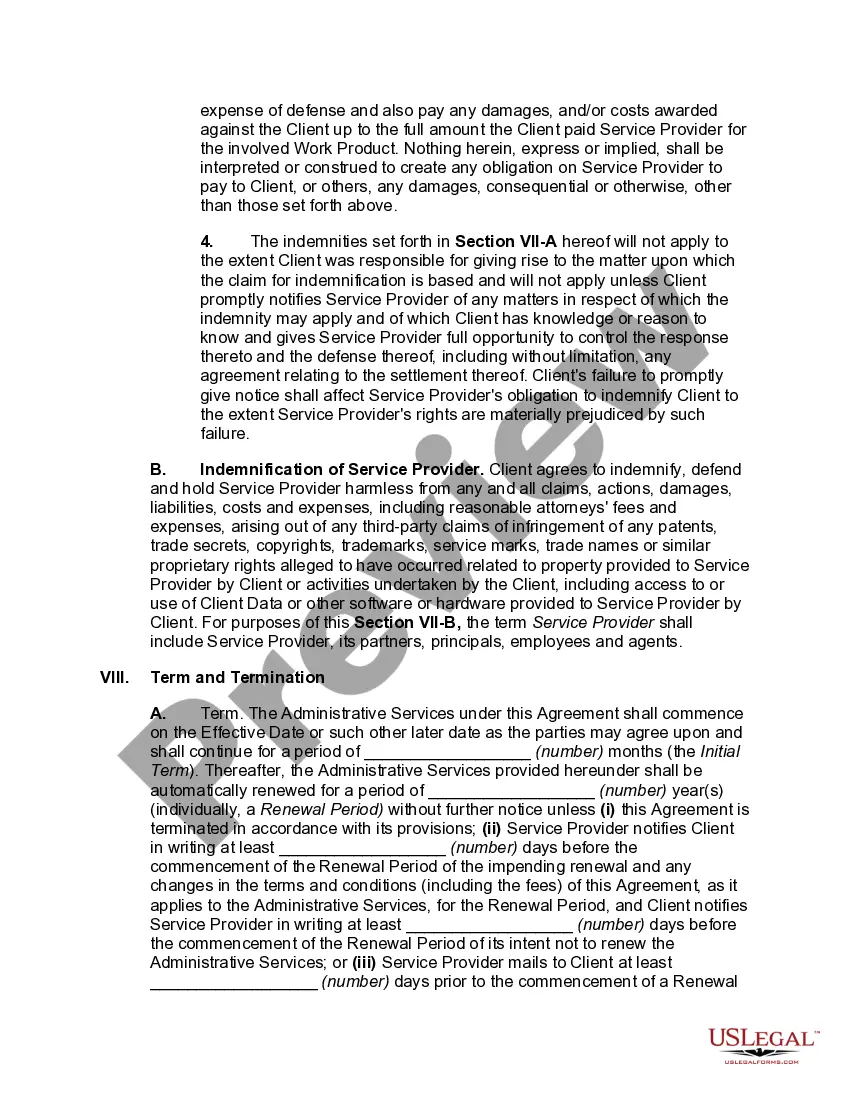
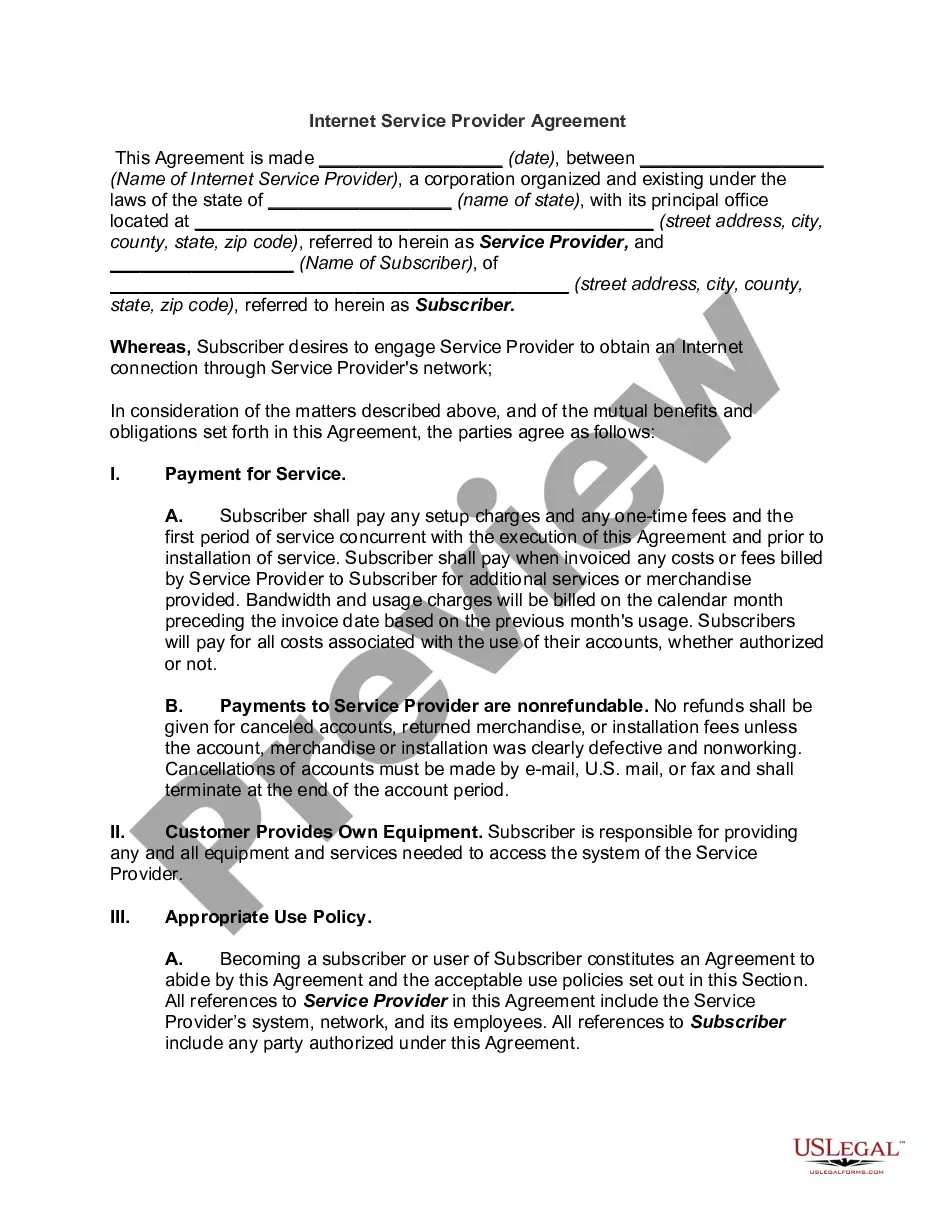
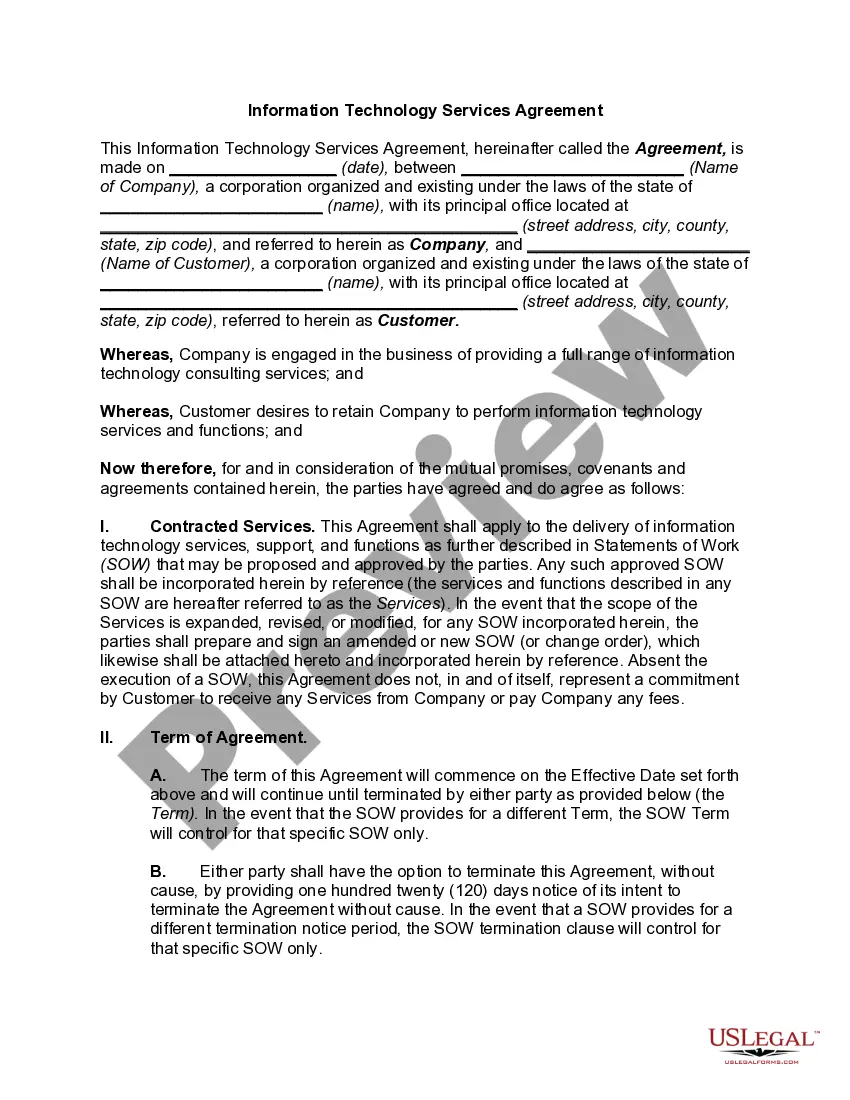
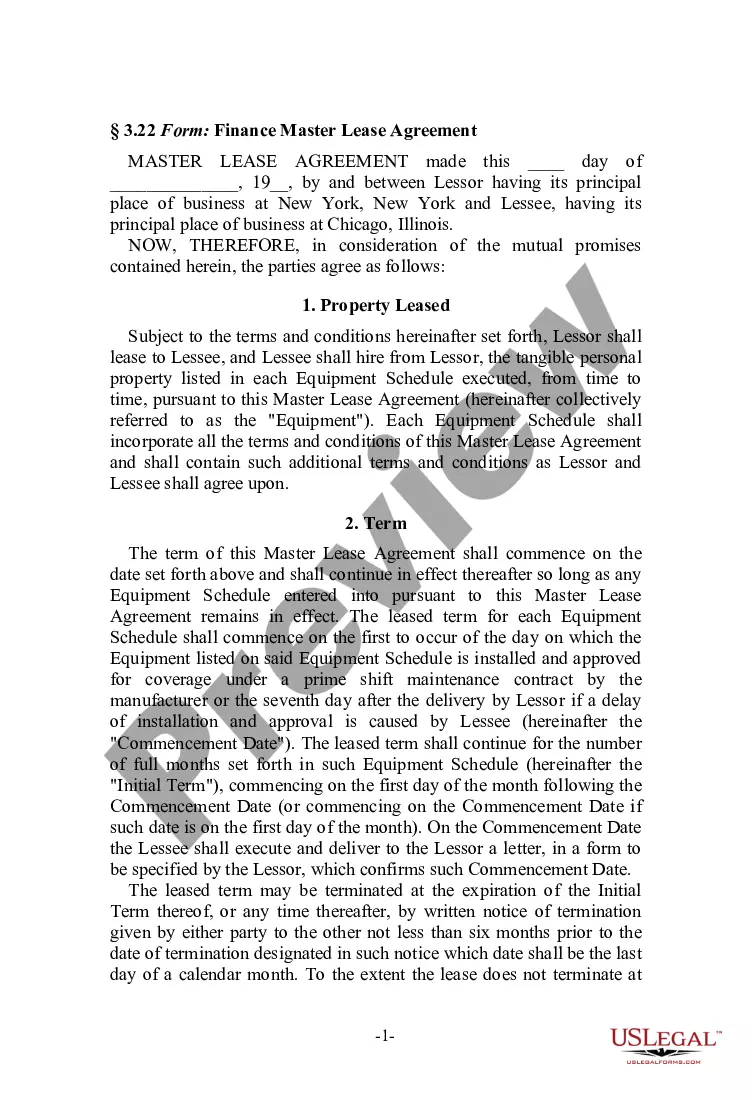
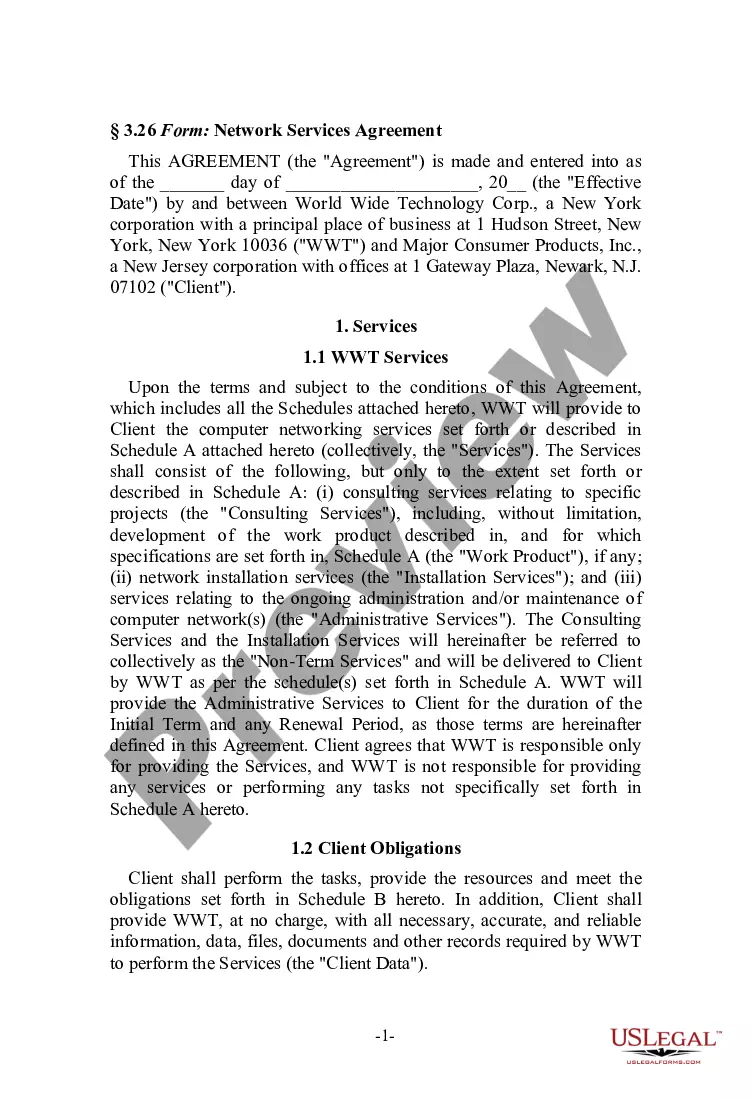
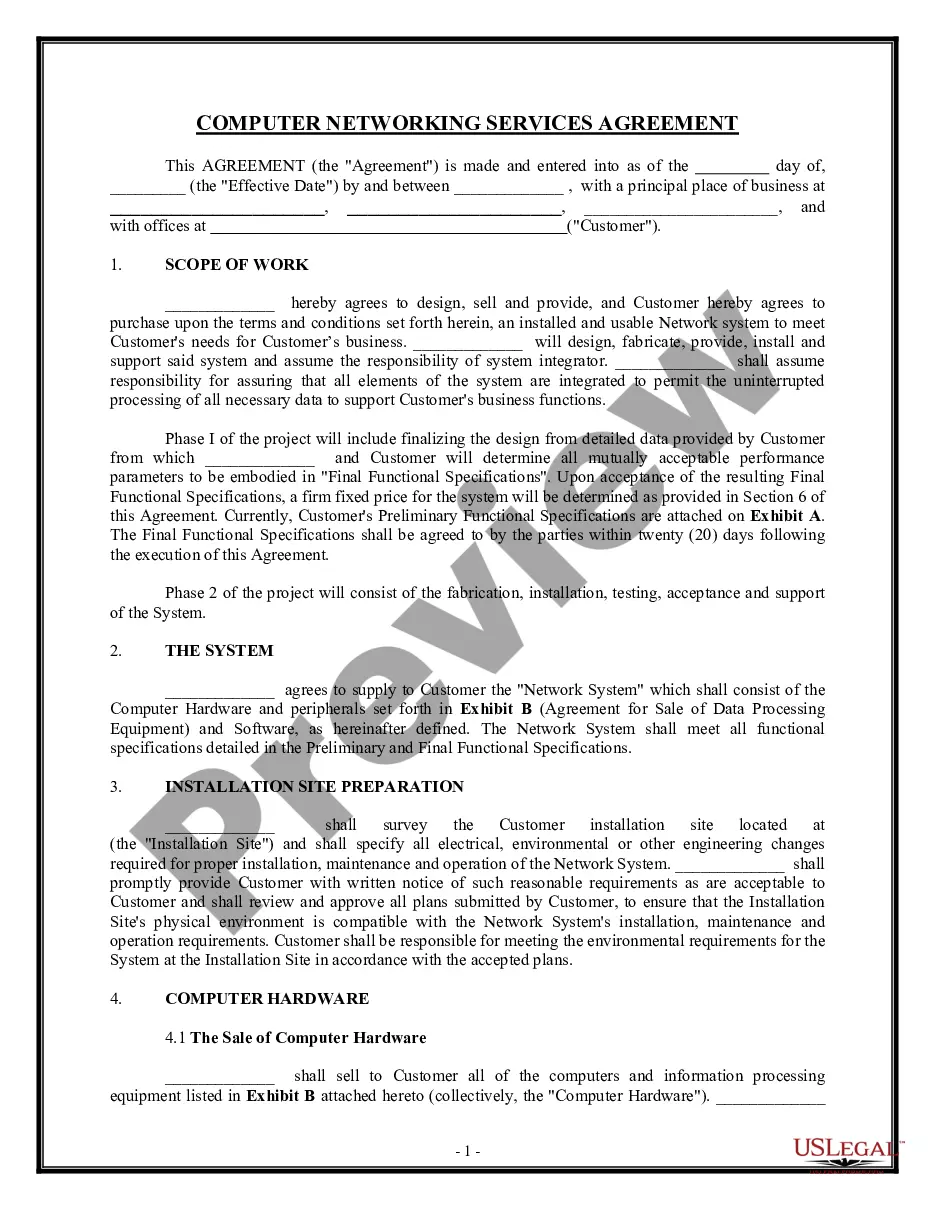
A Network Services Agreement is a legal document essential for parties involved in the computer, internet, and software industries. It outlines the terms under which a service provider offers networking services to a client. This agreement specifies the rights, responsibilities, and expectations of both parties, differentiating itself from other service agreements by its focus on network installation, administration, and consulting services tailored to the specific needs of technology-based projects.
Form components explained
- Service Provider and Client details: Names, addresses, and contact information.
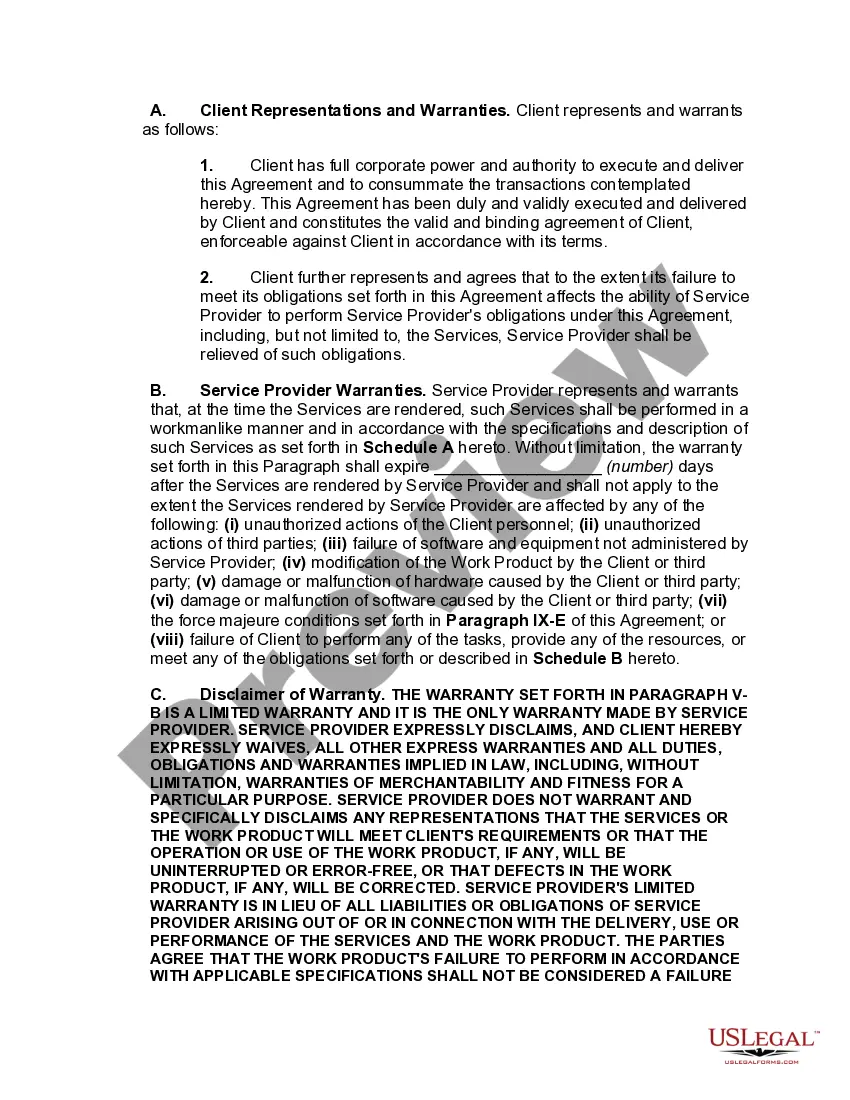
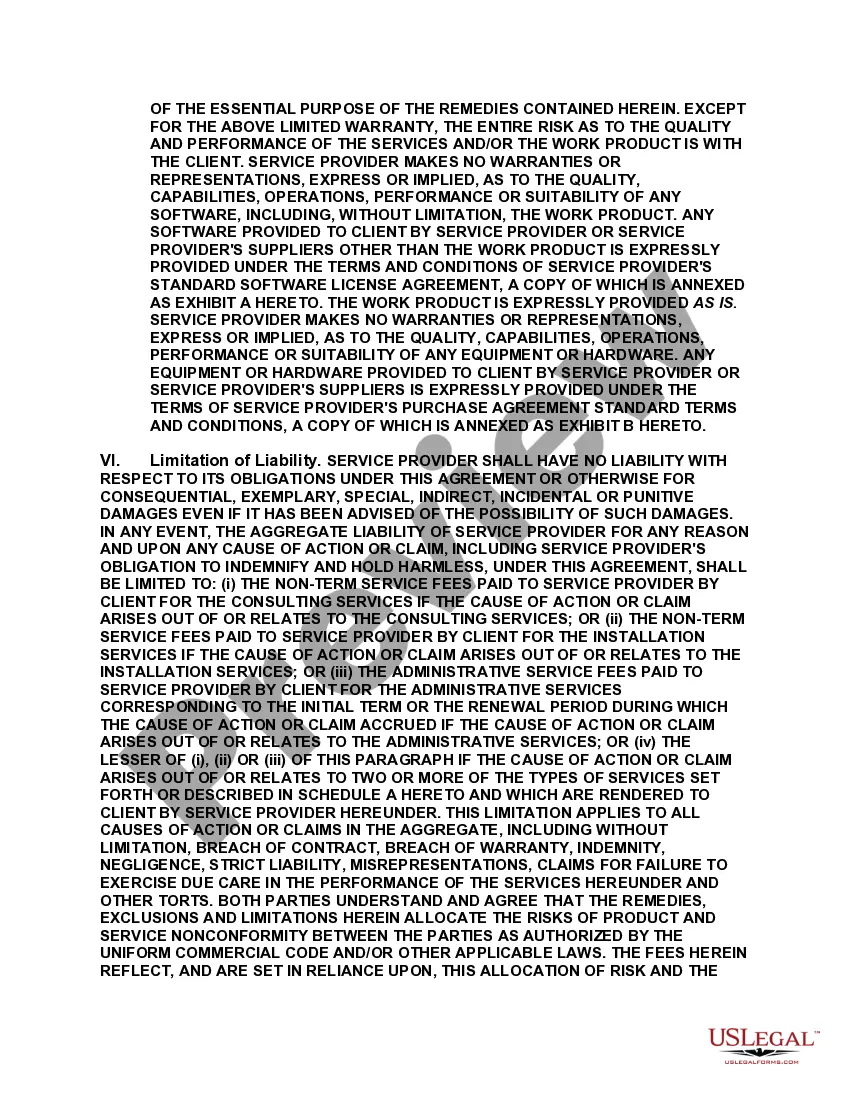
- Scope of services: Descriptions of consulting services, installation services, and ongoing administrative support.
- Client obligations: Responsibilities including providing necessary data and documentation for service delivery.
- Work product acceptance: Procedures for reviewing, approving, or rejecting the work produced by the service provider.
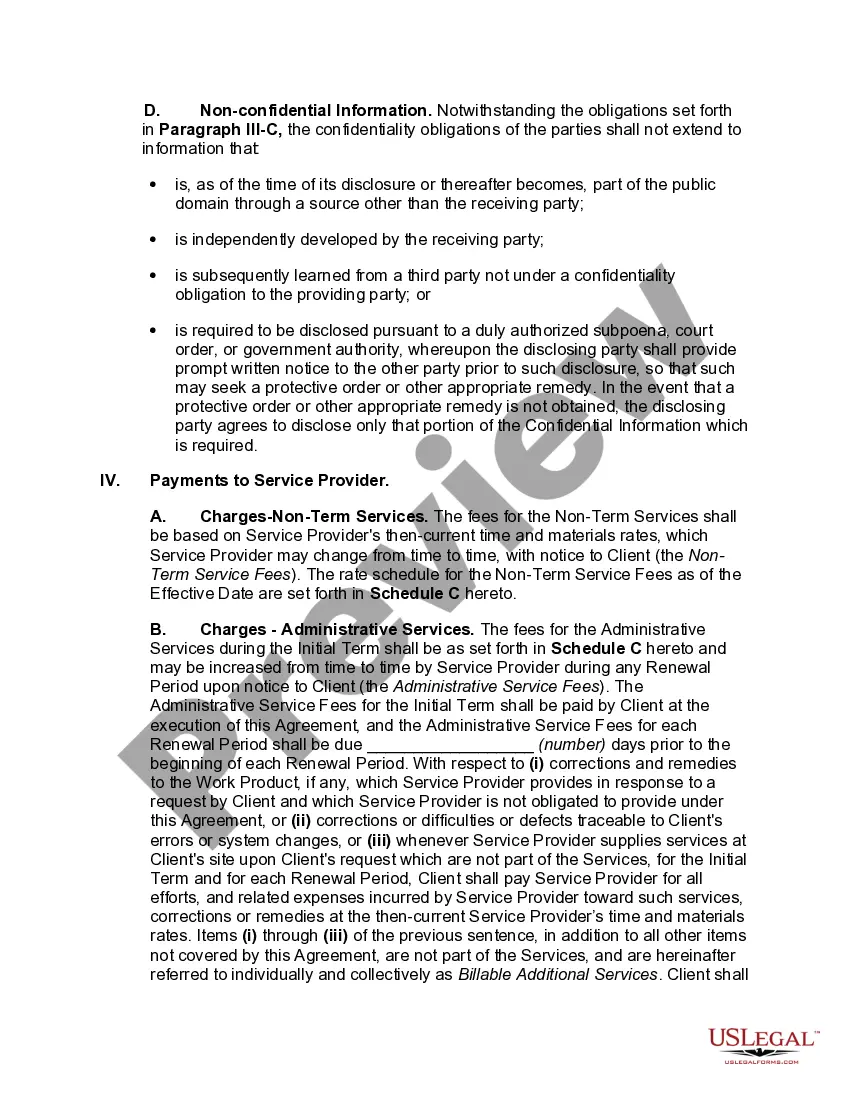
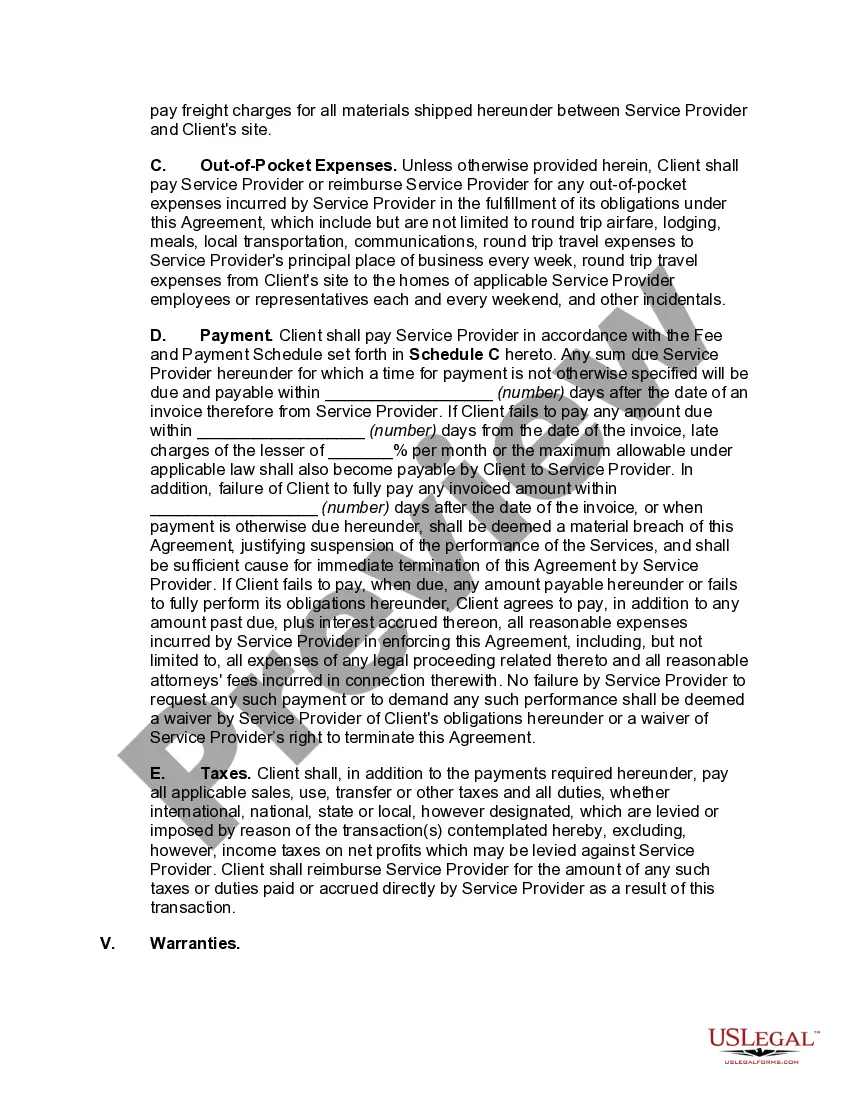
- Payment terms: Detailed fees for services rendered and conditions for payment.
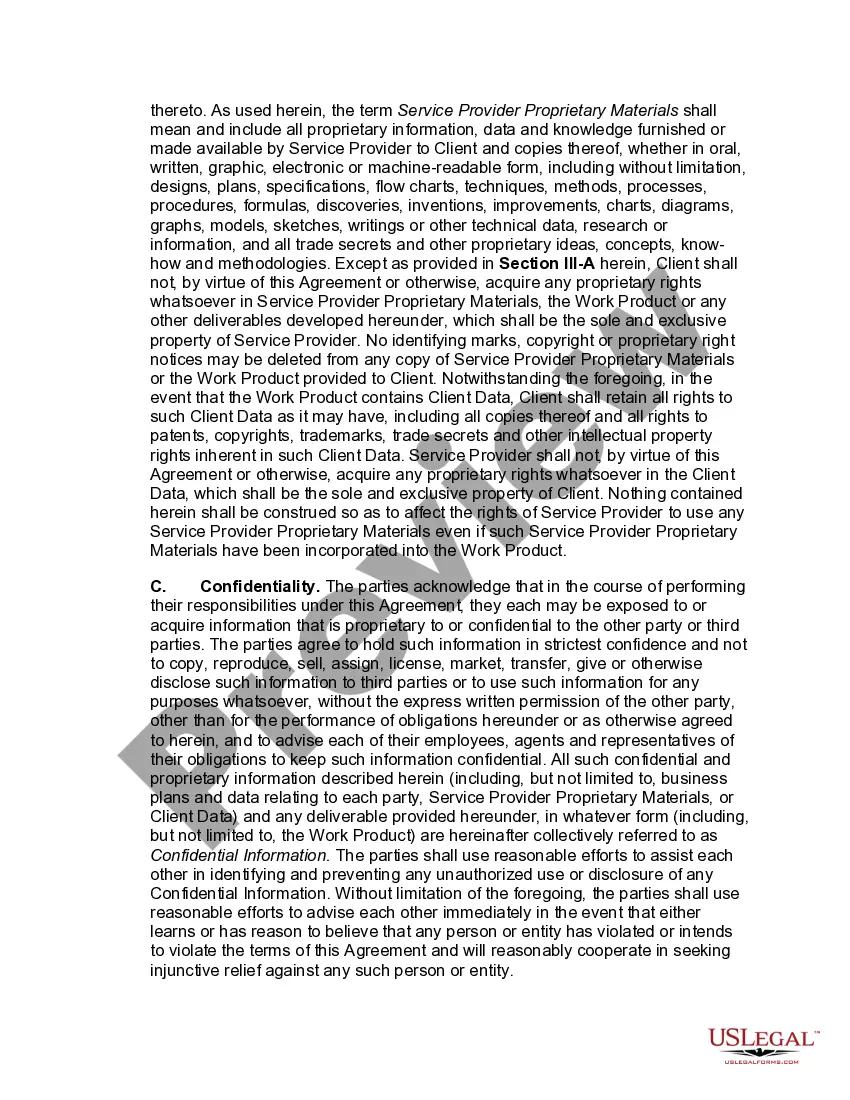
- Confidentiality provisions: Obligations for both parties regarding the handling of proprietary and confidential information.

When to use this document
This agreement should be used when a client hires a service provider for network-related services, including the installation of computer networks, ongoing administrative support, and consulting services. It is especially necessary for projects where the service provider will have access to sensitive client data or where specific work products are needed within a defined timeframe.
Who needs this form
- Businesses in the computer and internet industry seeking to formalize agreements with service providers.
- Service providers offering networking services to clients, ensuring legal compliance and clarity of expectations.
- Clients needing structured terms for hiring IT services, including installation and maintenance of networks.
How to prepare this document
- Identify the parties: Enter the names and addresses of both the service provider and the client.
- Define services: Specify the types of services to be provided in the section designated for service descriptions.
- Outline client obligations: Detail what information and resources the client must provide for effective service delivery.
- Establish payment terms: Fill in the fees and payment schedules as specified in the agreement.
- Review and sign: Ensure all parties read and understand the agreement before signing and dating the document.
Notarization guidance
This form does not typically require notarization unless specified by local law. However, obtaining notarization can provide an additional layer of authenticity and may be beneficial depending on the parties' preferences.
Get your form ready online
Our built-in tools help you complete, sign, share, and store your documents in one place.
Make edits, fill in missing information, and update formatting in US Legal Forms—just like you would in MS Word.
Download a copy, print it, send it by email, or mail it via USPS—whatever works best for your next step.
Sign and collect signatures with our SignNow integration. Send to multiple recipients, set reminders, and more. Go Premium to unlock E-Sign.
If this form requires notarization, complete it online through a secure video call—no need to meet a notary in person or wait for an appointment.
We protect your documents and personal data by following strict security and privacy standards.

Make edits, fill in missing information, and update formatting in US Legal Forms—just like you would in MS Word.

Download a copy, print it, send it by email, or mail it via USPS—whatever works best for your next step.

Sign and collect signatures with our SignNow integration. Send to multiple recipients, set reminders, and more. Go Premium to unlock E-Sign.

If this form requires notarization, complete it online through a secure video call—no need to meet a notary in person or wait for an appointment.

We protect your documents and personal data by following strict security and privacy standards.
Typical mistakes to avoid
- Failing to detail the scope of services leading to misunderstandings: Make sure all services are clearly outlined.
- Omitting client obligations, which can cause delays: Ensure all required actions and information from the client are noted.
- Not specifying payment terms correctly: Double-check the payment amounts and deadlines to avoid disputes later.
Benefits of completing this form online
- Convenience: Download and complete the form from anywhere, eliminating the need for physical meetings.
- Editability: Easily modify the document to fit specific terms and conditions relevant to the parties involved.
- Reliability: Access professionally drafted forms that comply with legal standards, ensuring protection for both parties.
Looking for another form?

Form popularity
FAQ
A description of the parties involved in the agreement. A description of the services to be performed. A description of fees and payment schedules. The effective date of the contract, when work will begin, and the terms under which it can be terminated. Include a place for signatures.
Network Service a capability that facilitates a network operation. It typically is provided by a server (which can be running one or more services), based on network protocols running at the application layer in the Open Systems Interconnection (OSI) model of the network.
Computer networks support an enormous number of applications and services such as access to the World Wide Web, digital video, digital audio, shared use of application and storage servers, printers, and fax machines, and use of email and instant messaging applications as well as many others.
Directory services. e-Mail. File sharing. Instant messaging. Online game. Printing. File server. Voice over IP.
Identify the customer and service provider. Describe the services being provided. Outline a payment schedule. Establish terms about confidentiality, non-solicitation, and non-competition. Address ownership of materials. Personalize your Service Agreement.
A Service Agreement, also sometimes called a General Services Agreement, is a document between a service provider and a client. Within these agreements, the service provider and client outline their expectations for behavior and agree to the bounds of the relationship between them.
Network Services include IP addressing, Domain Name System (DNS), primary domain email service, Internet access, web content filtering, security products such as firewalls, VPN termination and intrusion prevention systems (IPS), and the necessary tools and staff to support these services.
Computer networks share common devices, functions, and features including servers, clients, transmission media, shared data, shared printers and other hardware and software resources, network interface card(NIC), local operating system(LOS), and the network operating system (NOS).