Mississippi Plaintiffs' Motion for Partial Summary Judgment Against Defendants
Overview of this form
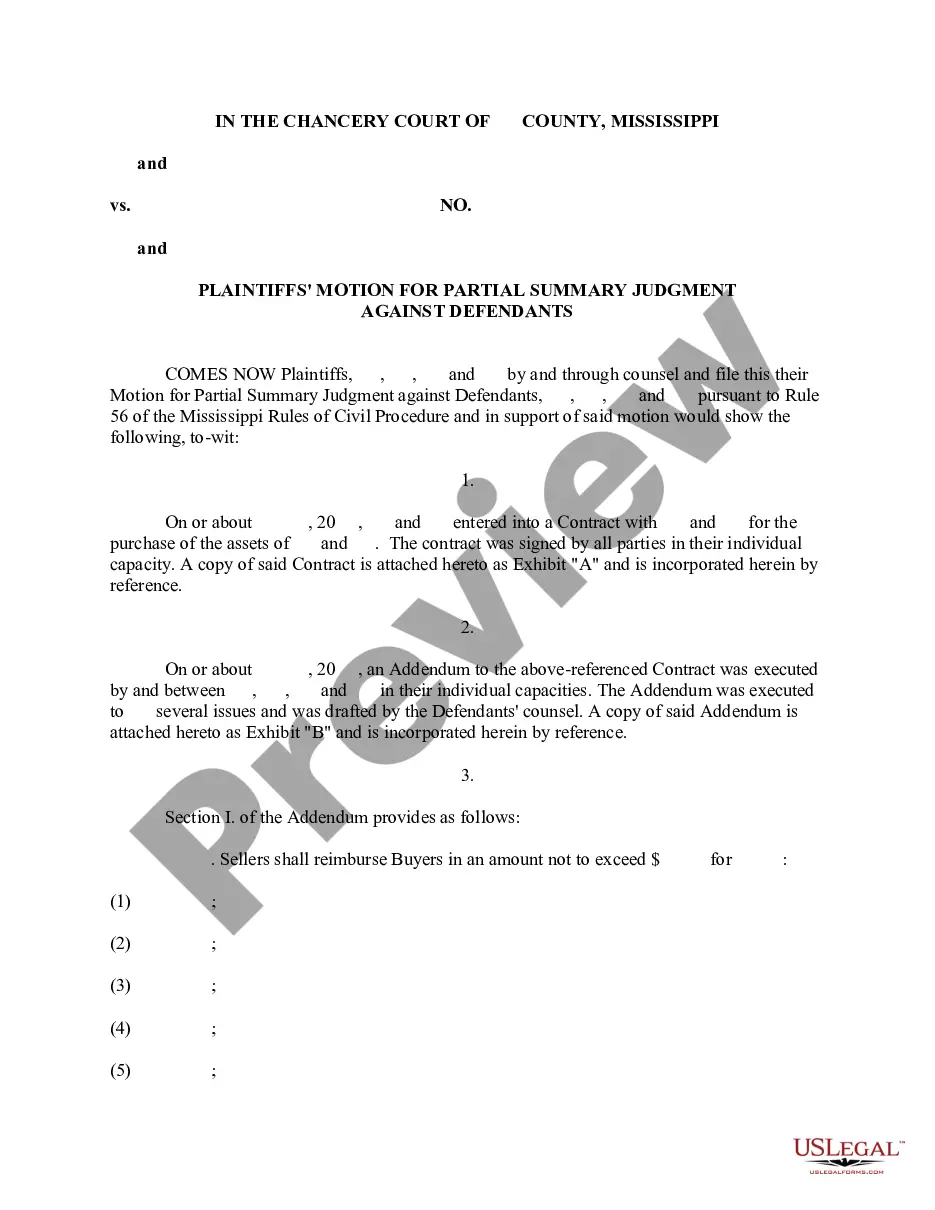
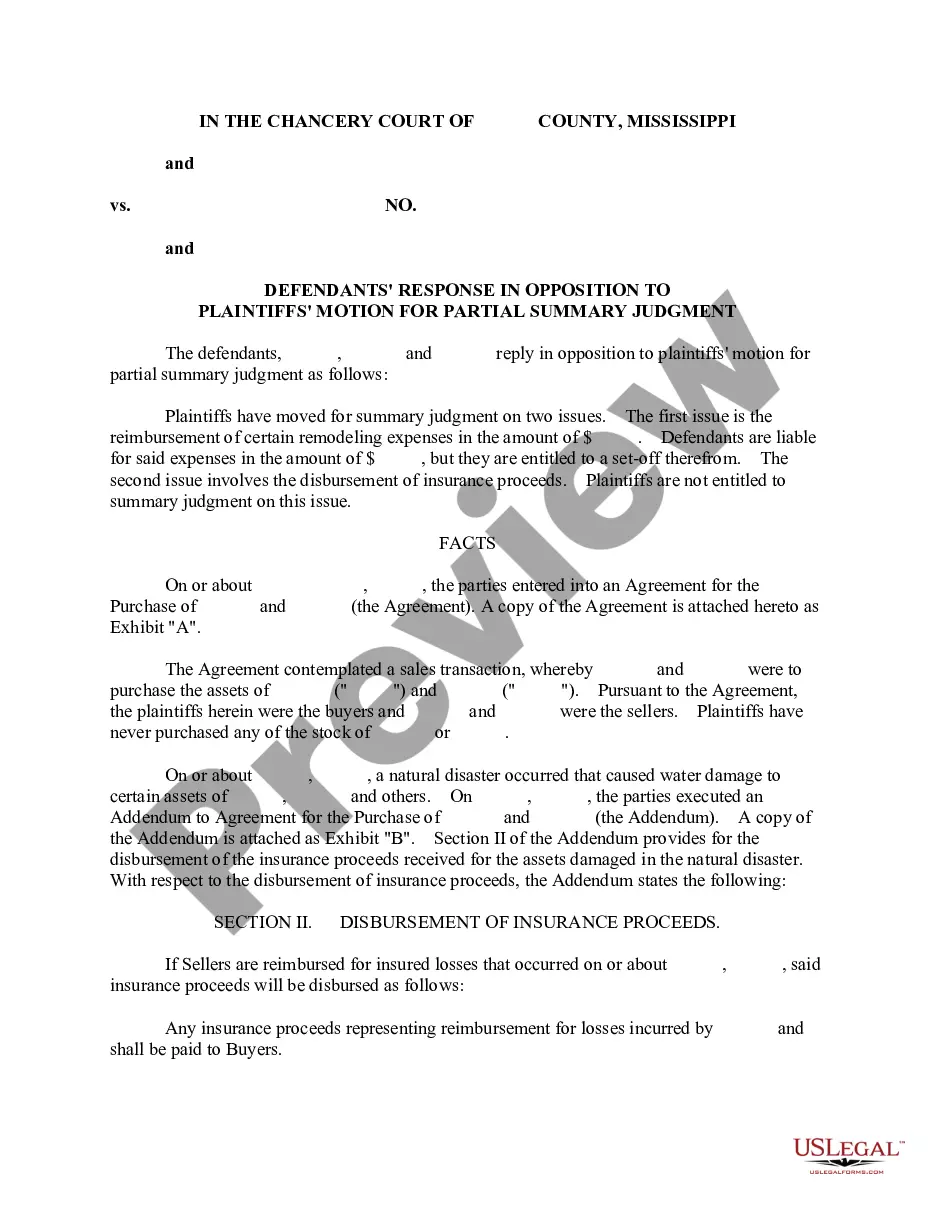
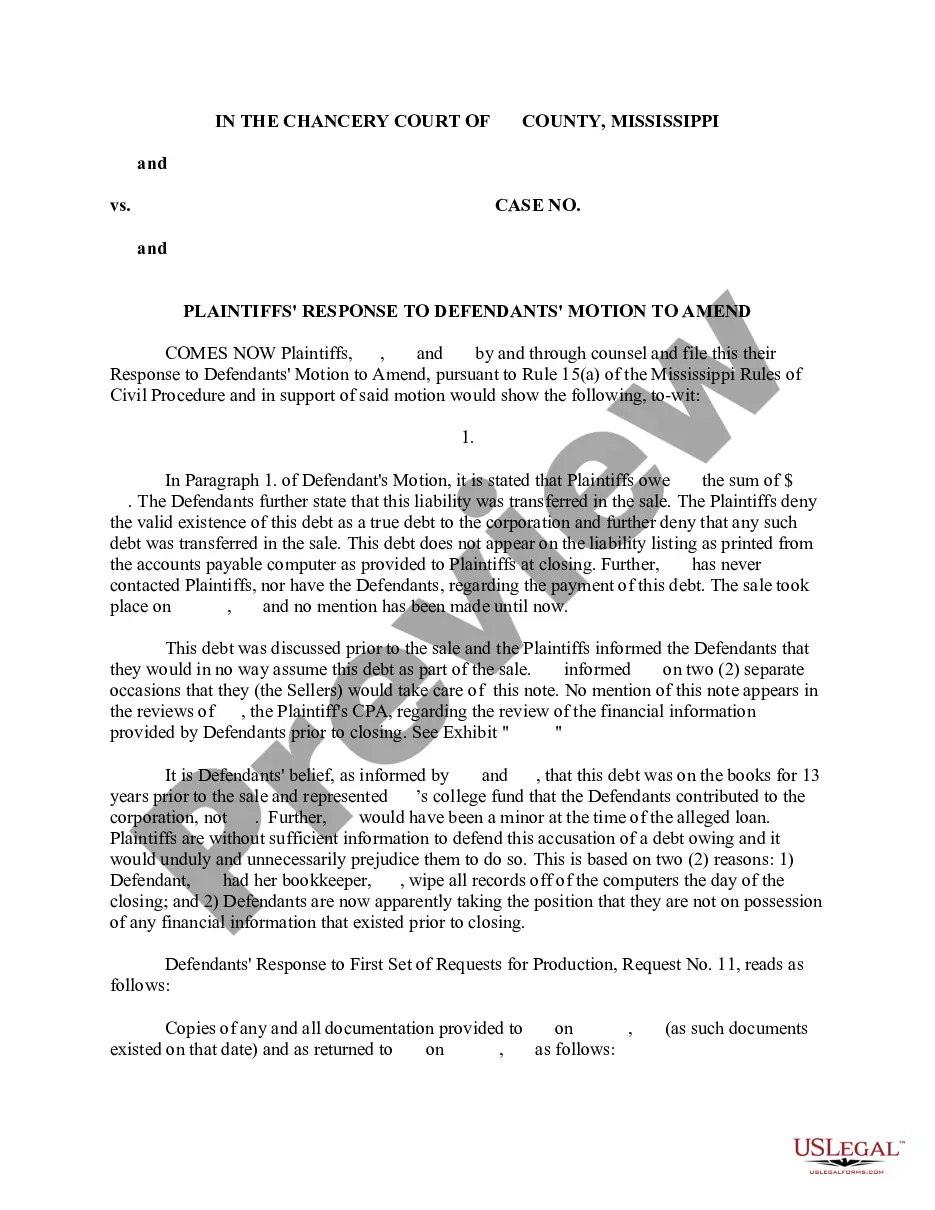
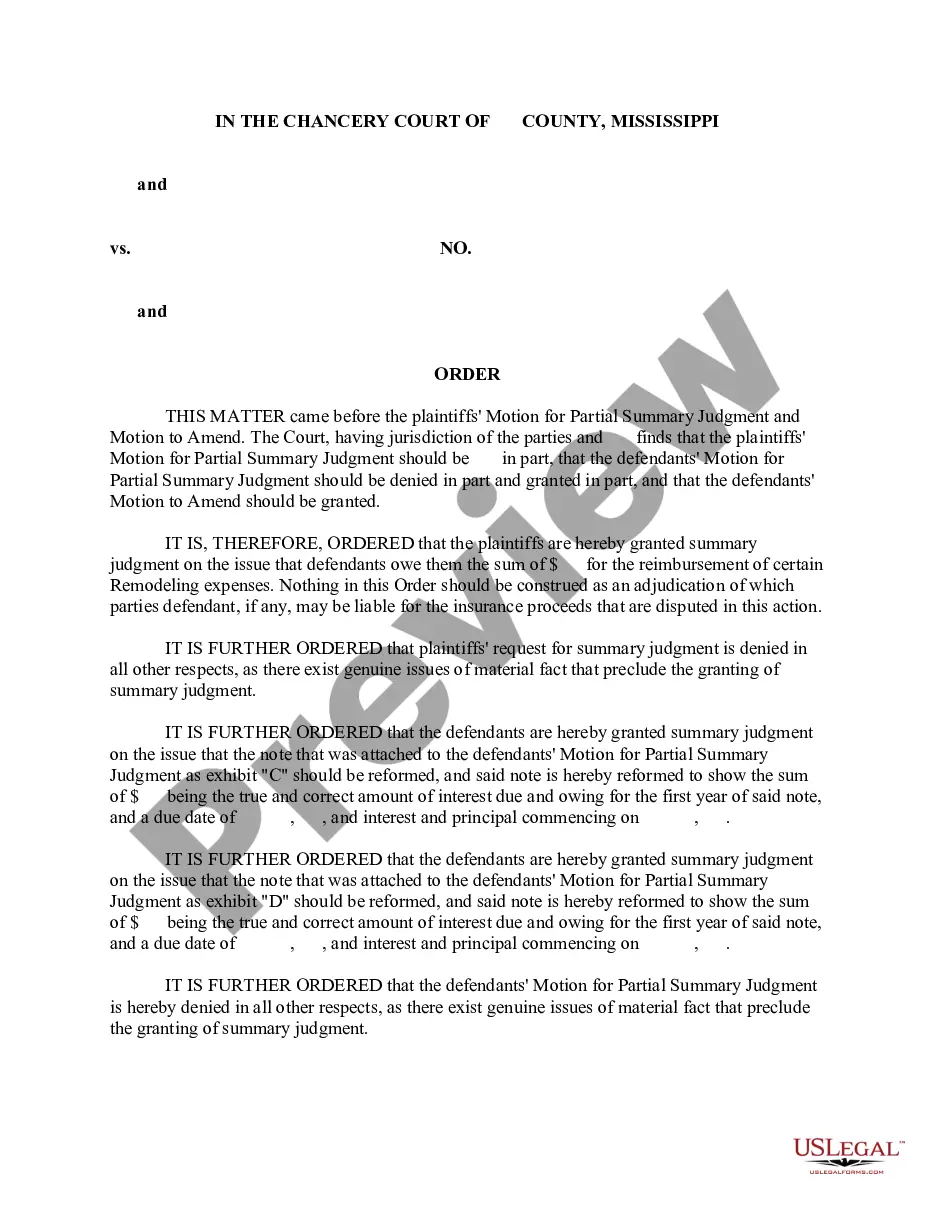
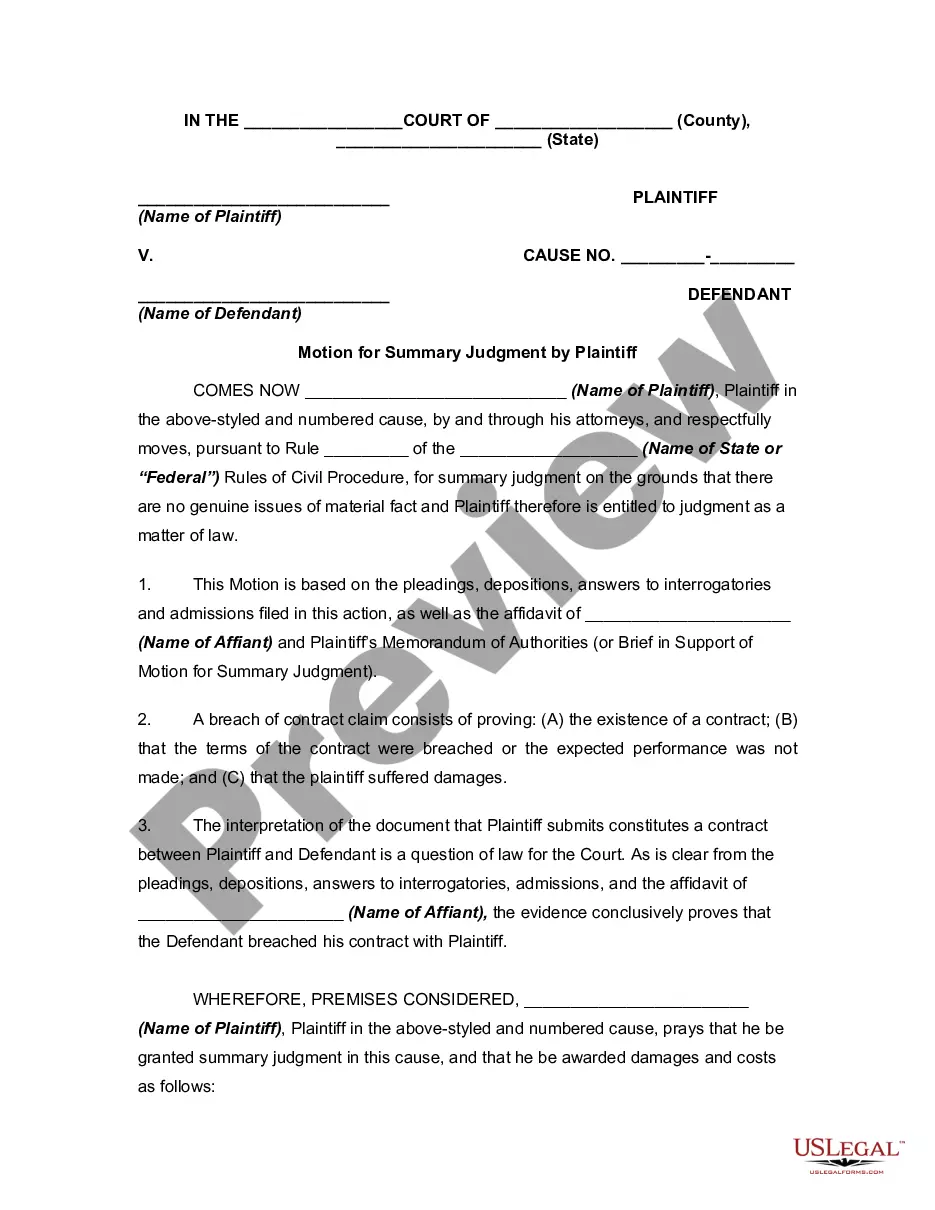
A Plaintiffs' Motion for Partial Summary Judgment Against Defendants is a formal request made to the court, asking for a ruling on specific aspects of a legal case before a full trial occurs. This motion aims to establish that there are no genuine disputes regarding certain key facts, allowing the court to decide in favor of the plaintiffs without needing a trial for the disputed issues. This form is distinct from other motions in that it focuses specifically on partial summary judgment, limiting its scope to particular points rather than the entire case.
Key parts of this document
- Introduction of the plaintiffs and defendants, including their names and roles in the matter.
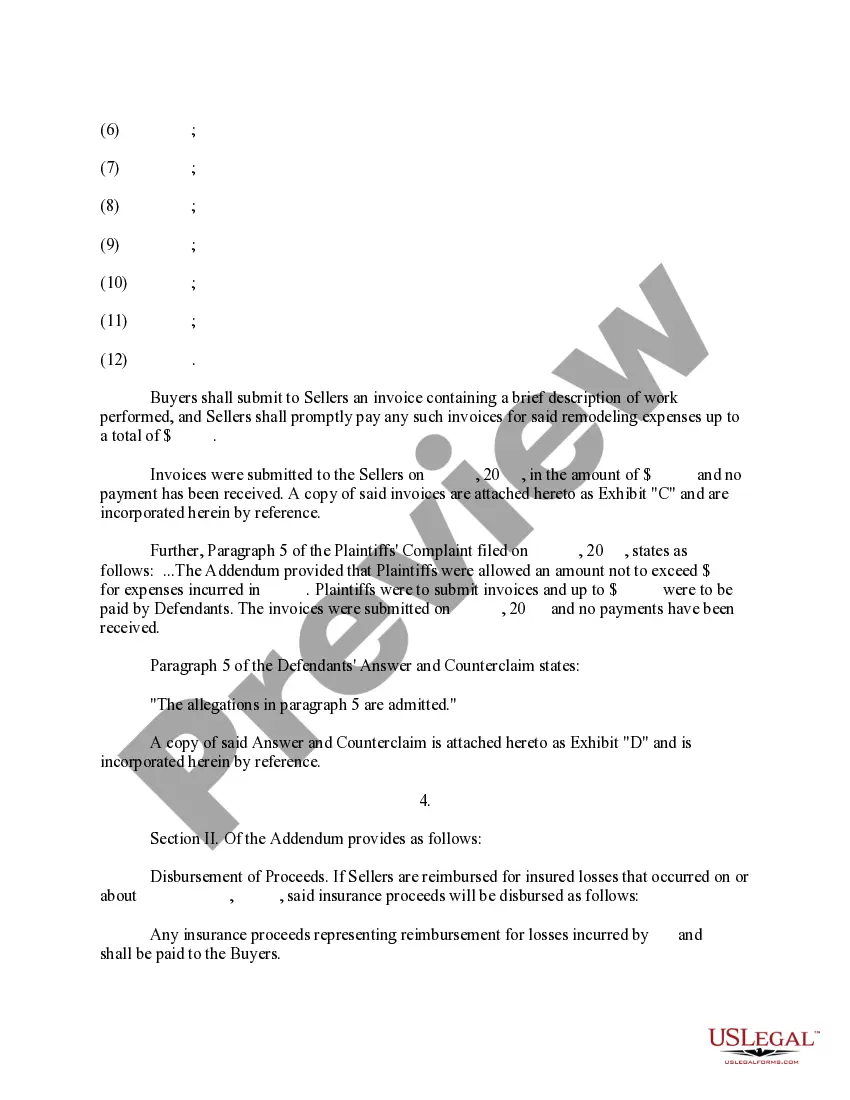
- Details of the contract and any relevant addenda that support the motion.
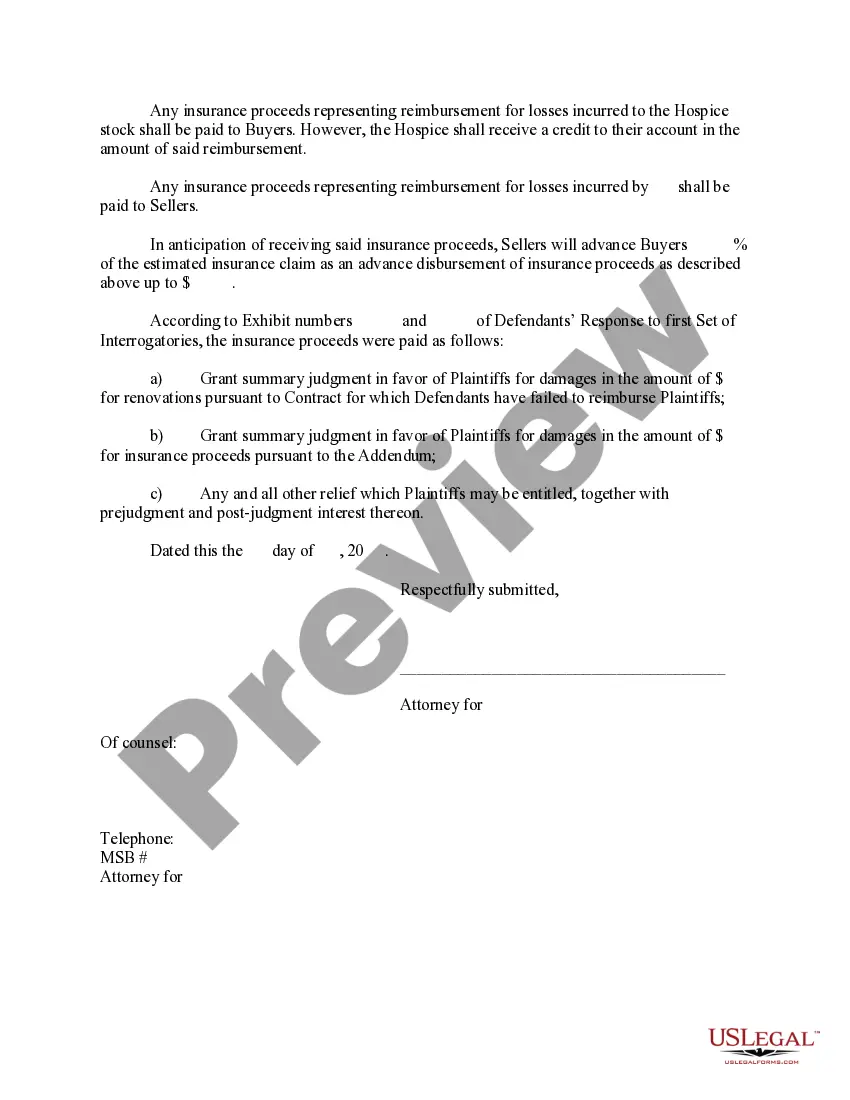
- Statements regarding the admissions made by the defendants in their response to the contract allegations.
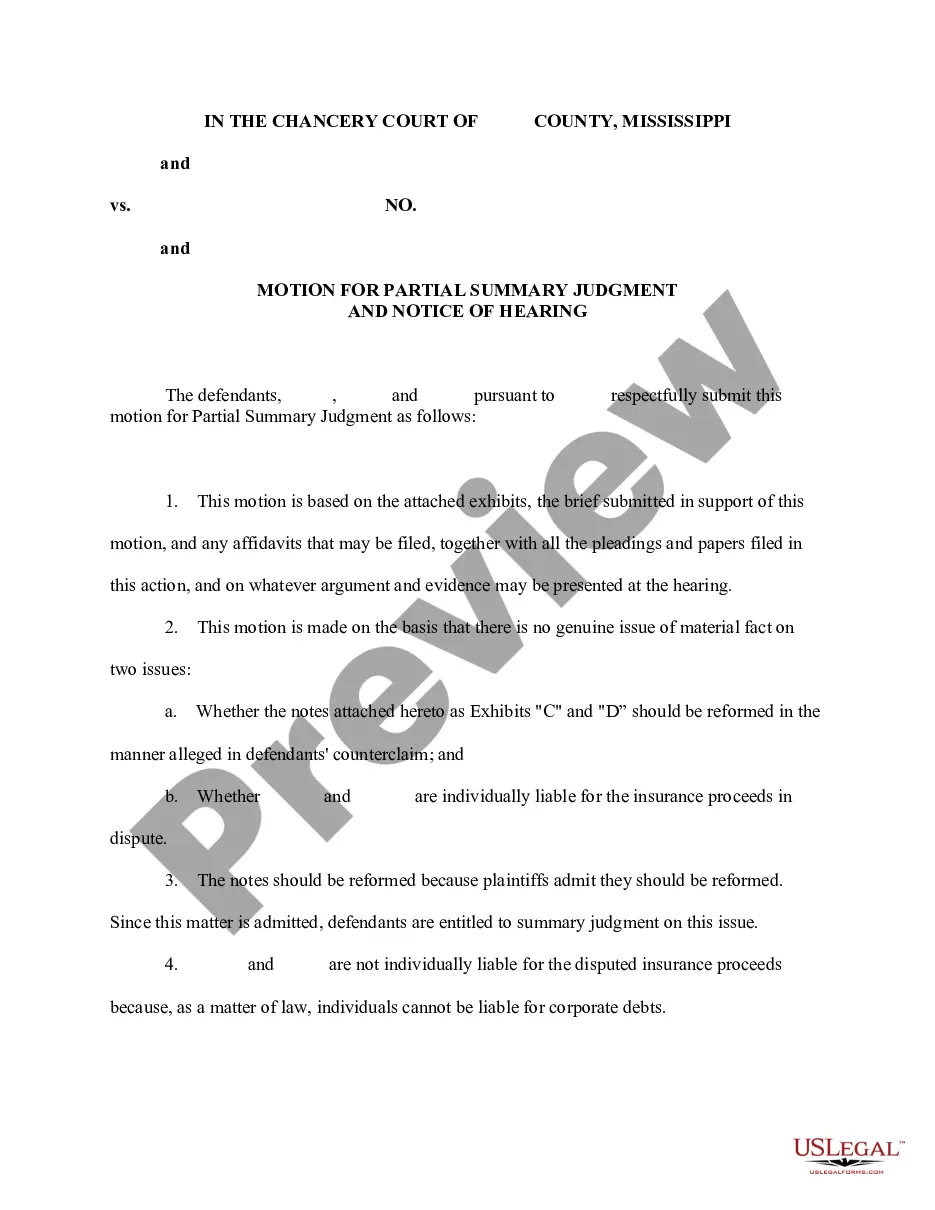
- Presentation of factual issues intended to be resolved through the motion.
- Attachments, including exhibits like the contract and addenda, which substantiate the motion.
Common use cases
This form should be used when a party (the plaintiffs) believes that certain facts of the case are undisputed and wishes to seek a legal ruling on these matters without proceeding to a full trial. It is commonly utilized in cases involving contracts, property disputes, or where specific financial obligations are in question. Scenarios might include disputes over contract interpretation, liability acknowledgments between parties, or claims for insurance reimbursements.
Who this form is for
- Individuals or businesses serving as plaintiffs in a civil lawsuit against one or more defendants.
- Attorneys representing clients seeking a partial summary judgment in matters of contract disputes.
- Legal professionals who need a structured motion format to streamline court filings.
Completing this form step by step
- Identify and enter the names of the plaintiffs and the defendants involved in the case.
- Provide detailed information about the contract and any addenda relevant to your motion.
- Include the dates when contracts or agreements were executed, ensuring accuracy.
- Attach supporting documents as exhibits, clearly labeled for reference.
- Review the completed motion for adherence to local court filing requirements before submitting.
Is notarization required?
This form does not typically require notarization to be legally valid. However, some jurisdictions or document types may still require it. US Legal Forms provides secure online notarization powered by Notarize, available 24/7 for added convenience.
Get your form ready online
Our built-in tools help you complete, sign, share, and store your documents in one place.
Make edits, fill in missing information, and update formatting in US Legal Forms—just like you would in MS Word.
Download a copy, print it, send it by email, or mail it via USPS—whatever works best for your next step.
Sign and collect signatures with our SignNow integration. Send to multiple recipients, set reminders, and more. Go Premium to unlock E-Sign.
If this form requires notarization, complete it online through a secure video call—no need to meet a notary in person or wait for an appointment.
We protect your documents and personal data by following strict security and privacy standards.

Make edits, fill in missing information, and update formatting in US Legal Forms—just like you would in MS Word.

Download a copy, print it, send it by email, or mail it via USPS—whatever works best for your next step.

Sign and collect signatures with our SignNow integration. Send to multiple recipients, set reminders, and more. Go Premium to unlock E-Sign.

If this form requires notarization, complete it online through a secure video call—no need to meet a notary in person or wait for an appointment.

We protect your documents and personal data by following strict security and privacy standards.
Common mistakes
- Failing to include all necessary parties in the introduction section.
- Not attaching relevant exhibits, such as the contract and addendum.
- Inaccurate or incomplete information regarding dates and signatures.
- Overlooking specific local court rules that may impact how the motion should be formatted or filed.
Benefits of completing this form online
- Convenience of downloading and filling out the form at your own pace.
- Editable digital format allows for quick adjustments as needed.
- Access to professionally drafted legal templates by licensed attorneys, ensuring compliance with legal standards.
Looking for another form?
Form popularity
FAQ
(b) (1) A party may move for judgment on the pleadings.(A) If the moving party is a plaintiff, that the complaint states facts sufficient to constitute a cause or causes of action against the defendant and the answer does not state facts sufficient to constitute a defense to the complaint.
When it comes to summary judgment, plaintiff lawyers are often guilty of forgetting the fact that either party can file one. If you have solid evidence that can't be disputed, you may very well be able to prove your claim without going to trial.
Instead the party who believes that the undisputed facts compel a ruling in his or her favor will file a motion for summary judgment. The motion asks the court to consider the undisputed facts and apply the law to them, and argues that the law requires a judgment for the party bringing the motion.
Partial summary judgment," as used in' this comment, refers to the granting of judgment on a portion of a single claim. It is not used to refer to the granting of judgment on a single claim where more than one claim is presented in a case.
When a motion for summary judgment is denied, the nonmoving party achieves a form of premium that enables a case to settle for an additional amount. Put simply, the settlement value of a case increases when a motion for summary judgment is denied.
Judgment on the pleadings is a motion made after pleading and before discovery; summary judgment happens after discovery and before trial; JMOL occurs during trial.Timing is very important in making a motion for JMOL; the motion can be made only after the opposing party has presented its case.
Motion for judgment on the pleadings is a party's request to the court to rule in his/her favor based on the pleadings on file, without accepting evidence, as when the outcome of the case rests on the court's interpretation of the law.
A response must be in writing and include the same supporting documents as a motion for summary judgment. The opposition to the motion for summary judgment should also include a statement of facts showing the dispute and supporting documents.