Mississippi Order on Motion for Partial Summary Judgment
What is this form?
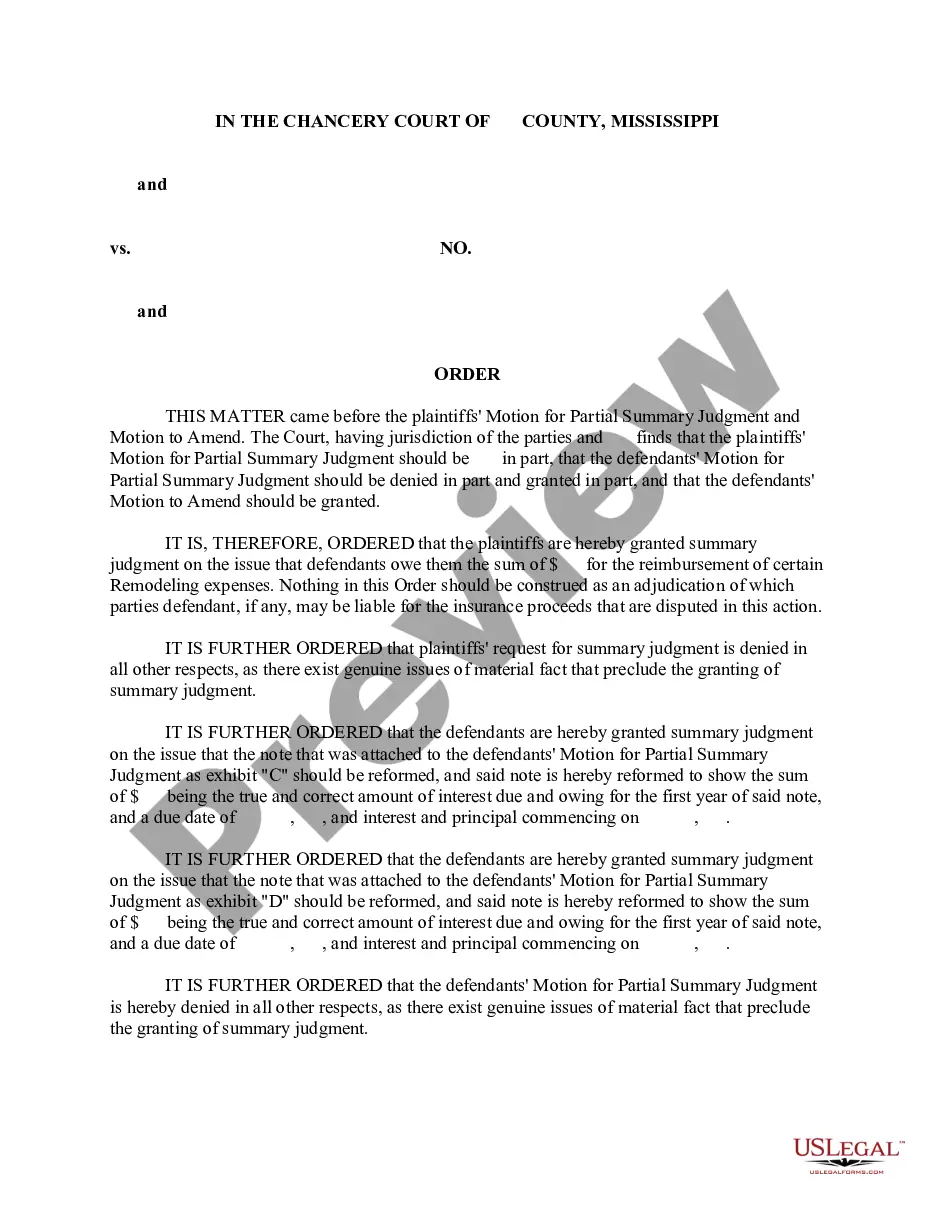
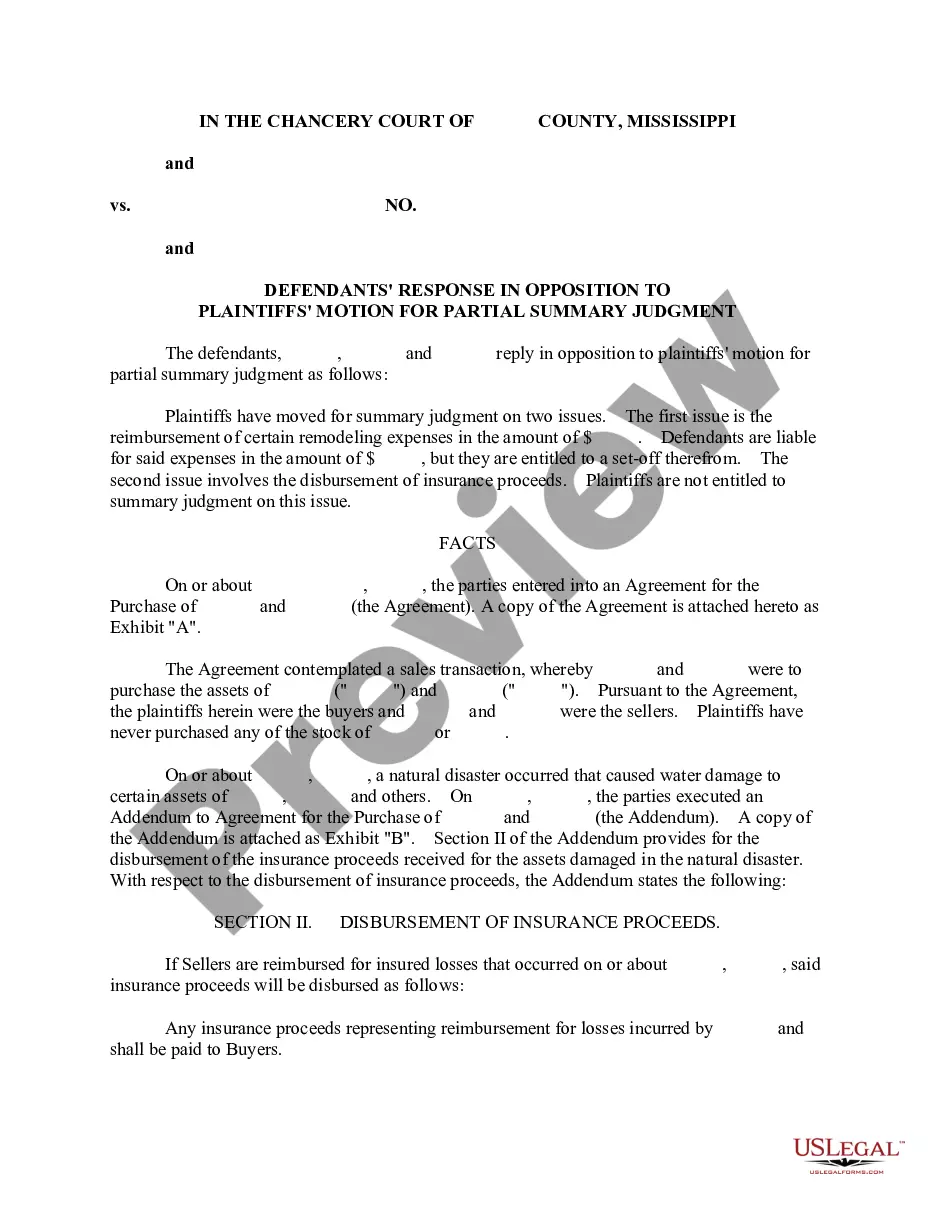
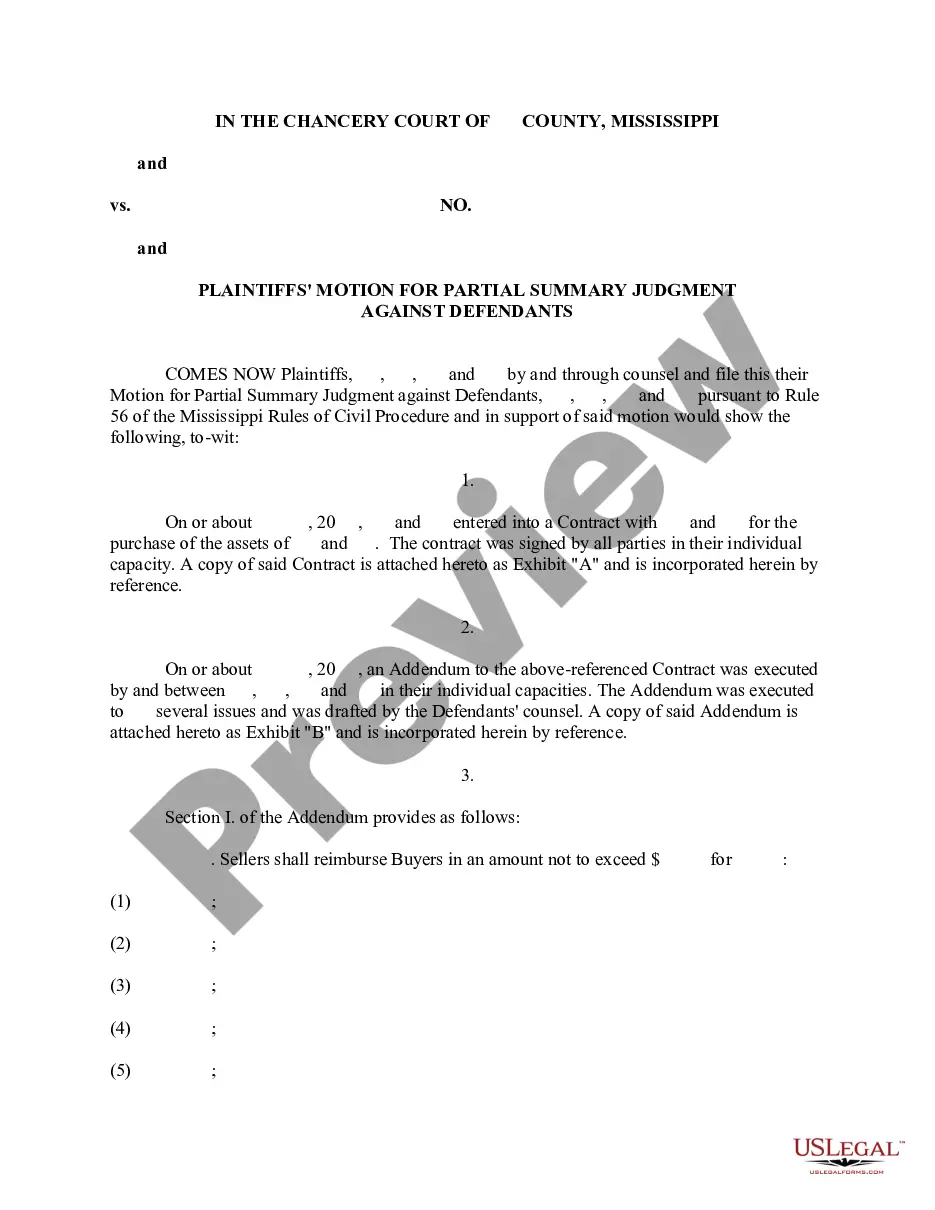
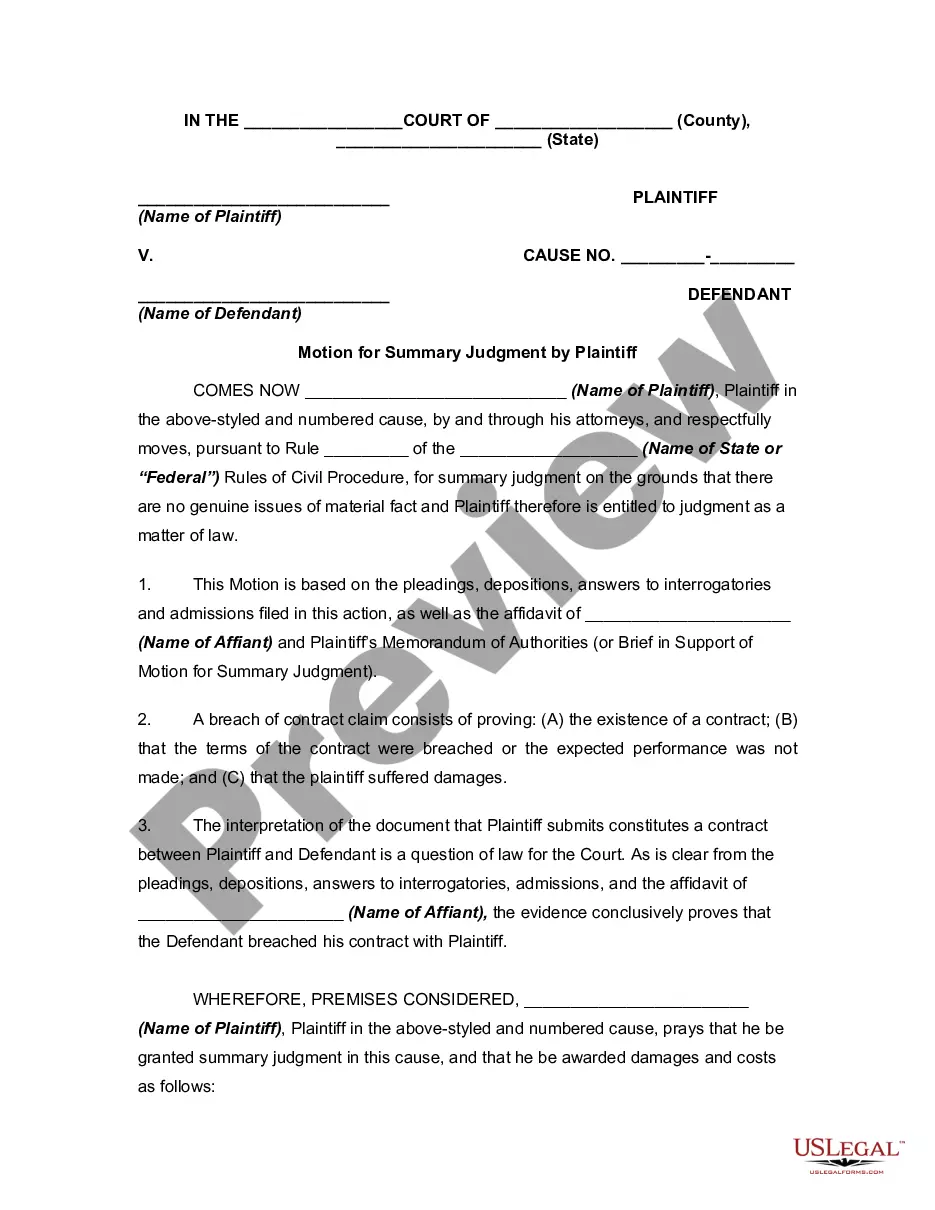
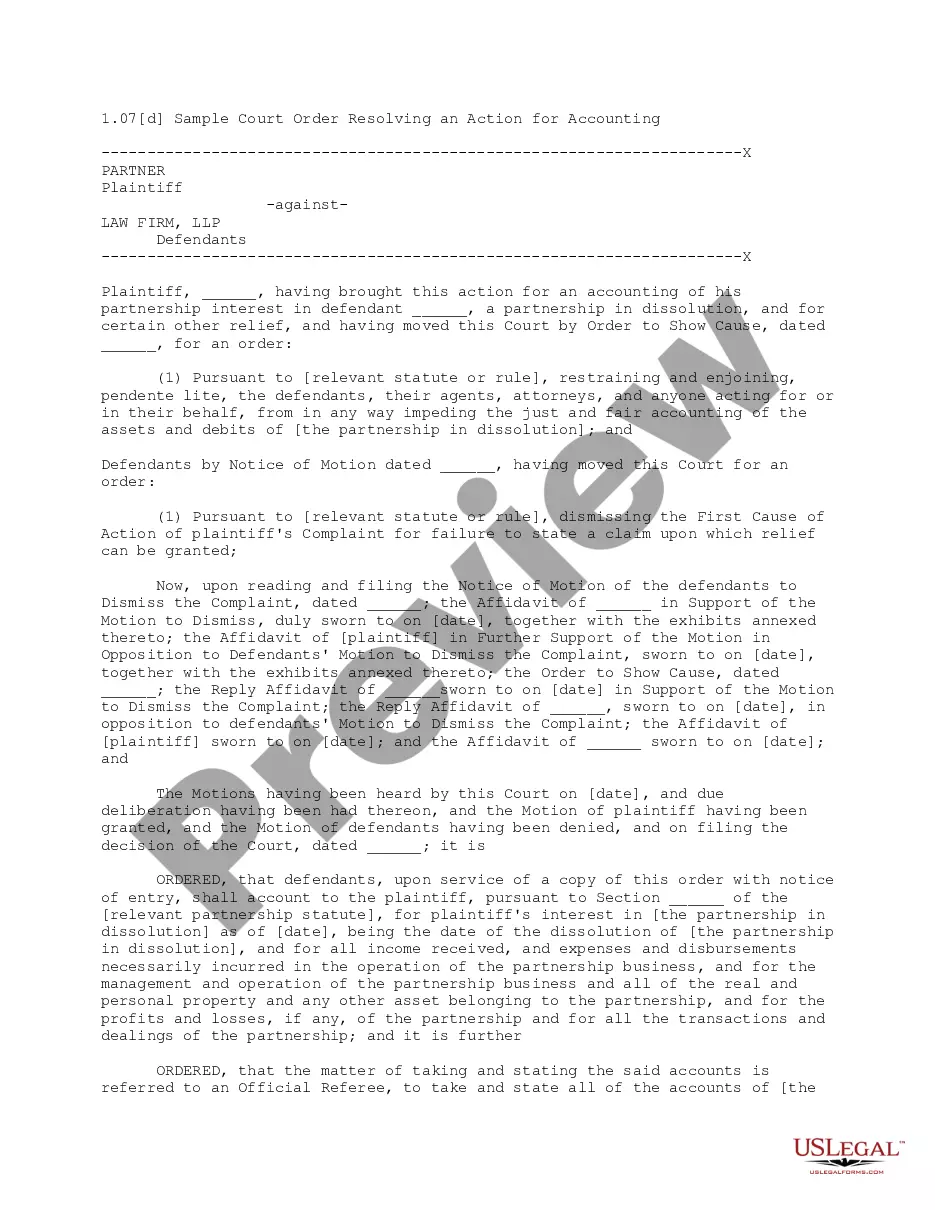
The Order on Motion for Partial Summary Judgment is a formal document issued by a court that commands specific actions regarding a case. It outlines the court's decisions on motions related to summary judgments, distinguishing between various motions from both parties. This form serves as a template for drafting your own order when the court requests it, ensuring clarity and adherence to legal standards.
Main sections of this form
- Case caption: Identifies the parties involved in the proceedings.
- Order details: Specifies which motions are granted or denied.
- Judgment amounts: Details any sums owed or agreements reached.
- Action directives: Outlines what each party must do following the order.
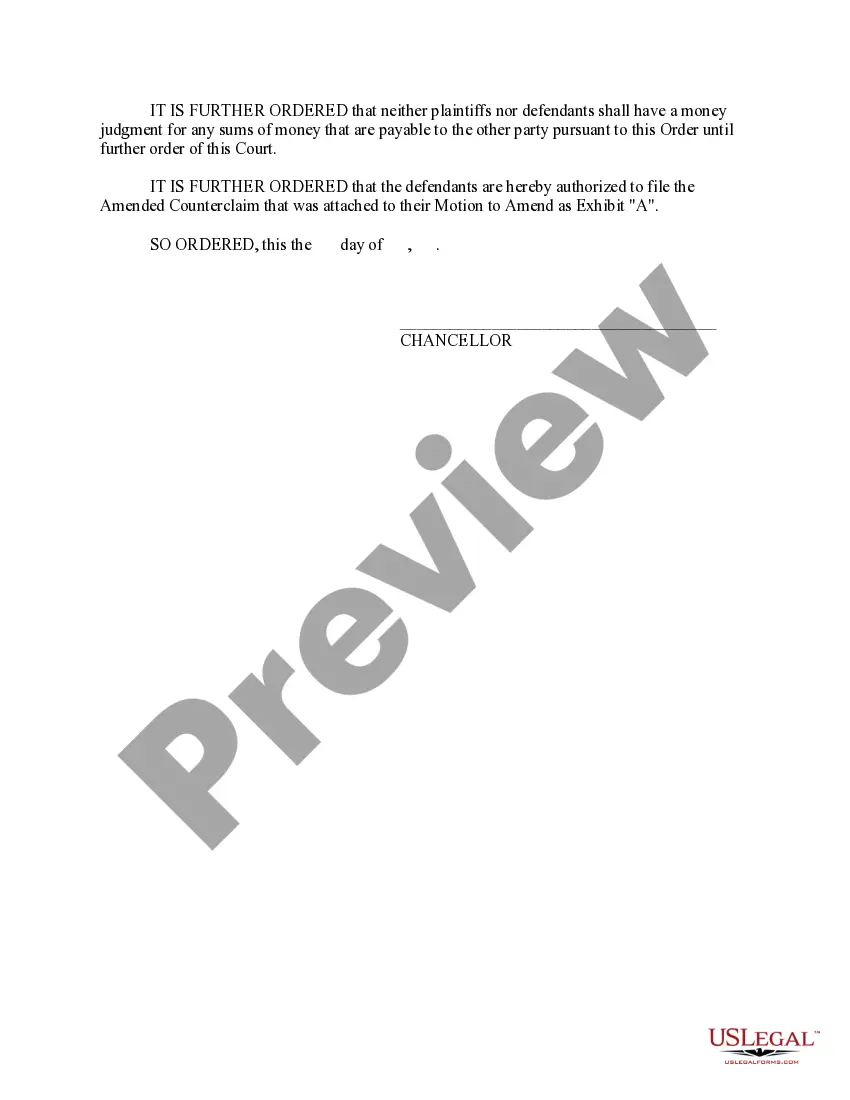
- Date and signature: Includes the date of issuance and the judge's signature line.
When to use this document
This form is necessary when a party involved in a legal dispute seeks a partial summary judgment from the court. It is typically used in cases where there are clear issues that can be resolved without a full trial, allowing the court to make determinations on specific points of law or fact that will streamline the resolution of the case.
Intended users of this form
- Parties in a legal dispute who are filing a Motion for Partial Summary Judgment.
- Legal representatives drafting orders for submission to the court upon its direction.
- Individuals seeking to clarify and formalize court decisions regarding motions in their cases.
How to complete this form
- Identify the parties: Enter the names of the plaintiffs and defendants involved in the case.
- Specify the motions: Clearly outline which motions are being addressed and the court's decisions on them.
- Enter amounts owed: Fill in the specific sums for judgments related to the case, if applicable.
- Include dates: Provide the relevant dates for any payments, motions, and the issuance of the order.
- Sign and date: Ensure the document is signed by the judge and dated appropriately.
Does this form need to be notarized?
This form usually doesn’t need to be notarized. However, local laws or specific transactions may require it. Our online notarization service, powered by Notarize, lets you complete it remotely through a secure video session, available 24/7.
Get your form ready online
Our built-in tools help you complete, sign, share, and store your documents in one place.
Make edits, fill in missing information, and update formatting in US Legal Forms—just like you would in MS Word.
Download a copy, print it, send it by email, or mail it via USPS—whatever works best for your next step.
Sign and collect signatures with our SignNow integration. Send to multiple recipients, set reminders, and more. Go Premium to unlock E-Sign.
If this form requires notarization, complete it online through a secure video call—no need to meet a notary in person or wait for an appointment.
We protect your documents and personal data by following strict security and privacy standards.

Make edits, fill in missing information, and update formatting in US Legal Forms—just like you would in MS Word.

Download a copy, print it, send it by email, or mail it via USPS—whatever works best for your next step.

Sign and collect signatures with our SignNow integration. Send to multiple recipients, set reminders, and more. Go Premium to unlock E-Sign.

If this form requires notarization, complete it online through a secure video call—no need to meet a notary in person or wait for an appointment.

We protect your documents and personal data by following strict security and privacy standards.
Typical mistakes to avoid
- Failing to use correct legal terminology specific to the jurisdiction.
- Leaving out essential details such as the amounts owed or actions required.
- Neglecting to sign and date the order before submission.
- Confusing the order with other types of court forms.
Benefits of using this form online
- Convenience: Download from anywhere at any time.
- Editability: Customize the form to fit your specific case needs.
- Reliability: Templates are drafted by licensed attorneys, ensuring legal validity.
Legal use & context
- This form aids in minimizing court time by resolving clear issues prior to trial.
- Partial summary judgments can be crucial in expediting case resolutions.
- Understanding the implications of the order can enhance strategic litigation planning.
Main things to remember
- The Order on Motion for Partial Summary Judgment is essential for resolving specific legal disputes efficiently.
- Properly completed, this form can facilitate a smoother legal process.
- Always ensure compliance with local laws when using this form to avoid complications.
Looking for another form?
Form popularity
FAQ
Judgment on the pleadings is a motion made after pleading and before discovery; summary judgment happens after discovery and before trial; JMOL occurs during trial.Timing is very important in making a motion for JMOL; the motion can be made only after the opposing party has presented its case.
A motion asking the court to enter judgment as a matter of law. This motion is made before a case is submitted to the jury, and argues that no reasonable jury could find for the opposing party (i.e., whatever evidence exists for such ruling is legally insufficient).Also referred to as a motion for a directed verdict.
1. The Rule. Rule 50(a) provides for a motion for judgment as a matter of law (JMOL) which may be made at any time before submission of the case to the jury.If the court decides the initial motion should have been granted, it may set aside the verdict of the jury and enter judgment as a matter of law.
Motion for judgment on the pleadings is a party's request to the court to rule in his/her favor based on the pleadings on file, without accepting evidence, as when the outcome of the case rests on the court's interpretation of the law.
21 provides that misjoinder of parties is not ground for dismissal of an action, and that parties may be dropped or added by court order on motion of any party or of the court's own initiative at any stage in the action and on such terms as are just.
Motion for judgment on the pleadings is a party's request to the court to rule in his/her favor based on the pleadings on file, without accepting evidence, as when the outcome of the case rests on the court's interpretation of the law.
When you file your motion, the court clerk will insert the date, time, and place of the hearing on your motion. You must then serve (mail) a copy of your filed motion (including all exhibits and the date, time, and place of hearing) to all other parties in the case.
You need to set your motion(s) for hearing to get it before the Court. Otherwise, the Court will not address your motion(s), which is why you feel like you are being ignored. Thus, you must file a notice of hearing on your motion and go before the...
At a motion hearing, each party can argue its position and the judge can ask specific questions about the fact or law. After hearing the judge decides the motion and this is called an order. However, during a trial or a hearing, an oral motion may also be permitted.