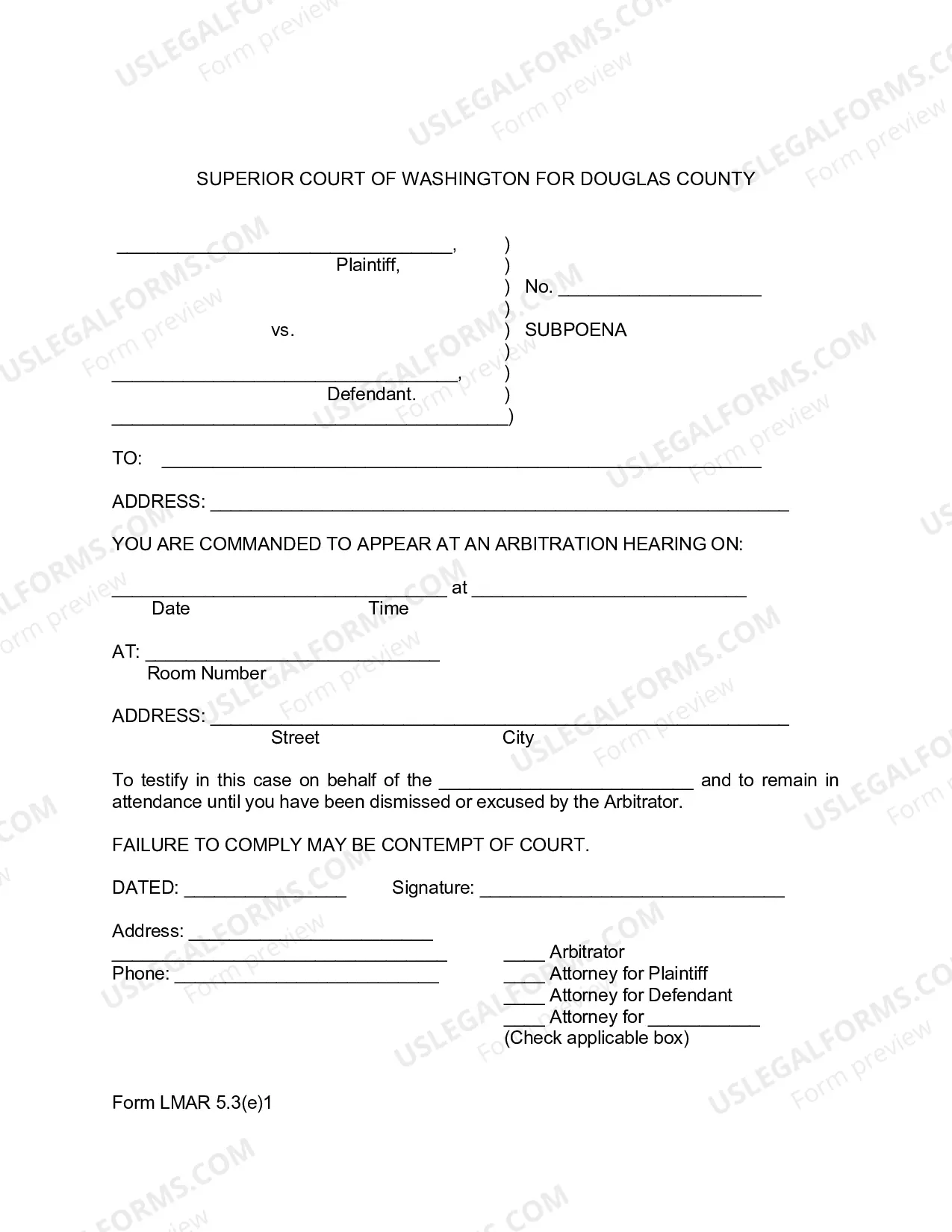
Colorado Sewer Easement
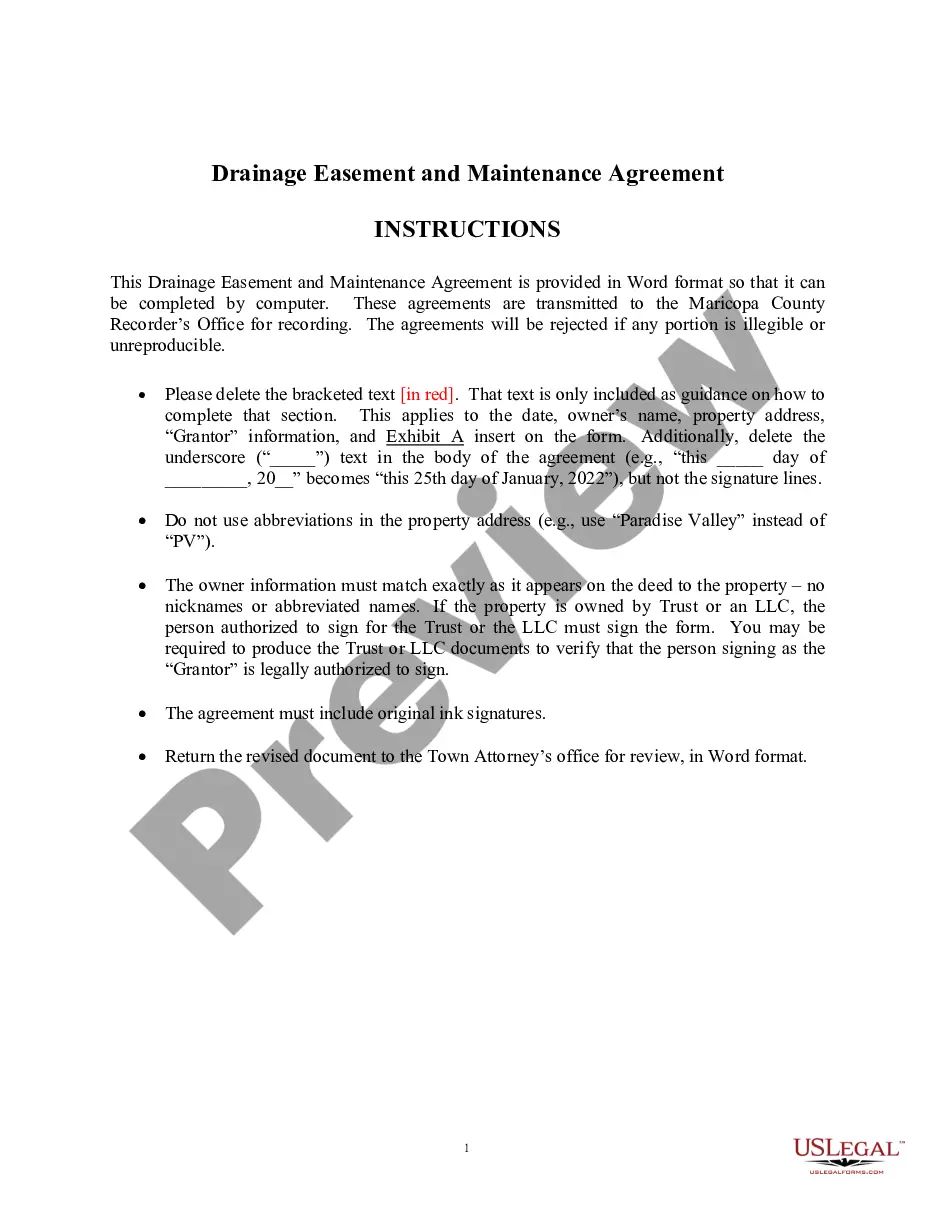
Overview of this form
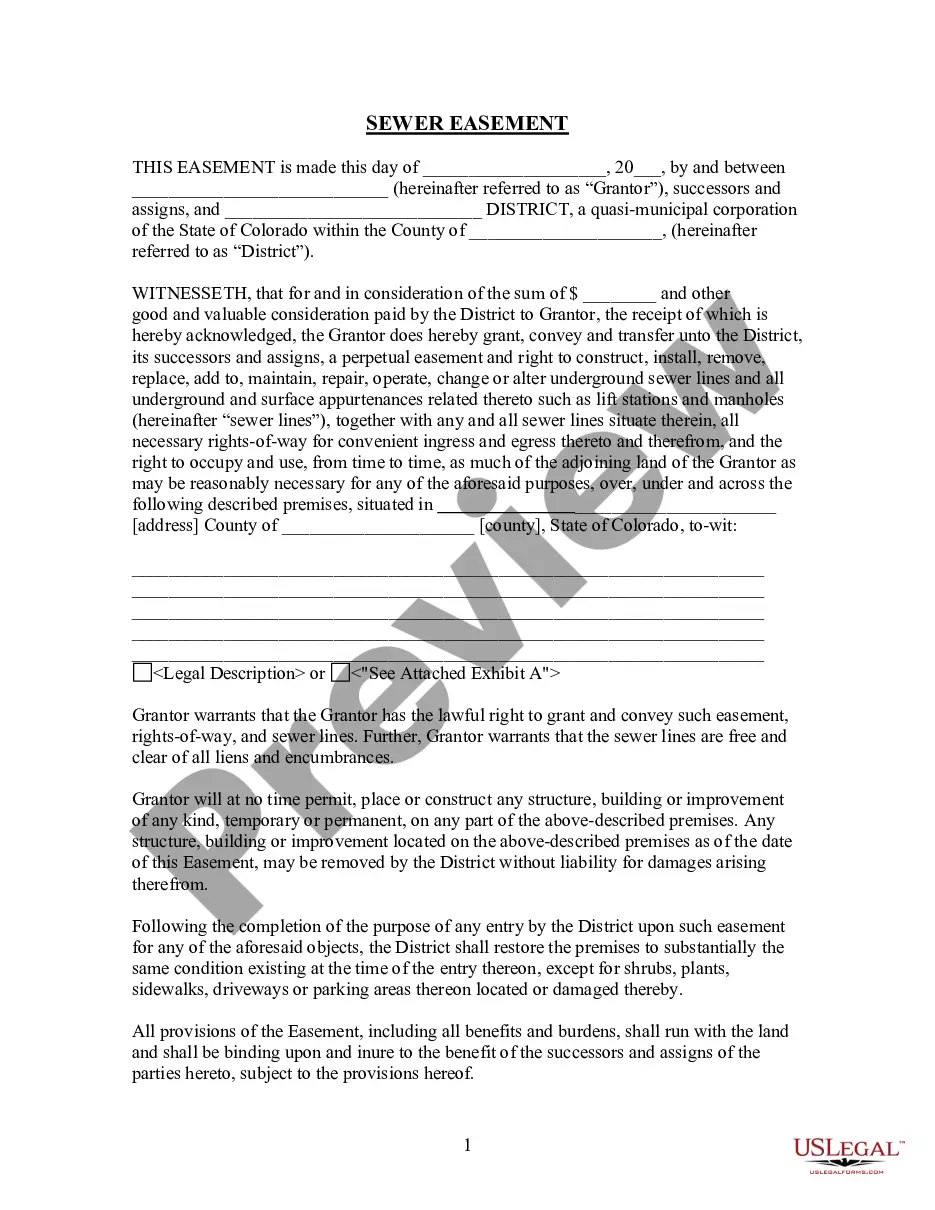
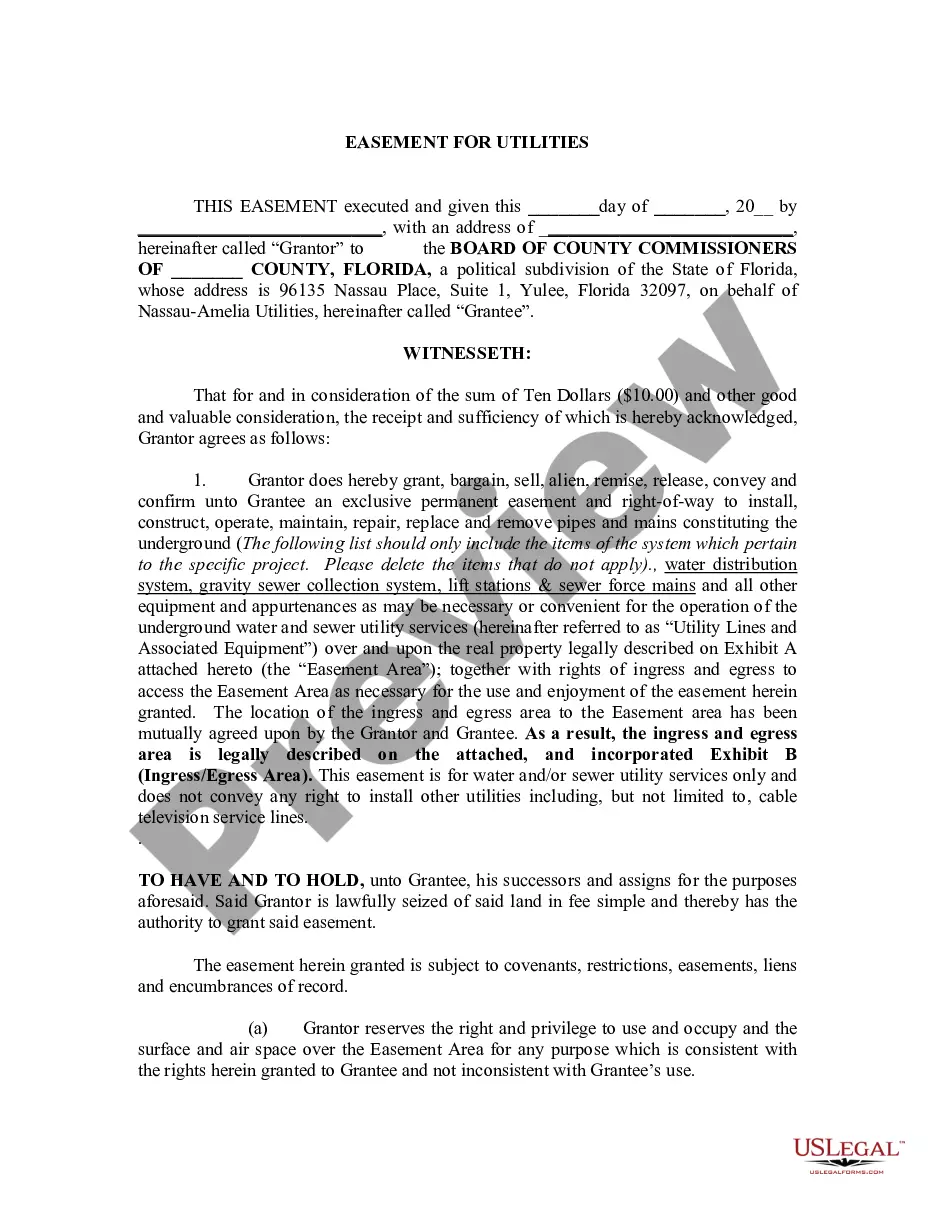
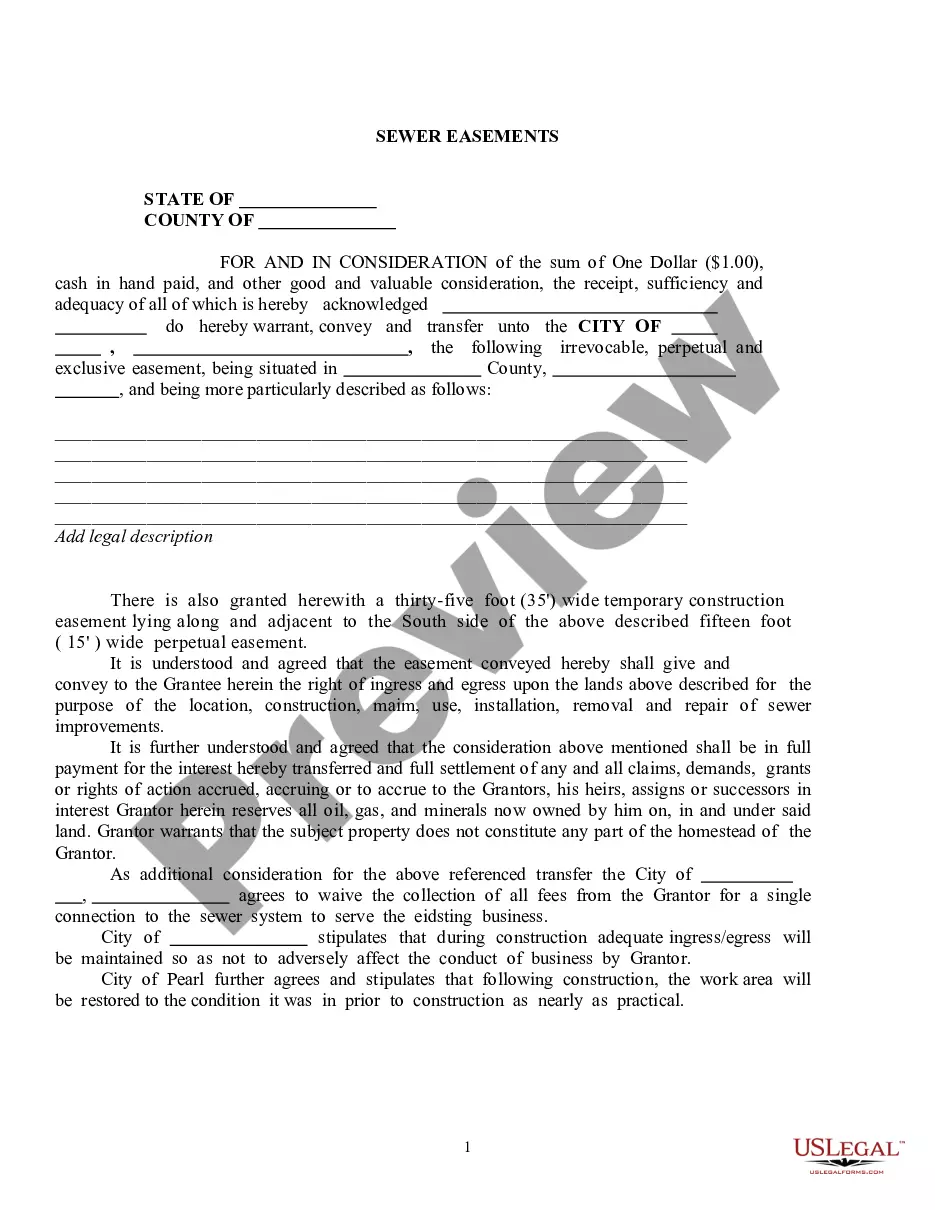
The Sewer Easement is a legal document that grants a utility district the right to construct, maintain, and operate sewer lines on someone else's property. This easement allows for necessary access to install, repair, or replace underground sewer infrastructure, which is essential for community wastewater management. Unlike a property deed, an easement does not transfer ownership of the land but allows specific use of it by the easement holder.
Key parts of this document
- Grantor and District Information: Names and details of the property owner (Grantor) and the utility district.
- Consideration: The monetary sum or other considerations provided in exchange for the easement.
- Legal Description: Detailed description of the property affected by the easement, often referenced in an exhibit.
- Warranties by Grantor: Assurance that the Grantor holds the right to grant the easement and that the sewer lines are free from encumbrances.
- Terms of Use: Conditions regarding what can and cannot be built on the easement area by the Grantor.
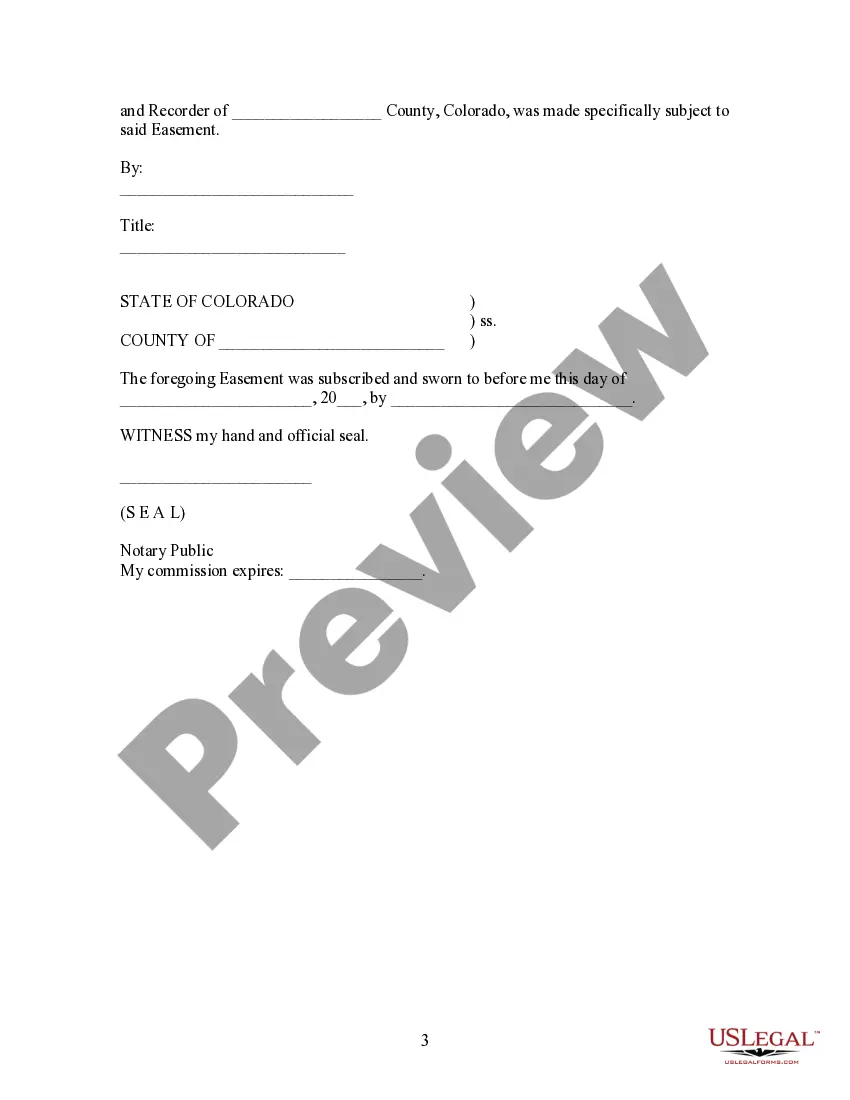
- Signatures: Spaces for the signatures of the Grantor and District representatives, acknowledging the agreement.


Situations where this form applies
This form should be used when a utility district needs to install or maintain sewer lines on private property. It is relevant when property owners agree to allow access for ongoing utility operations, especially when such access is necessary for public health and safety concerns associated with sewage management.
Who needs this form
This form is intended for:
- Property owners wishing to grant an easement for sewer lines on their land.
- Utility districts or municipalities that require access to install or maintain sewer infrastructure.
- Developers needing to outline easement terms for property development projects that involve sewer connections.
Completing this form step by step
- Identify the parties involved: Enter the names of the Grantor (property owner) and the District (utility entity).
- Specify the property: Fill in the legal description of the property where the easement will apply.
- Enter consideration details: Document any financial payment or other compensation for the easement.
- Warranties: Acknowledge that the Grantor has the legal authority to grant this easement and that the property is free of liens.
- Sign the document: Ensure all parties sign and date the easement to validate the agreement.
Does this form need to be notarized?
Yes, this form must be notarized to be legally valid. US Legal Forms offers integrated online notarization services that are available 24/7 via secure video call, ensuring convenience and legal equivalence without the need for travel.
Get your form ready online
Our built-in tools help you complete, sign, share, and store your documents in one place.
Make edits, fill in missing information, and update formatting in US Legal Forms—just like you would in MS Word.
Download a copy, print it, send it by email, or mail it via USPS—whatever works best for your next step.
Sign and collect signatures with our SignNow integration. Send to multiple recipients, set reminders, and more. Go Premium to unlock E-Sign.
If this form requires notarization, complete it online through a secure video call—no need to meet a notary in person or wait for an appointment.
We protect your documents and personal data by following strict security and privacy standards.

Make edits, fill in missing information, and update formatting in US Legal Forms—just like you would in MS Word.

Download a copy, print it, send it by email, or mail it via USPS—whatever works best for your next step.

Sign and collect signatures with our SignNow integration. Send to multiple recipients, set reminders, and more. Go Premium to unlock E-Sign.

If this form requires notarization, complete it online through a secure video call—no need to meet a notary in person or wait for an appointment.

We protect your documents and personal data by following strict security and privacy standards.
Mistakes to watch out for
- Failing to provide a clear legal description of the property may lead to disputes.
- Not securing the necessary signatures or notarization can invalidate the easement.
- Overlooking local regulations that may require additional approvals for easements.
Benefits of using this form online
- Convenience of downloading the form anytime and anywhere.
- Editable template to tailor the document to specific legal needs and local requirements.
- Access to attorney-drafted language, ensuring that all legal bases are covered.
Legal use & context
- An easement allows utility companies to perform necessary maintenance without transferring property ownership.
- It remains in effect even if the property is sold, affecting future owners.
- Failure to comply with the terms of the easement can result in legal disputes.
Summary of main points
- The Sewer Easement grants essential rights to utility companies while protecting property owner interests.
- Proper completion and notarization of the form are critical for its validity.
- Understanding the rights and responsibilities associated with this easement is crucial for both parties.
Looking for another form?

Form popularity
FAQ
Abuse of a Colorado sewer easement occurs when the easement holder exceeds the scope defined in the easement agreement. This can include activities that cause excessive damage or disrupt the primary purpose of the easement, like performing unrelated construction work. It’s vital for both parties to adhere to established boundaries to avoid conflicts. If you suspect an easement is being misused, seeking advice from a legal expert can help you address the issue effectively.
Generally, a property owner cannot block a legally established Colorado sewer easement. Easements grant specific rights for utility access, and attempting to block them could lead to legal disputes. However, property owners may negotiate certain terms, potentially addressing their concerns while still allowing access. Engaging with a professional through USLegalForms can guide you in understanding your rights regarding easements.
Yes, a Colorado sewer easement can affect property value, often depending on the easement's location and extent. While the presence of an easement may limit certain property uses, it can also provide necessary access for repairs and maintenance, which adds value in some cases. If you are concerned about how a sewer easement impacts your property, consider consulting with a real estate expert. They can help you navigate this complex topic.
To file a Colorado sewer easement, you typically need to go to your local county clerk and recorder's office. The process usually involves preparing a legal document that outlines the easement, which you must then submit for recording. It's essential to include specific details, such as the property description and the easement's intended use. Using a reliable platform like USLegalForms can help you draft the necessary documents accurately.
Easement law in Colorado establishes how easements function, including their creation, duration, and rights associated with them. This law ensures that landowners can use their property while respecting the rights of others who may need access. If you are dealing with issues surrounding easements, including the Colorado Sewer Easement, utilizing a resource like UsLegalForms can provide clarity and legal support throughout the process.
The ditch law in Colorado encompasses the statutes governing the use and maintenance of irrigation ditches. This law safeguards water rights and outlines responsibilities for property owners and ditch users. Knowledge of this law is important for those interested in developing or managing properties that involve drainage systems, particularly concerning the Colorado Sewer Easement.
A ditch easement is a legal right that permits access to and use of land for water transport via ditches. It ensures that both the holder and the property owner can manage water flow effectively. Familiarizing yourself with the concept of ditch easements is essential, especially when navigating issues surrounding the Colorado Sewer Easement.
The ditch easement law in Colorado regulates how landowners can utilize ditches on their property. This law allows for the necessary access and maintenance of irrigation ditches, ensuring water rights are protected. Understanding these regulations ensures landowners can confidently manage their land without infringing on rights related to the Colorado Sewer Easement.
Easement laws in Colorado outline the rights and obligations of both the easement holder and the property owner. These laws ensure that easements, including Colorado Sewer Easements, must be clearly defined and can be enforceable in a court of law. It is essential for property owners to understand how these laws can impact their property rights. For complex situations, users can turn to platforms like USLegalForms to ensure all necessary legal documentation is thorough and compliant.
In Colorado, an easement allows one party to use another's land for a specific purpose, such as access for utilities or sewer maintenance. Generally, easements can be created through agreements, necessity, or long-term use. Once a Colorado Sewer Easement is established, it gives the holder certain rights, while the property owner maintains ownership responsibilities of the land. It's important to document these agreements properly to avoid future disputes.