Drainage Easement
About this form
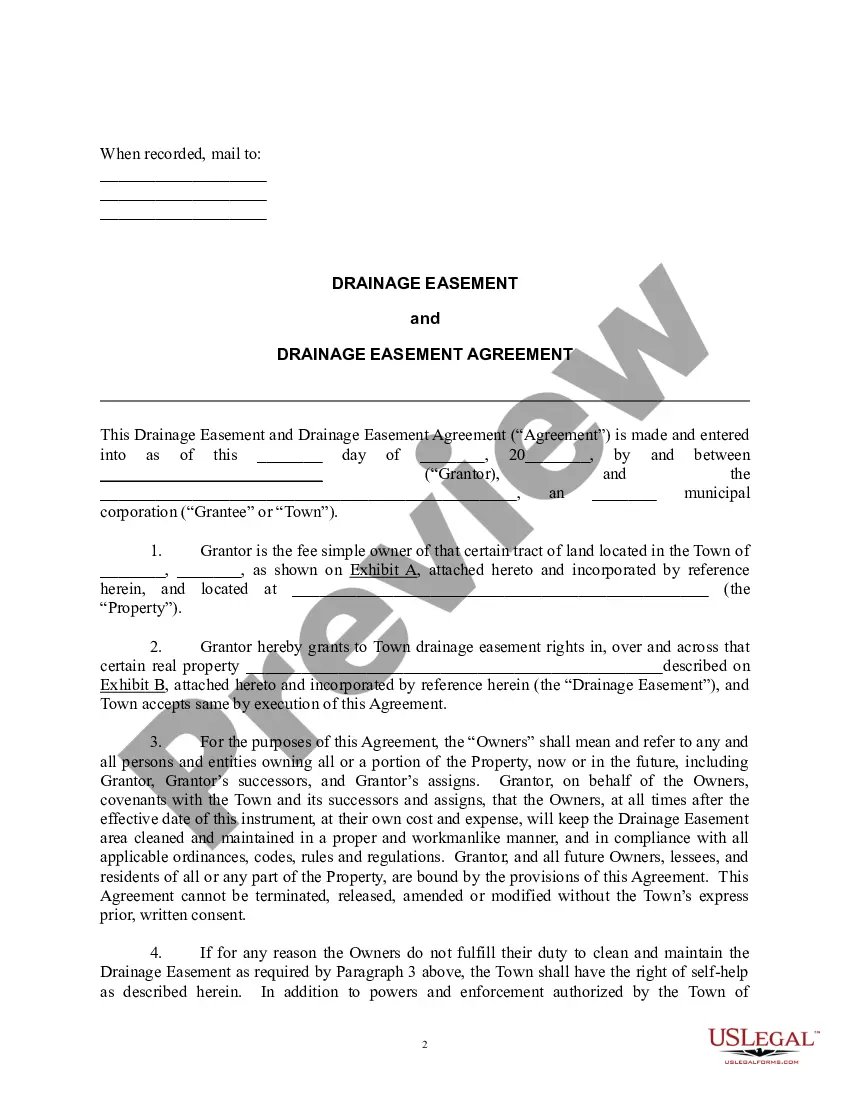
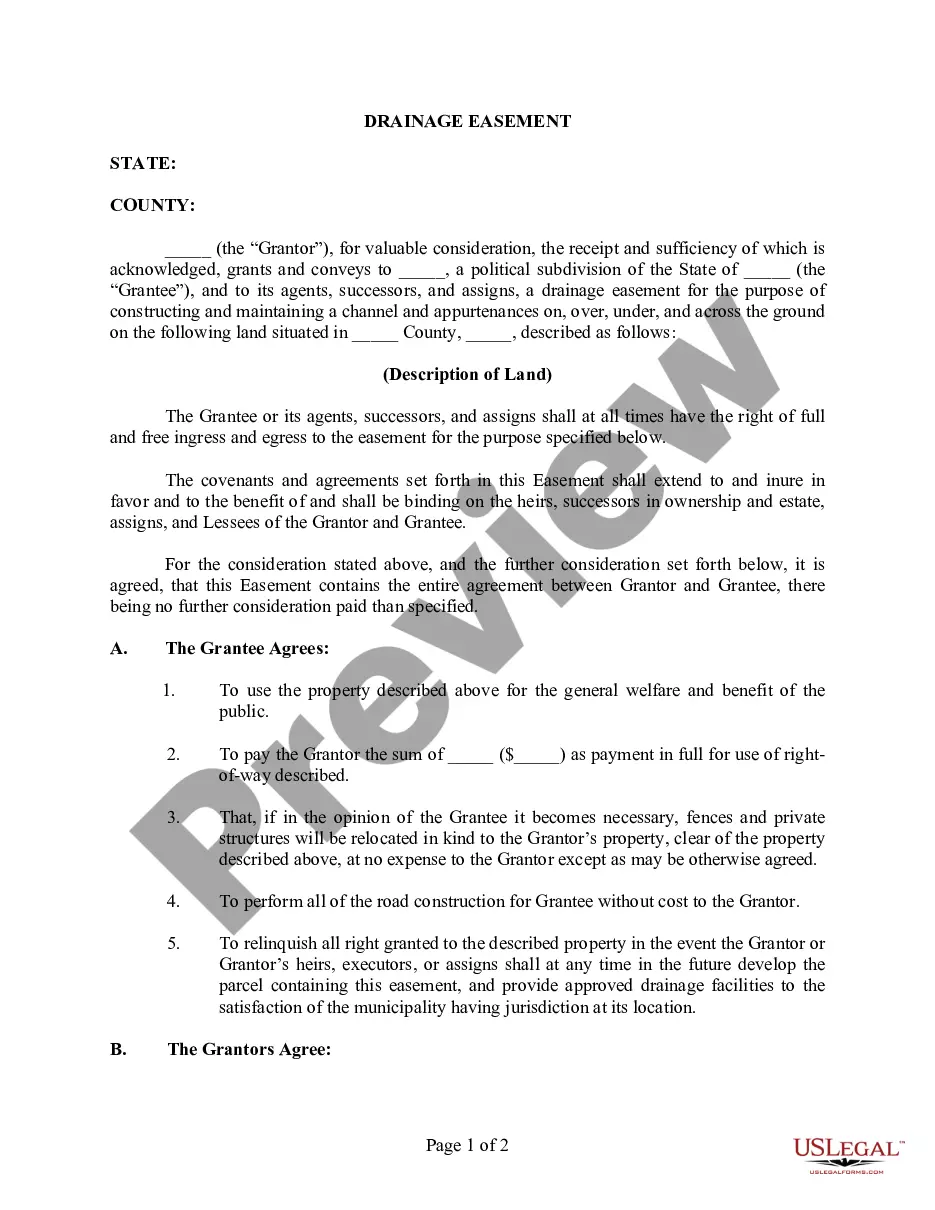
The Drainage Easement form is a legal agreement that grants another party specific rights to use a tract of land for drainage purposes. Unlike a lease, this form does not transfer possession or ownership rights to the easement area; it simply allows the designated party to maintain and utilize the land for managing water flow and drainage effectively.
Key components of this form
- Identification of the Grantor (landowner) and Grantee (the entity receiving the easement).
- Legal description of the property and the specific area designated as the drainage easement.
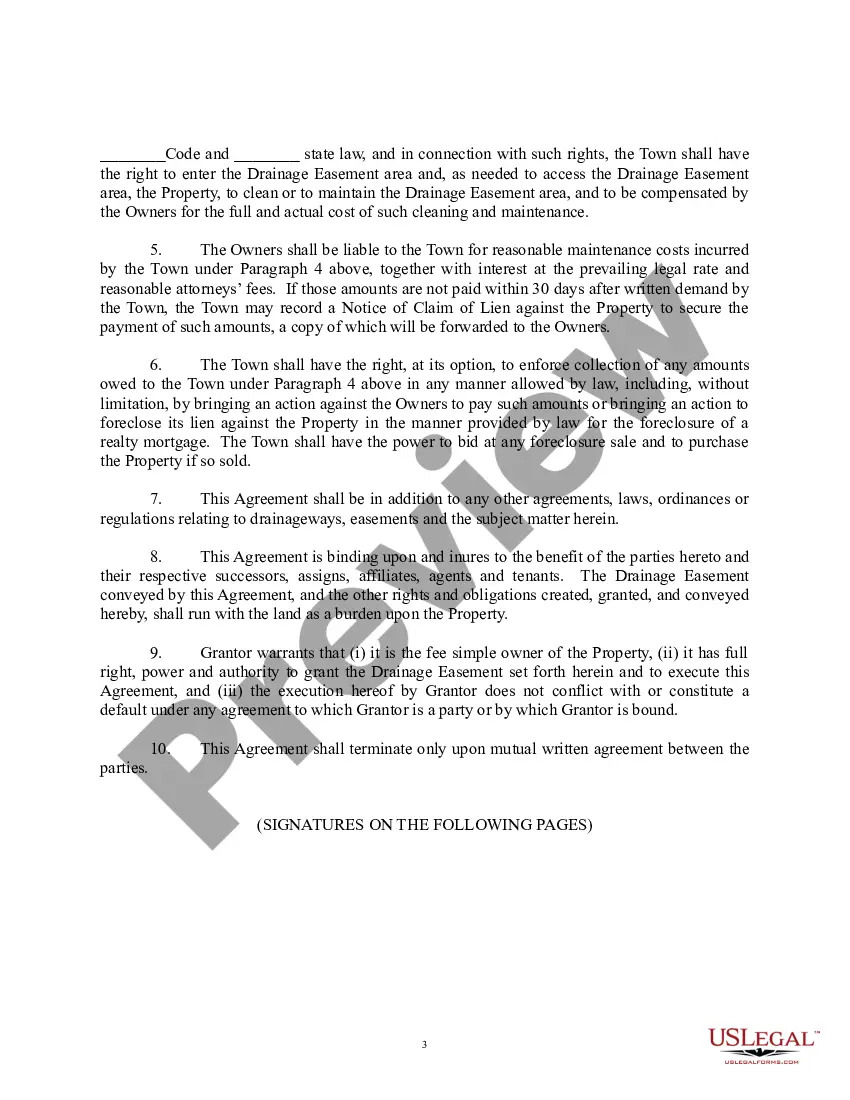
- Responsibilities of the property owners for maintaining the easement area.
- Conditions under which the Town may enter the easement area for maintenance if not properly maintained by the owners.
- Provisions for enforcement, liability, and the rights of the parties involved.
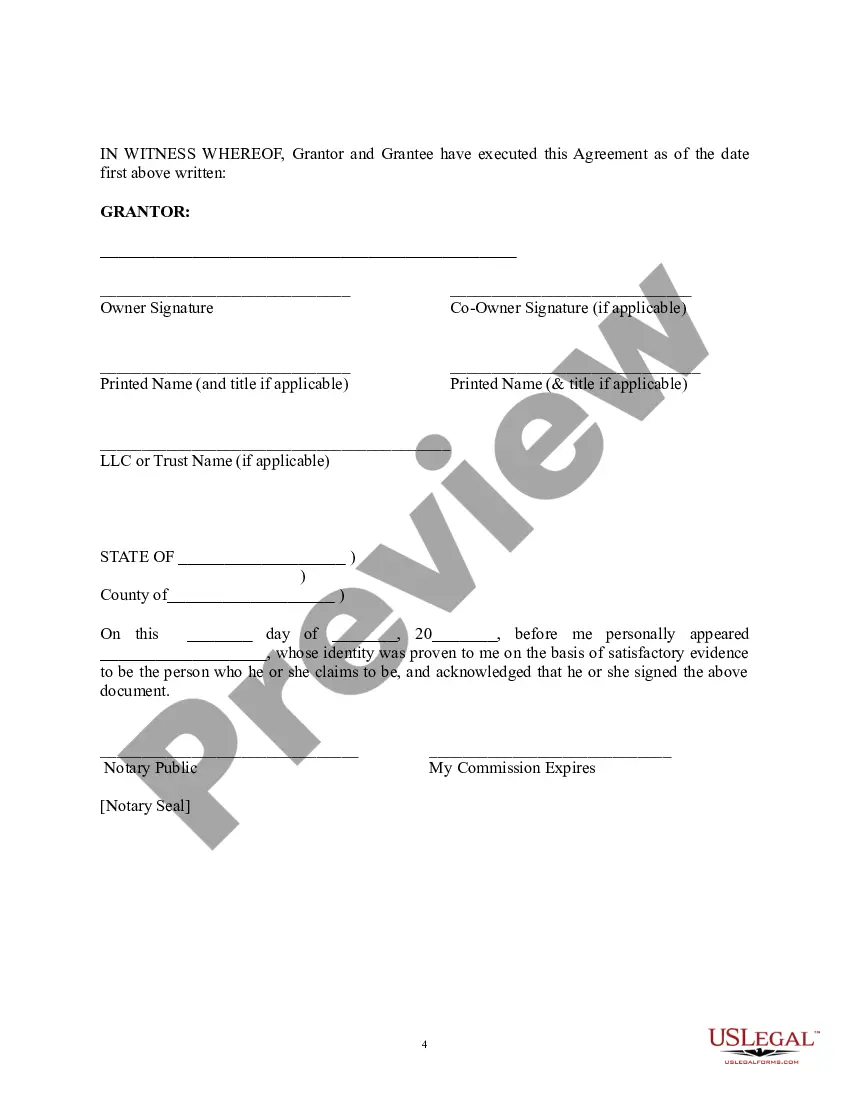
- Signature requirements and notarization details.

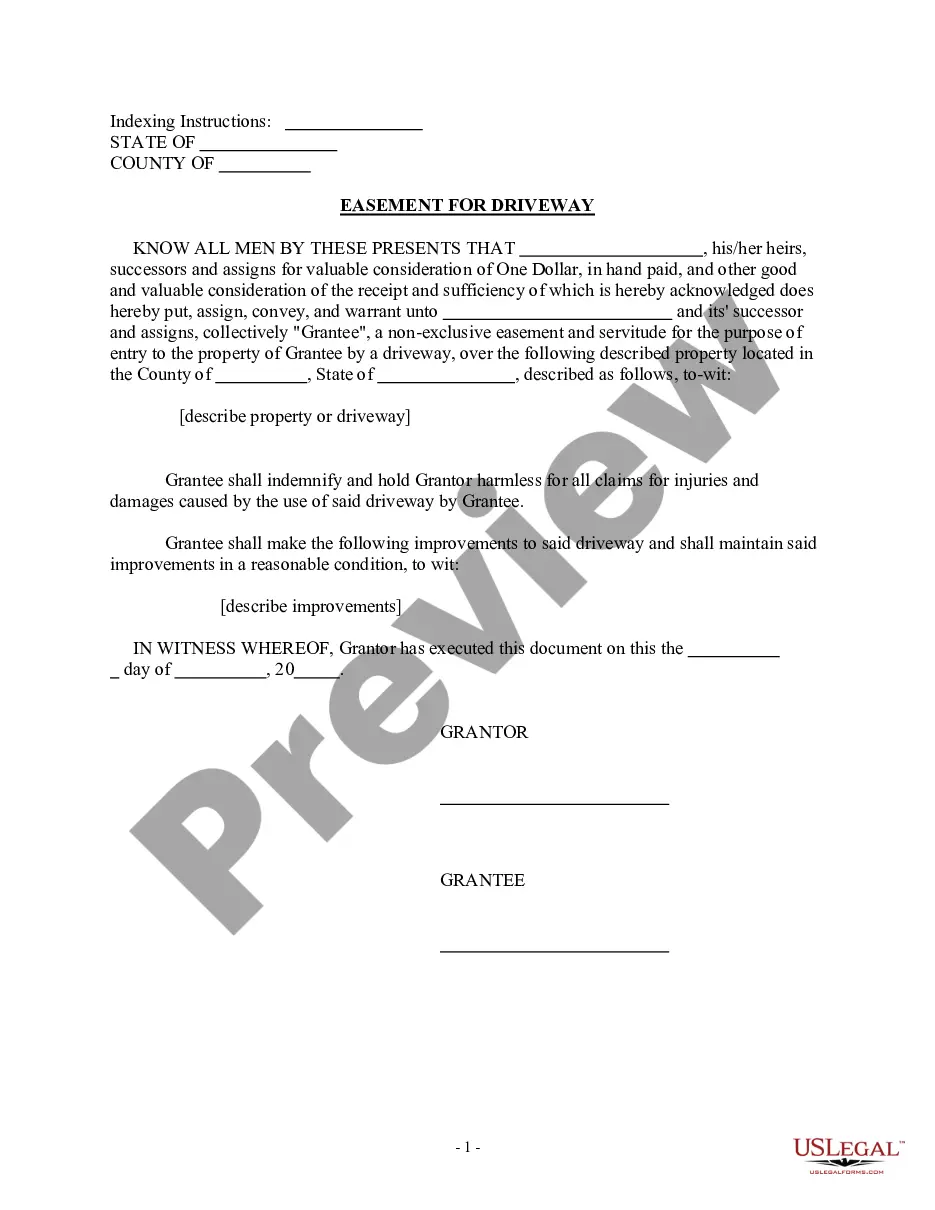
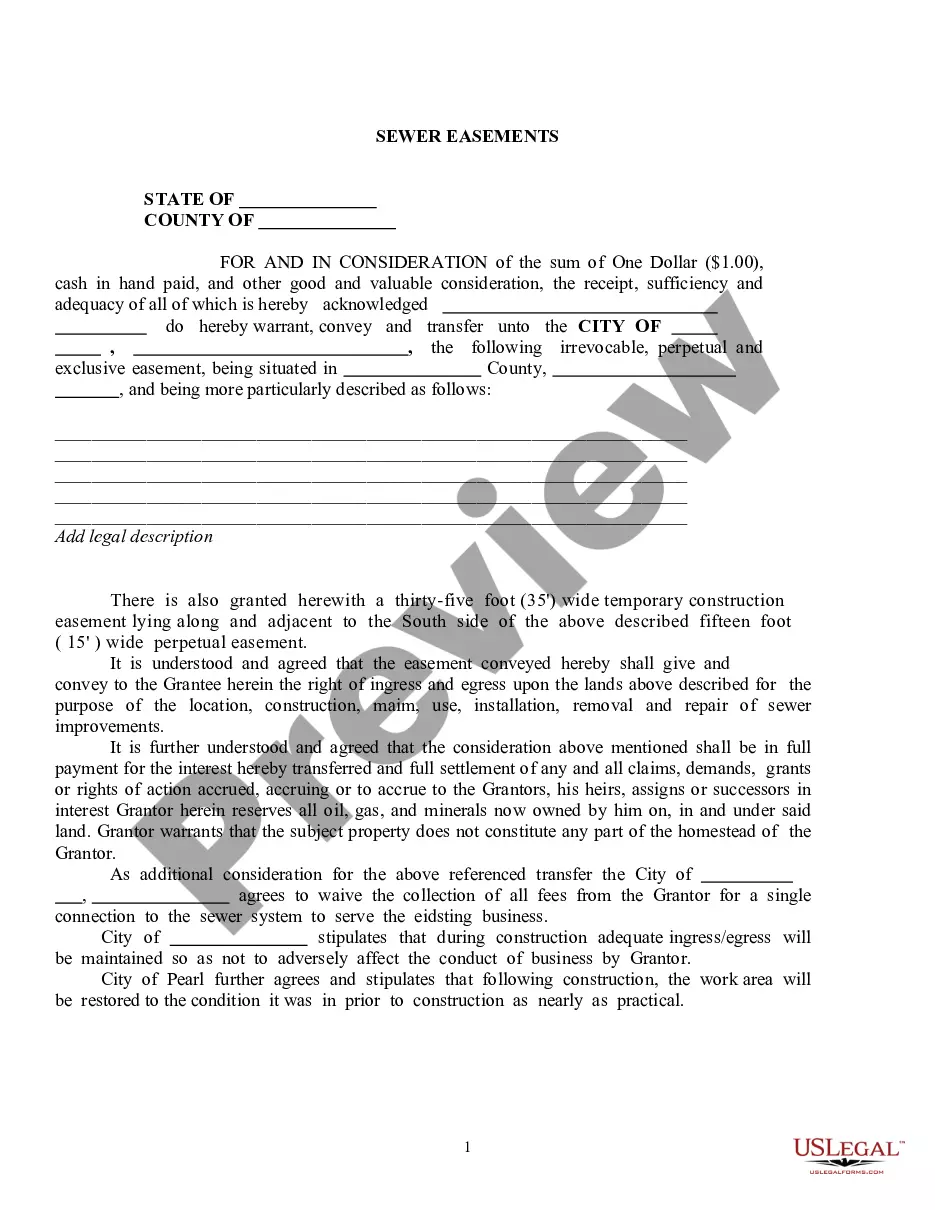
When to use this document
This form is typically used when a property owner needs to grant a municipality or other party access to a portion of their land for drainage purposes. It is essential to use this document when there is a need to manage water runoff or drainage effectively and legally, ensuring that both parties understand their rights and responsibilities regarding the easement.
Who this form is for
This form is suitable for:
- Property owners who are seeking to grant drainage easement rights to a municipality or governmental entity.
- Entities, such as towns or cities, that require access to private land for the purpose of managing drainage systems.
- Individuals or businesses involved in property development where drainage easements are necessary.
How to complete this form
- Identify the parties involved, including the Grantor (landowner) and the Grantee (municipality).
- Specify the property with an accurate legal description and include any relevant exhibits.
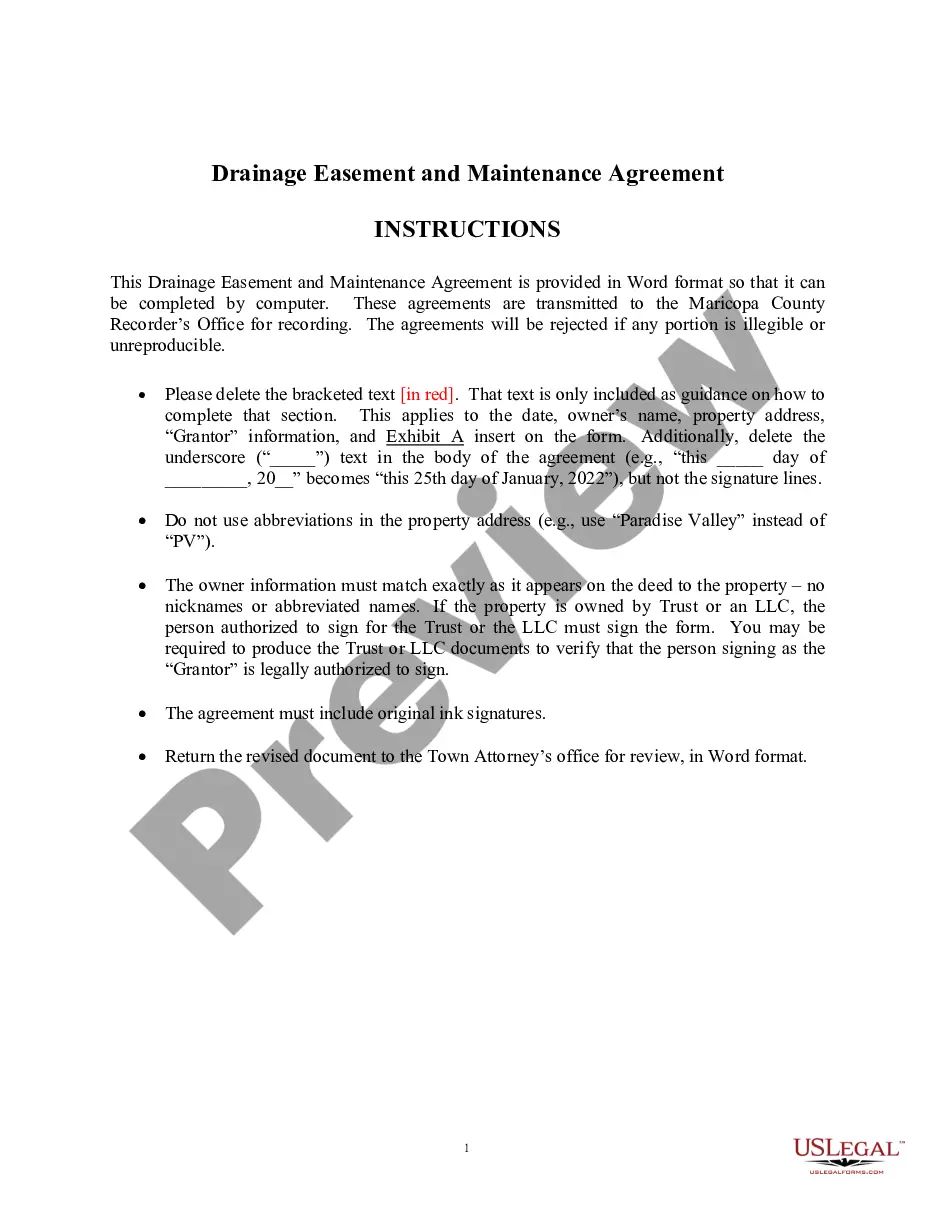
- Enter dates and ensure the owners' names match exactly as they appear on the property deed.
- Delete any bracketed instructional text and fill in the underscores with the appropriate information.
- Obtain original ink signatures and ensure notarization as needed.
Does this document require notarization?
Yes, this form must be notarized to be legally valid. It requires original signatures, and notarization helps verify the identities of the signatories. US Legal Forms offers integrated online notarization services that are available 24/7 via secure video calls, ensuring your document is notarized efficiently and legally.
Get your form ready online
Our built-in tools help you complete, sign, share, and store your documents in one place.
Make edits, fill in missing information, and update formatting in US Legal Forms—just like you would in MS Word.
Download a copy, print it, send it by email, or mail it via USPS—whatever works best for your next step.
Sign and collect signatures with our SignNow integration. Send to multiple recipients, set reminders, and more. Go Premium to unlock E-Sign.
If this form requires notarization, complete it online through a secure video call—no need to meet a notary in person or wait for an appointment.
We protect your documents and personal data by following strict security and privacy standards.

Make edits, fill in missing information, and update formatting in US Legal Forms—just like you would in MS Word.

Download a copy, print it, send it by email, or mail it via USPS—whatever works best for your next step.

Sign and collect signatures with our SignNow integration. Send to multiple recipients, set reminders, and more. Go Premium to unlock E-Sign.

If this form requires notarization, complete it online through a secure video call—no need to meet a notary in person or wait for an appointment.

We protect your documents and personal data by following strict security and privacy standards.
Common mistakes to avoid
- Failing to provide clear and legible information, leading to rejection during recording.
- Using abbreviations in the property address.
- Not matching the names exactly as they appear on the property deed.
- Neglecting to include original ink signatures.
Advantages of online completion
- Convenience of accessing legal forms anytime and anywhere.
- Editability allows you to fill out the form accurately before printing.
- Reliability of using attorney-drafted forms that meet legal standards.
Looking for another form?
Form popularity
FAQ
In the State of Georgia, a permit is required to own, operate or construct a Category I dam. An application must be filled out in order to obtain a permit.
The General Law in North Carolina states that the person on the lower estate must receive and pass the water from the higher estate(s).
One is called the "common enemy rule." Under this rule, drainage water is regarded as an enemy common to all landowners. The law allows every owner to take any measure to protect property, regardless of the consequences to other neighbors.
It holds that since surface water is a "common enemy" to landowners, each landowner has the right to alter the drainage pattern of his land (for example by building dikes or drainage channels) without regard for the effects on neighboring parcels, as long as that water flows to where it otherwise would have naturally
Drainage easements are in place to allow maintenance personnel/equipment access to various components of the cities drainage infrastructure.
The Civil Law rule ?imposes a right and a duty upon every landowner to receive water naturally flowing onto his land from that of his neighbor.? (Mallard vs Pye, 215 Ga.
Although the state of Georgia does not own waterways on or adjacent to private land, it has the power to regulate the use of the water. Non-navigable waters are not considered to be held in public trust.
A property owner with a drainage easement is restricted from erecting both temporary (such as a shed) and permanent structures (such as a driveway) within the easement area. Such structures can reduce the efficiency of drainage and increase the possibility of flooding.