Easement for Utilities
What is this form?
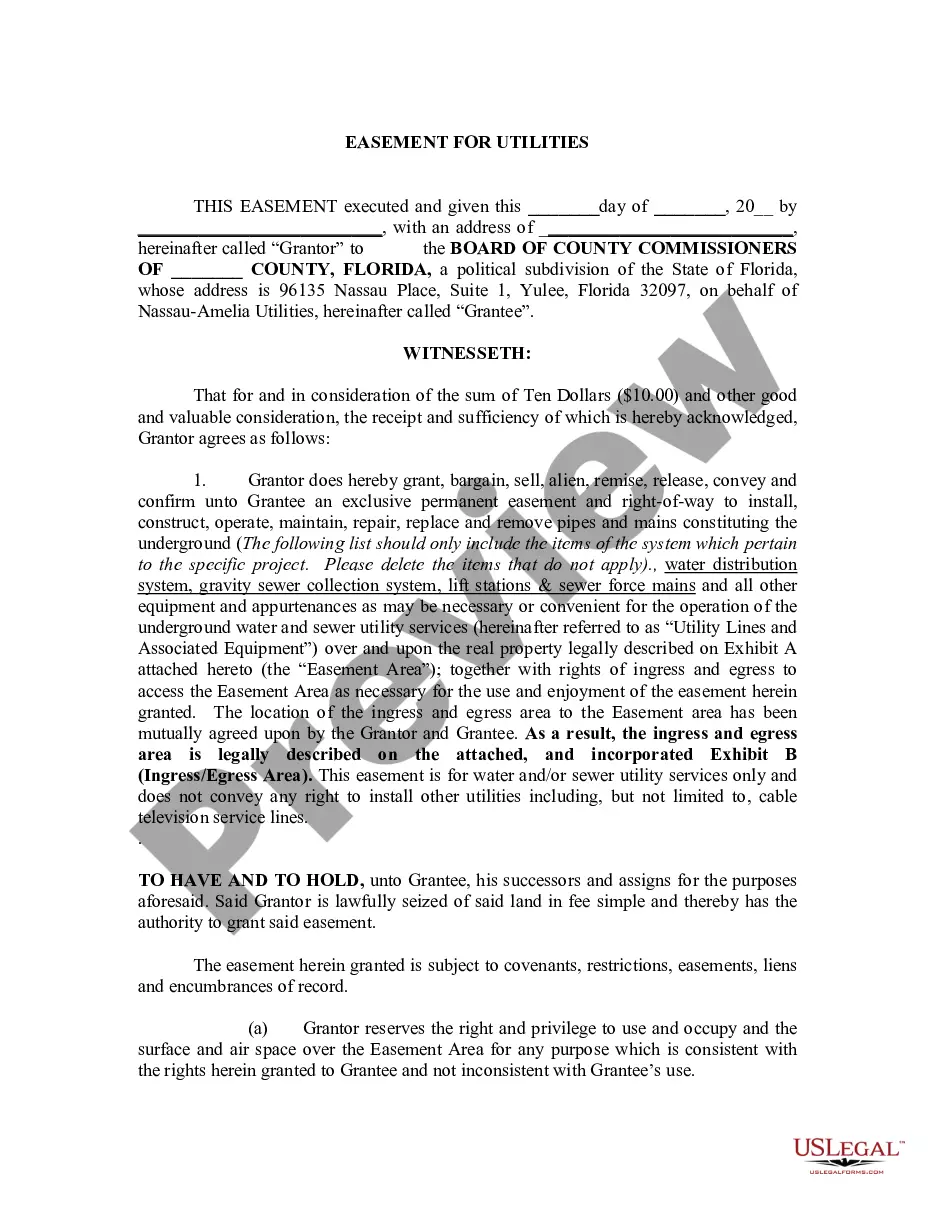
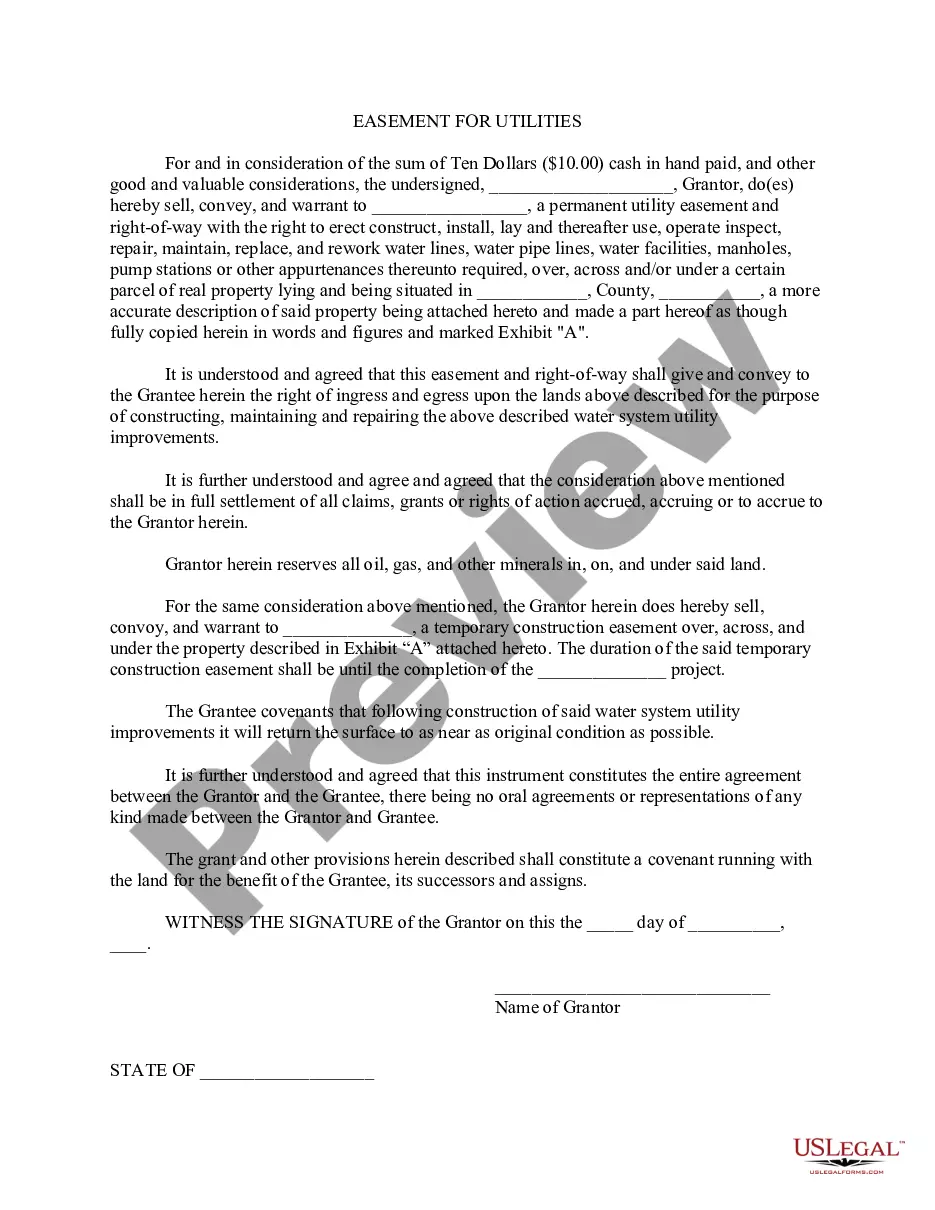
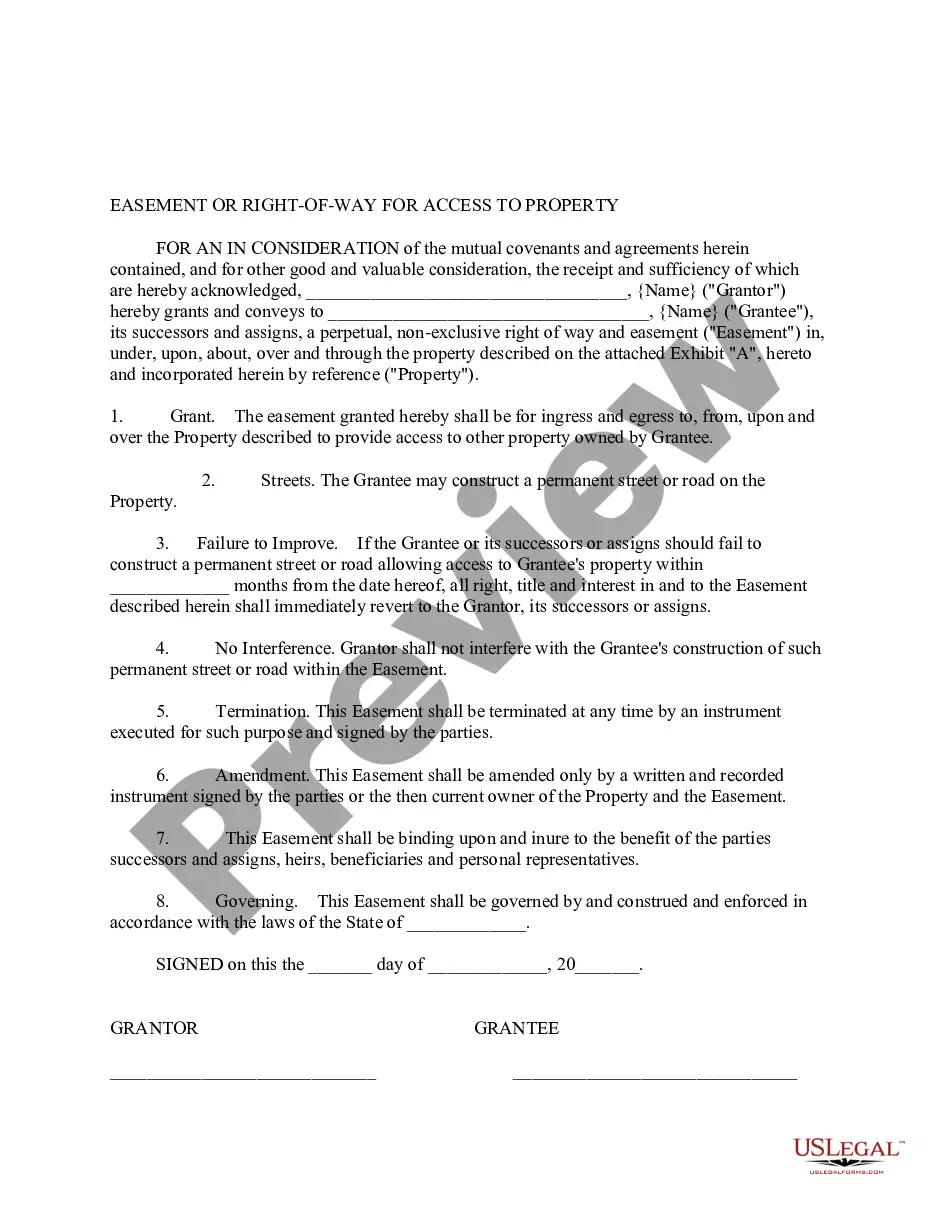
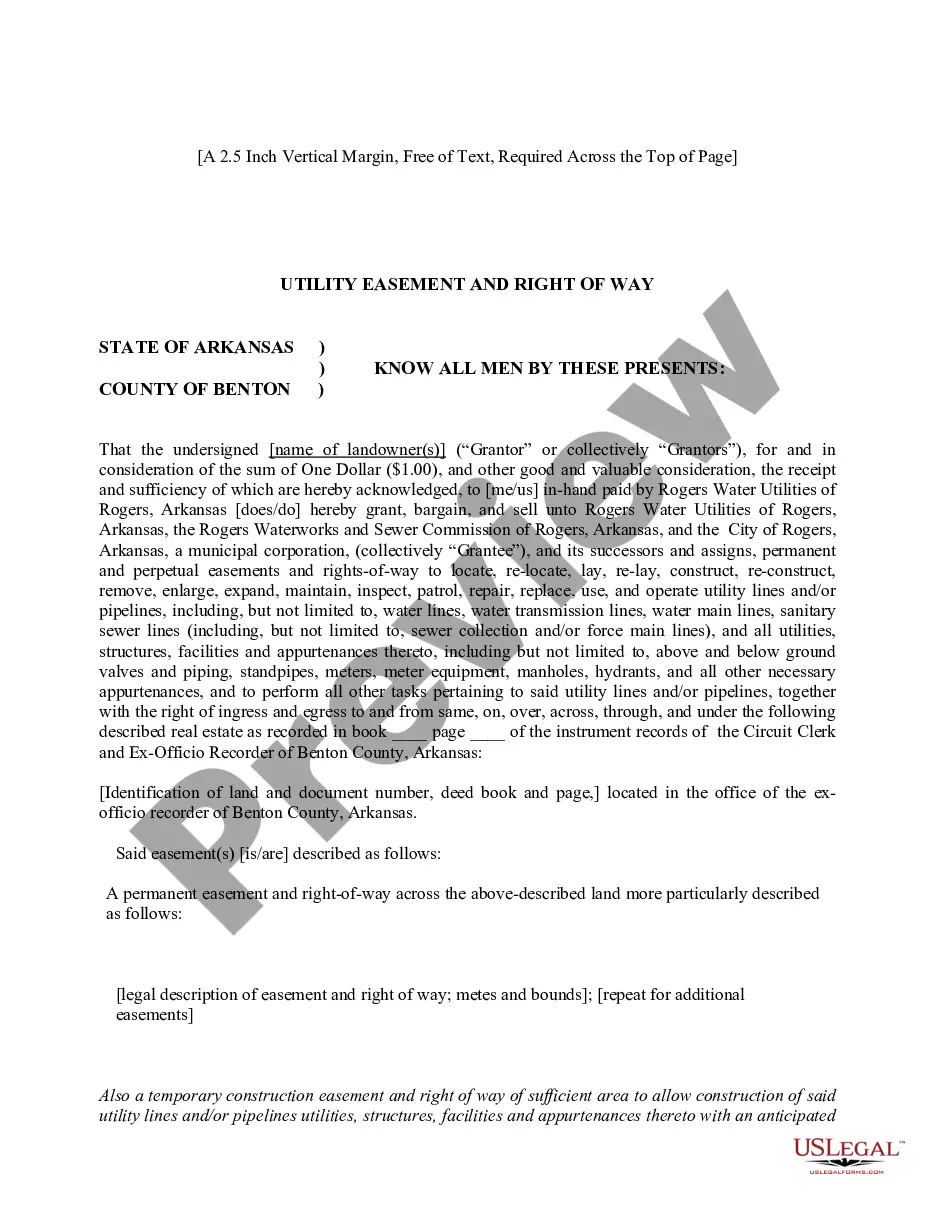
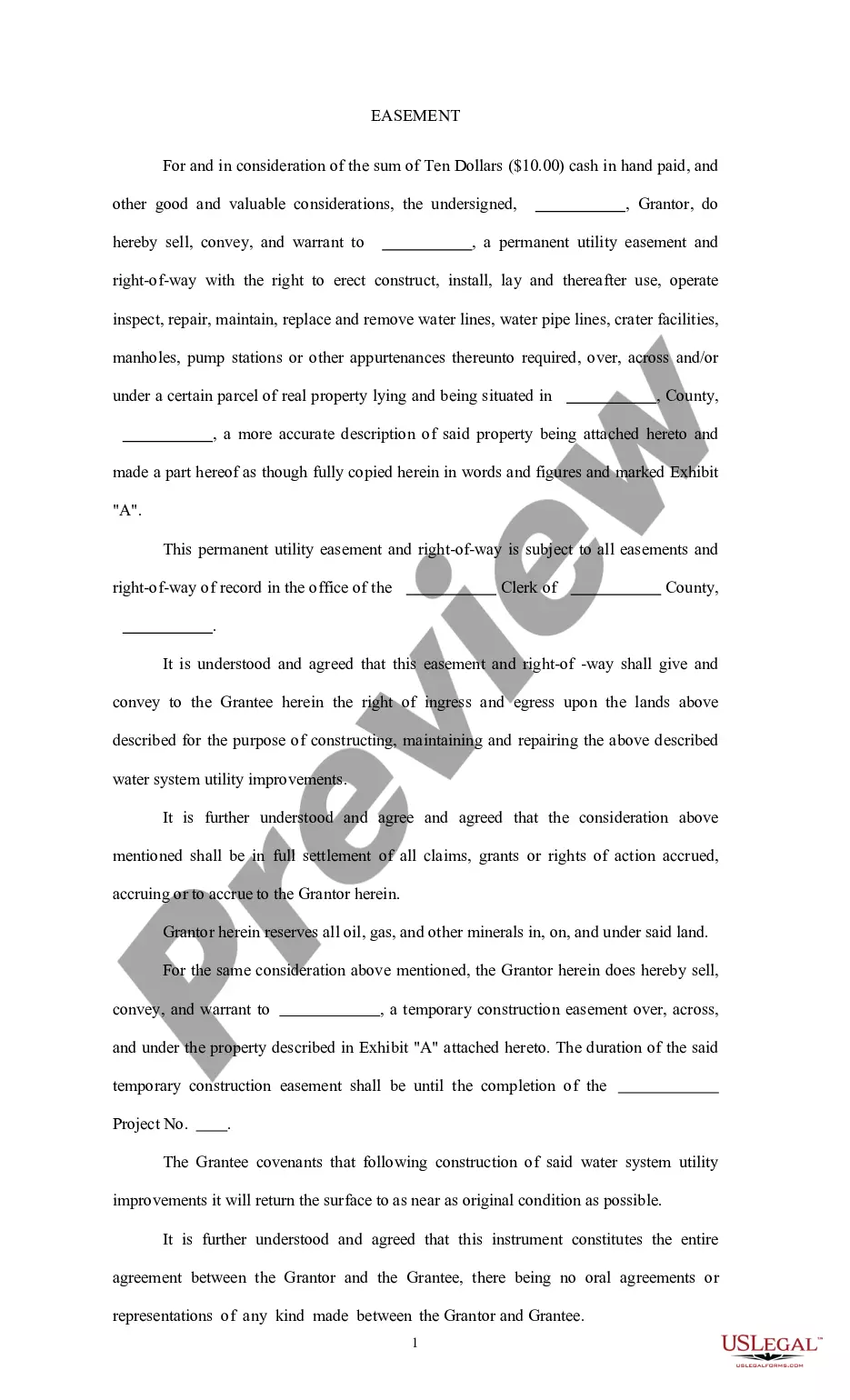
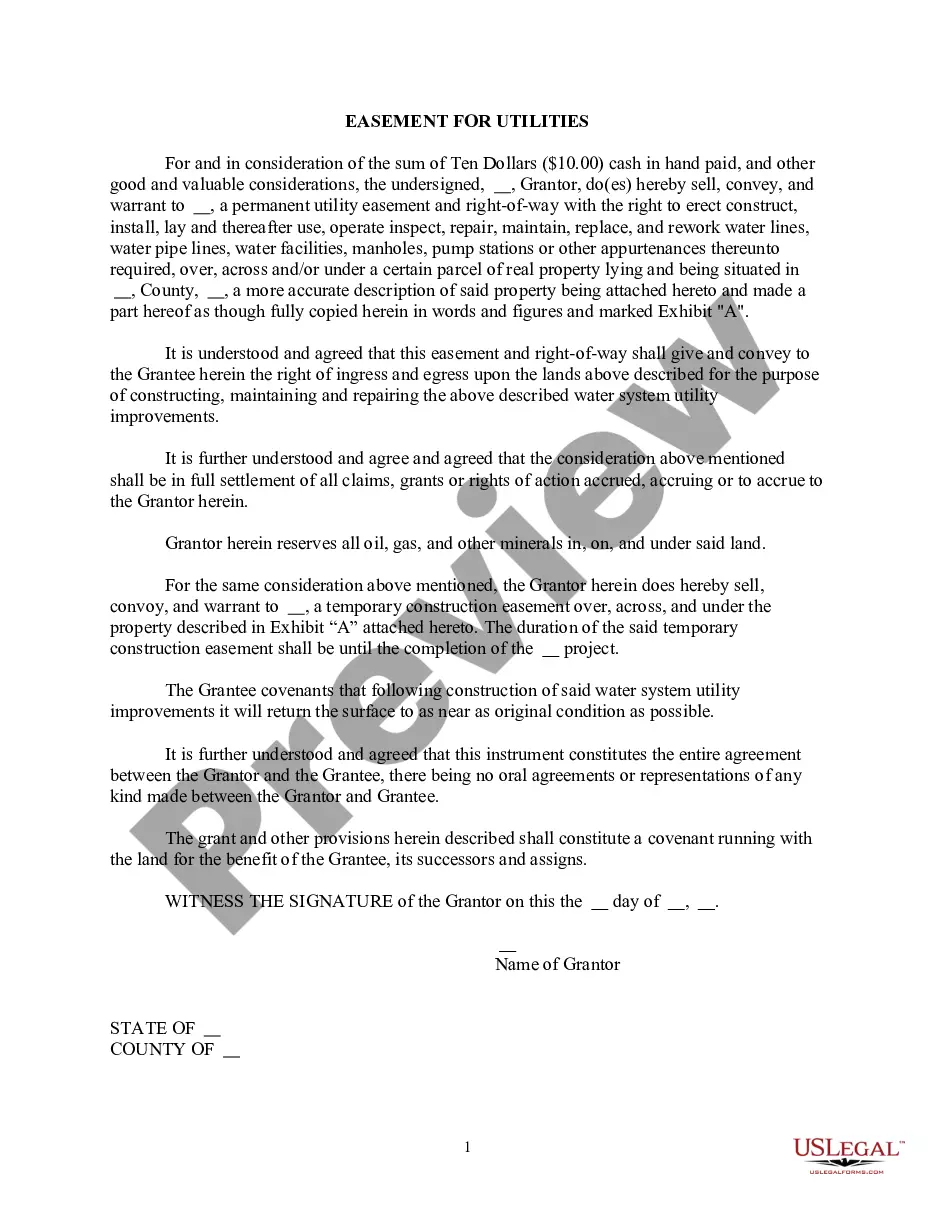
The Easement for Utilities is a legal document that grants a third party the right to use a specific portion of land for utility purposes, such as installing and maintaining water or sewer lines. Unlike other land agreements, it does not transfer ownership of the land but allows limited use for essential services. This form is specifically designed to outline the rights and obligations related to utility installations on a property without granting full possession to the utility provider.
Main sections of this form
- Identification of the Grantor (landowner) and Grantee (utility provider)
- Description of the Easement Area and Ingress/Egress Areas
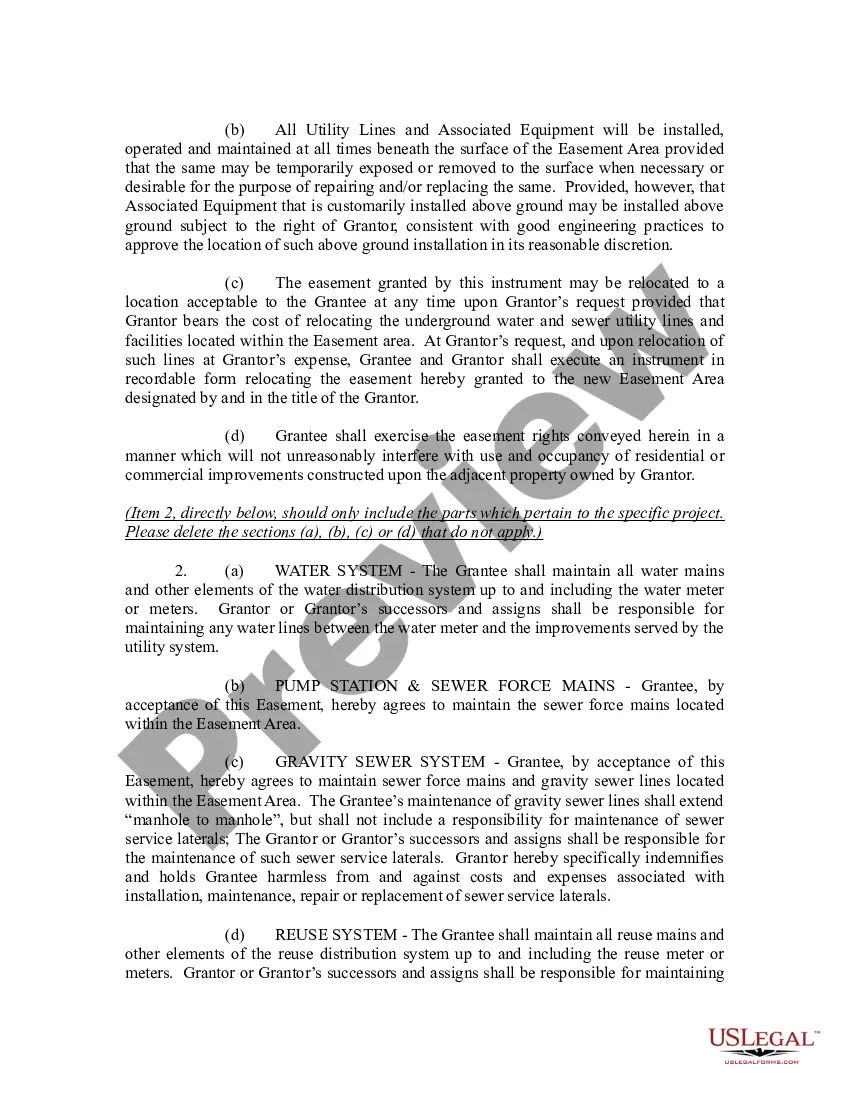
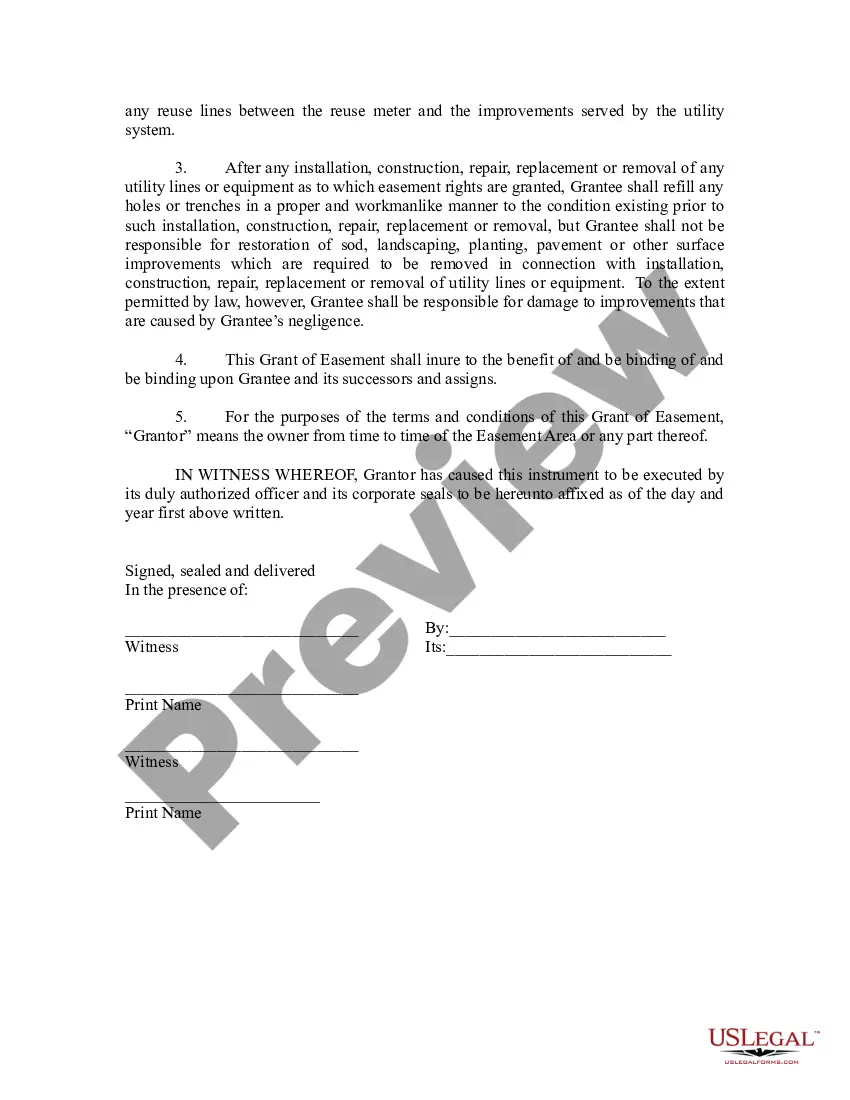
- Terms of maintenance responsibilities for the utility systems
- Rights of the Grantor to use the surface of the Easement Area
- Conditions for relocation of utility lines at the Grantorâs request


When to use this form
This form is used when a property owner (Grantor) needs to allow a utility provider (Grantee) to install, operate, and maintain utility lines on their property. It is particularly important in situations involving new construction, upgrades to existing utility services, or when existing utility lines require modification. Using this form helps clarify the rights and responsibilities of both parties, ensuring that utility services can be provided without unnecessary legal complications.
Who this form is for
- Property owners who need to grant access for utility installations
- Utility providers that require legal permission to use a portion of land for utilities
- Real estate professionals and attorneys involved in property transactions
How to complete this form
- Identify and enter the names and addresses of the Grantor and Grantee.
- Specify the date of execution of the easement.
- Clearly describe the Easement Area and any Ingress/Egress Areas in the provided exhibits.
- Detail the maintenance responsibilities of each party regarding the utility installations.
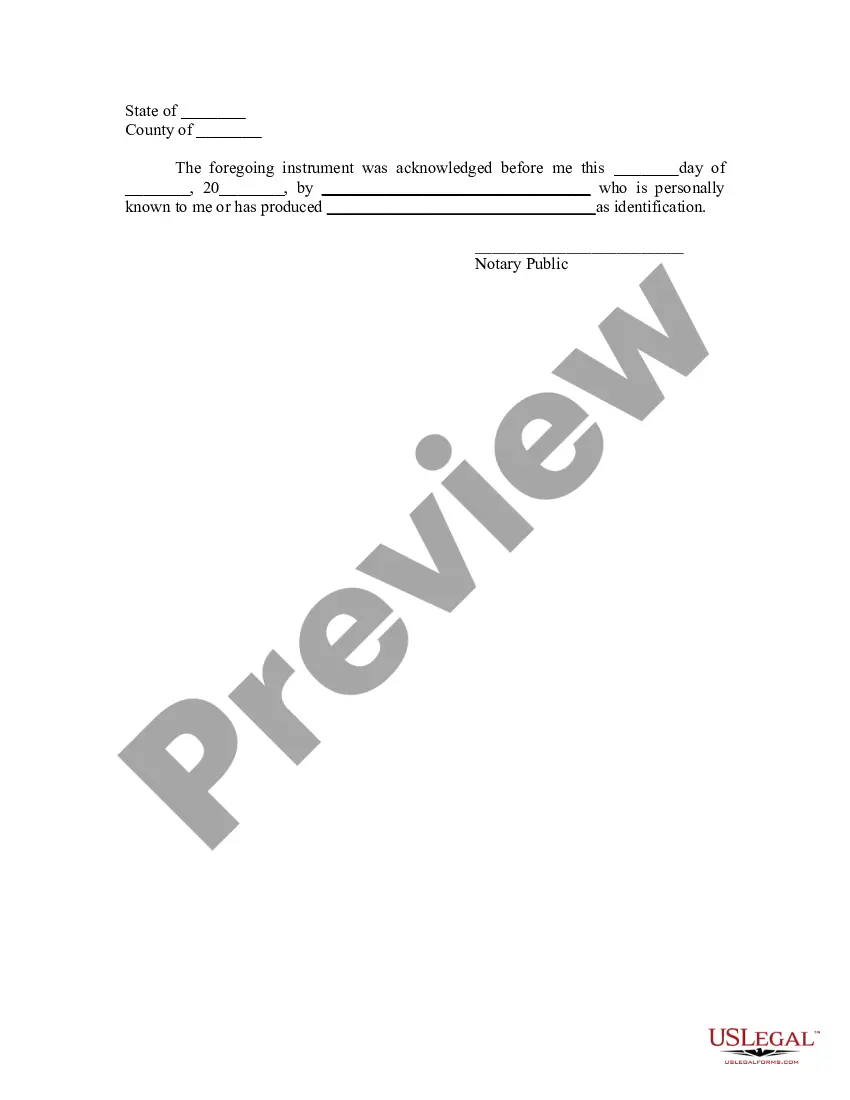
- Sign and date the form in the presence of witnesses and a notary as required.
Does this document require notarization?
Yes, this form must be notarized to be legally valid. Notarization helps to confirm the identity of the parties involved and the authenticity of the signatures. US Legal Forms offers integrated online notarization services that are available 24/7, ensuring a secure and simple process without the need for travel.
Get your form ready online
Our built-in tools help you complete, sign, share, and store your documents in one place.
Make edits, fill in missing information, and update formatting in US Legal Forms—just like you would in MS Word.
Download a copy, print it, send it by email, or mail it via USPS—whatever works best for your next step.
Sign and collect signatures with our SignNow integration. Send to multiple recipients, set reminders, and more. Go Premium to unlock E-Sign.
If this form requires notarization, complete it online through a secure video call—no need to meet a notary in person or wait for an appointment.
We protect your documents and personal data by following strict security and privacy standards.

Make edits, fill in missing information, and update formatting in US Legal Forms—just like you would in MS Word.

Download a copy, print it, send it by email, or mail it via USPS—whatever works best for your next step.

Sign and collect signatures with our SignNow integration. Send to multiple recipients, set reminders, and more. Go Premium to unlock E-Sign.

If this form requires notarization, complete it online through a secure video call—no need to meet a notary in person or wait for an appointment.

We protect your documents and personal data by following strict security and privacy standards.
Avoid these common issues
- Failing to clearly define the Easement Area, which can lead to disputes.
- Not including specific responsibilities for maintenance, resulting in misunderstandings.
- Not having the document notarized or witnessed, which may affect enforceability.
Benefits of using this form online
- Immediate access to a legally vetted form, saving time and effort.
- Ability to easily edit the form to meet specific needs before downloading.
- Access from anywhere, allowing convenient completion at your pace.
Looking for another form?

Form popularity
FAQ
The easements shall be at least 15 feet in width and may be coincident with utility easements. Where a subdivision is traversed by a legal drain, the easement for the drain shall be in ance with the Indiana Code requirements for legal drains.
You can refuse a utility easement request, especially if there are alternate properties that the company could use instead of yours.
Illinois law recognizes an easement by necessity as one of the two types of an implied easement (along with an easement arising from a pre-existing use). An easement by necessity is created when a landowner is landlocked and needs access for ingress and egress over another's property.
Indiana easement laws are derived from a combination of common law and statutory authority. Easement theories are complex and heavily dependent upon specific facts. Therefore, a landowner's rights are often initially unclear and require an intensive investigation into an easement's creation and intended purpose.
An easement is the right to use or enter land, or servient estate, that belongs to someone else for a particular purpose, often to benefit the dominant estate. Because utilities go hand-in-hand with the use of property, easements provide the route for utilities to gain access to property.
The easement width shall be a minimum of ten (10) feet.
Generally, the owner of any easement has a duty to maintain the easement. If the easement is owned by more than one person, or is attached parcels of land under different ownership, each owner must share in the cost of maintaining the easement pursuant to their agreement.
Utility Easements The most common type of easement, a utility easement allows a utility company to run its pipes, lines, etc., under or on other people's property in order to serve its customers. As opposed to buying all the land necessary, utility companies negotiate easement agreements with landowners.