Mineral Deed with Grantor Reserving Executive Rights in the Interest Conveyed - Transfer
About this form
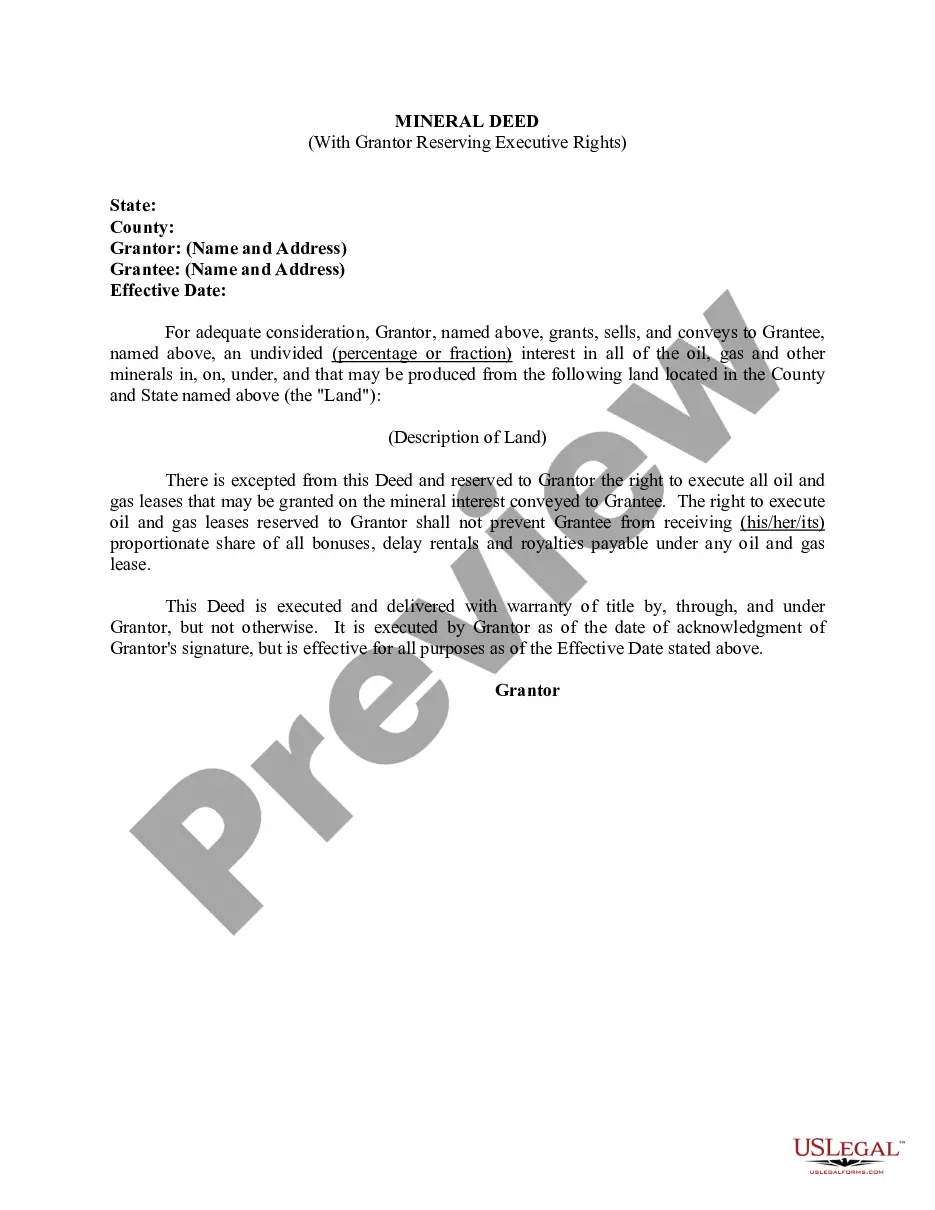
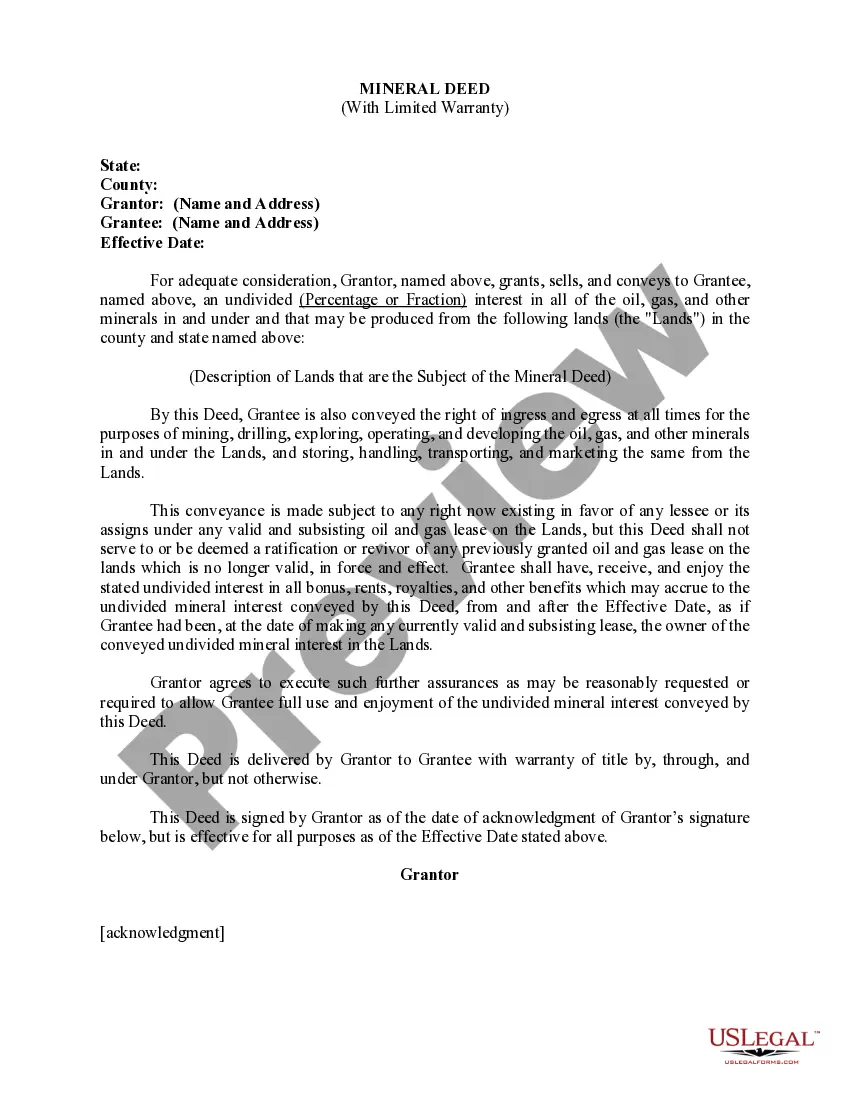
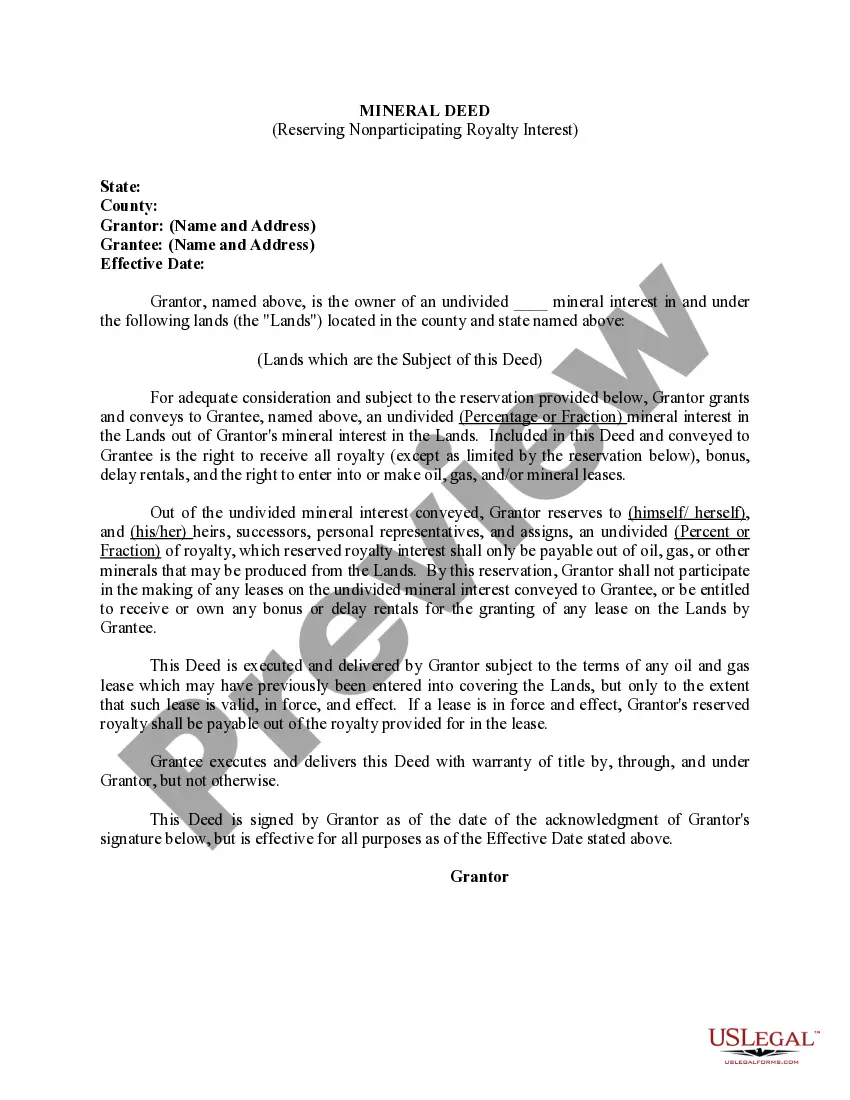
The Mineral Deed with Grantor Reserving Executive Rights is a legal document used to transfer a specified undivided mineral interest from one party (the grantor) to another (the grantee), while allowing the grantor to reserve the right to sign oil and gas leases on behalf of the grantee. This form is essential for those looking to convey mineral rights while maintaining certain control over leasing activities. It differs from other mineral deeds by specifically reserving the executive rights for the grantor, ensuring they manage lease agreements related to the conveyed minerals.
Main sections of this form
- Grantor and Grantee names and addresses
- Description of the mineral interest being conveyed
- Effective date of the deed
- Reservation of executive rights to the grantor
- Warranties regarding the title of the conveyed interest
Situations where this form applies
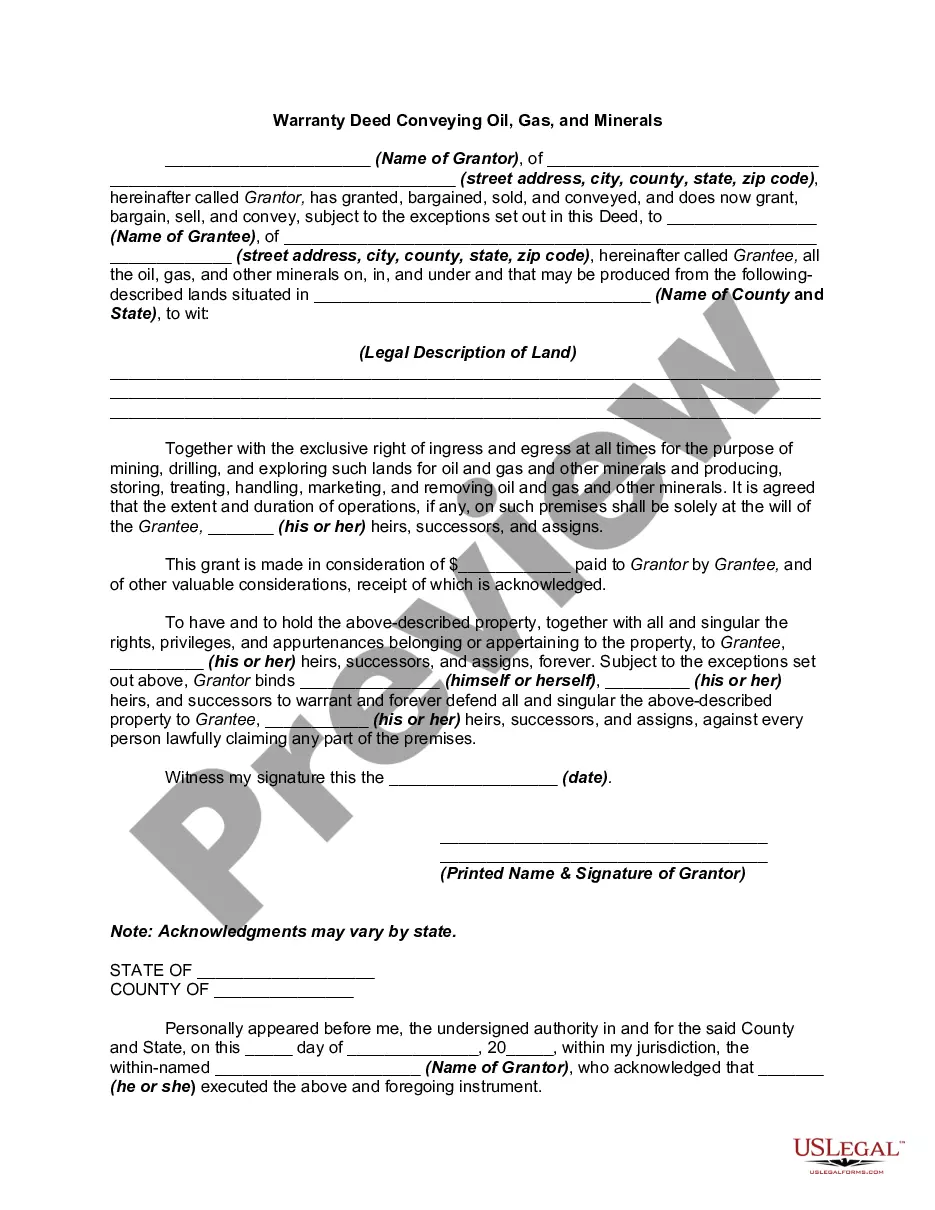
This form is needed when a property owner wants to transfer some or all of their mineral rights to another party but wishes to retain the authority to manage oil and gas leases. It is applicable in situations such as when an owner sells mineral interests but retains control over lease negotiations and agreements, ensuring they can manage revenue streams from bonuses, delay rentals, and royalties.
Who can use this document
This form is intended for:
- Property owners who wish to sell a portion of their mineral interests
- Individuals or companies looking to acquire mineral rights with reserved executive rights
- Legal professionals assisting clients in mineral transactions
- Landowners involved in oil and gas operations
Steps to complete this form
- Identify the grantor and grantee by entering their full names and addresses.
- Specify the effective date of the deed.
- Describe the mineral interest being conveyed, including the legal description of the land.
- Outline the reservation of executive rights clearly to ensure understanding.
- Have the grantor sign the deed, ensuring all required acknowledgments are completed.
Does this document require notarization?
Notarization is required for this form to take effect. Our online notarization service, powered by Notarize, lets you verify and sign documents remotely through an encrypted video session, available 24/7.
Get your form ready online
Our built-in tools help you complete, sign, share, and store your documents in one place.
Make edits, fill in missing information, and update formatting in US Legal Forms—just like you would in MS Word.
Download a copy, print it, send it by email, or mail it via USPS—whatever works best for your next step.
Sign and collect signatures with our SignNow integration. Send to multiple recipients, set reminders, and more. Go Premium to unlock E-Sign.
If this form requires notarization, complete it online through a secure video call—no need to meet a notary in person or wait for an appointment.
We protect your documents and personal data by following strict security and privacy standards.

Make edits, fill in missing information, and update formatting in US Legal Forms—just like you would in MS Word.

Download a copy, print it, send it by email, or mail it via USPS—whatever works best for your next step.

Sign and collect signatures with our SignNow integration. Send to multiple recipients, set reminders, and more. Go Premium to unlock E-Sign.

If this form requires notarization, complete it online through a secure video call—no need to meet a notary in person or wait for an appointment.

We protect your documents and personal data by following strict security and privacy standards.
Mistakes to watch out for
- Failing to include a complete legal description of the land.
- Not specifying the correct percentage or fraction of the mineral interest being conveyed.
- Omitting the effective date which may lead to confusion about the transaction timeline.
- Not providing the grantor's reservation rights clearly, which can result in disputes.
Why complete this form online
- Convenient downloading and printing from any device.
- Editable fields to customize to your specific situation.
- Access to reliable templates vetted by licensed attorneys.
- Fast and straightforward preparation of legal documents without the need for extensive legal knowledge.
What to keep in mind
- The Mineral Deed allows for the transfer of mineral rights while reserving executive rights.
- Understanding the key components is crucial for proper execution and clarity.
- Using this form can streamline the process of transferring mineral interests legally and securely.
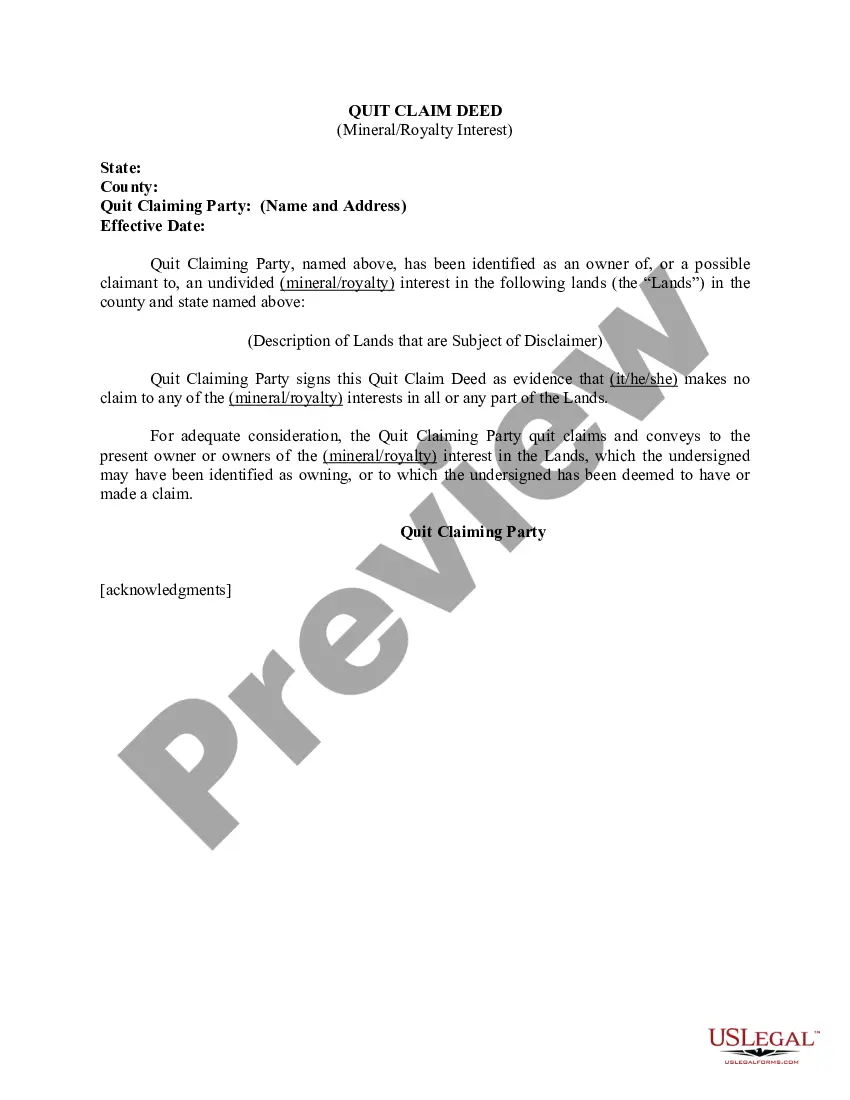
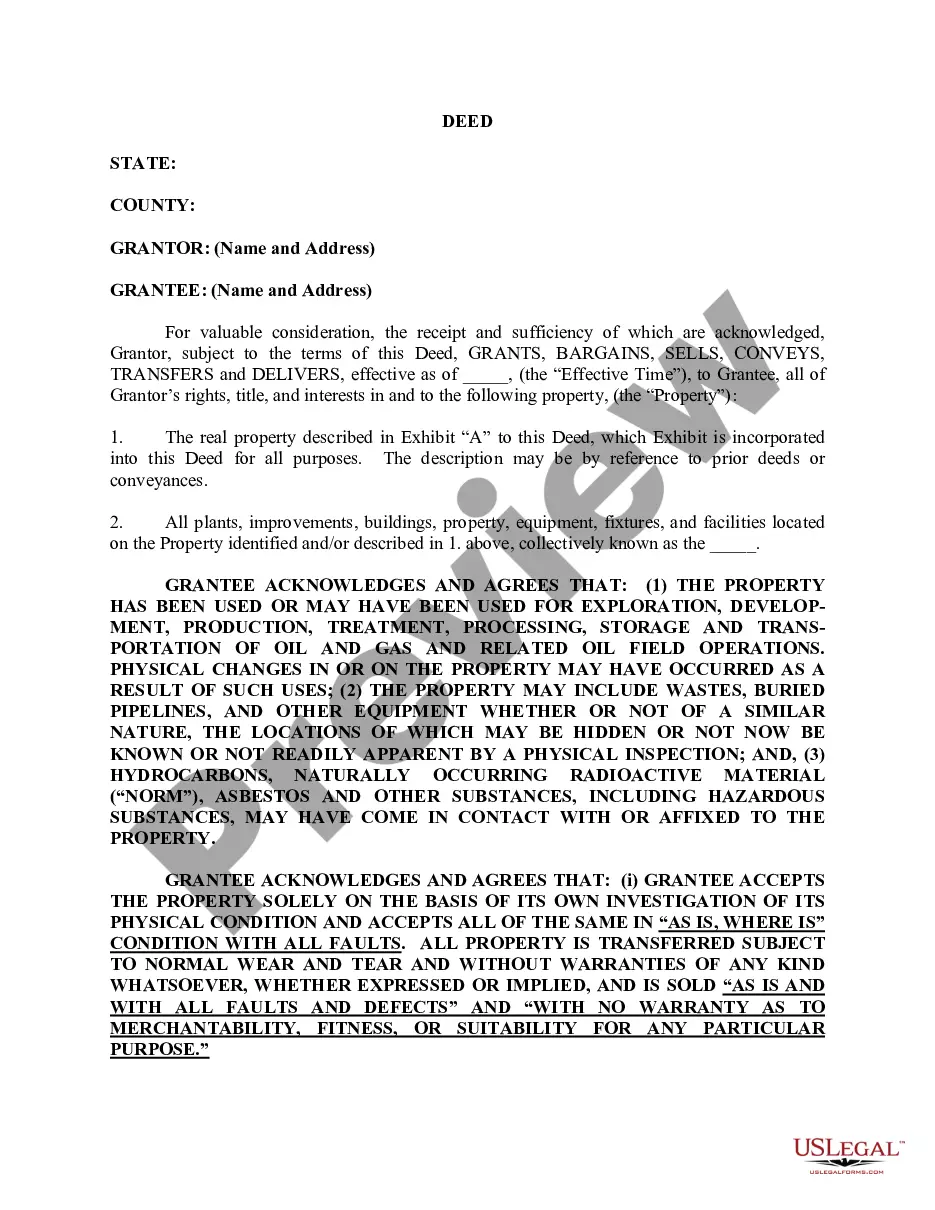
Looking for another form?
Form popularity
FAQ
An owner can separate the mineral rights from his or her land by: Conveying (selling or otherwise transferring) the land but retaining the mineral rights. (This is accomplished by including a statement in the deed conveying the land that reserves all rights to the minerals to the seller.)
Mineral rights must be transferred to heirs before any transactions related to them can take place. Unlike a home, which can be sold by an estate, mineral rights must be transferred before any sale. Mineral rights can be transferred to rightful heir(s) or to a trust through a mineral deed.
Call the county where the minerals are located and ask how to transfer mineral ownership after death. They will probably advise you to submit a copy of the death certificate, probate documents (if any), and a copy of the will (or affidavit of heirship if there is no will).
If you want to sell the mineral rights to another person, you can transfer them by deed. You will need to create a mineral deed and have it recorded. You should check with the county Recorder of Deeds in the county where the land is located and ask if a printed mineral deed form is available to use.
As a mineral rights value rule of thumb, the 3X cash flow method is often used. To calculate mineral rights value, multiply the 12-month trailing cash flow by 3. For a property with royalty rights, a 5X multiple provides a more accurate valuation (stout.com).
Surface rights mean that you own the top of the land. Essentially, you'll own the grass, trees and any structures that are part of the land itself. All of the rights to these essential parts of the land will be owned once the title of the land has been transferred to your name.
As a mineral rights value rule of thumb, the 3X cash flow method is often used. To calculate mineral rights value, multiply the 12-month trailing cash flow by 3. For a property with royalty rights, a 5X multiple provides a more accurate valuation (stout.com).