Accounting Error
Understanding this form
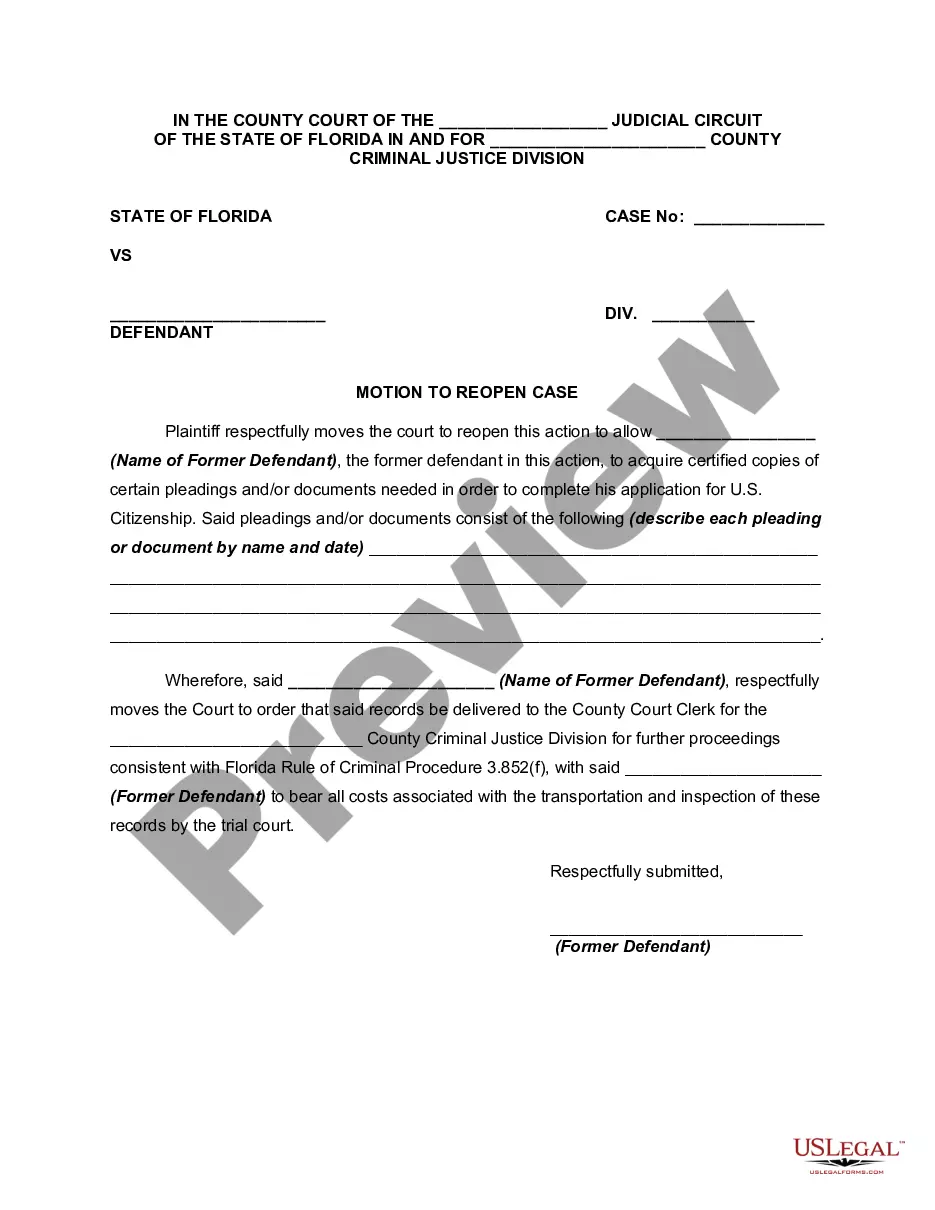
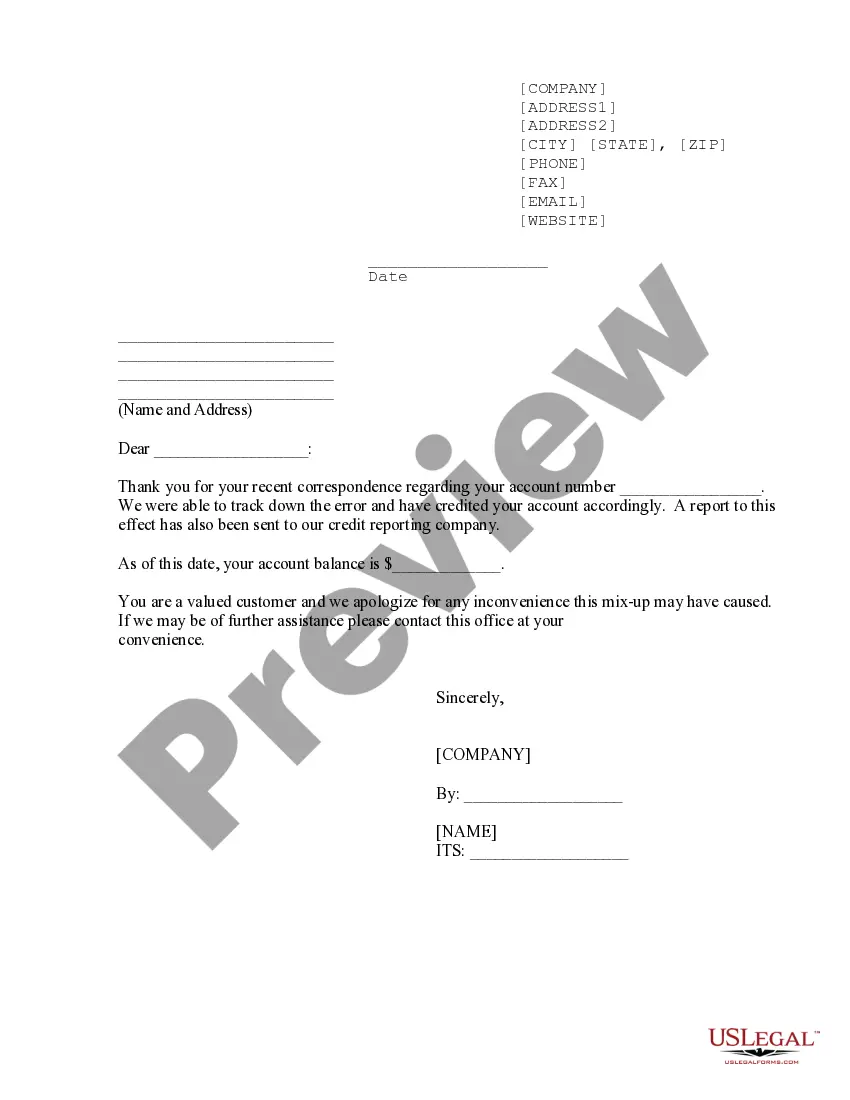
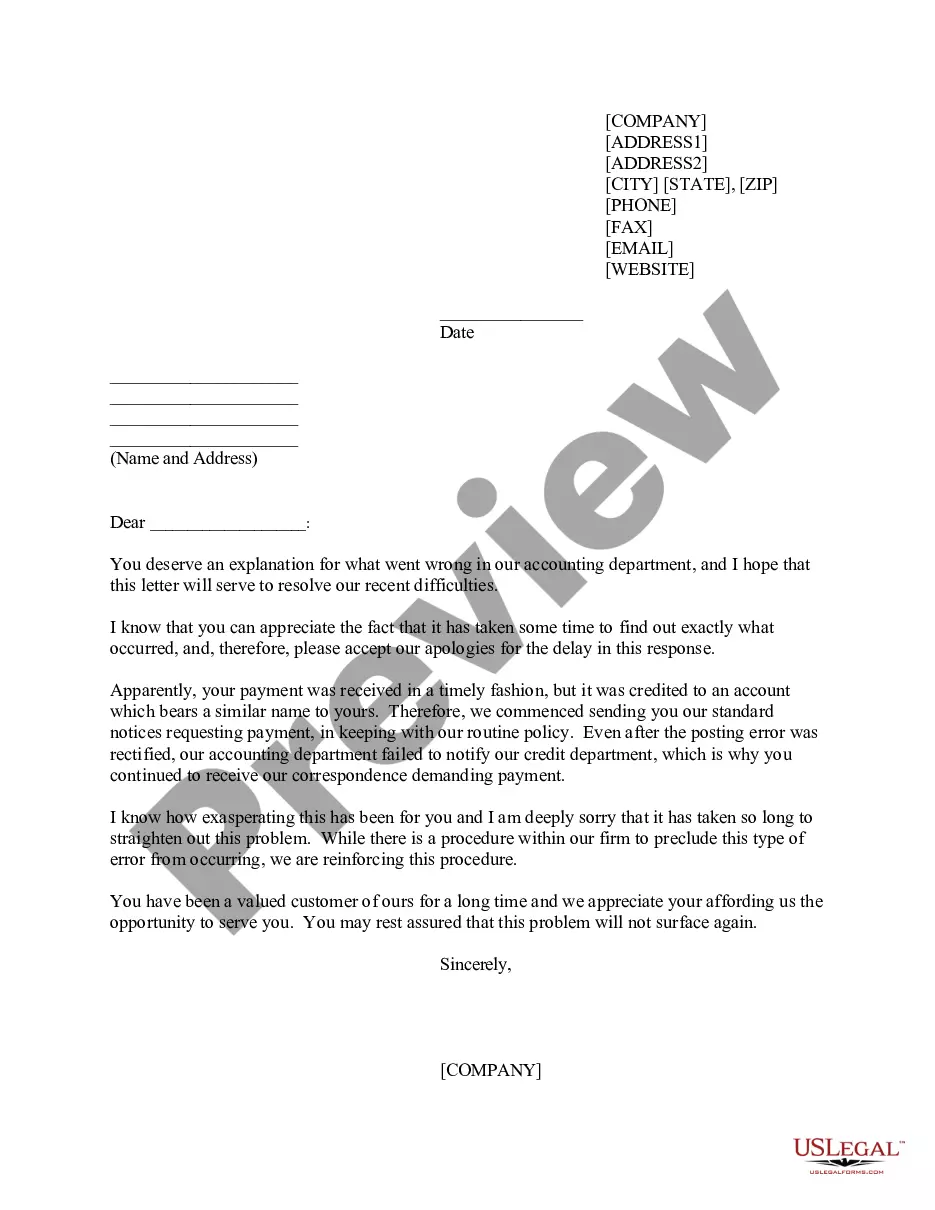
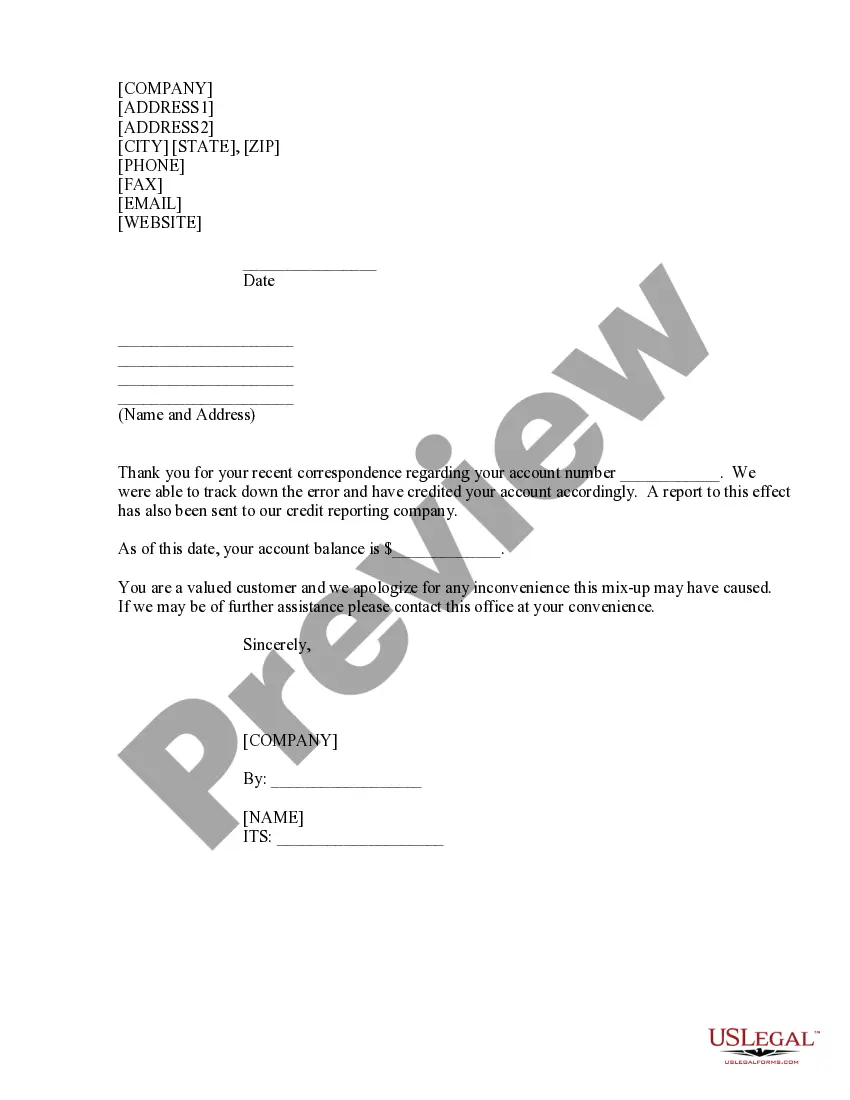
The Accounting Error form is a document designed to formally address discrepancies in account details, ensuring that an accounting error is recognized and corrected. This form serves as a written acknowledgment to the customer, outlining the steps taken to address the error and providing updated account information. Unlike other forms related to billing disputes, this document specifically focuses on rectifying mistakes made in accounting practices.
Main sections of this form
- Sender's contact information, including address, phone, and email.
- Date the letter is issued.
- Recipient's name and address.
- Account number related to the error.
- Description of the correction made and updated account balance.
- Signature block for an authorized company representative.
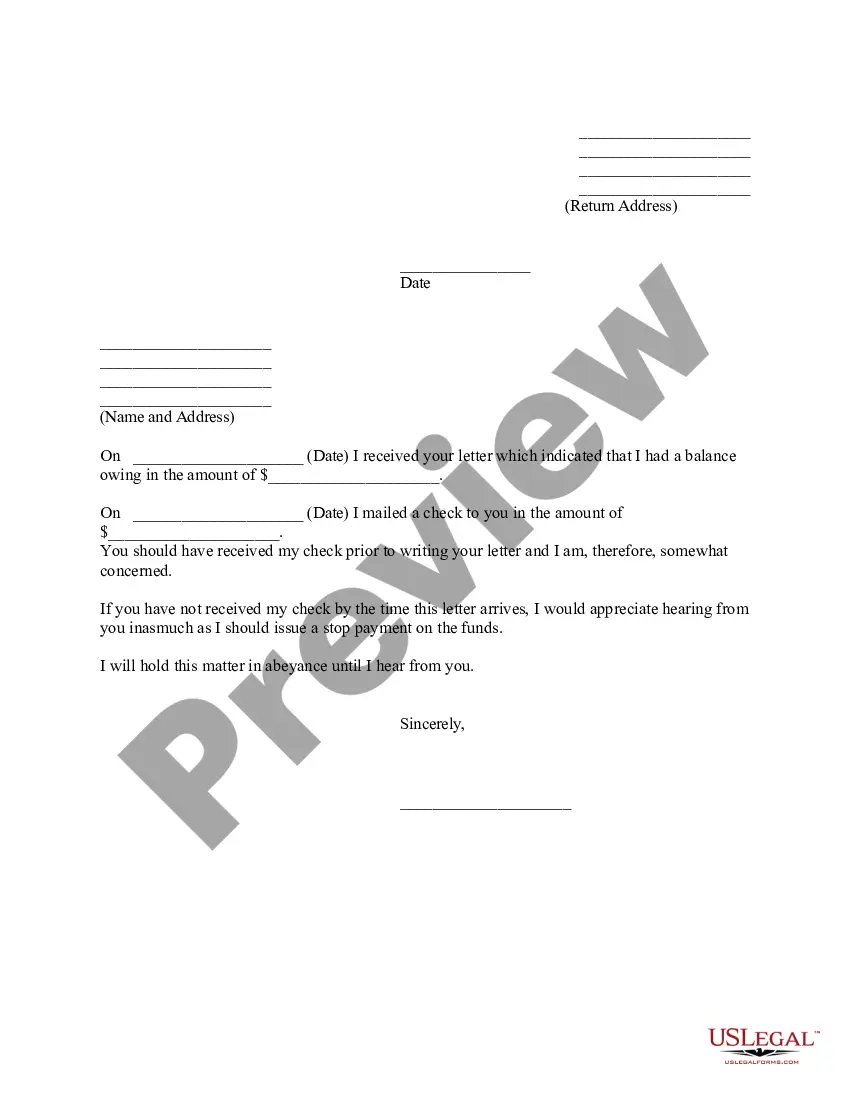
When to use this form
This form should be used when a customer has reported an error in their accounting, such as billing discrepancies, incorrect charges, or payment misapplications. It is essential when the company needs to communicate the resolution of the issue formally, ensuring that the customer is informed of corrections made to their account and the current balance after adjustments.
Intended users of this form
- Businesses that handle customer accounts and billing.
- Account managers or customer service representatives responsible for addressing billing errors.
- Companies that require formal documentation to update customers on errors and resolutions.
How to complete this form
- Fill in your company's contact information at the top of the form.
- Enter the date of the letter.
- Include the recipient's name and address accurately.
- Specify the account number related to the error in the designated field.
- Detail the nature of the error and the actions taken to correct it, including the updated balance.
- Sign the document with an authorized representative's name and title.
Does this form need to be notarized?
Notarization is not commonly needed for this form. However, certain documents or local rules may make it necessary. Our notarization service, powered by Notarize, allows you to finalize it securely online anytime, day or night.
Get your form ready online
Our built-in tools help you complete, sign, share, and store your documents in one place.
Make edits, fill in missing information, and update formatting in US Legal Forms—just like you would in MS Word.
Download a copy, print it, send it by email, or mail it via USPS—whatever works best for your next step.
Sign and collect signatures with our SignNow integration. Send to multiple recipients, set reminders, and more. Go Premium to unlock E-Sign.
If this form requires notarization, complete it online through a secure video call—no need to meet a notary in person or wait for an appointment.
We protect your documents and personal data by following strict security and privacy standards.

Make edits, fill in missing information, and update formatting in US Legal Forms—just like you would in MS Word.

Download a copy, print it, send it by email, or mail it via USPS—whatever works best for your next step.

Sign and collect signatures with our SignNow integration. Send to multiple recipients, set reminders, and more. Go Premium to unlock E-Sign.

If this form requires notarization, complete it online through a secure video call—no need to meet a notary in person or wait for an appointment.

We protect your documents and personal data by following strict security and privacy standards.
Common mistakes to avoid
- Failing to include the correct account number, which can lead to confusion.
- Omitting important dates, such as the date of the error or when it was resolved.
- Not providing adequate details about the nature of the error and the correction made.
Why complete this form online
- Convenient access to a professionally drafted template that saves time.
- Editability allows for customization to fit specific situations and company policies.
- Reliable format ensures all necessary legal language is included, minimizing errors.
Looking for another form?
Form popularity
FAQ
Common errors of principle can include: mixing up debits and credits, using the wrong liability account for an expense, crediting the wrong type of asset account for a payment, or potentially debiting the wrong client account in an accounts receivable transaction.
How Do You Correct Accounting Errors? Often, adding a journal entry (known as a ?correcting entry?) will fix an accounting error. The journal entry adjusts the retained earnings (profit minus expenses) for a certain accounting period.
A transaction that incorrectly uses an accounting principle is called an error of principle. Errors of principle don't meet the generally accepted accounting principles (GAAP). It's also called an ?input error? because, though the number is correct, it's recorded in the wrong account.
Accounting errors are mistakes that are made in previous financial statements. This can include the misclassification of an expense, not depreciating an asset, miscounting inventory, a mistake in the application of accounting principles, or oversight.
Error of Commission. Error of Omission. Compensating Error. Error of Principle. Error of Commission. Compensating Error.
What are the most common types of accounting errors & how do they occur? Data entry errors.Error of omission.Error of commission.Error of transposition.Compensating error.Error of duplication.Error of principle.Error of entry reversal.
How to find accounting errors: 5 Tips Keep an audit trail. If you're looking for an easy way to track down accounting transactions and find errors, a good place to start is an audit trail.Double-check your work.Have a consistent process.Conduct routine reconciliations.Get a fresh set of eyes.
What are the 4 types of accounting errors? Most accounting errors can be classified as data entry errors, errors of commission, errors of omission and errors in principle.