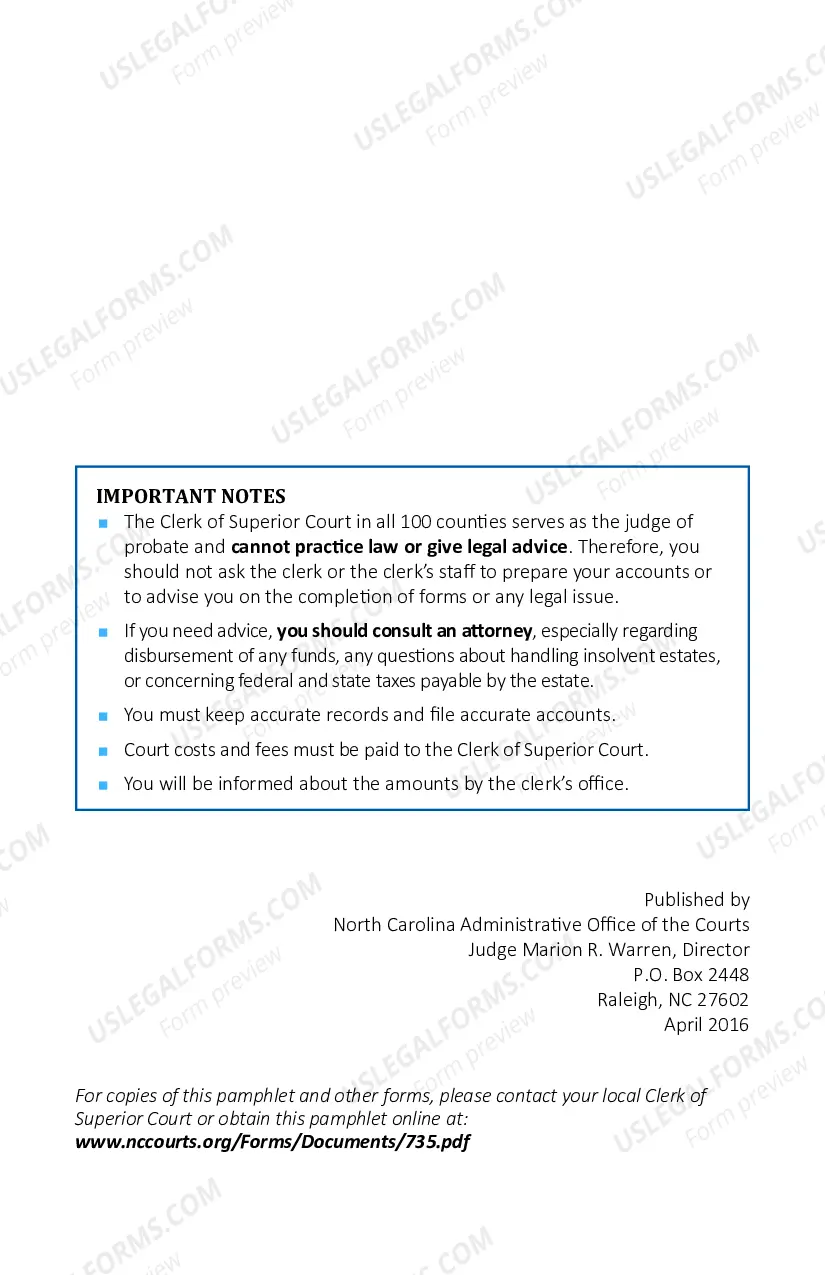
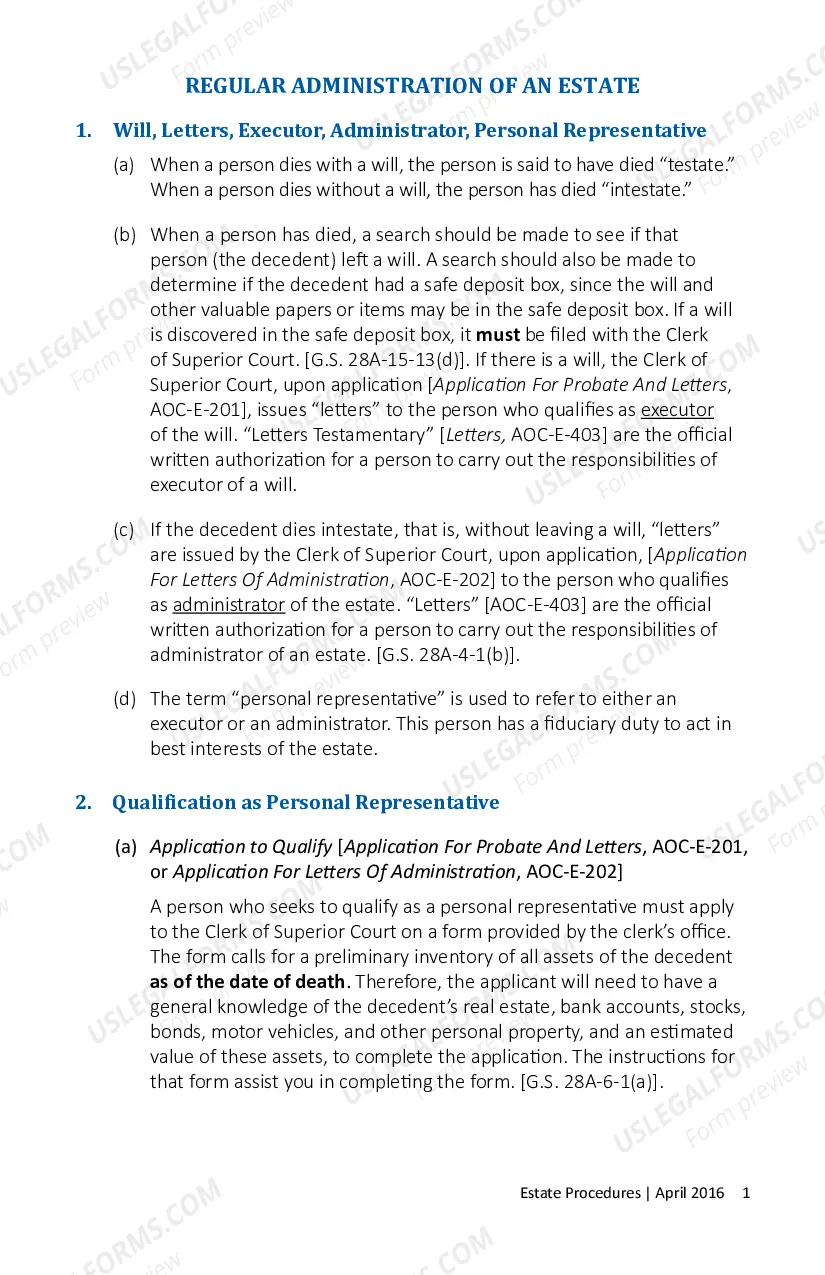
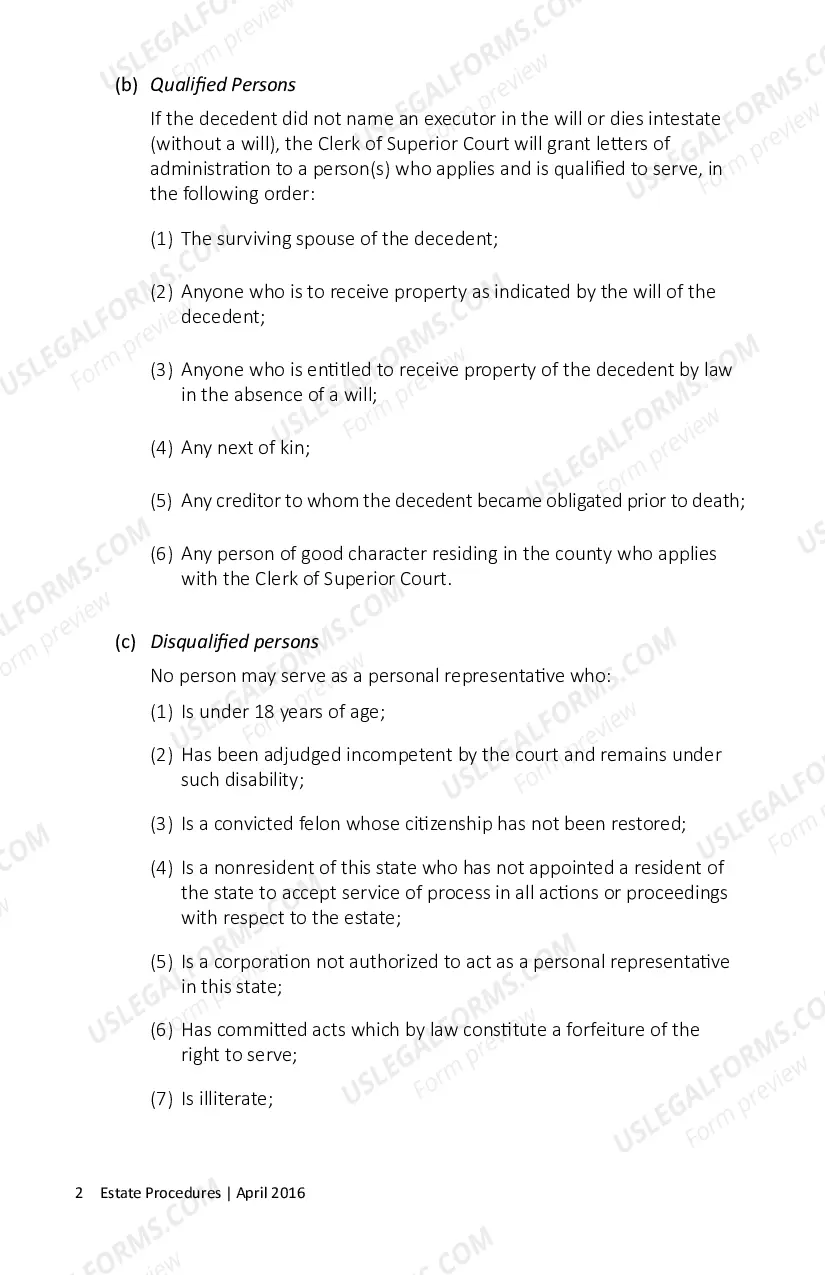
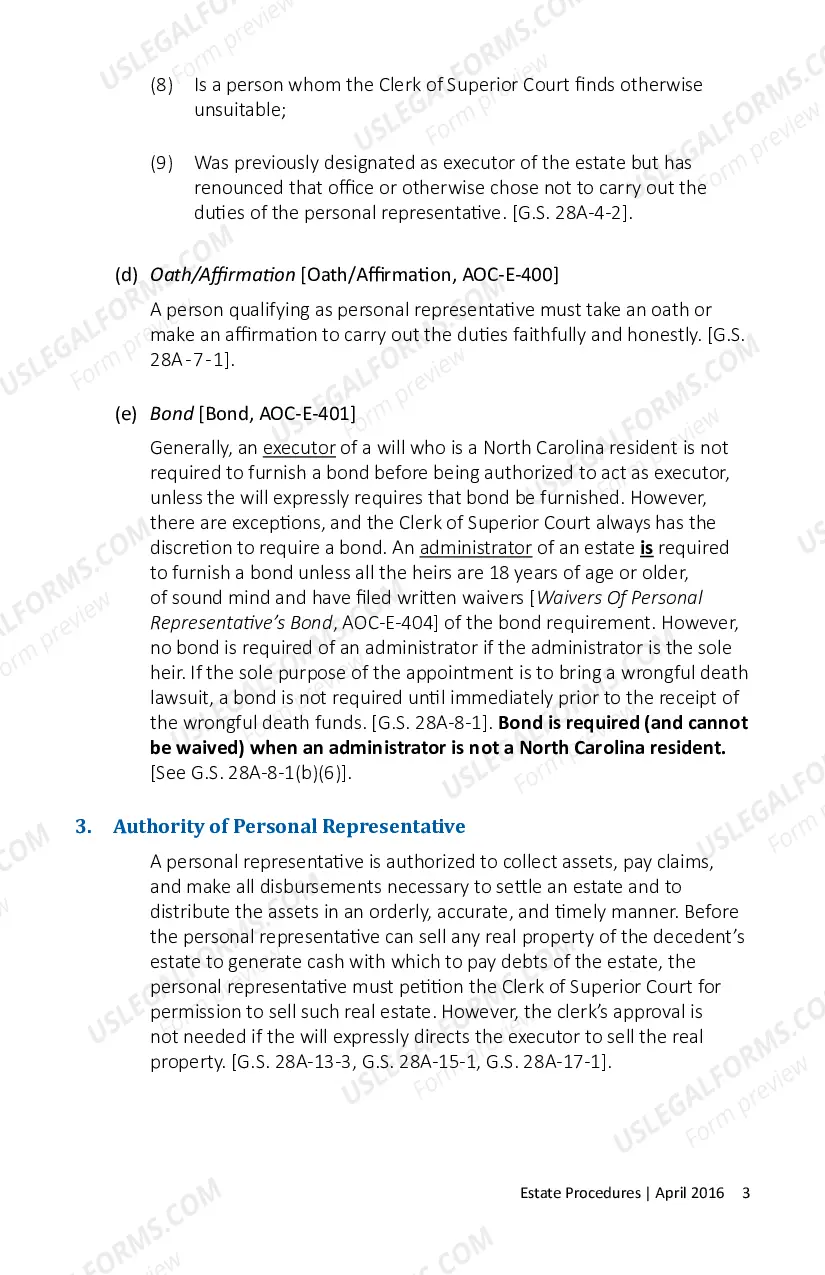
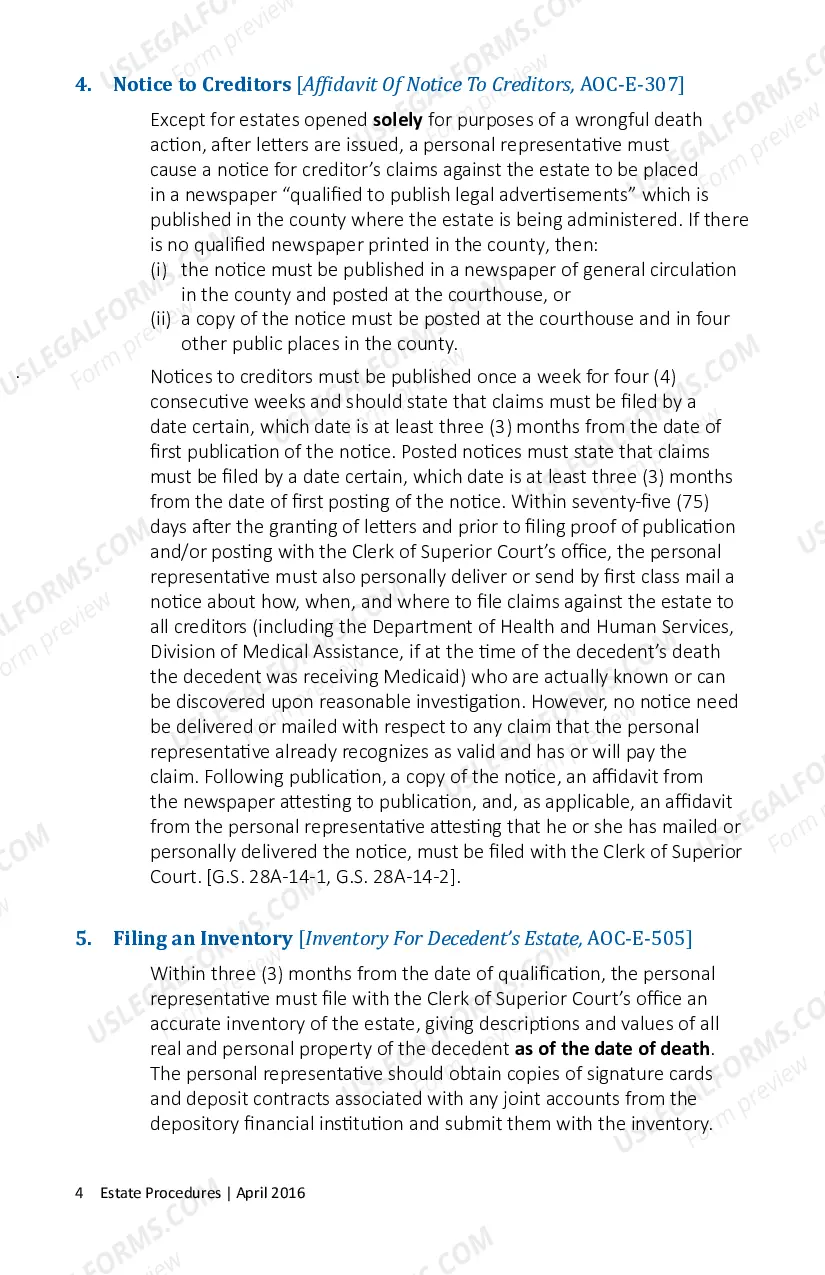
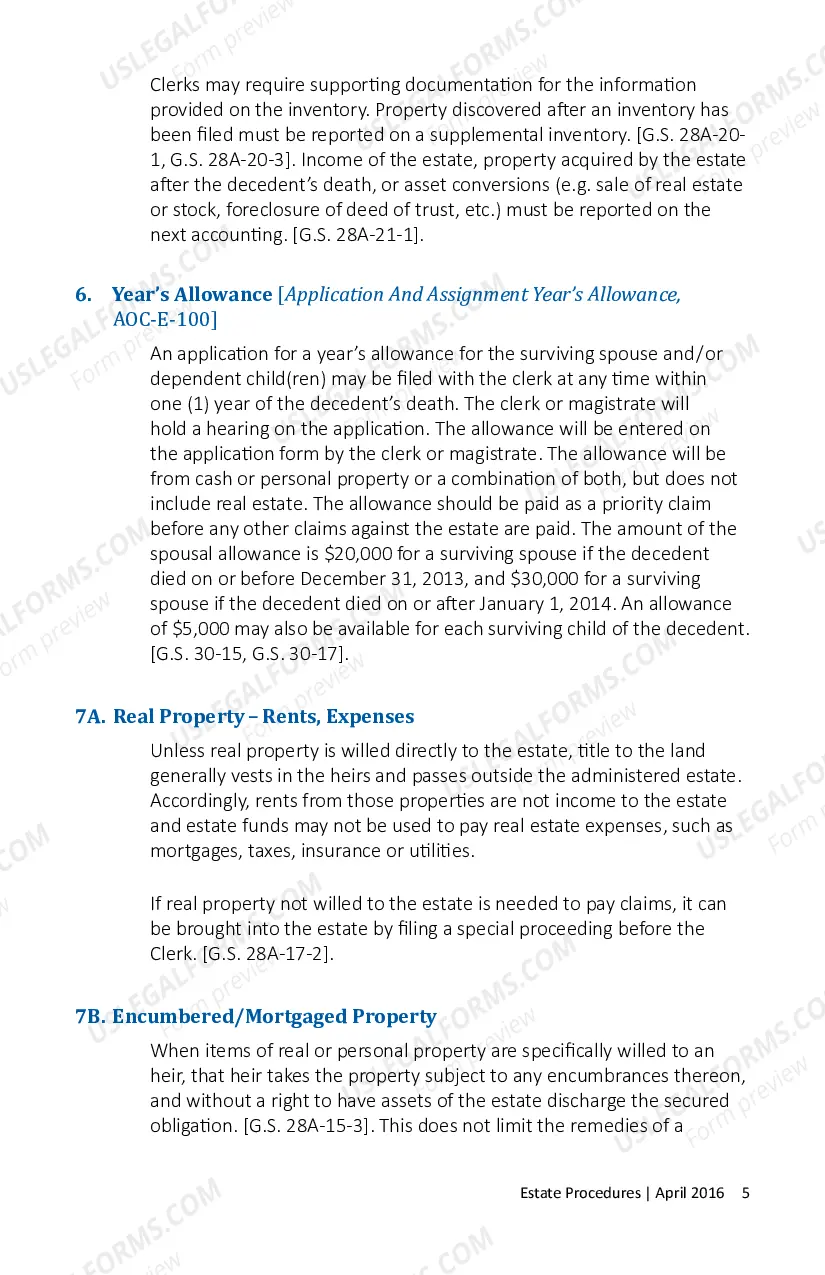
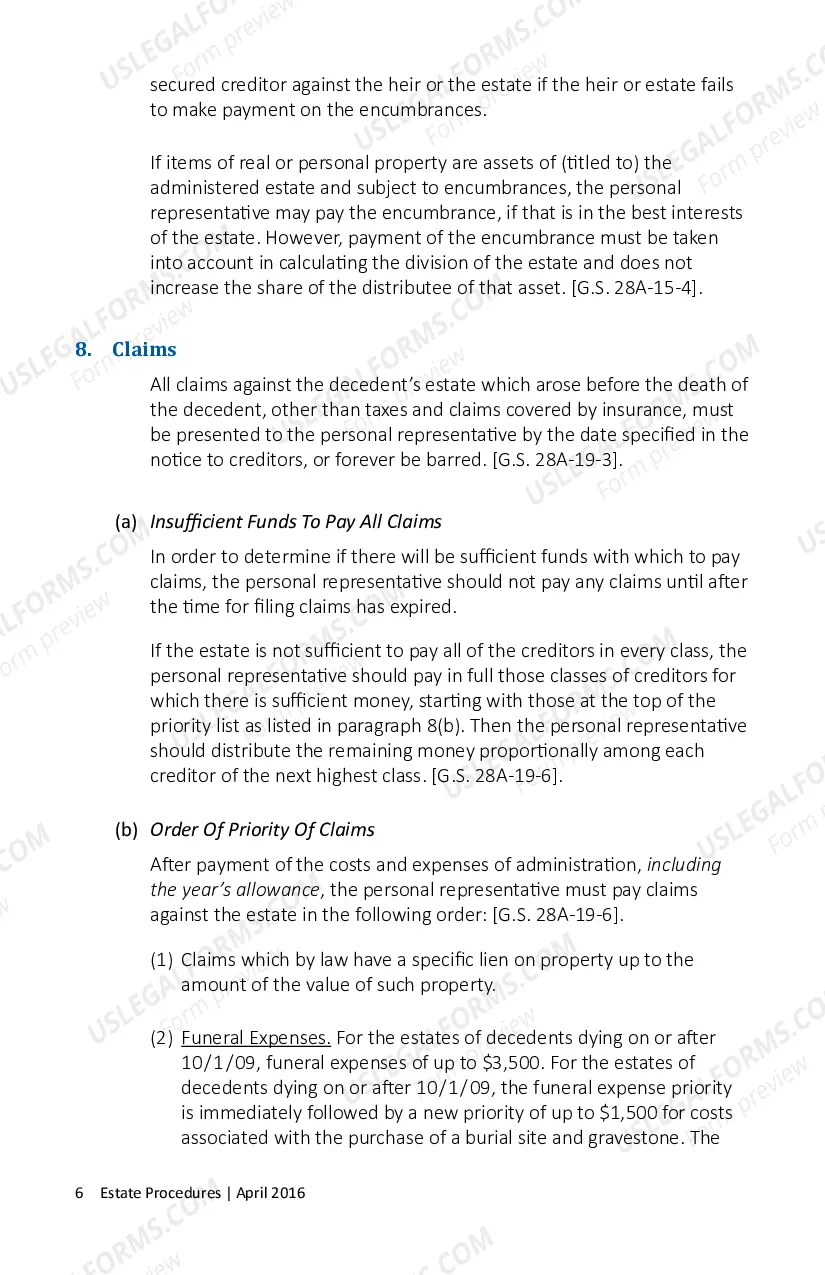
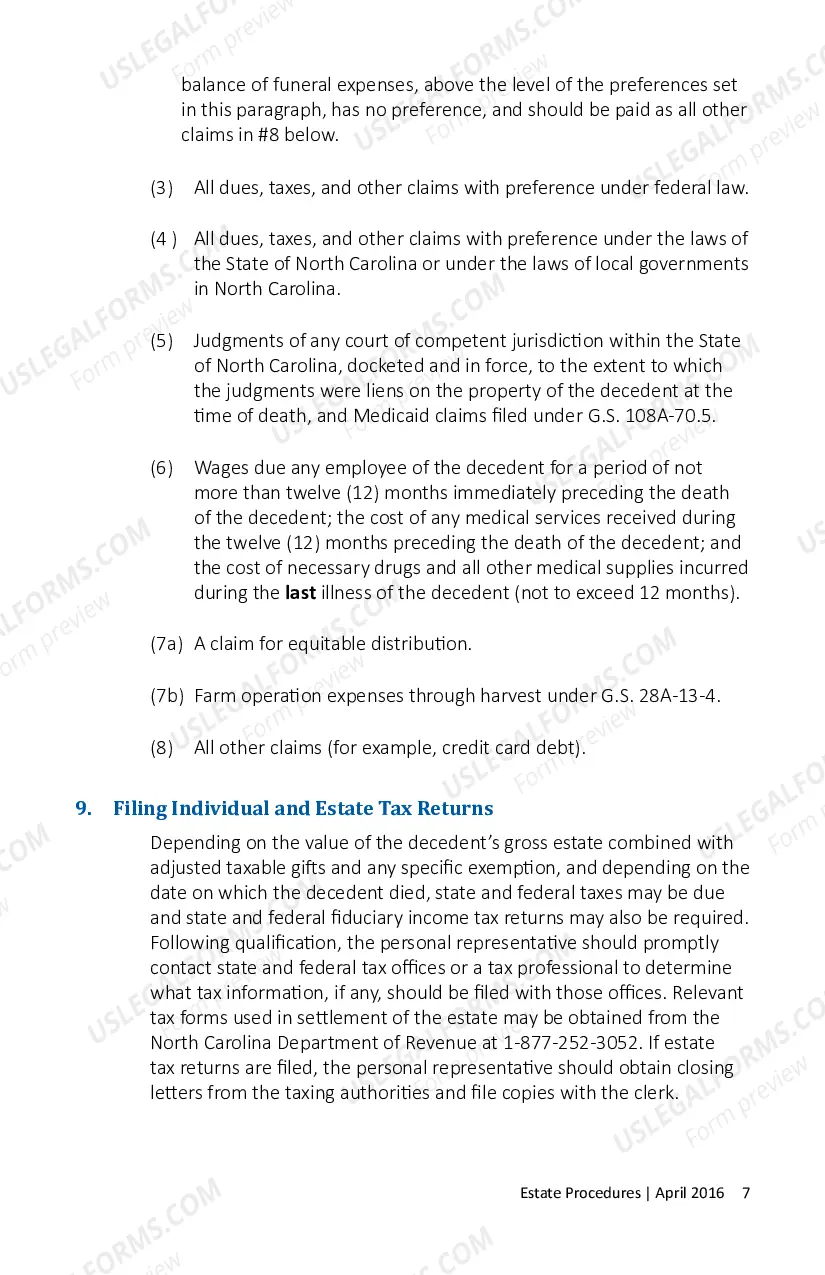
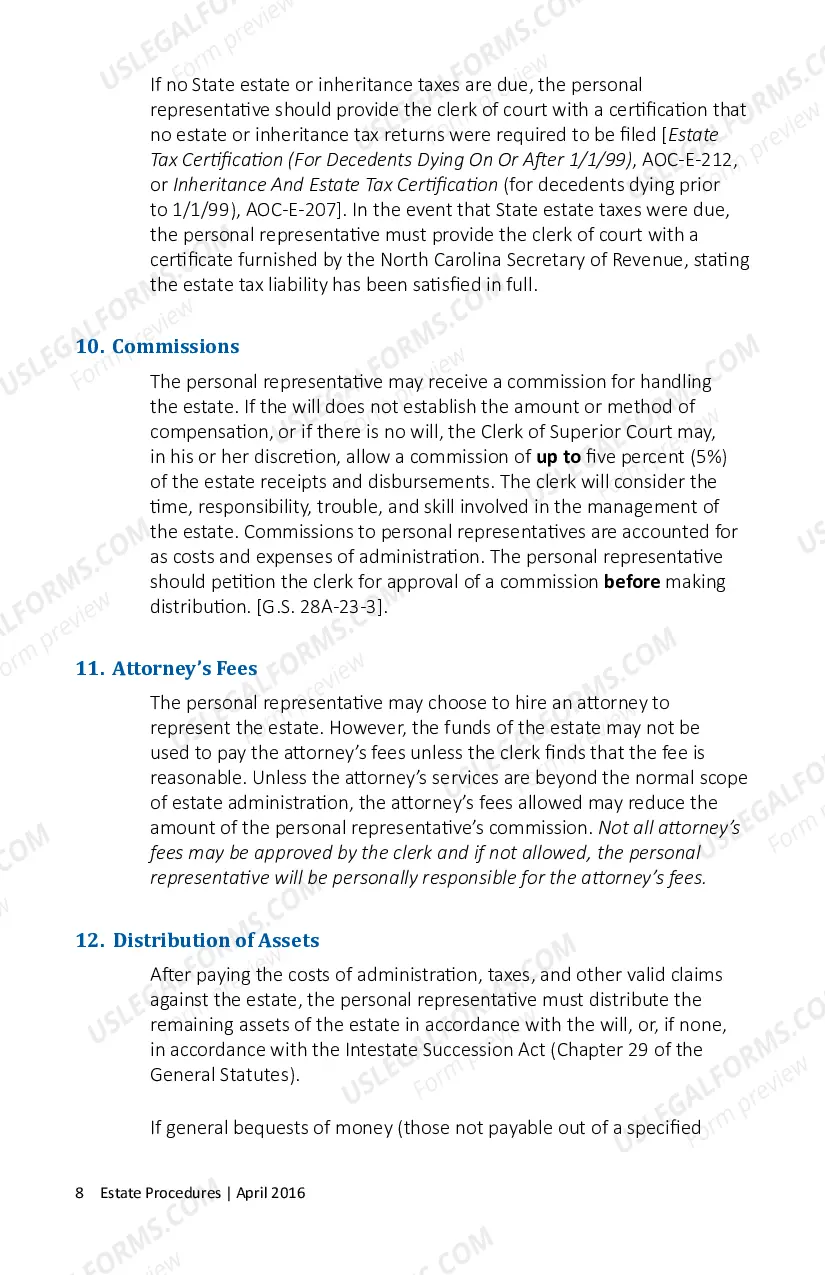
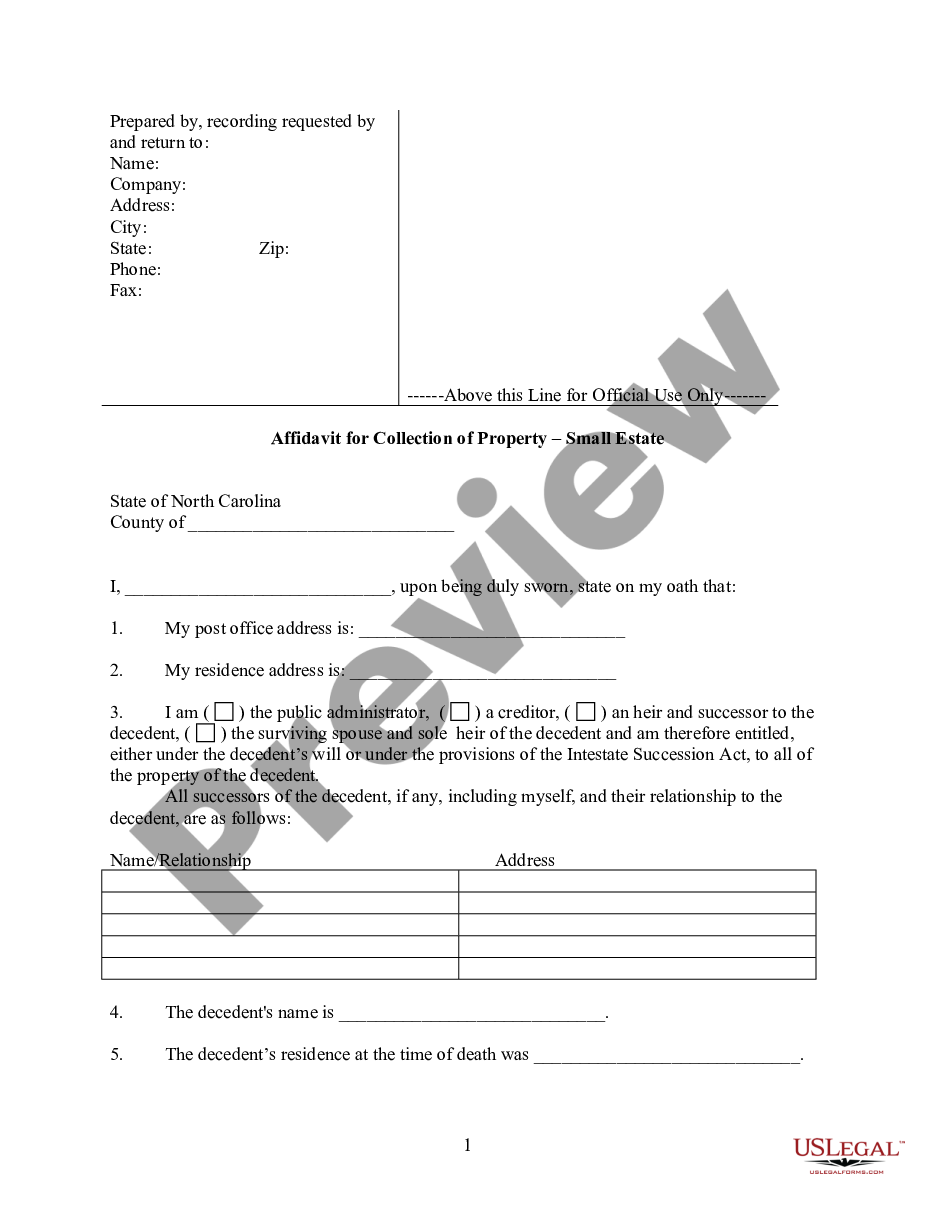
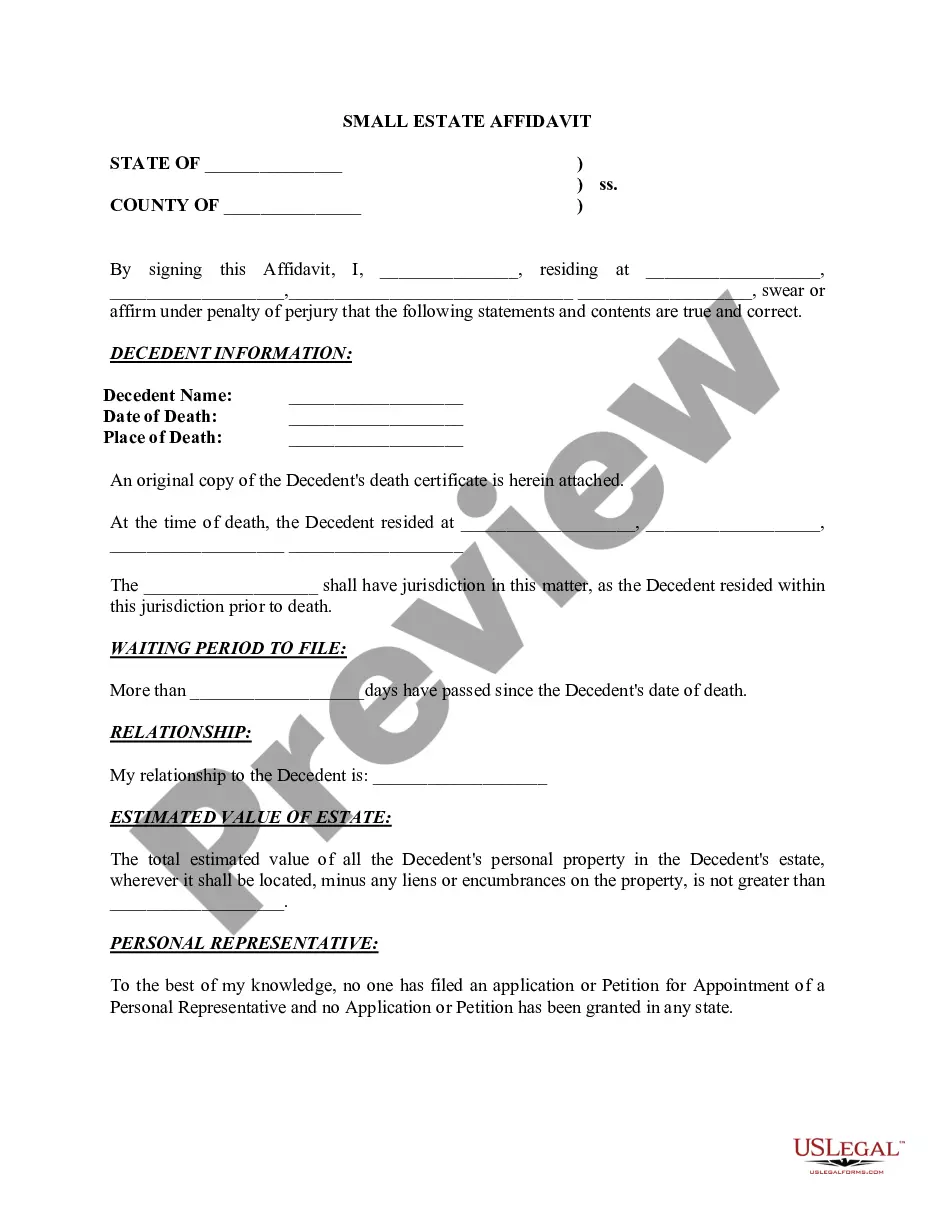
This is a pamphlet on small estate procedure from the North Carolina Administrative Office of the Courts covering the topics of executor, administrator, collector by affidavit and summary administration.
North Carolina Estate Procedure Pamphlet - Instructions
Instant download
This website is not affiliated with any governmental entity
Public form
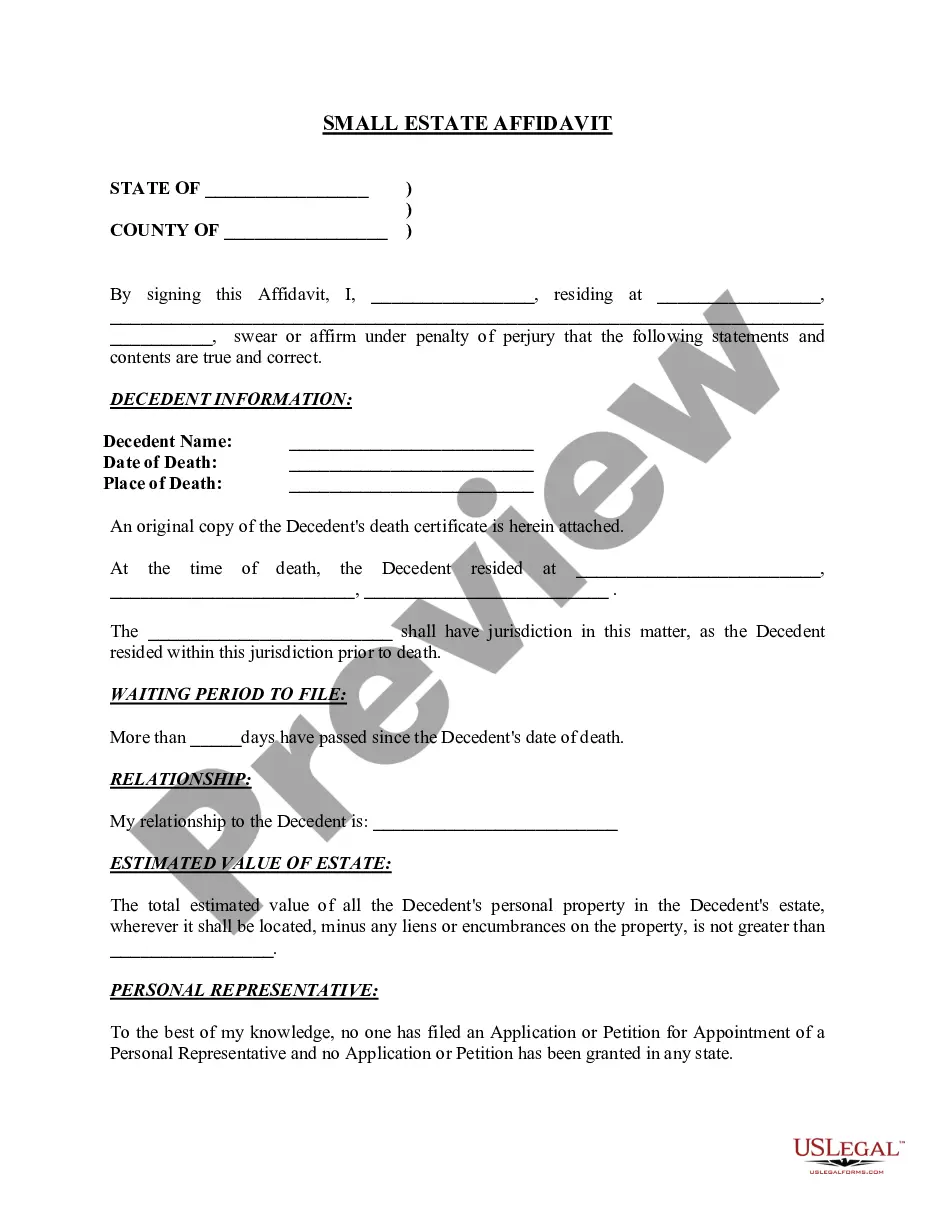
Description
Free preview

Get your form ready online
Our built-in tools help you complete, sign, share, and store your documents in one place.
Built-in online Word editor
Make edits, fill in missing information, and update formatting in US Legal Forms—just like you would in MS Word.
Export easily
Download a copy, print it, send it by email, or mail it via USPS—whatever works best for your next step.
E-sign your document
Sign and collect signatures with our SignNow integration. Send to multiple recipients, set reminders, and more. Go Premium to unlock E-Sign.
Notarize online 24/7
If this form requires notarization, complete it online through a secure video call—no need to meet a notary in person or wait for an appointment.
Store your document securely
We protect your documents and personal data by following strict security and privacy standards.

Make edits, fill in missing information, and update formatting in US Legal Forms—just like you would in MS Word.

Download a copy, print it, send it by email, or mail it via USPS—whatever works best for your next step.

Sign and collect signatures with our SignNow integration. Send to multiple recipients, set reminders, and more. Go Premium to unlock E-Sign.

If this form requires notarization, complete it online through a secure video call—no need to meet a notary in person or wait for an appointment.

We protect your documents and personal data by following strict security and privacy standards.
Looking for another form?


How to fill out North Carolina Estate Procedure Pamphlet - Instructions?
Steer clear of costly lawyers and locate the North Carolina Estate Procedure Pamphlet - Instructions you require at an affordable rate on the US Legal Forms website.
Utilize our straightforward grouping feature to search for and obtain legal and tax documents. Examine their details and preview them thoroughly prior to downloading.
Choose to download the document in PDF or DOCX format. Simply click Download and locate your template in the My documents section. You can save the form to your device or print it out. After downloading, you can complete the North Carolina Estate Procedure Pamphlet - Instructions by hand or with editing software. Print it and reuse the form multiple times. Achieve more for less with US Legal Forms!
- Additionally, US Legal Forms provides clients with detailed instructions on how to download and complete every form.
- US Legal Forms users simply need to Log In and acquire the specific form they require in their My documents section.
- Those who have not yet subscribed should follow the steps outlined below.
- Confirm that the North Carolina Estate Procedure Pamphlet - Instructions is valid for use in your area.
- If applicable, review the description and utilize the Preview feature before downloading the templates.
- If you’re confident that the template meets your requirements, click Buy Now.
- If the form is inaccurate, use the search function to locate the correct one.
- Next, establish your account and choose a subscription plan.
- Make your payment via credit card or PayPal.
Form popularity
FAQ
Determine Your State's Laws Regarding Inventory Forms. Review the Instructions Provided. Identify Real Property. Identify Personal Property. Identify Bank Accounts. Identify Retirement Accounts. Identify Non-Probate Assets. File the Form With the Court.
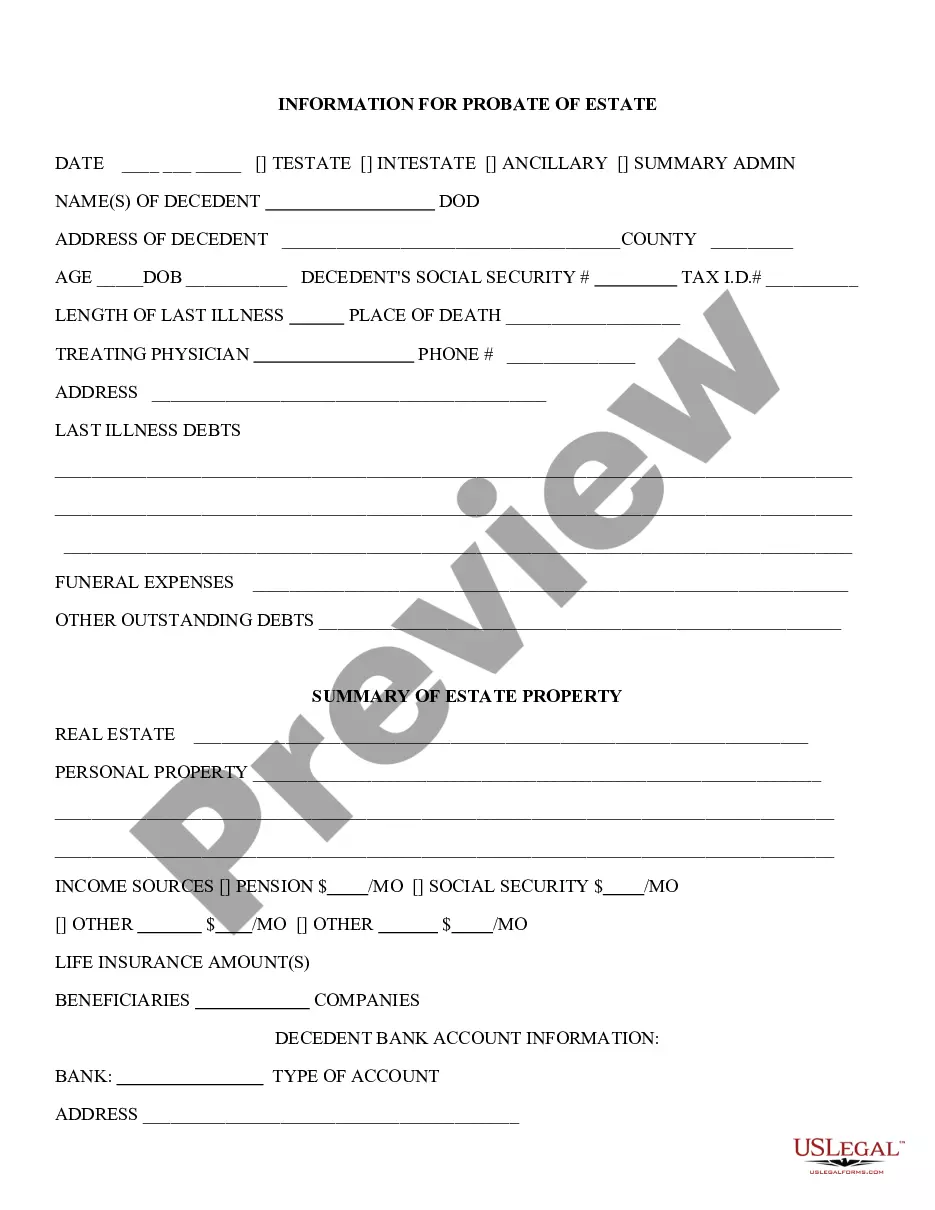
Collect and inventory the deceased person's assets, and keep them safe. have assets professionally appraised, if necessary. sell some assets, if necessary. pay valid debts and taxes, and. give out the remaining property as the will (or if there's no will, state law) directs.
Your inventory should include the number of shares of each type of stock, the name of the corporation, and the name of the exchange on which the stock is traded. Meanwhile, you should note the total gross amount of a bond, the name of the entity that issued it, the interest rate on the bond, and its maturity date.
You should expect it to take a minimum of six months to a year to settle an estate because of the legal notice requirements and time that creditors have to submit claims against the estate. Creditors have 90 days from the first publication date of the notice of probate.
You should expect it to take a minimum of six months to a year to settle an estate because of the legal notice requirements and time that creditors have to submit claims against the estate. Creditors have 90 days from the first publication date of the notice of probate.
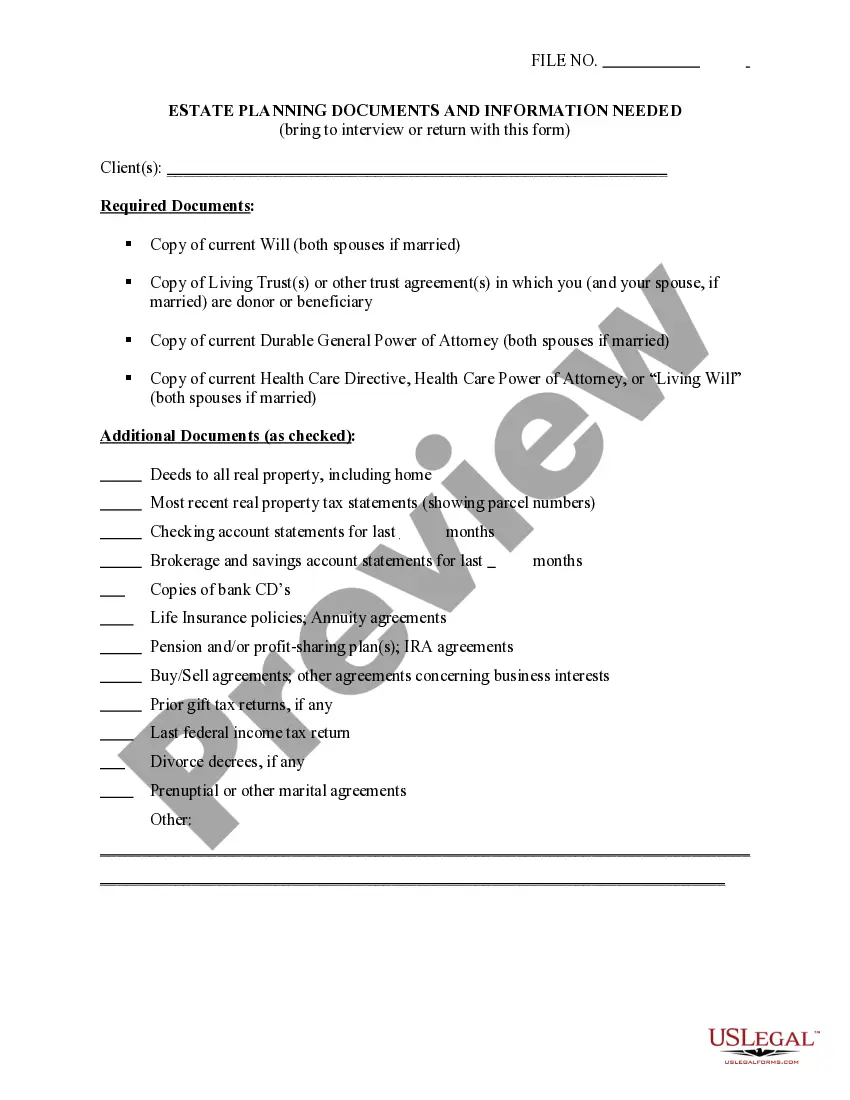
The first step in probating an estate is to locate all of the decedent's estate planning documents and other important papers, even before being appointed to serve as the personal representative or executor.
The probate process begins at the Clerk of Superior Court in the deceased's county of residence. An application is submitted to the clerk by either the executor/executrix named in a will or, if there is no will or the person named in the will is not able or willing to serve, a person qualified to be an administrator.
An inventory and appraisal is a required filing in California probate. The inventory and appraisal is a single document that (1) inventories the property in the decedent's estate and (2) contains an appraisal of the property in the inventory. California Probate Code § 8800(a).
When calculating the value of an estate, the gross value is the sum of all asset values, and the net value is the gross value minus any debts: in other words, the actual worth of the estate.