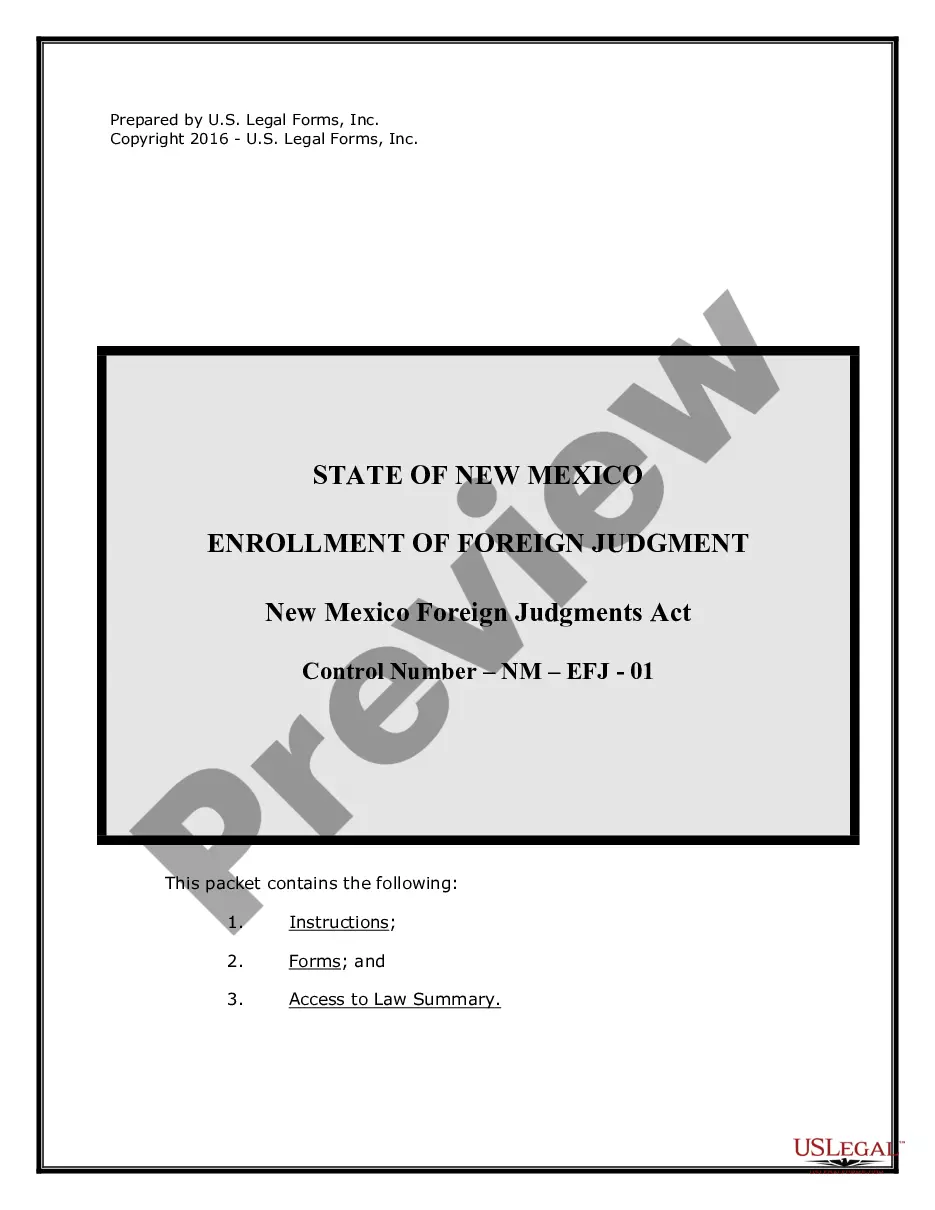
Maryland Performance Horse Lease Agreement
What is this form?
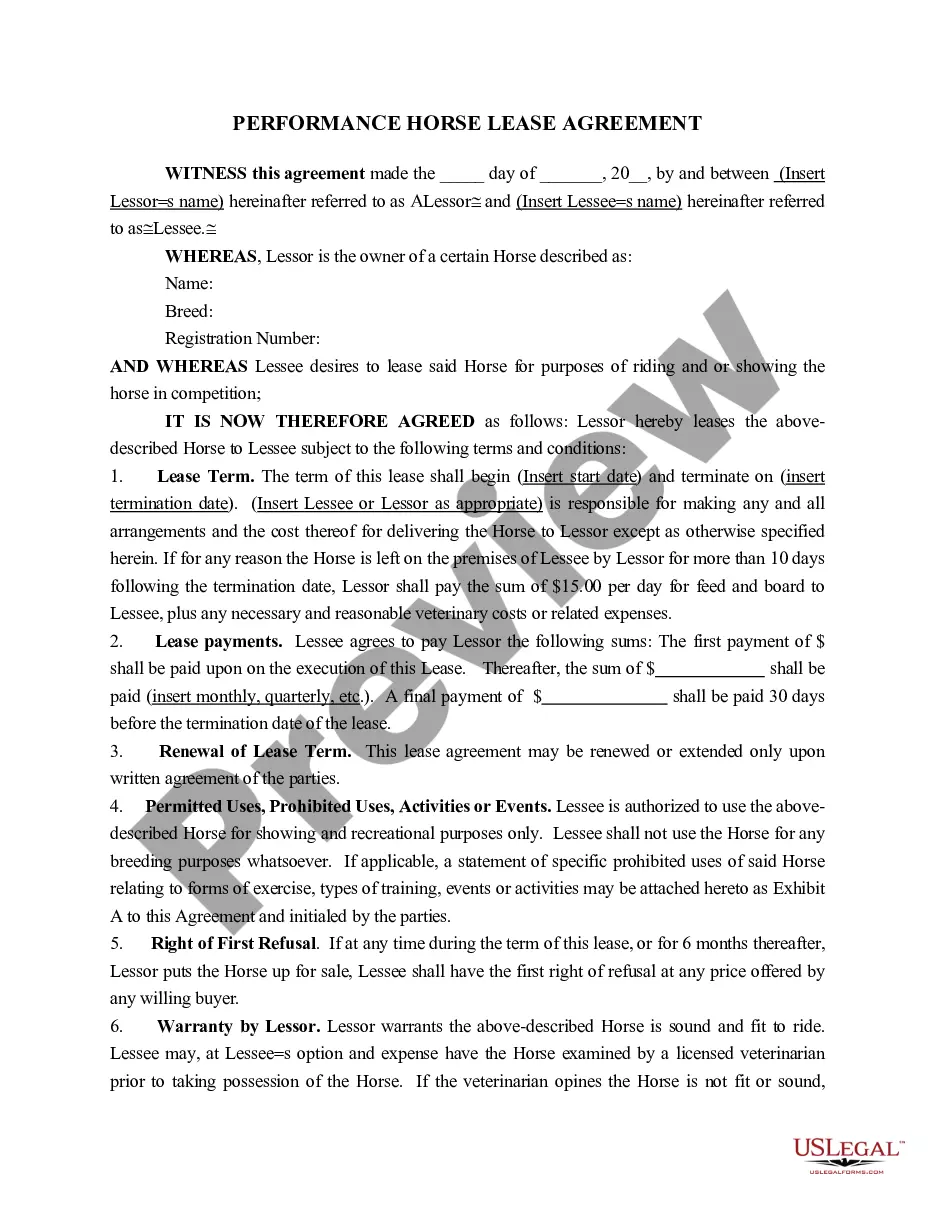
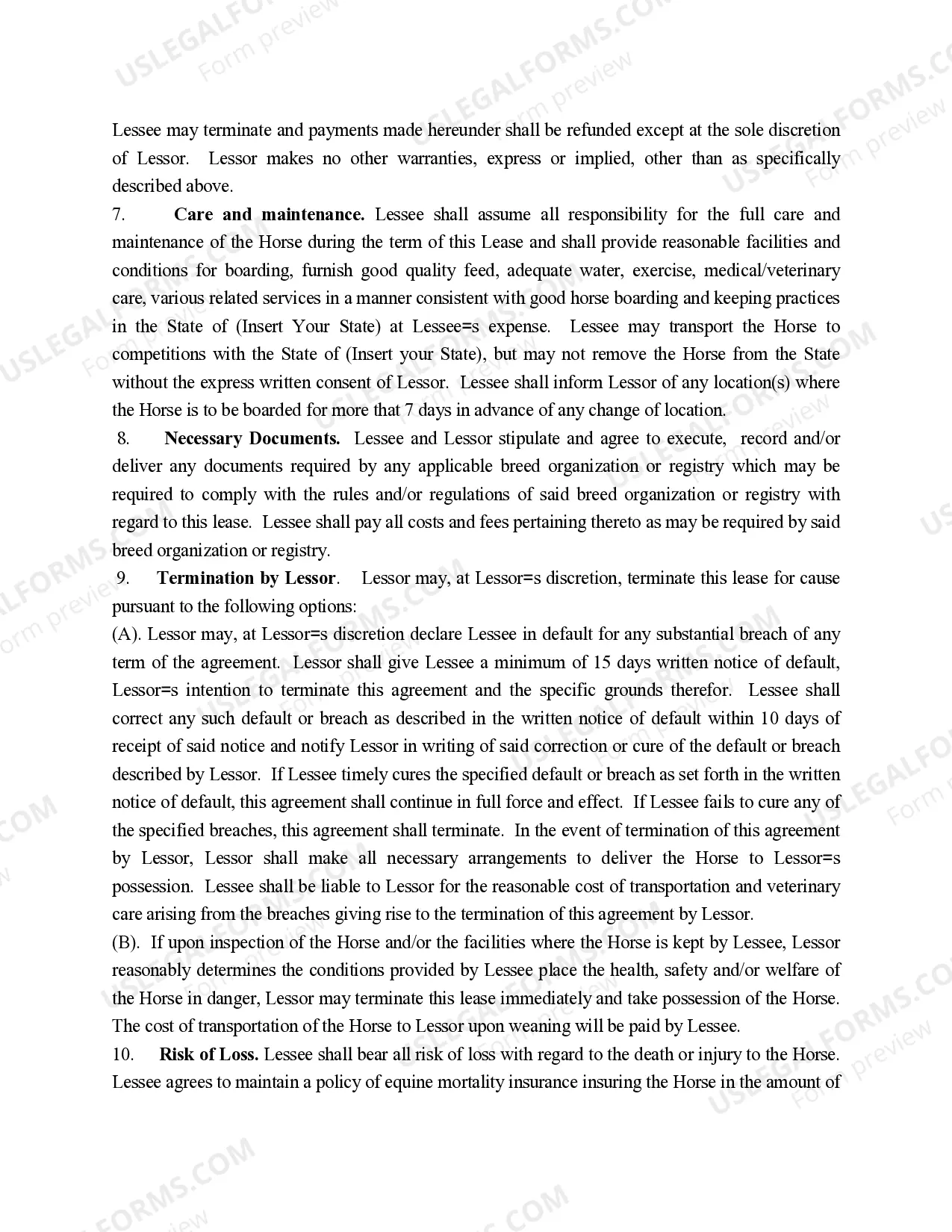
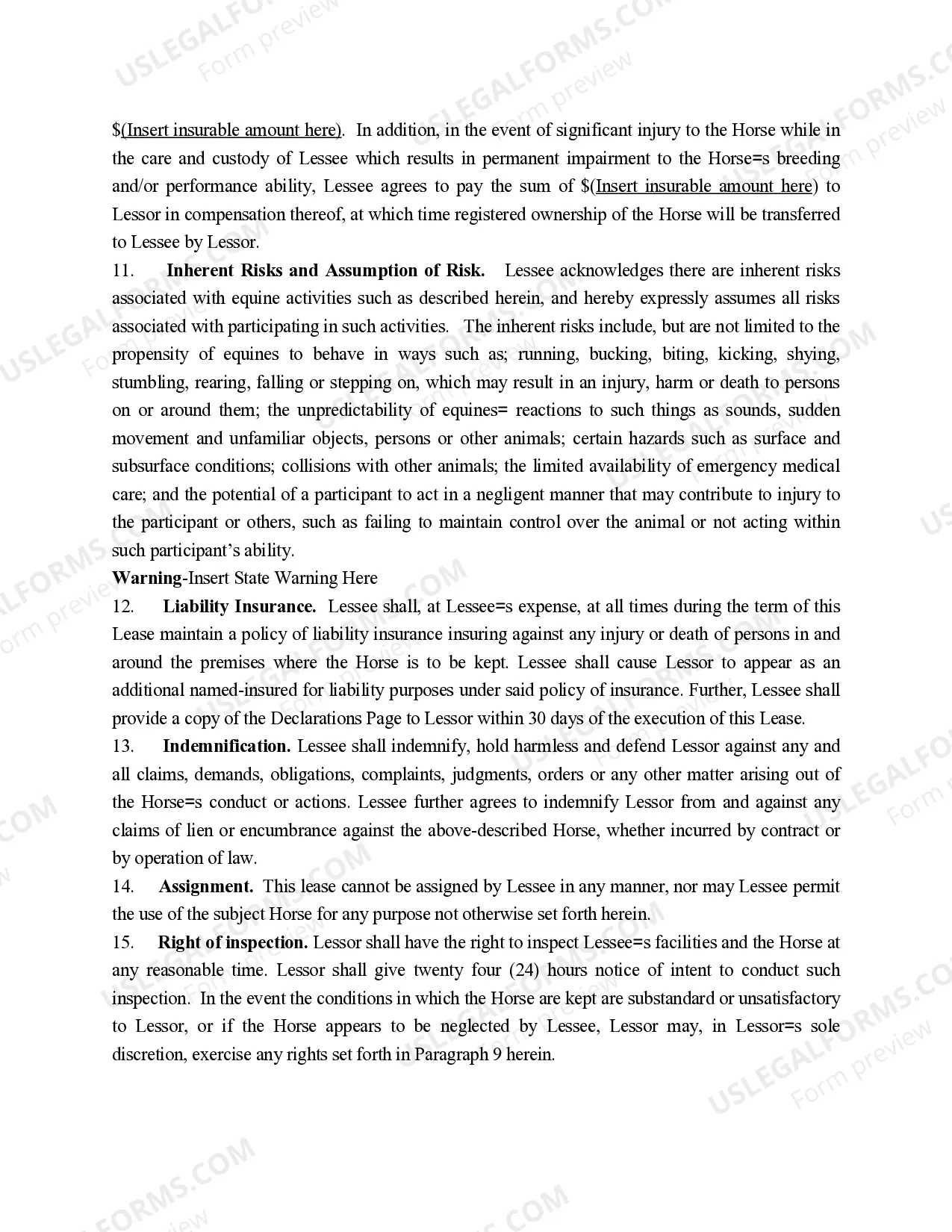
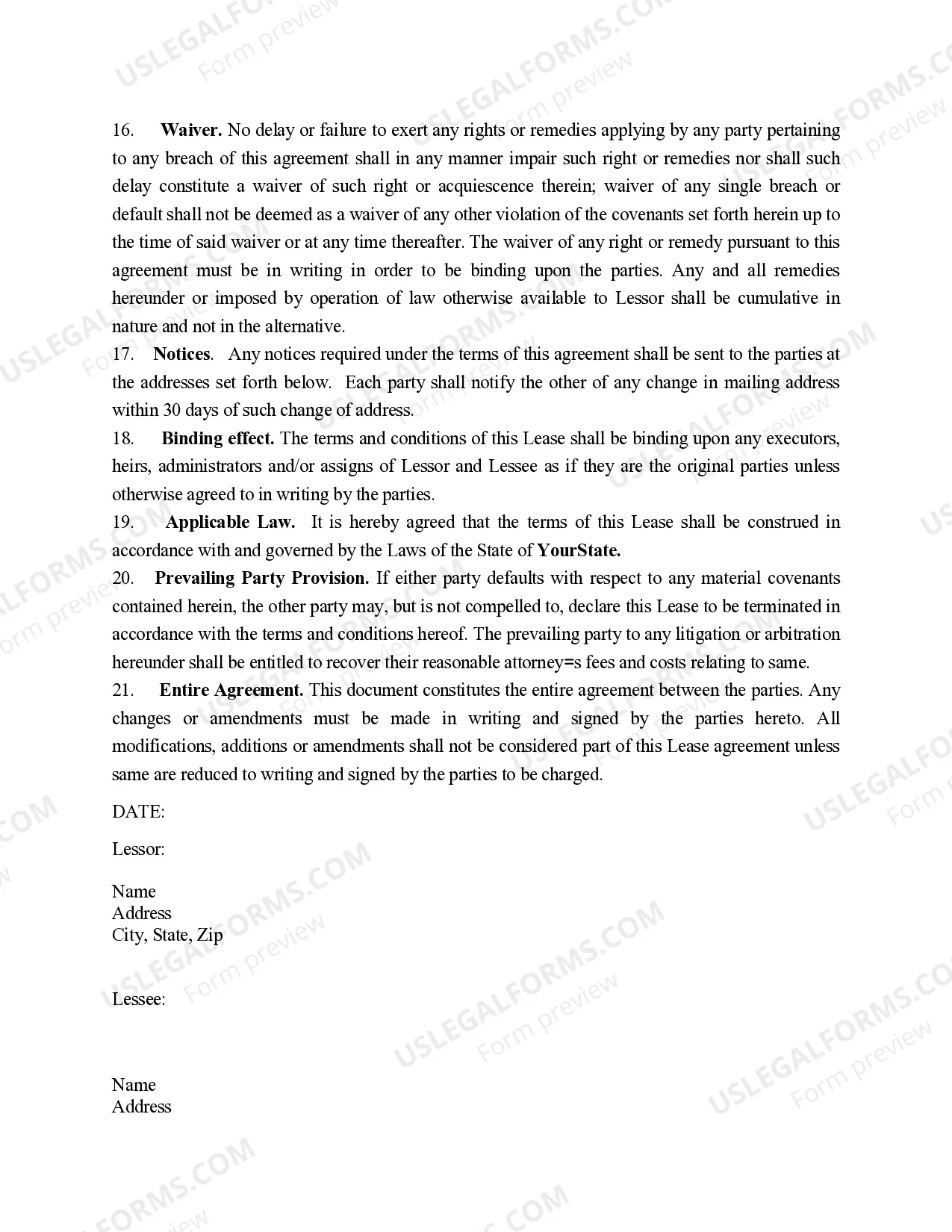
The Performance Horse Lease Agreement is a legal document that allows an individual (lessee) to lease a horse from another person (lessor) for the purposes of riding or competing. This agreement includes important provisions regarding lease payments, intended use, care, maintenance, and liability. It differs from buying a horse or a traditional rental agreement by focusing specifically on the rights and responsibilities of both parties concerning the lease of the horse for performance activities.
Key components of this form
- Lease Term: Defines the duration of the lease and responsibilities for transportation of the horse.
- Lease Payments: Details the payment structure, including initial and renewal payments.
- Permitted and Prohibited Uses: Specifies how the horse may be used and any activities that are not allowed.
- Right of First Refusal: Grants the lessee the first option to purchase the horse if the lessor decides to sell it.
- Conditions for Termination: Outlines scenarios in which the lease can be terminated if the horse's welfare is jeopardized.
- Governing Law: Specifies that the agreement will be governed by the laws of the specified state.

When to use this document
This form should be used when an individual wishes to lease a horse specifically for performance purposes, including riding and competition. It is particularly relevant in scenarios where the lessee does not have the means to purchase a horse but seeks to enjoy equestrian activities or show the horse in events.
Intended users of this form
- Individuals wishing to lease a horse for performance and competitive activities.
- Horse owners looking to lease out their horse under clearly defined terms.
- Equestrians seeking formal agreements to protect their interests while using leased horses.
- Organizations or clubs involved in equestrian sports that require leasing arrangements.
Instructions for completing this form
- Identify the parties involved: Fill in the names and contact information of the lessor and lessee.
- Specify the horse details: Provide information such as breed, registration number, and name of the horse being leased.
- Enter lease duration: Clearly state the start and end dates of the lease agreement.
- Detail lease payments: Clearly outline the payment amounts, due dates, and any additional fees.
- Include terms of use: Specify permitted and prohibited uses of the horse and any conditions affecting its care.
Is notarization required?
This form does not typically require notarization unless specified by local law. It is advisable to check with a legal professional if notarization is necessary in your jurisdiction.
Get your form ready online
Our built-in tools help you complete, sign, share, and store your documents in one place.
Make edits, fill in missing information, and update formatting in US Legal Forms—just like you would in MS Word.
Download a copy, print it, send it by email, or mail it via USPS—whatever works best for your next step.
Sign and collect signatures with our SignNow integration. Send to multiple recipients, set reminders, and more. Go Premium to unlock E-Sign.
If this form requires notarization, complete it online through a secure video call—no need to meet a notary in person or wait for an appointment.
We protect your documents and personal data by following strict security and privacy standards.

Make edits, fill in missing information, and update formatting in US Legal Forms—just like you would in MS Word.

Download a copy, print it, send it by email, or mail it via USPS—whatever works best for your next step.

Sign and collect signatures with our SignNow integration. Send to multiple recipients, set reminders, and more. Go Premium to unlock E-Sign.

If this form requires notarization, complete it online through a secure video call—no need to meet a notary in person or wait for an appointment.

We protect your documents and personal data by following strict security and privacy standards.
Mistakes to watch out for
- Failing to include all relevant details regarding the horse's care and allowed activities.
- Not specifying the payment schedule or payment methods clearly.
- Ignoring state-specific legal implications when filling out the agreement.
- Leaving out critical clauses about termination conditions and responsibilities.
Benefits of completing this form online
- Convenience: Access and download the form anytime, anywhere.
- Editability: Fill in and modify sections easily to fit specific leasing arrangements.
- Reliability: Use a form drafted by licensed attorneys, ensuring legal compliance.
Legal use & context
- This lease agreement is enforceable under contract law, provided all parties agree to its terms.
- Terms must be clearly defined to avoid disputes over payment and horse care.
- Consult local laws for additional requirements related to horse leasing in your state.
Summary of main points
- The Performance Horse Lease Agreement is tailored for leasing horses for riding and competitions.
- Both parties' responsibilities must be clearly defined in the lease to minimize conflicts.
- Ensure all lease details are completed accurately for legal validity.
Looking for another form?
Form popularity
FAQ
A free lease means that the horse is leased to someone without any payment to the owner. When you have a free lease you retain ownership and control of your horse but your horse, in best case scenarios, is still cared for and loved. Everyone wins. The owner has good care for the horse they love.
Full Leasing a Horse When you full lease a horse you pay an agreed upon fee for exclusive access to the horse. This means you are the only one riding the horse.
FULL LEASE: For $400 per month, you will have full, exclusive use of the horse. Full-leases require that you also pay to the costs of routine farrier and health care, which will vary according to the horse's needs.
Decide How Many Days the Lease Is For. Will you be offering a part or a full lease of your horse? Determine What Experience the Rider Needs. Decide on the Lease Price. Decide on the Lessee's Responsibilities. Determine Any Limitations. Draw Up a Contract.
Lease-to-Buy Equine Contract To purchase the horse, the buyer will pay the full purchase price during the lease term. During this time, the buyer will continue making lease payments per the parties' agreement, which will potentially go toward the total purchase price of the horse.
A Complete List of Tenant's Names. The Amount of Rent Due and Due Date. A Clear Rental or Lease Term. Any Deposits and Late Fees. Right to Entry Terms. Maintenance and Repairs. Limits on Occupancy. Rules for Pets.
Option #1: The person leasing the horse is responsible for all of the horse's expenses (board, feed, veterinary, farrier, etc). The person leasing the horse may ride or use the horse any time they'd like. Full leases rarely restrict riding days, times, or horse-related events, like attending a horse show.
Contents of a lease agreement: Names of the lessor and lessee or their agents. Description of the property. Amount of rent and due dates, grace period, late charges. Mode of rent payment.