Maryland Interrogatories to Plaintiff for Motor Vehicle Occurrence
Overview of this form
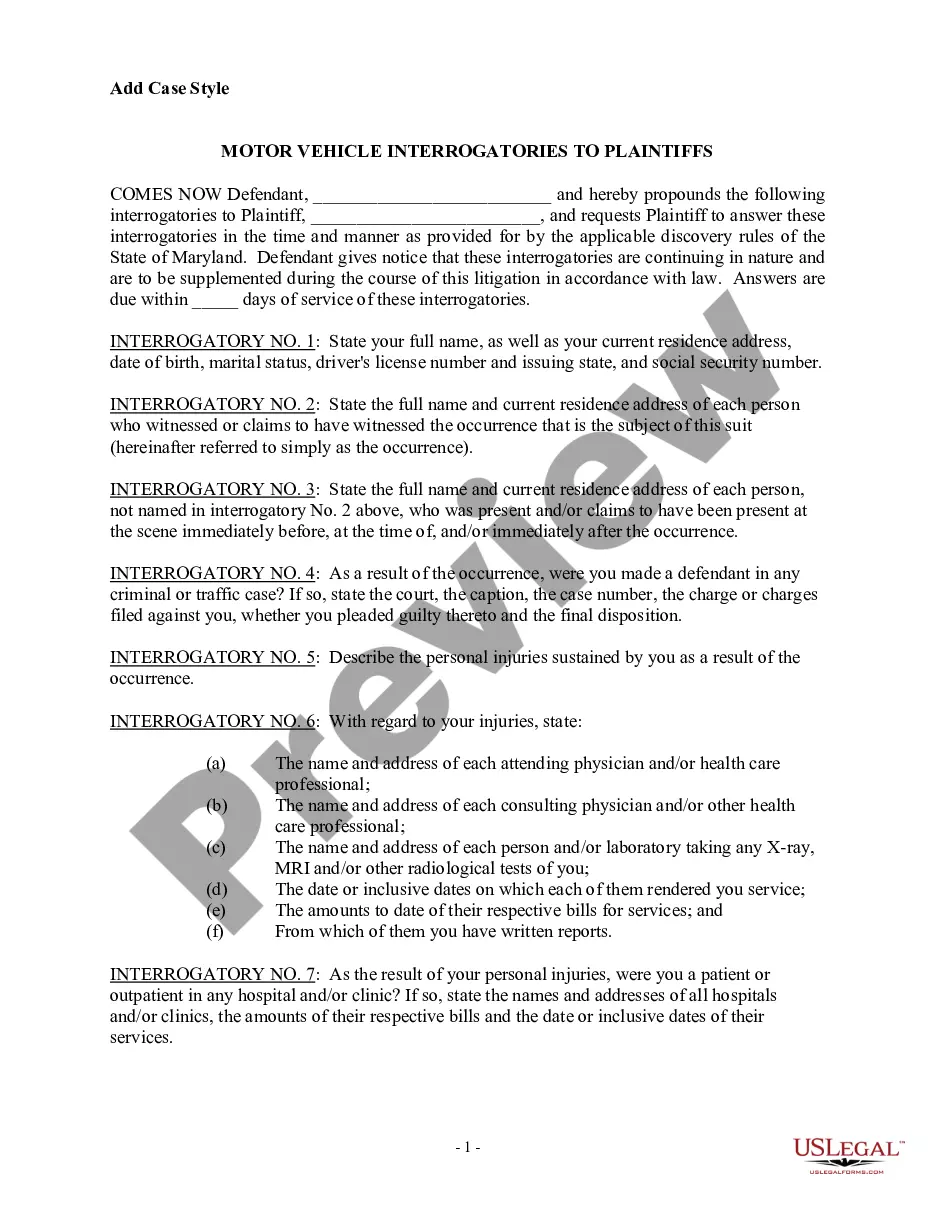
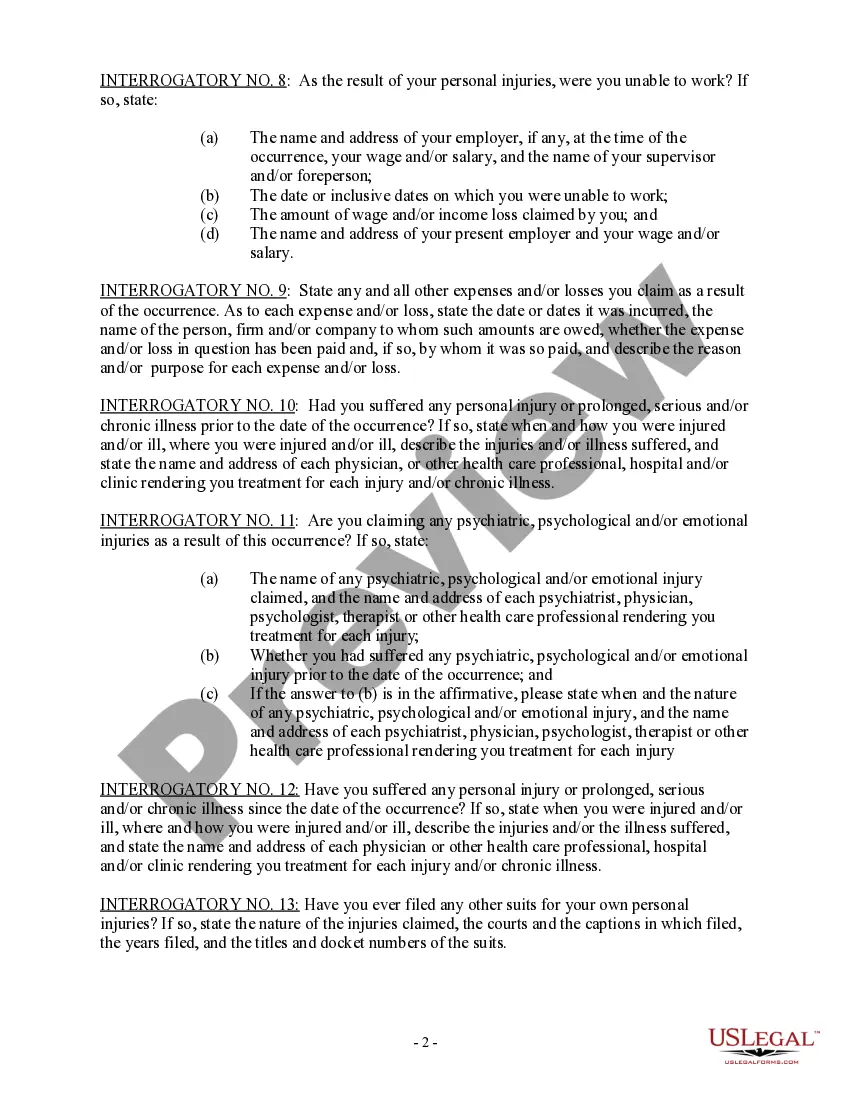
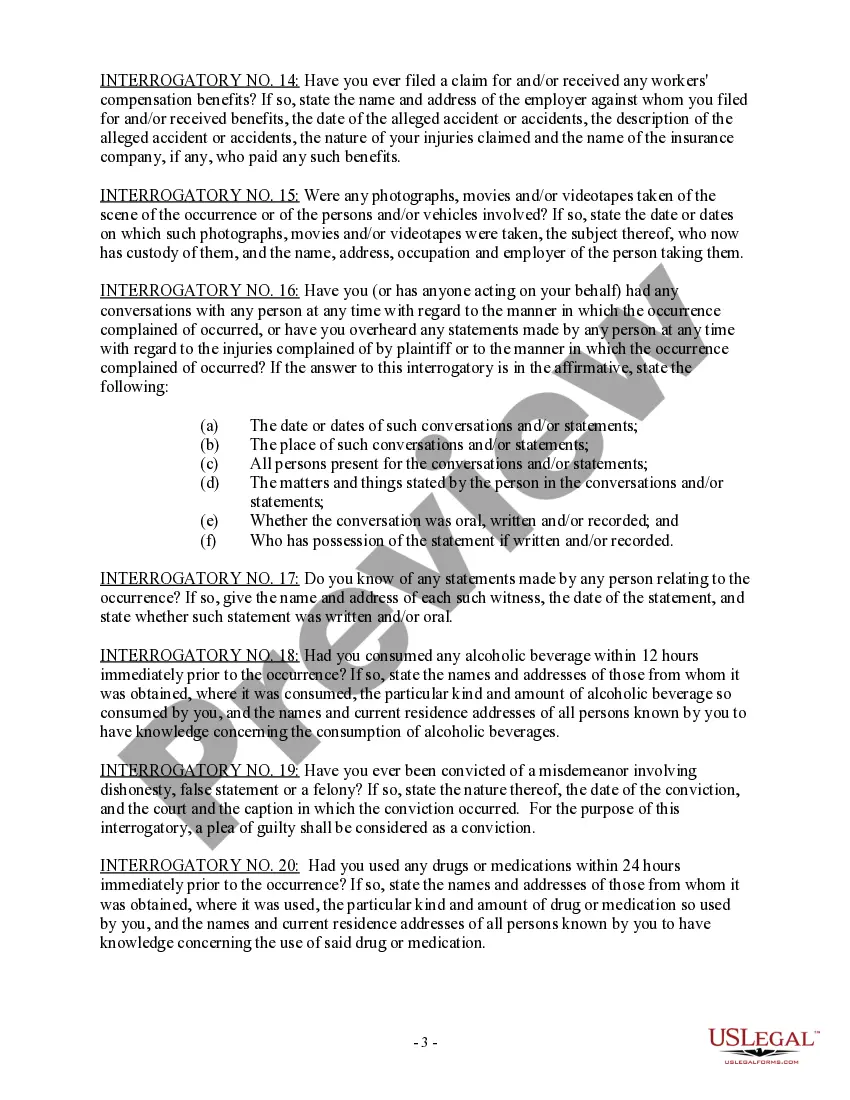
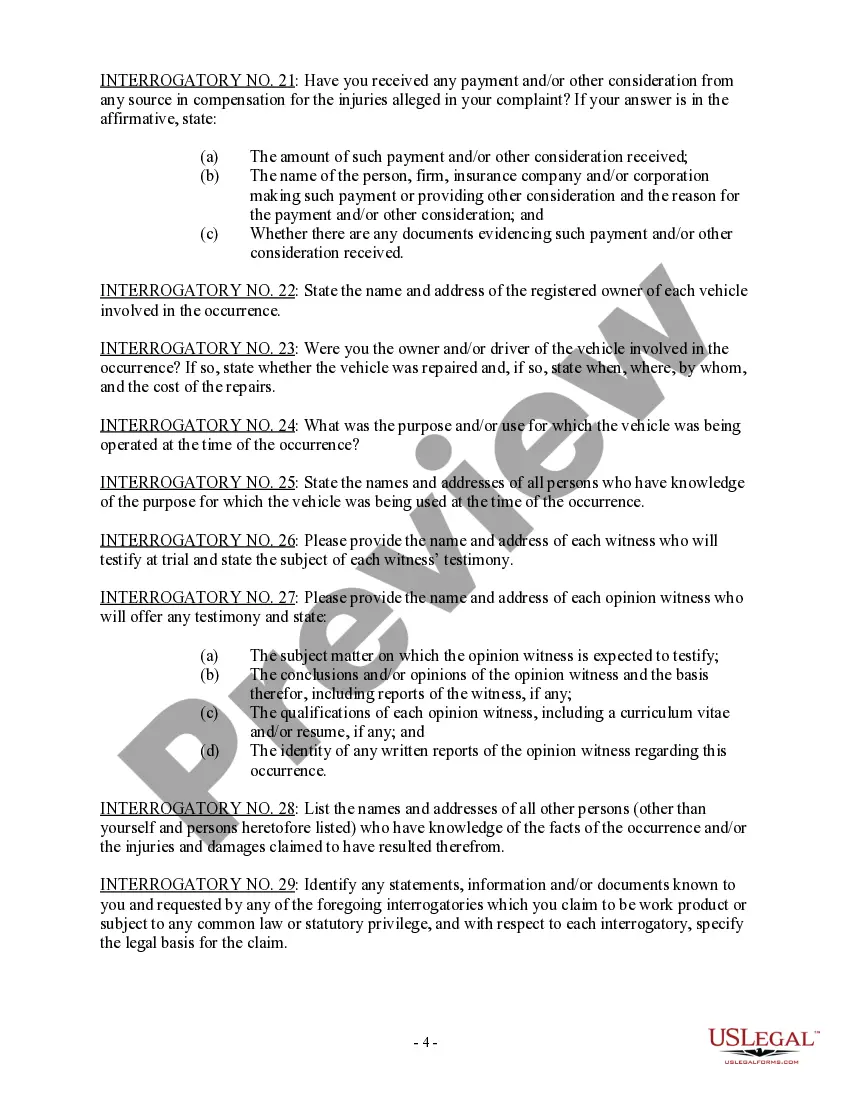
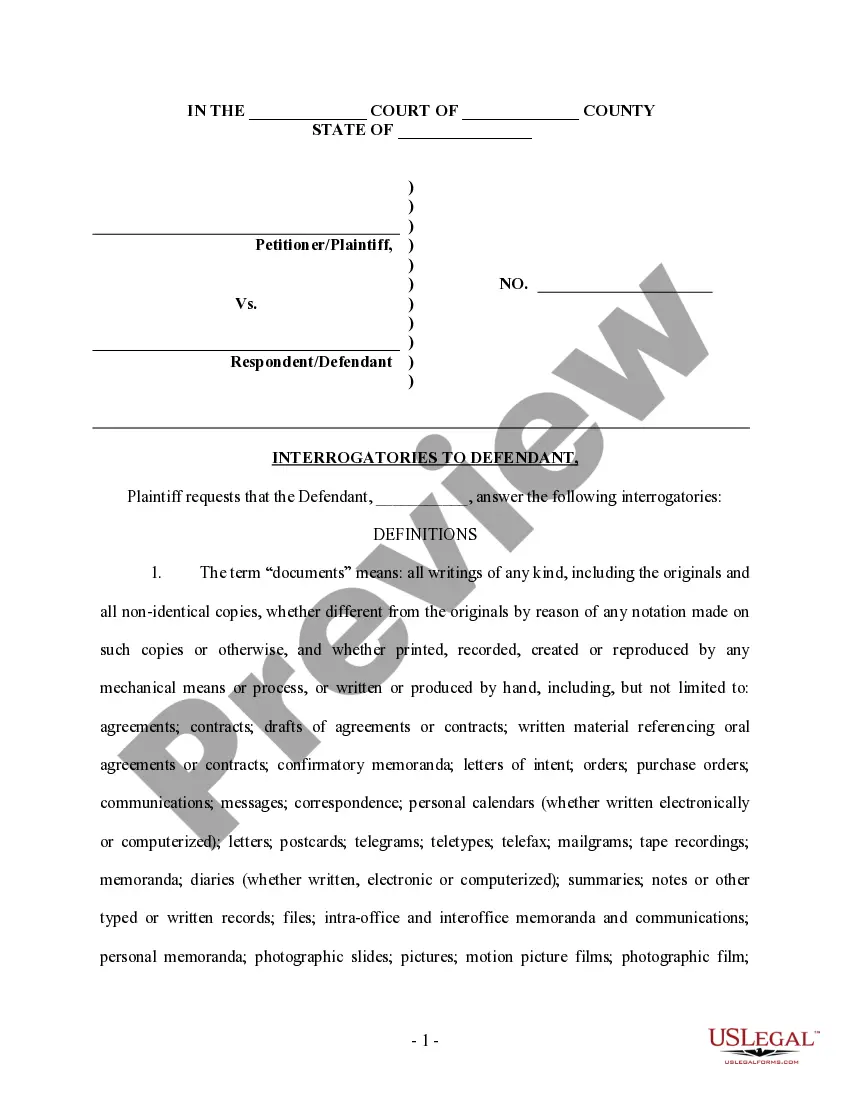
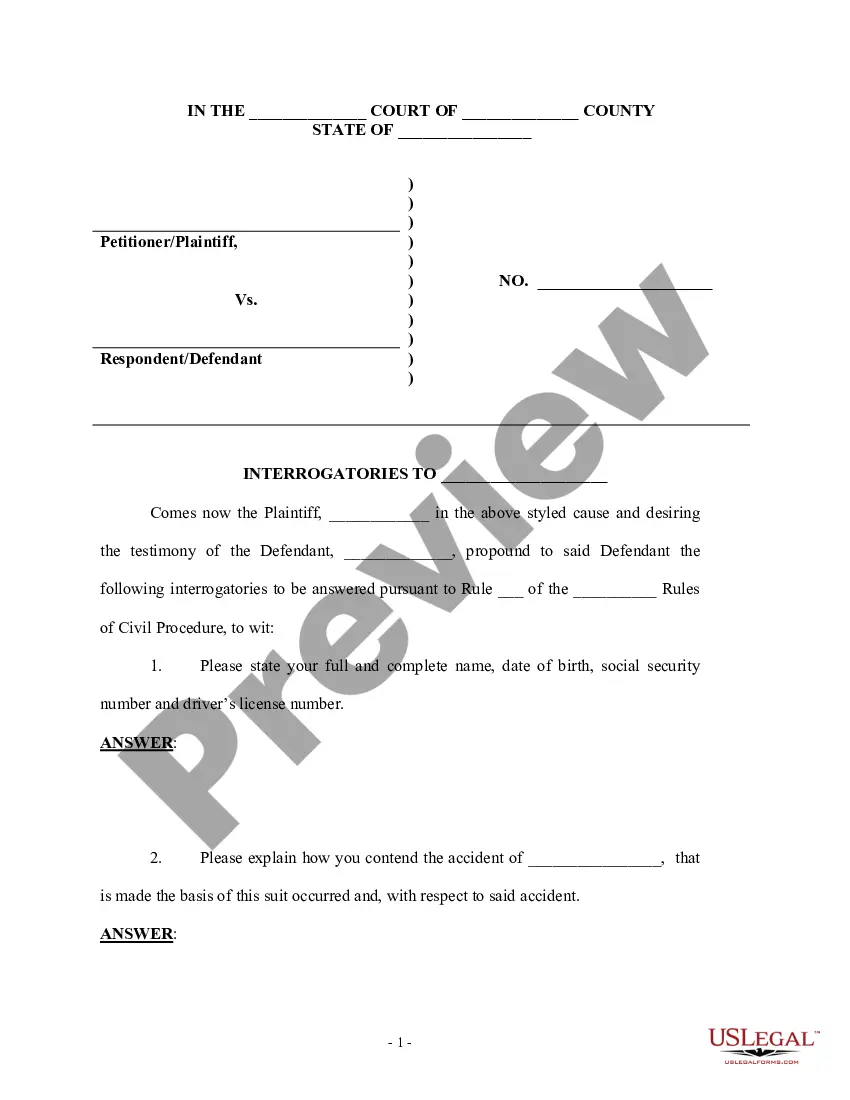
The Interrogatories to Plaintiff for Motor Vehicle Occurrence is a legal document used in vehicle incident cases, such as automobile accidents, to gather detailed information from the plaintiff. This form includes a series of questions designed to elicit essential facts regarding the occurrence, injuries sustained, treatment received, and any other relevant circumstances. It serves a critical role in the discovery process, distinguishing it from other forms that may focus solely on claims or defenses without gathering this level of detail.
Key components of this form
- Identifies the parties involved in the vehicle incident.
- Requests detailed personal information from the plaintiff.
- Inquires about witnesses to the occurrence and their contact details.
- Addresses any personal injuries or medical treatments related to the incident.
- Asks about lost wages and other financial impacts resulting from the incident.
- Seeks clarity on previous injuries or claims that may influence the case.
- Includes questions about any records, photographs, or communications regarding the incident.
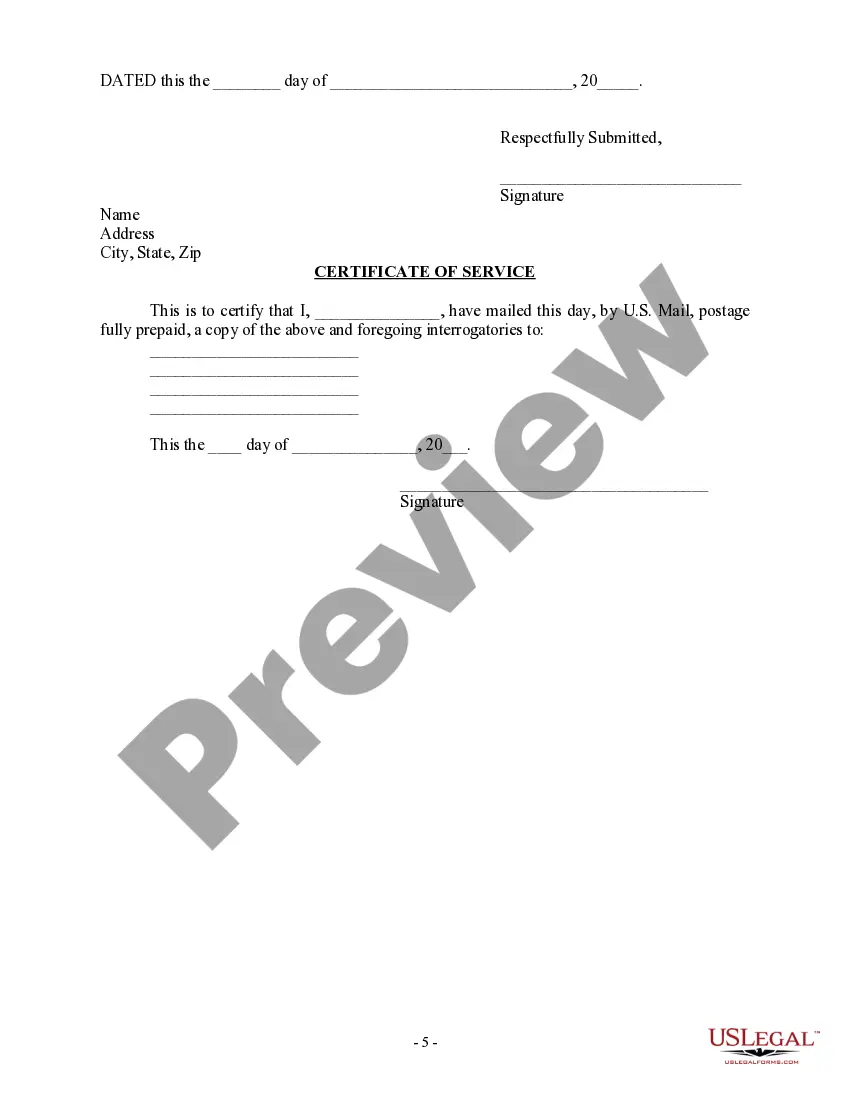
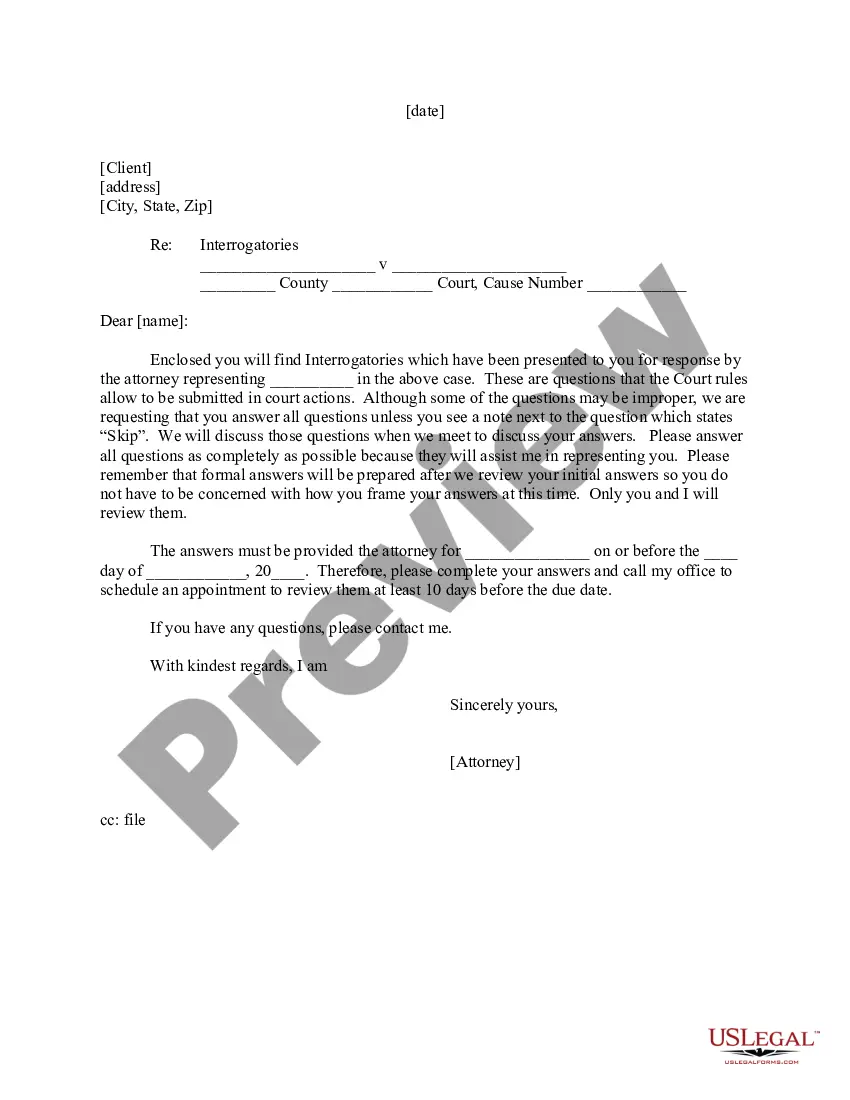
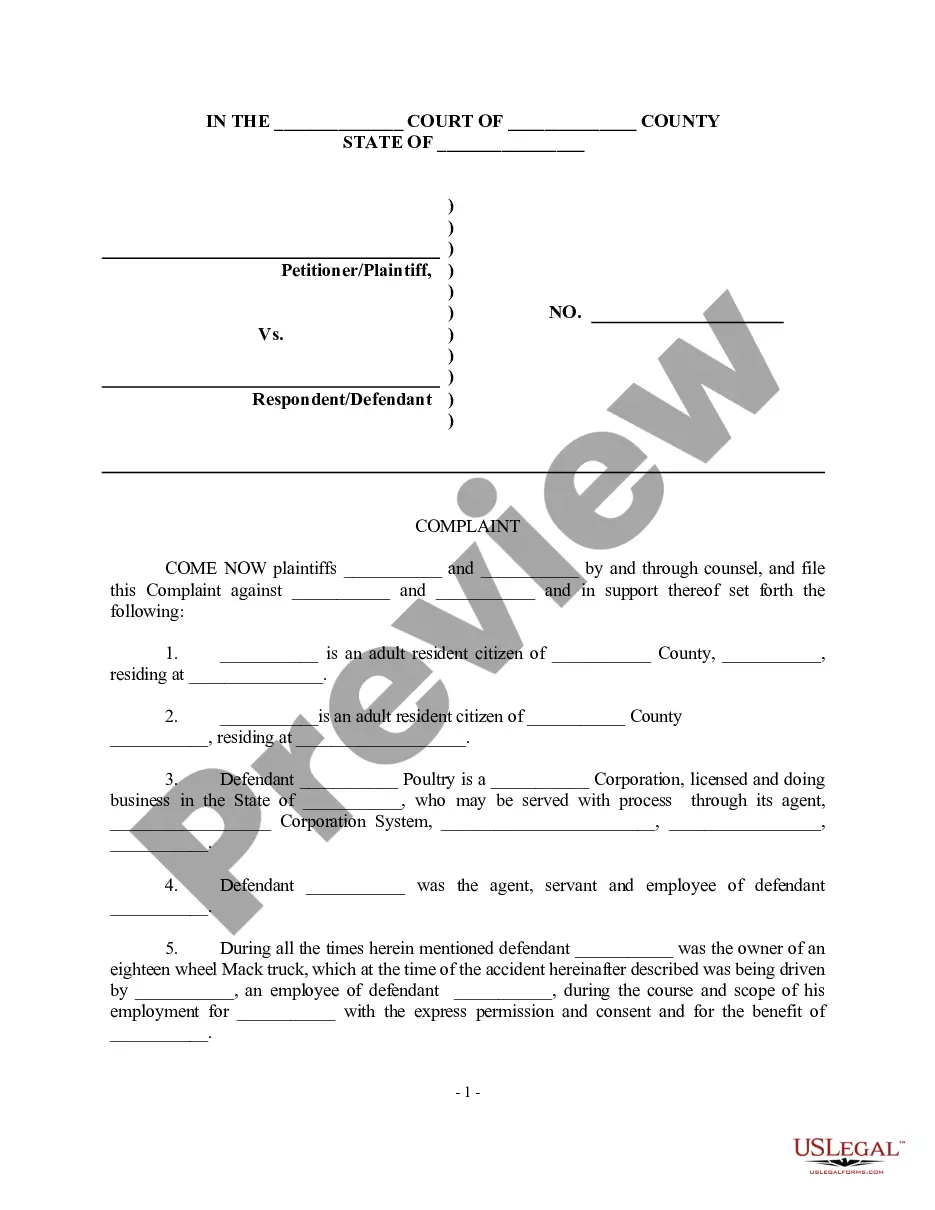
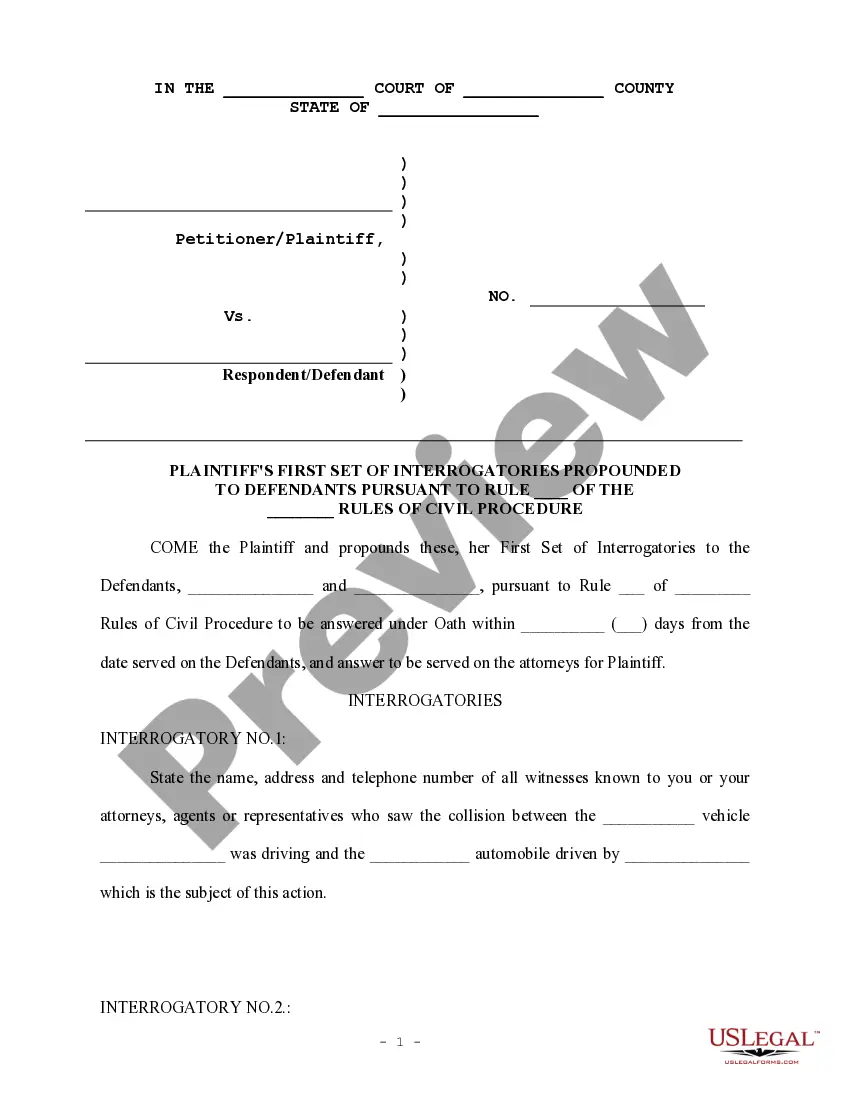
When to use this document
This form should be used when a defendant in a motor vehicle incident needs to obtain crucial information from the plaintiff. Common scenarios include preparing for trial, responding to a filed claim, or initiating a legal discovery process. It is particularly valuable in cases where the injury and its impacts are disputed or when details surrounding the incident need clarification.
Who should use this form
- Defendants in a motor vehicle accident lawsuit.
- Attorneys representing defendants seeking detailed information from plaintiffs.
- Individuals involved in vehicle incidents who require structured questions to gather facts relevant to their case.
How to prepare this document
- Fill in the names and contact information of the defendant and plaintiff at the top of the form.
- Answer each interrogatory clearly and concisely, providing accurate information.
- Indicate the number of days allowed for responses as dictated by local rules.
- Review your answers for completeness and accuracy before submission.
- Sign and date the document to authenticate it before sending it to the plaintiff.
Notarization guidance
In most cases, this form does not require notarization. However, some jurisdictions or signing circumstances might. US Legal Forms offers online notarization powered by Notarize, accessible 24/7 for a quick, remote process.
Get your form ready online
Our built-in tools help you complete, sign, share, and store your documents in one place.
Make edits, fill in missing information, and update formatting in US Legal Forms—just like you would in MS Word.
Download a copy, print it, send it by email, or mail it via USPS—whatever works best for your next step.
Sign and collect signatures with our SignNow integration. Send to multiple recipients, set reminders, and more. Go Premium to unlock E-Sign.
If this form requires notarization, complete it online through a secure video call—no need to meet a notary in person or wait for an appointment.
We protect your documents and personal data by following strict security and privacy standards.

Make edits, fill in missing information, and update formatting in US Legal Forms—just like you would in MS Word.

Download a copy, print it, send it by email, or mail it via USPS—whatever works best for your next step.

Sign and collect signatures with our SignNow integration. Send to multiple recipients, set reminders, and more. Go Premium to unlock E-Sign.

If this form requires notarization, complete it online through a secure video call—no need to meet a notary in person or wait for an appointment.

We protect your documents and personal data by following strict security and privacy standards.
Avoid these common issues
- Failing to provide complete or accurate personal information.
- Leaving answers blank or not fully addressing the interrogatories.
- Not adhering to the timeline for response indicated on the form.
- Failing to sign and date the form before submission.
Advantages of online completion
- Convenient access to a standardized format that ensures all relevant questions are covered.
- Editable templates that allow you to customize questions based on your case specifics.
- Immediate availability for download and completion, facilitating timely responses to legal proceedings.
What to keep in mind
- The form is essential for collecting vital information in motor vehicle incident cases.
- It is important to answer all questions accurately and thoroughly to avoid complications in the litigation process.
- Understanding state-specific requirements is crucial to ensure compliance during legal proceedings.
Looking for another form?

Form popularity
FAQ
The interrogatories rules in Maryland include various procedural requirements for the number of questions, their wording, and response deadlines. These rules are designed to ensure that the discovery process is equitable and efficient. Familiarizing yourself with these rules enhances your capacity to effectively use Maryland Interrogatories to Plaintiff for Motor Vehicle Occurrence.
Your answers to the interrogatories should usually be short, clear, and direct and should answer only the question that is being asked. This is not the time to set out your entire case or defense to the other side. Take the time to make sure your answers are correct and truthful.
Interrogatories Md. The Maryland Rules of Civil Procedure allow you to serve thirty interrogatories against each party. If you have two opponents, you may serve thirty interrogatories to one opponent and another thirty to the other opponent.
The purpose of interrogatories is to learn a great deal of general information about a party in a lawsuit. For example, the defendant in a personal injury lawsuit about a car accident might send you interrogatories asking you to disclose things like: Where you live.
So, can you refuse to answer interrogatories? The answer is, no, you may not.That answer must either permit inspection of the requested information or object to the production of the information for a specific reason.
(1) Number. Unless otherwise stipulated or ordered by the court, a party may serve on any other party no more than 25 written interrogatories, including all discrete subparts. Leave to serve additional interrogatories may be granted to the extent consistent with Rule 26(b)(1) and (2).
You must answer each interrogatory separately and fully in writing under oath, unless you object to it. You must explain why you object. You must sign your answers and objections.
Motions to Compel If a party doesn't respond to interrogatories or requests for production, then the party seeking those answers must file a motion to compel with the court. If the court grants the motion to compel, then the party who objected or failed to answer must then do so.