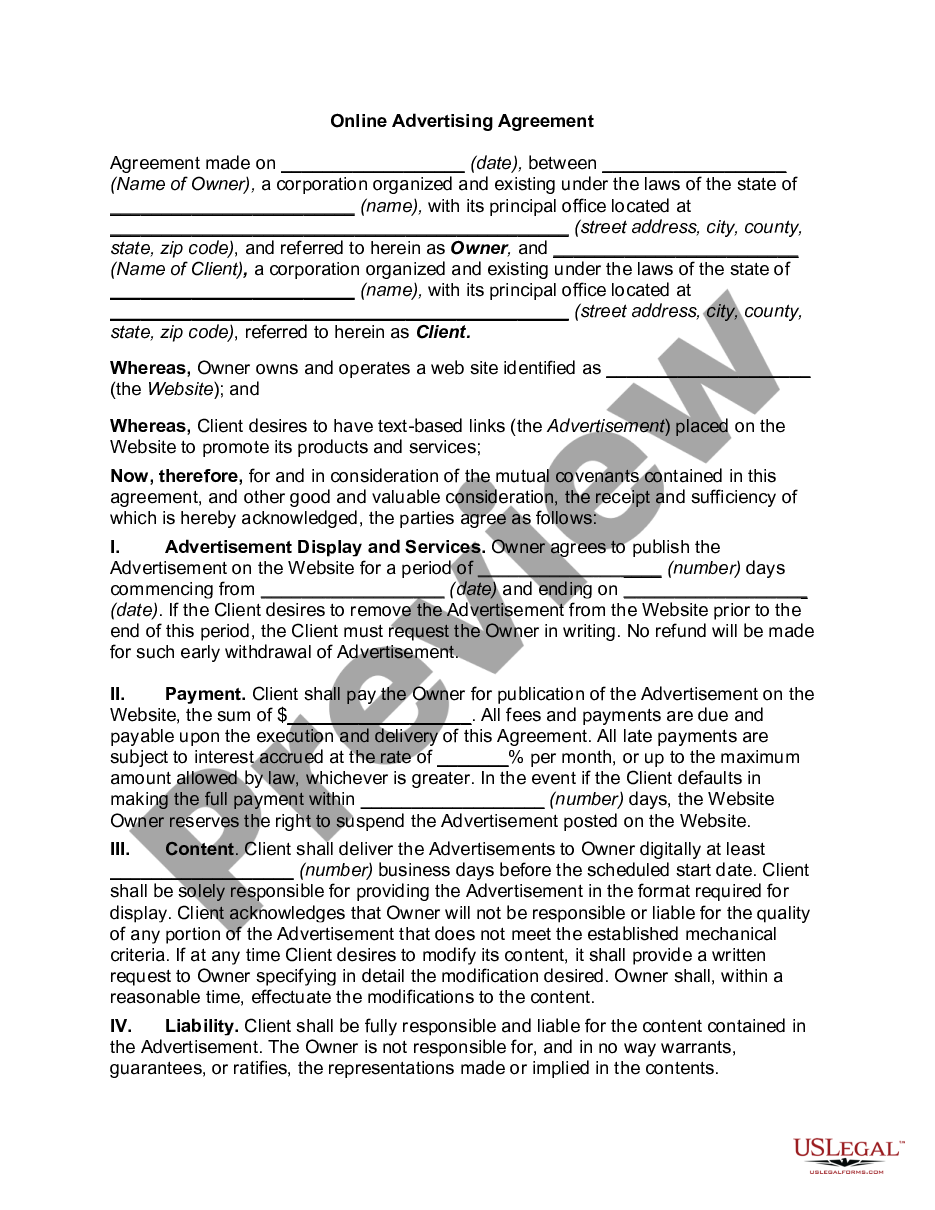
Online Advertising Agreement
Overview of this form
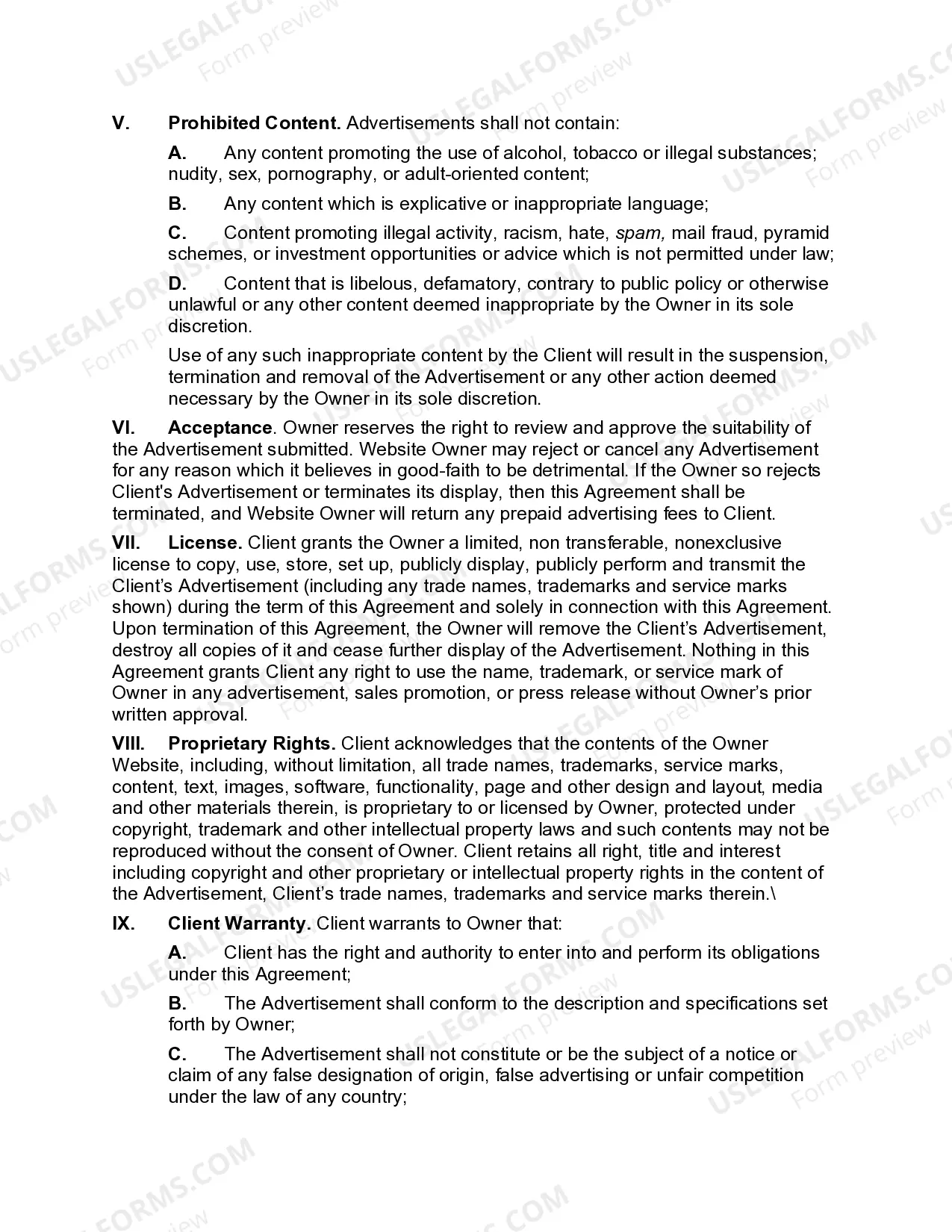
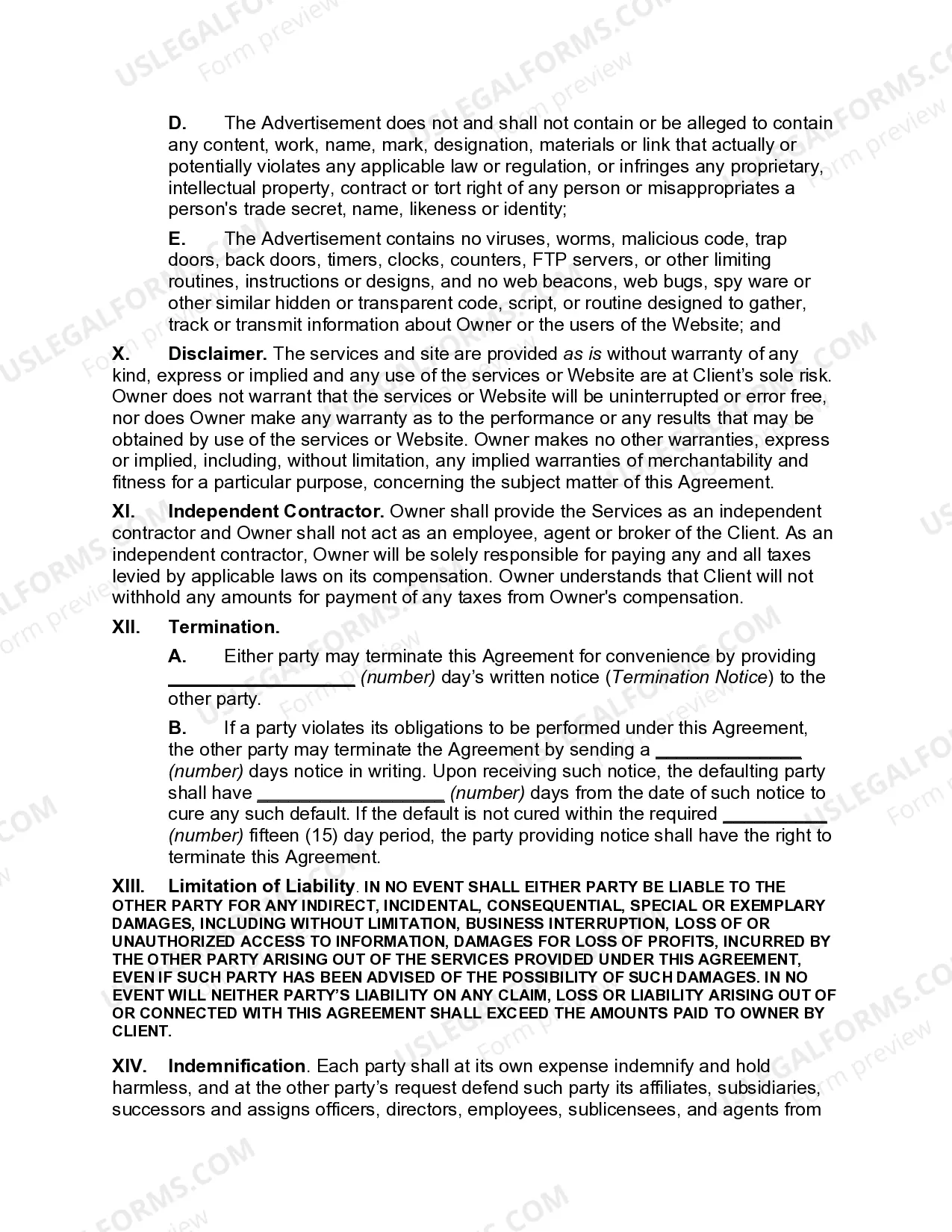
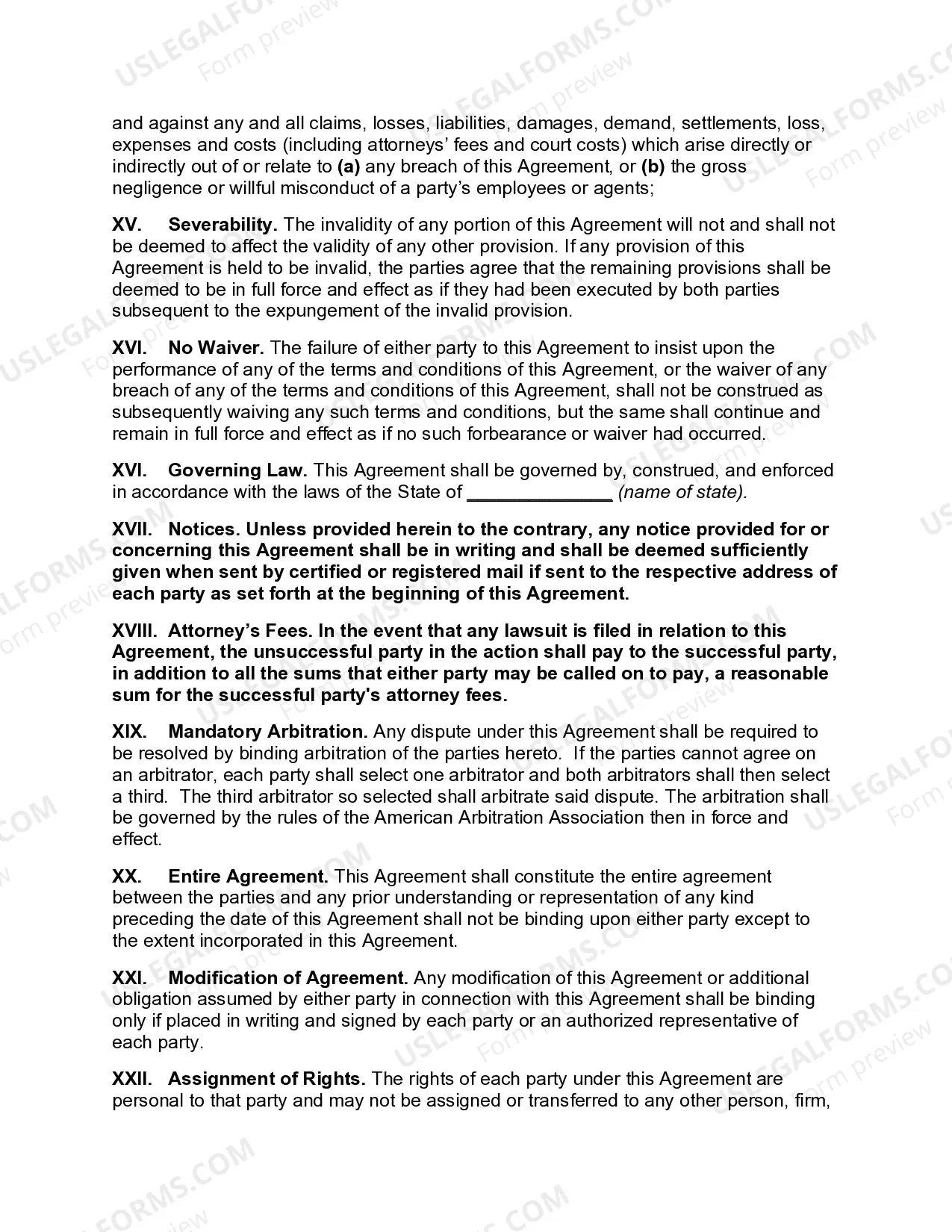
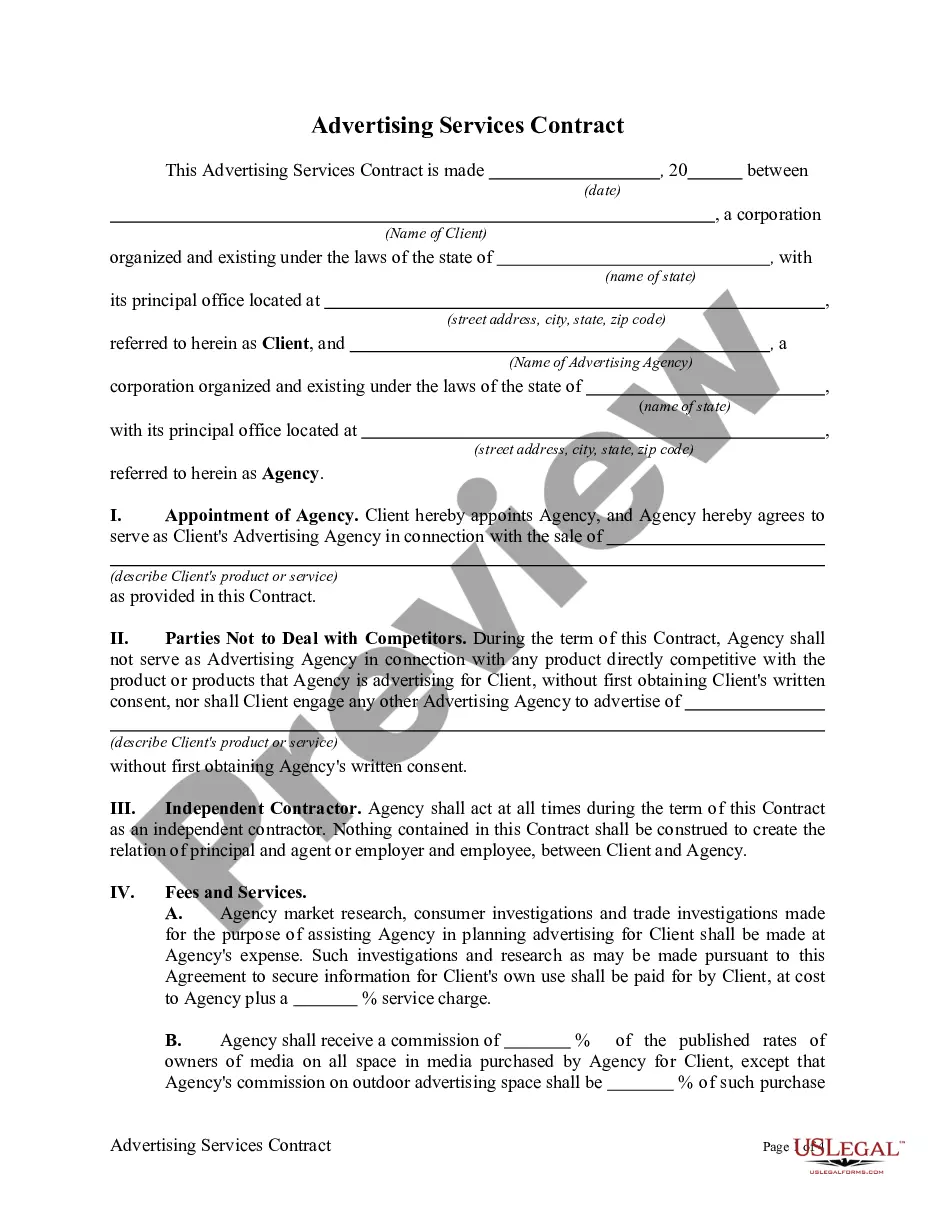
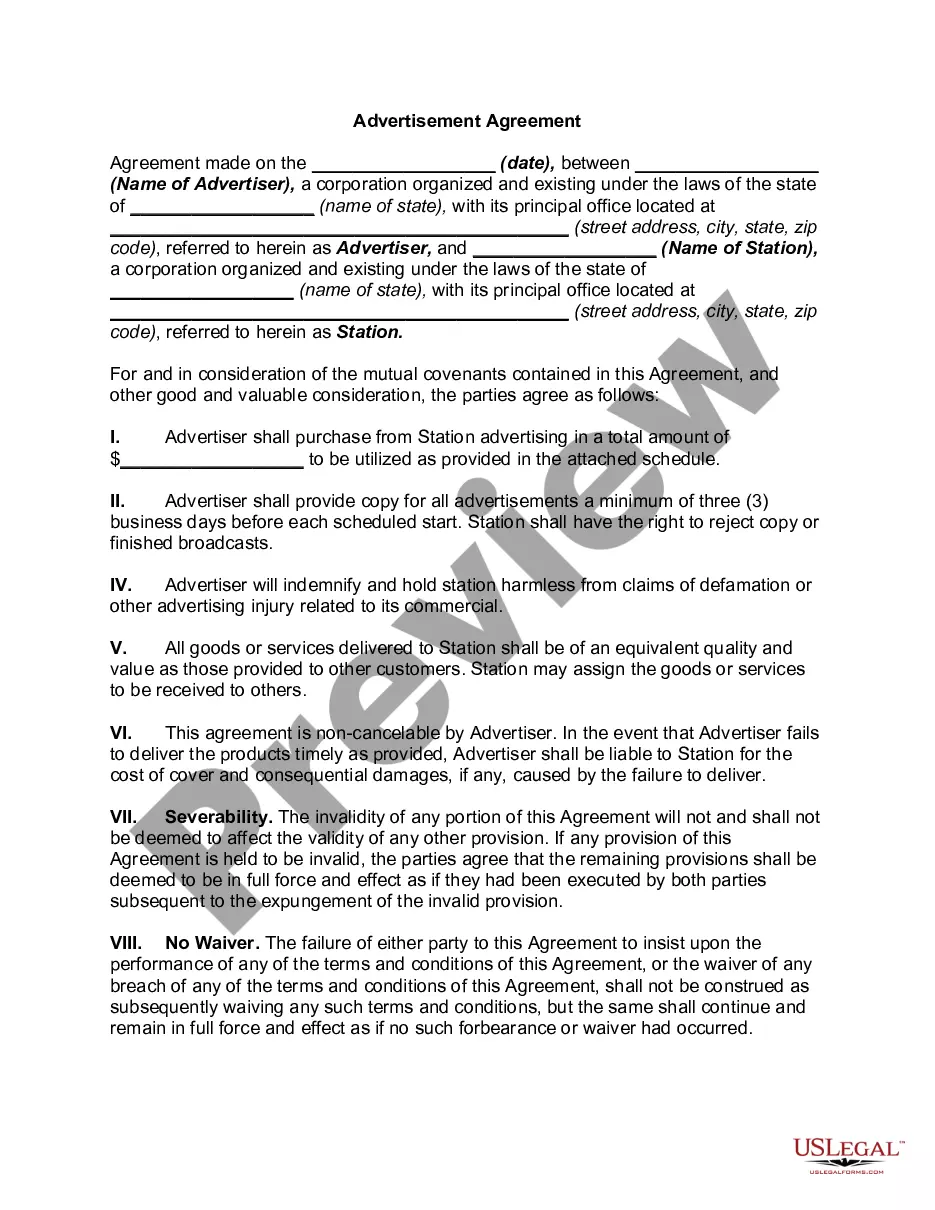
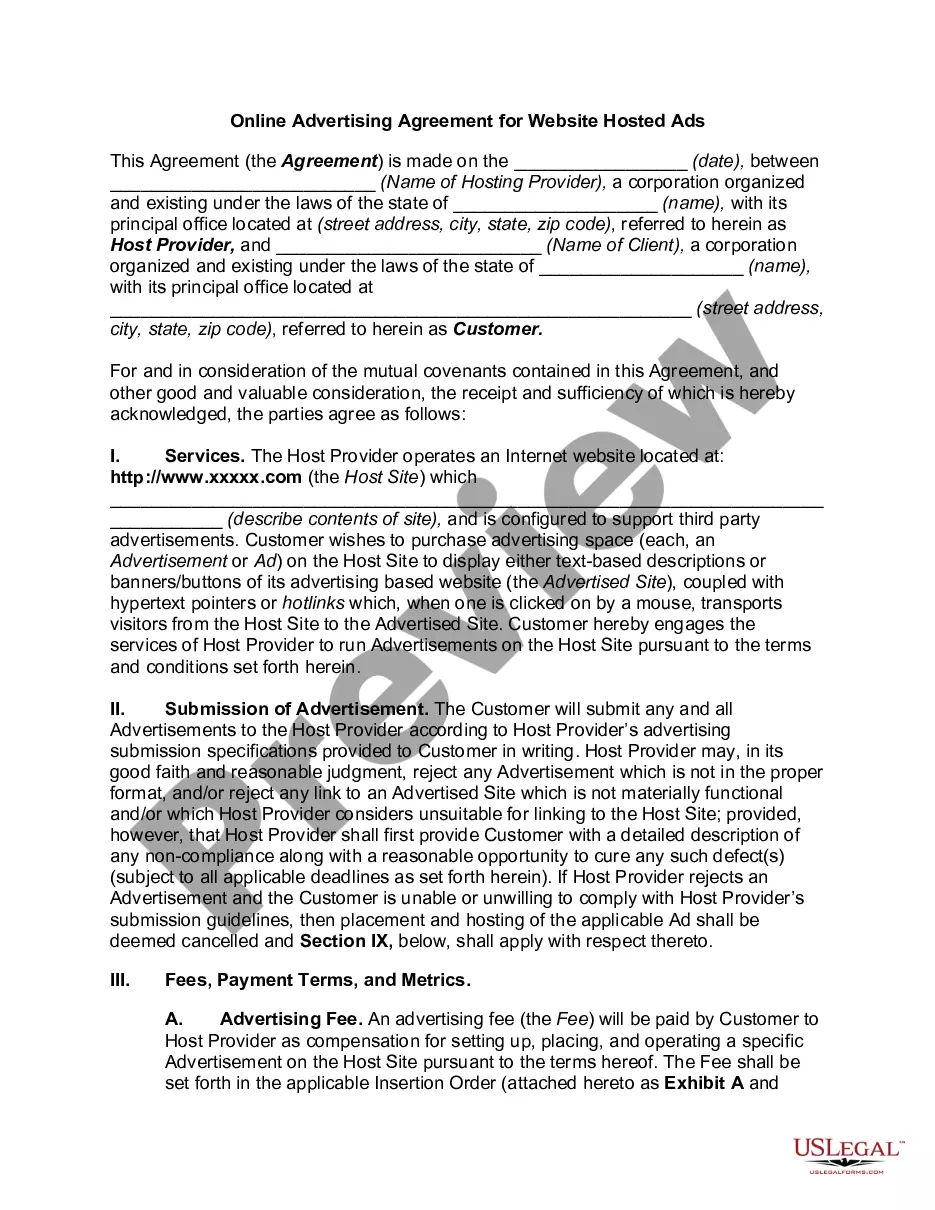
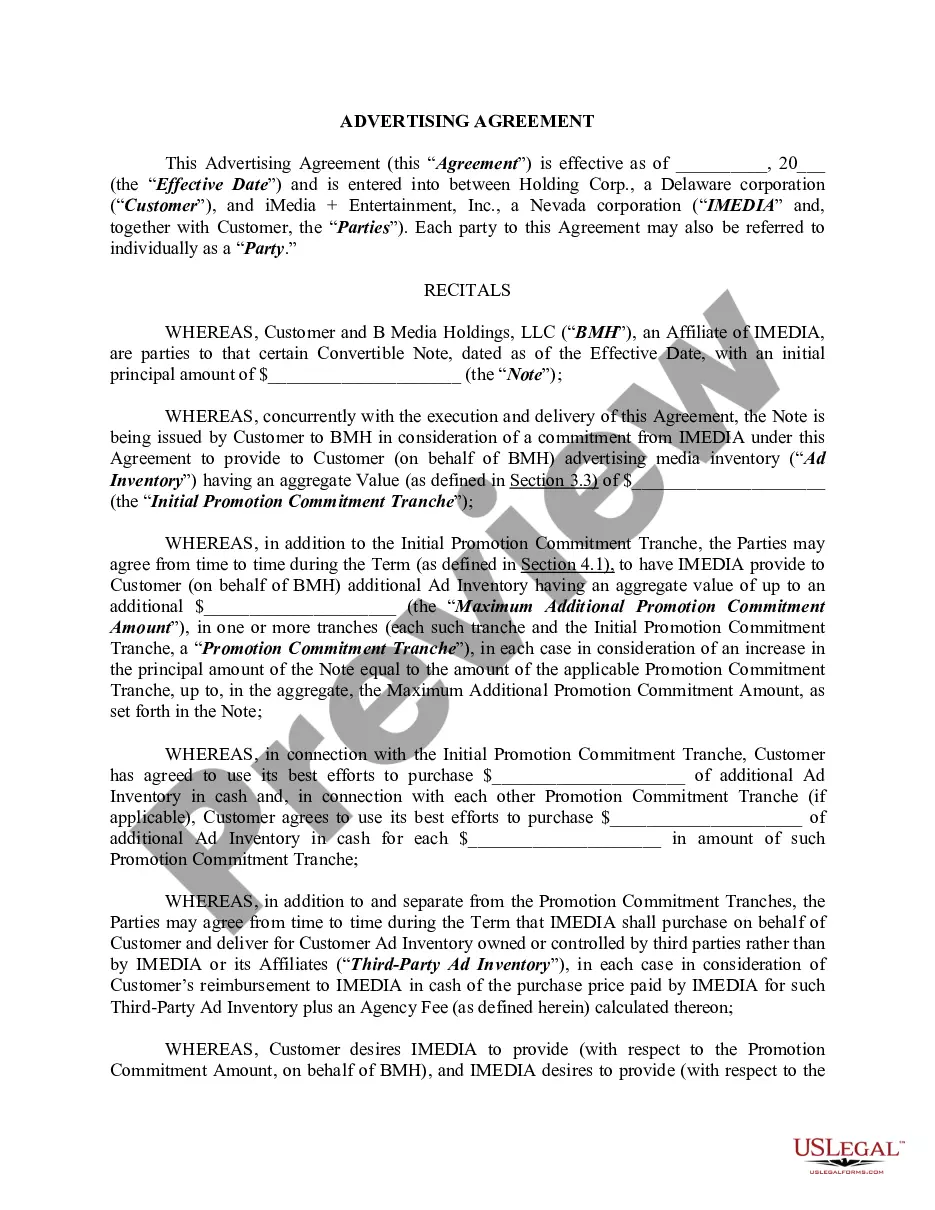
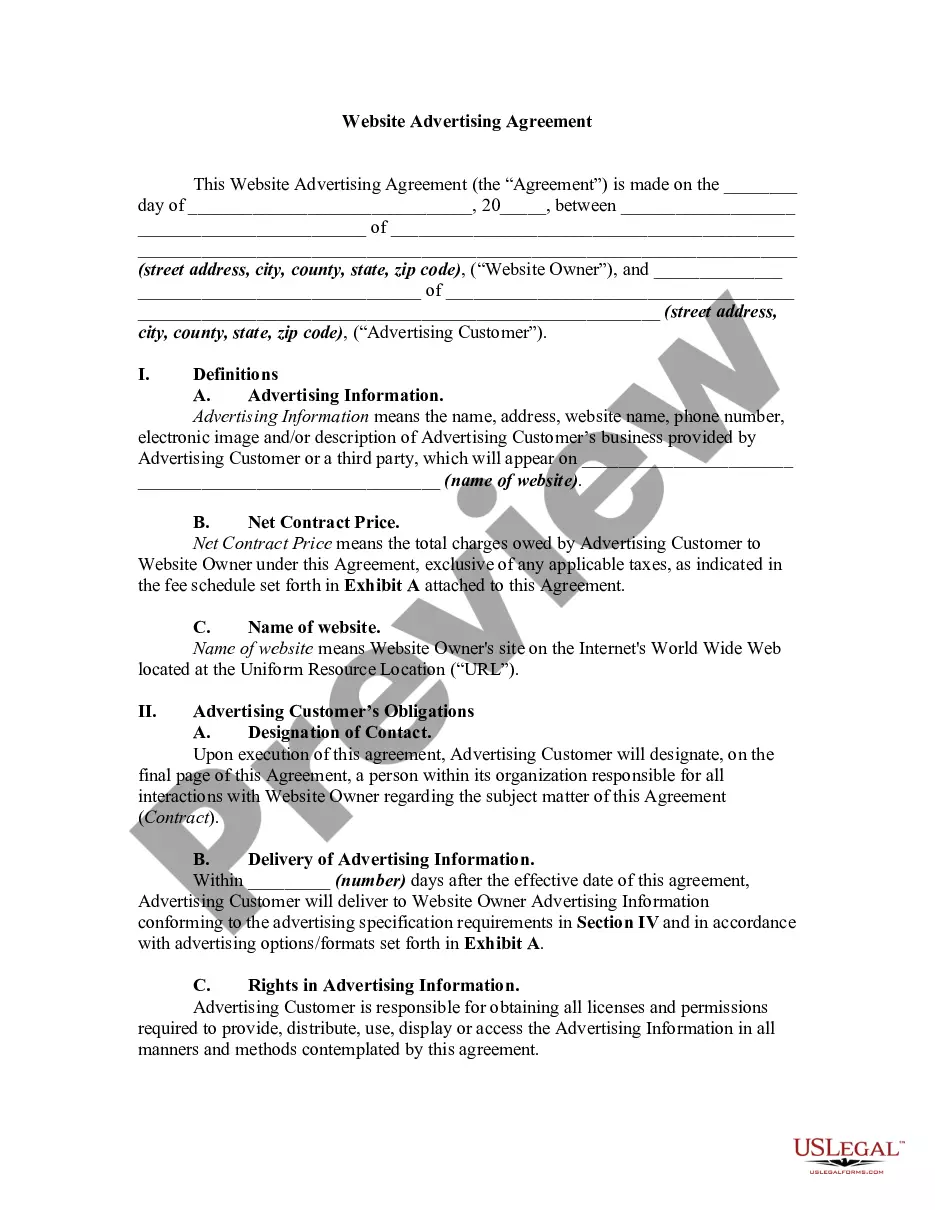
The Online Advertising Agreement is a legal document that outlines the terms and conditions under which one party (the Owner) allows another party (the Client) to advertise their services or products on a specified website. This agreement differs from other advertising forms by focusing specifically on online platforms, ensuring both parties understand their rights and responsibilities related to the advertisement placement, content standards, and payment obligations.
Key parts of this document
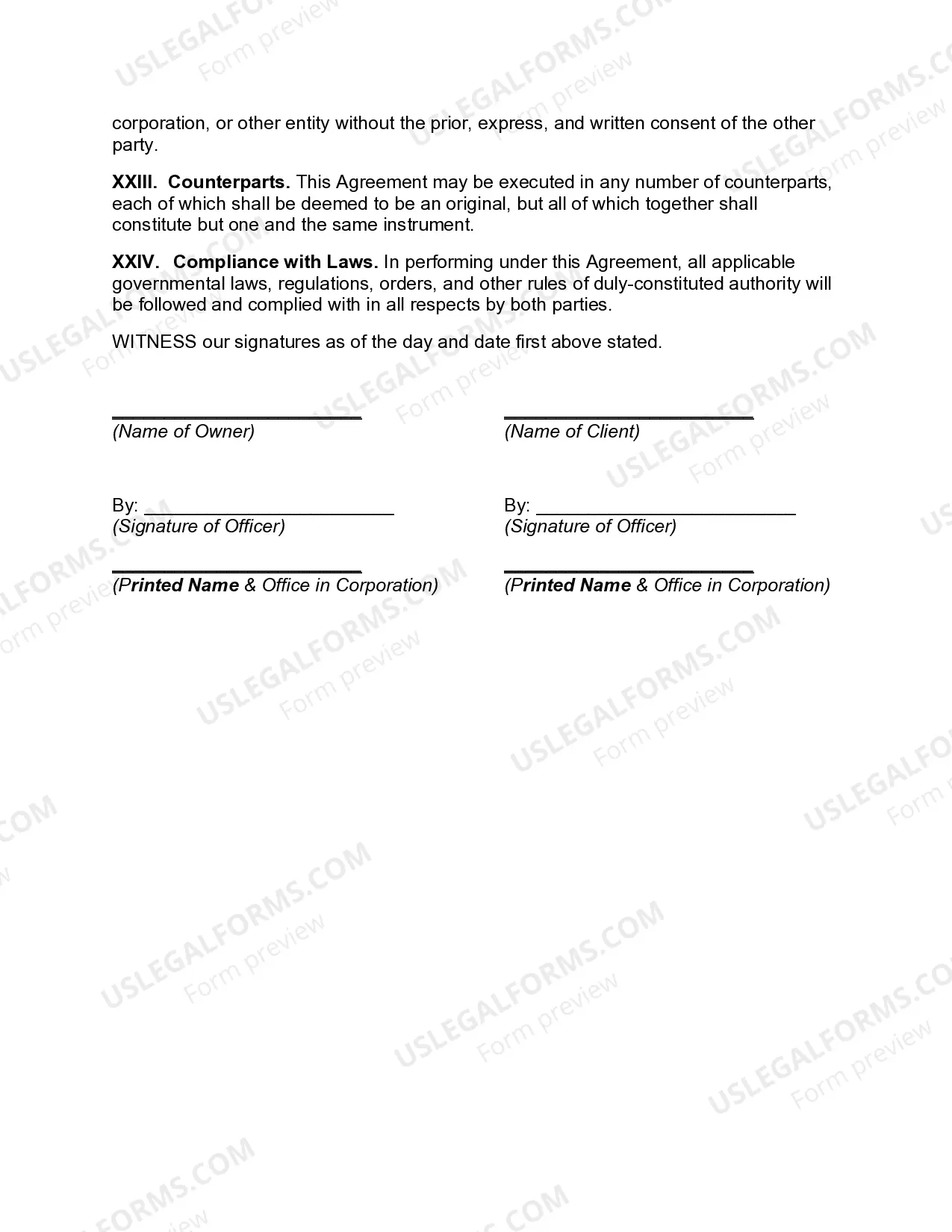
- Parties involved: Identifies the Owner and the Client entering into the agreement.
- Advertisement display and services: Details the duration and conditions for displaying the advertisement.
- Payment obligations: Specifies the fees, payment schedule, and consequences of late payments.
- Content responsibilities: Clarifies who is responsible for the advertisement's content and format.
- Termination clauses: Outlines conditions under which either party can terminate the agreement.
- Indemnification: Provides details on each party's responsibility to defend against claims or losses.
When to use this form
This form is essential when a business owner or website operator agrees to allow another business to advertise products or services on their website. It is commonly used by digital marketers, blog owners, or businesses looking to monetize their online space through sponsored advertisements. This agreement helps establish clear expectations, protect both parties, and ensure a smooth advertising process.
Who this form is for
- Website owners looking to earn revenue through online advertisements.
- Companies seeking to promote their products or services through online marketing channels.
- Digital marketers managing advertising campaigns for clients.
- Organizations wanting to formalize their advertising agreements with other businesses.
Steps to complete this form
- Identify the parties: Fill in the names of the Owner and Client along with their respective addresses.
- Specify the advertisement: Describe the advertisement type to be displayed on the website.
- Set the duration: Enter the start and end dates for the advertisement display period.
- Outline payment details: Indicate the payment amount and terms.
- Review content responsibilities: Ensure both parties understand their obligations regarding advertisement content.
Notarization guidance
This form does not typically require notarization unless specified by local law. It is advisable for both parties to sign the agreement to formalize their understanding of the terms.
Get your form ready online
Our built-in tools help you complete, sign, share, and store your documents in one place.
Make edits, fill in missing information, and update formatting in US Legal Forms—just like you would in MS Word.
Download a copy, print it, send it by email, or mail it via USPS—whatever works best for your next step.
Sign and collect signatures with our SignNow integration. Send to multiple recipients, set reminders, and more. Go Premium to unlock E-Sign.
If this form requires notarization, complete it online through a secure video call—no need to meet a notary in person or wait for an appointment.
We protect your documents and personal data by following strict security and privacy standards.

Make edits, fill in missing information, and update formatting in US Legal Forms—just like you would in MS Word.

Download a copy, print it, send it by email, or mail it via USPS—whatever works best for your next step.

Sign and collect signatures with our SignNow integration. Send to multiple recipients, set reminders, and more. Go Premium to unlock E-Sign.

If this form requires notarization, complete it online through a secure video call—no need to meet a notary in person or wait for an appointment.

We protect your documents and personal data by following strict security and privacy standards.
Mistakes to watch out for
- Failing to clearly define the advertisement content and format.
- Not specifying payment terms or consequences for late payments.
- Leaving out termination conditions, which can lead to disputes.
- Neglecting to review local advertising regulations before initiating the agreement.
Benefits of completing this form online
- Convenience: Easily fill out and download the form from any location.
- Editability: Customize the agreement to suit specific advertising needs without legal terminology barriers.
- Reliability: Access to a professionally drafted form ensures legal compliance and reduces the risk of future disputes.
Legal use & context
- The agreement helps ensure both parties are legally protected during the advertising arrangement.
- It provides a clear framework that can be enforced in case of disagreements.
- All advertising content must comply with applicable regulations to avoid legal disputes.
Quick recap
- The Online Advertising Agreement is crucial for formalizing advertising arrangements between a website owner and a client.
- Clear terms about payment, content responsibilities, and termination rights protect both parties.
- This form can be easily customized and completed online for user convenience, saving time and legal costs.
Looking for another form?

Form popularity
FAQ
Advertisements Are Not Offers Generally, courts do not consider advertisements offers. Instead, they are an invitation to begin negotiations.
Advertising is not a legally binding contract with your customers, and so they can't sue you in civil court. You can, however, still bring the wrath of the U.S. Federal Trade Commission (FTC) down on your head if you fib, even a little, in advertising.
A contract -- no matter how informal -- is legally binding, which means you can't just walk away from it because you no longer agree to its terms. When your business agrees to work with a marketing firm, the contract provides security to both you and the other company.
Can an Advertisement Be a Contract? Making an offer is the first step of forming a contract. While offers can come in many forms, an advertisement is usually not considered an offer to enter into a contract. Announcements, brochures, and catalogs also do not reach the level of an offer.
A digital marketing contract is a legally binding agreement between you, the marketer, and your client. It outlines the responsibilities of both parties while protecting the rights of each person. It is a finalized legal agreement between the client and a freelancer.
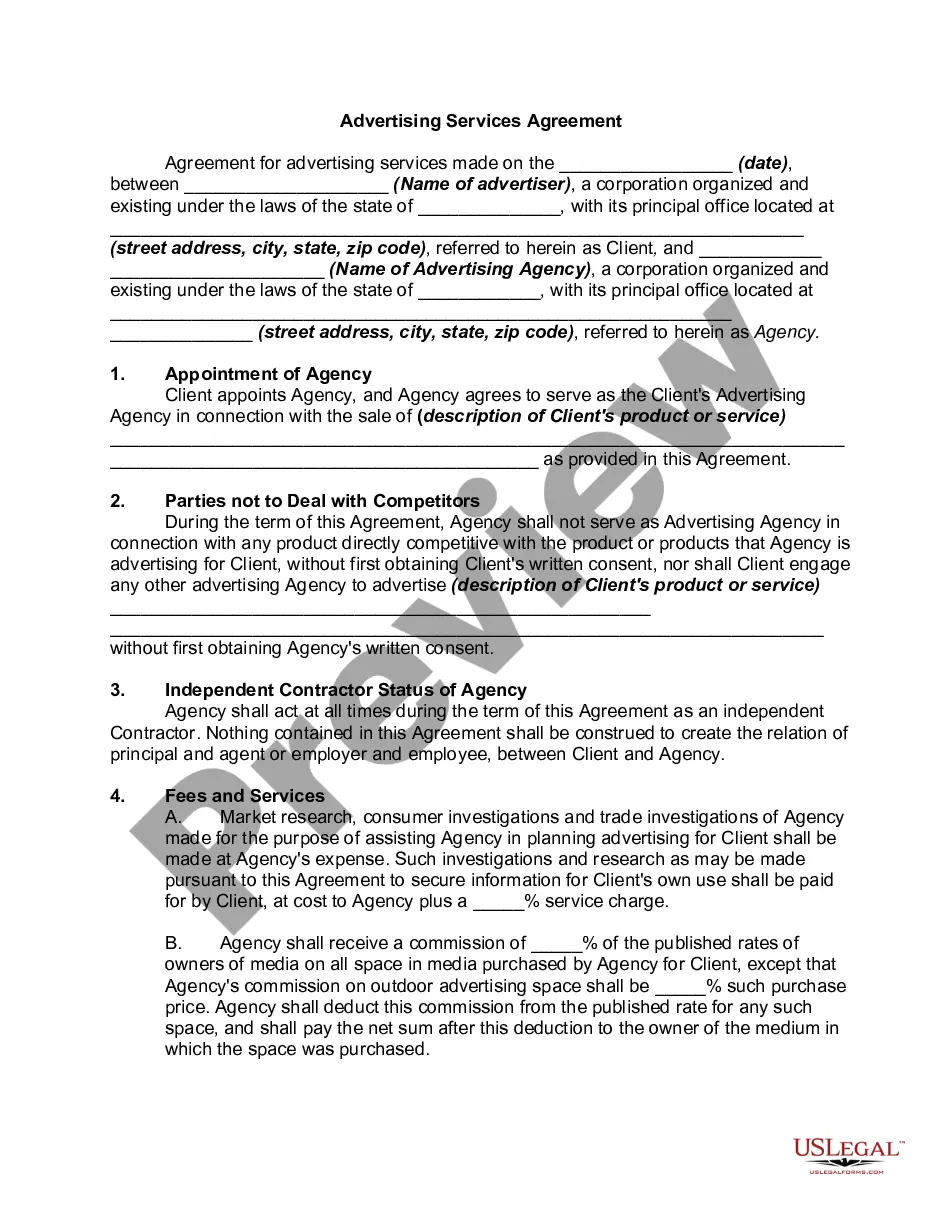
An advertising agreement is a legal contract executed between a company hosting the advertising and a company providing the advertising. For example, there would be an advertising agreement between the owner of a billboard and an entity wanting to place an ad on the billboard.
A basic advertising contract should include the following: name of publication, station, website or advertising vehicle; your business name; price for the ad or ad schedule; date, issues or shows in which the ad is to run; placement in a print publication or time the ad is to run; payment due date; number of insertions