Advertisement Agreement
Overview of this form
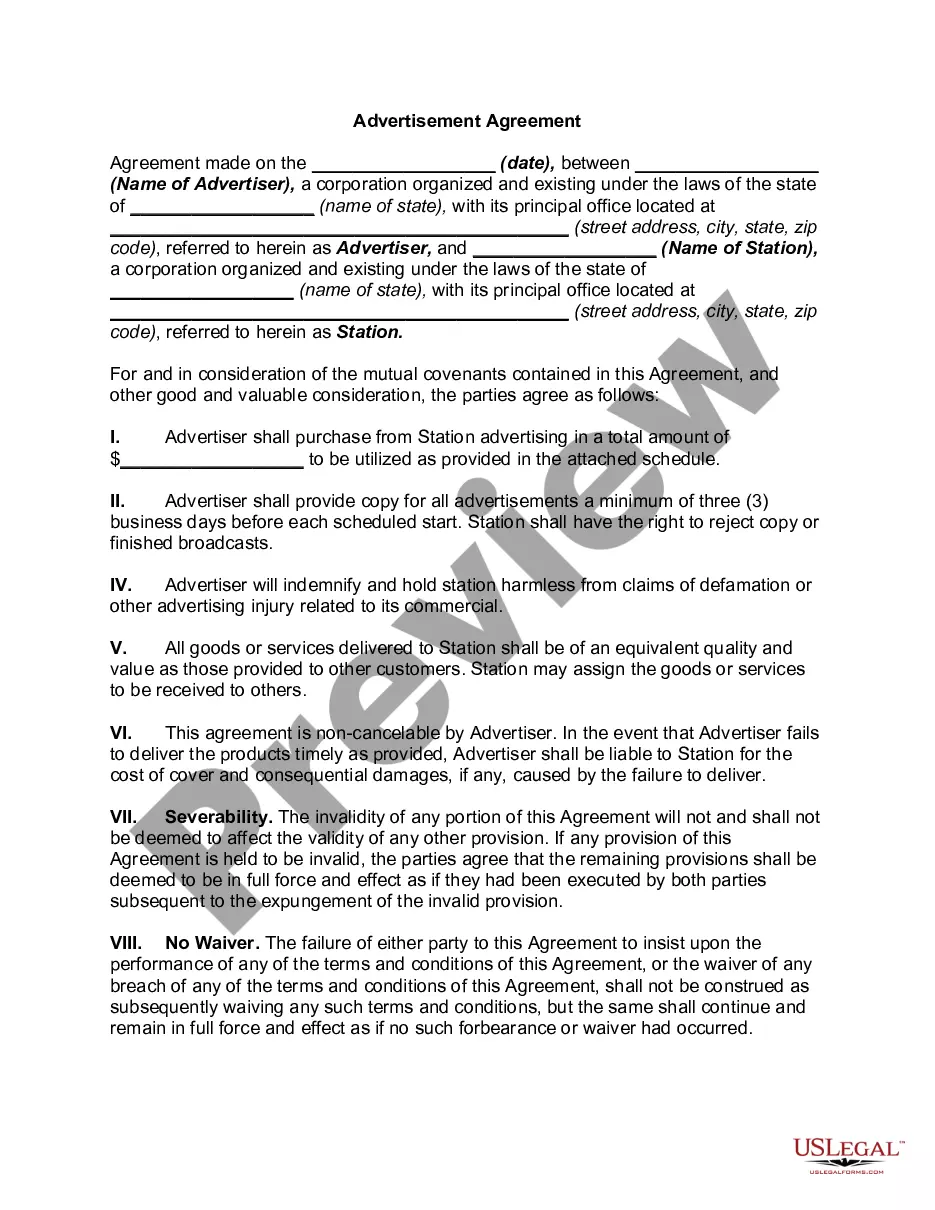
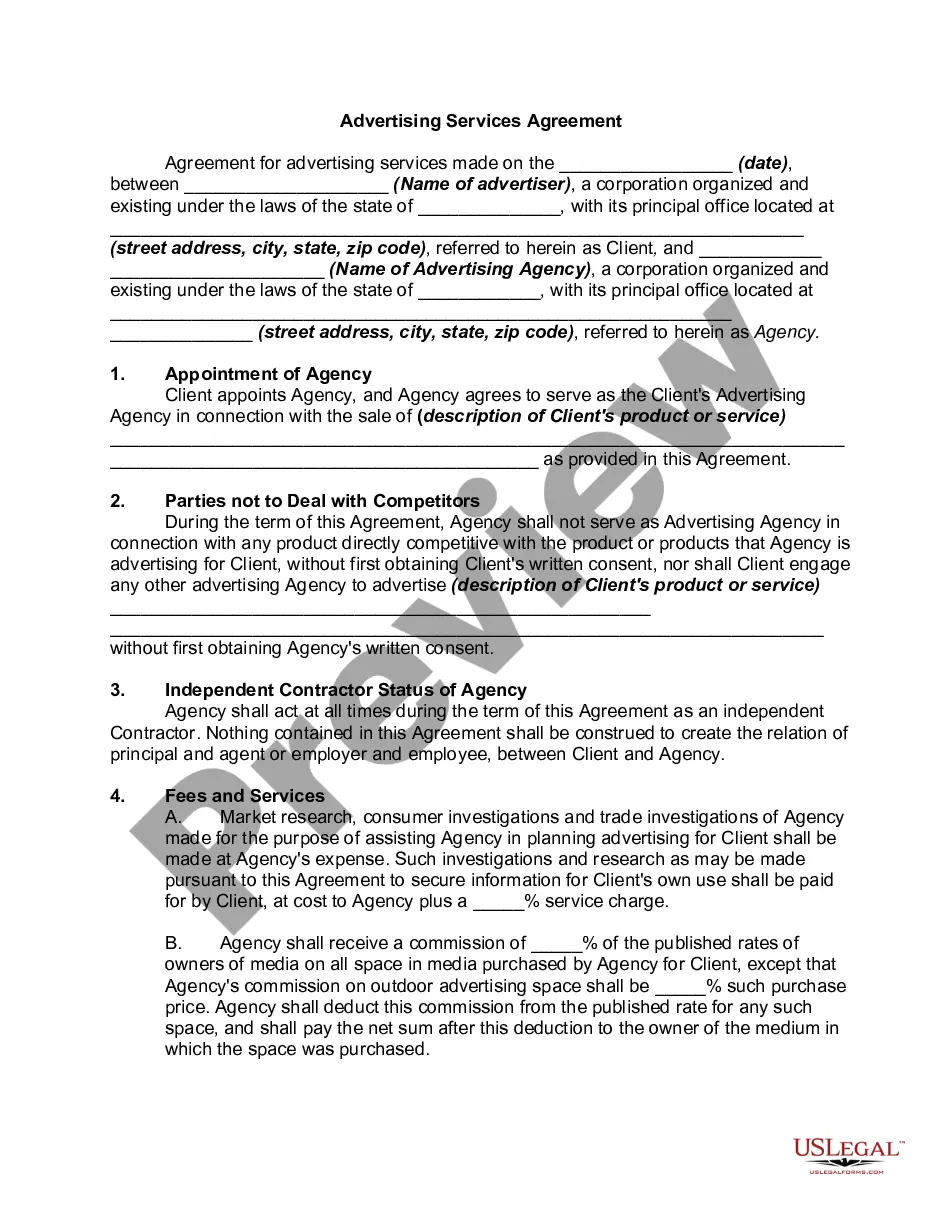
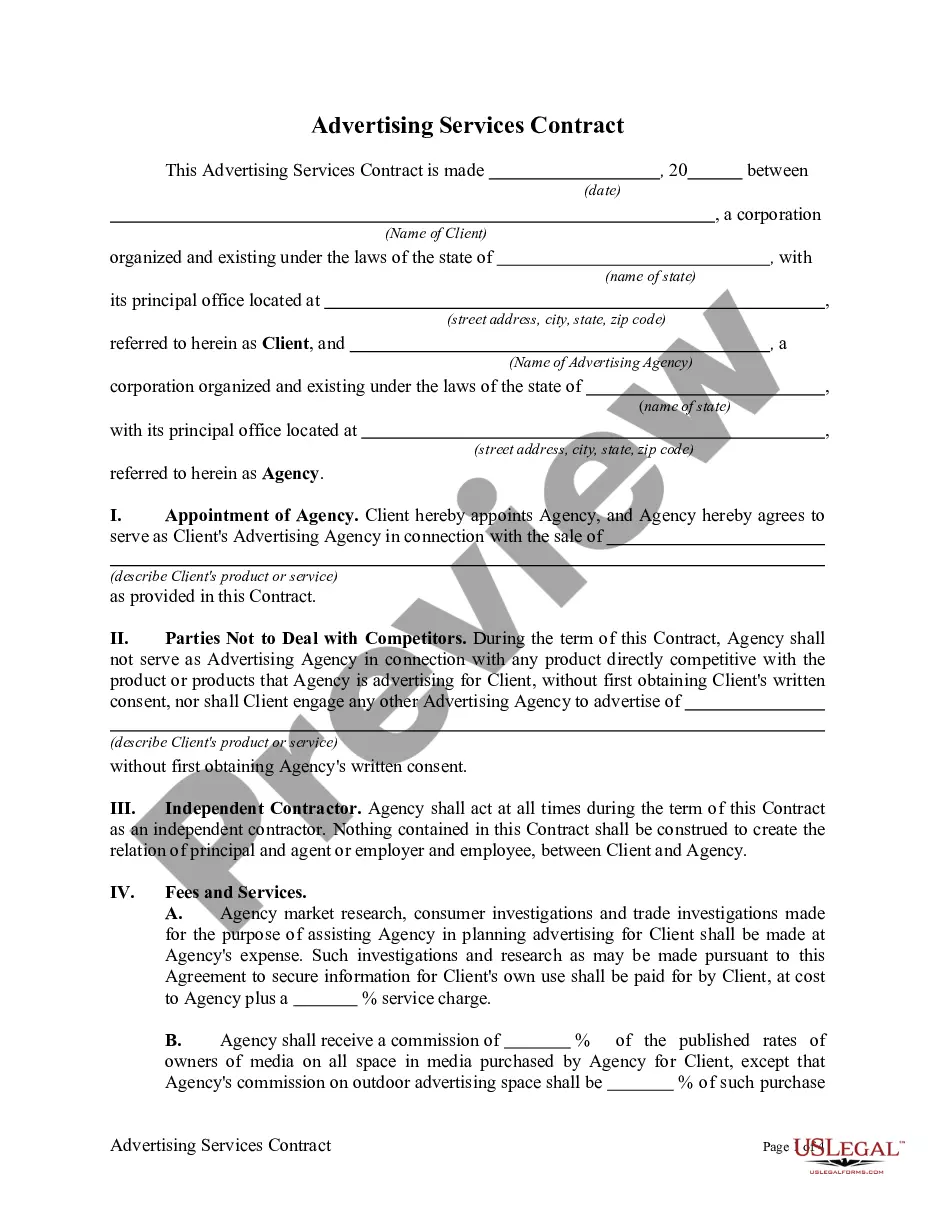
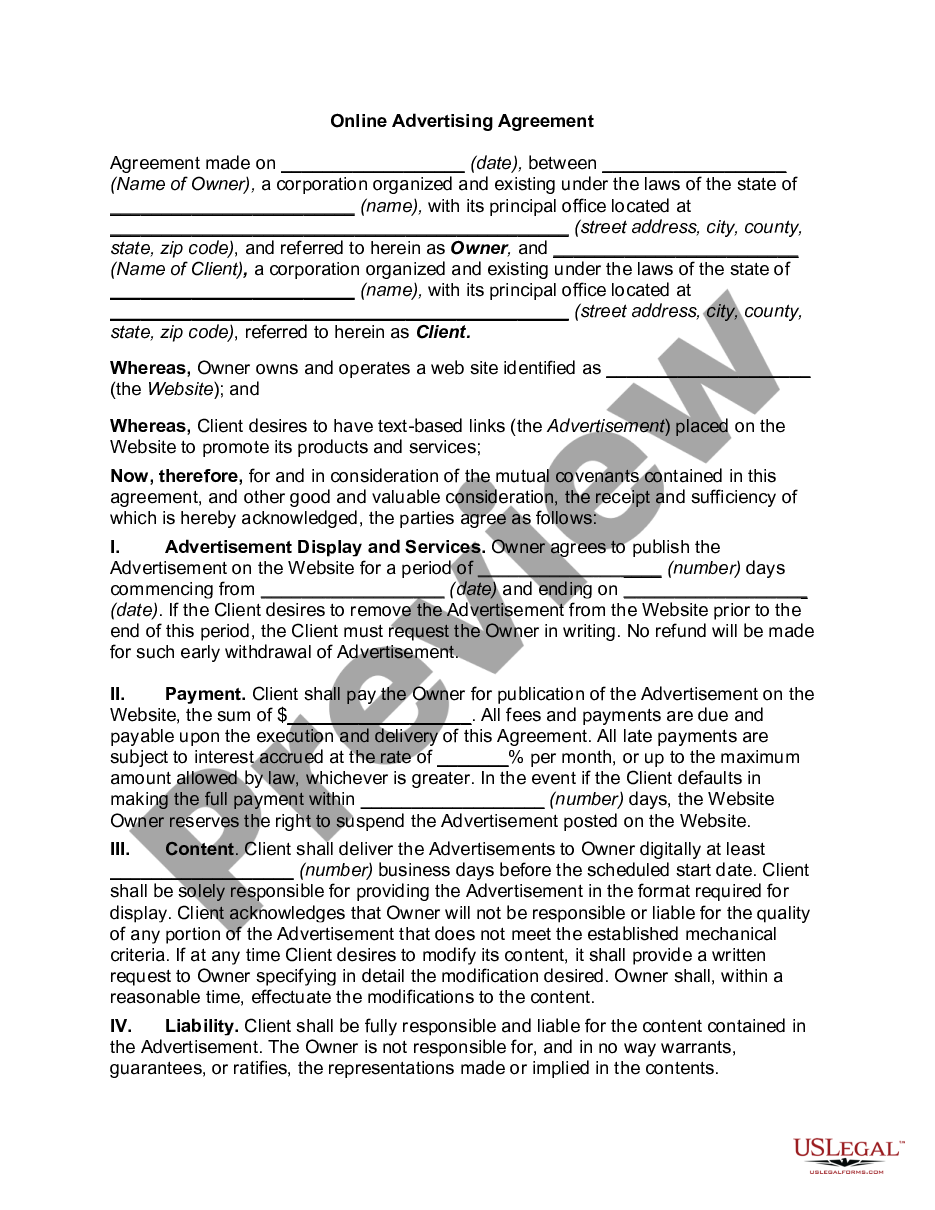
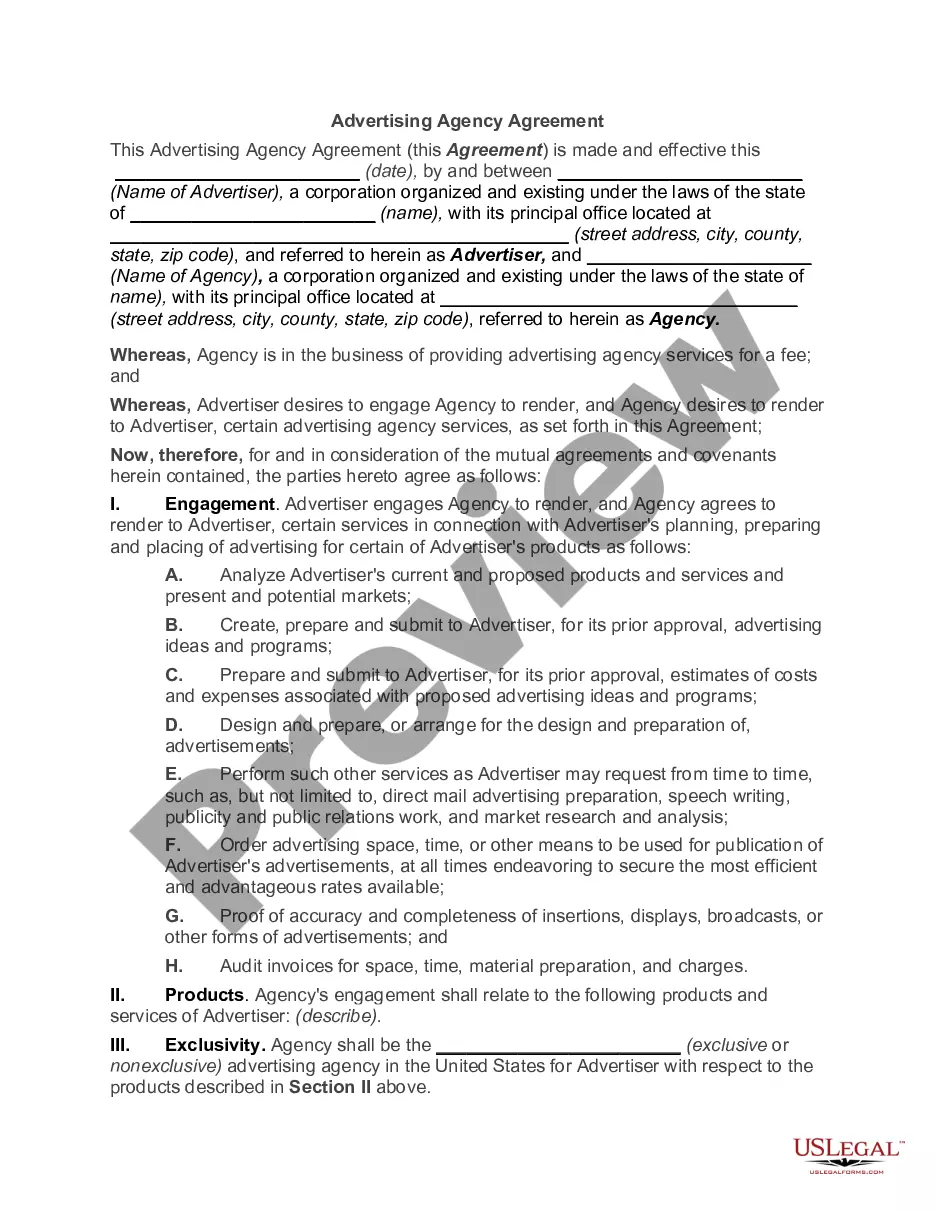
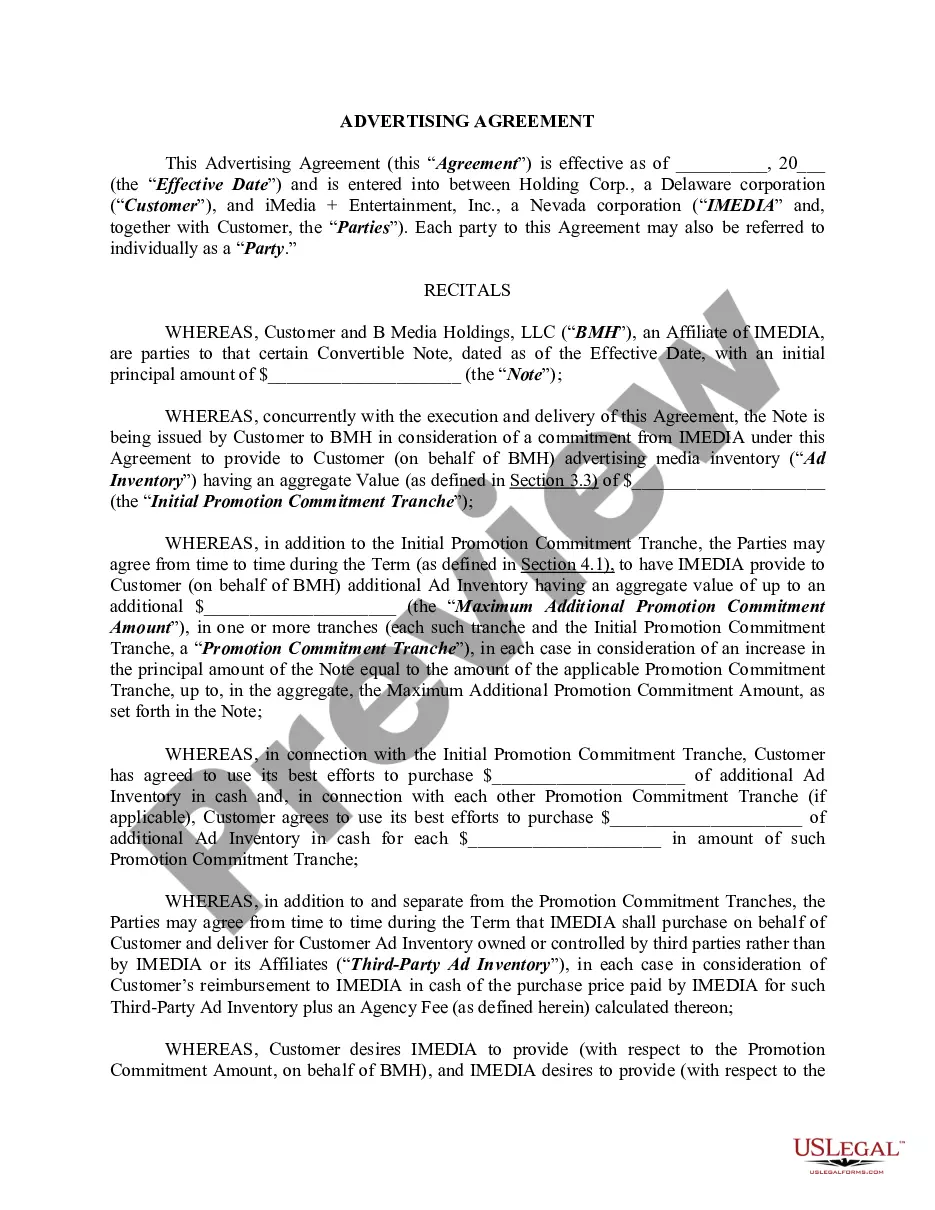
An Advertisement Agreement is a legal document that formalizes the relationship between an advertiser and a supplier of advertising time or space, such as a media representative or communications medium. This agreement details the content, cost, and placement of advertising, ensuring both parties understand their roles and obligations. Unlike other advertising contracts, this document may also involve advertising agencies representing clients, providing clear terms for advertising services used.
Key components of this form
- Date of agreement
- Name and address of the Advertiser
- Name and address of the Station or supplier
- Total amount of advertising purchased
- Copy submission requirements and timelines
- Indemnification clauses related to advertising content
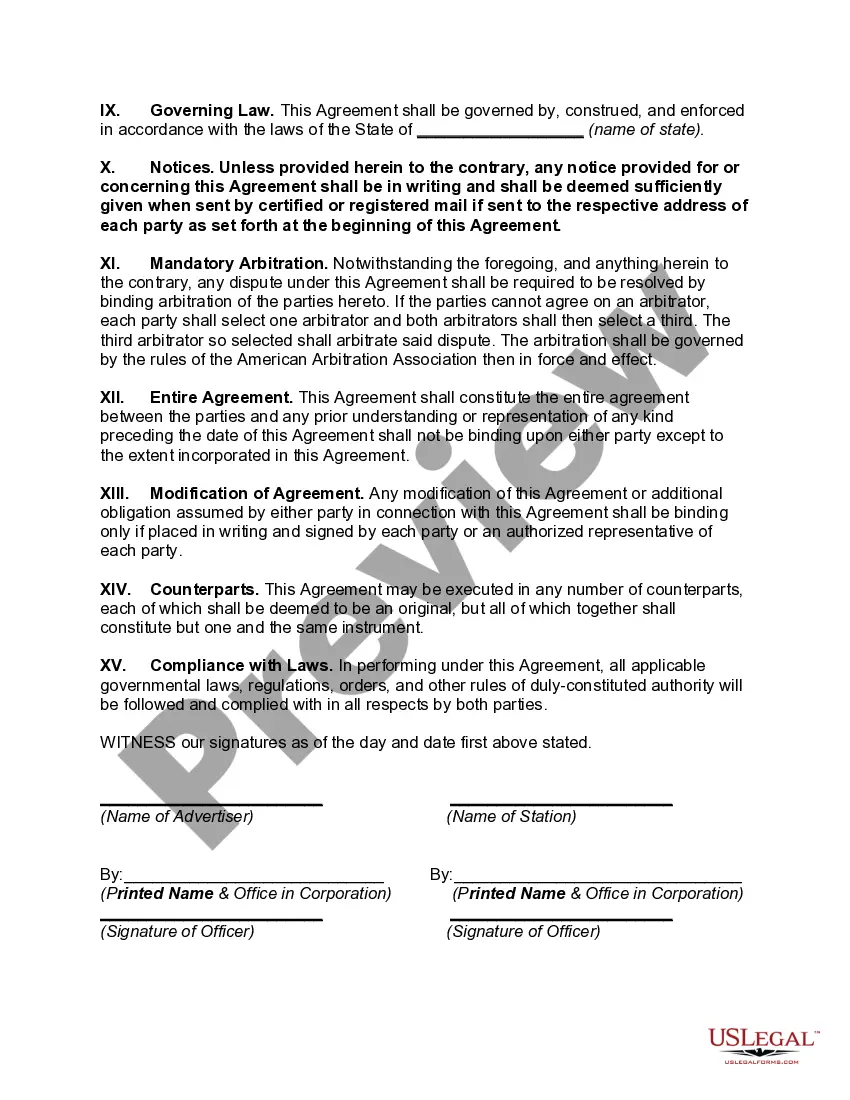
- Governing law for the agreement
- Mandatory arbitration for dispute resolution
- Provisions on agreement modifications and severability
When this form is needed
This form should be used when an advertiser intends to purchase advertising time or space from a media outlet. It is essential when establishing clear expectations about the deliverables, timelines, and responsibilities of both parties involved. This agreement is valuable in situations such as planning a new ad campaign, negotiating terms with media suppliers, or when advertising agencies manage client promotions.
Intended users of this form
- Advertisers looking to promote their products or services through media outlets
- Advertising agencies representing clients in negotiations with media suppliers
- Media suppliers providing advertising space or time
- Businesses of all sizes planning to enter into advertising agreements
How to prepare this document
- Identify the date of the agreement.
- Fill in the full names and addresses of both the Advertiser and Station.
- Specify the total amount of advertising being purchased and include delivery details.
- Outline the timeline for copy submission and any requirements for approval.
- Ensure both parties sign and date the agreement to validate it.
Is notarization required?
This form usually doesn’t need to be notarized. However, local laws or specific transactions may require it. Our online notarization service, powered by Notarize, lets you complete it remotely through a secure video session, available 24/7.
Get your form ready online
Our built-in tools help you complete, sign, share, and store your documents in one place.
Make edits, fill in missing information, and update formatting in US Legal Forms—just like you would in MS Word.
Download a copy, print it, send it by email, or mail it via USPS—whatever works best for your next step.
Sign and collect signatures with our SignNow integration. Send to multiple recipients, set reminders, and more. Go Premium to unlock E-Sign.
If this form requires notarization, complete it online through a secure video call—no need to meet a notary in person or wait for an appointment.
We protect your documents and personal data by following strict security and privacy standards.

Make edits, fill in missing information, and update formatting in US Legal Forms—just like you would in MS Word.

Download a copy, print it, send it by email, or mail it via USPS—whatever works best for your next step.

Sign and collect signatures with our SignNow integration. Send to multiple recipients, set reminders, and more. Go Premium to unlock E-Sign.

If this form requires notarization, complete it online through a secure video call—no need to meet a notary in person or wait for an appointment.

We protect your documents and personal data by following strict security and privacy standards.
Mistakes to watch out for
- Failing to clearly outline the total advertising cost.
- Not specifying deadlines for advertisement copy submission.
- Leaving out indemnification clauses, leading to liability issues.
- Using vague language that can create misunderstandings.
Why use this form online
- Convenience of completing and modifying the form from anywhere.
- Access to templates drafted by licensed attorneys for legal assurance.
- Immediate downloads save time compared to traditional methods.
- Clear guidelines simplify the process for individuals with limited legal knowledge.
Looking for another form?
Form popularity
FAQ
A basic advertising contract should include the following: name of publication, station, website or advertising vehicle; your business name; price for the ad or ad schedule; date, issues or shows in which the ad is to run; placement in a print publication or time the ad is to run; payment due date; number of insertions
A contract -- no matter how informal -- is legally binding, which means you can't just walk away from it because you no longer agree to its terms. When your business agrees to work with a marketing firm, the contract provides security to both you and the other company.
Can an Advertisement Be a Contract? Making an offer is the first step of forming a contract. While offers can come in many forms, an advertisement is usually not considered an offer to enter into a contract. Announcements, brochures, and catalogs also do not reach the level of an offer.
Advertisements Are Not Offers Generally, courts do not consider advertisements offers. Instead, they are an invitation to begin negotiations.
An advertising agreement is a legal contract executed between a company hosting the advertising and a company providing the advertising. For example, there would be an advertising agreement between the owner of a billboard and an entity wanting to place an ad on the billboard.
Advertisements Are Not Offers Generally, courts do not consider advertisements offers. Instead, they are an invitation to begin negotiations.
This Advertising Agreement (the ?Agreement?) sets out the terms and conditions upon which COMPANY NAME (the ?Company?), being a Company duly registered under the laws of STATE with registered number REGISTERED NUMBER and having its registered address at REGISTERED ADDRESS, engages ADVERTISER NAME (the ?
Advertising is not a legally binding contract with your customers, and so they can't sue you in civil court. You can, however, still bring the wrath of the U.S. Federal Trade Commission (FTC) down on your head if you fib, even a little, in advertising.