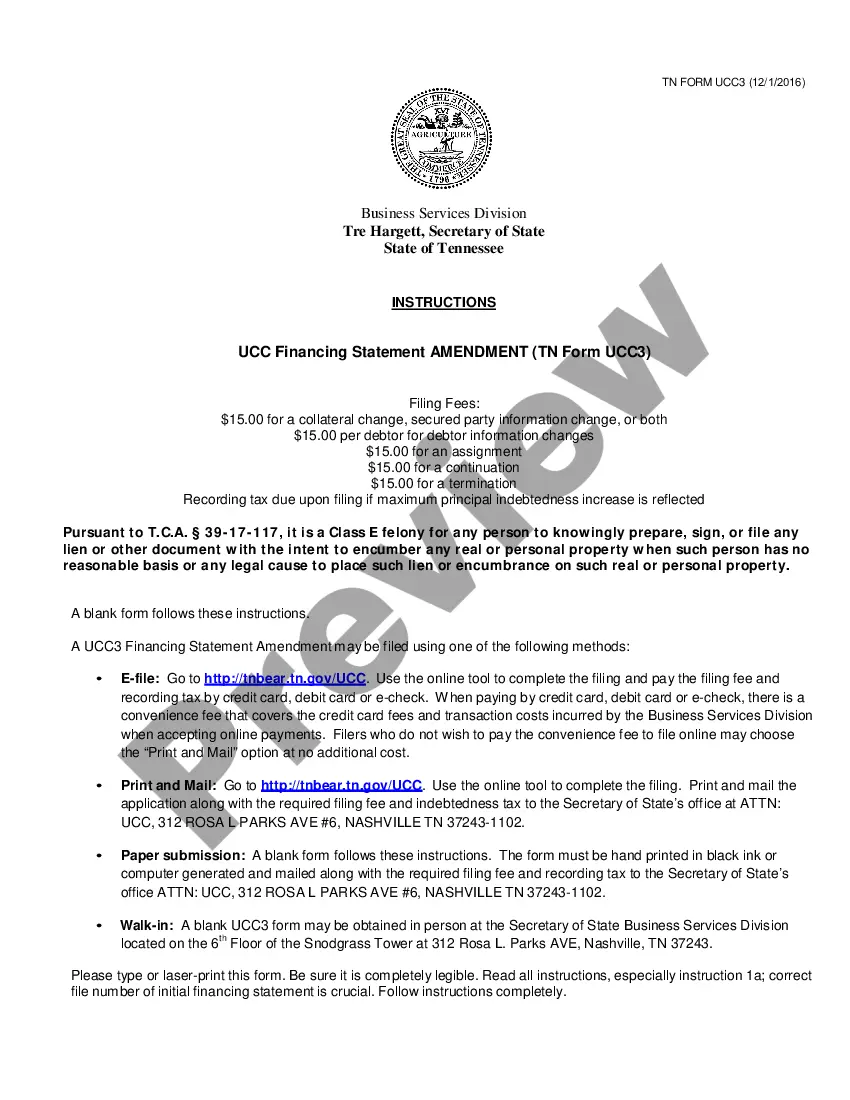
Wisconsin Acknowledgment for Corporation
About this form
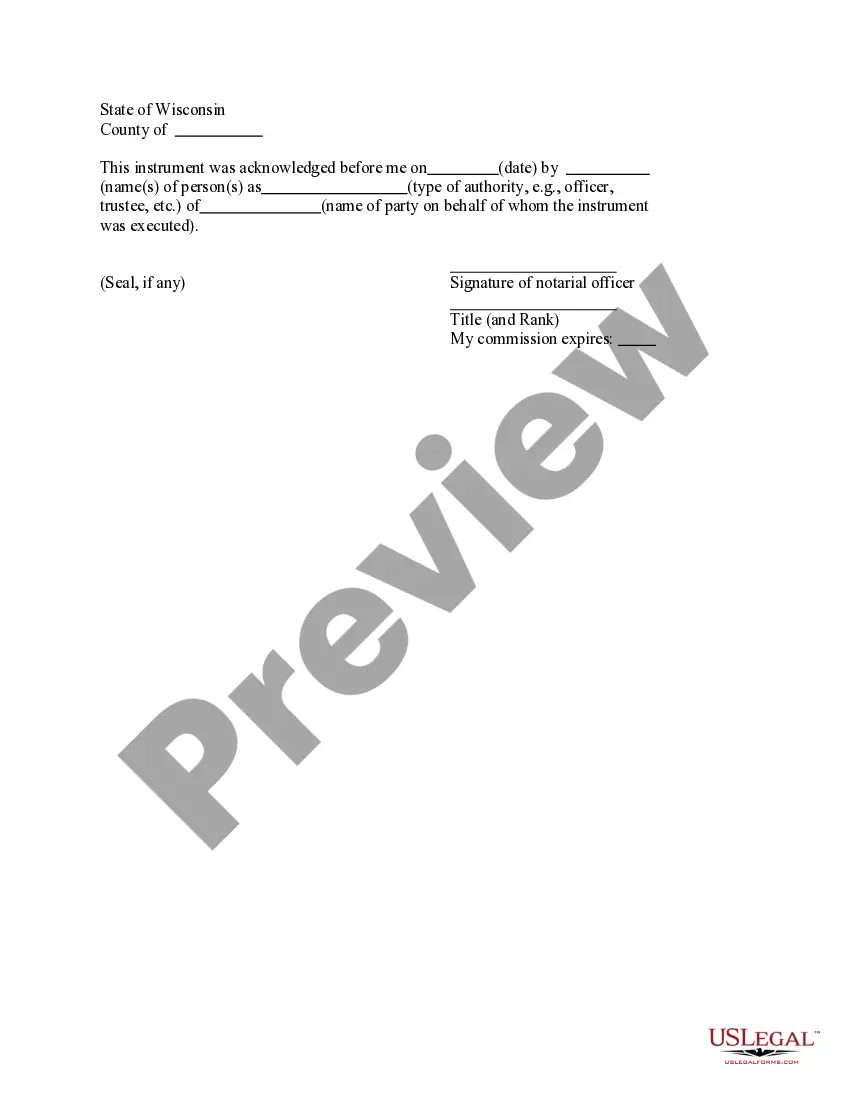
The Acknowledgment for Corporation is a legal document used to confirm the authenticity of signatures on corporate documents. This form is typically executed before a notary public and serves to verify that the person signing the document has the authority to do so on behalf of the corporation. Unlike similar forms, this acknowledgment focuses specifically on corporate contexts and includes fields for specifying the type of authority held by the signatory.
What’s included in this form
- Date of acknowledgment
- Name and title of the individual signing
- Type of authority (e.g., officer or trustee)
- Name of the corporate entity
- Signature of the notary public
- Notary seal (if applicable)

When this form is needed
This form is used when a corporation needs to formally acknowledge the authority of an individual signing a document on its behalf, such as contracts, agreements, or other legal documents. It is essential in situations where verification of the signer's identity and authority is required for legal enforceability.
Who can use this document
- Corporate officers acting on behalf of the corporation
- Trustees or authorized representatives of the corporation
- Notaries public witnessing the signing of corporate documents
How to prepare this document
- Identify the date of acknowledgment.
- Enter the name(s) of the person(s) signing the document.
- Specify the type of authority (e.g., officer, trustee).
- Include the name of the corporation on whose behalf the signing takes place.
- Have a notary public sign and seal the document if required.
Notarization requirements for this form
This form needs to be notarized to ensure legal validity. US Legal Forms provides secure online notarization powered by Notarize, allowing you to complete the process through a verified video call, available anytime.
Get your form ready online
Our built-in tools help you complete, sign, share, and store your documents in one place.
Make edits, fill in missing information, and update formatting in US Legal Forms—just like you would in MS Word.
Download a copy, print it, send it by email, or mail it via USPS—whatever works best for your next step.
Sign and collect signatures with our SignNow integration. Send to multiple recipients, set reminders, and more. Go Premium to unlock E-Sign.
If this form requires notarization, complete it online through a secure video call—no need to meet a notary in person or wait for an appointment.
We protect your documents and personal data by following strict security and privacy standards.

Make edits, fill in missing information, and update formatting in US Legal Forms—just like you would in MS Word.

Download a copy, print it, send it by email, or mail it via USPS—whatever works best for your next step.

Sign and collect signatures with our SignNow integration. Send to multiple recipients, set reminders, and more. Go Premium to unlock E-Sign.

If this form requires notarization, complete it online through a secure video call—no need to meet a notary in person or wait for an appointment.

We protect your documents and personal data by following strict security and privacy standards.
Common mistakes
- Failing to specify the type of authority held by the signatory.
- Not having the document notarized when required.
- Omitting the name of the corporation.
- Inputting an incorrect date of acknowledgment.
Benefits of completing this form online
- Convenient access to legal templates anytime.
- Easy customization to fit specific needs.
- Reliable forms drafted by licensed attorneys.
Key takeaways
- The Acknowledgment for Corporation is necessary for validating authority in corporate documents.
- This form requires notarization to ensure its legal standing.
- It is crucial to accurately fill out each section to avoid common pitfalls.
Looking for another form?
Form popularity
FAQ
The certificate of a notary public, justice of the peace, or other authorized officer, attached to a deed, mortgage, or other instrument, setting forth that the parties thereto personally appeared before him on such a date and acknowledged the instrument to be their free and voluntary act and deed. Read v.
Step 1: Require Personal Appearance. Step 2: Check Over The Document. Step 3: Carefully Identify The Signer. Step 4: Record Your Journal Entry. Step 5: Complete The Notarial Certificate. A Last Note: Never Give Advice.
Use an appropriate heading. You can write the letter in any format you choose but make certain to mention an appropriate heading. Insert a case caption. Add the address. Give details about the affiant. Include your name. Leave a space for the signature of the notary public.
In such cases, you should refuse to notarize, citing the blank space as a reason. Remember that you may only complete information in the notarial certificate wording. Any blanks in the main text must be completed by the signer or another individual authorized to do so before the notarization may proceed.
When you see (here insert the name and character of the officer) next to a blank as shown below, it means you should insert Your name, Notary Public in the blank.
For an acknowledgment, the signer must always: Be positively identified by the Notary. The Notary must always identify the signer for an acknowledgement; whether the signer personally knows the Notary, presents an ID document, or is identified by a credible witness depends on the circumstances.
When taking an acknowledgment, the notary must ask the signer in a verbal ceremony the following questions: (1) Are you acknowledging to me that this is your signature?; (2) Are you acknowledging to me that you signed this document for the purposes stated therein?; (3) Are you acknowledging to me that you signed this