Advertising Services Agreement
Understanding this form
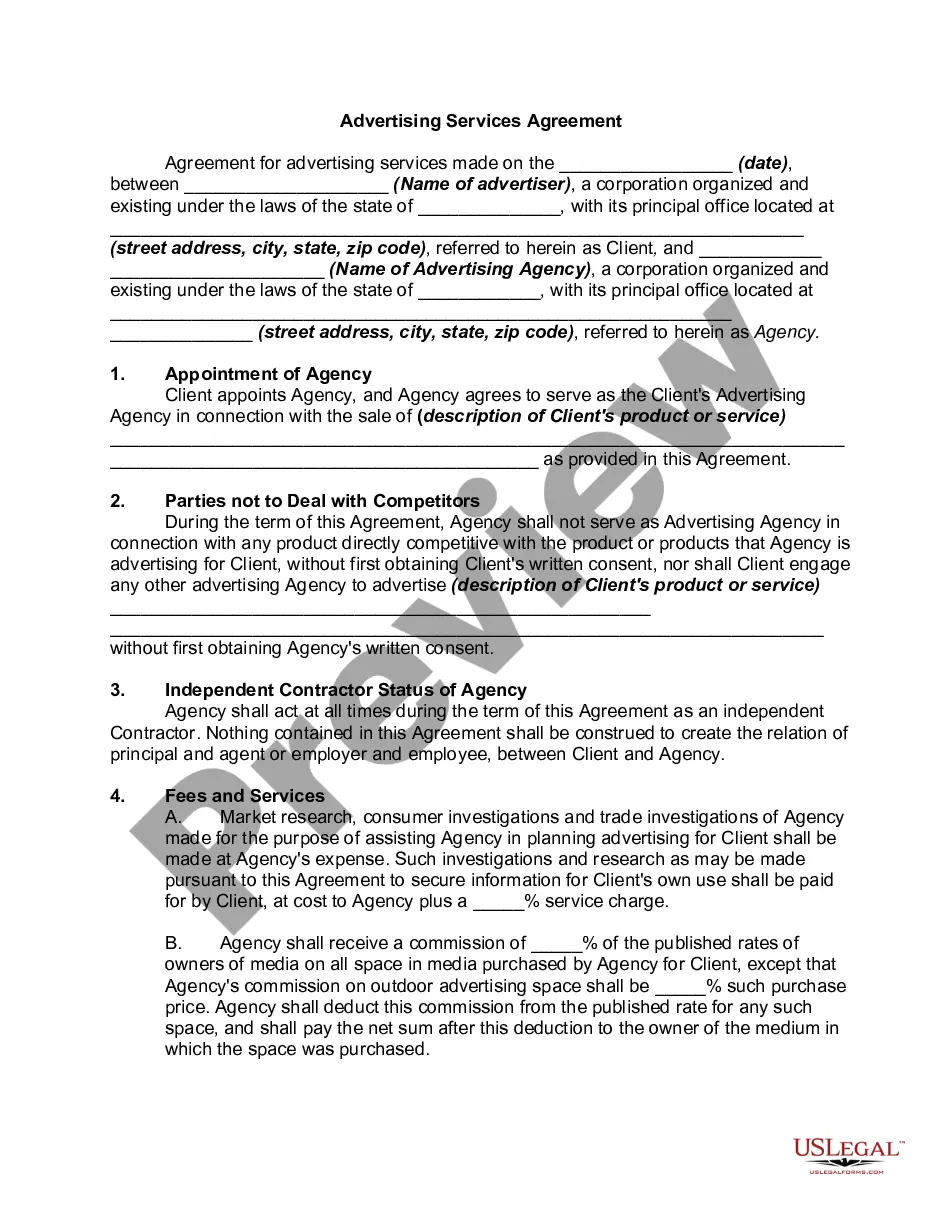
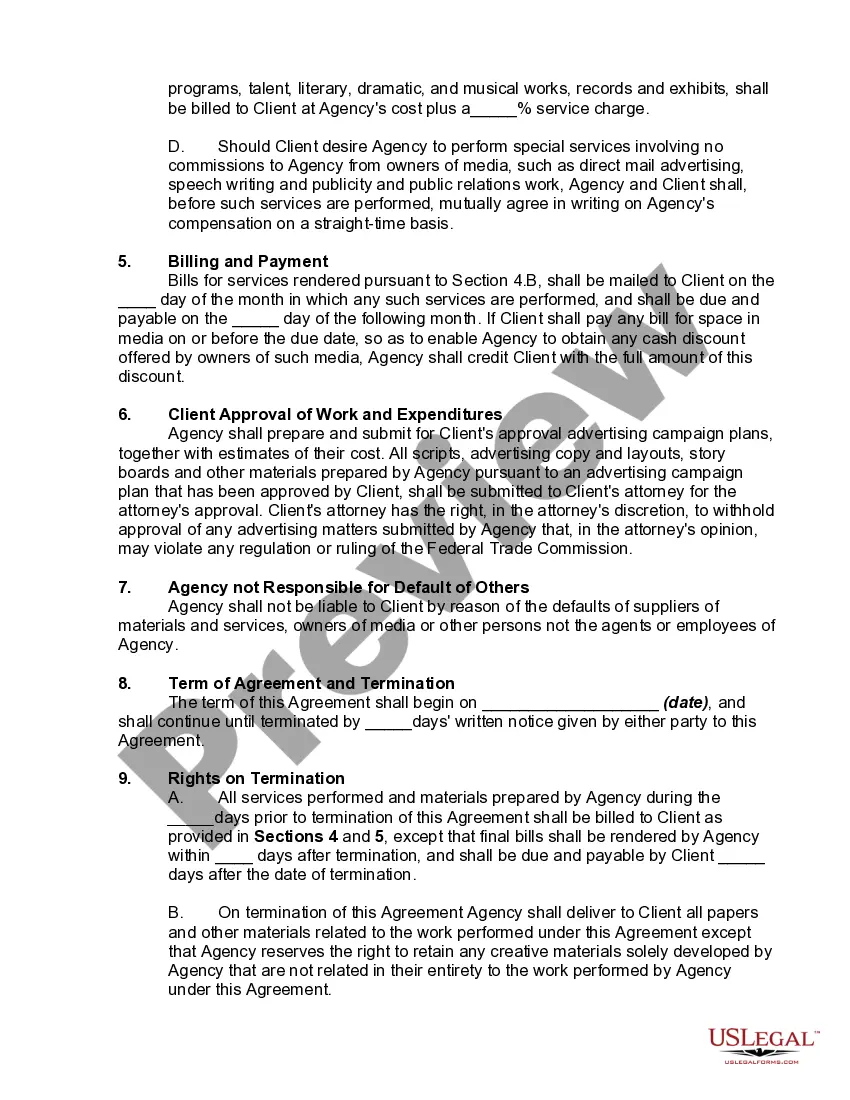
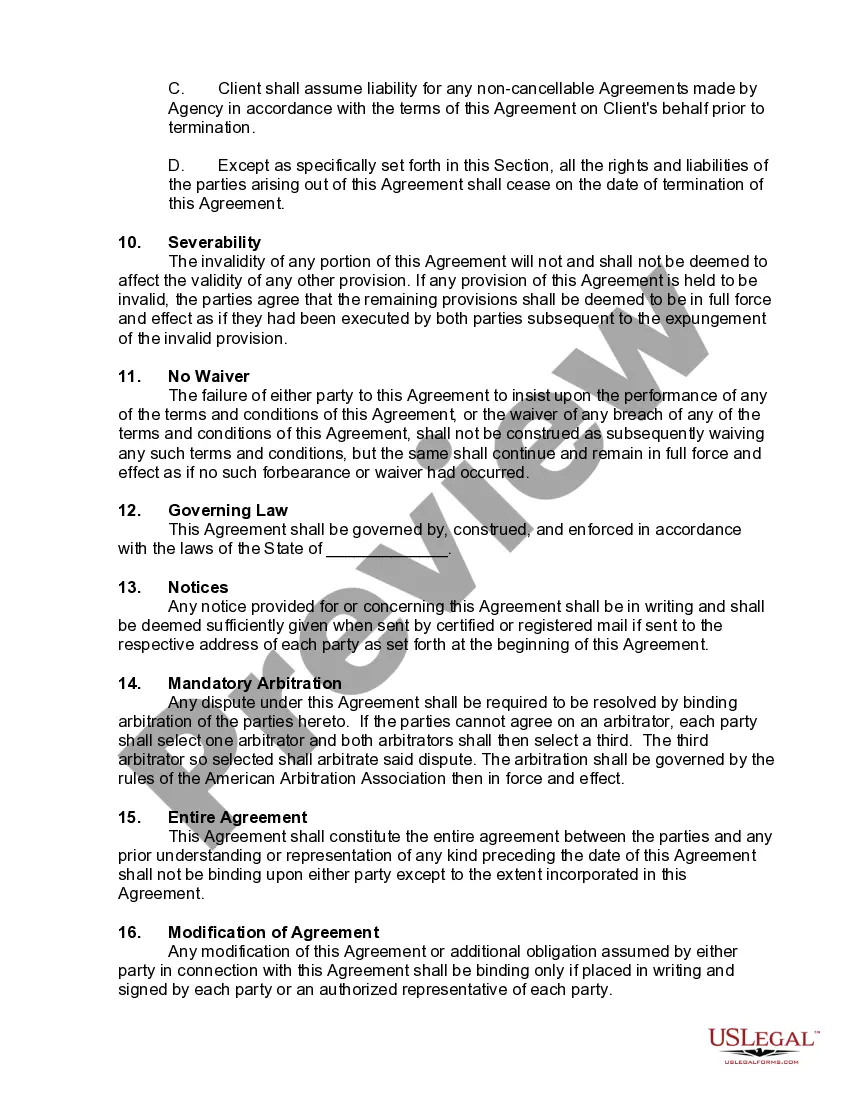
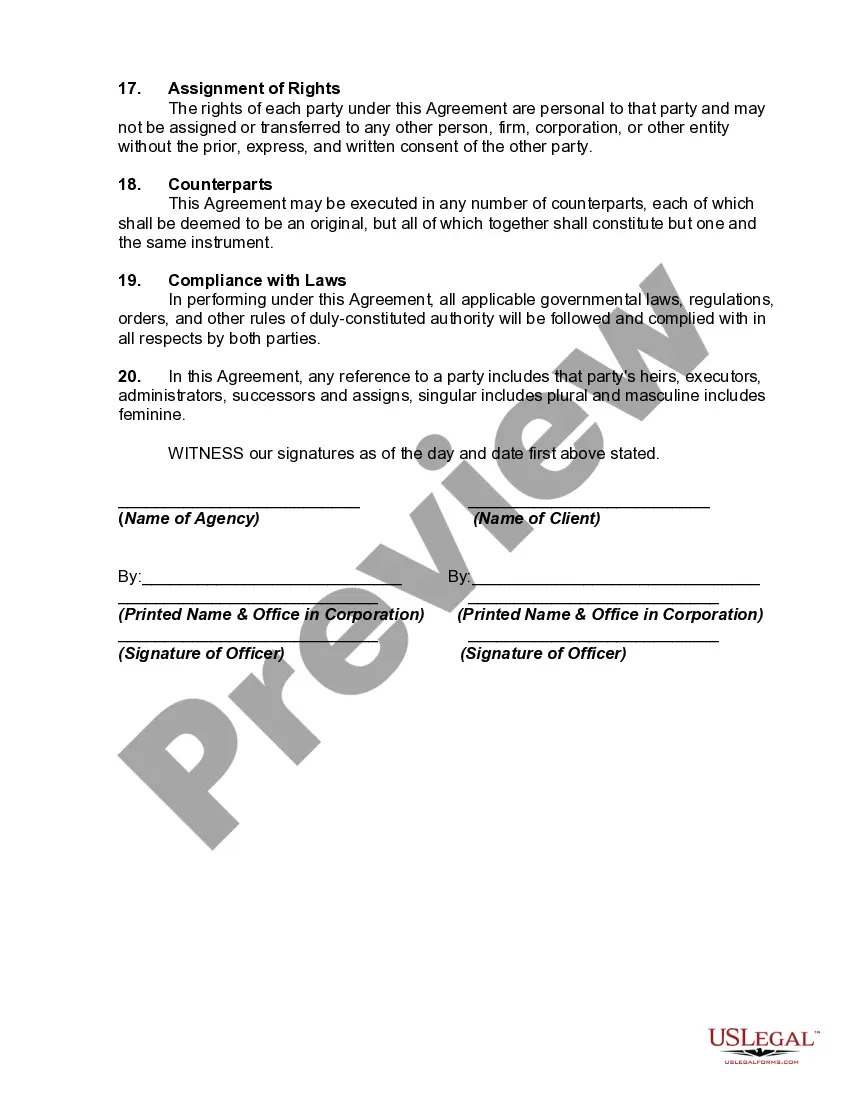
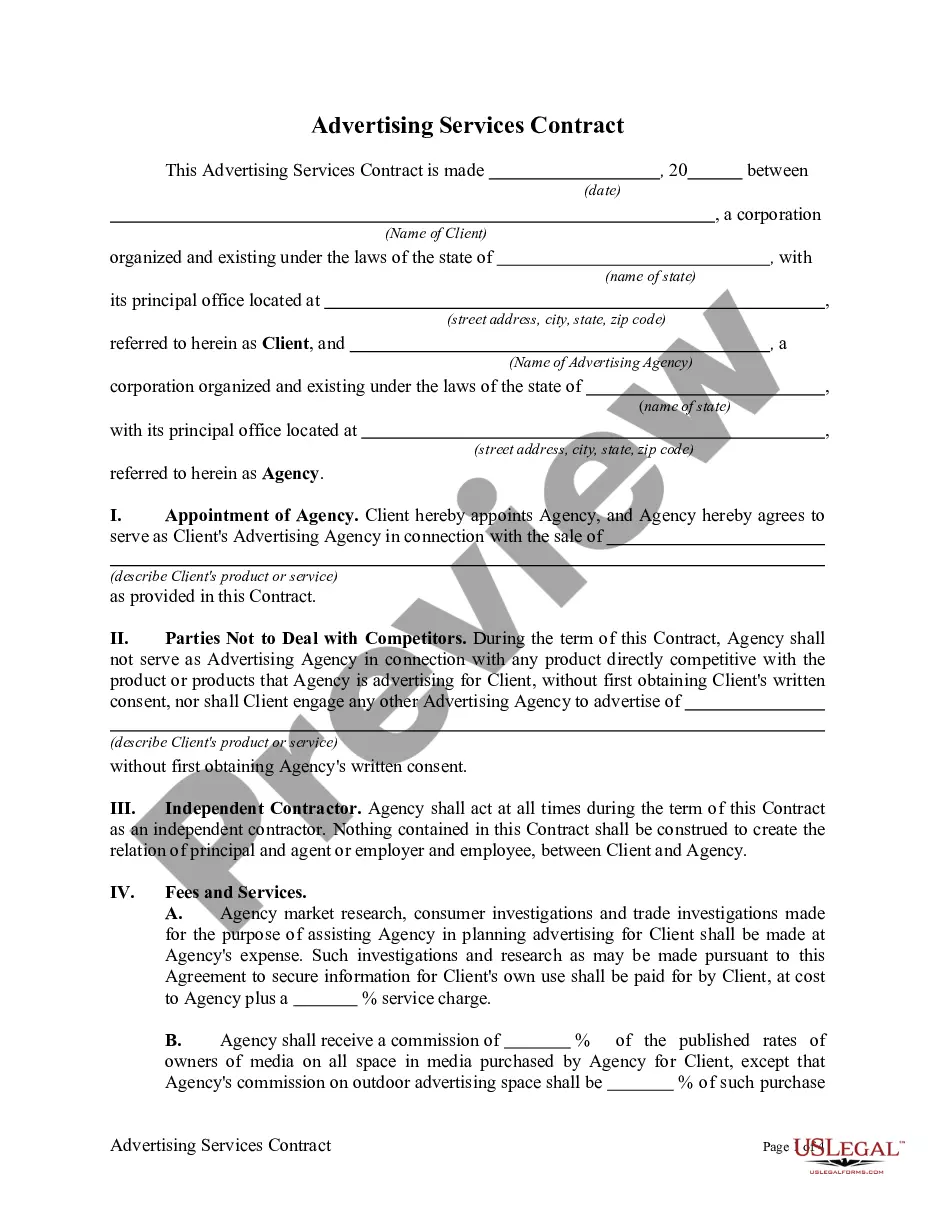
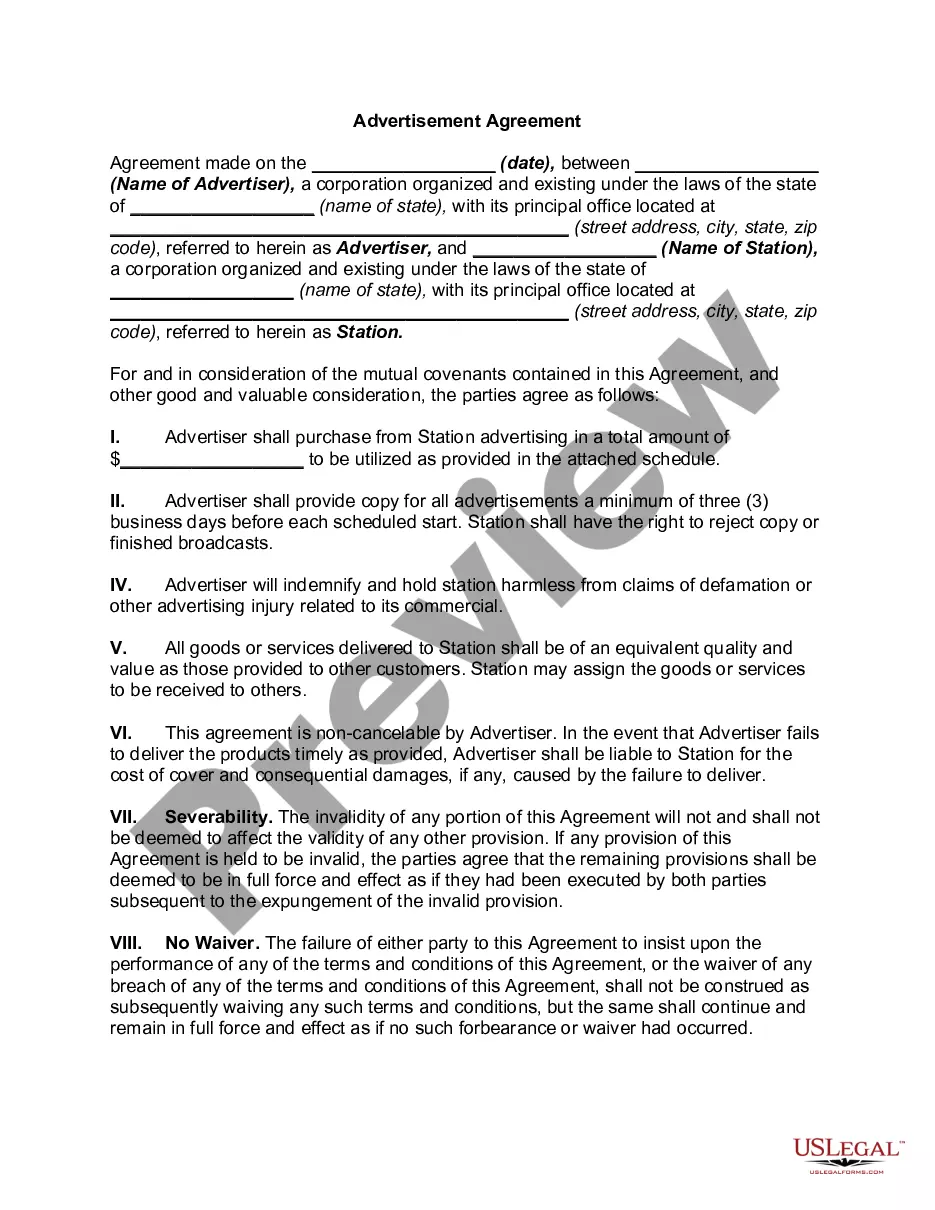
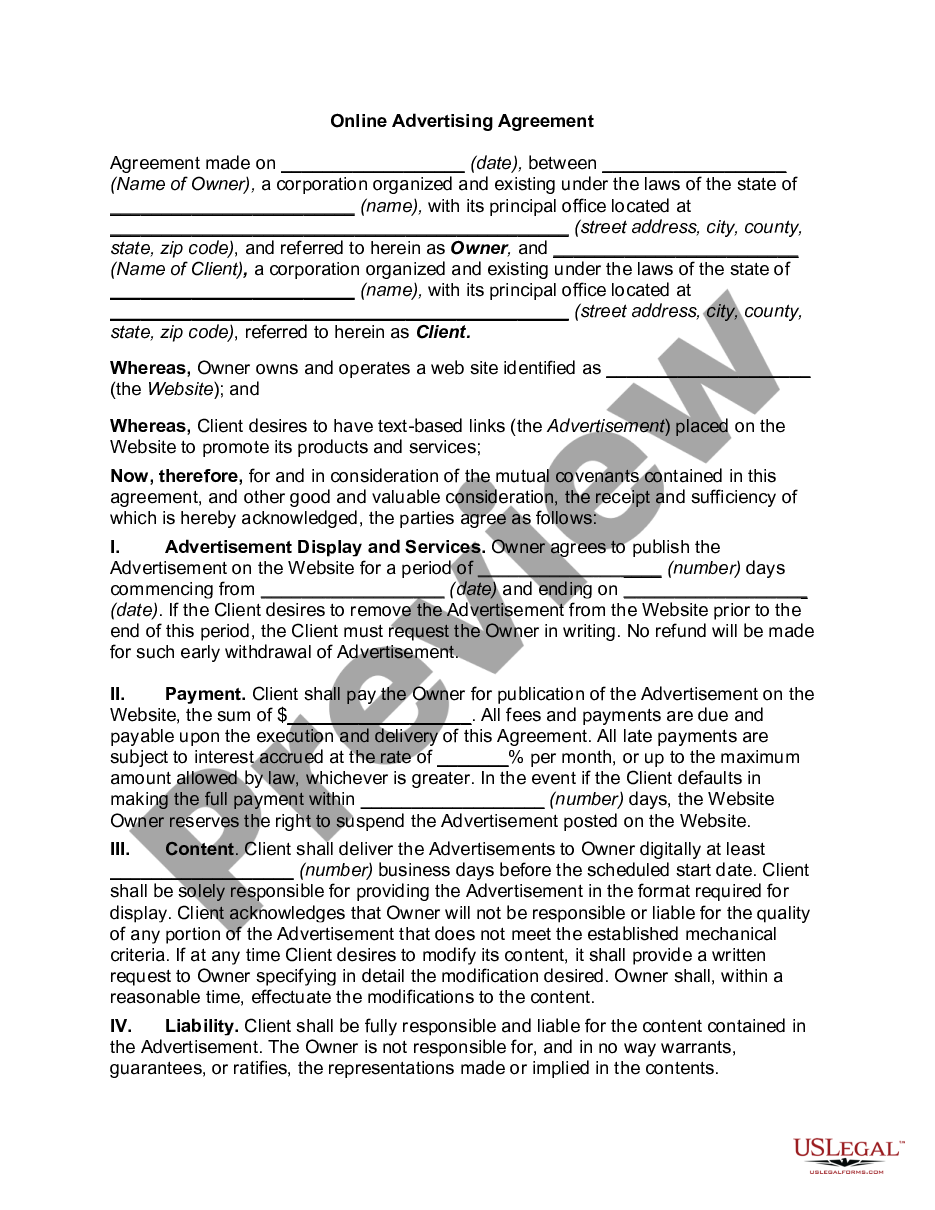
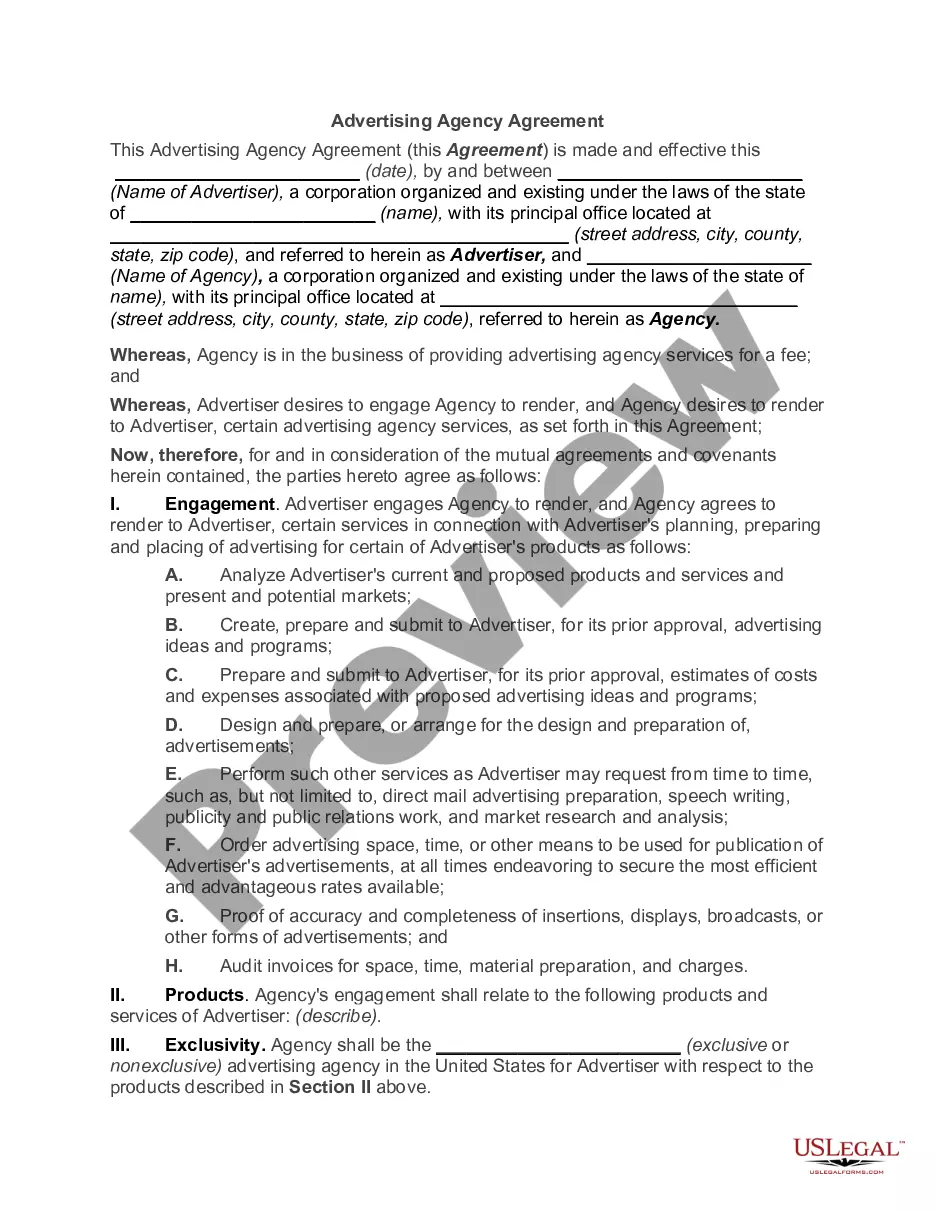
The Advertising Services Agreement is a legal document that outlines the relationship between a client and an advertising agency. This agreement specifies the services to be provided, the terms of engagement, and the responsibilities of both parties. It ensures clarity in expectations, protects the interests of both the client and the agency, and helps to avoid disputes over advertising campaigns. This form is specifically designed for situations where a business hires an agency to conduct advertising on its behalf, distinct from other service agreements that may not deal with advertising specifics.
Key components of this form
- A detailed description of the services provided by the agency.
- Appointment and independent contractor status of the agency.
- Fee structure, including commissions and service charges.
- Conditions for client approval of work and expenditures.
- Terms relating to the termination of the agreement.
- Framework for mandatory arbitration in the event of disputes.
When to use this form
This Advertising Services Agreement should be used when a business engages an advertising agency to promote its products or services. It is particularly useful when establishing a formal partnership, detailing service expectations, and setting payment terms. Use this form to ensure both parties have a clear understanding of their roles, responsibilities, and compensation, thereby minimizing potential conflicts during the advertising process.
Who can use this document
- Businesses or corporations seeking advertising services.
- Advertising agencies providing creative and media purchasing services.
- Marketing professionals looking to formalize agreements with clients.
- Any entity planning organized advertising campaigns with a dedicated agency.
How to complete this form
- Identify the parties involved, including the client and the advertising agency.
- Specify the date of the agreement and the location of each party's principal office.
- Define the scope of services the agency will provide to the client.
- Outline the fee structure, including commission percentages and any expenses.
- Sign the agreement by authorized representatives of both parties, ensuring all sections are complete.
Notarization guidance
This form usually doesn’t need to be notarized. However, local laws or specific transactions may require it. Our online notarization service, powered by Notarize, lets you complete it remotely through a secure video session, available 24/7.
Get your form ready online
Our built-in tools help you complete, sign, share, and store your documents in one place.
Make edits, fill in missing information, and update formatting in US Legal Forms—just like you would in MS Word.
Download a copy, print it, send it by email, or mail it via USPS—whatever works best for your next step.
Sign and collect signatures with our SignNow integration. Send to multiple recipients, set reminders, and more. Go Premium to unlock E-Sign.
If this form requires notarization, complete it online through a secure video call—no need to meet a notary in person or wait for an appointment.
We protect your documents and personal data by following strict security and privacy standards.

Make edits, fill in missing information, and update formatting in US Legal Forms—just like you would in MS Word.

Download a copy, print it, send it by email, or mail it via USPS—whatever works best for your next step.

Sign and collect signatures with our SignNow integration. Send to multiple recipients, set reminders, and more. Go Premium to unlock E-Sign.

If this form requires notarization, complete it online through a secure video call—no need to meet a notary in person or wait for an appointment.

We protect your documents and personal data by following strict security and privacy standards.
Mistakes to watch out for
- Failing to specify the services adequately, leading to misunderstandings.
- Not clearly outlining payment terms and fees, which can lead to disputes.
- Neglecting to define the duration of the agreement and termination conditions.
- Overlooking the need for both parties' signatures, making the agreement unenforceable.
Benefits of completing this form online
- Convenience of downloading and filling out the form at your own pace.
- Editability allows customization to fit the specific needs of the client and agency.
- Reliability of using a legally sound agreement drafted by licensed attorneys.
- Access to a clear structure that simplifies understanding and completion of the document.
Looking for another form?

Form popularity
FAQ
Whether large or small, advertising agencies typically have three main sections or divisionsaccount services, creative teams, and media specialists. These may be called by other names in different agencies, but their functions are generally the same.
The agency agreement between a principal and the agent must always be in writing with clear terms and conditions with explicit language limiting the principal's liability if the agent does something that wasn't authorized. This protects you personally and professionally.
Include Contact Information of Both Parties. Specify Project Terms and Scope. Establish Payment Terms. Set the Schedule. Decide What Happens If a Contract Is Terminated. Determine Who Owns Final Copyrights.
Whether large or small, advertising agencies typically have three main sections or divisionsaccount services, creative teams, and media specialists. These may be called by other names in different agencies, but their functions are generally the same.
Employment contracts. lease agreements. insurance agreements. financial agreements.
The following list includes the key provisions to look for when entering into a service agreement, including: payment, scope of services, amendment, termination, liability insurance, confidentiality, IP ownership, and choice of law/dispute resolution.
Identify the customer and service provider. Describe the services being provided. Outline a payment schedule. Establish terms about confidentiality, non-solicitation, and non-competition. Address ownership of materials. Personalize your Service Agreement.
Get it in writing. Keep it simple. Deal with the right person. Identify each party correctly. Spell out all of the details. Specify payment obligations. Agree on circumstances that terminate the contract. Agree on a way to resolve disputes.
1.) Don't Use Legalese. 2.) Start by Citing Both Parties. 3.) Specify Duration and What Signifies the End. 4.) Clearly Define the Scope of Work. 5.) Talk About Additional, Out of Scope Work. 6.) Identify Budget and Payment Terms. 7.) Address Refund Requests. 8.) Termination Clause.
The certainty of terms and as the meaning suggest that Michael was certain in buying the car at $800.00 and on the other hand Boris was certain to sell his car to Michael for $800.00. So both parties were definite in their dealings which constitutes to a simple contract.