Interrogatories - Personal Injury - Auto Accident
Understanding this form
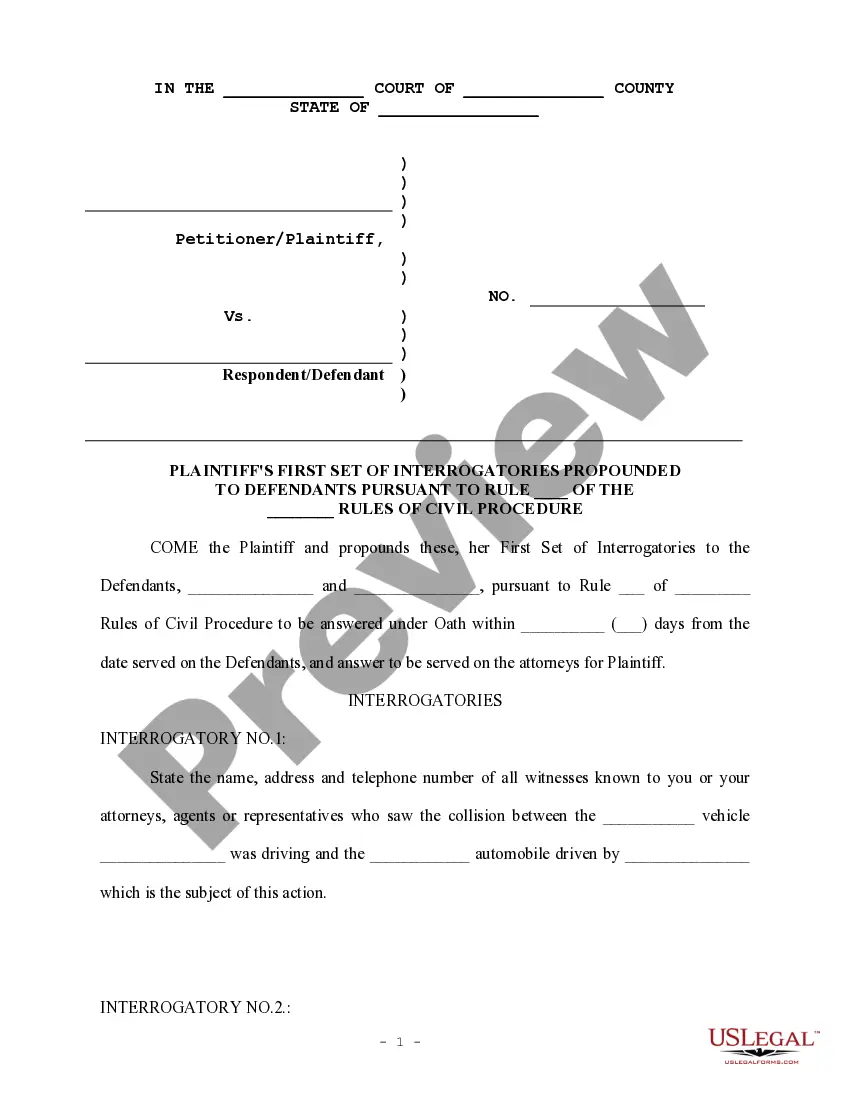
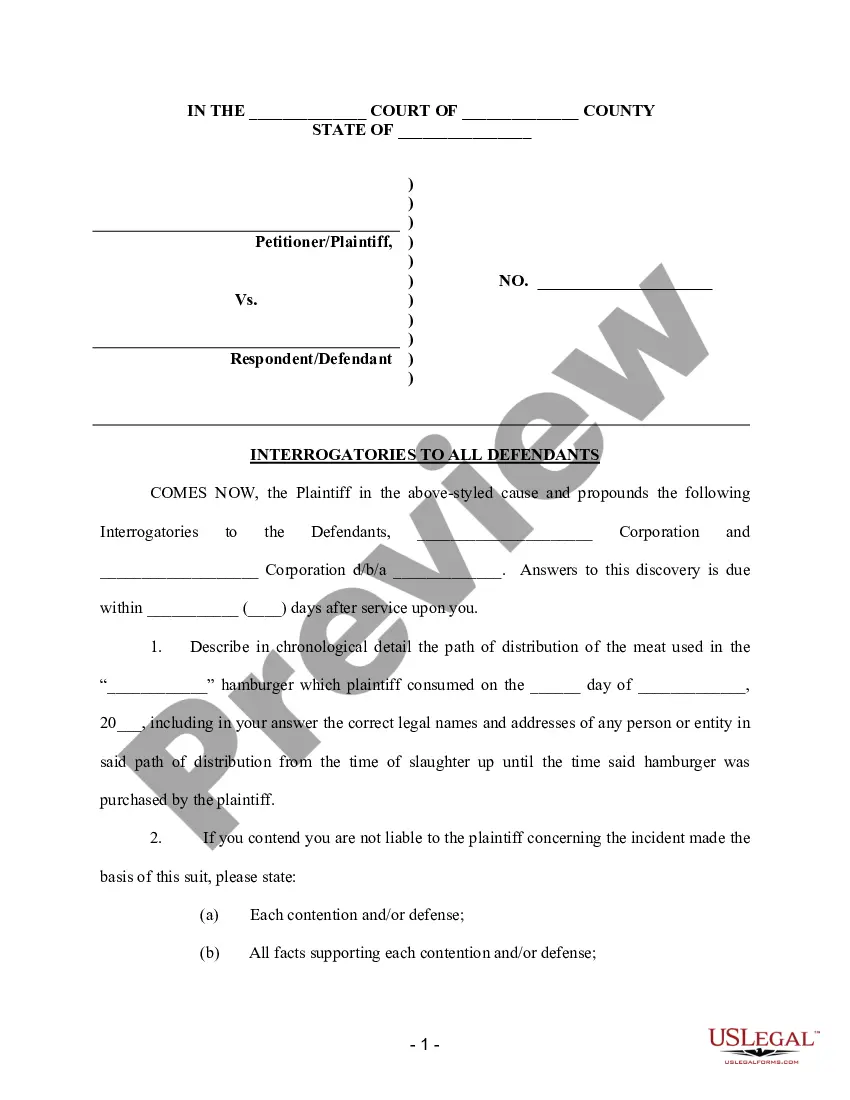
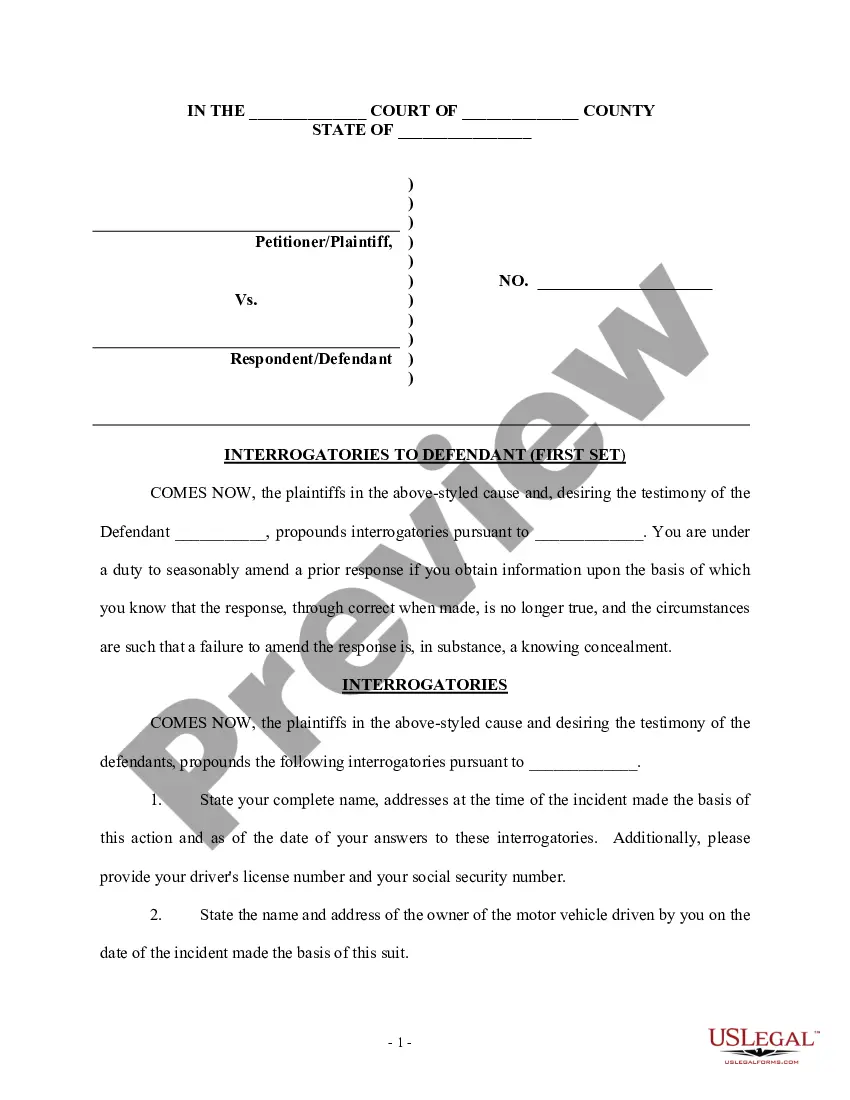
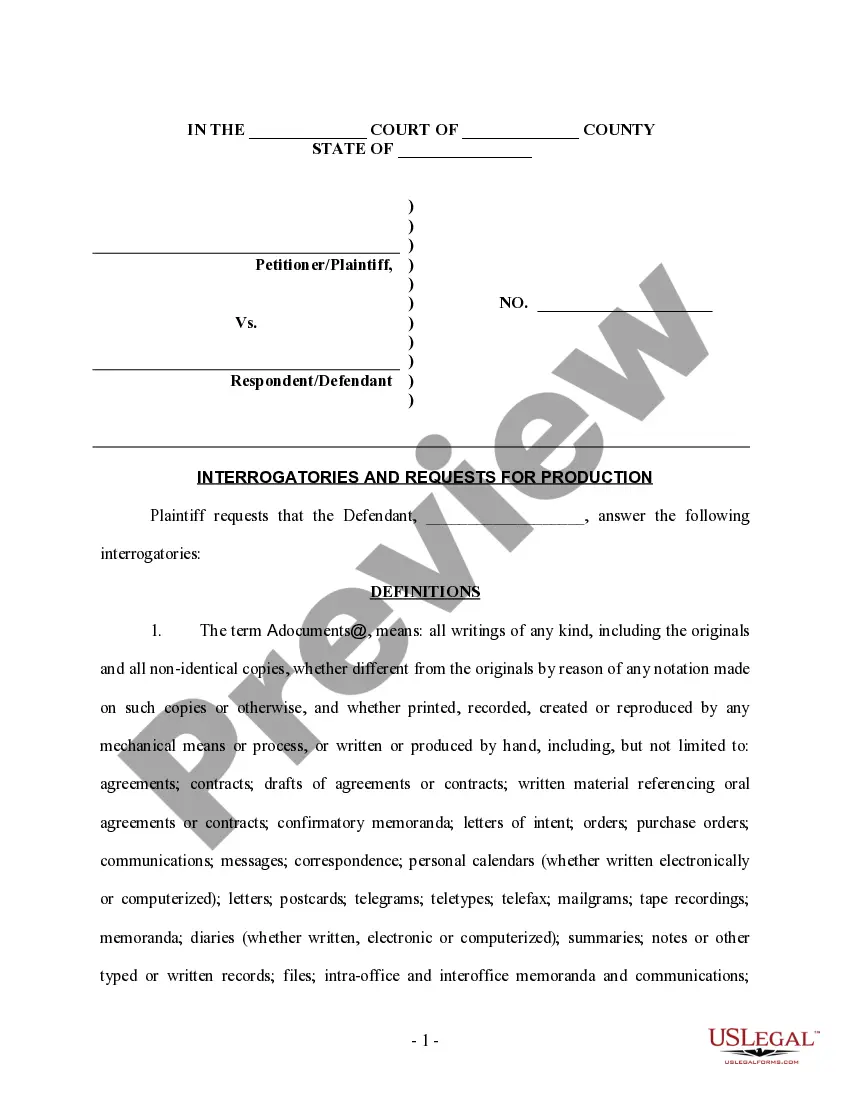
The Interrogatories - Personal Injury - Auto Accident form is a legal template that allows a plaintiff to request information and documents from the defendant in a personal injury case following an auto accident. This form is essential for gathering evidence and understanding the facts related to the collision, distinguishing it from other legal forms that might address different types of claims or cases.
Form components explained
- Interrogatory No. 1: Requests the names, addresses, and phone numbers of witnesses who observed the accident.
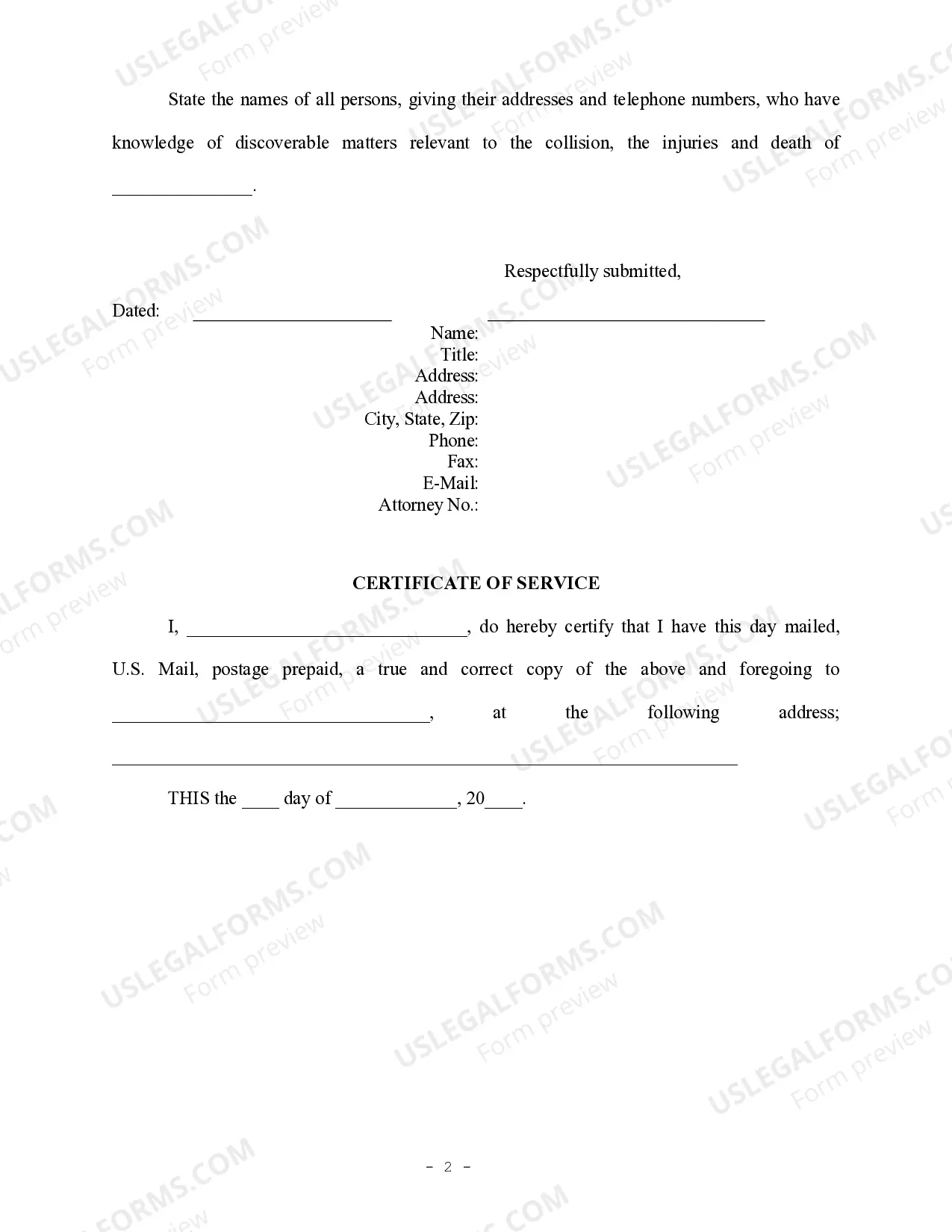
- Interrogatory No. 2: Seeks contact details of individuals who have knowledge relevant to the accident and the injuries sustained.
- Certificate of Service: Confirms that a copy of the interrogatories has been sent to the involved parties.
- Space for identification of the plaintiff and defendant, including their respective addresses and contact information.
- Date section for when the form is completed and submitted.
When to use this document
This form should be used in personal injury lawsuits arising from auto accidents when the plaintiff seeks vital information from the defendant. It is typically utilized during the discovery phase of litigation to explore facts, uncover evidence, and build a comprehensive understanding of the circumstances surrounding the accident. You may need this form if you are preparing for trial or settlement discussions.
Who this form is for
- Individuals who have filed a personal injury lawsuit due to an auto accident.
- Legal representatives assisting clients in the discovery phase of litigation.
- Parties involved in disputes over liability and damages related to an auto accident.
Steps to complete this form
- Identify the parties: Fill in the names and contact details of the plaintiff and defendant.
- List witnesses: Provide the names and contact information of all known witnesses as requested in the interrogatories.
- Gather evidence: Identify individuals who might have relevant information about the accident.
- Complete the Certificate of Service: Ensure it is filled out to confirm that the form has been sent to the other party.
- Review for accuracy: Check all information for completeness and correctness before submitting.
Does this document require notarization?
In most cases, this form does not require notarization. However, some jurisdictions or signing circumstances might. US Legal Forms offers online notarization powered by Notarize, accessible 24/7 for a quick, remote process.
Get your form ready online
Our built-in tools help you complete, sign, share, and store your documents in one place.
Make edits, fill in missing information, and update formatting in US Legal Forms—just like you would in MS Word.
Download a copy, print it, send it by email, or mail it via USPS—whatever works best for your next step.
Sign and collect signatures with our SignNow integration. Send to multiple recipients, set reminders, and more. Go Premium to unlock E-Sign.
If this form requires notarization, complete it online through a secure video call—no need to meet a notary in person or wait for an appointment.
We protect your documents and personal data by following strict security and privacy standards.

Make edits, fill in missing information, and update formatting in US Legal Forms—just like you would in MS Word.

Download a copy, print it, send it by email, or mail it via USPS—whatever works best for your next step.

Sign and collect signatures with our SignNow integration. Send to multiple recipients, set reminders, and more. Go Premium to unlock E-Sign.

If this form requires notarization, complete it online through a secure video call—no need to meet a notary in person or wait for an appointment.

We protect your documents and personal data by following strict security and privacy standards.
Mistakes to watch out for
- Failing to include all relevant witnesses' information.
- Not serving the interrogatories to the correct parties.
- Incomplete or incorrect responses to the interrogatories.
- Missing the deadline for submitting the form as set by the court.
Benefits of completing this form online
- Convenient access to legal templates that can be downloaded anytime.
- Editable forms that allow you to customize your responses easily.
- Reliable guidance from templates created by licensed attorneys.
- Quick turnaround for preparing necessary legal documents.
Looking for another form?


Form popularity
FAQ
So, can you refuse to answer interrogatories? The answer is, no, you may not.That answer must either permit inspection of the requested information or object to the production of the information for a specific reason.
Following a Car Accident, you can sue the responsible party for all damages as result of the accident. To pursue a personal injury claim for damages that you incurred, you must file your suit against the responsible party within 2 years from the date of the accident.
Interrogatories Interrogatories are written questions that are sent by one party to another. Generally speaking, the party who receives these questions has 30 days to answer them.If the other party fails to respond on time, within 30 days, then the questions are deemed admitted.
If the plaintiff does not respond to the court order, then you can file a Motion to Dismiss and you may win your case. Send a final request. If they do not respond to the final request within 30 days you can send the court an application for entry of final judgment or dismissal.
The purpose of interrogatories is to learn a great deal of general information about a party in a lawsuit. For example, the defendant in a personal injury lawsuit about a car accident might send you interrogatories asking you to disclose things like: Where you live.
Interrogatories are a discovery tool that the parties can use to have specific questions about a case answered before trial. Interrogatories are lists of questions sent to the other party that s/he must respond to in writing.
Responding to Form InterrogatoriesAnswer each question, being careful to answer each subpart, if one exists. Read the question carefully, and answer only what it asks. You may attach exhibits, if necessary. The response must be verified, meaning you must swear that the responses given are true.
The defendant owed other drivers on the road (like you) a duty to drive safe and had a legal responsibility to prevent a wreck. By causing the accident or failing to prevent it, the defendant breached their legal duty of care owed to you.