Interrogatories and Requests for Production - Personal Injury
Overview of this form
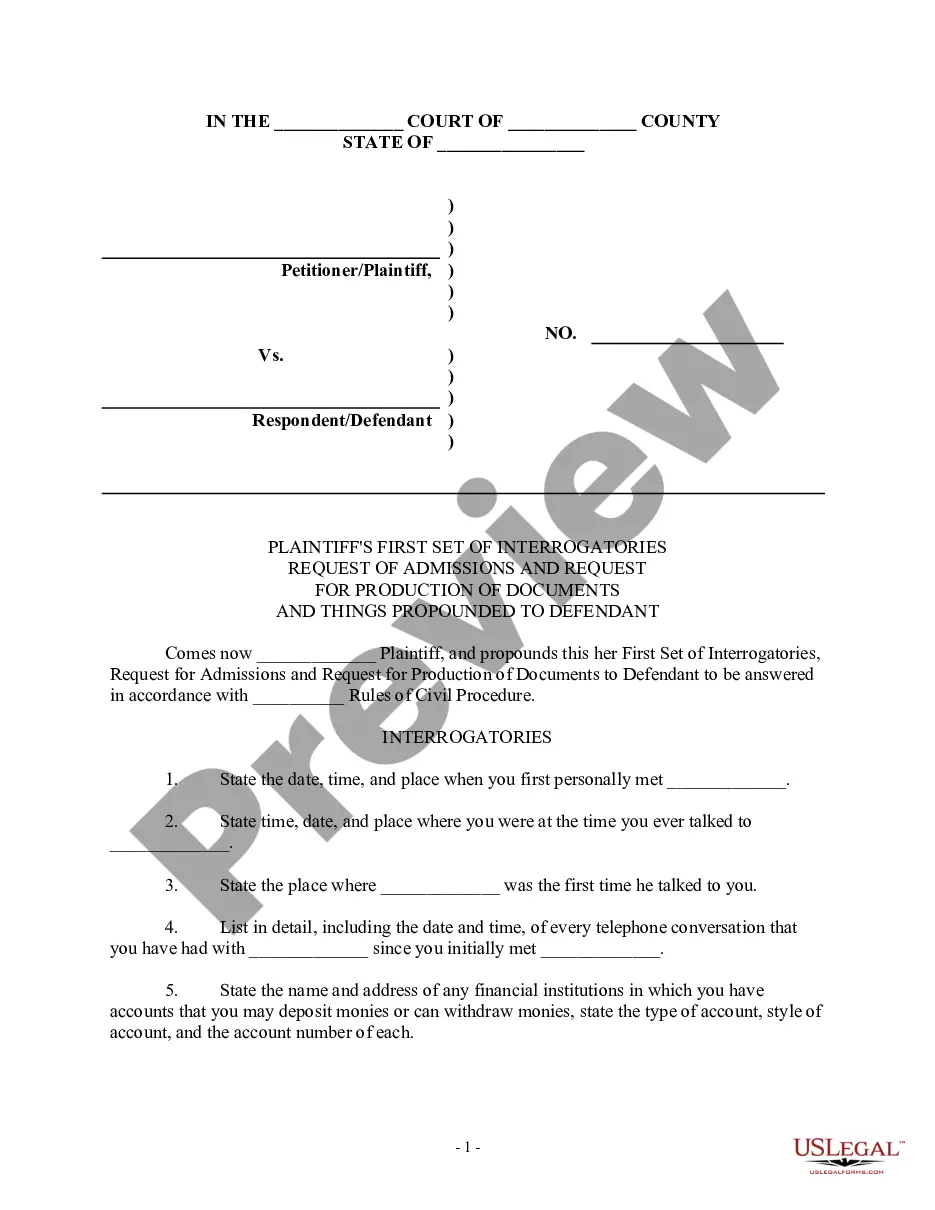
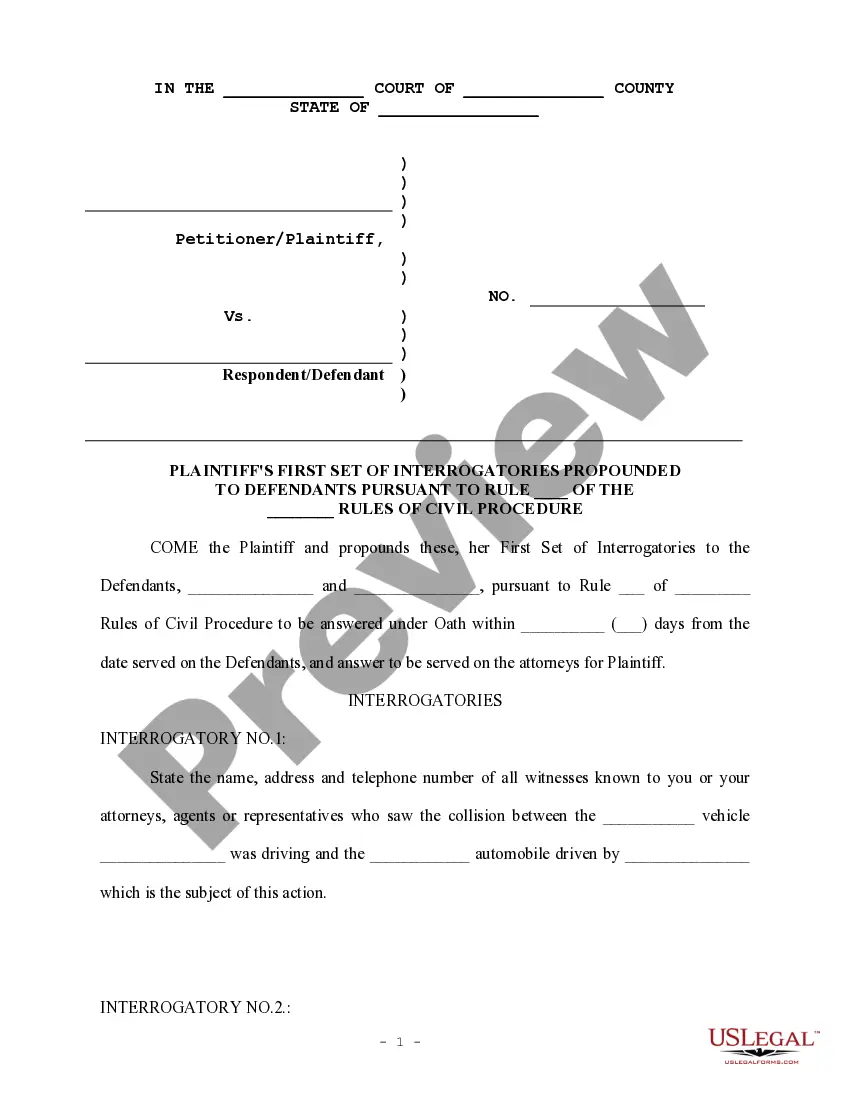
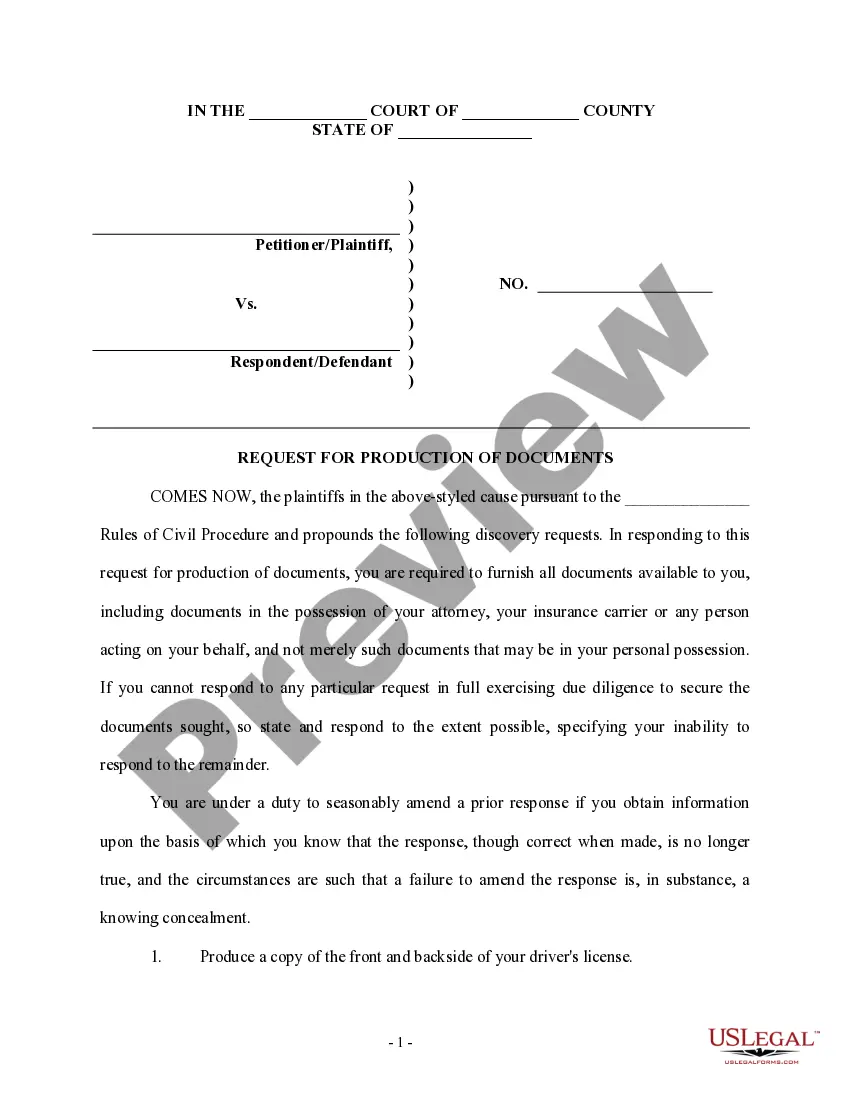
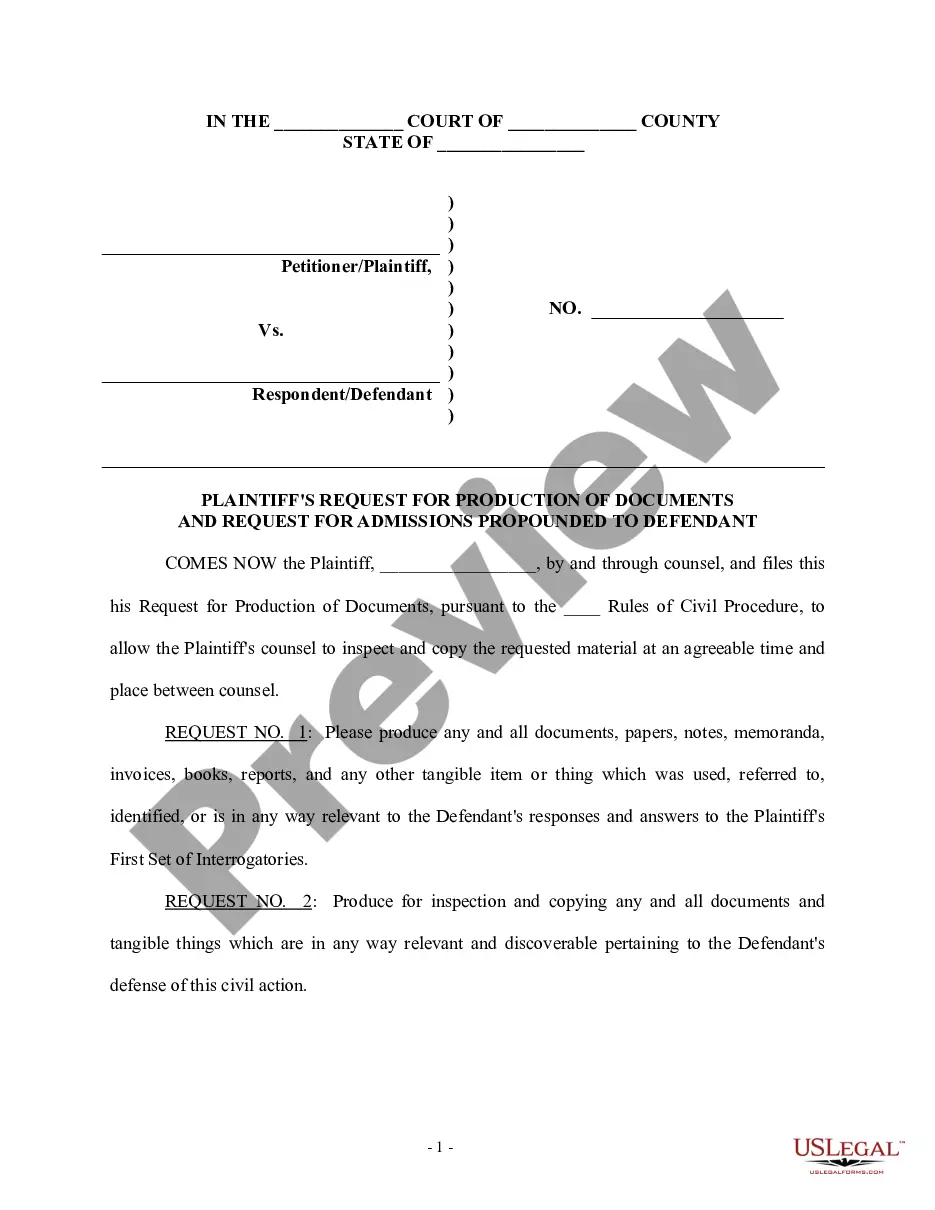
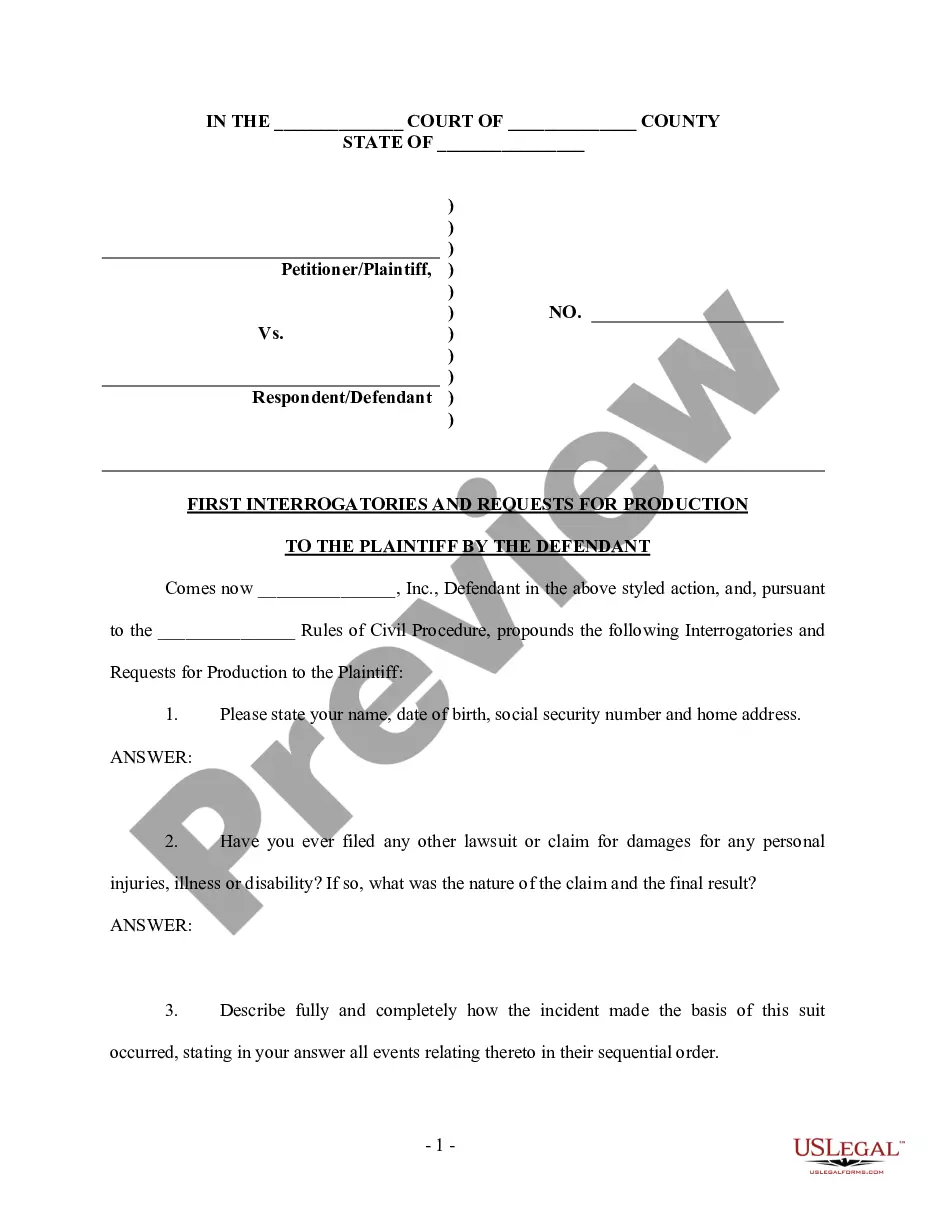
The Interrogatories and Requests for Production - Personal Injury form is a legal tool used in personal injury cases. This form allows the plaintiff to gather crucial information and documents from the defendant. Unlike other forms, this one focuses specifically on obtaining detailed insights and evidence related to the injury case, ensuring that both parties have the necessary information to support their claims and defenses.
Key components of this form
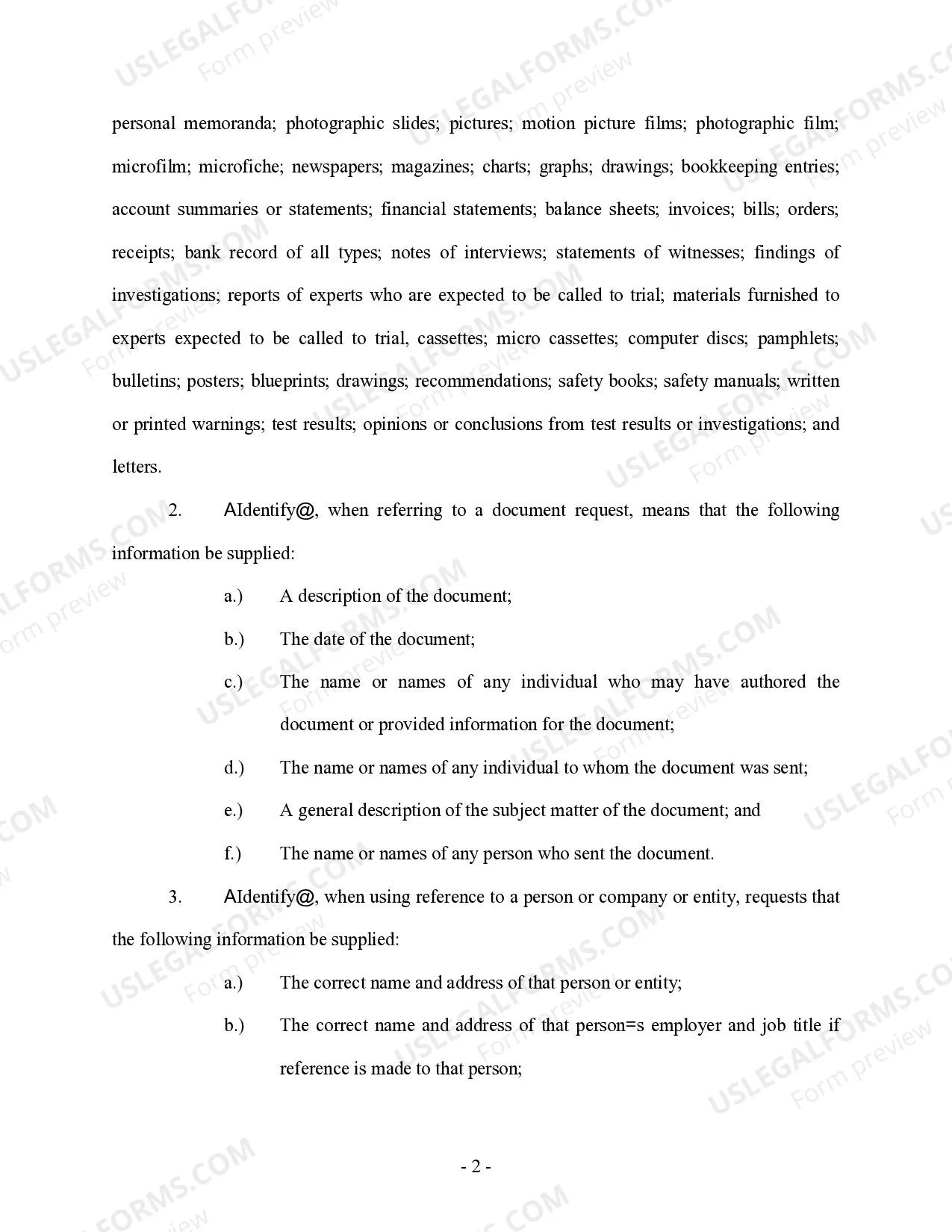
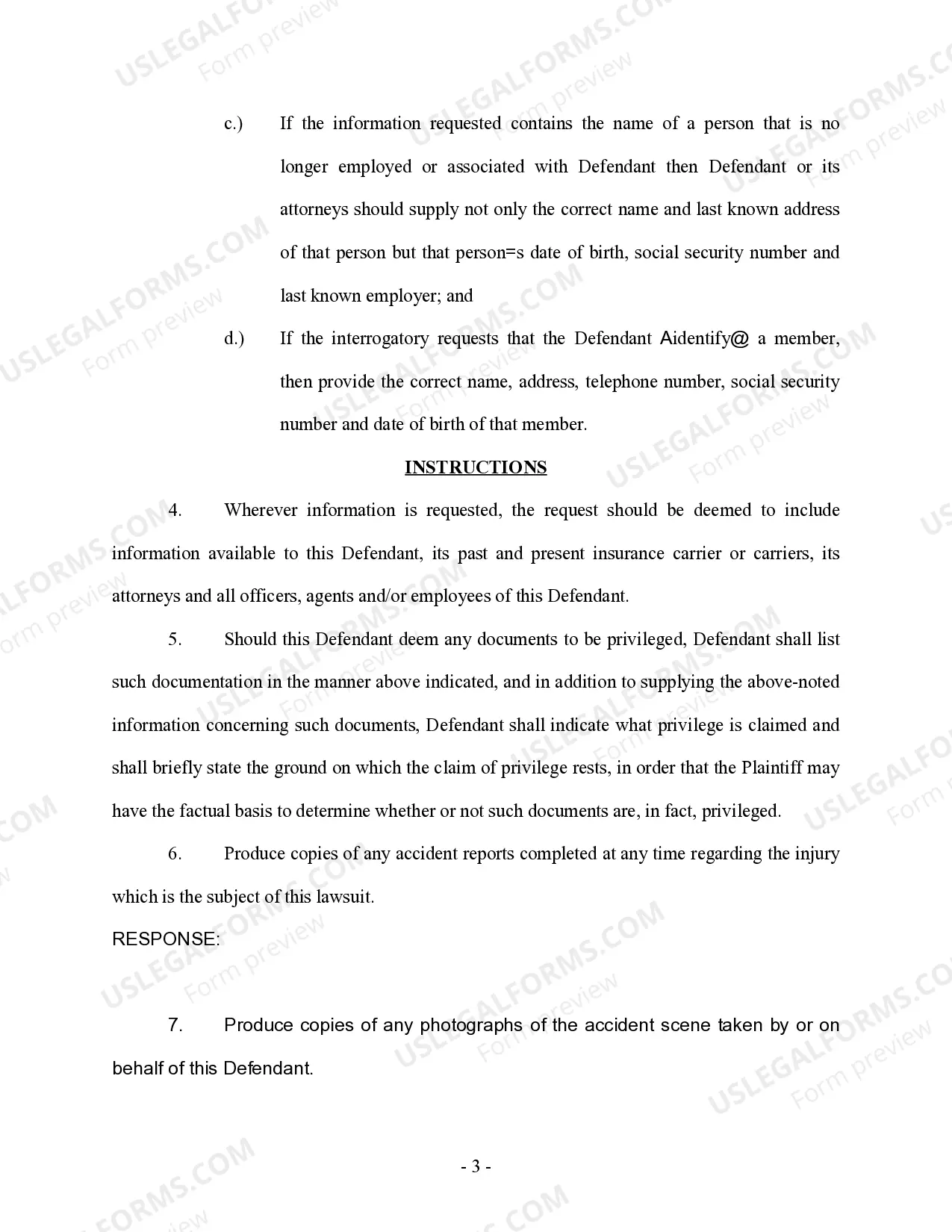
- Definition of "Identify" related to document requests and individuals.
- Instructions for requesting information from the defendant and their attorneys.
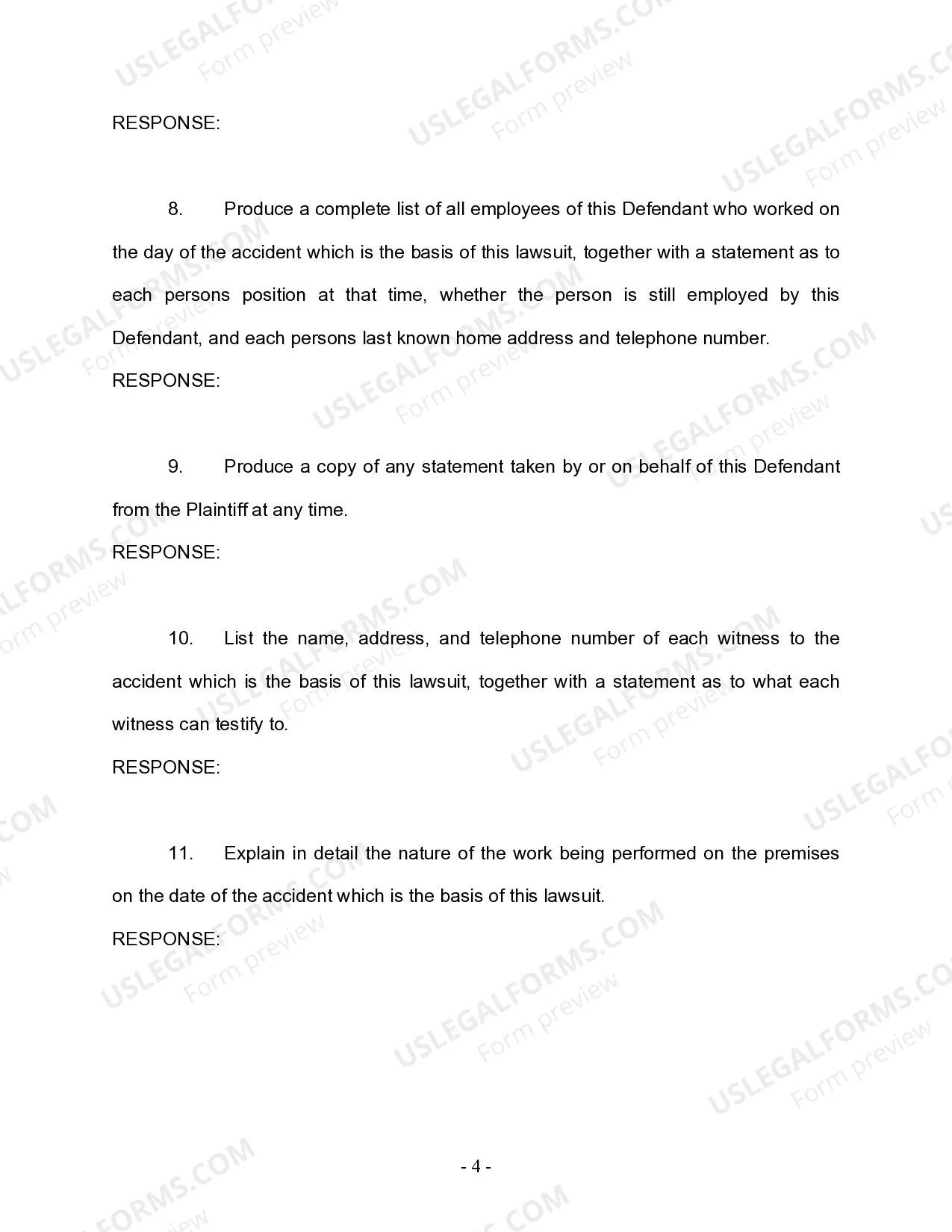
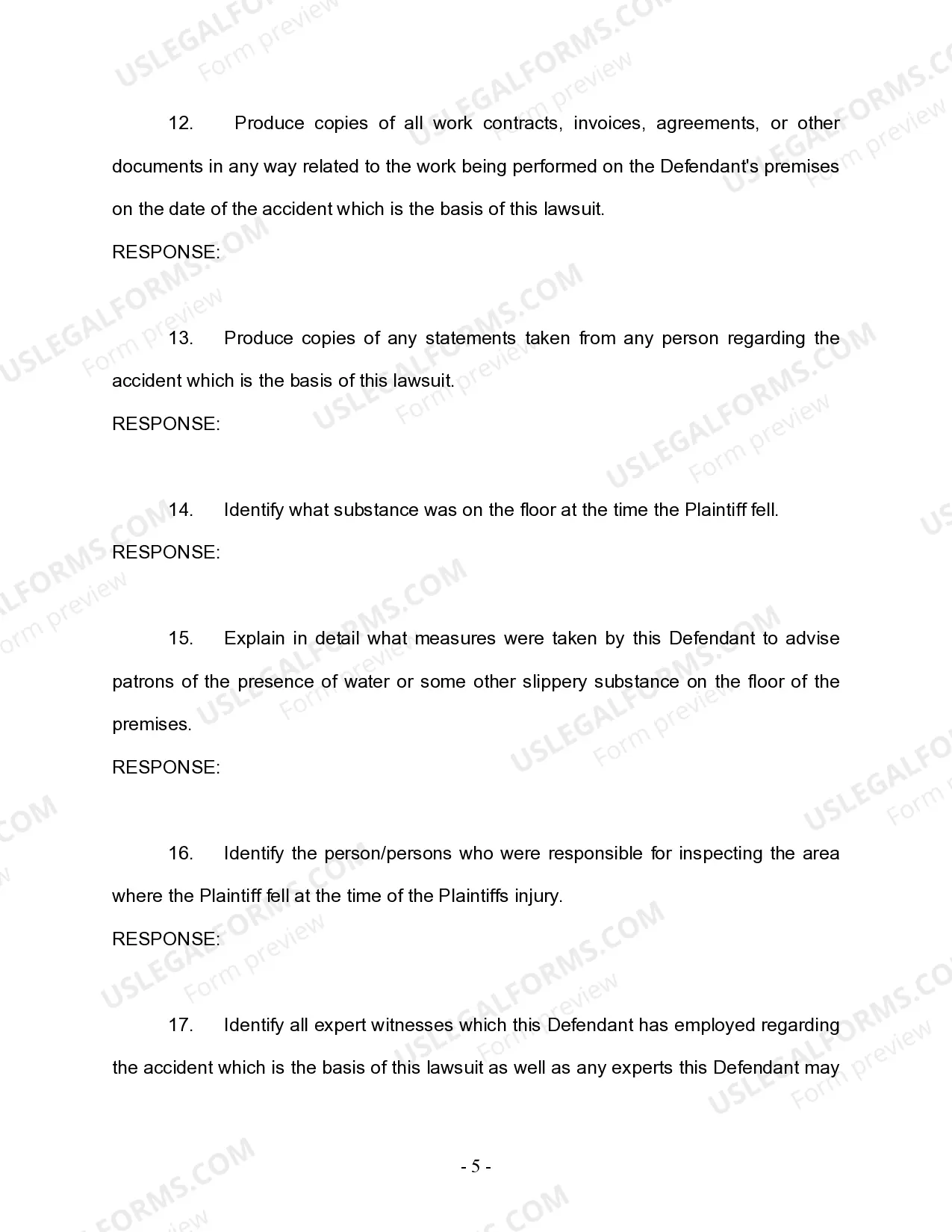
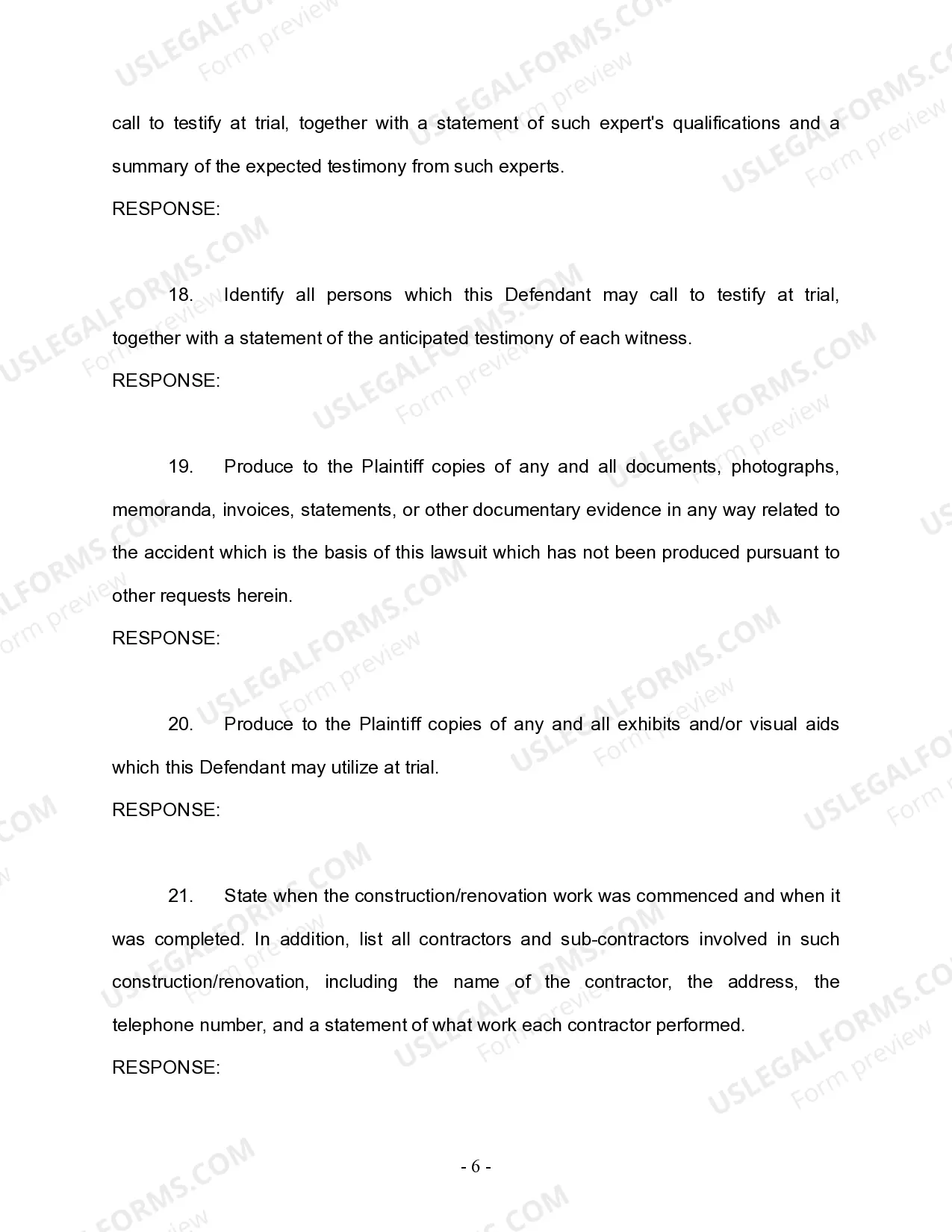
- Variety of requests for documentation, including accident reports and witness lists.
- Detailed questions about the circumstances of the injury.
- Identification of experts who may be called to testify regarding the accident.

Situations where this form applies
This form is ideal when a plaintiff initiates a personal injury lawsuit and seeks to formalize their request for information from the defendant. It is particularly useful during the discovery phase, where both parties exchange evidence and information to build their cases. Use this form if you need to clarify the details surrounding the accident, identify witnesses, or obtain documents that are pertinent to your claim.
Intended users of this form
This form is specifically designed for:
- Individuals who have filed a personal injury lawsuit as plaintiffs.
- Attorneys representing plaintiffs in personal injury cases.
- Parties involved in disputes where gathering evidence is essential to the case.
How to complete this form
- Enter the names and addresses of all parties involved in the case.
- Specify the documents requested, including accident reports and witness statements.
- Provide clear descriptions and context for each request to ensure compliance.
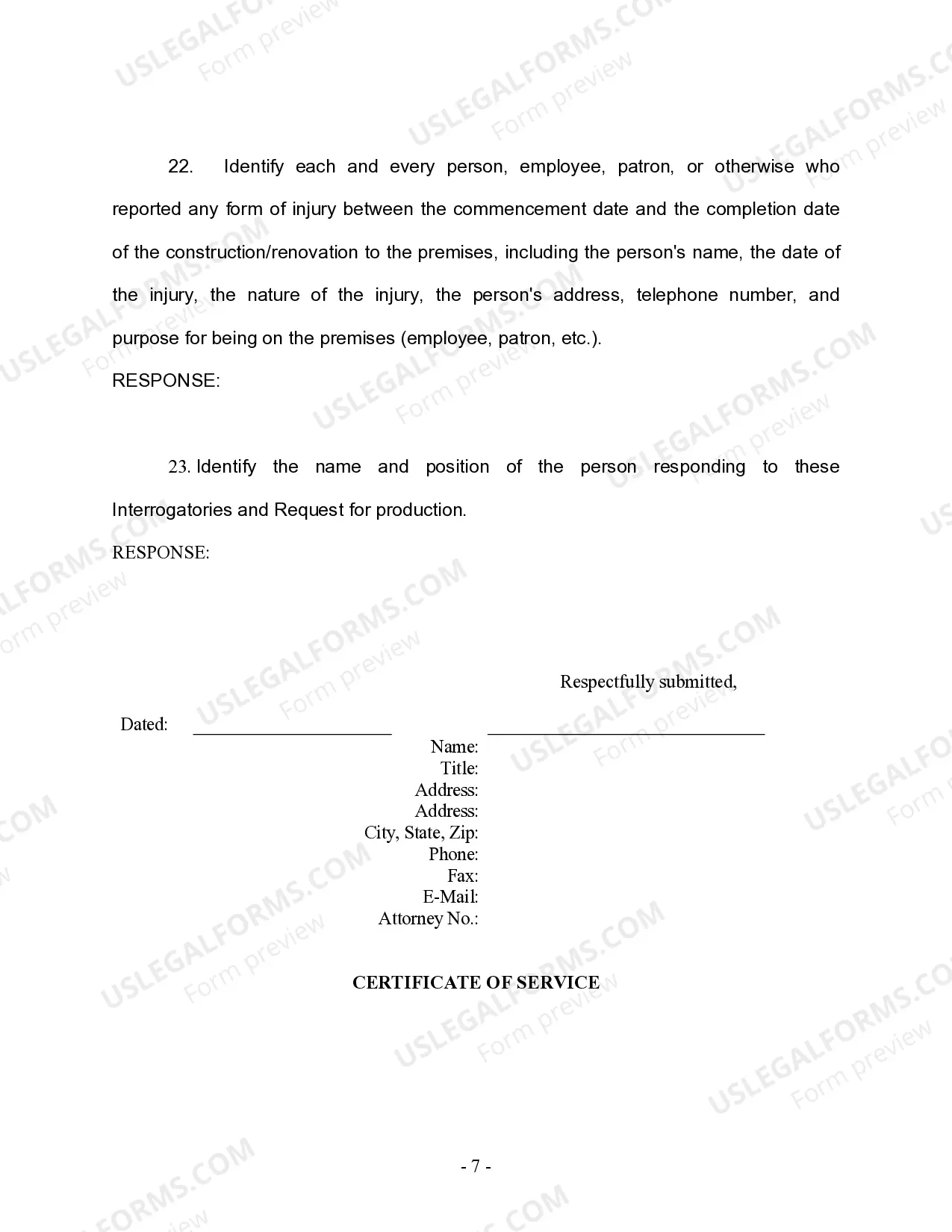
- Sign and date the form at the designated area.
- Ensure to follow up with the defendant to receive the requested information.
Does this form need to be notarized?
Notarization is not commonly needed for this form. However, certain documents or local rules may make it necessary. Our notarization service, powered by Notarize, allows you to finalize it securely online anytime, day or night.
Get your form ready online
Our built-in tools help you complete, sign, share, and store your documents in one place.
Make edits, fill in missing information, and update formatting in US Legal Forms—just like you would in MS Word.
Download a copy, print it, send it by email, or mail it via USPS—whatever works best for your next step.
Sign and collect signatures with our SignNow integration. Send to multiple recipients, set reminders, and more. Go Premium to unlock E-Sign.
If this form requires notarization, complete it online through a secure video call—no need to meet a notary in person or wait for an appointment.
We protect your documents and personal data by following strict security and privacy standards.

Make edits, fill in missing information, and update formatting in US Legal Forms—just like you would in MS Word.

Download a copy, print it, send it by email, or mail it via USPS—whatever works best for your next step.

Sign and collect signatures with our SignNow integration. Send to multiple recipients, set reminders, and more. Go Premium to unlock E-Sign.

If this form requires notarization, complete it online through a secure video call—no need to meet a notary in person or wait for an appointment.

We protect your documents and personal data by following strict security and privacy standards.
Mistakes to watch out for
- Failing to specify the documents or information clearly.
- Not including proper names and addresses, leading to confusion.
- Neglecting to sign or date the form before submission.
- Overlooking state-specific requirements that could affect the validity of the requests.
Benefits of using this form online
- Convenience of downloading and completing the form at your own pace.
- Editability allows you to modify the form based on specific case needs.
- Reliability of the legal language drafted by licensed attorneys.
- Access to customer support for any questions you may have during completion.
Legal use & context
- The form is used for collecting evidence in personal injury lawsuits.
- Responses to the interrogatories must be provided in a timely manner, as specified by court rules.
- Failure to comply with requests can have legal consequences, including sanctions.
Key takeaways
- The Interrogatories and Requests for Production is vital for gathering evidence in personal injury cases.
- Clearly defined instructions and specific requests help streamline the discovery process.
- Adaptation to state requirements is necessary for the form's effectiveness.
- Always double-check for accuracy and completeness before submission.
Looking for another form?
Form popularity
FAQ
Thank you for your inquiry regarding our product or service. Thank you for your interest in our product or service. We would like to thank you for your letter inquiring about our product. We truly appreciate your letter asking for information about our service.
Personal/Corporate information of opposing party. Identifying information of witnesses. Contact information & background of expert witnesses. Insurance information.
You must answer each interrogatory separately and fully in writing under oath, unless you object to it. You must explain why you object. You must sign your answers and objections.
The purpose of interrogatories is to learn a great deal of general information about a party in a lawsuit. For example, the defendant in a personal injury lawsuit about a car accident might send you interrogatories asking you to disclose things like: Where you live. Where you work.
Interrogatories Interrogatories are written questions that are sent by one party to another.Requests for production are the means by which you can ask the other party to make copies of documents, photographs, records, etc. and to request the inspection of property.
Interrogatories, which are written questions about things that are relevant or important to the case. (NRCP 33; JCRCP 33) Requests for production of documents or things, which are written requests that demand the other side provide particular documents or items.
Interrogatories ask questions; the responding party provides written answers. A request for production of documents requests the production of documents (or other tangible things); the responding party provides documents.
If a request asks for a document, make a copy of the document; in your response, describe the document and say that a copy is attached; and attach a copy of the document to the responses you send back to the other side.