Arizona Disclaimer Deed
Overview of this form
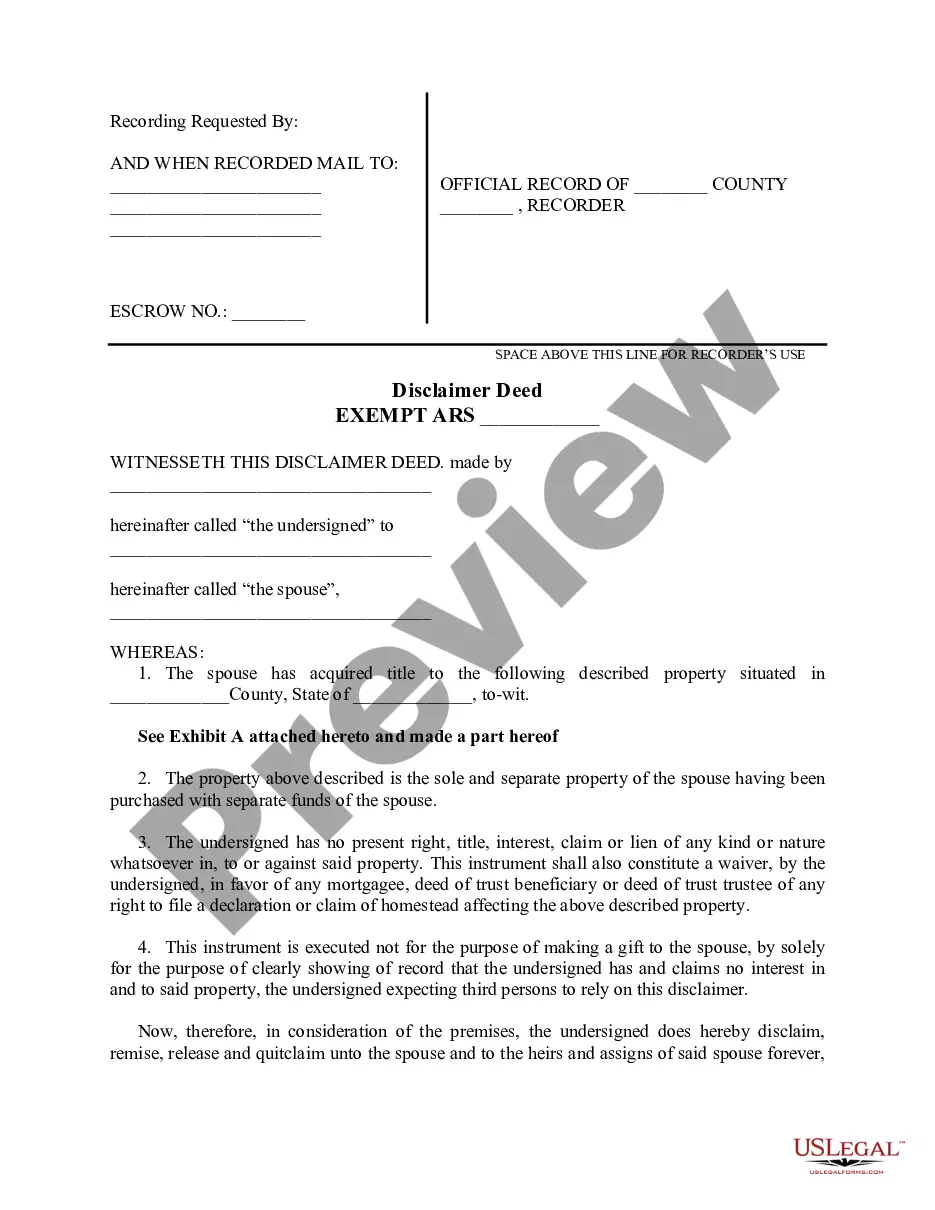
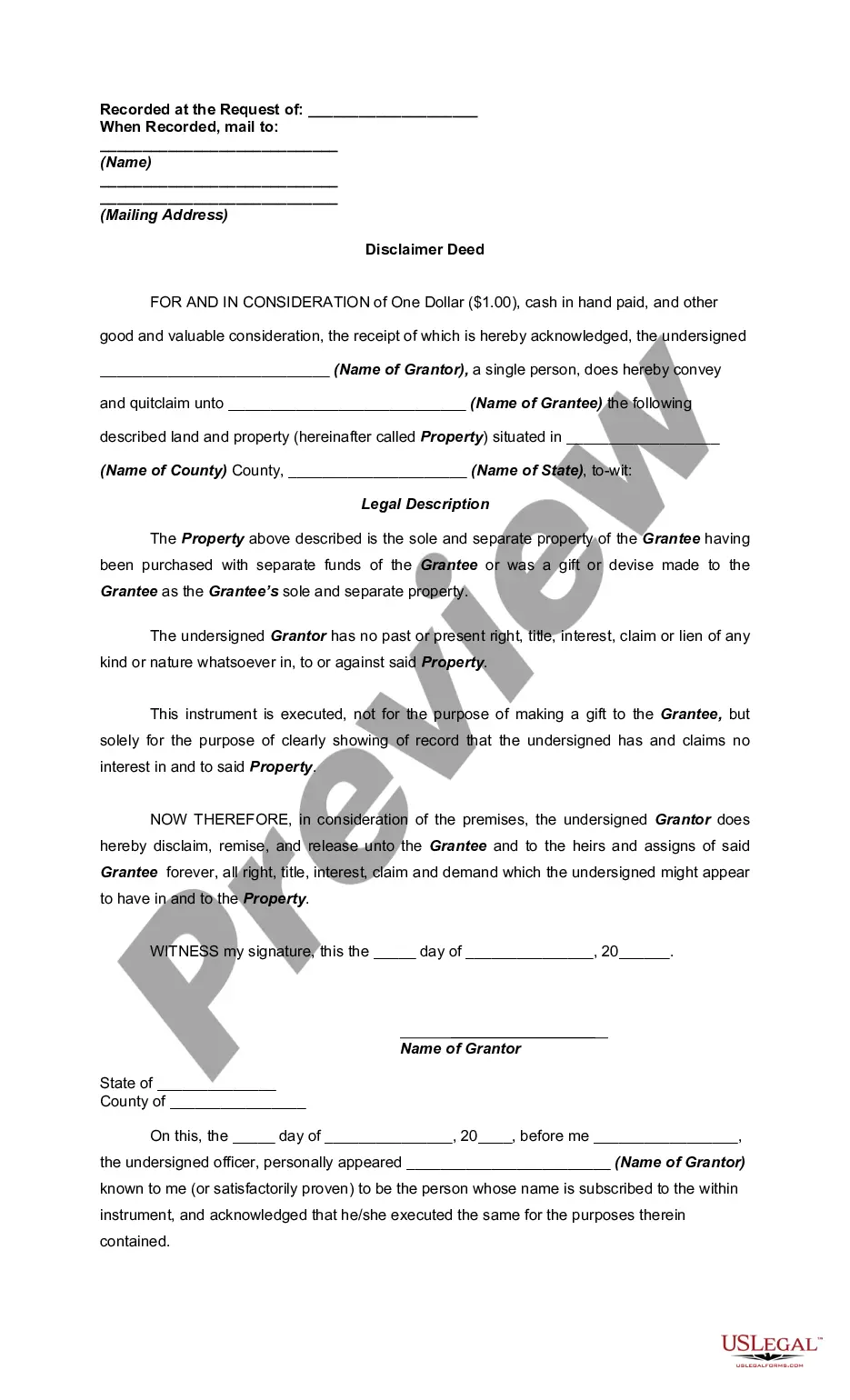
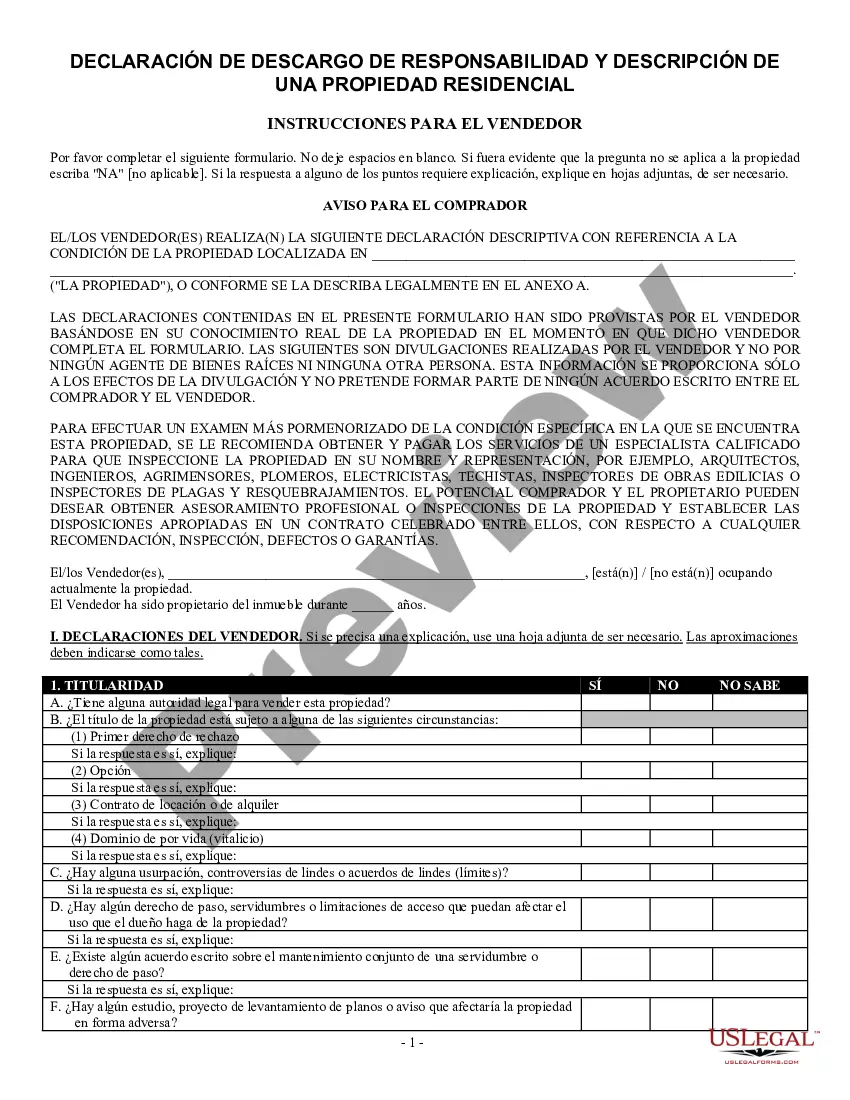
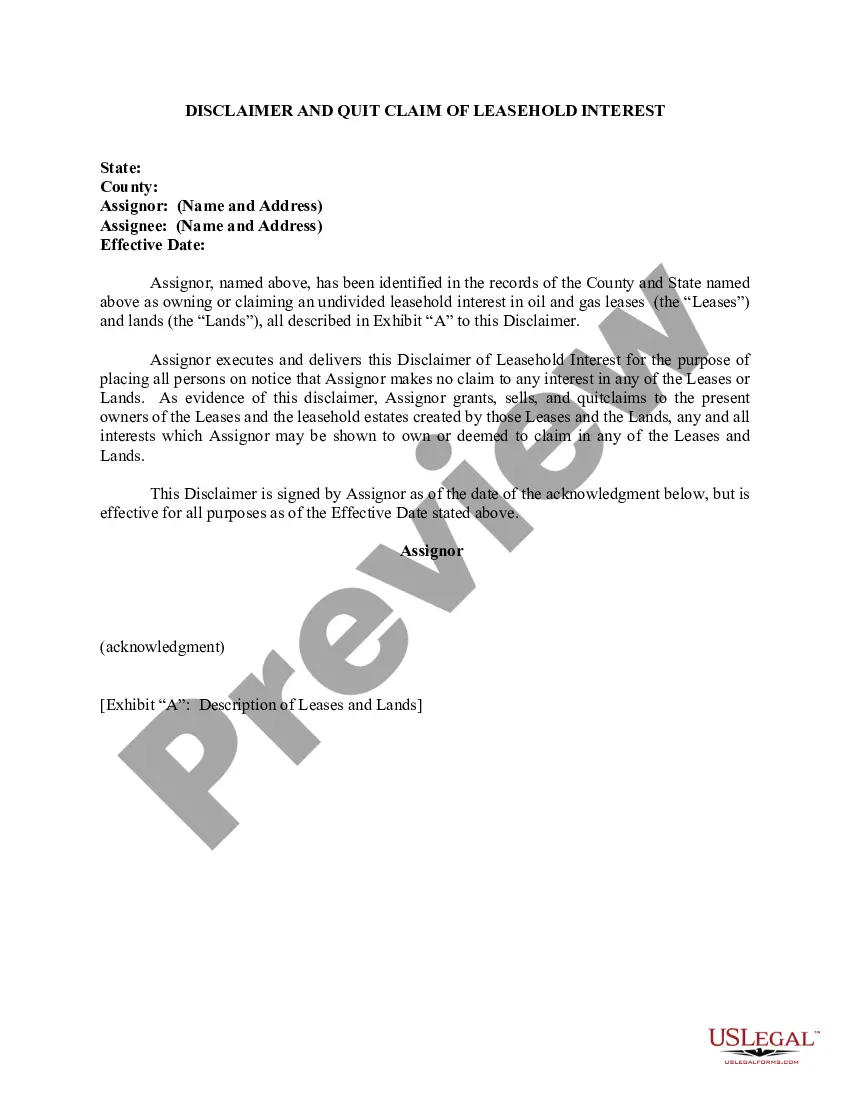
A disclaimer deed is a legal document used by one spouse to formally deny any interest in a property owned by the other spouse. This form is essential for clarifying ownership, especially in situations where real estate is acquired during marriage. Unlike other property transfer documents, a disclaimer deed explicitly states that the disclaiming spouse has no claims to the property, ensuring that their rights are relinquished.
Key parts of this document
- Identification of the parties: Names of the spouse and the undersigned.
- Description of property: A clear description of the real estate in question.
- Disclaimer language: A declaration that the undersigned has no interest in the property.
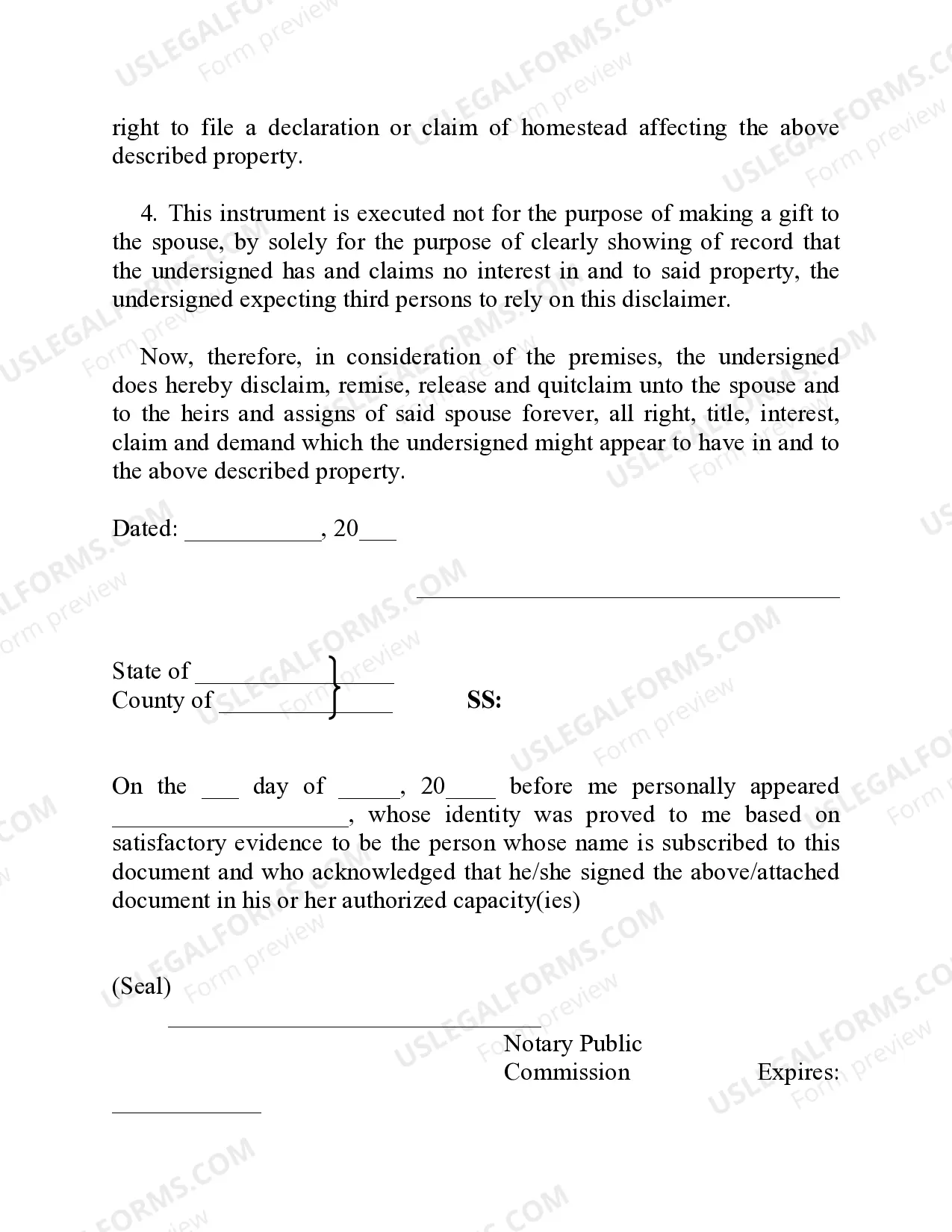
- Execution details: Signature of the undersigned, date, and notary acknowledgment.

When to use this document
This form is used in various scenarios, such as when one spouse acquires real estate independently and wants to confirm that the other spouse does not claim any interest in it. It is also helpful in divorce proceedings where clear title is needed to a property owned by one spouse. Additionally, it can be used as part of estate planning to avoid confusion about property ownership after death.
Who needs this form
- Married individuals who wish to clarify property ownership.
- Spouses involved in divorce proceedings needing to address property rights.
- Individuals in blended families wanting to specify property claims.
- Anyone engaged in estate planning involving real property.
How to prepare this document
- Identify the parties by entering the names of both spouses.
- Specify the property by providing a full legal description, often found in the property deed.
- Enter the date on which the disclaimer is being executed.
- Ensure the undersigned signs the document, indicating their understanding and agreement.
- Have the form notarized, as required, to validate the transaction.
Notarization guidance
Yes, this form must be notarized to be legally valid. A notary public will verify the identities of the parties involved and their willingness to sign the document. US Legal Forms offers integrated online notarization, making it convenient to complete your disclaimer deed securely via a video call without needing to travel.
Get your form ready online
Our built-in tools help you complete, sign, share, and store your documents in one place.
Make edits, fill in missing information, and update formatting in US Legal Forms—just like you would in MS Word.
Download a copy, print it, send it by email, or mail it via USPS—whatever works best for your next step.
Sign and collect signatures with our SignNow integration. Send to multiple recipients, set reminders, and more. Go Premium to unlock E-Sign.
If this form requires notarization, complete it online through a secure video call—no need to meet a notary in person or wait for an appointment.
We protect your documents and personal data by following strict security and privacy standards.

Make edits, fill in missing information, and update formatting in US Legal Forms—just like you would in MS Word.

Download a copy, print it, send it by email, or mail it via USPS—whatever works best for your next step.

Sign and collect signatures with our SignNow integration. Send to multiple recipients, set reminders, and more. Go Premium to unlock E-Sign.

If this form requires notarization, complete it online through a secure video call—no need to meet a notary in person or wait for an appointment.

We protect your documents and personal data by following strict security and privacy standards.
Mistakes to watch out for
- Failing to clearly describe the property in question.
- Not obtaining a notarized signature when required.
- Leaving out the date of execution, which can lead to legal challenges.
- Not understanding the implications of disclaiming property rights.
Benefits of using this form online
- Convenient access to a customizable disclaimer deed template.
- Easy to fill out and download without needing to consult multiple sources.
- Ensures that you are working with a legally vetted document.
- Provides peace of mind by helping to avoid future property disputes.
Looking for another form?
Form popularity
FAQ
An Arizona Disclaimer Deed is a real estate document used to relinquish any ownership or interest in a property. It’s typically used by an heir or other party who wants to decline an inheritance or remove their claim from a title so the remaining owner’s rights are clear. Use it when you intend to permanently relinquish your interest and avoid future claims.
Yes. In Arizona, a disclaimer of inheritance generally must be signed by the person disclaimering the interest and acknowledged before a notary to be valid for recording. After signing, the disclaimer deed should be filed with the county recorder where the property is located to finalize the relinquishment and update title records.
To disclaim an inheritance in Arizona, identify the interest to be disclaimed and prepare the Arizona Disclaimer Deed. The document must be signed and notarized, then recorded in the county where the property sits. Completing these steps ensures the disclaimer takes effect and the title shows the remaining owner’s rights.
In Arizona, a disclaimer deed that is validly executed and recorded is generally difficult to reverse. Reversal may require legal action or a court order and a new instrument to correct the title. Always consult a qualified attorney before attempting any revocation.
A typical process includes preparing the Arizona Disclaimer Deed, ensuring it identifies the interest being disclaimed, signing and having it notarized, and recording it in the county where the property is located. Then verify the title reflects the disclaimer and consider any related tax or estate implications with professionals.
A disclaimer deed relinquishes any existing interest you would otherwise have in a property and voids your claim, without transferring rights to another party. A quit claim deed transfers whatever interest the grantor has, if any, without warranties. In Arizona, use the disclaimer deed to opt out of an inheritance or ownership.