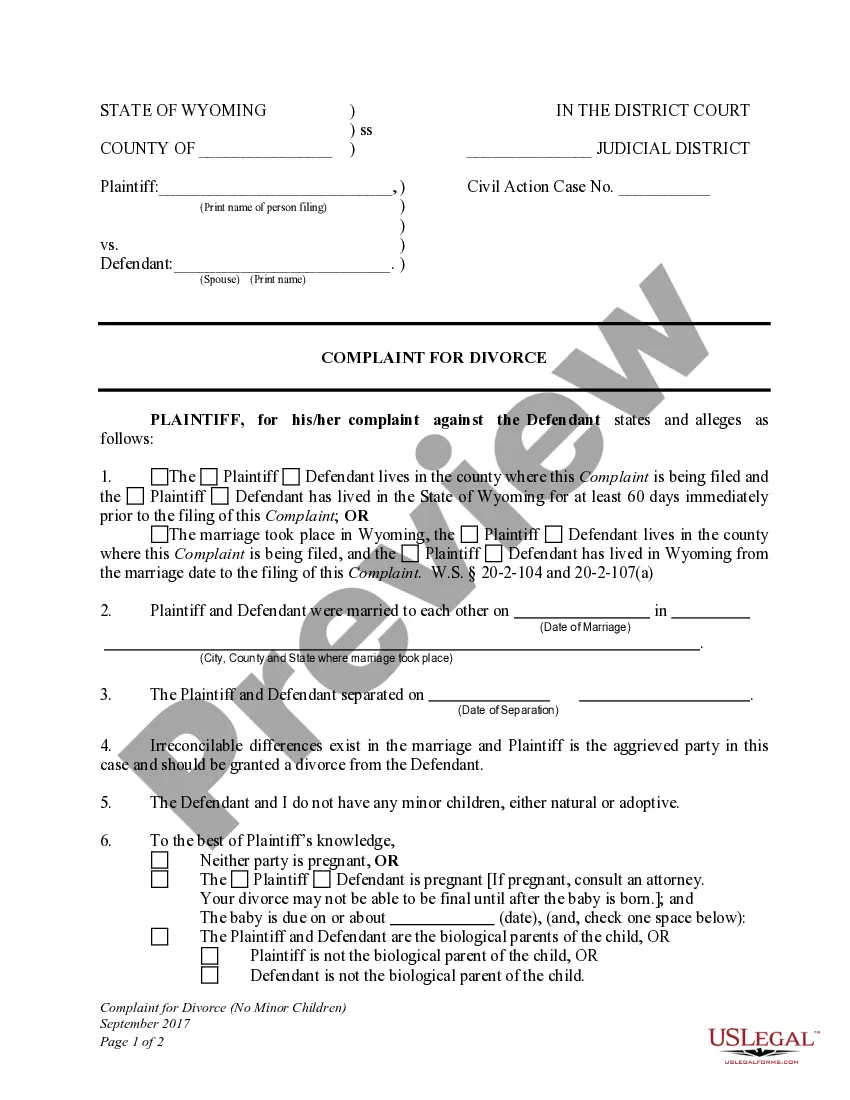
Collective Bargaining Agreement Between University and Faculty Union
What this document covers
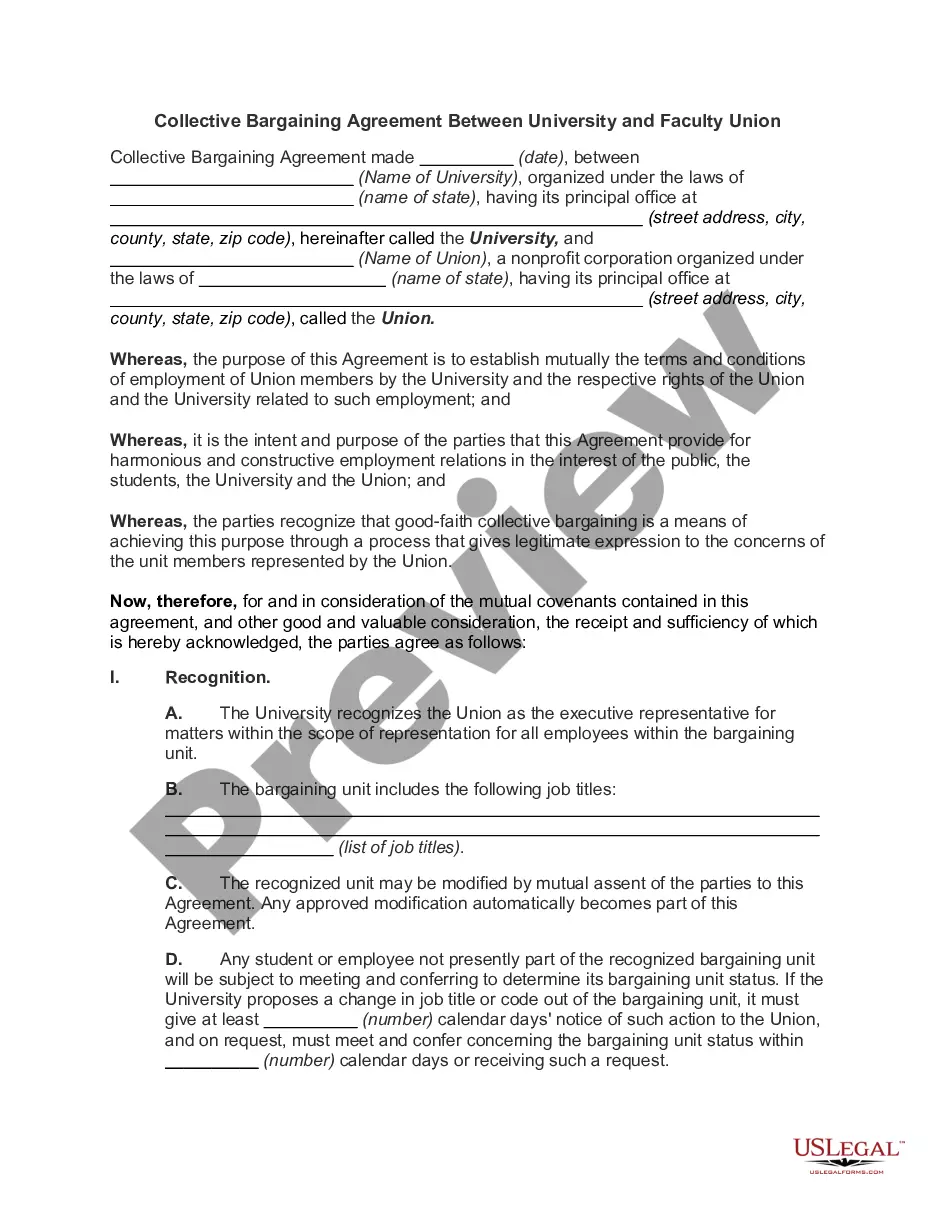
A Collective Bargaining Agreement Between University and Faculty Union is a contract that outlines the hiring practices, working conditions, and dispute resolution methods agreed upon by the university and its faculty union. This type of agreement is distinct from other employment contracts as it specifically addresses the collective rights and responsibilities of faculty as a representative group, ensuring that both the university and the union remain committed to harmonious employment relations.
Form components explained
- Recognition of the union as the representative for faculty members within the bargaining unit.
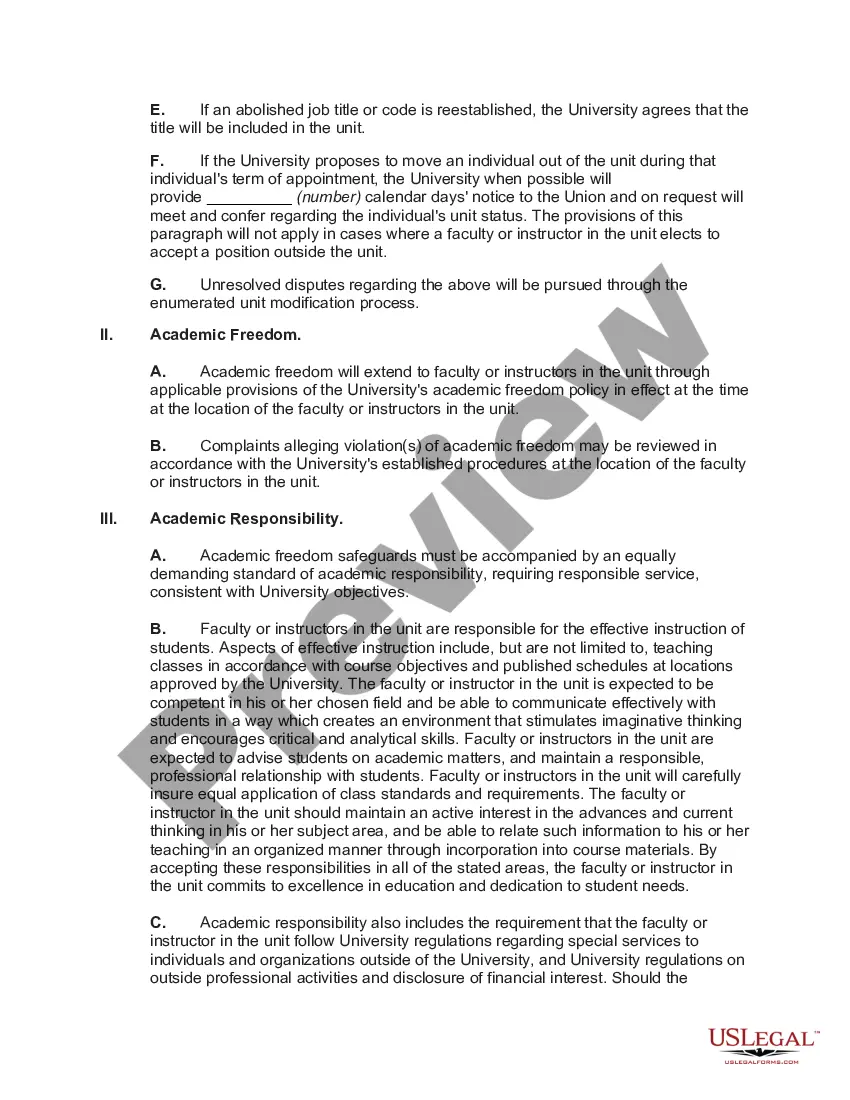
- Definitions and descriptions of academic freedom and academic responsibility for faculty members.
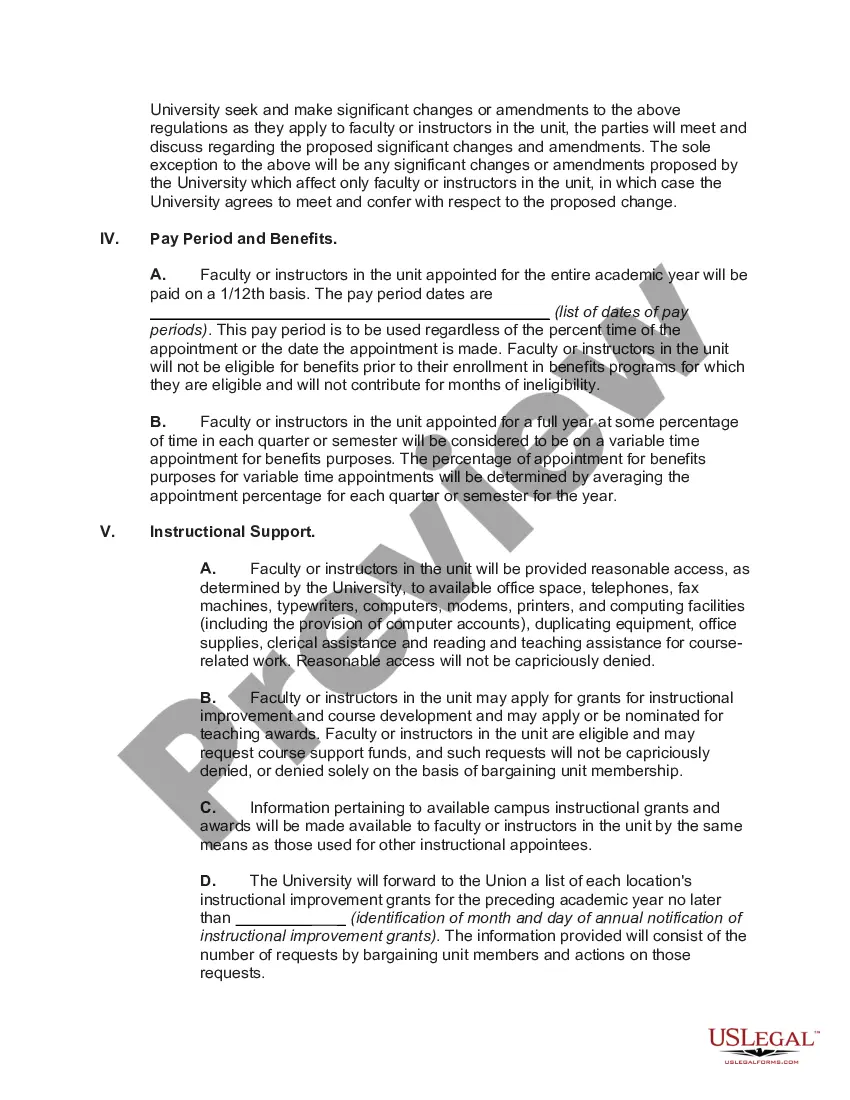
- Details about pay periods, benefits, and eligibility conditions for faculty appointments.
- Provisions for instructional support and access to resources for faculty.
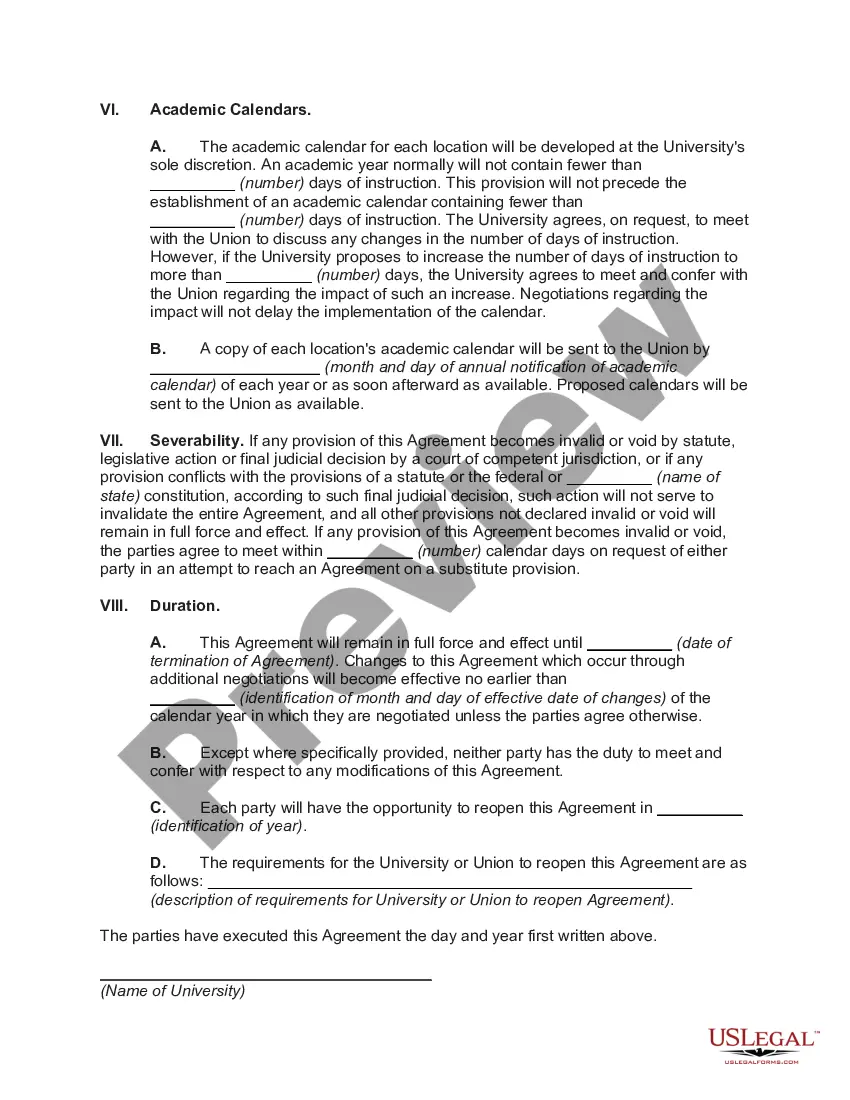
- Establishment of academic calendars and the university's discretion in setting instruction days.
- Severability clause to maintain agreement integrity despite invalid provisions.
- Duration of the agreement and conditions for reopening negotiations.
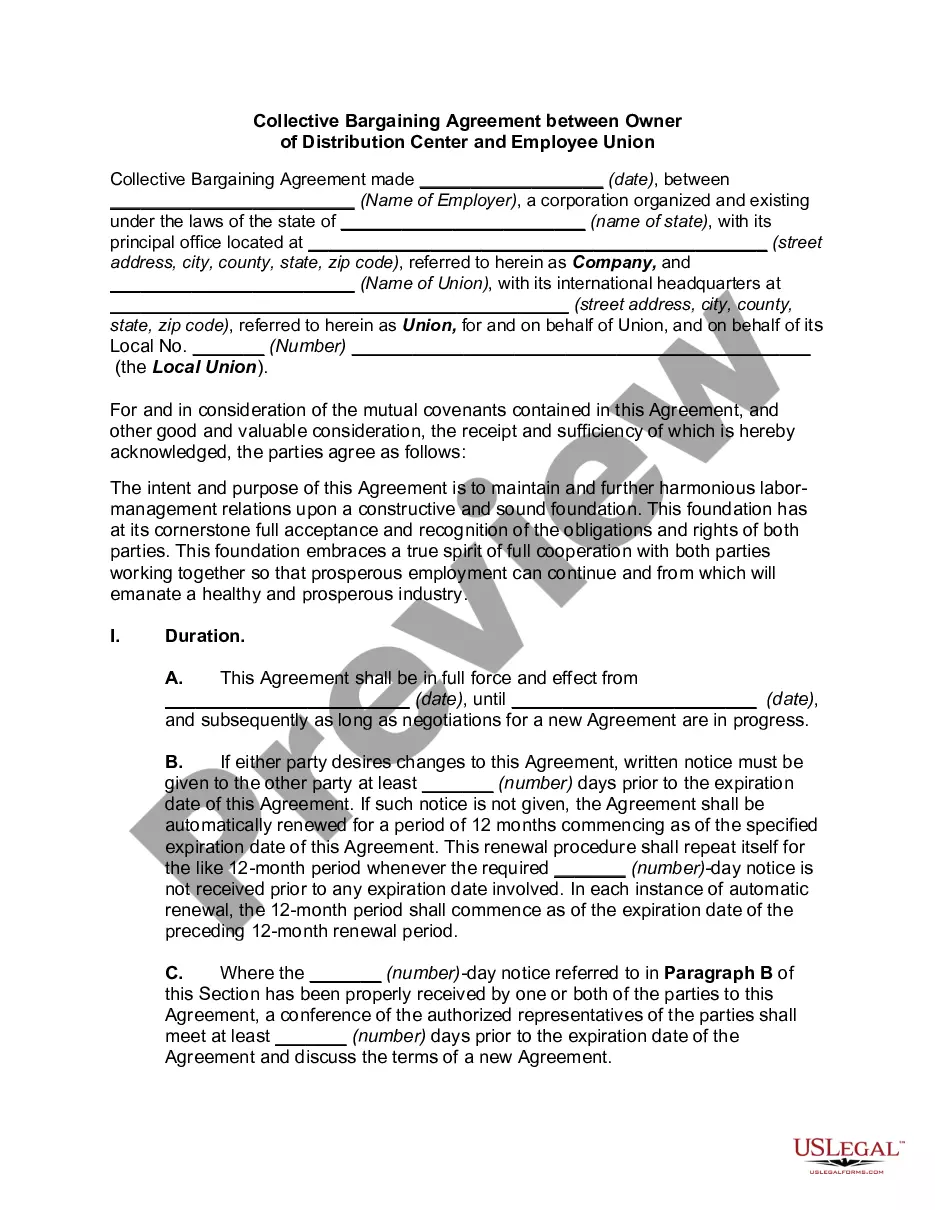
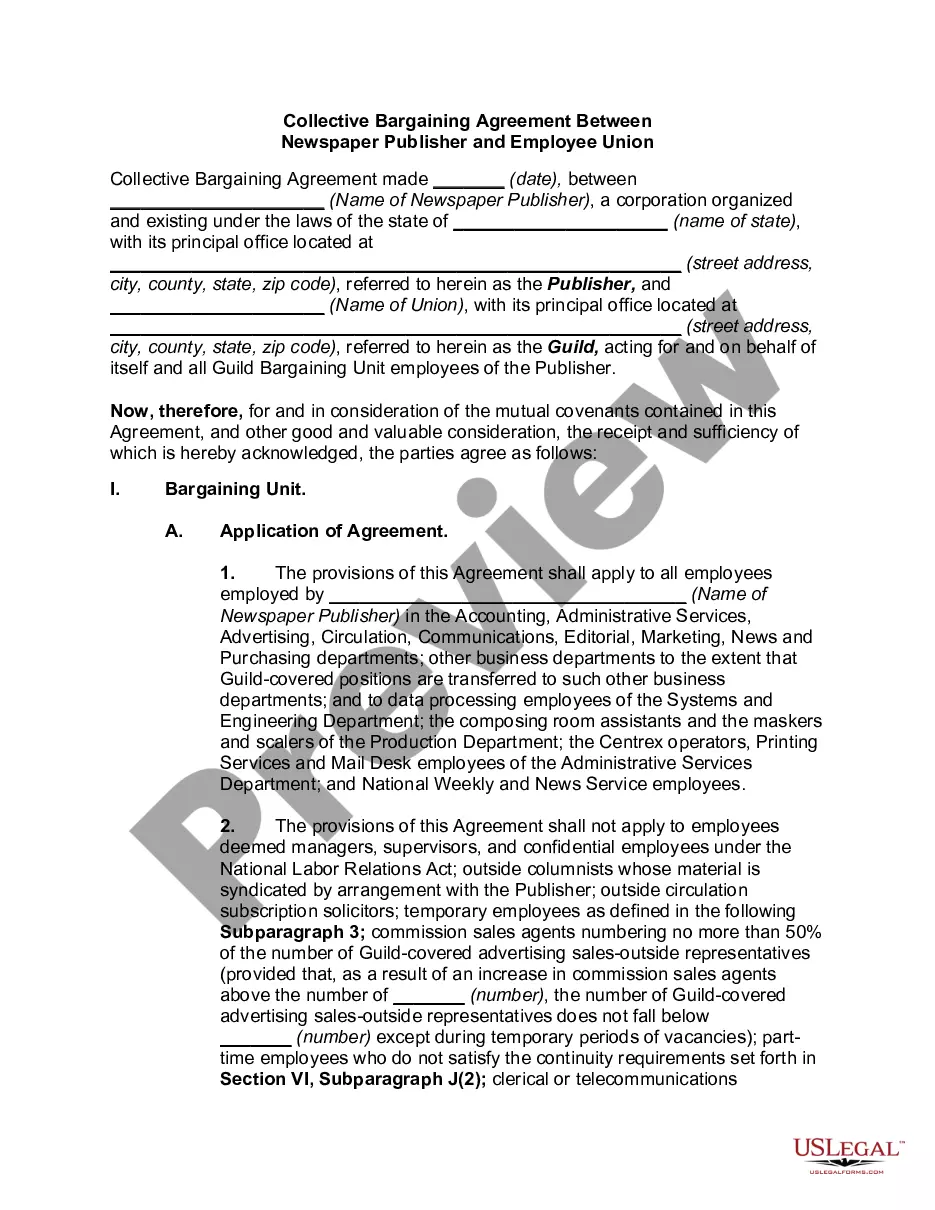
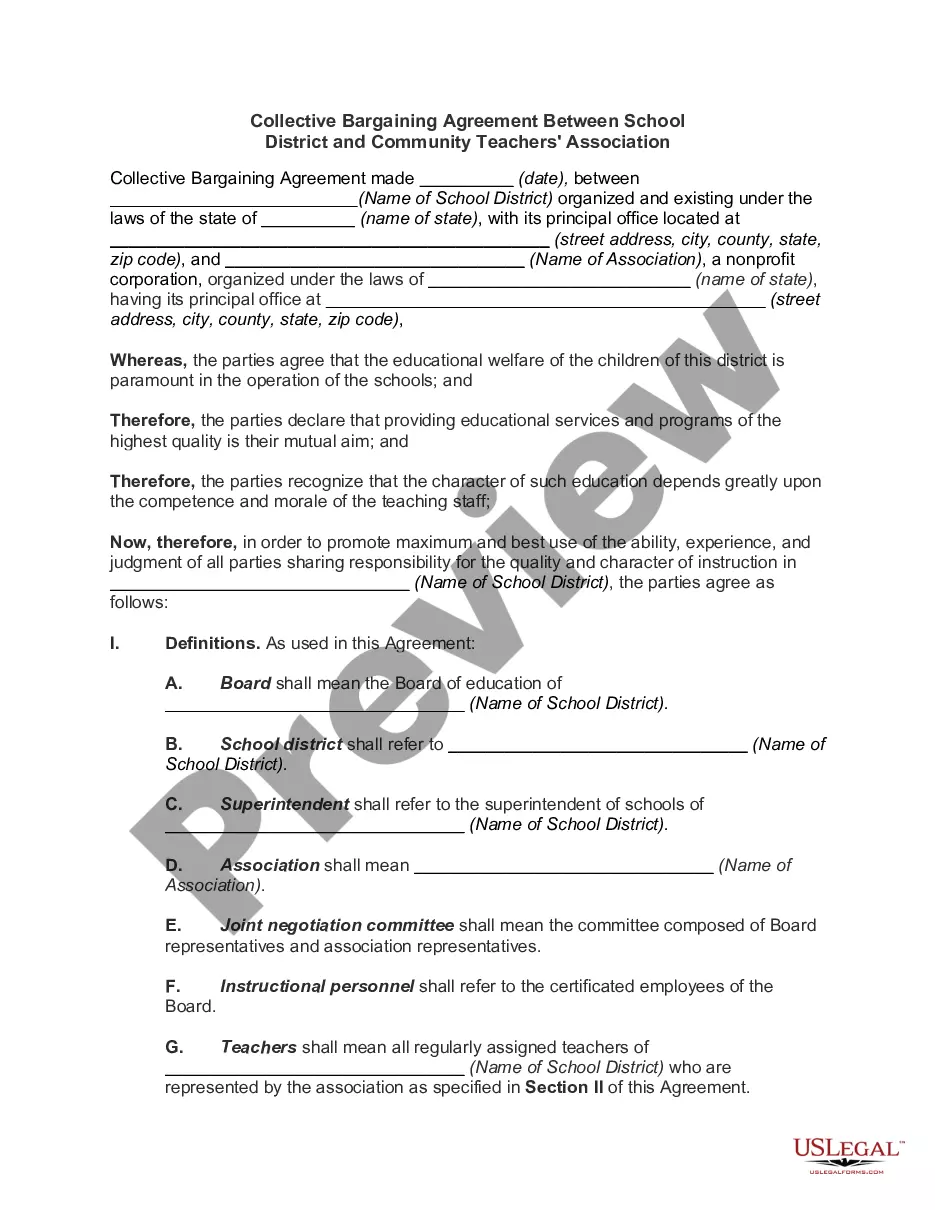
Situations where this form applies
This form is essential when a university and its faculty union decide to formalize employment terms. Use this agreement when initiating collective negotiation processes or when updating existing agreements to reflect changes in employment conditions, benefits, and rights relevant to faculty members. This is crucial during periods of hiring, contractual renewals, or significant policy changes.
Who should use this form
This form is intended for:
- Universities looking to establish or update their collective bargaining agreements with faculty unions.
- Faculty representatives who are negotiating employment conditions on behalf of faculty members.
- Legal professionals engaged in drafting or reviewing agreements related to university employment.
How to complete this form
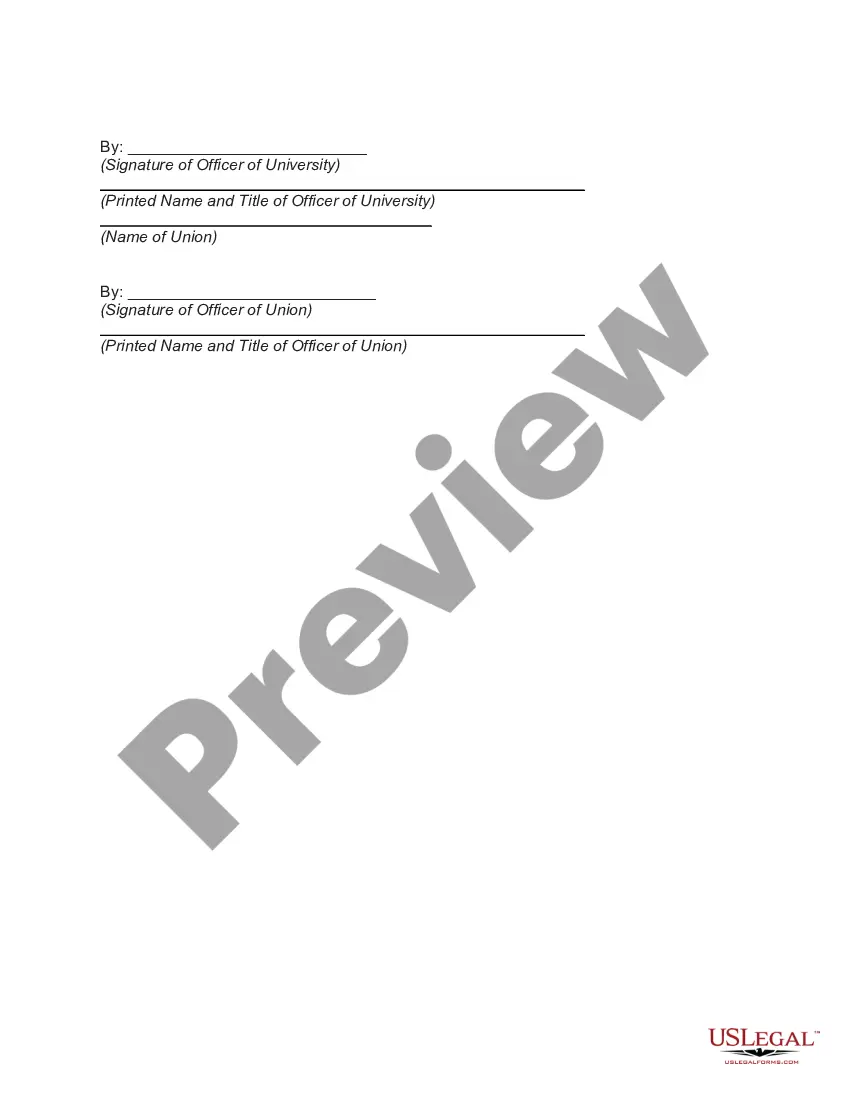
- Identify and enter the date and names of the university and union involved in the agreement.
- Specify the names and addresses for both the university and the union.
- Detail the recognition clause by listing all job titles included in the bargaining unit.
- Outline the pay periods and provide any relevant dates for employee payment schedules.
- Include agreement duration dates and the conditions under which this agreement can be reopened for negotiation.
Does this form need to be notarized?
This form does not typically require notarization unless specified by local law. You can create a legally binding agreement without a notary, but it is advisable to consult legal counsel for state-specific requirements.
Get your form ready online
Our built-in tools help you complete, sign, share, and store your documents in one place.
Make edits, fill in missing information, and update formatting in US Legal Forms—just like you would in MS Word.
Download a copy, print it, send it by email, or mail it via USPS—whatever works best for your next step.
Sign and collect signatures with our SignNow integration. Send to multiple recipients, set reminders, and more. Go Premium to unlock E-Sign.
If this form requires notarization, complete it online through a secure video call—no need to meet a notary in person or wait for an appointment.
We protect your documents and personal data by following strict security and privacy standards.

Make edits, fill in missing information, and update formatting in US Legal Forms—just like you would in MS Word.

Download a copy, print it, send it by email, or mail it via USPS—whatever works best for your next step.

Sign and collect signatures with our SignNow integration. Send to multiple recipients, set reminders, and more. Go Premium to unlock E-Sign.

If this form requires notarization, complete it online through a secure video call—no need to meet a notary in person or wait for an appointment.

We protect your documents and personal data by following strict security and privacy standards.
Typical mistakes to avoid
- Failing to accurately list all job titles within the bargaining unit may lead to misunderstandings about representation.
- Not specifying dates for pay periods or agreement duration can create confusion about employment terms.
- Overlooking the legal requirements specific to the jurisdiction can result in unenforceable agreements.
Benefits of completing this form online
- Convenience of downloading and completing the form at your own pace.
- Editability allows for customization to fit specific needs and circumstances.
- Access to templates drafted by licensed attorneys ensures legal reliability.
Legal use & context
- This collective bargaining agreement is enforceable as long as it is compliant with applicable state and federal labor laws.
- The agreement establishes a legal framework for employment conditions, requiring good-faith negotiations between the university and the union.
- Any modifications or additions to the agreement must be documented to maintain enforceability.
Looking for another form?


Form popularity
FAQ
Collective bargaining is the process in which working people, through their unions, negotiate contracts with their employers to determine their terms of employment, including pay, benefits, hours, leave, job health and safety policies, ways to balance work and family, and more.
Examples of subjects that are mandatory for bargaining include wages, benefits such as health care and pension, grievance and arbitration procedures, contract length, seniority, union security clauses, strikes and lock outs, management rights clauses, and other terms and conditions of employment.
An example of collective bargaining is a labor union engaged in negotiations with management over salaries. In labor law, negotiations between an employer and a labor union or other group representing employees concerning the terms and conditions of the employees' work.
154 defines collective bargaining as referring to: all negotiations which take place between an employer, a group of employers or one or more employers' organisations, on the one hand, and one or more workers' organisations, on the other, for: (a) determining working conditions and terms of employment; and/or.
This type of deal is a labor contract and is often referred to as a "collective bargaining agreement" or CBA. Examples of some of the many topics covered in CBAs between management and employees include employee wages, hours, benefits, time off, raises, promotions, and disciplinary issues.
Collective bargaining is important. It permits employees to work together as a unit to negotiate with employers on a more level playing field. By negotiating as a unit, employees have more bargaining power and leverage at the bargaining table.
Wages. Working hours and conditions. Employee benefits. Grievance and arbitration procedures. Limitations on strikes. The union's rights and responsibilities. Management's rights and responsibilities.
The process that labor unions and management use to agree on a union contract is a negotiation tool referred to as "collective bargaining." When a labor union and management engage in collective bargaining, each party has representatives who comprise its respective negotiation team.
Those subjects include items like wages, overtime, bonuses, grievance procedures, safety and work practices, and seniority, as well as procedures for discharge, layoff, recall, or discipline.