Collective Bargaining Agreement between Owner of Distribution Center and Employee Union
Understanding this form
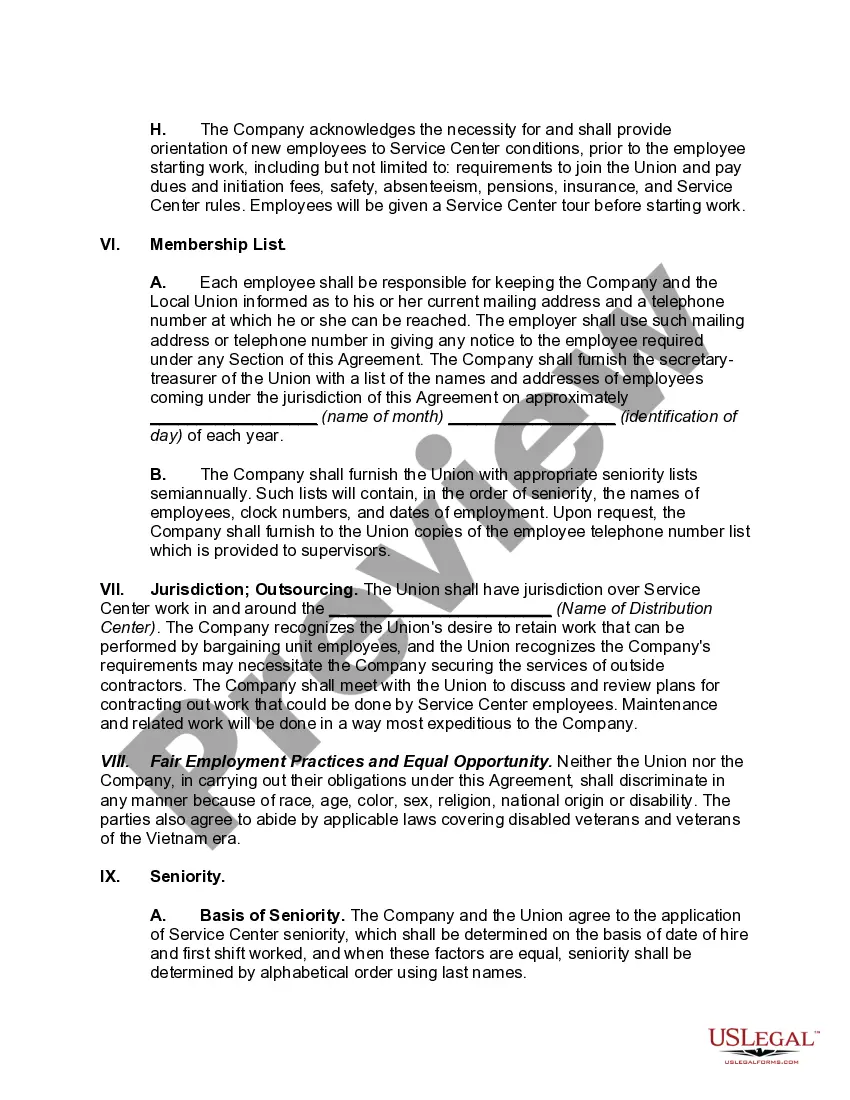
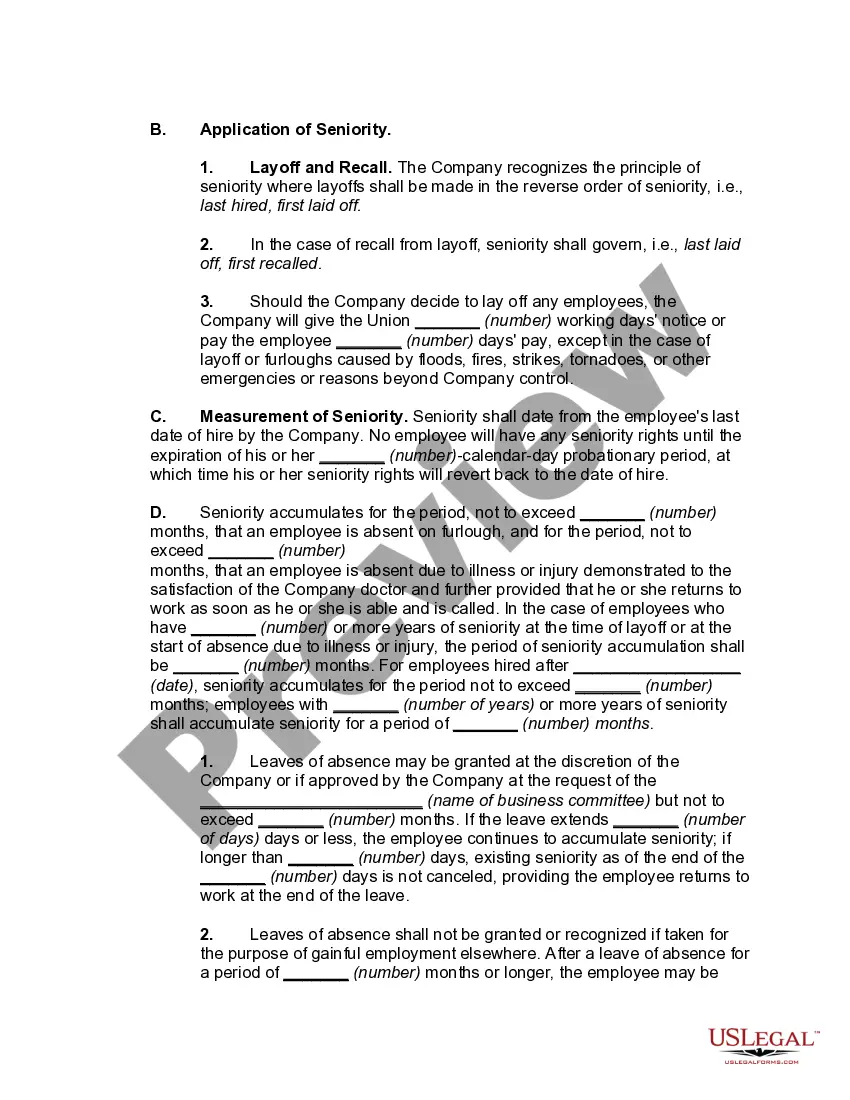
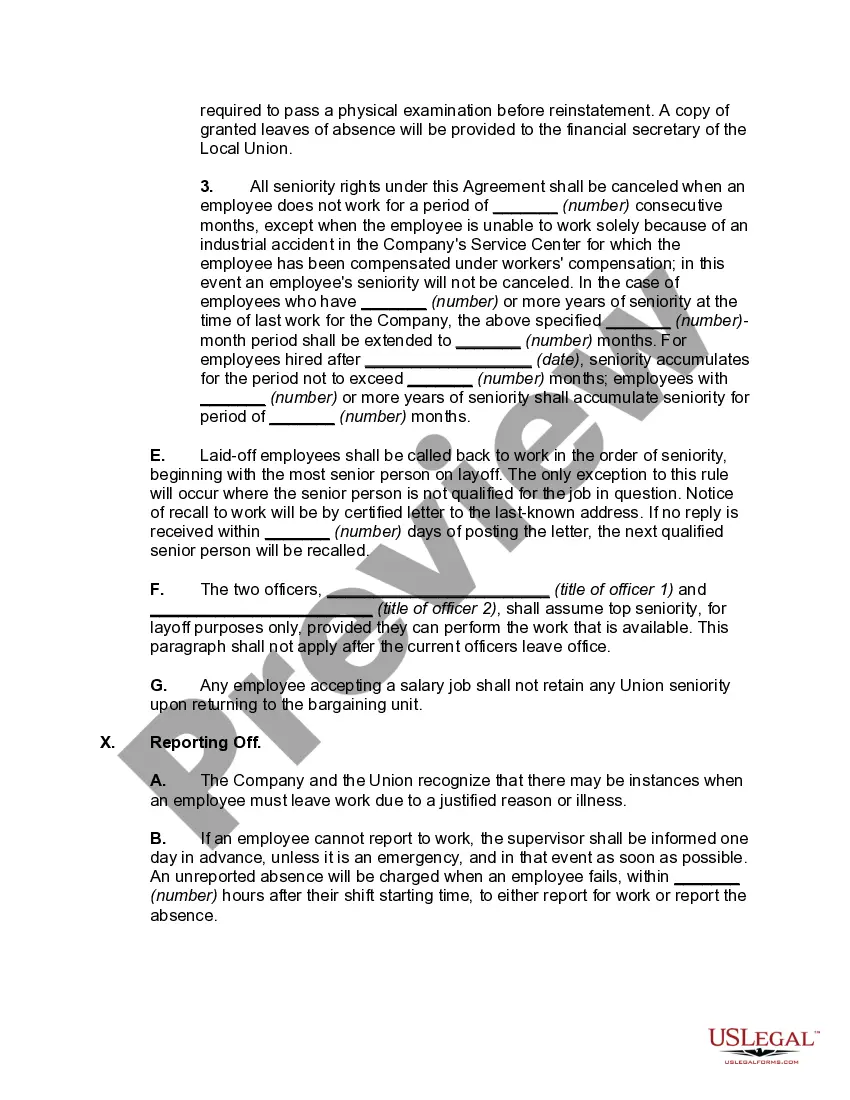
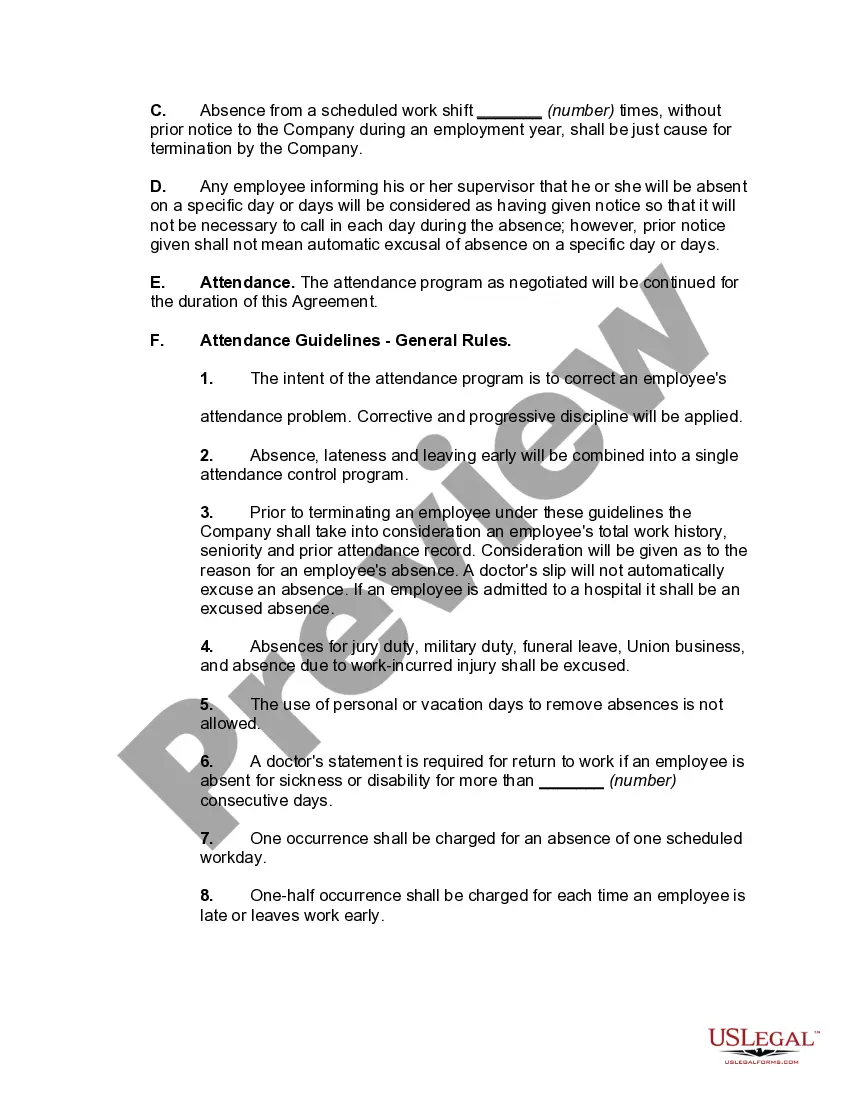
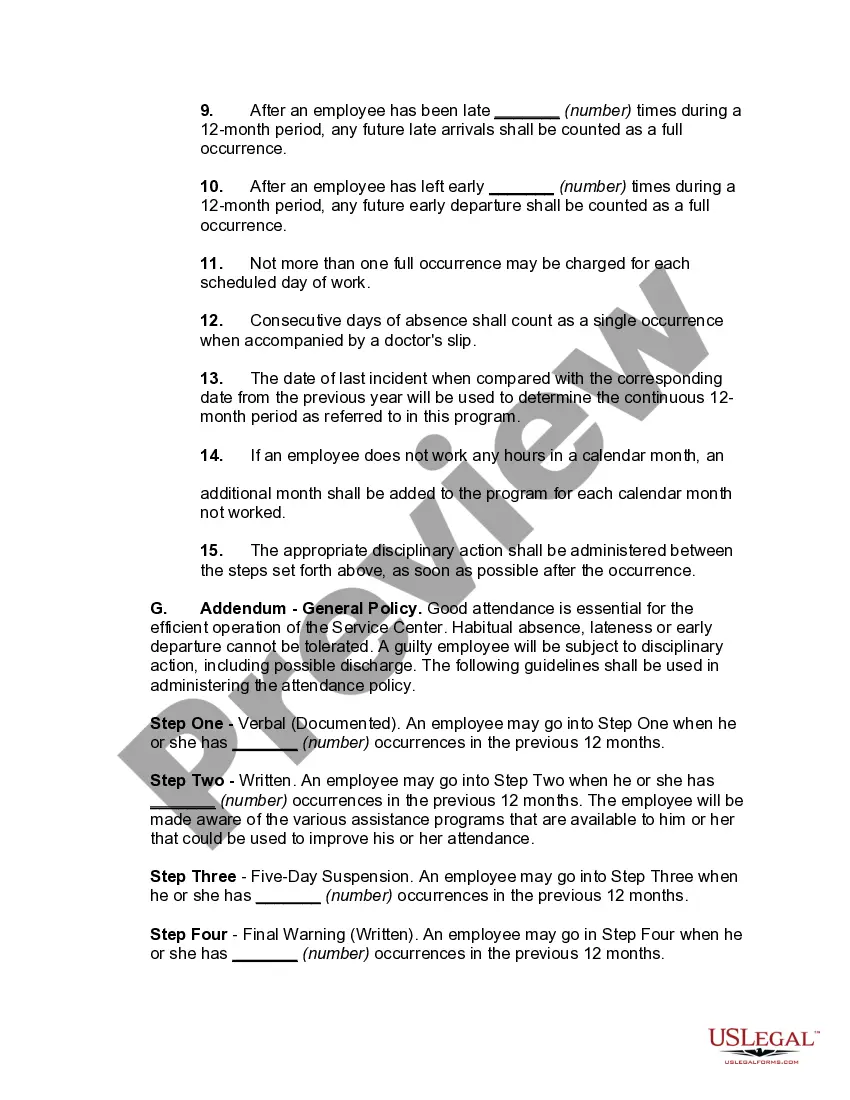
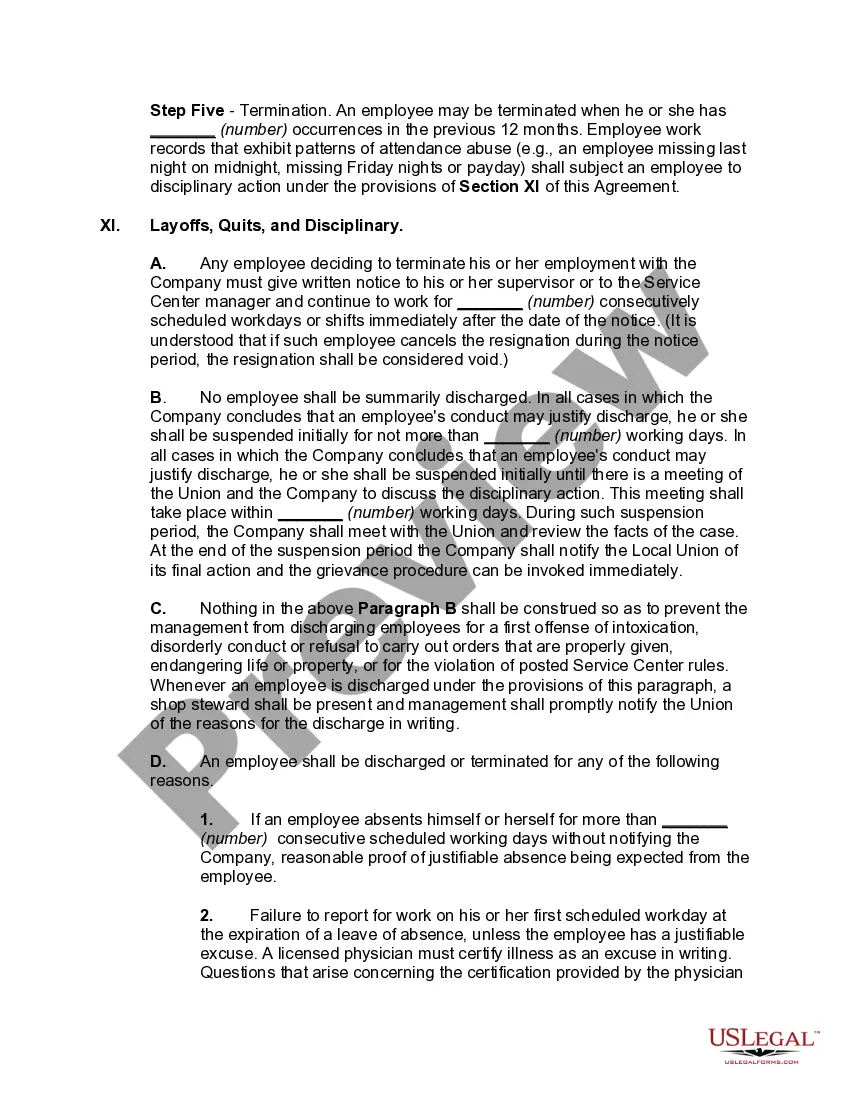
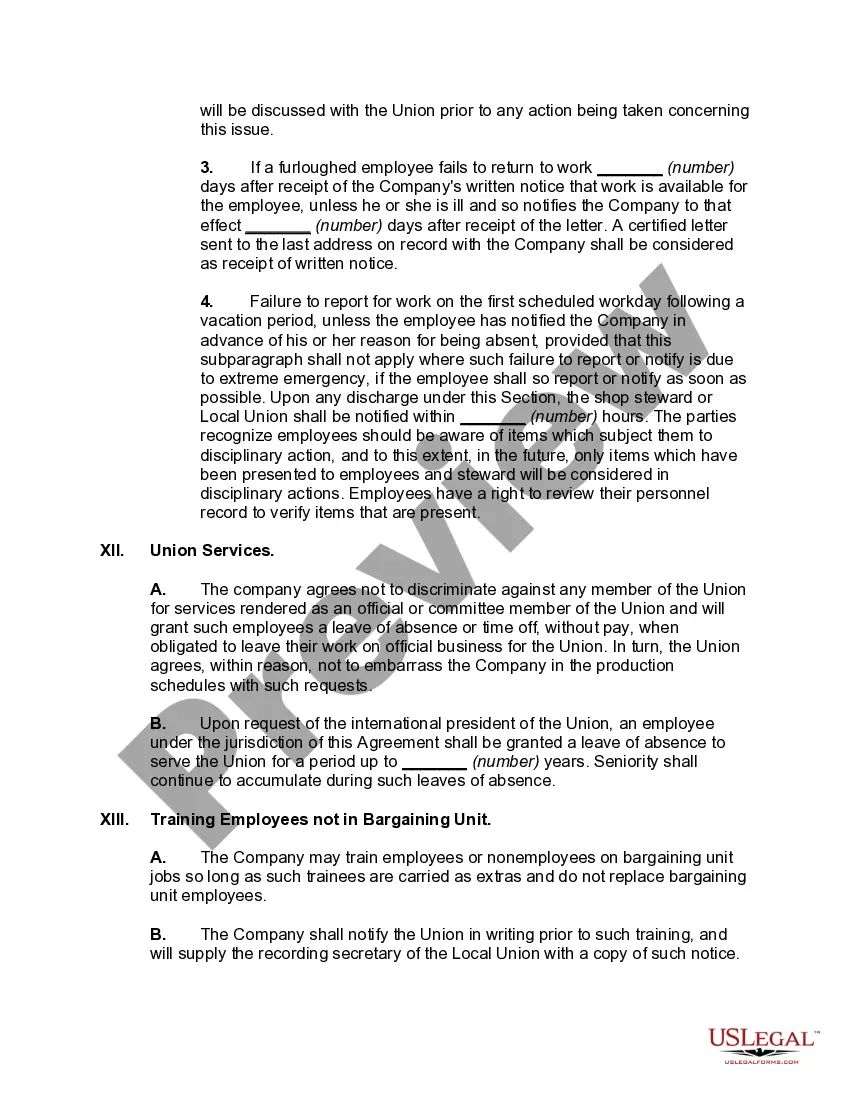
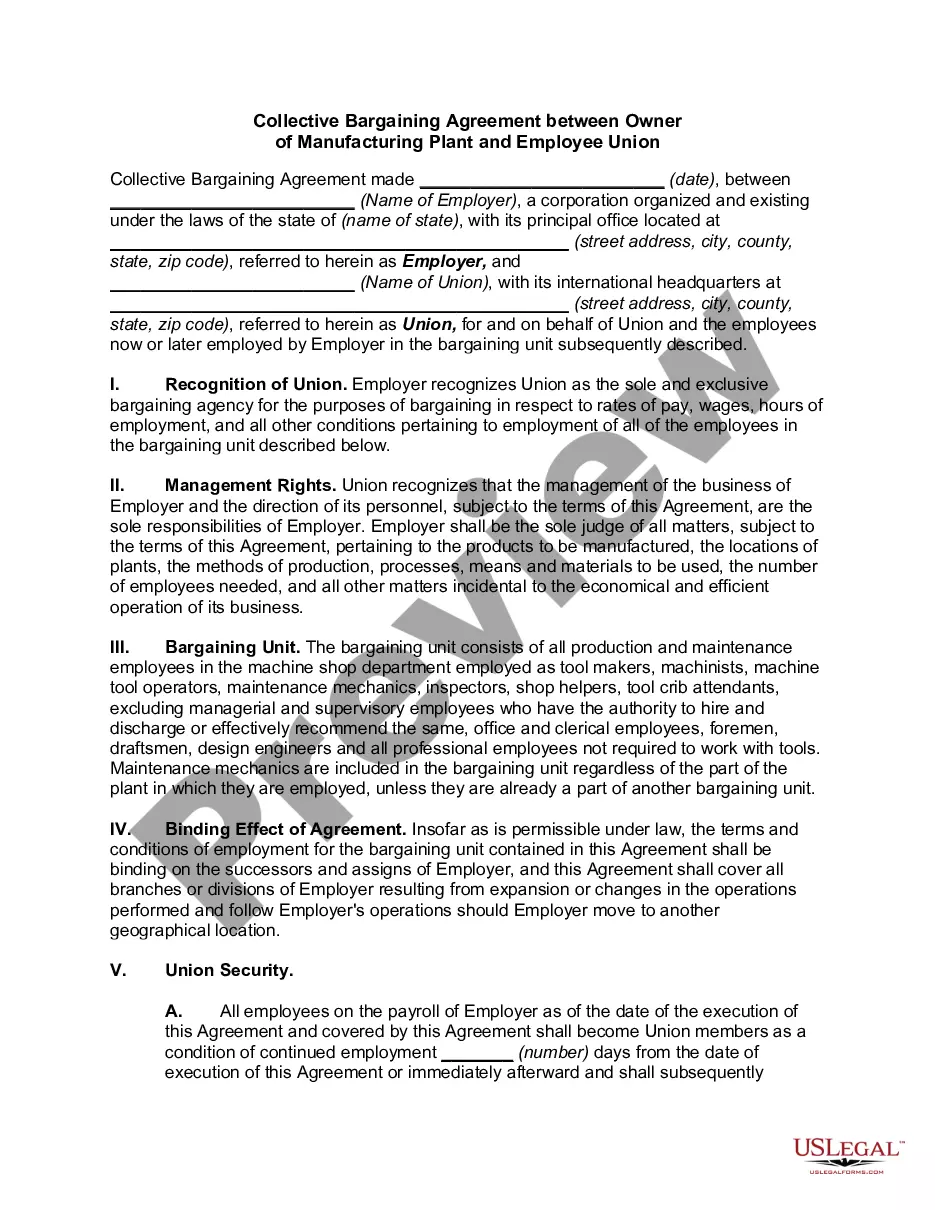
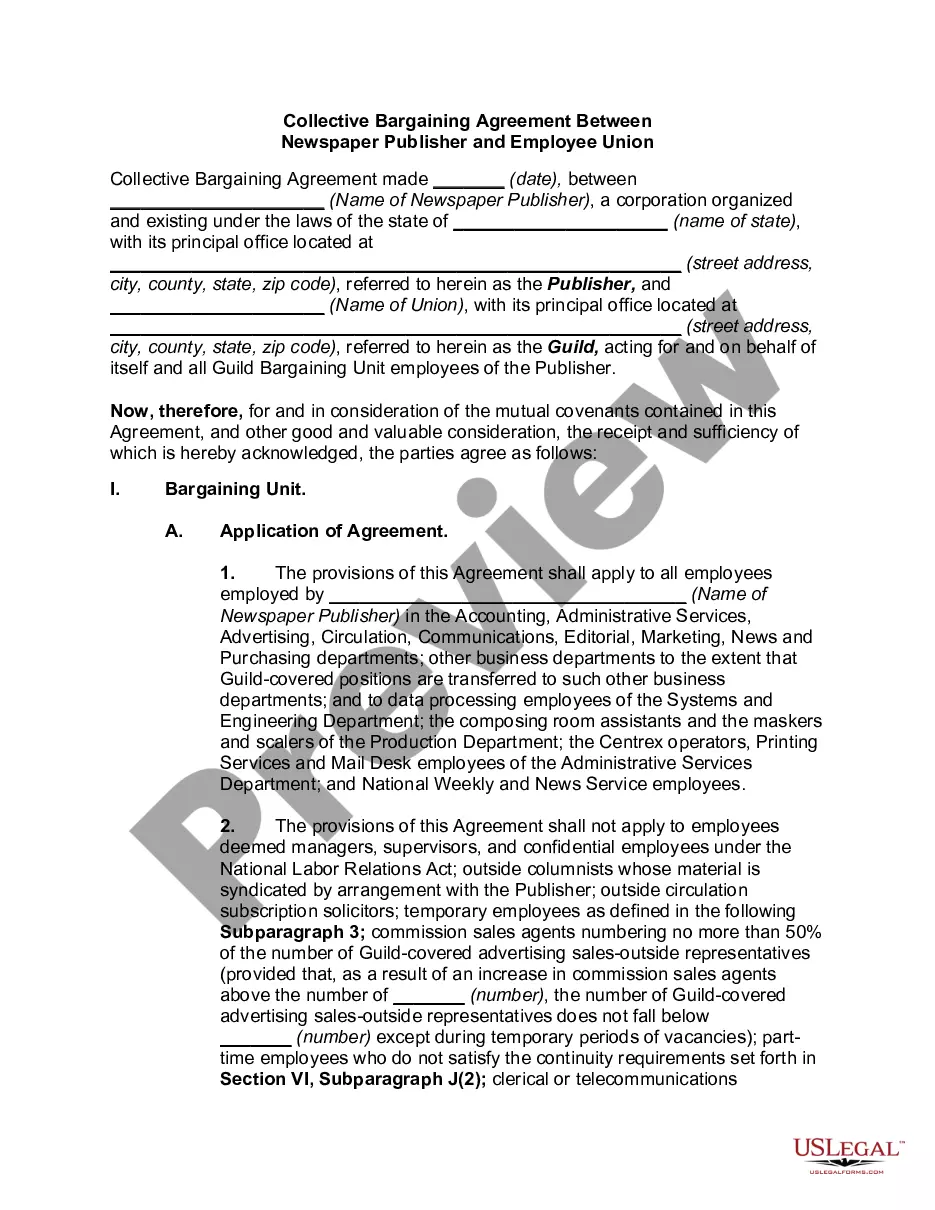
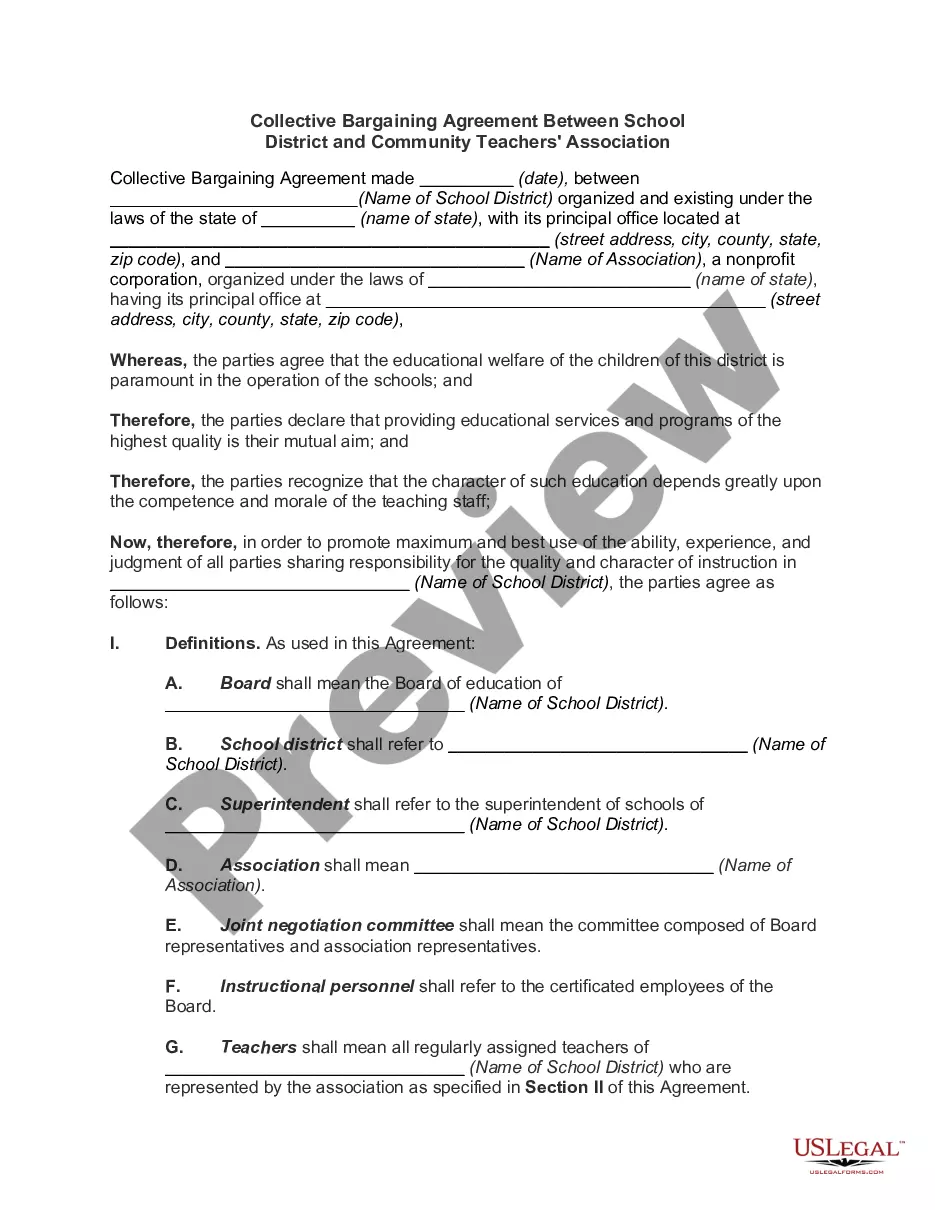
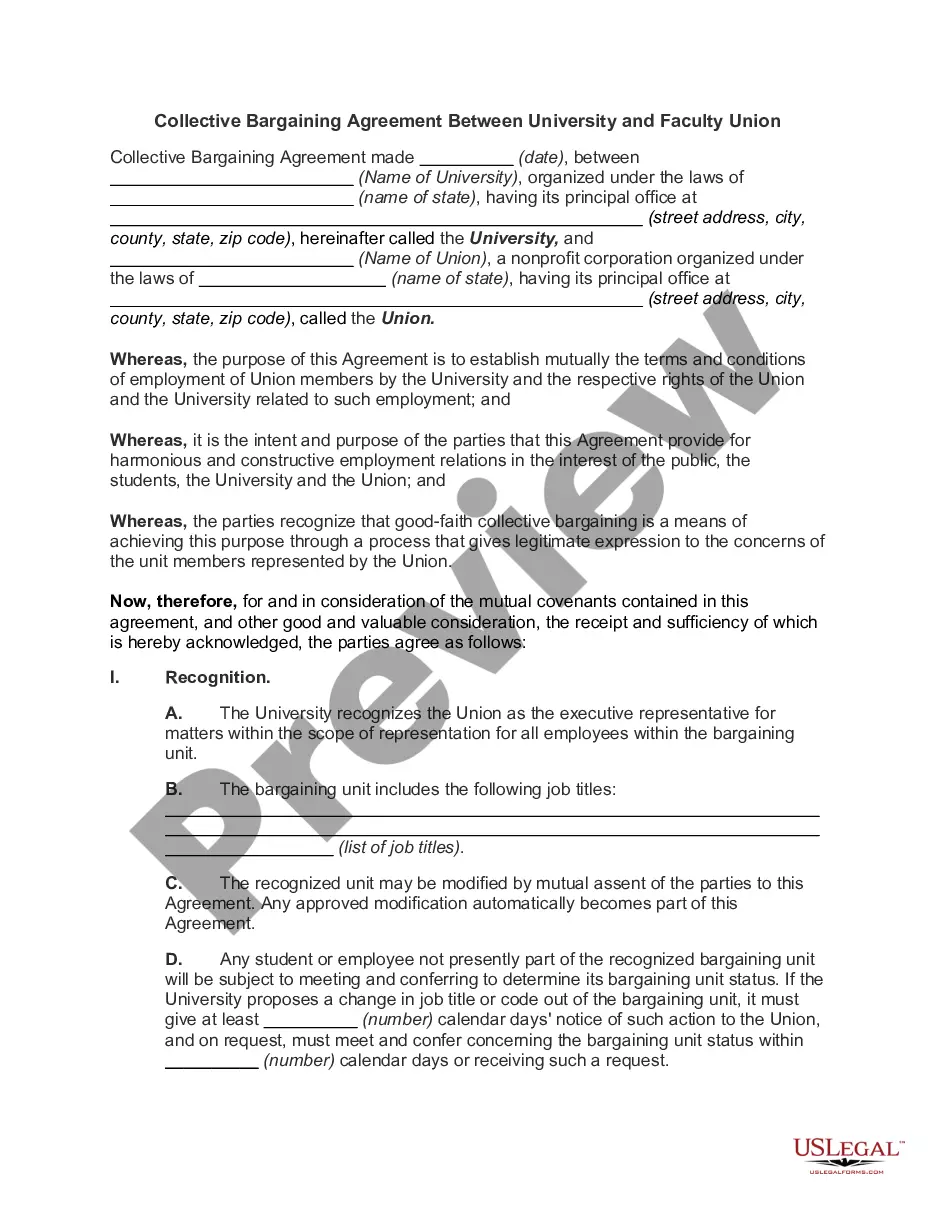
A Collective Bargaining Agreement (CBA) between the owner of a distribution center and an employee union is a legally binding contract that outlines the rights and obligations of both parties. Unlike standard contracts, this agreement is designed to manage a range of issues that may arise in the workplace, establishing a framework for labor relations. It serves as a foundational document for fostering cooperation between management and employees while ensuring workplace protections and benefits for union members.
Key components of this form
- Duration of the agreement, including renewal terms
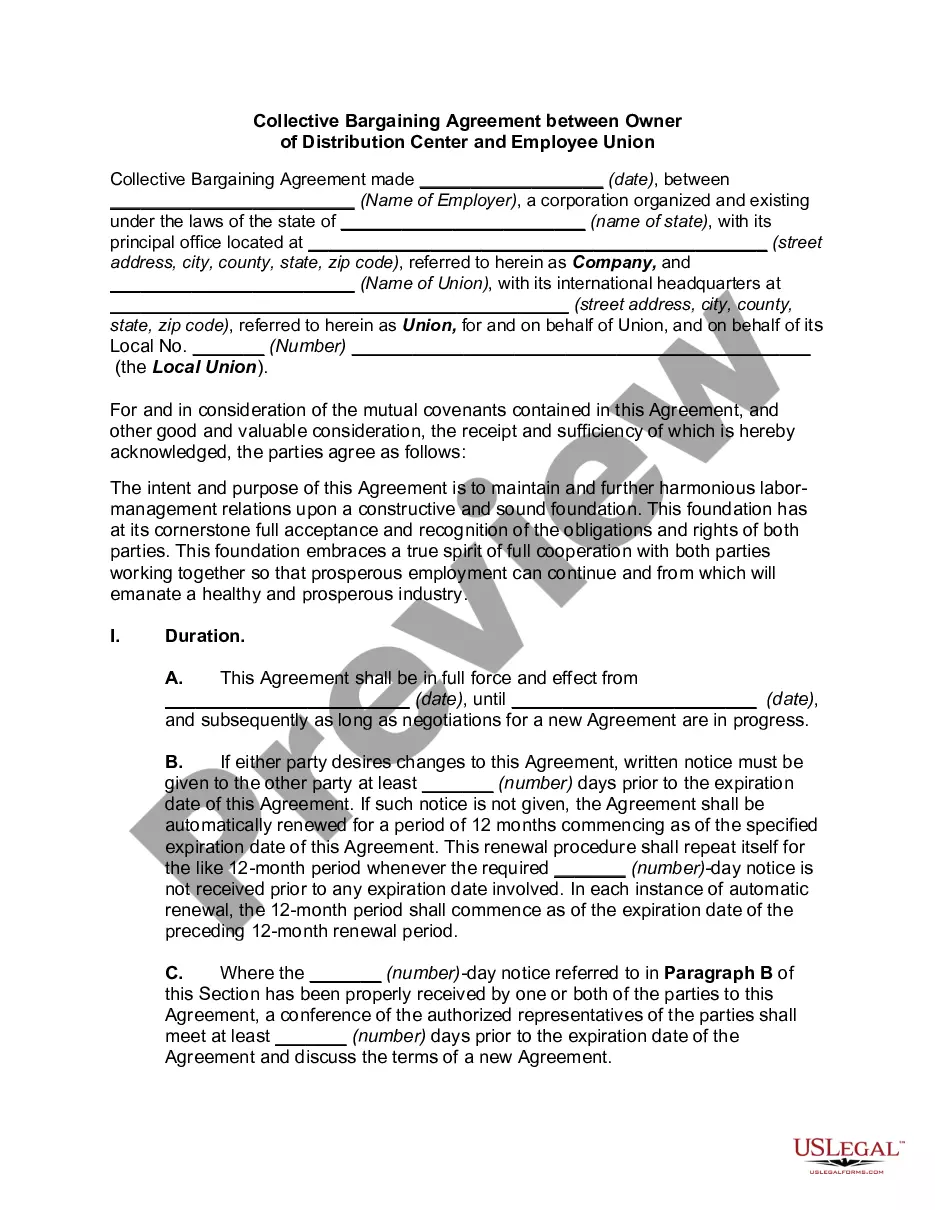
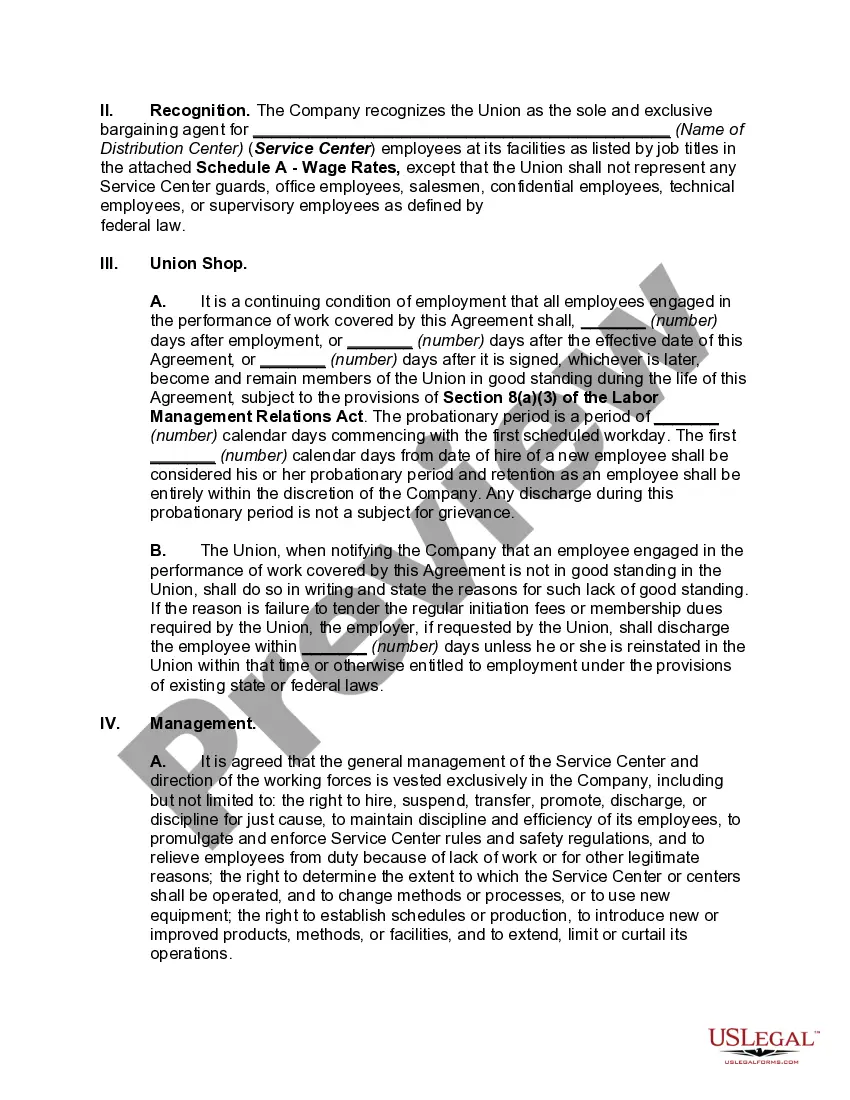
- Recognition of the union as the exclusive bargaining representative
- Union shop clauses that define membership requirements
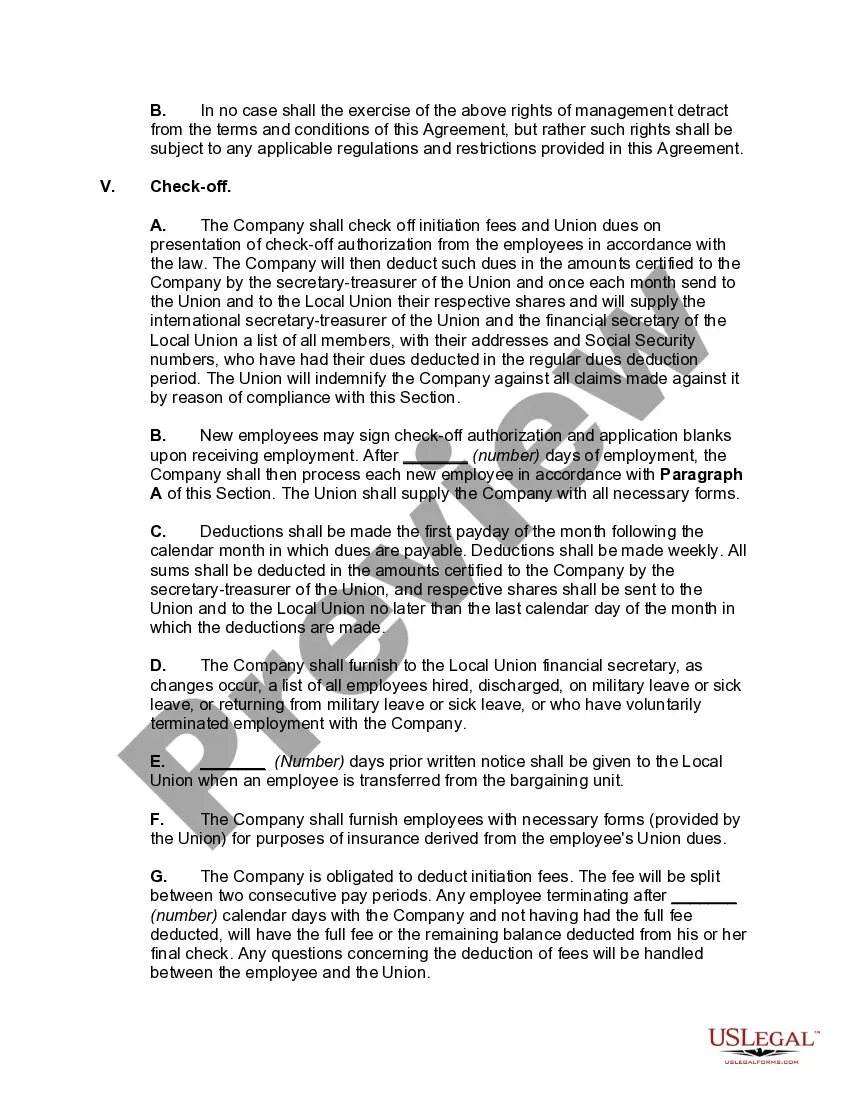
- Management rights outlining employer authority
- Provisions for union dues and fees deduction
- Guidelines for grievances and resolution processes

When this form is needed
This form should be used when establishing a collective bargaining agreement between a distribution center and its employee union. It is essential during negotiations to ensure that workersâ rights are protected, and it serves as a reference for solving workplace disputes, addressing management practices, and ensuring compliance with labor laws.
Who can use this document
- Employers or management of distribution centers looking to formalize labor agreements
- Employee unions seeking to represent workers' interests in negotiations
- Labor relations professionals involved in drafting or negotiating employment contracts
- Legal representatives assisting firms or unions in establishing labor agreements
Steps to complete this form
- Identify the parties by filling in the names of the employer and the union.
- Specify the effective dates of the agreement and any renewal terms.
- Detail the recognition clause identifying the union's bargaining rights.
- Complete sections regarding union membership and management rights.
- Include provisions for grievance procedures to resolve potential disputes.
- Ensure signatures are obtained from authorized representatives of both parties.
Does this form need to be notarized?
This form does not typically require notarization unless specified by local law. It is advisable to check with a legal professional to ensure compliance with any state-specific requirements regarding notarization.
Get your form ready online
Our built-in tools help you complete, sign, share, and store your documents in one place.
Make edits, fill in missing information, and update formatting in US Legal Forms—just like you would in MS Word.
Download a copy, print it, send it by email, or mail it via USPS—whatever works best for your next step.
Sign and collect signatures with our SignNow integration. Send to multiple recipients, set reminders, and more. Go Premium to unlock E-Sign.
If this form requires notarization, complete it online through a secure video call—no need to meet a notary in person or wait for an appointment.
We protect your documents and personal data by following strict security and privacy standards.

Make edits, fill in missing information, and update formatting in US Legal Forms—just like you would in MS Word.

Download a copy, print it, send it by email, or mail it via USPS—whatever works best for your next step.

Sign and collect signatures with our SignNow integration. Send to multiple recipients, set reminders, and more. Go Premium to unlock E-Sign.

If this form requires notarization, complete it online through a secure video call—no need to meet a notary in person or wait for an appointment.

We protect your documents and personal data by following strict security and privacy standards.
Typical mistakes to avoid
- Failing to include all parties involved in the agreement, leading to disputes over representation.
- Neglecting to specify the clear terms for duration and renewal clauses.
- Omitting required signatures, which can invalidate the agreement.
- Not aligning the agreement provisions with state-specific labor laws.
Why use this form online
- Convenience of downloading and accessing the form anytime, anywhere.
- Ease of customization to reflect specific needs and terms of the distribution center and union.
- Access to templates drafted by licensed attorneys ensuring legal validity.
- Ability to make real-time updates during negotiations.
Legal use & context
- The agreement must be clear and enforceable under federal and state labor laws.
- It serves as a tool for both parties to uphold worker rights and management duties.
- It's crucial to review the agreement periodically to ensure continued legal compliance.
Key takeaways
- The collective bargaining agreement is unique and ranges beyond traditional contracts.
- Outlines significant aspects of labor relations such as union recognition and workplace governance.
- Contains enforced terms for resolving disputes and detailing employee rights.
Looking for another form?


Form popularity
FAQ
A collective bargaining agreement (CBA) is a written legal contract between an employer and a union representing the employees.
Collective Bargaining Agreements (CBA) negotiated by both the trade union and employer are posted online once they are submitted to the Director of Mediation Services, as outlined in the Labour Relations Code.
What are the types of collective bargaining? Distributive Bargaining. Integrative Bargaining. Productivity Bargaining. Composite Bargaining. Concessionary Bargaining.
When a workplace has a union, negotiation between employees and employers defines the terms that govern certain aspects of the workplace. The legal contract that defines these terms is called a collective bargaining agreement (CBA).
A collective bargaining agreement (CBA) is a written legal contract between an employer and a union representing the employees. The CBA is the result of an extensive negotiation process between the parties regarding topics such as wages, hours, and terms and conditions of employment.
Your union and employer must bargain in good faith about wages, hours, and other terms and conditions of employment until they agree on a labor contract or reach a stand-off or ?impasse.? If negotiations reach an impasse, an employer can impose terms and conditions so long as it offered them to the union before impasse
Collective bargaining is the process in which working people, through their unions, negotiate contracts with their employers to determine their terms of employment, including pay, benefits, hours, leave, job health and safety policies, ways to balance work and family, and more.
The main types of collective bargaining include composite bargaining, concessionary bargaining, distributive bargaining, integrative bargaining, and productivity bargaining.