Illinois Subcontractors 60 Day Notice
About this form
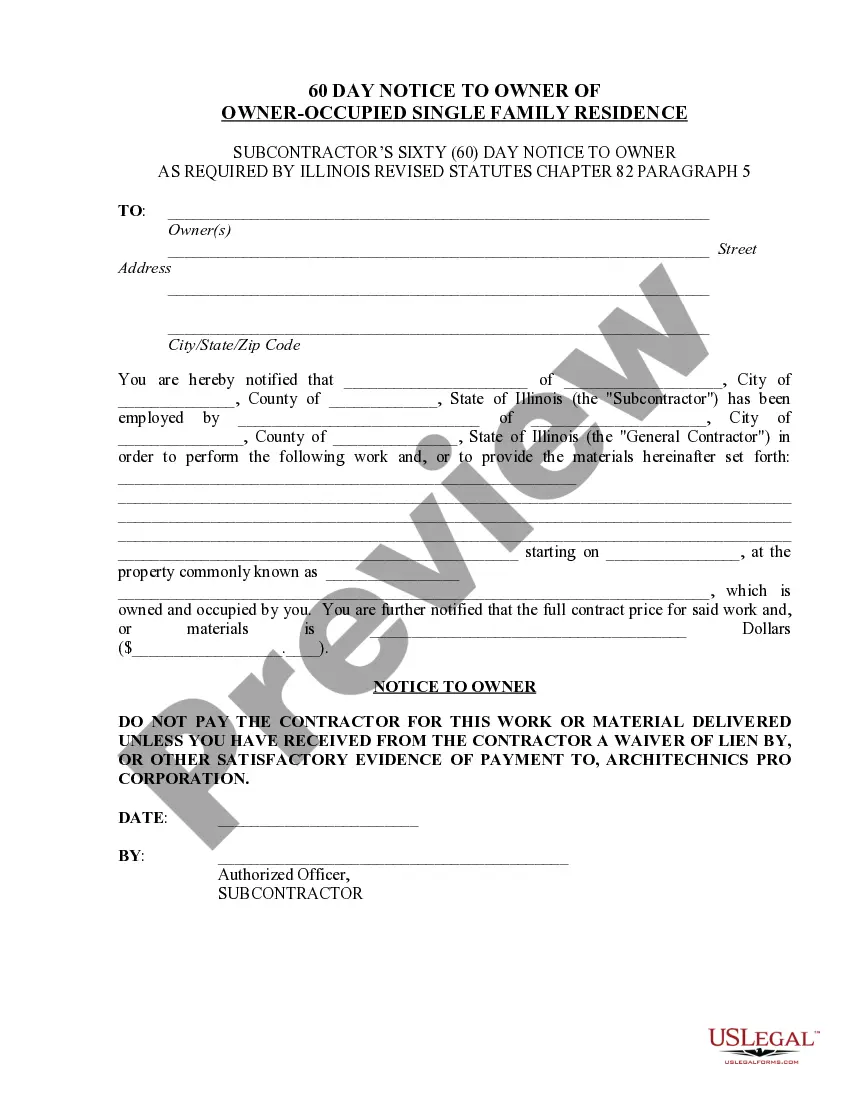
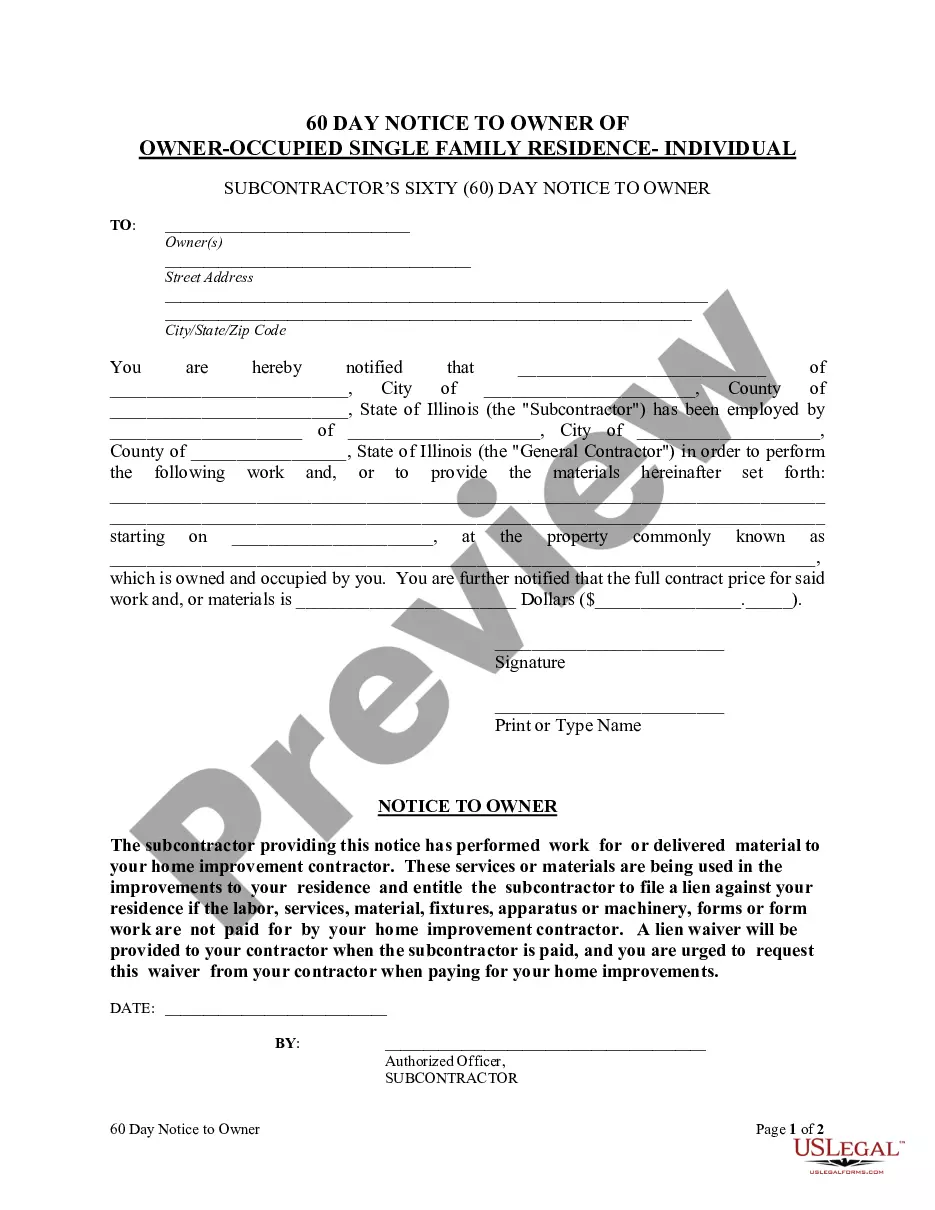
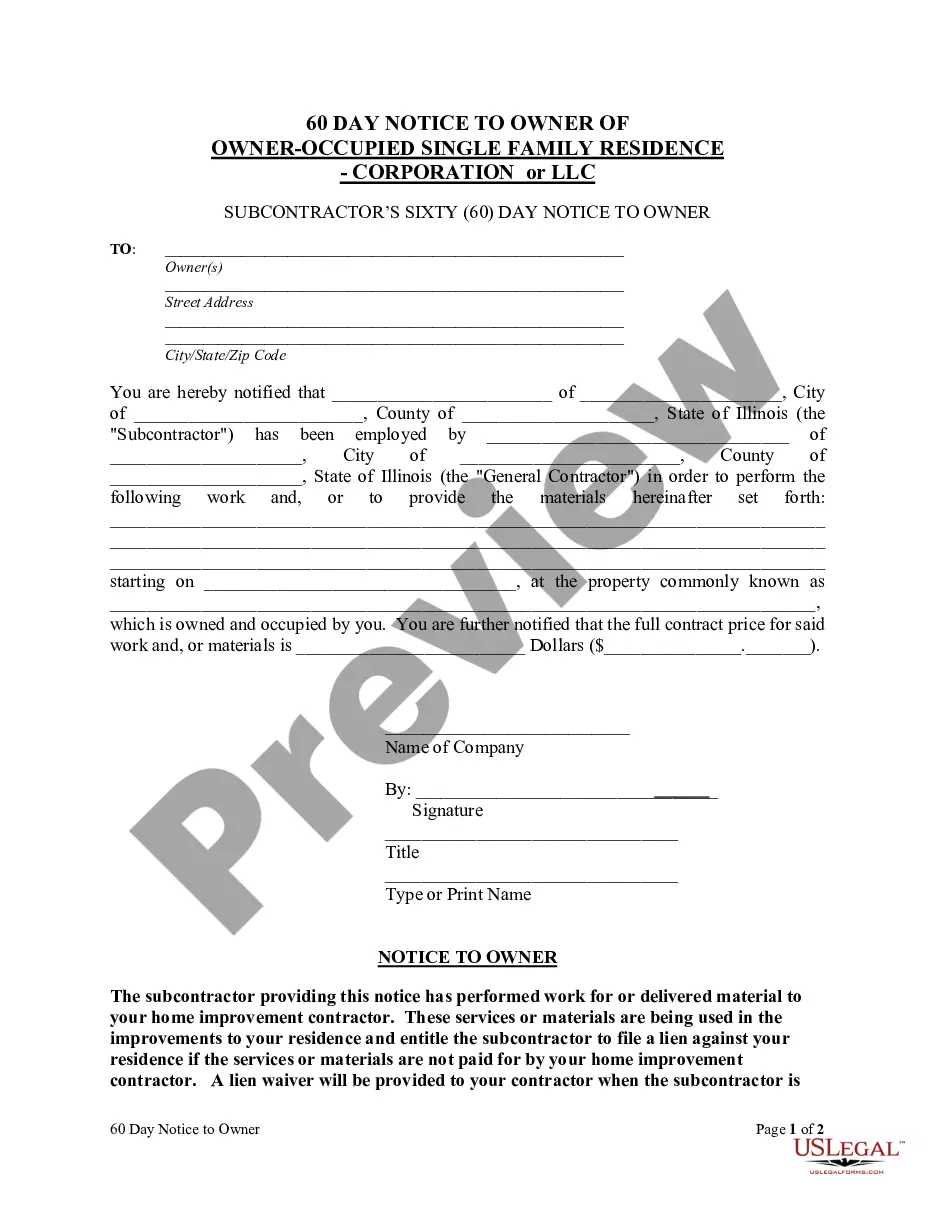
The Subcontractors 60 Day Notice is a legal document that informs property owners that a subcontractor has been hired to perform work on their property. This notice serves to alert the owners of an upcoming job, allowing them 60 days to prepare for the subcontractor's arrival. It also advises the owners not to pay the general contractor without receiving a signed Waiver of Lien from the subcontractor, ensuring that the owners are protected from potential payment disputes. This form is important for safeguarding the interests of property owners and differs from similar notices in its specific focus on subcontractor arrangements and lien rights.
Main sections of this form
- Identification of the subcontractor and the general contractor.
- Description of the work to be performed or materials to be provided.
- Notification of the contract price for the work or materials.
- Instructions to the owner about paying the contractor.
- The signature of an authorized officer from the subcontractor.
When to use this document
This form should be used in scenarios where a subcontractor has been hired to perform work on a residential property. If you are a subcontractor preparing to start a job for a general contractor, providing this notice to the property owner is essential for legal protection. It is particularly relevant in cases where the owner may need to verify that lien waivers are received before making payments to the general contractor.
Who should use this form
- Subcontractors working on residential projects who need to notify property owners.
- General contractors managing subcontractor relationships to ensure legal compliance.
- Property owners wanting to be aware of subcontractor engagements and their rights regarding payments.
How to prepare this document
- Identify the names of the subcontractor and the general contractor.
- Provide the detailed description of the work to be completed or materials to be supplied.
- Specify the start date of the work along with the property address.
- Enter the total contract price for the work being performed.
- Ensure the form is signed by an authorized officer of the subcontractor.
Does this document require notarization?
This form does not typically require notarization unless specified by local law. However, it is advisable to check local regulations to ensure compliance with any additional requirements that may apply.
Get your form ready online
Our built-in tools help you complete, sign, share, and store your documents in one place.
Make edits, fill in missing information, and update formatting in US Legal Forms—just like you would in MS Word.
Download a copy, print it, send it by email, or mail it via USPS—whatever works best for your next step.
Sign and collect signatures with our SignNow integration. Send to multiple recipients, set reminders, and more. Go Premium to unlock E-Sign.
If this form requires notarization, complete it online through a secure video call—no need to meet a notary in person or wait for an appointment.
We protect your documents and personal data by following strict security and privacy standards.

Make edits, fill in missing information, and update formatting in US Legal Forms—just like you would in MS Word.

Download a copy, print it, send it by email, or mail it via USPS—whatever works best for your next step.

Sign and collect signatures with our SignNow integration. Send to multiple recipients, set reminders, and more. Go Premium to unlock E-Sign.

If this form requires notarization, complete it online through a secure video call—no need to meet a notary in person or wait for an appointment.

We protect your documents and personal data by following strict security and privacy standards.
Mistakes to watch out for
- Failing to provide a complete description of the work to be performed.
- Not signing the notice by an authorized officer.
- Omitting the contract price or inaccurately stating it.
- Neglecting to notify the property owner within the required time frame.
Why use this form online
- Convenience of downloading and completing the form from any location.
- Editability allows you to easily input specific details regarding your project.
- Reliability, with each form drafted by licensed attorneys to meet legal standards.
- Access to a secure and compliant resource for your legal documentation needs.
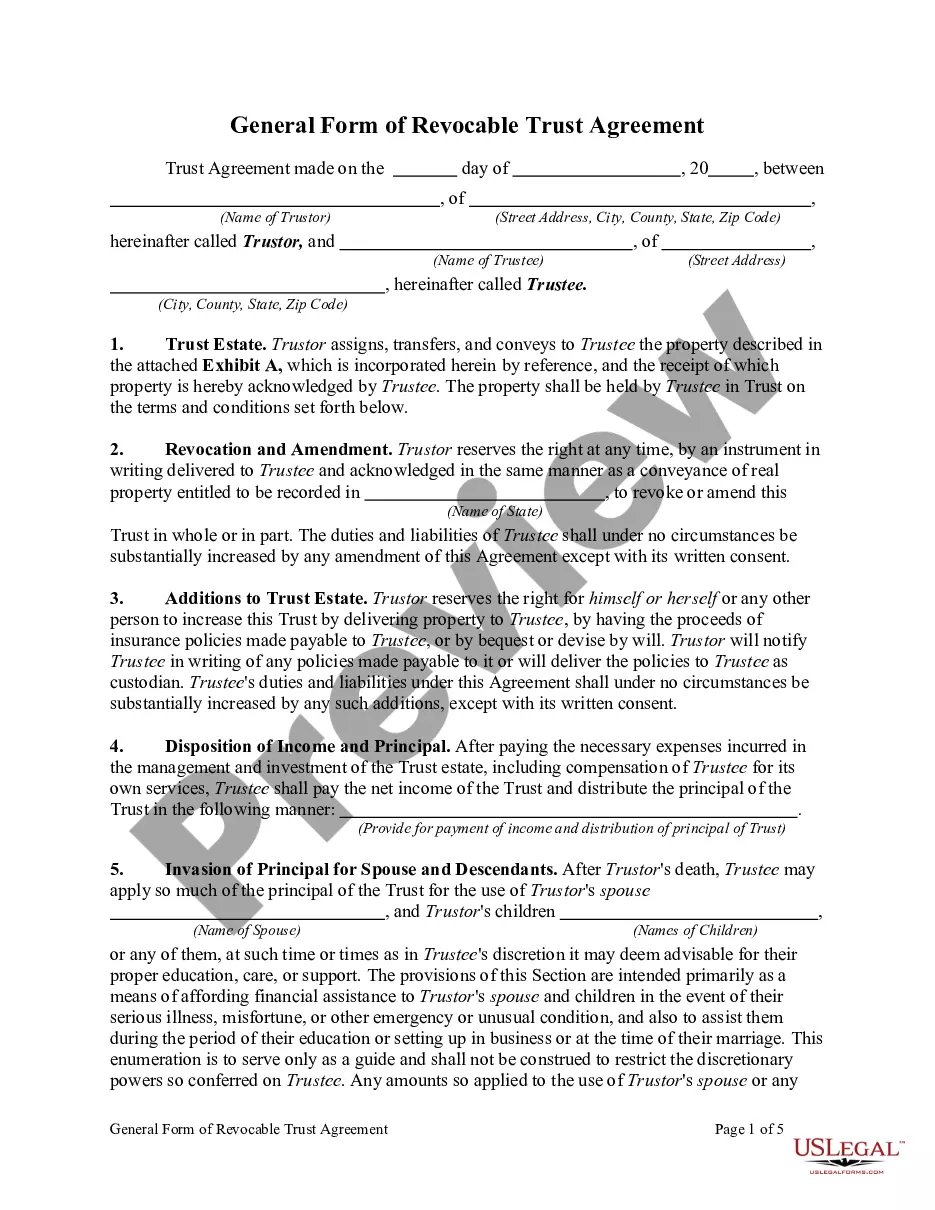
Looking for another form?
Form popularity
FAQ
If a general contractor refuses to pay his subcontractors, they can make a claim against the payment bond. The surety company will pay out the subcontractors for at least part of their money and take the contractor to court.
Essentially, a subcontractor will perform all or part of the obligations of the contractor's contract.Depending on the Subcontractor Agreement, they may be responsible for providing their own materials and equipment for the task they are hired for. If contractors are the managers, subcontractors are the workers.
Read the Subcontract. Twice. Due diligence. Are the prime contract or the plans and specs incorporated into the subcontract? Consider business objectives. Payment is not the only important provision. What is the bottom line? Negotiate. Think long term. Knowledge is power.
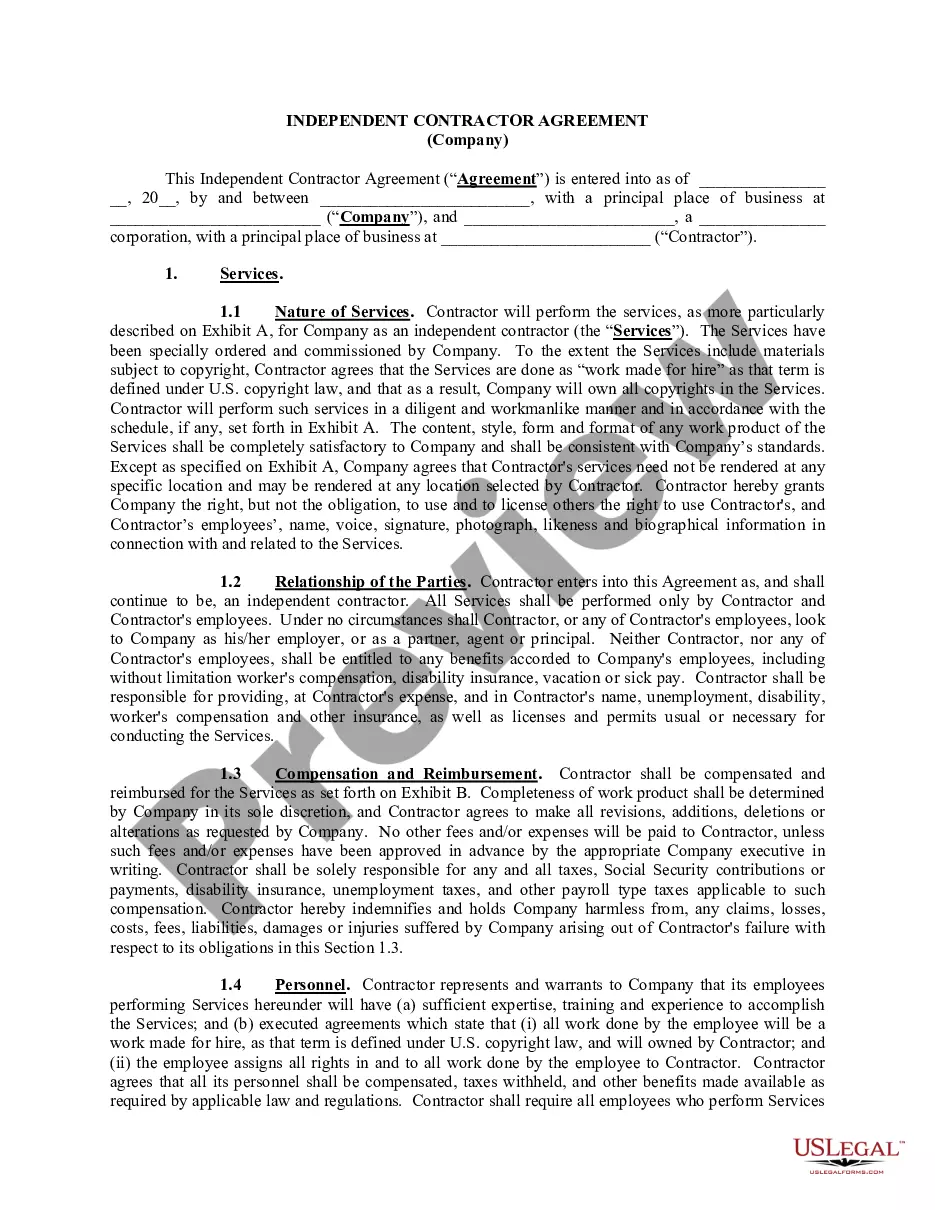
Scope of the Project. Timing for Completion: Duration of Work Clause. Payment and Billing Clause. Independent Contractor Notice. Non-Disclosure Agreement. Non-Complete Clause. Work for Hire Inclusion. Responsibilities for Insurance for Accidental Damages.
Define the needs of the project. Finalize the provisions of the agreement, such as the due dates. Clarify the terms for payment. Write a draft of the contract and send it to the subcontractor for her review. Decide on a method to handle disputes, should one arise between you and the subcontractor.
Put it in writing. Clearly define roles and responsibilities for both the subcontractor and your company. Train for customer service. Many subs lack the benefit of your experience with successful customer service. Pay properly. Evaluate. Take precautions.
The disadvantages contractors doing this work lie in costs: The hourly expenses are high, and the professionals are independent in that they don't report to supervisors inside the company. These factors make it challenging to control the costs of these subcontracts.
If the general contractor goes out of business or files for bankruptcy, you can still file a lawsuit or an insurance claim against any subcontractors who contributed to the construction defect. Subcontractors should also have their own insurance to cover any defects they are responsible for.
Prequalify Your Subs. Before you take pricing or solicit bids from subcontractors you need to make sure they are capable of completing the work, both physically and financially. Know the Signs. Craft a Plan. Put It in a Contract. Protect Yourself. Termination of Contract.