Arkansas Deed of Distribution from Personal Representative to two Individuals
What this document covers
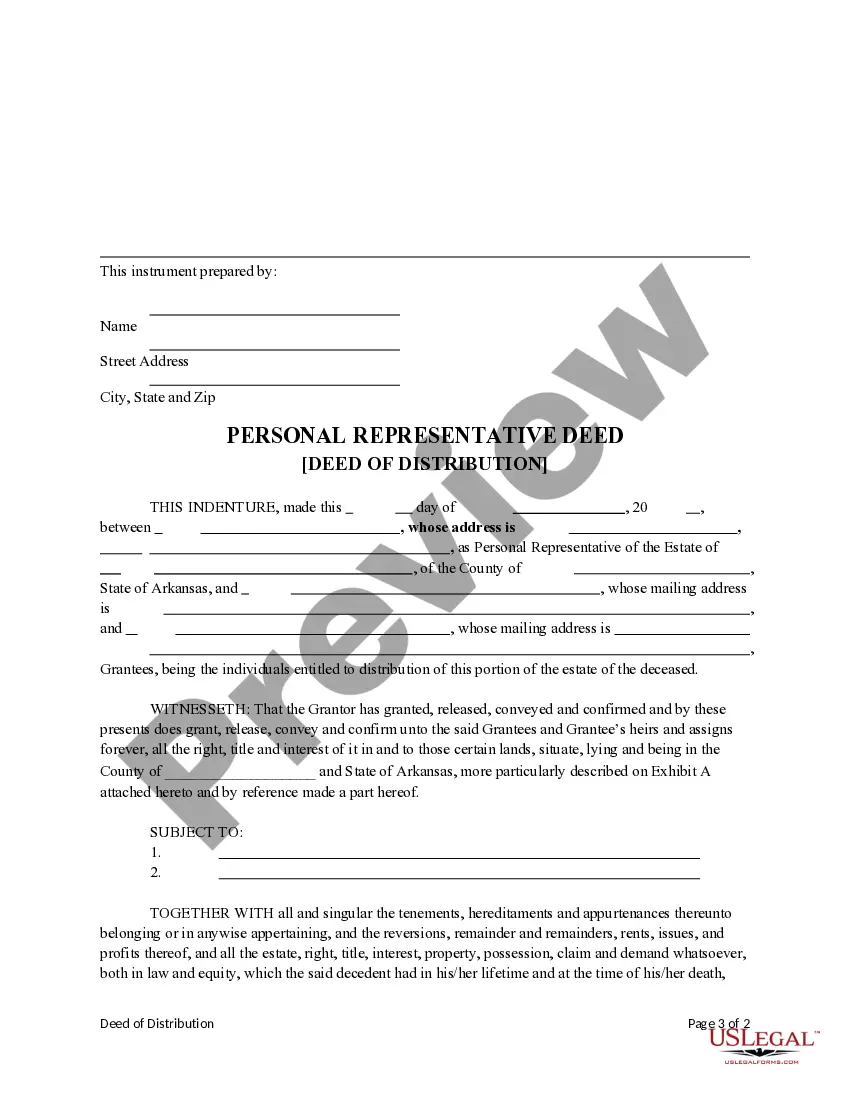
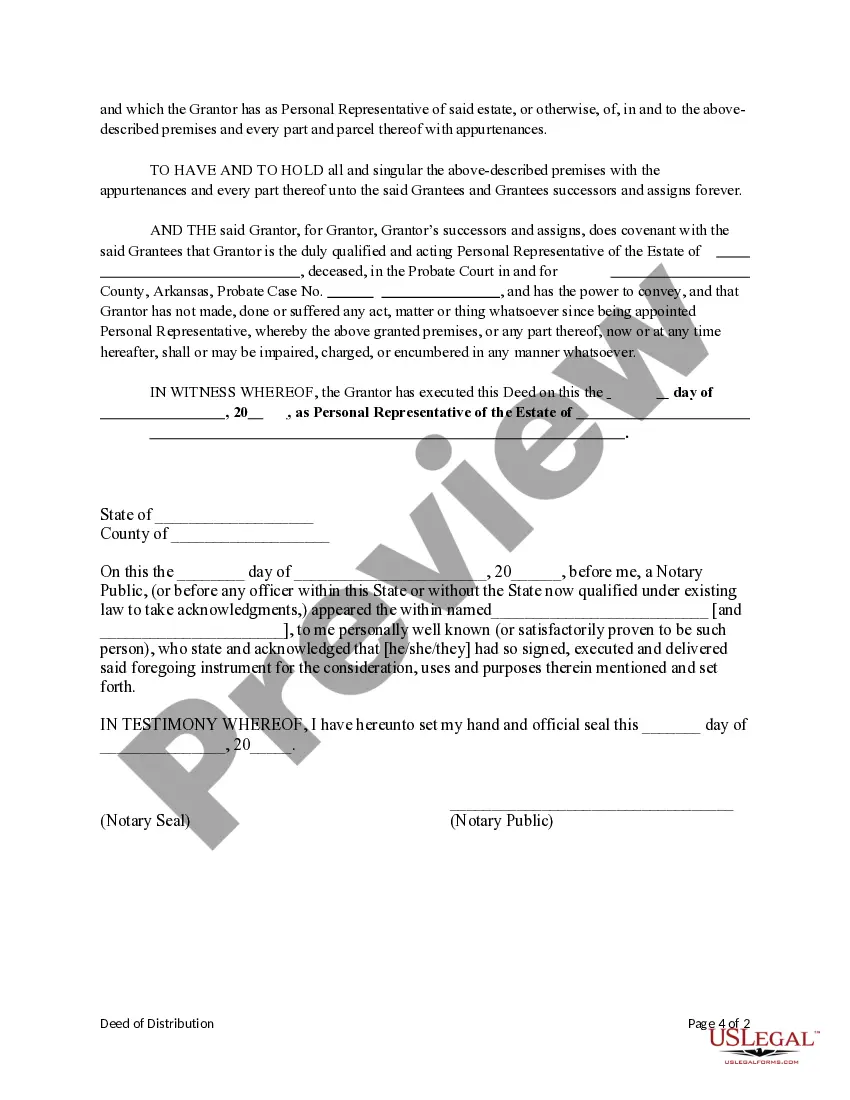
This Deed of Distribution is a legal document used when a personal representative of an estate distributes property to two designated beneficiaries. This form allows the grantor, acting on behalf of the estate, to officially transfer ownership of specified property to the grantees. It complies with relevant state laws, ensuring it meets necessary legal standards for property distribution.
Form components explained
- Identification of the Grantor as the personal representative of the estate.
- Details of the Grantees, the individuals receiving the property.
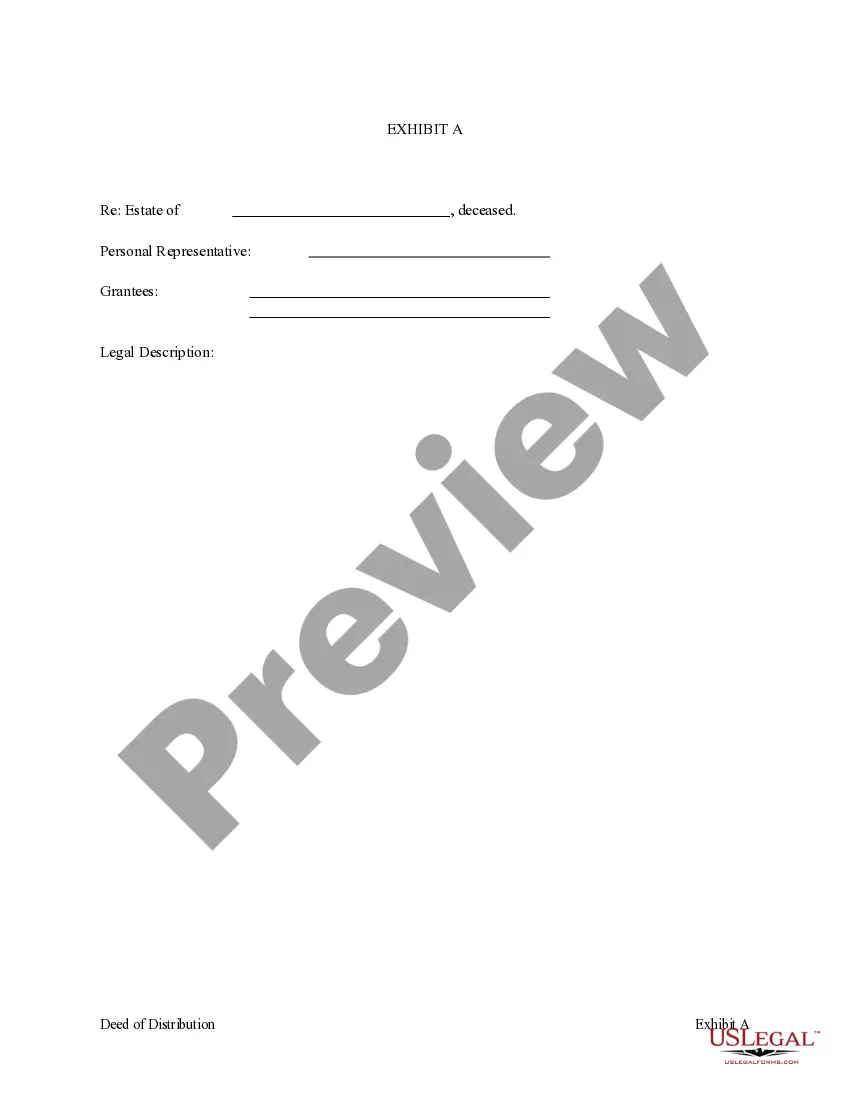
- Description of the property being transferred, including its location.
- Statements affirming the grantor's authority to transfer the property.
- Provision for successors and assigns of the Grantees to inherit the property.



When to use this document
This form is typically used after the settlement of an estate, when the personal representative needs to distribute assets according to the will or state law. It is ideal for legally transferring property to beneficiaries named in the estate documents, ensuring clarity and legal compliance in the transfer process.
Intended users of this form
This form is intended for:
- Personal representatives of estates responsible for property distribution.
- Beneficiaries who are set to receive specific property from an estate.
- Individuals seeking a clear and formal document to validate property transfers among beneficiaries.
Instructions for completing this form
- Identify the parties involved: the Grantor (personal representative) and Grantees (beneficiaries).
- Clearly describe the property being transferred, including its location and legal description.
- Enter the names of the beneficiaries who will receive the property.
- Provide the date of the transaction and any required signatures.
- Ensure the form is properly executed, including any necessary witness signatures if required by state law.
Is notarization required?
This document requires notarization to meet legal standards. US Legal Forms provides secure online notarization powered by Notarize, allowing you to complete the process through a verified video call, available 24/7.
Get your form ready online
Our built-in tools help you complete, sign, share, and store your documents in one place.
Make edits, fill in missing information, and update formatting in US Legal Forms—just like you would in MS Word.
Download a copy, print it, send it by email, or mail it via USPS—whatever works best for your next step.
Sign and collect signatures with our SignNow integration. Send to multiple recipients, set reminders, and more. Go Premium to unlock E-Sign.
If this form requires notarization, complete it online through a secure video call—no need to meet a notary in person or wait for an appointment.
We protect your documents and personal data by following strict security and privacy standards.

Make edits, fill in missing information, and update formatting in US Legal Forms—just like you would in MS Word.

Download a copy, print it, send it by email, or mail it via USPS—whatever works best for your next step.

Sign and collect signatures with our SignNow integration. Send to multiple recipients, set reminders, and more. Go Premium to unlock E-Sign.

If this form requires notarization, complete it online through a secure video call—no need to meet a notary in person or wait for an appointment.

We protect your documents and personal data by following strict security and privacy standards.
Mistakes to watch out for
- Failing to accurately describe the property may lead to confusion or disputes.
- Not including all required signatures, which could invalidate the deed.
- Forgetting to check for specific state requirements that must be fulfilled.
- Leaving out the date of execution, which is critical for the legal validity of the deed.
Benefits of using this form online
- Immediate access to downloadable forms that can be completed quickly and efficiently.
- Editability of forms allows users to customize details according to their specific needs.
- Ensures accuracy, as the forms are drafted by licensed attorneys and comply with state laws.
- No need to visit a lawyer for standard document preparation, saving both time and money.
Key takeaways
- The Deed of Distribution is essential for transferring property from an estate to beneficiaries.
- It must comply with Arkansas laws, ensuring its legal effectiveness.
- Proper completion and execution of the form are critical to avoid common pitfalls.
- Using this form online offers convenience and immediate access to vital legal documents.
Looking for another form?

Form popularity
FAQ
While it's possible to complete a transfer on death deed without a lawyer, having legal guidance can ensure the process is handled correctly. A lawyer can provide clarity on Arkansas laws and help you draft an Arkansas Deed of Distribution from Personal Representative to two Individuals if necessary. This can help avoid potential issues or disputes among heirs. Therefore, consulting with a legal professional can be a prudent step in ensuring a smooth transfer.
A personal representative's deed of distribution is a legal document used in Arkansas to transfer property from an estate to its beneficiaries or heirs. This deed is executed by the personal representative of the estate as part of settling the deceased's affairs. It serves to formally convey ownership from the estate to individuals, detailing the property and the names of the new owners. Using an Arkansas Deed of Distribution from Personal Representative to two Individuals helps clarify the transfer process and protect the rights of the beneficiaries.
To transfer a property deed from a deceased relative in Arkansas, the personal representative of the estate must handle the process. They will prepare an Arkansas Deed of Distribution, which conveys the property to the designated heirs or beneficiaries. This deed must include the deceased's information and a legal description of the property, and then it should be filed with the county clerk's office. Completing these steps will ensure the property is legally transferred to the rightful individuals.
No, you cannot transfer a deed to a deceased person in Arkansas. Once an individual passes away, title to their property must be transferred through their estate. The Arkansas Deed of Distribution from Personal Representative to two Individuals can legally convey property to heirs or beneficiaries listed in the will. Thus, all property transfers must occur posthumously, based on the instructions in the will or the laws of intestacy.
To change your personal representative for an estate, you will need to petition the probate court in Arkansas. You should present valid reasons for the change, such as the current representative's inability to perform their duties. If approved, the court will appoint a new personal representative and update the estate's records. It’s essential to follow the legal procedures to ensure the new representative can handle tasks, including managing the Arkansas Deed of Distribution from Personal Representative to two Individuals.
Transferring a deed after death in Arkansas typically involves the personal representative of the deceased's estate. The representative must execute an Arkansas Deed of Distribution to properly transfer property to the beneficiaries. This deed must clearly identify the deceased individual, the property, and the new owners. Once completed, it needs to be recorded with the county clerk to formalize the transfer.
To transfer ownership of a property in Arkansas, you will need to prepare a deed that specifies the transfer of interest from the current property owner to the new owner. This deed should include the names of both parties and a legal description of the property. Once the deed is executed, it must be filed with the appropriate county clerk's office. If you are dealing with an Arkansas Deed of Distribution from Personal Representative to two Individuals, this process will be governed by state laws regarding estates.
In Arkansas, if an estate's value exceeds $100,000, it typically must go through probate proceedings. This requirement ensures that the estate is properly administered and distributed. Utilizing the Arkansas Deed of Distribution from Personal Representative to two Individuals can facilitate the transfer of assets without the lengthy probate process when it is appropriate. Therefore, it's wise to understand your options.
Heirs in Arkansas generally have three years to claim their inheritance from the date of the decedent's death. This timeline can be complex, especially when using the Arkansas Deed of Distribution from Personal Representative to two Individuals. It is advisable to take action promptly and consult legal advice to secure your rights as an heir.
In Arkansas, the order of inheritance typically follows the state's intestacy laws if there is no will. Spouses, children, and certain other relatives generally inherit first. Understanding this order is crucial, especially when dealing with the Arkansas Deed of Distribution from Personal Representative to two Individuals. Seek guidance to ensure proper distribution according to the law.