Restriction of Use Clause
Overview of this form
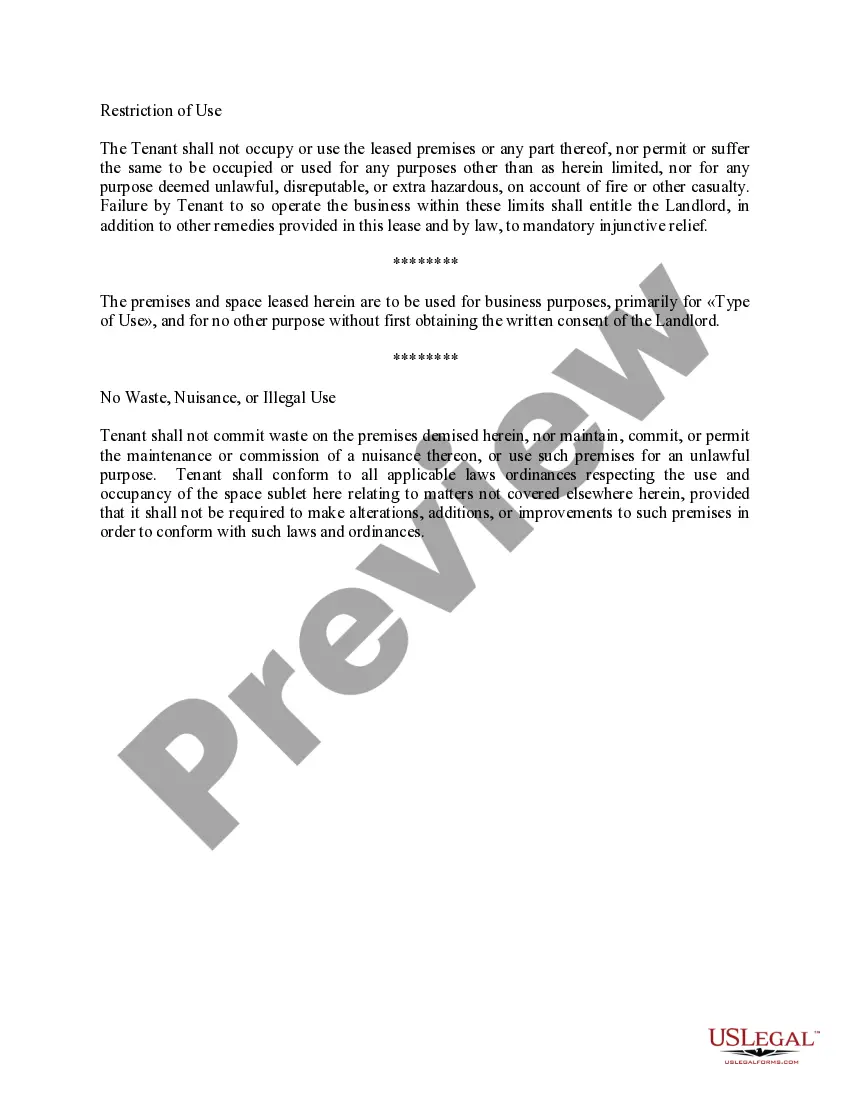
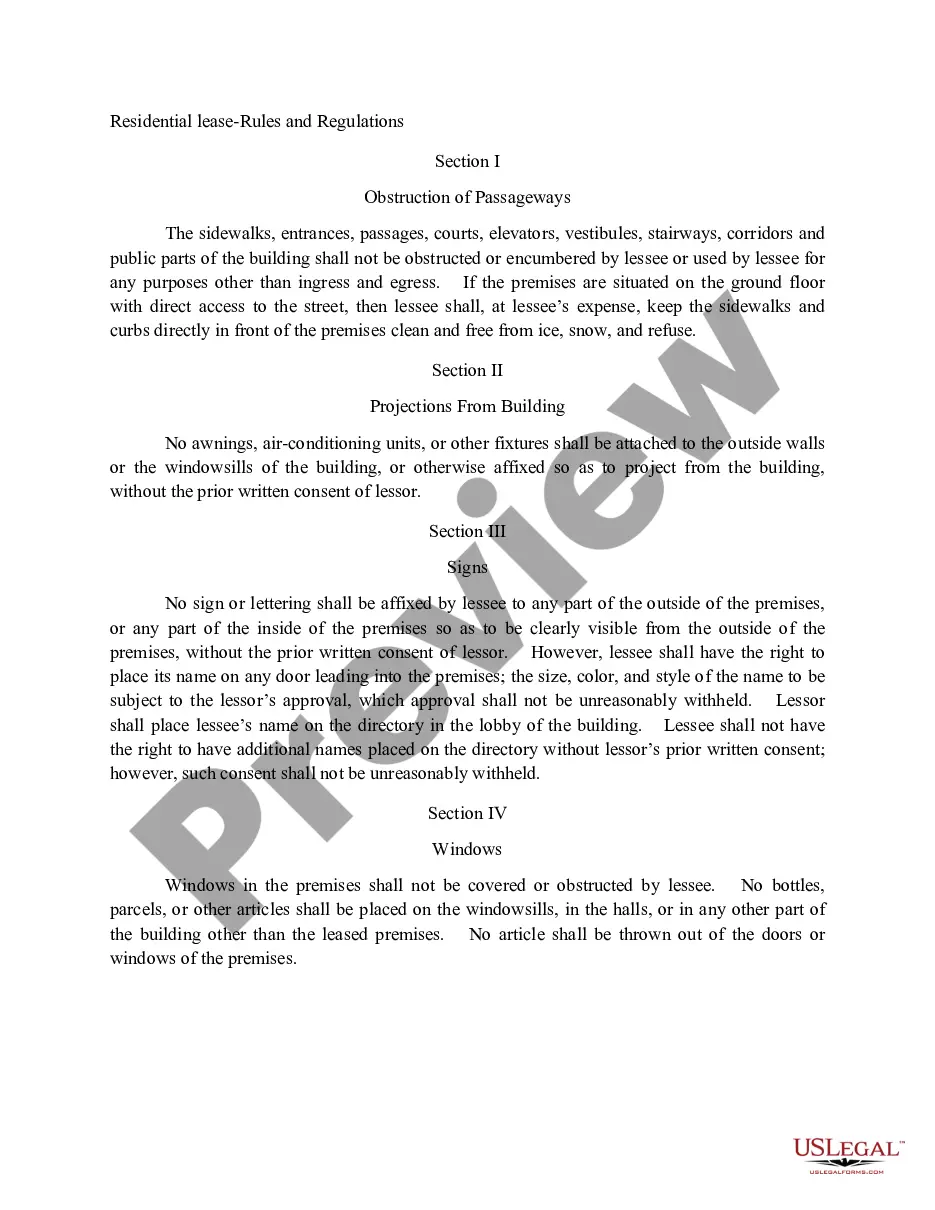
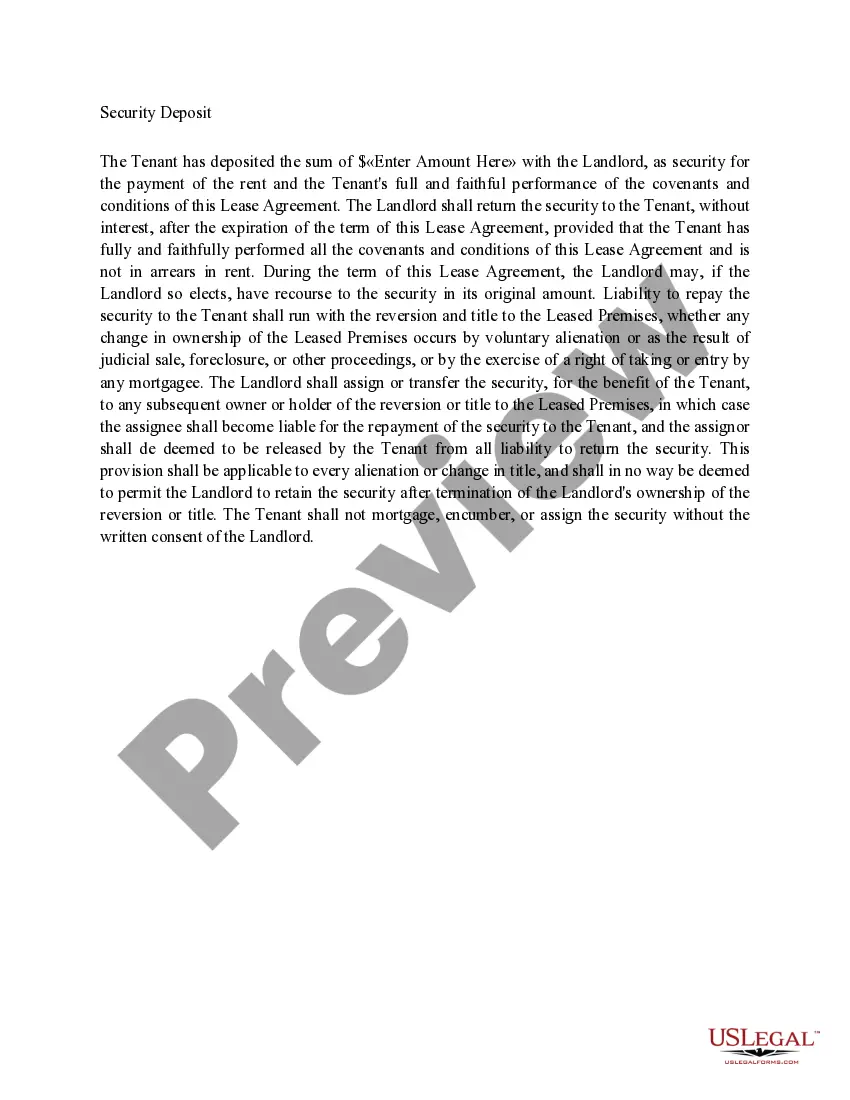
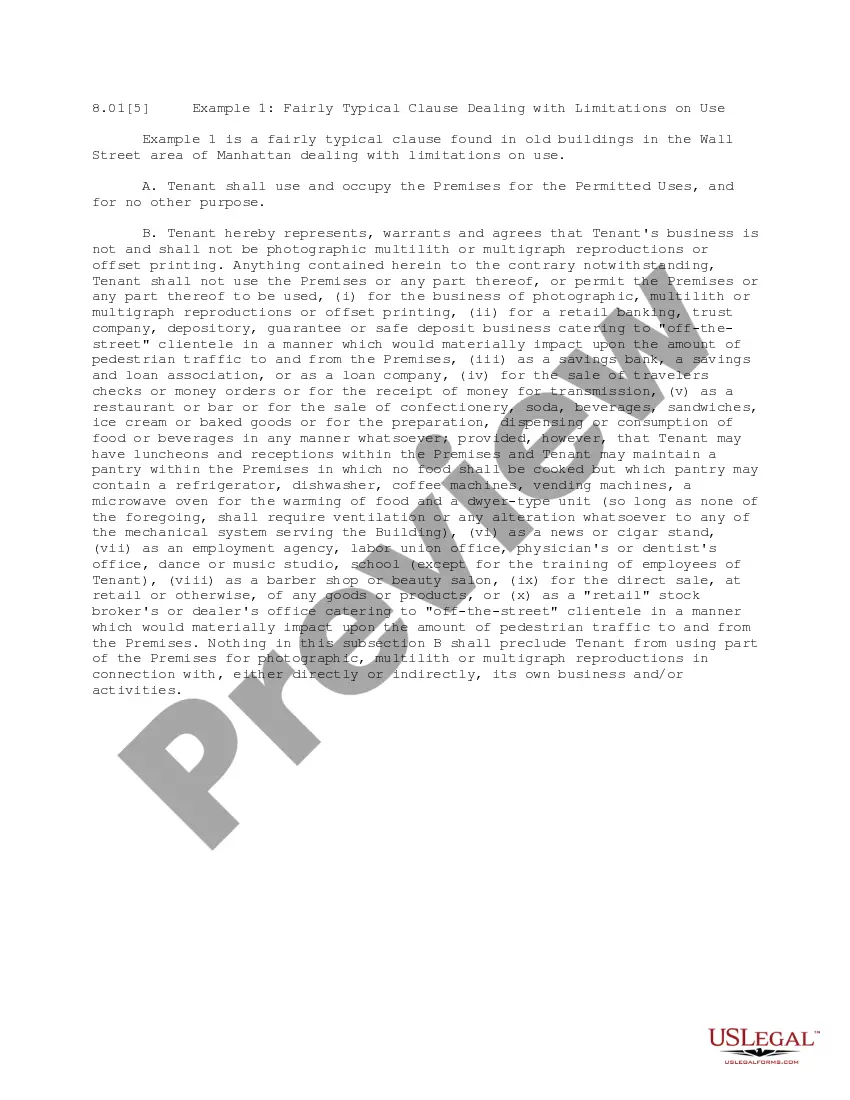
The Restriction of Use Clause is a legal document that defines the specific purposes for which a property can be used. This form aims to prevent any activities that could result in waste, nuisance, or illegal use of the leased space. By clearly outlining these restrictions, landlords can protect their property and maintain its value while also ensuring tenants operate their businesses within agreed-upon limits. This form is essential for landlords and tenants who want to avoid disputes related to property use.
Main sections of this form
- Definition of permissible uses of the property.
- Prohibition of waste and nuisance activities.
- Requirement for the tenant to obtain written consent for any additional uses.
- Clarification of the landlord's rights and remedies in case of non-compliance.
- Statement regarding conformity with applicable laws and ordinances.
When to use this document
This form is used when leasing commercial property to ensure that tenants understand the limitations on how they can utilize the space. It is particularly important in situations where the nature of the tenant's business could impact property value or violate local laws, such as in mixed-use developments or areas with strict zoning regulations. If a landlord wishes to maintain control over the types of activities conducted on their property, this form is necessary.
Intended users of this form
- Landlords leasing commercial properties.
- Tenants who need clarity on allowed and prohibited uses of the leased space.
- Property managers overseeing compliance with lease agreements.
- Real estate attorneys drafting or reviewing lease agreements.
Instructions for completing this form
- Identify the parties involved, including the landlord and tenant.
- Specify the property being leased, including full address and description.
- Clearly outline the purpose of the lease and the acceptable uses of the property.
- Include any clauses regarding waste, nuisance, and compliance with laws.
- Obtain necessary signatures from both the landlord and tenant.
Notarization guidance
This form does not typically require notarization unless specified by local law. Ensure you check any additional requirements related to the property location to maintain compliance.
Get your form ready online
Our built-in tools help you complete, sign, share, and store your documents in one place.
Make edits, fill in missing information, and update formatting in US Legal Forms—just like you would in MS Word.
Download a copy, print it, send it by email, or mail it via USPS—whatever works best for your next step.
Sign and collect signatures with our SignNow integration. Send to multiple recipients, set reminders, and more. Go Premium to unlock E-Sign.
If this form requires notarization, complete it online through a secure video call—no need to meet a notary in person or wait for an appointment.
We protect your documents and personal data by following strict security and privacy standards.

Make edits, fill in missing information, and update formatting in US Legal Forms—just like you would in MS Word.

Download a copy, print it, send it by email, or mail it via USPS—whatever works best for your next step.

Sign and collect signatures with our SignNow integration. Send to multiple recipients, set reminders, and more. Go Premium to unlock E-Sign.

If this form requires notarization, complete it online through a secure video call—no need to meet a notary in person or wait for an appointment.

We protect your documents and personal data by following strict security and privacy standards.
Common mistakes
- Failing to specify all permissible uses of the property.
- Not including necessary legal definitions for clarity.
- Leaving out the consequences of violating the restrictions.
- Not obtaining written consent for additional uses after the lease is signed.
Why complete this form online
- Convenience of downloading and filling out the form at your own pace.
- Editability allows for customization based on specific business needs.
- Reliability of having a professionally drafted document by licensed attorneys.
Looking for another form?
Form popularity
FAQ
A restrictive clause restricts or defines the meaning of a noun or noun phrase and provides necessary information about the noun in the sentence. It is not separated from the rest of the sentence by commas. Restrictive clauses are more common in writing than nonrestrictive clauses.
A limitation clause is a constitutional provision which enables constitutionally protected rights to be partially limited, to a specified extent and for certain democratically justifiable purposes.
What Is a Terms of Use Agreement? A terms of use agreement defines rules for the use of a website. Sometimes referred to as ?terms and conditions,? this document includes disclaimers and notices clarifying the limit of the website's or business's liability to the visitor.
An acceptable use policy (AUP) is a document stipulating constraints and practices that a user must agree to for access to a corporate network, the internet or other resources. Many businesses and educational institutions require employees or students to sign an AUP before being granted a network ID.