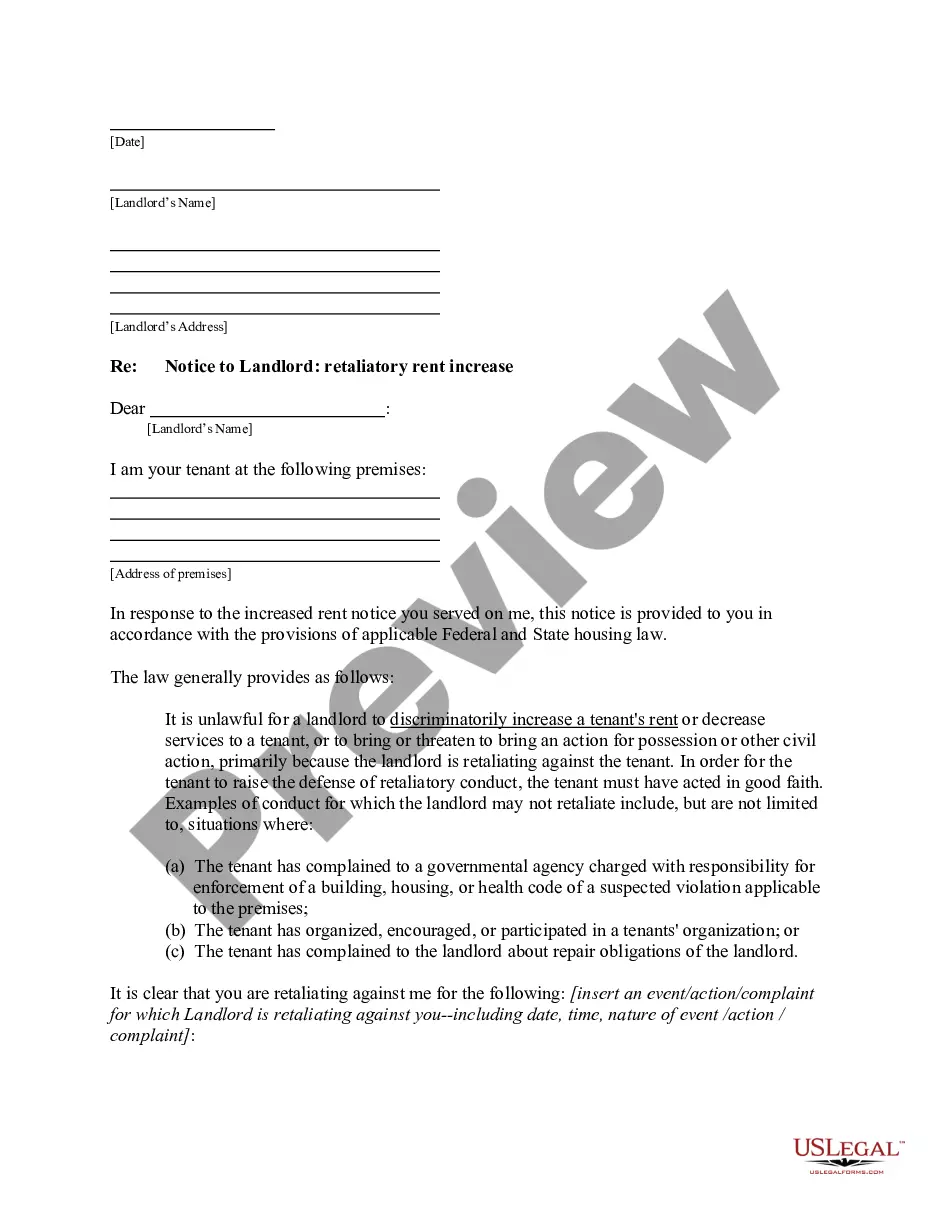
Information For Probate of Estate
About this form
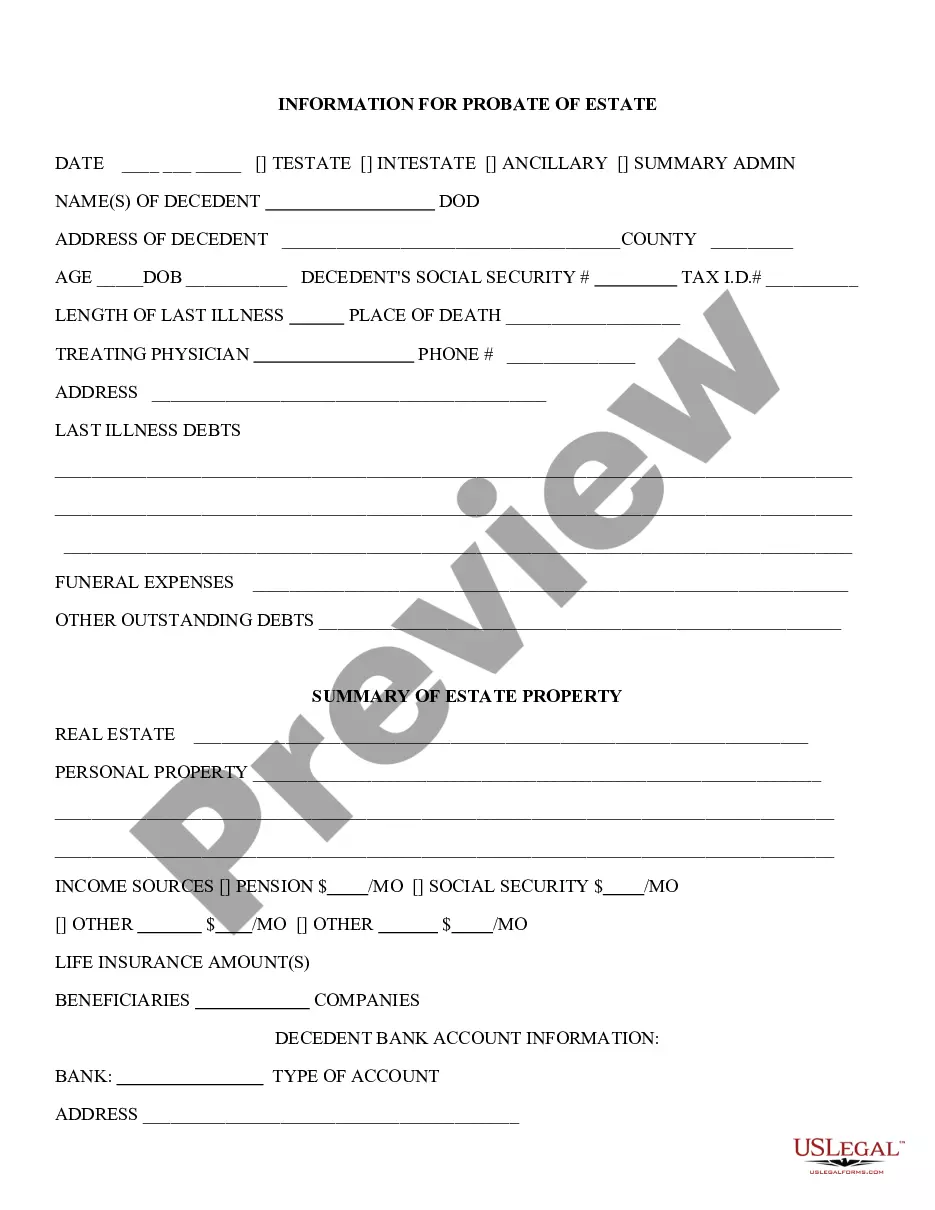
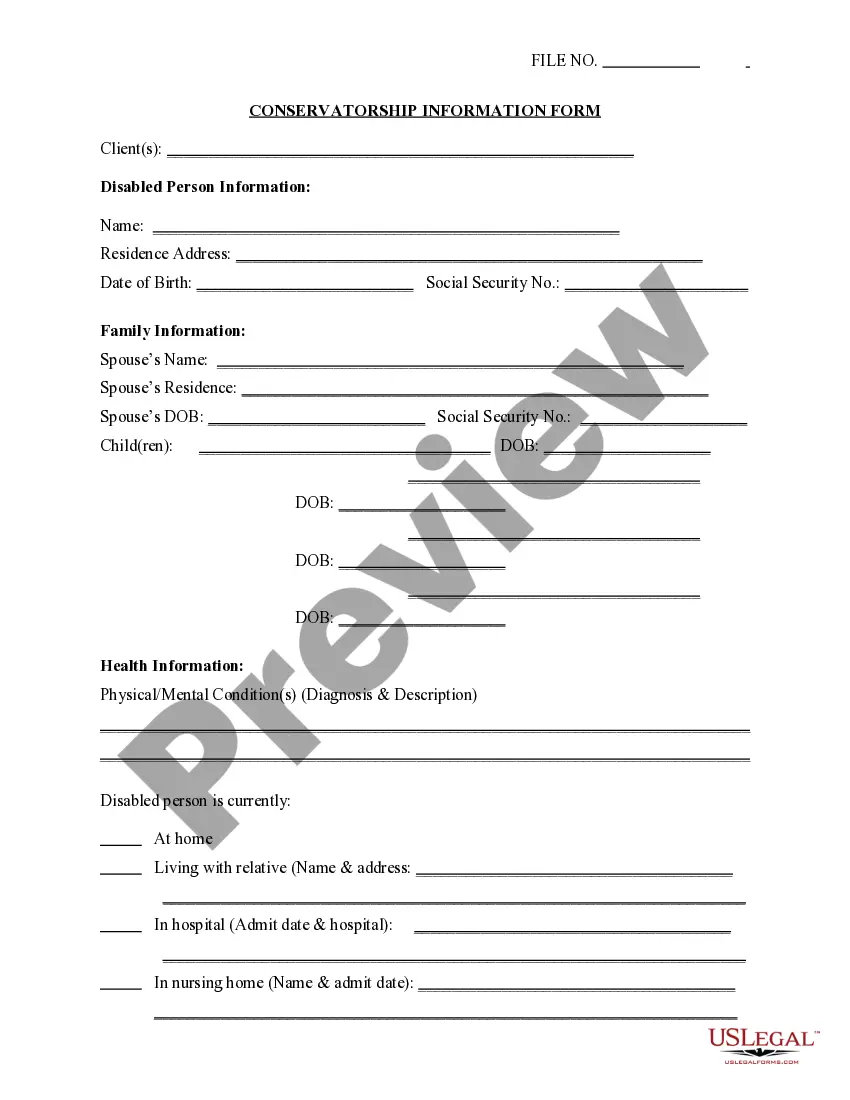
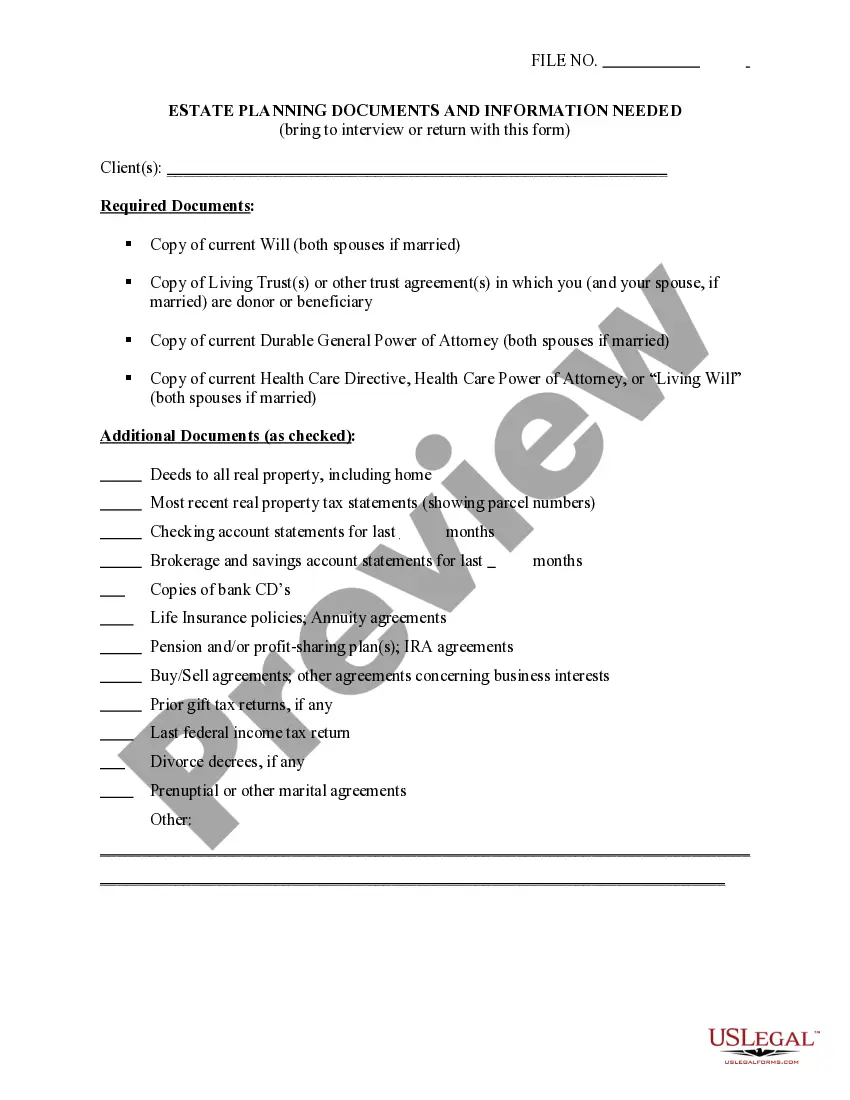
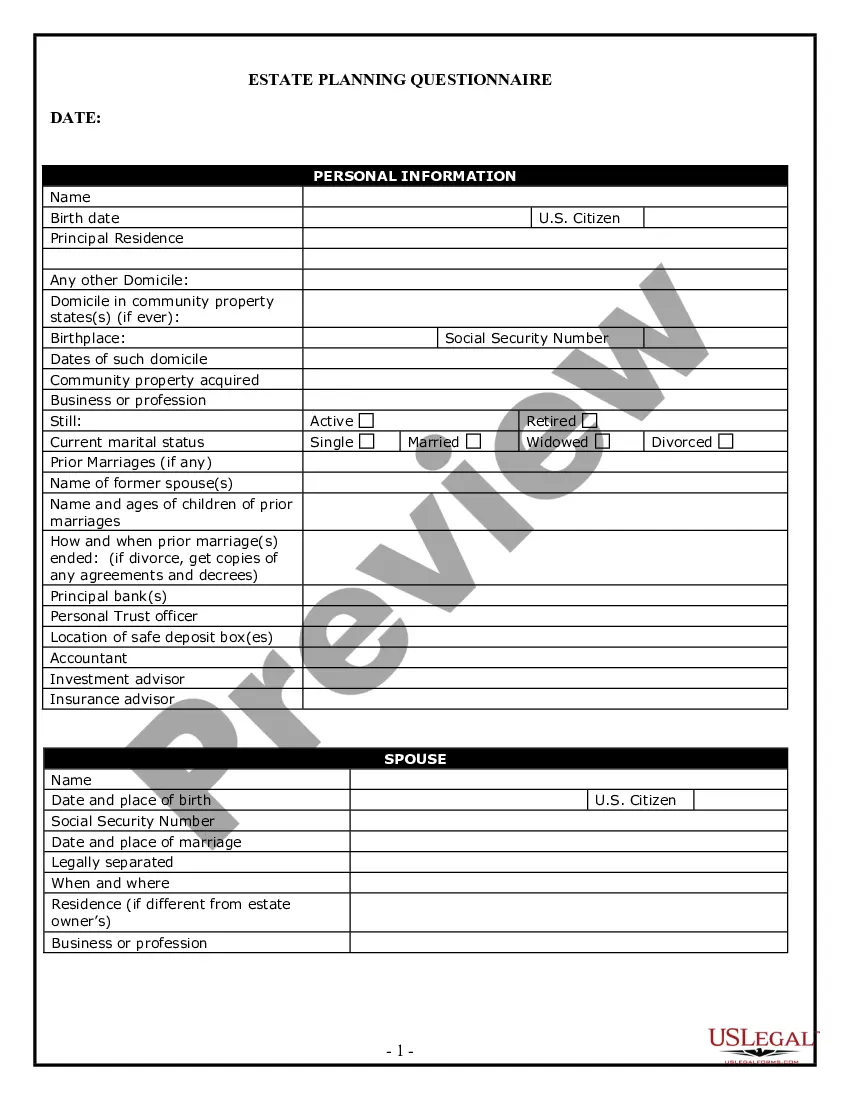
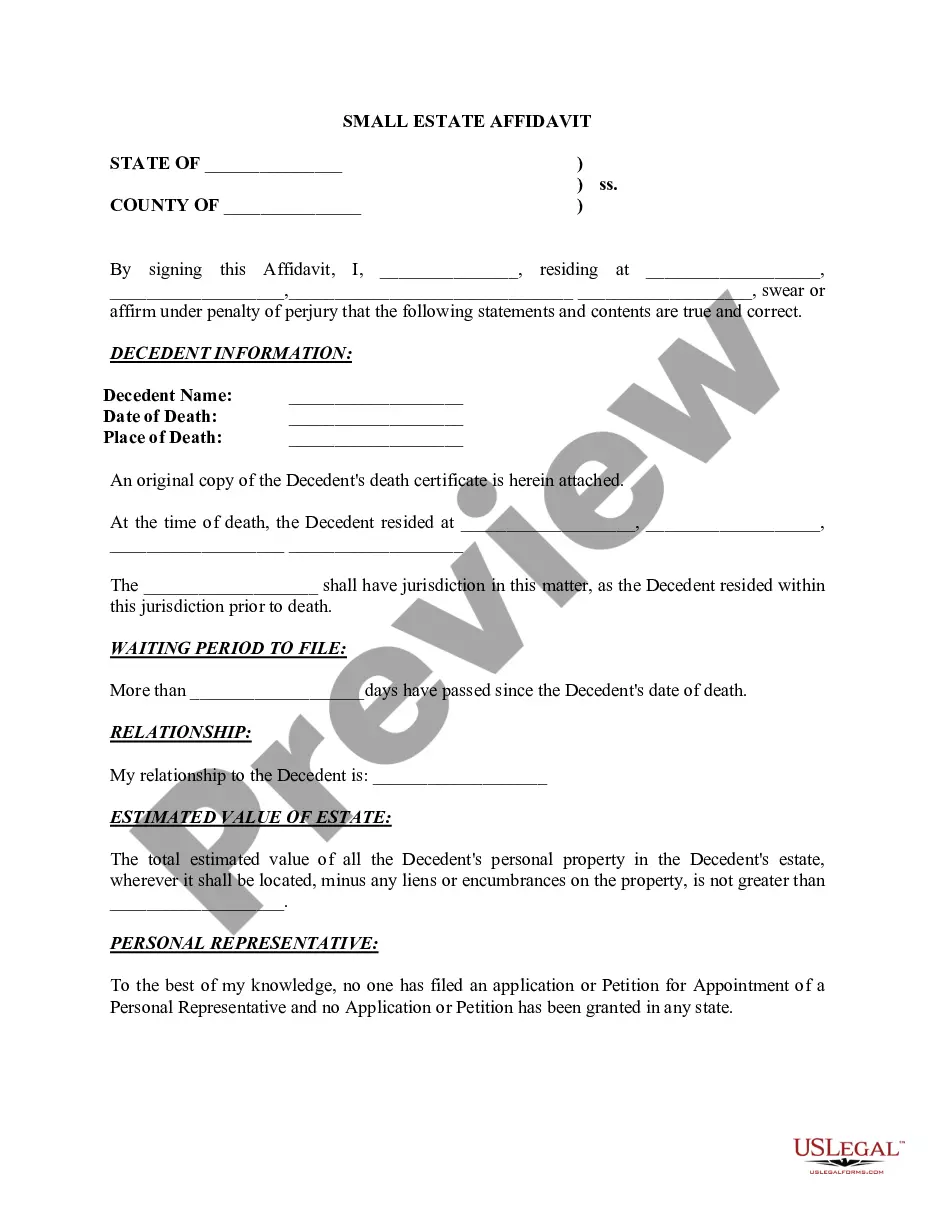
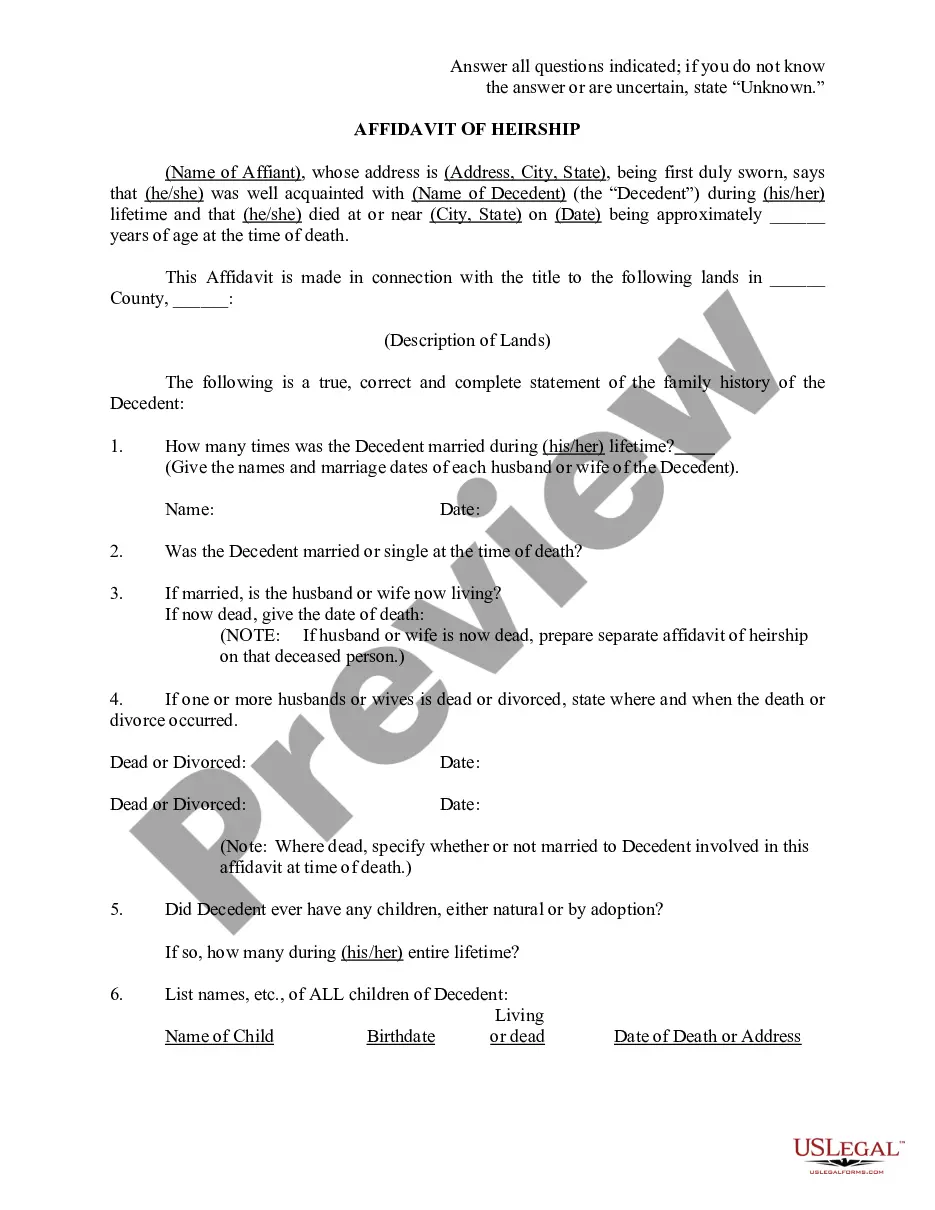
The Information for Probate of Estate form is designed to gather essential details necessary for preparing a probate application. This form collects information about the decedent, including personal details, heir information, financial obligations, and estate assets. Unlike other estate planning documents, this form specifically focuses on providing the requisite data to initiate the probate process efficiently.
Key parts of this document
- Decedent's personal information, including name, address, and date of death.
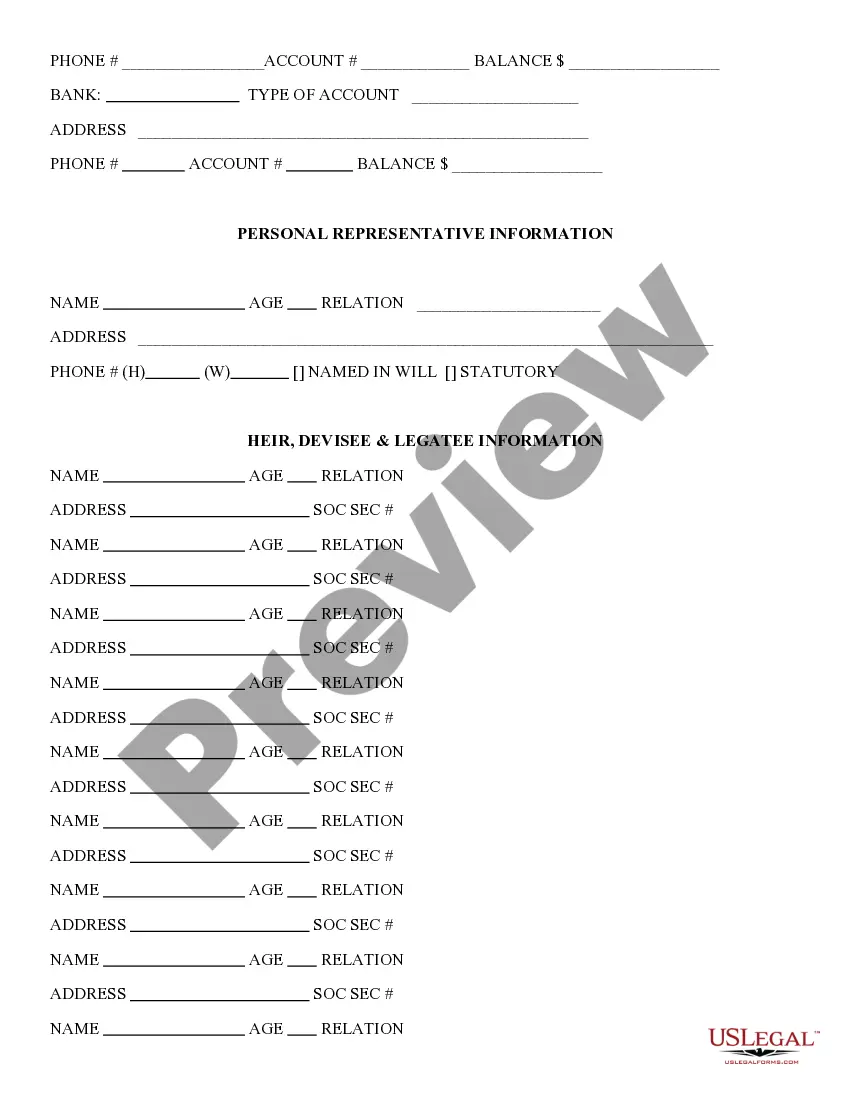
- Information on heirs and beneficiaries, including their relations to the decedent.
- Details of the decedent's financial obligations and outstanding debts.
- Summary of estate property, including real estate and personal property.
- Contact information for the personal representative managing the probate process.
Common use cases
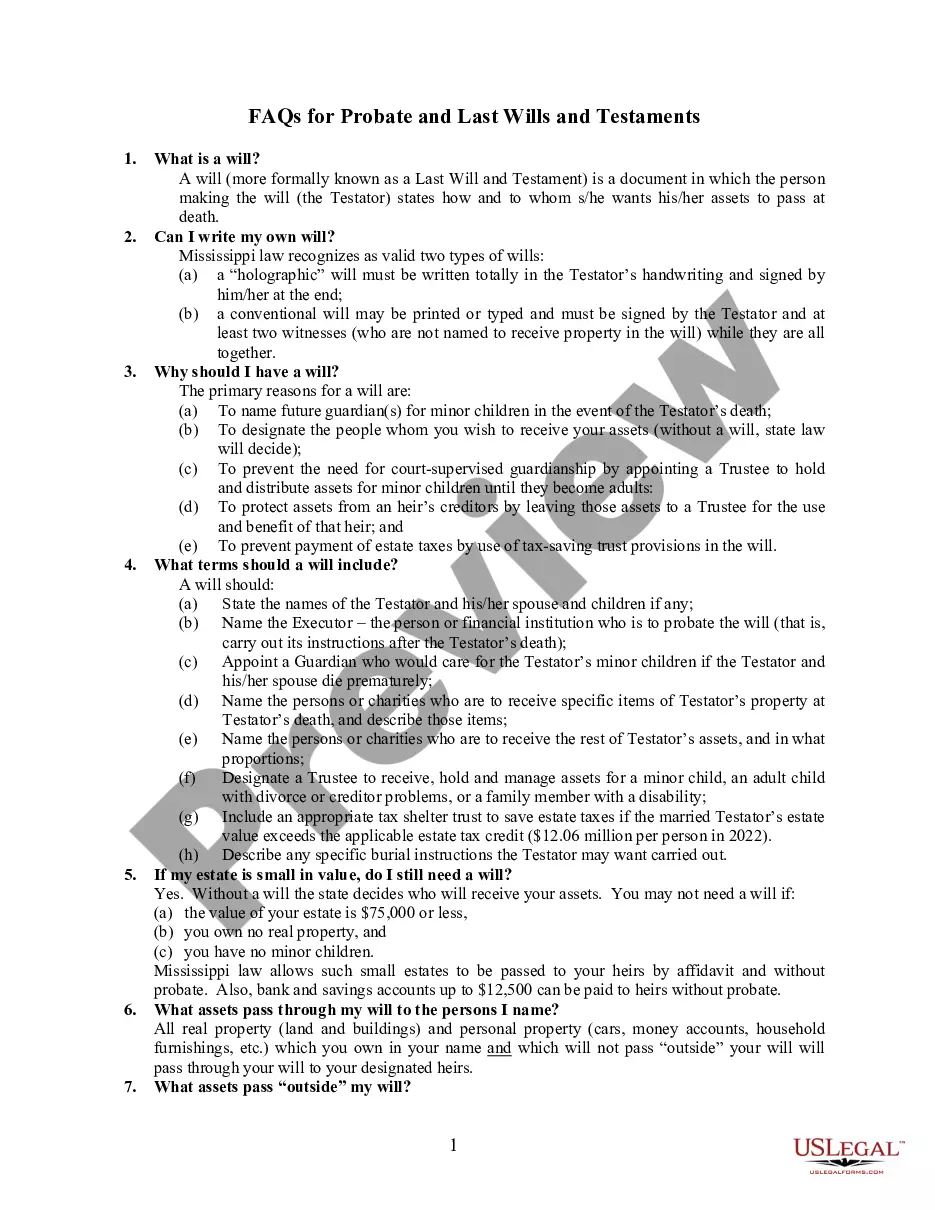
This form is used when you need to probate an estate, whether the decedent left a valid will (testate) or died without one (intestate). It is essential to compile all necessary information to identify heirs, outline debts, and summarize the assets that will be distributed through the probate process.
Who this form is for
- Personal representatives named in a will who are responsible for overseeing the probate process.
- Heirs or beneficiaries of an estate seeking to understand their rights and obligations.
- Administrators of intestate estates who need to establish a legal framework for asset distribution.
Completing this form step by step
- Fill in the decedent's personal information, including their name, address, and date of death.
- List the names and details of all heirs, beneficiaries, and their relationships to the decedent.
- Detail any outstanding debts, including funeral expenses and other financial obligations.
- Summarize the estate property, categorizing it as real estate or personal property.
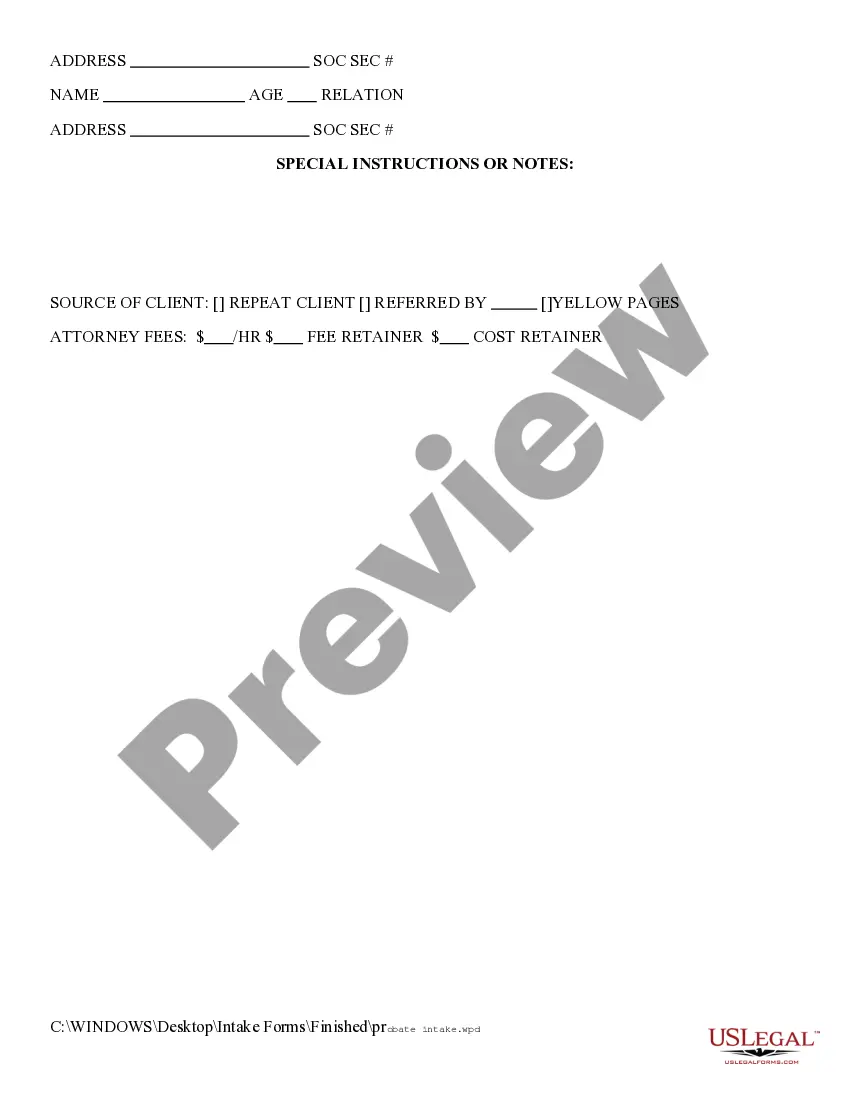
- Provide contact information for the personal representative and any necessary special instructions.
Notarization requirements for this form
This form does not typically require notarization unless specified by local law. However, having the signature of the personal representative notarized may enhance its legal validity in some jurisdictions.
Get your form ready online
Our built-in tools help you complete, sign, share, and store your documents in one place.
Make edits, fill in missing information, and update formatting in US Legal Forms—just like you would in MS Word.
Download a copy, print it, send it by email, or mail it via USPS—whatever works best for your next step.
Sign and collect signatures with our SignNow integration. Send to multiple recipients, set reminders, and more. Go Premium to unlock E-Sign.
If this form requires notarization, complete it online through a secure video call—no need to meet a notary in person or wait for an appointment.
We protect your documents and personal data by following strict security and privacy standards.

Make edits, fill in missing information, and update formatting in US Legal Forms—just like you would in MS Word.

Download a copy, print it, send it by email, or mail it via USPS—whatever works best for your next step.

Sign and collect signatures with our SignNow integration. Send to multiple recipients, set reminders, and more. Go Premium to unlock E-Sign.

If this form requires notarization, complete it online through a secure video call—no need to meet a notary in person or wait for an appointment.

We protect your documents and personal data by following strict security and privacy standards.
Common mistakes to avoid
- Failing to include all relevant heirs and beneficiaries, which can delay the probate process.
- Neglecting to accurately report outstanding debts, which can lead to legal complications.
- Providing incomplete or inconsistent information about estate property.
Benefits of completing this form online
- Convenience of accessing the form anytime and anywhere.
- Editability allows for easy updates to information as needed.
- Reliable templates drafted by licensed attorneys ensure compliance with legal standards.
Looking for another form?
Form popularity
FAQ
Illinois probate follows this general flow: contact the court, get appointed as personal representative, submit will if it exists, inventory and submit valuations of all relevant assets, have the court and beneficiaries approve it, and then distribute the assets to beneficiaries.
Estates that include pieces of property that are difficult to value can also slow down probate. It can take time for all parties to agree on the value of the unique assets, and disputes can easily arise between the estate's executor and the IRS over the asset's value for estate tax purposes.
The disadvantages of probating a will are many. The probate process is expensive, time consuming, and intrusive. Court costs, attorney fees, personal representative fees, bonds, and accounting fees all add up.
To be valid, your will must be: in writing, and. signed at the end by you and two witnesses, with all three being present together, and with all three seeing each other sign, and. intended by you to take effect as a will, and.
If you have living descendants, your spouse will get half of the inheritance, and your descendants will get the other half of the inheritance. However, grandchildren will only receive a share if their parents are not alive to receive their share.
Property that is jointly owned with a survivorship right will avoid probate. If one owner dies, title passes automatically to the remaining owner. There are three types of joint ownership with survivorship rights: Joint tenancy with rights of survivorship.