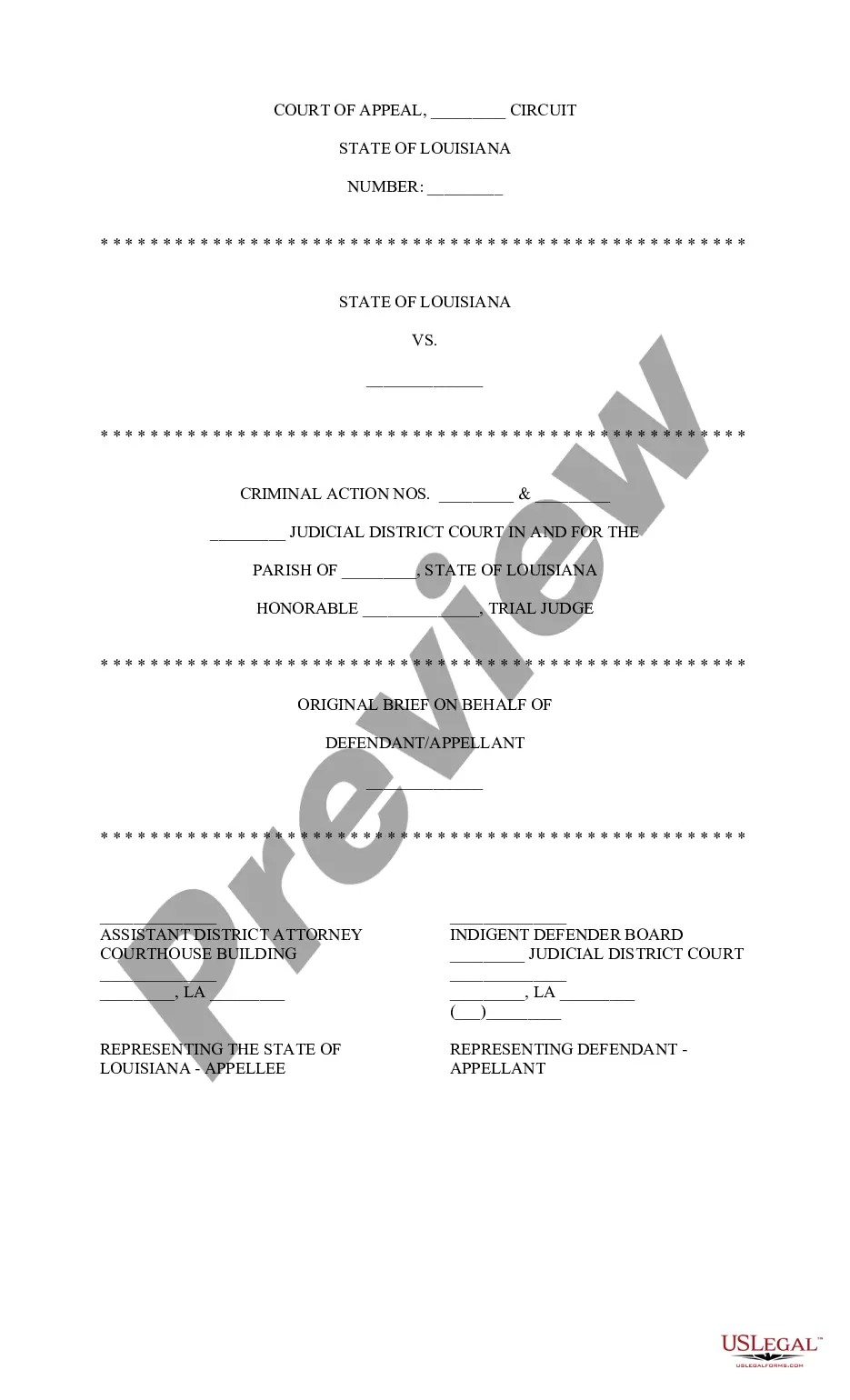
Investment Company Partnership
Understanding this form
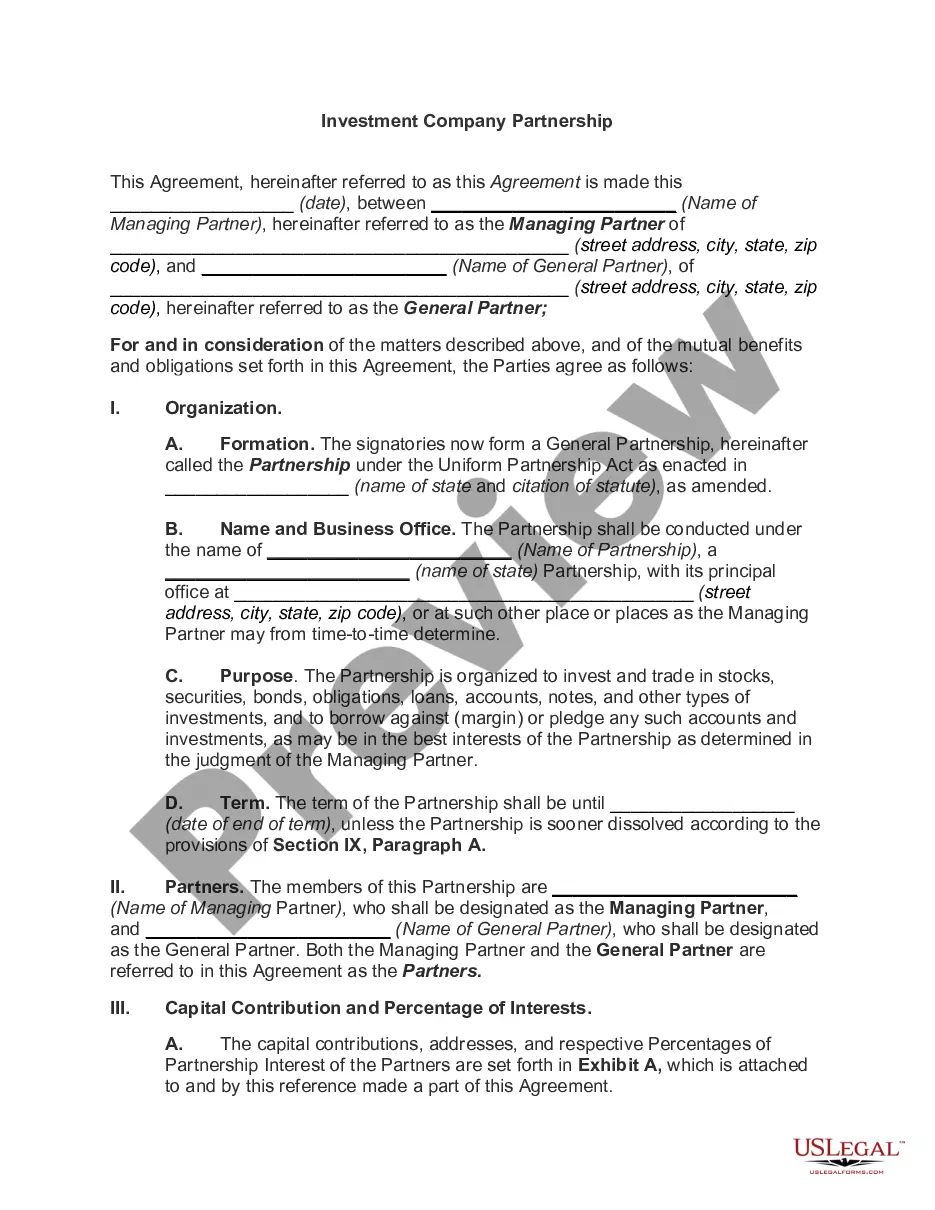
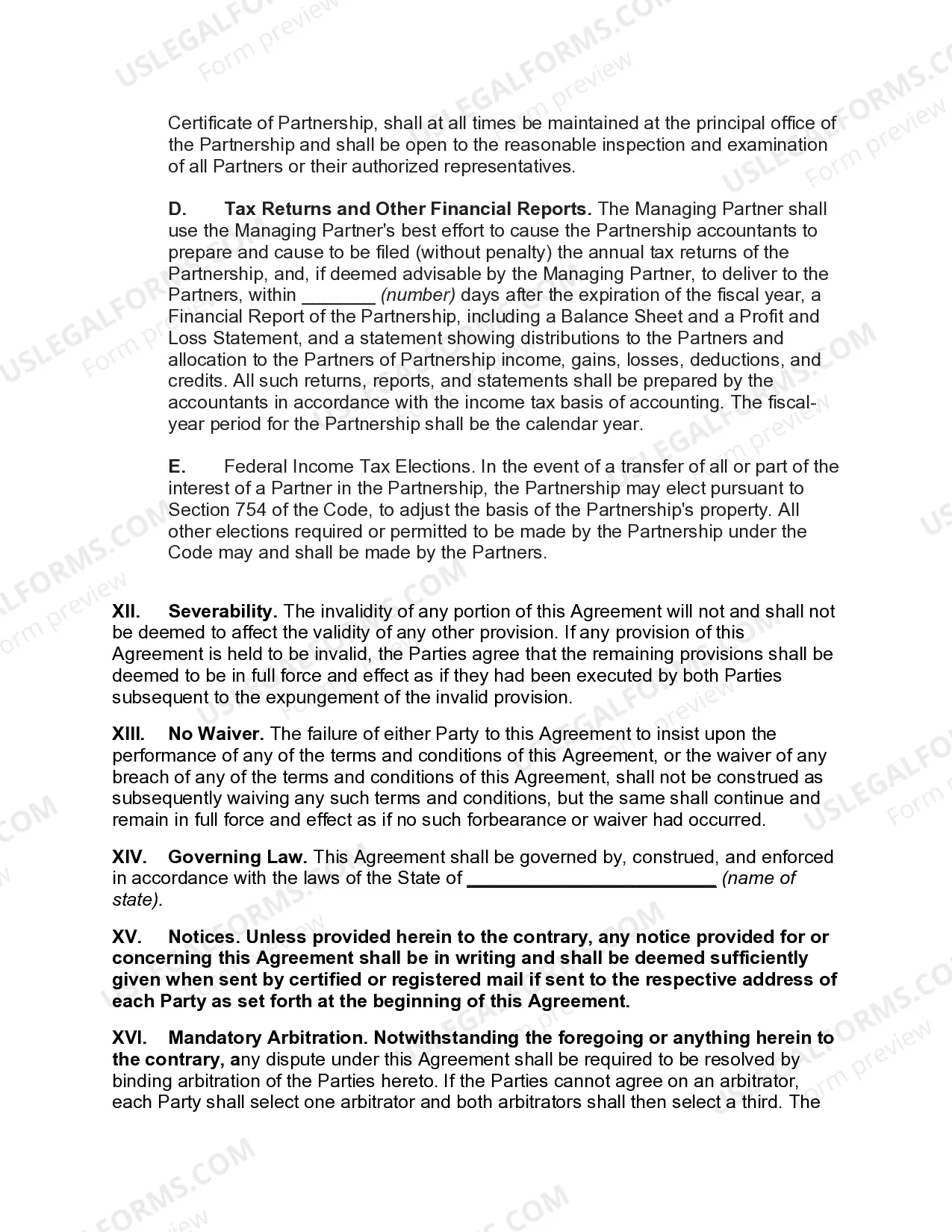
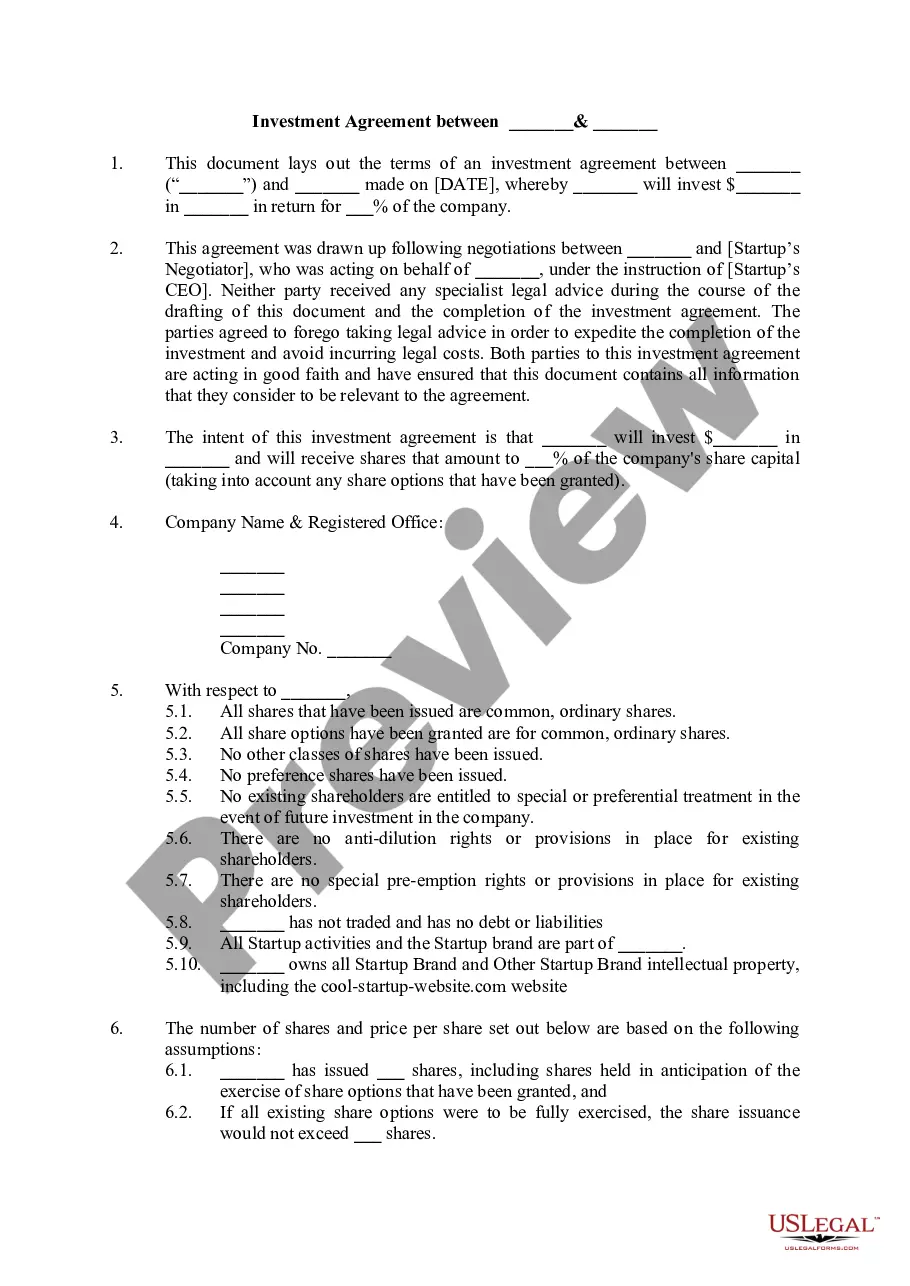
The Investment Company Partnership form is a legal agreement that establishes a general partnership between two or more parties aimed at investing in various financial assets. This form outlines the roles, responsibilities, and obligations of the partners, differentiating it from similar partnership agreements by focusing specifically on investment activities. It is critical for parties looking to engage in collective investing while sharing liabilities and profits in accordance with the terms set forth in the agreement.
Form components explained
- Formation of the partnership under state law.
- Identification of partners and their respective roles, including Managing Partner and General Partner.
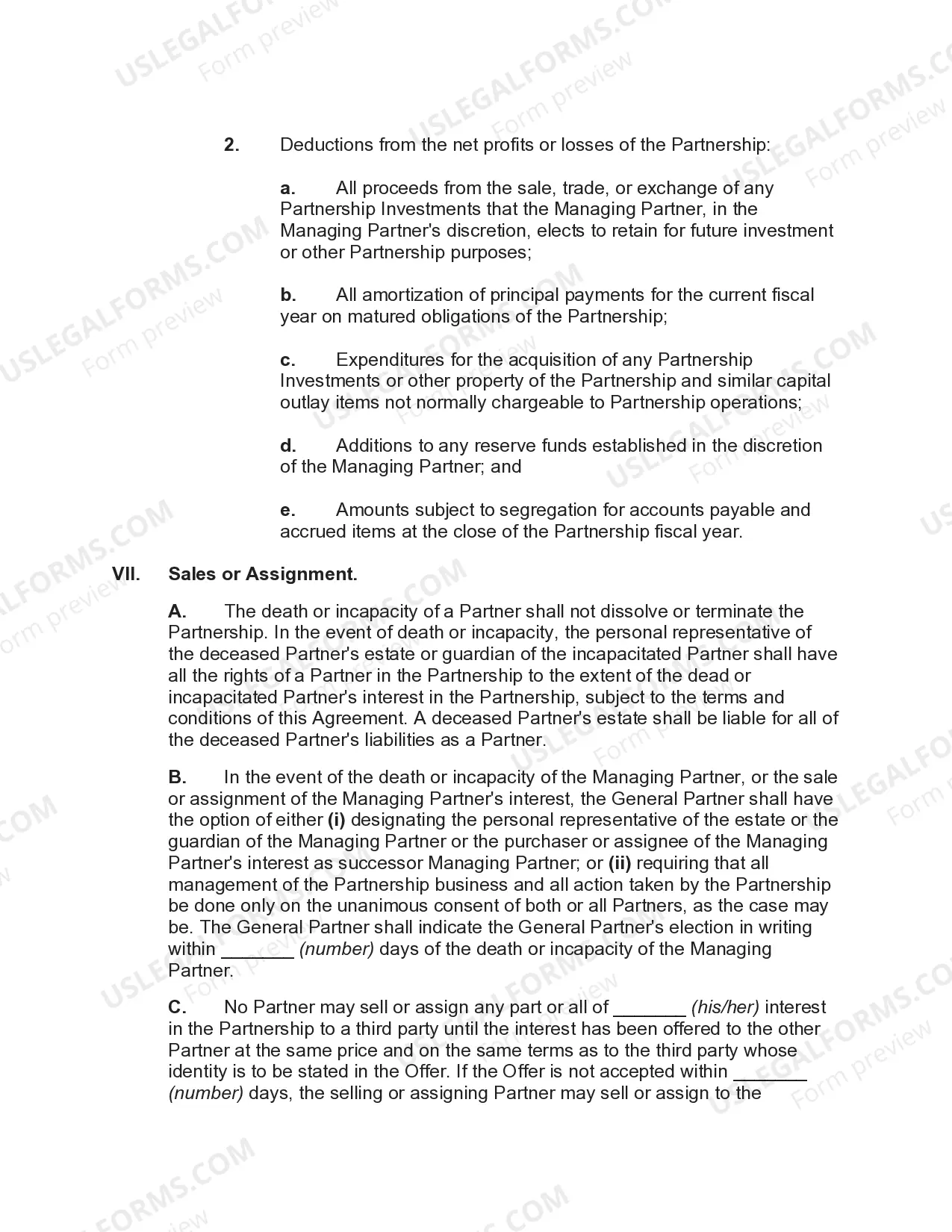
- Details on capital contributions and percentage of interests.
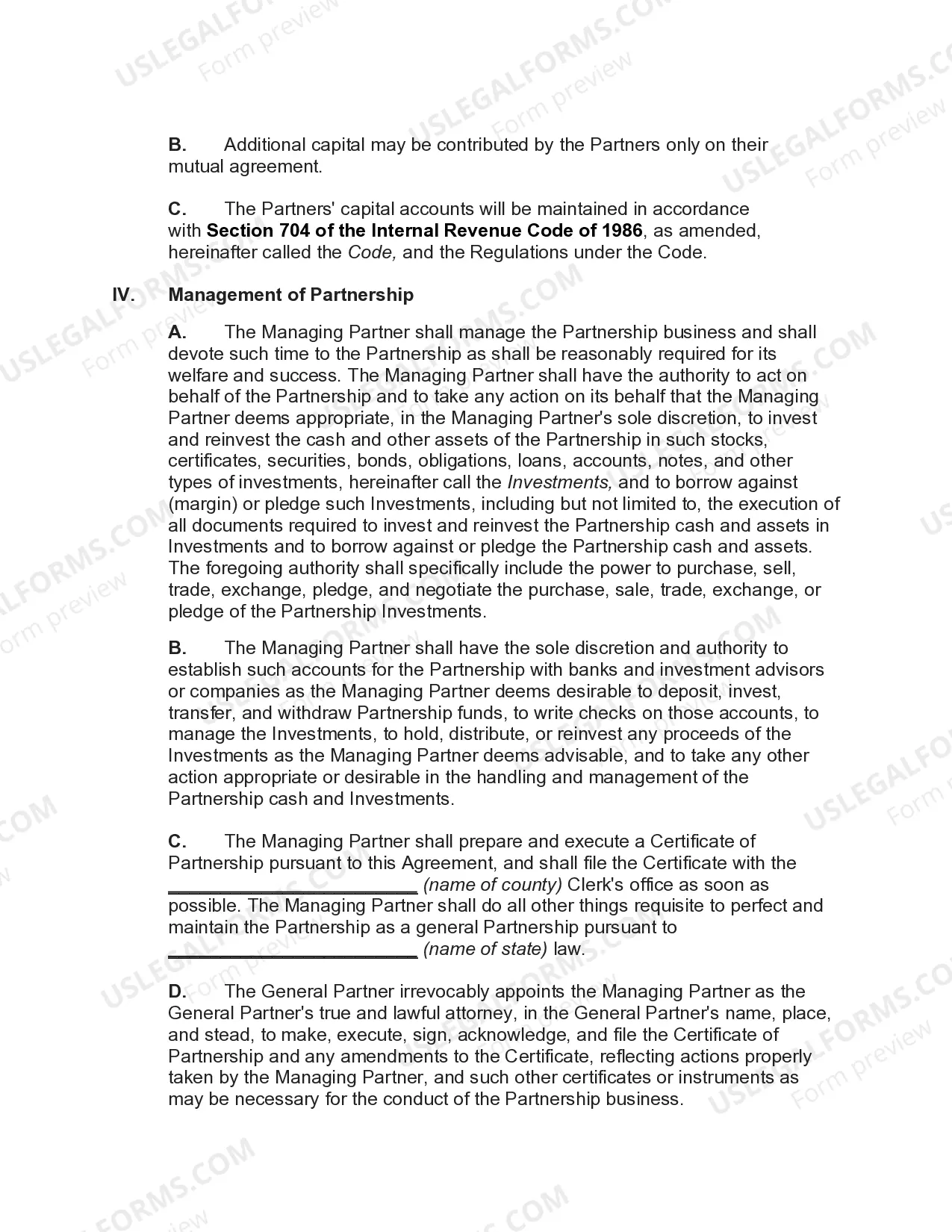
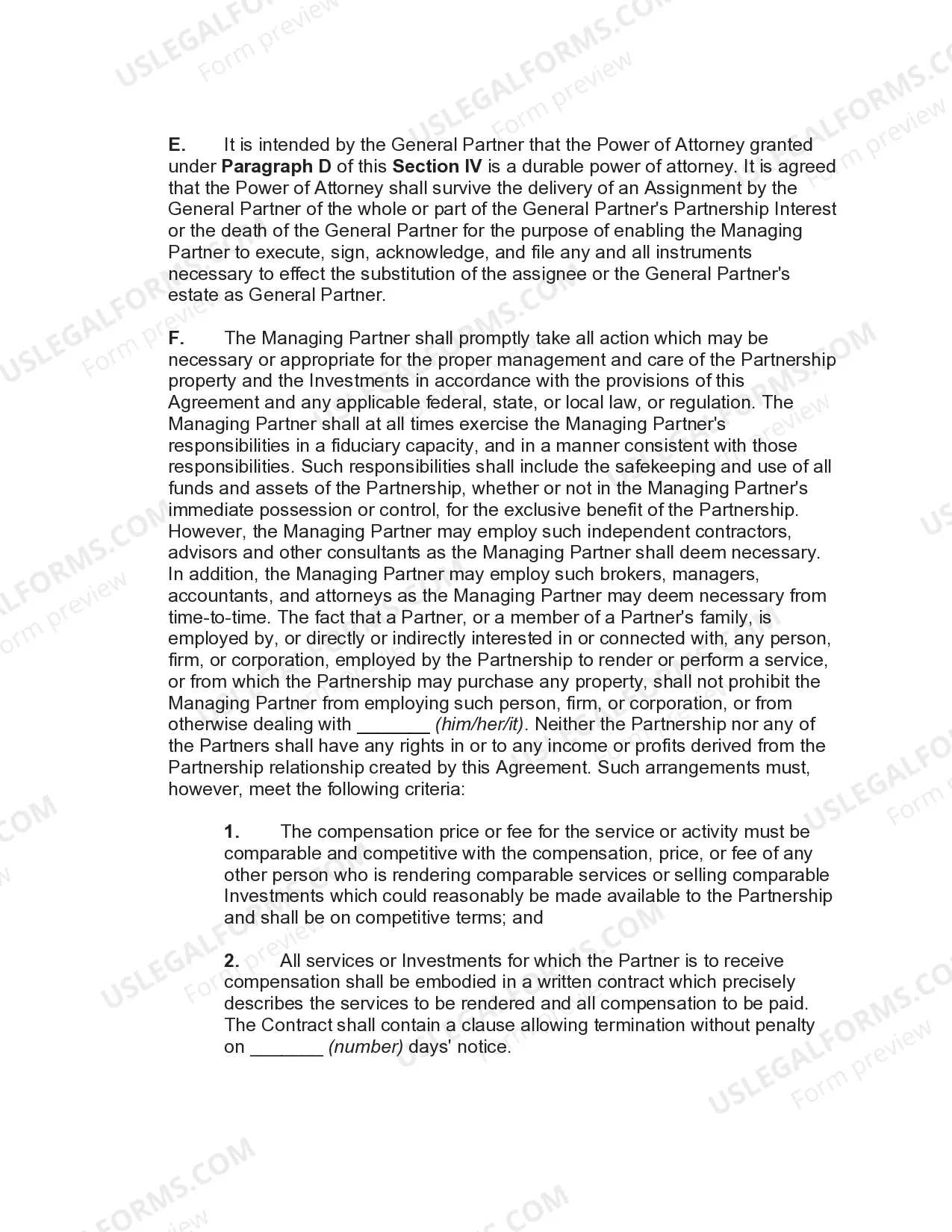
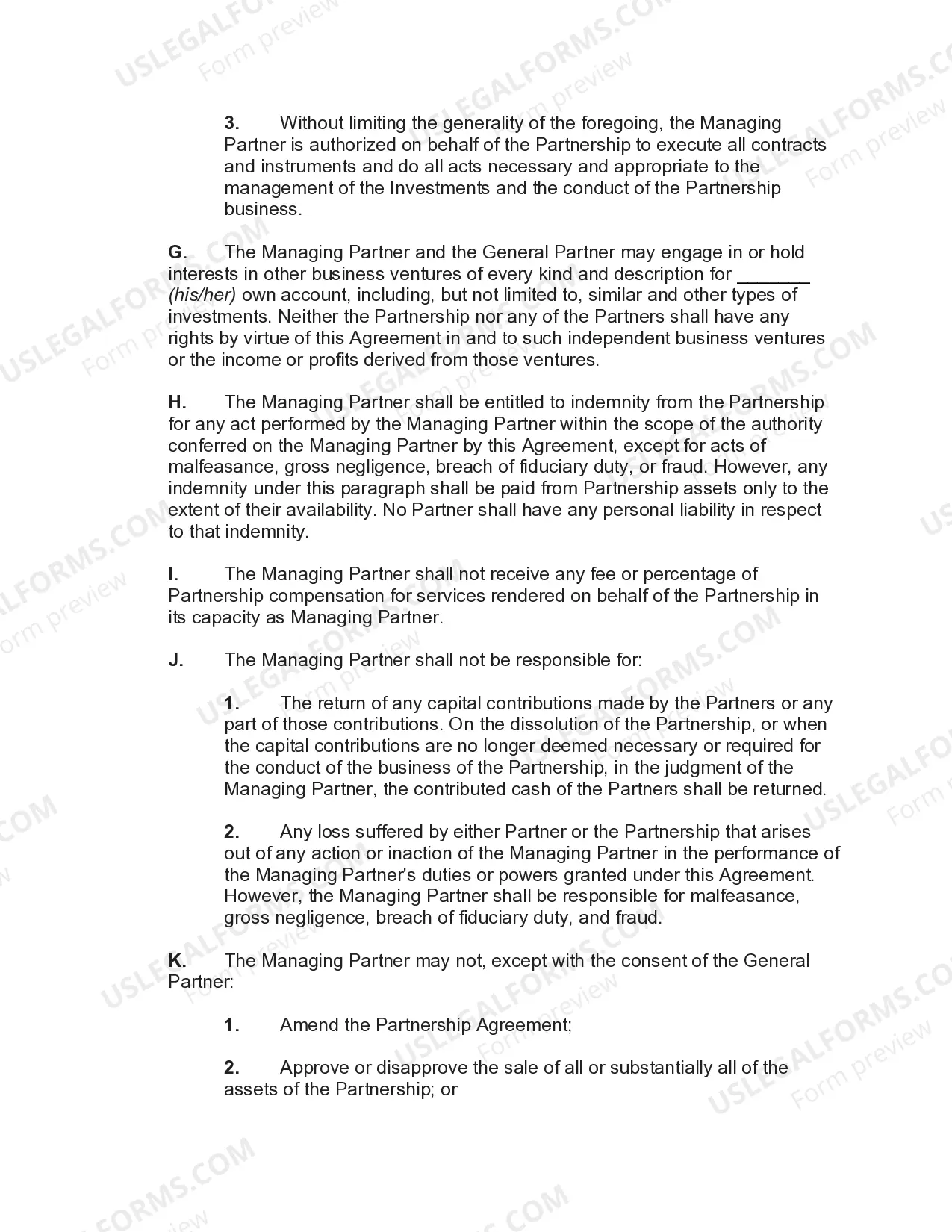
- Management structure and authority granted to the Managing Partner.
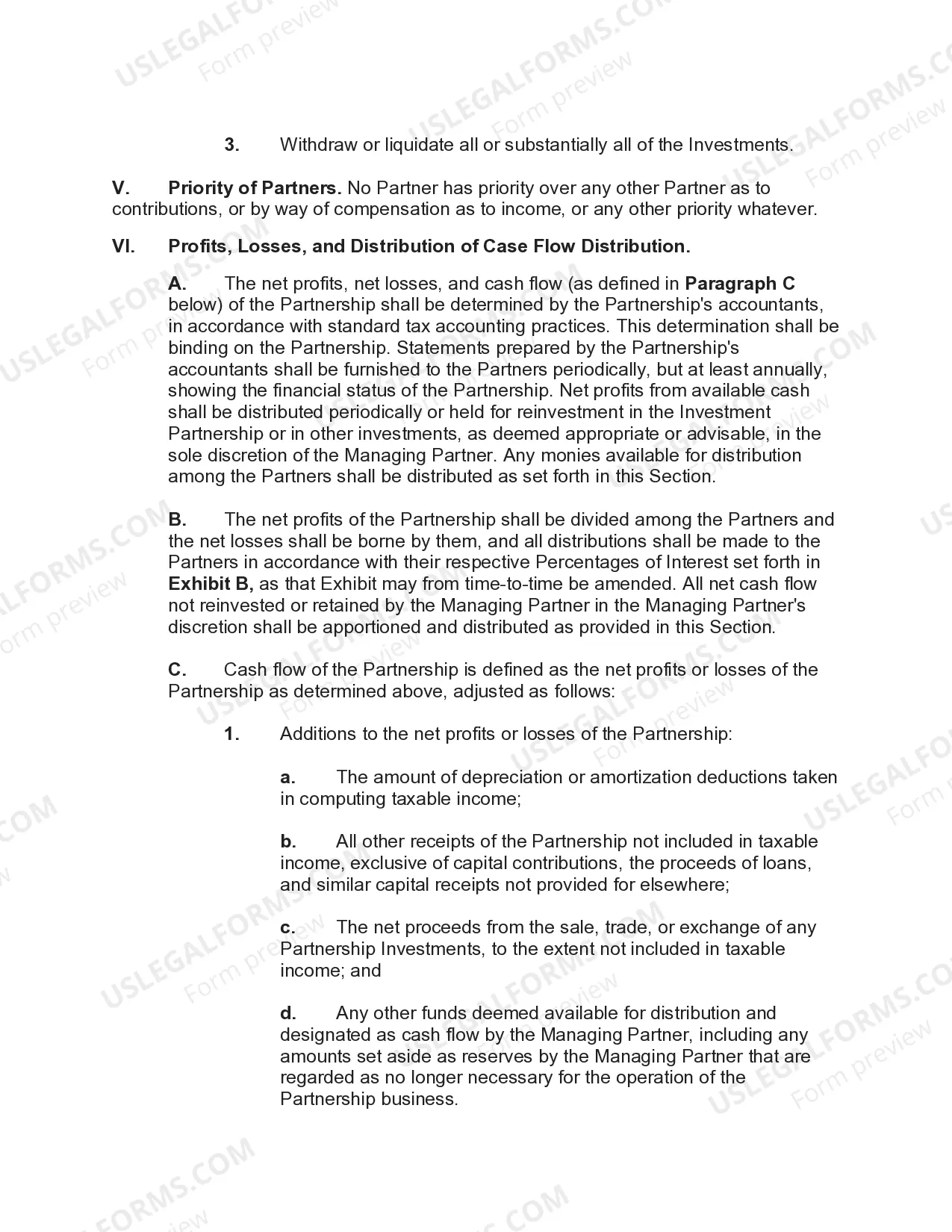
- Provisions regarding profits, losses, and cash flow distribution among partners.
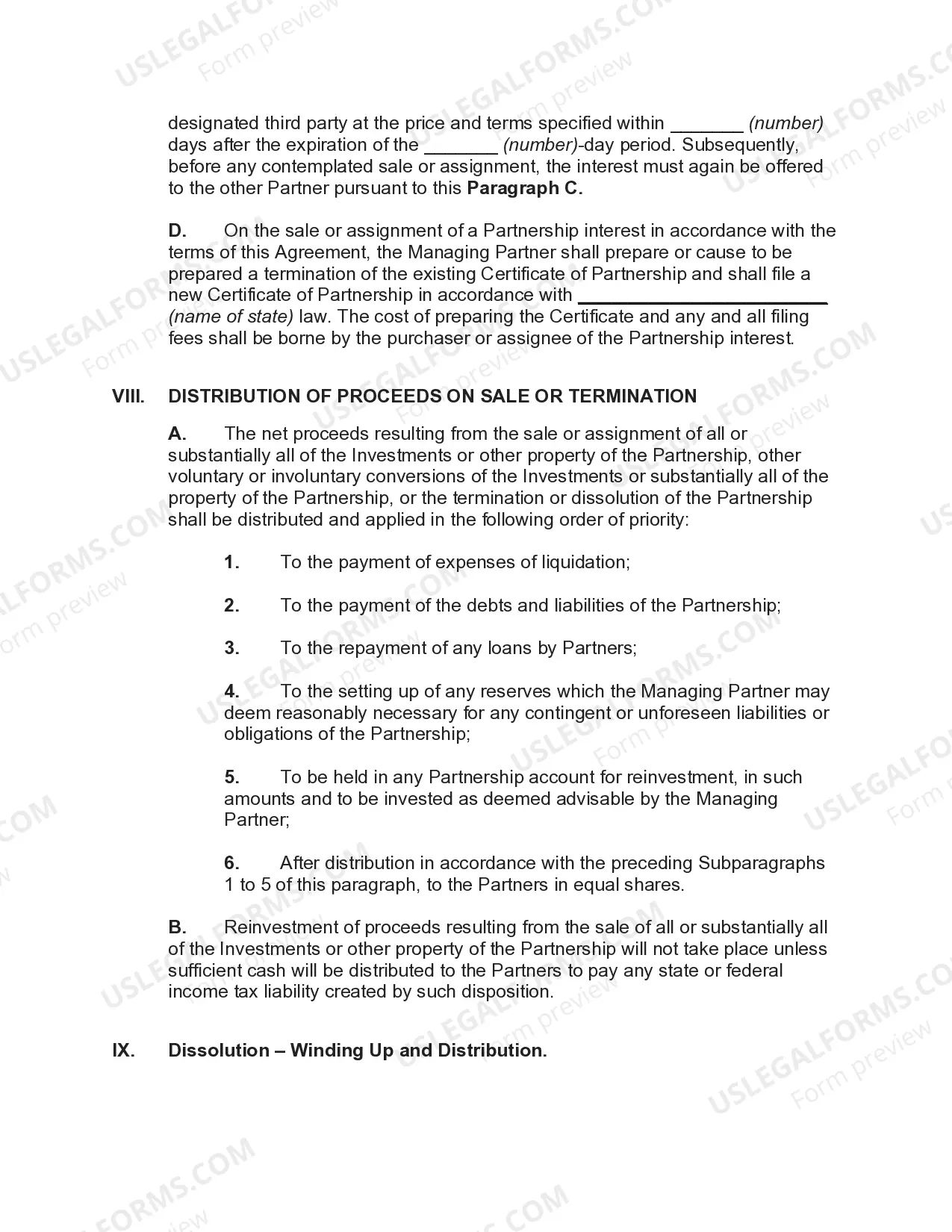
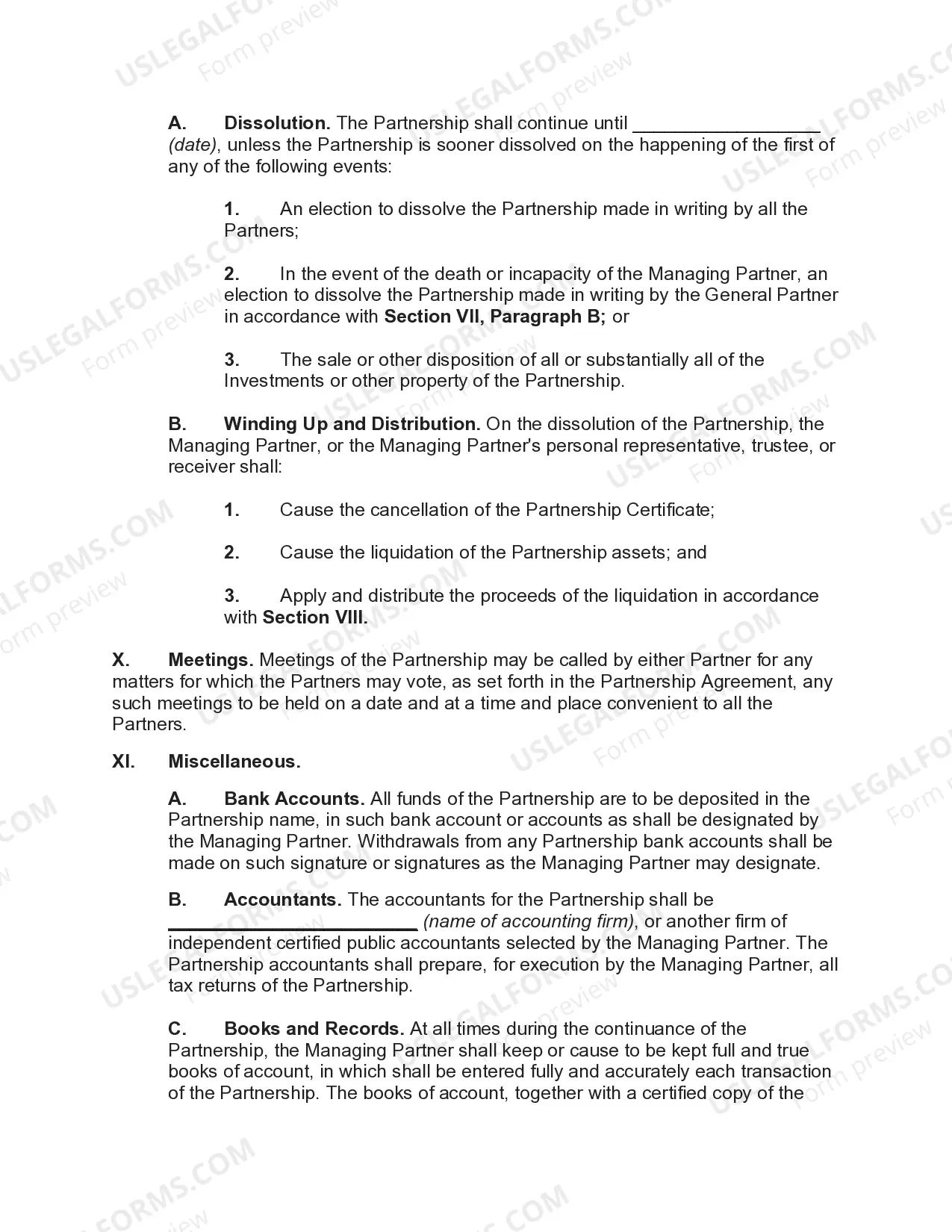
- Conditions for dissolving the partnership and winding up financial affairs.


Common use cases
This form is essential when two or more individuals or entities want to enter into a partnership specifically for investment purposes. It is suitable when the partners wish to collectively share profits, losses, and risks associated with financial investments without forming a more complex legal entity. Use this form to ensure that all parties agree on the terms of their partnership, including how decisions will be made and how investments will be managed.
Who should use this form
- Individuals or entities looking to form a partnership for investment purposes.
- Business partners who want to outline their roles and responsibilities regarding investment activities.
- Persons who seek to clearly delineate the management structure of the partnership.
- Investors interested in protecting their interests and outlining profit-sharing agreements.
Instructions for completing this form
- Identify and enter the names and addresses of the Managing Partner and the General Partner.
- Specify the date of the agreement and the name of the partnership.
- Detail the capital contributions of each partner and their respective percentages of interest.
- Provide any provisions concerning management and operational authority of the Managing Partner.
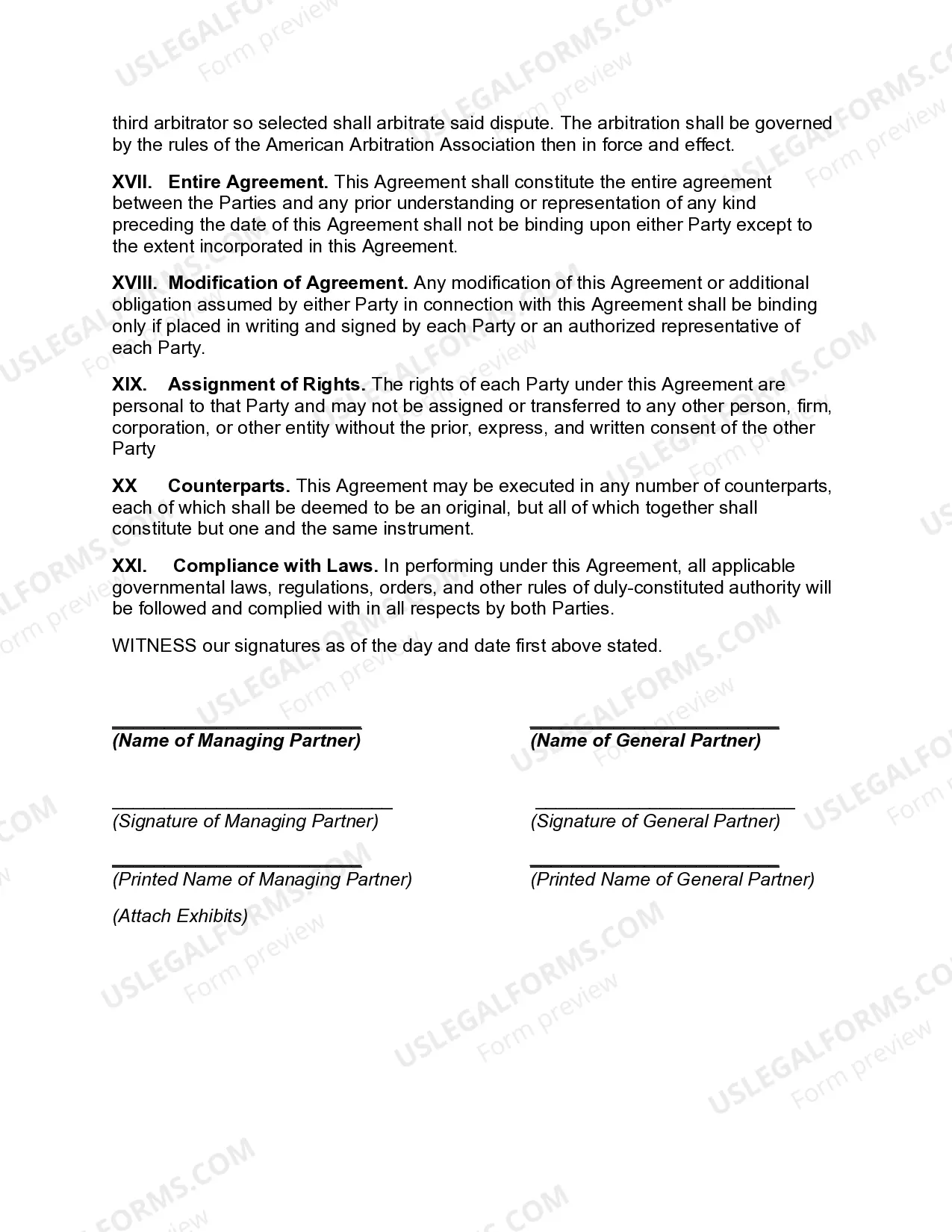
- Sign and date the agreement where indicated by all partners involved.
Notarization requirements for this form
This form does not typically require notarization unless specified by local law. However, having it notarized may provide an additional layer of verification and security.
Get your form ready online
Our built-in tools help you complete, sign, share, and store your documents in one place.
Make edits, fill in missing information, and update formatting in US Legal Forms—just like you would in MS Word.
Download a copy, print it, send it by email, or mail it via USPS—whatever works best for your next step.
Sign and collect signatures with our SignNow integration. Send to multiple recipients, set reminders, and more. Go Premium to unlock E-Sign.
If this form requires notarization, complete it online through a secure video call—no need to meet a notary in person or wait for an appointment.
We protect your documents and personal data by following strict security and privacy standards.

Make edits, fill in missing information, and update formatting in US Legal Forms—just like you would in MS Word.

Download a copy, print it, send it by email, or mail it via USPS—whatever works best for your next step.

Sign and collect signatures with our SignNow integration. Send to multiple recipients, set reminders, and more. Go Premium to unlock E-Sign.

If this form requires notarization, complete it online through a secure video call—no need to meet a notary in person or wait for an appointment.

We protect your documents and personal data by following strict security and privacy standards.
Avoid these common issues
- Failing to accurately define the roles of each partner.
- Neglecting to specify the distribution of profits and losses.
- Inadequately documenting capital contributions from each partner.
- Omitting state-specific language that may be required for compliance.
Benefits of using this form online
- Convenient access to a legally sound template prepared by licensed attorneys.
- Editability allows for customization as per specific partner agreements.
- Instant download for immediate use without extensive legal consultation.
- Secure and reliable format that ensures legal validity when completed correctly.
Looking for another form?



Form popularity
FAQ
Financial industry In such firms, the "partners" are typically the highest-compensated managing directors as well as more senior executives. The term is also used for senior executives in the private equity industry. In these industries, partners are often compensated millions of dollars per year.
A family investment partnerships structure is typically comprised of one or more investment partnerships (IPs) through which its members may invest in marketable securities, hedge funds, private equity, real estate, venture capital, and other illiquid alternative investments.
A partnership is classified as an investment partnership if at least 90 percent of its assets are investments in stocks, bonds, options, and similar intangible assets, and at least 90 percent of its income is derived from that kind of asset.
A company that issues and invests in securities. The three types of investment companies are mutual funds, closed-end funds, and unit investment trusts.
An investment partnership can be structured by forming a legal entity such as a limited partnership or limited liability company (LLC) and by drafting a partnership agreement that outlines the partners' roles, responsibilities, and profit-sharing arrangements.
An investment company is a specialized business that is engaged in the business of investing pooled capital into financial securities. Investment companies can be privately or publicly owned, and they engage in the management, sale, and marketing of investment products to the public.
A partnership must file an annual information return to report the income, deductions, gains, losses, etc., from its operations, but it does not pay income tax. Instead, it "passes through" profits or losses to its partners.
A business partner is an individual that plays a significant role in owning, managing, and/or creating a company. An investor is a person or organization that provides capital to a business with the expectation of a future financial return.