Career Development Discussion Guide
Understanding this form
The Career Development Discussion Guide is a tool designed for employees and supervisors to collaboratively plan and assess job performance objectives. Unlike other performance evaluations, this guide emphasizes open communication and direct discussion, ensuring that employees have clear direction towards achieving their goals and meeting their commitments in the workplace.
What’s included in this form
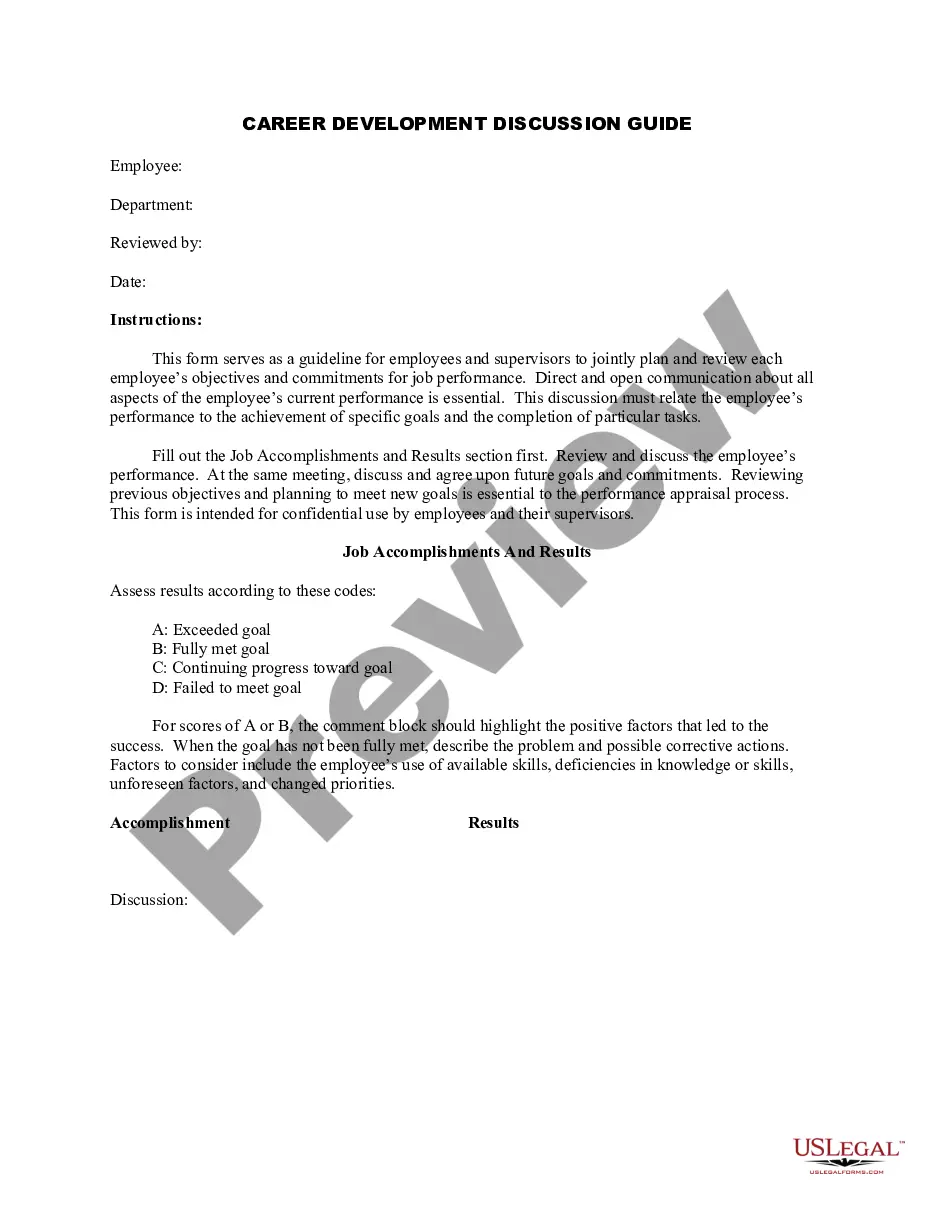
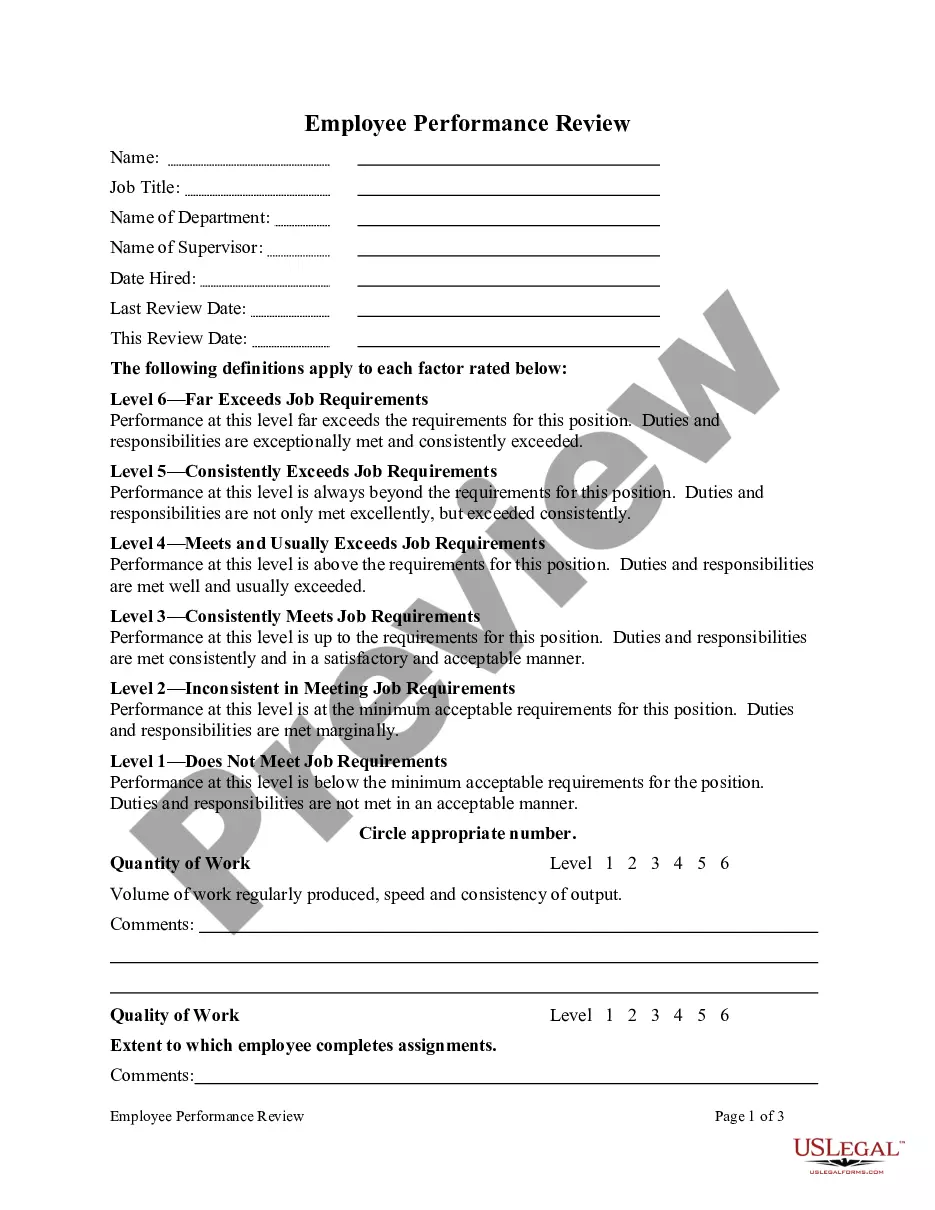
- Job Accomplishments and Results: Section to assess the employee's past performance based on specific criteria.
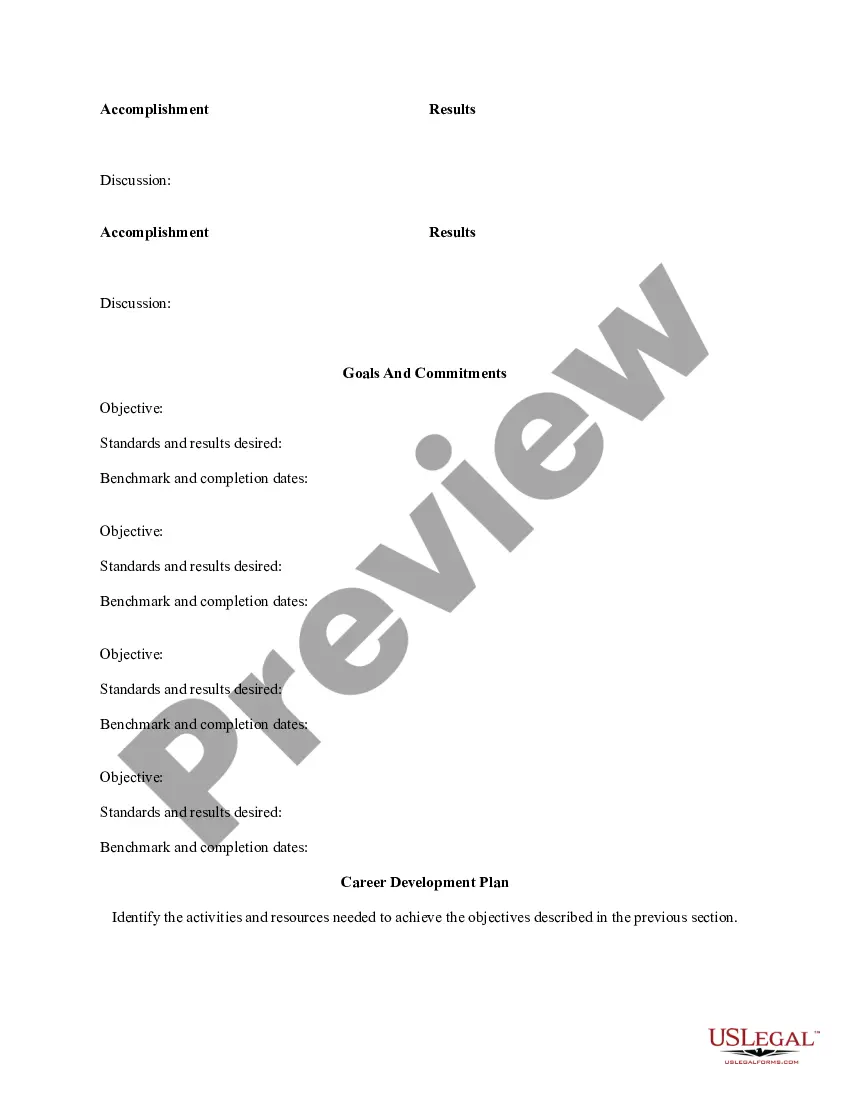
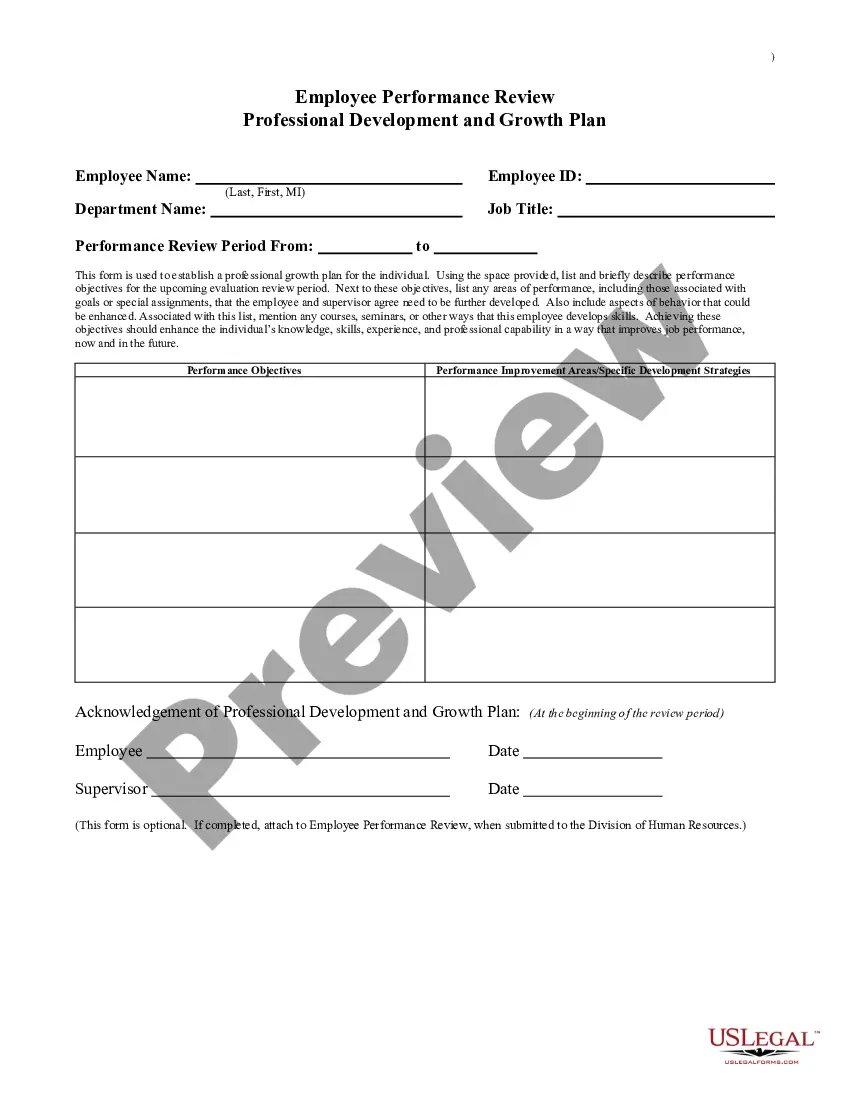
- Goals and Commitments: Area to outline future objectives and expected outcomes.
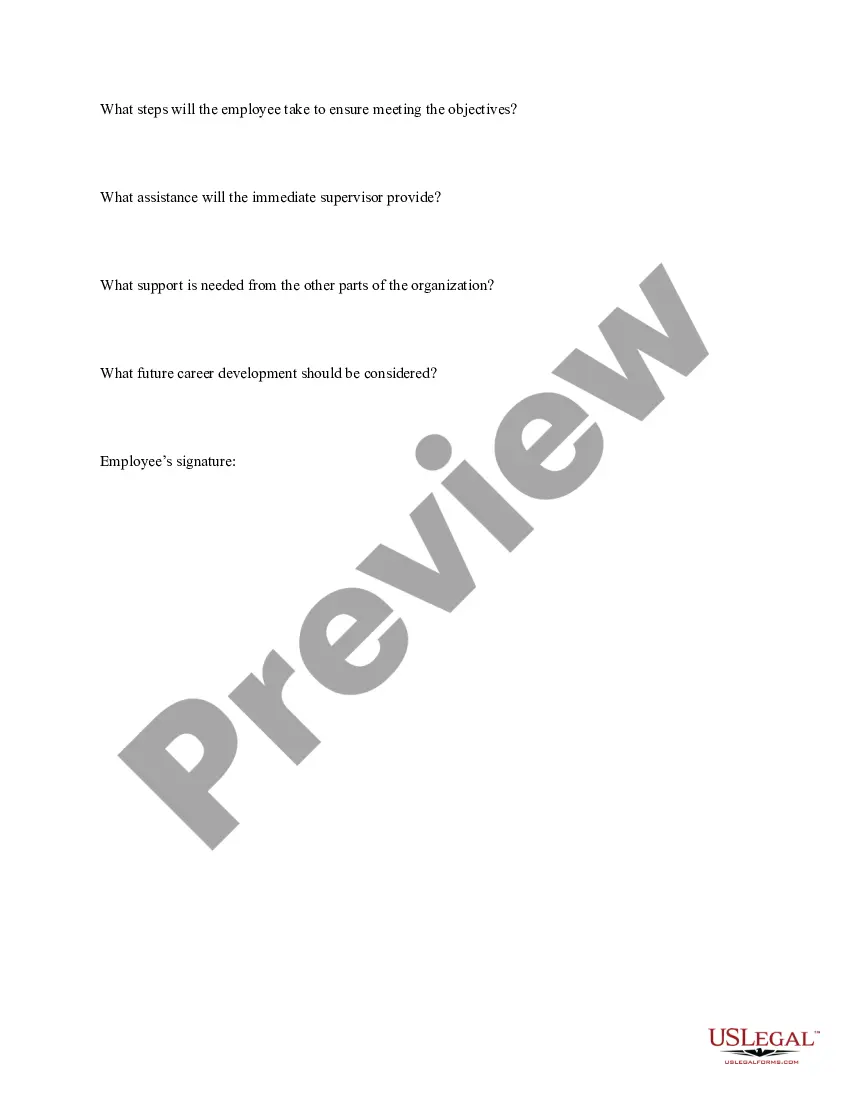
- Support and Resources: Identifies assistance needed from supervisors and the organization.
- Signature Fields: Places for the employee and supervisor to provide consent and acknowledgment.
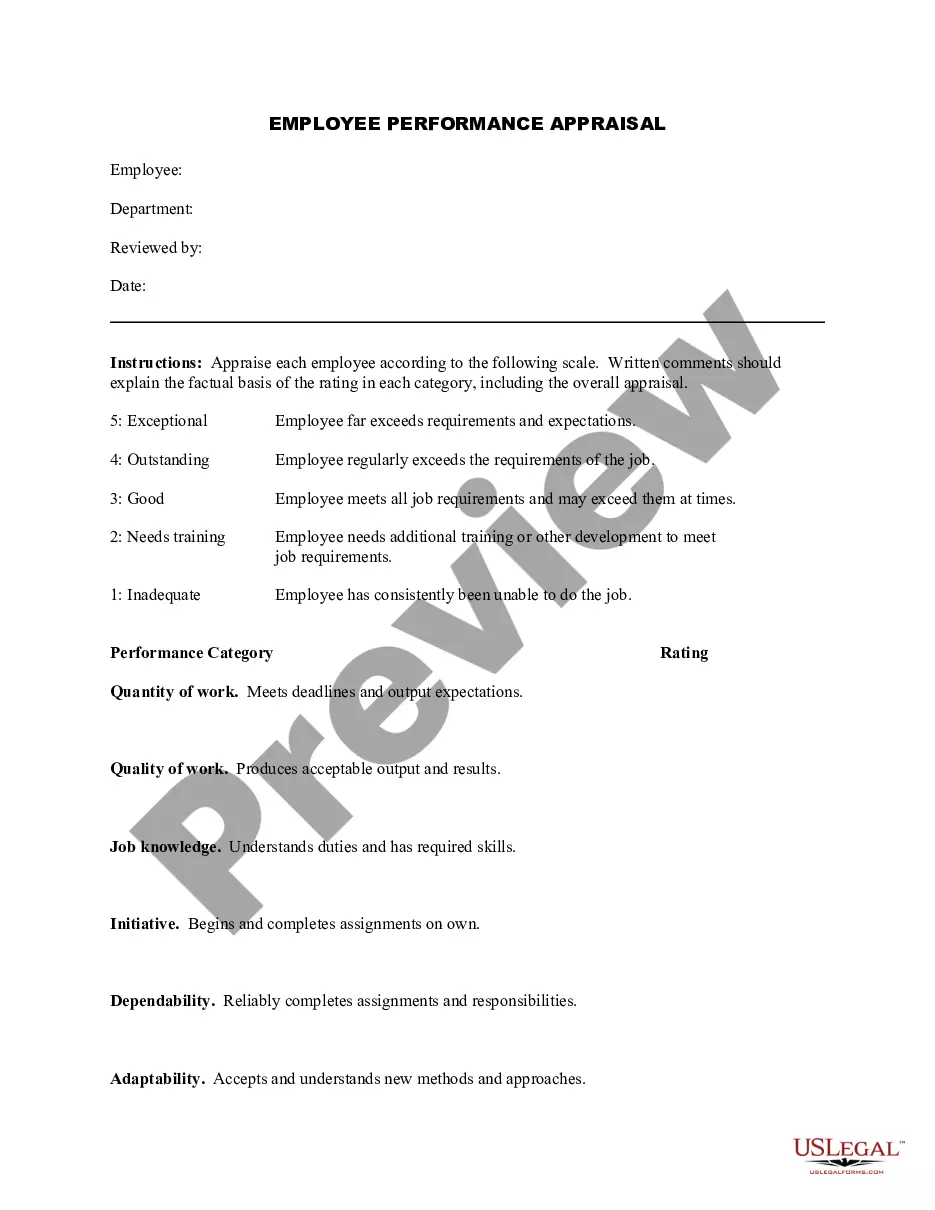
When to use this document
This form is typically used during performance review processes, annual appraisals, or whenever managers and employees meet to discuss performance. It helps facilitate fruitful conversations about achievements and future objectives, making it ideal for regular check-ins and developmental discussions.
Intended users of this form
- Employees seeking to set or review job-related goals.
- Supervisors responsible for guiding employee development.
- Human resources professionals involved in performance management.
How to complete this form
- Begin by filling out the Job Accomplishments and Results section, assessing past performance.
- Discuss the results with the supervisor to ensure mutual understanding and agreement.
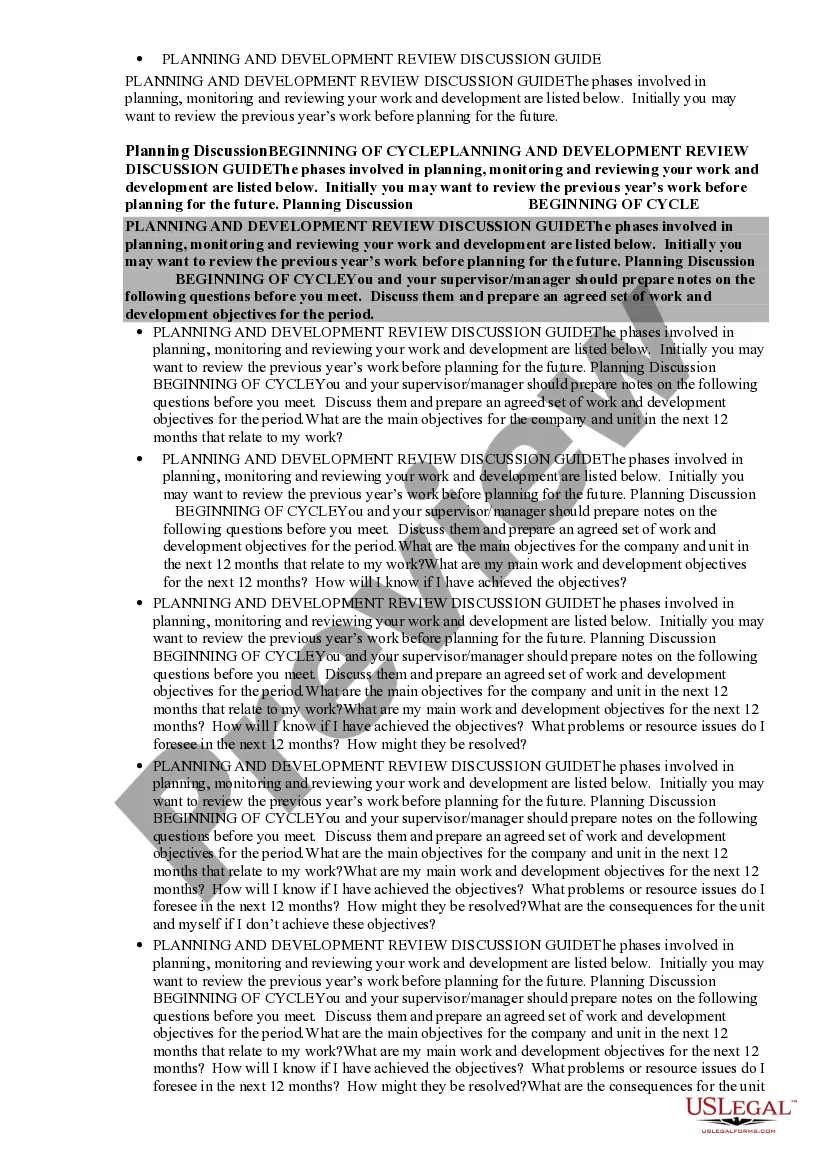
- Set future goals and commitments during the discussion, documenting them in the designated section.
- Identify what support and resources will be needed from the supervisor and the organization.
- Finally, both the employee and supervisor should sign to confirm the discussion and agreements made.
Does this form need to be notarized?
Notarization is generally not required for this form. However, certain states or situations might demand it. You can complete notarization online through US Legal Forms, powered by Notarize, using a verified video call available anytime.
Get your form ready online
Our built-in tools help you complete, sign, share, and store your documents in one place.
Make edits, fill in missing information, and update formatting in US Legal Forms—just like you would in MS Word.
Download a copy, print it, send it by email, or mail it via USPS—whatever works best for your next step.
Sign and collect signatures with our SignNow integration. Send to multiple recipients, set reminders, and more. Go Premium to unlock E-Sign.
If this form requires notarization, complete it online through a secure video call—no need to meet a notary in person or wait for an appointment.
We protect your documents and personal data by following strict security and privacy standards.

Make edits, fill in missing information, and update formatting in US Legal Forms—just like you would in MS Word.

Download a copy, print it, send it by email, or mail it via USPS—whatever works best for your next step.

Sign and collect signatures with our SignNow integration. Send to multiple recipients, set reminders, and more. Go Premium to unlock E-Sign.

If this form requires notarization, complete it online through a secure video call—no need to meet a notary in person or wait for an appointment.

We protect your documents and personal data by following strict security and privacy standards.
Common mistakes to avoid
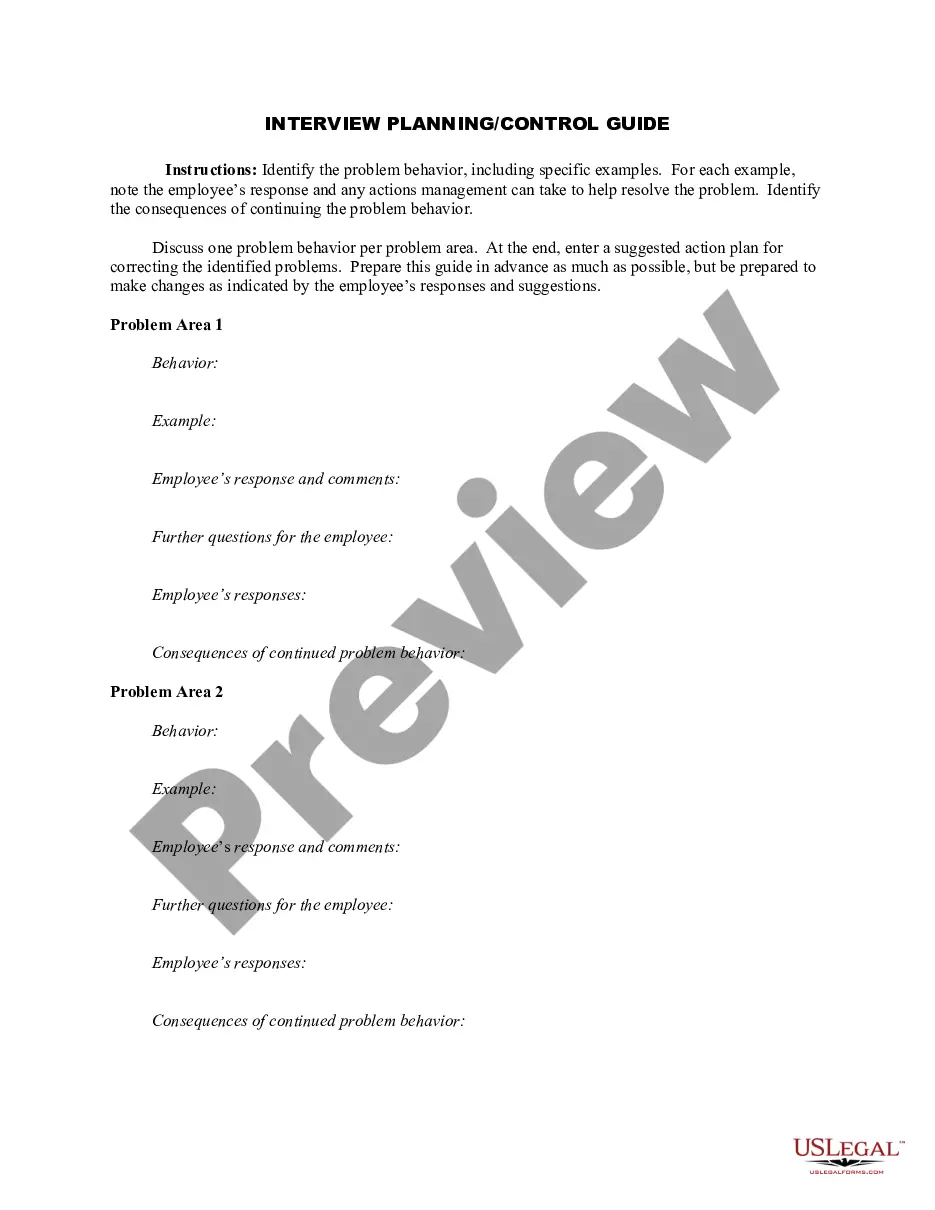
- Failing to prepare specific examples for the Job Accomplishments and Results section.
- Not following up on agreed-upon goals and commitments after the discussion.
- Ignoring the need for honest and constructive feedback during the evaluation.
Benefits of using this form online
- Convenient access from any device at any time.
- Easy to edit and update goals as circumstances change.
- Streamlined process for document storage and retrieval.
Legal use & context
- Utilized as part of internal performance management reviews, ensuring accountability and clarity in employee expectations.
- Helps protect employers by documenting performance discussions and agreed-upon goals.
Looking for another form?
Form popularity
FAQ
Ask your boss to share what they think your greatest skills are and in what areas you could develop. Discuss their long-term goals for the company, the team, and you. Question what future they see for you at the company and if there's room for growth.
Take Ownership. No one is more invested in your future than you. Clarify Your Accomplishments. Document where you performed well and how that can position you to be successful in your next role. Describe Your Vision. Where do you see yourself in one, three, or five years? Conduct the Meeting. Next Steps.
Take Ownership. No one is more invested in your future than you. Clarify Your Accomplishments. Document where you performed well and how that can position you to be successful in your next role. Describe Your Vision. Where do you see yourself in one, three, or five years? Conduct the Meeting. Next Steps.
Memory is Fallible: Take Notes. Even if your manager favors frequent, informal one-on-one meetings, you'll only have the opportunity to discuss career development a few times a year. Set the Agenda. Anticipate Questions. Understand the Three C's. Define Your Own Success.
Don't box the conversation into just promotions. Development doesn't necessarily mean a role change. Don't be abstract or use broad questions. Set developmental goals. Know your role. Discuss how short-term goals affect employees in the long term.
Prepare for the conversation. The first step is to do research. Understand your unique value. Set the tone for the conversation. Ask the tough questionseven if you feel awkward. Remember that this conversation is just the start.
Share your goals. Tell your manager what you're working on and inspiring to work on to give them a deeper sense of your productivity and where you want to go. Describe your achievements so far. Ask for input and advice. Identify and commit to next steps. What do you think?
Writing a career development plan. Identify and define a primary career interest. Identify long-term professional goals. Identify the short-term goals. Identify positive tasks in the current role. Identify the negative tasks in the current role. Identify additional skills and experience. Identify progress checkpoints.
Use development conversations to identify professional development opportunities, investigate barriers to an employee's ability to meet job performance goals and expectations, and identify performance improvement opportunities.