Employee Performance Review and Development Plan
About this form
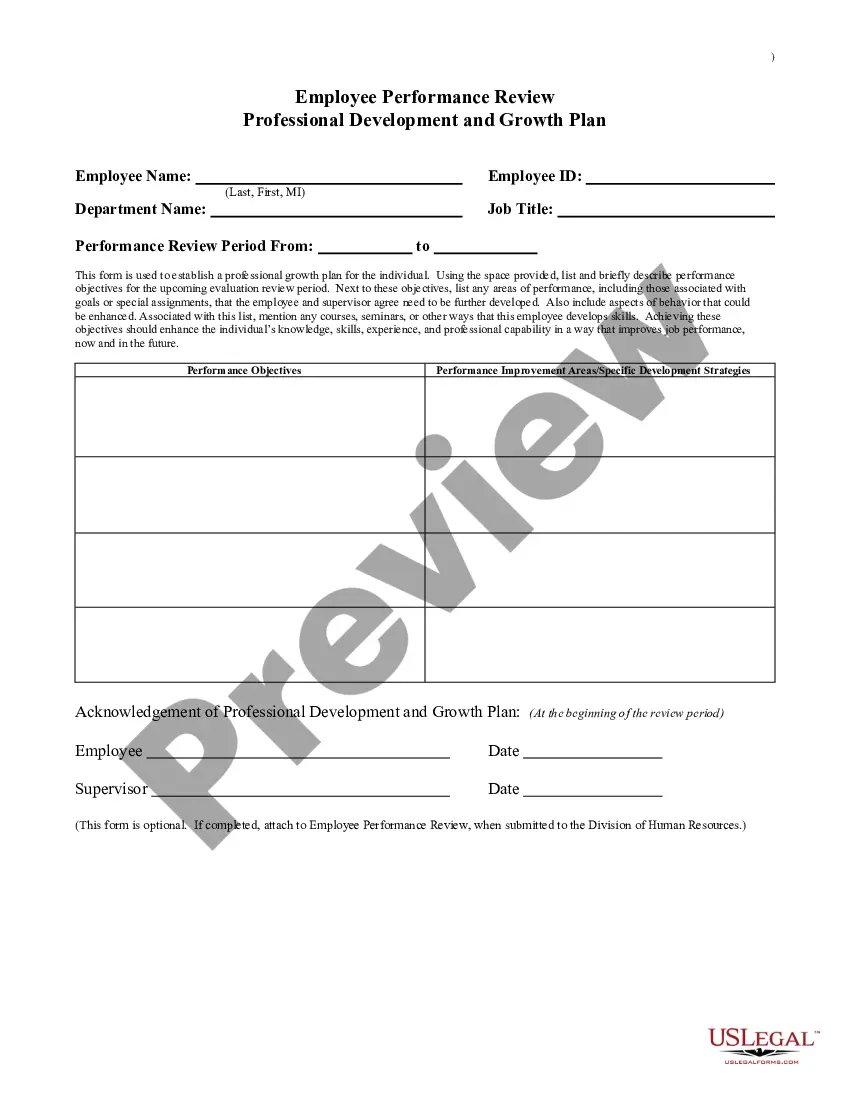
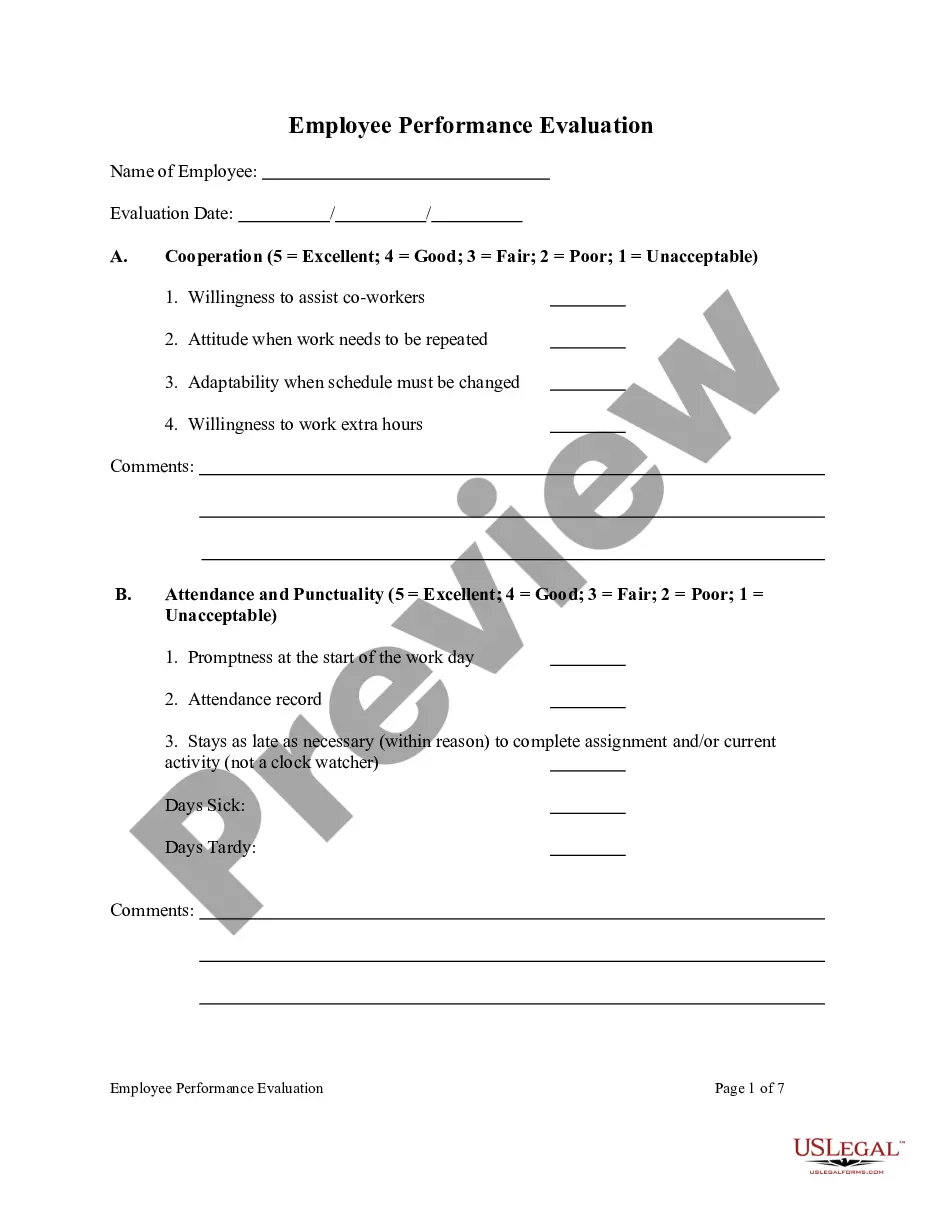
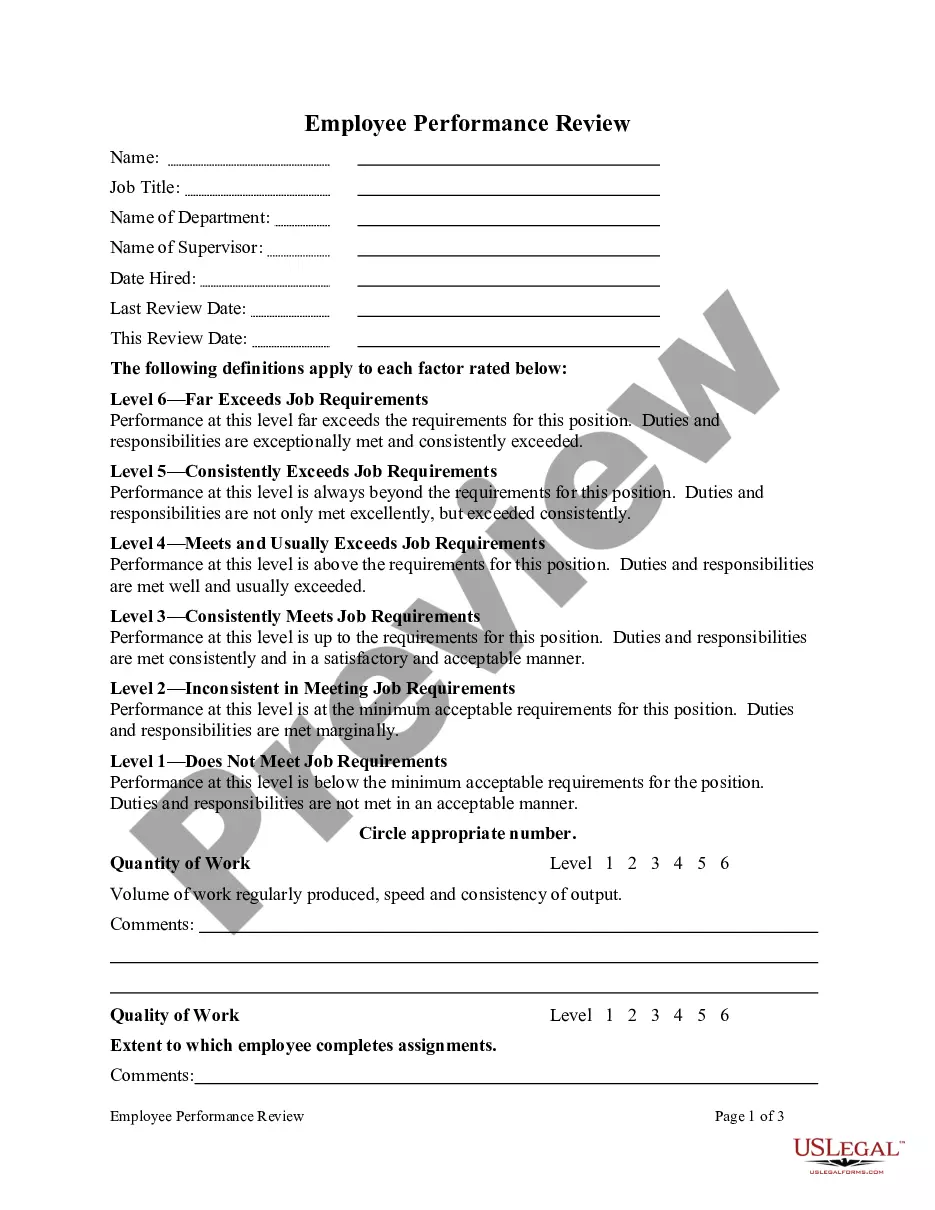
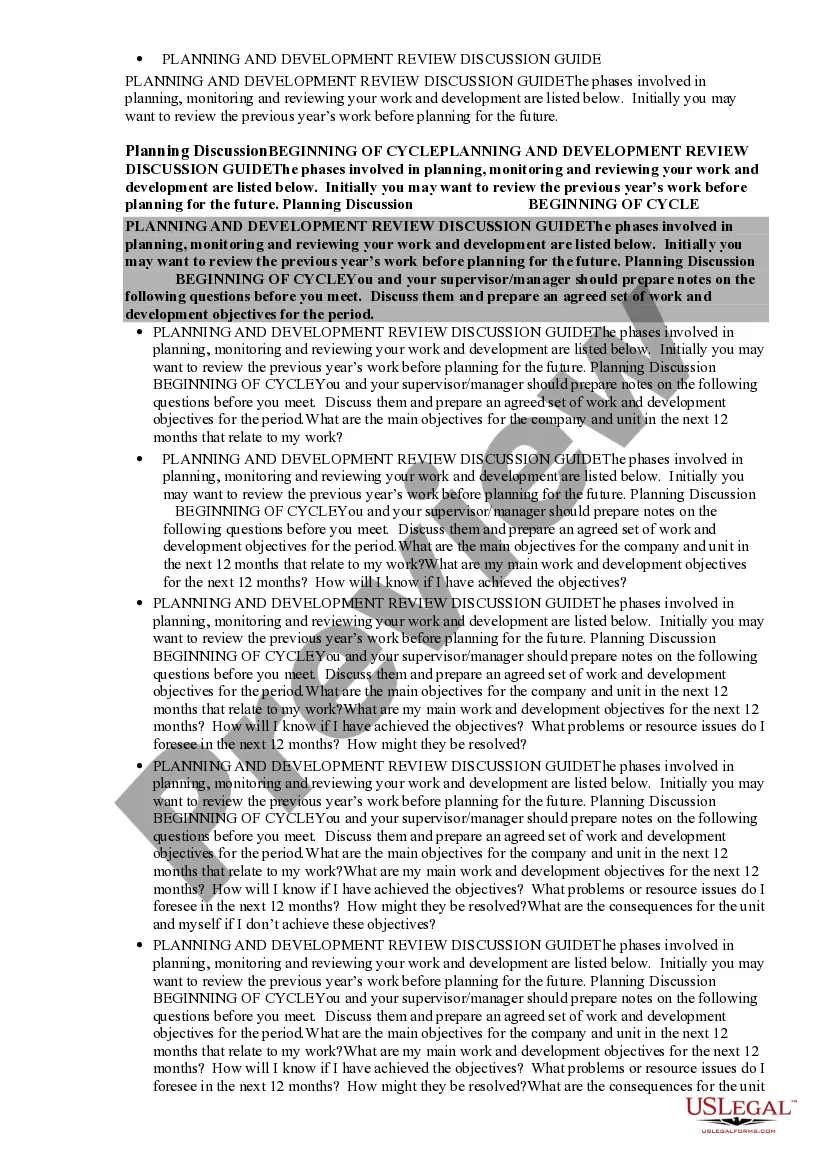
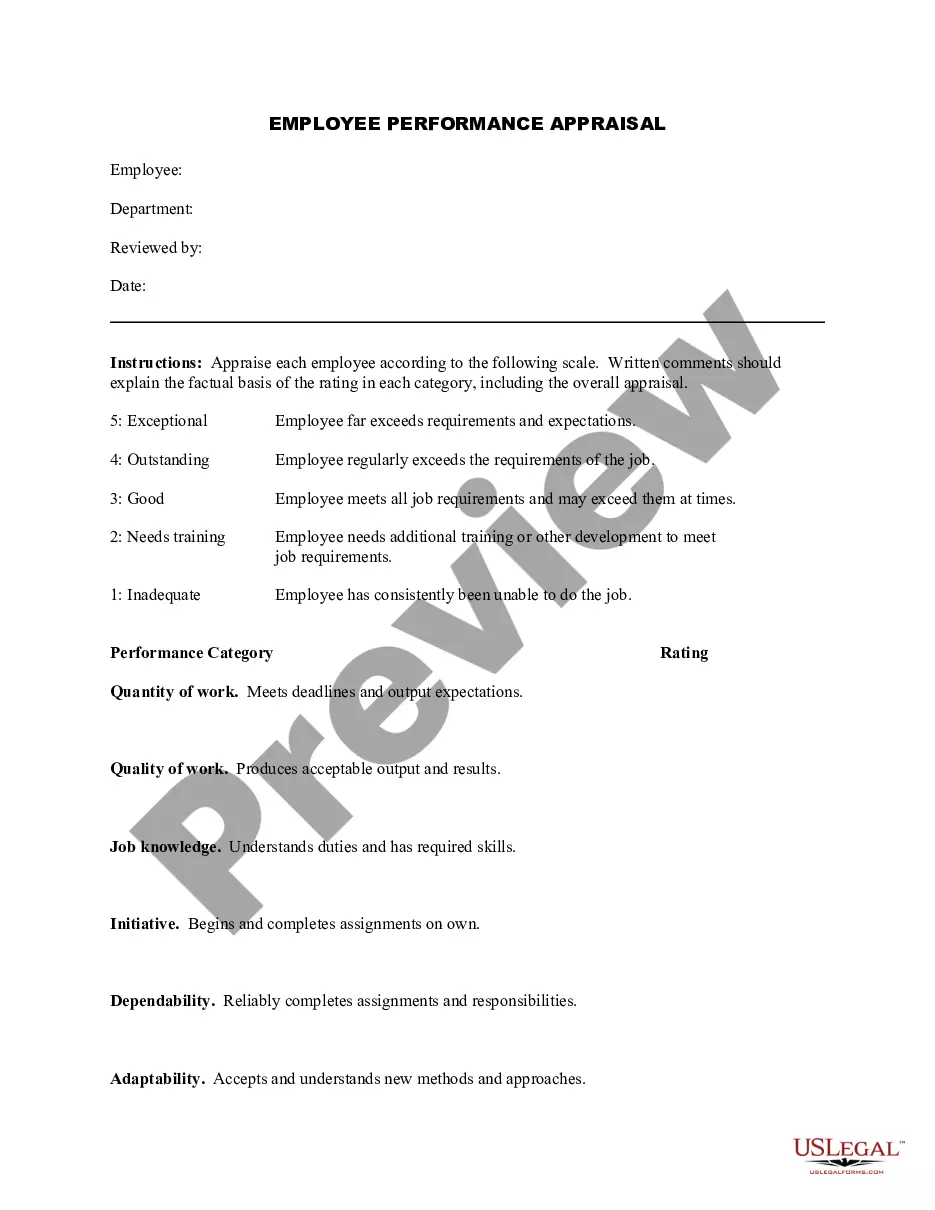
The Employee Performance Review and Development Plan is a legal document that assists employers in evaluating an employee's job performance. This form provides structured feedback and outlines specific strategies for employee development. It is distinct from other employment forms by focusing on performance assessment and growth opportunities for the employee, making it a valuable tool for managing workforce effectiveness.
Key parts of this document
- Employee Information: Basic details such as name, position, and department.
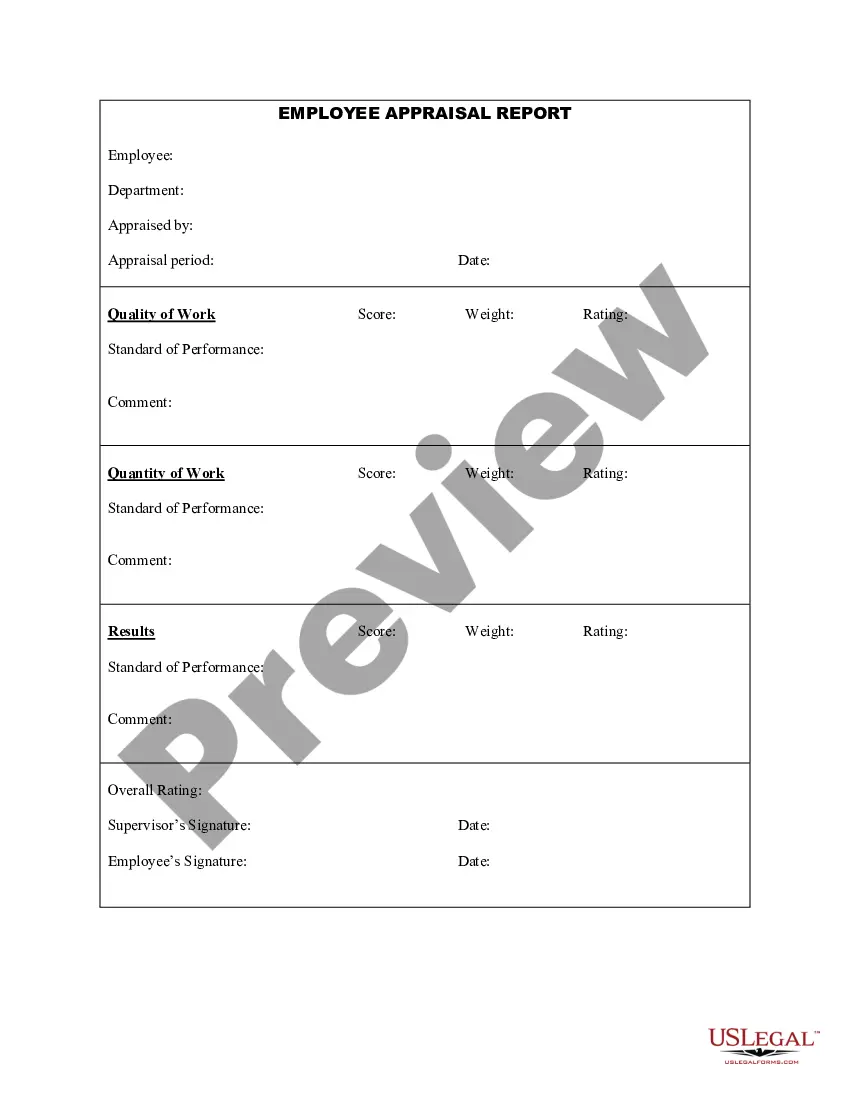
- Performance Metrics: Criteria used to evaluate the employee's work performance.
- Feedback Section: Space for specific comments on strengths and areas for improvement.
- Development Strategies: Suggestions for training or skills enhancement to support career progression.
- Action Plan: Steps and timelines for implementing development strategies.
When to use this document
This form is typically used during regular performance review cycles, which may occur annually or semi-annually. It is beneficial for identifying both commendable performance aspects and areas needing improvement. Employers should use this form if they aim to facilitate employee development conversations and set clear expectations moving forward.
Who should use this form
- Employers or managers responsible for evaluating employee performance.
- Human resources professionals overseeing employee development processes.
- Business owners who want to enhance workforce productivity through structured reviews.
- Supervisors aiming to document employee progress and future training needs.
How to complete this form
- Gather basic employee details such as name and position.
- Define and list specific performance metrics pertinent to the employee's role.
- Provide constructive feedback in the designated section, focusing on notable achievements and improvement opportunities.
- Identify and outline targeted development strategies tailored to the employee's career goals.
- Create an actionable plan with timelines for implementing agreed-upon strategies.
Notarization requirements for this form
Notarization is not commonly needed for this form. However, certain documents or local rules may make it necessary. Our notarization service, powered by Notarize, allows you to finalize it securely online anytime, day or night.
Get your form ready online
Our built-in tools help you complete, sign, share, and store your documents in one place.
Make edits, fill in missing information, and update formatting in US Legal Forms—just like you would in MS Word.
Download a copy, print it, send it by email, or mail it via USPS—whatever works best for your next step.
Sign and collect signatures with our SignNow integration. Send to multiple recipients, set reminders, and more. Go Premium to unlock E-Sign.
If this form requires notarization, complete it online through a secure video call—no need to meet a notary in person or wait for an appointment.
We protect your documents and personal data by following strict security and privacy standards.

Make edits, fill in missing information, and update formatting in US Legal Forms—just like you would in MS Word.

Download a copy, print it, send it by email, or mail it via USPS—whatever works best for your next step.

Sign and collect signatures with our SignNow integration. Send to multiple recipients, set reminders, and more. Go Premium to unlock E-Sign.

If this form requires notarization, complete it online through a secure video call—no need to meet a notary in person or wait for an appointment.

We protect your documents and personal data by following strict security and privacy standards.
Typical mistakes to avoid
- Failing to provide specific examples when giving feedback.
- Neglecting to establish measurable performance metrics.
- Not involving the employee in the development strategy discussion.
- Overlooking follow-up on proposed action plans.
Why complete this form online
- Convenience of accessing and completing the form from any location.
- Easy editability allows for personalized feedback and development plans.
- Reliable document storage for future reference and tracking employee progress.
- Reduces paper usage and streamlines performance management processes.
Summary of main points
- The Employee Performance Review and Development Plan aids in assessing employee performance and development needs.
- It is essential for fostering ongoing employee growth and setting clear goals.
- Utilizing this form can enhance communication and feedback between employees and management.
Looking for another form?
Form popularity
FAQ
State the exact performance that must be improved; be specific and cite examples. State the level of the work performance expectation and that it must be performed on a consistent basis. Identify and specify the support and resources that you will provide to assist the employee to succeed.
Identify the performance/behavior that needs improving. Provide specific examples for reasoning. Outline expected standard. Identify training and support. Schedule check-ins and review points. Sign and acknowledge.
Development goals: Write a brief goal for each development need. For example, Improve listening skills," or Learn how to lead a product team. Then create action plans to address each development goal. Bring a list of ideas to discuss with your manager on how to achieve each development goal (action plans).
Step 1: Establish personal and career development goals. Step 2: Establish work development needs. Step 3: Develop an action plan. Step 4: Make changes on the path to development. Step 5: Reflect on efficacy and update the plan as required.
Set yourself goals. Prioritise those goals. Set yourself deadlines for when you want to achieve them. Recognise threats and opportunities. Develop your skills or increase your knowledge. Use your support network. Measure your progress.
Identify performance or behavioral issues that need improvement. Explain the level of performance and behavior expected. Supply helpful suggestions for employee improvement. Schedule progress meetings with the employee. Outline consequences for not meeting standards.
Provide regular, informal feedback. While performance reviews typically happen once or twice a year, feedback should not be limited to those short review periods. Be honest. Do it face to face. Use tangible, pertinent examples. End on a positive note. Choose your words with care.
Assess where you are now. Identify your specific career goals. Gather information. Identify what professional skills you already have and which you need to work on. Choose how you will accomplish your goals. Develop a timeline for accomplishing your specific targets and goals.
A PIP typically should be used when the employee has been previously advised of the performance deficiencies and efforts such as verbal or written counseling have been unsuccessful in addressing the problem.