Employee Action and Behavior Documentation
What is this form?
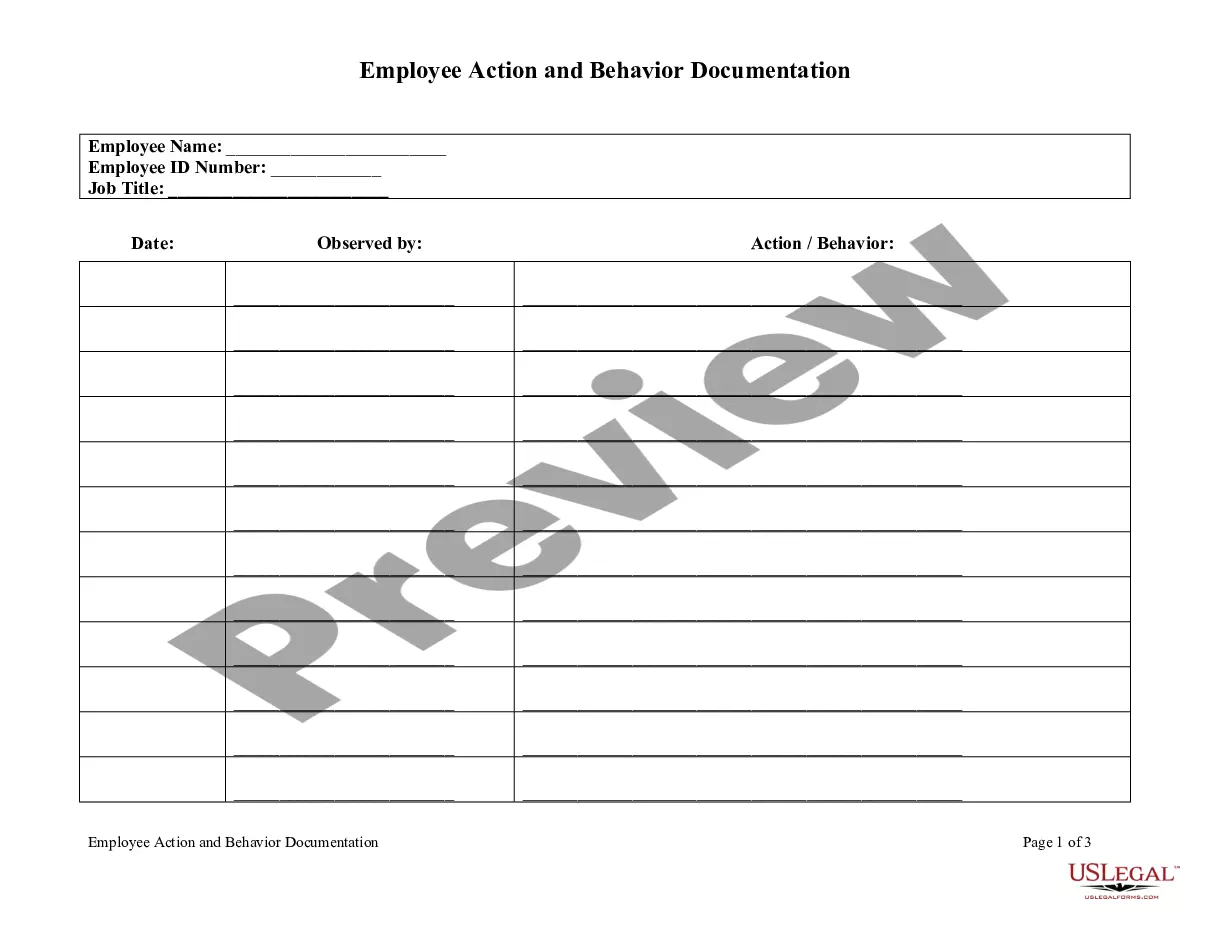
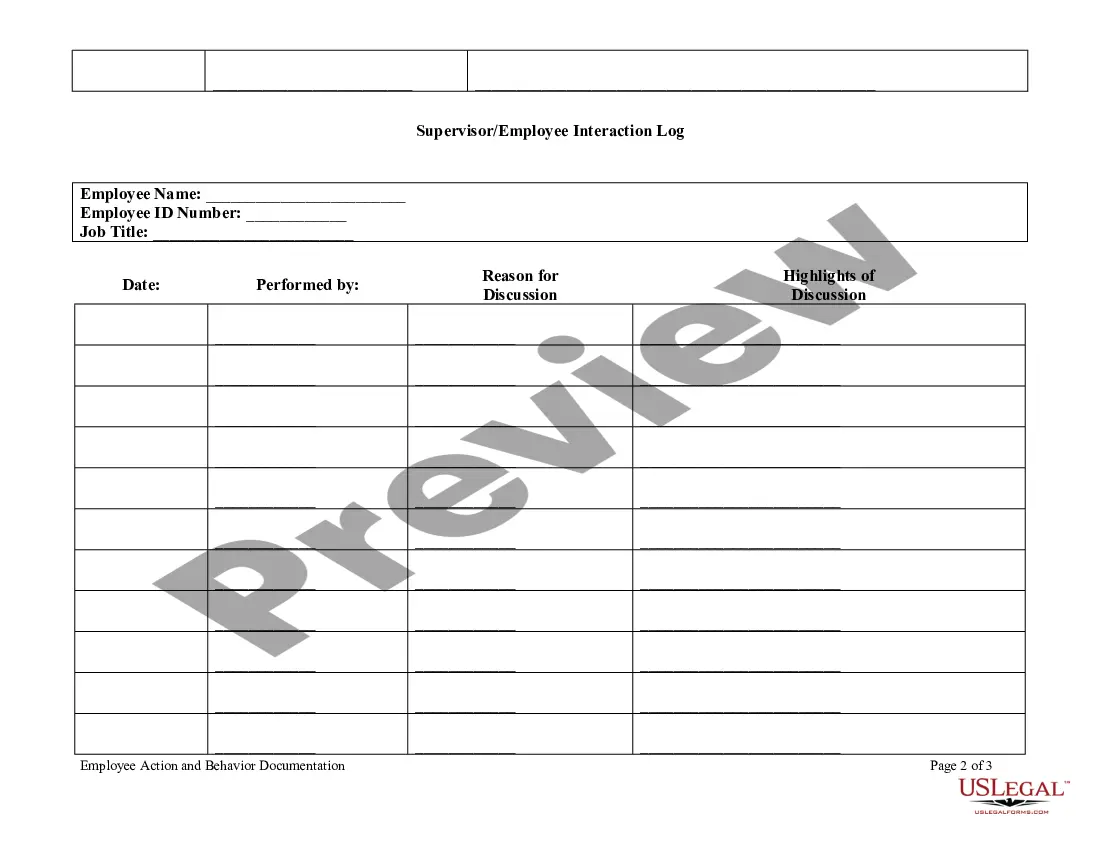
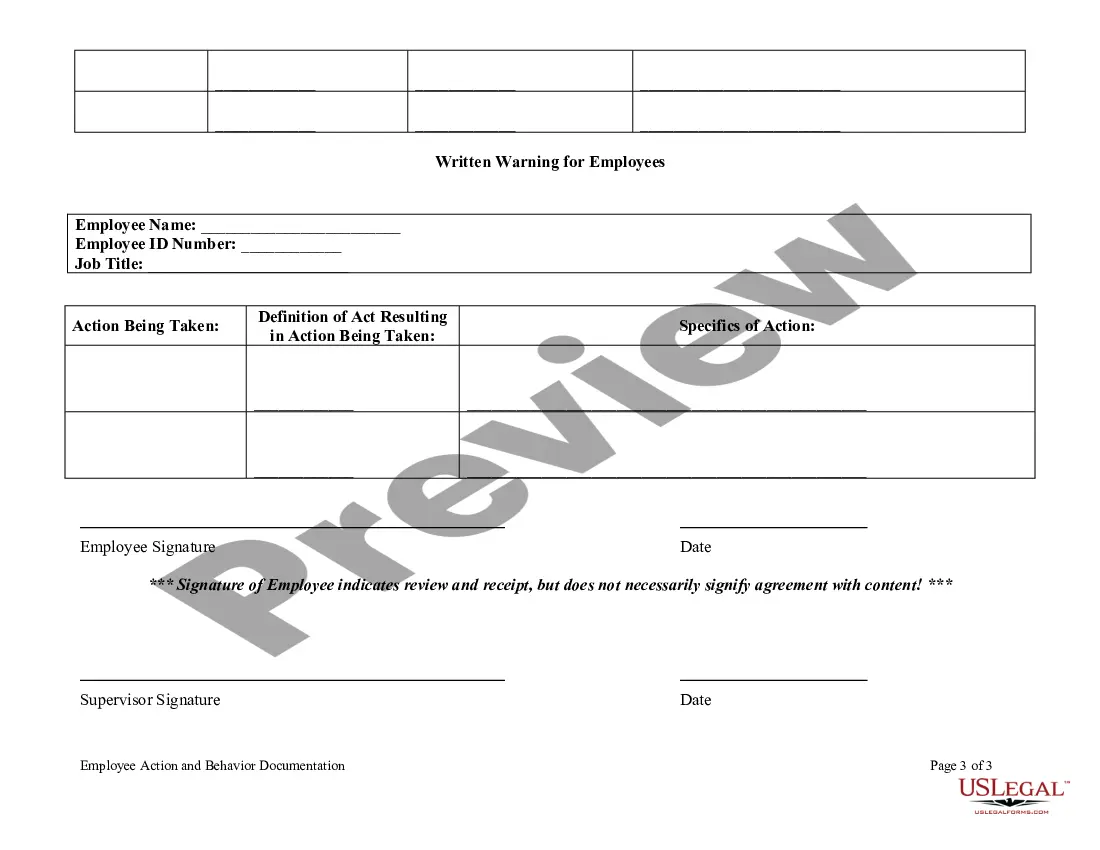
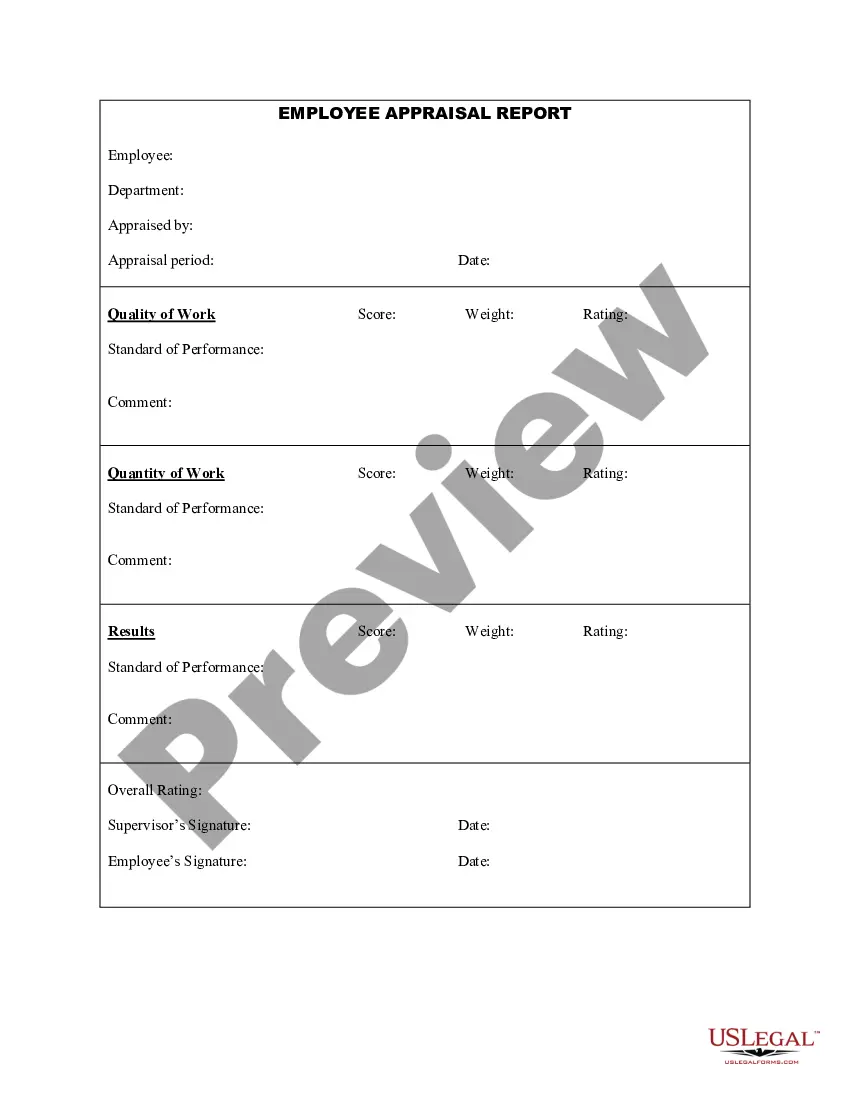
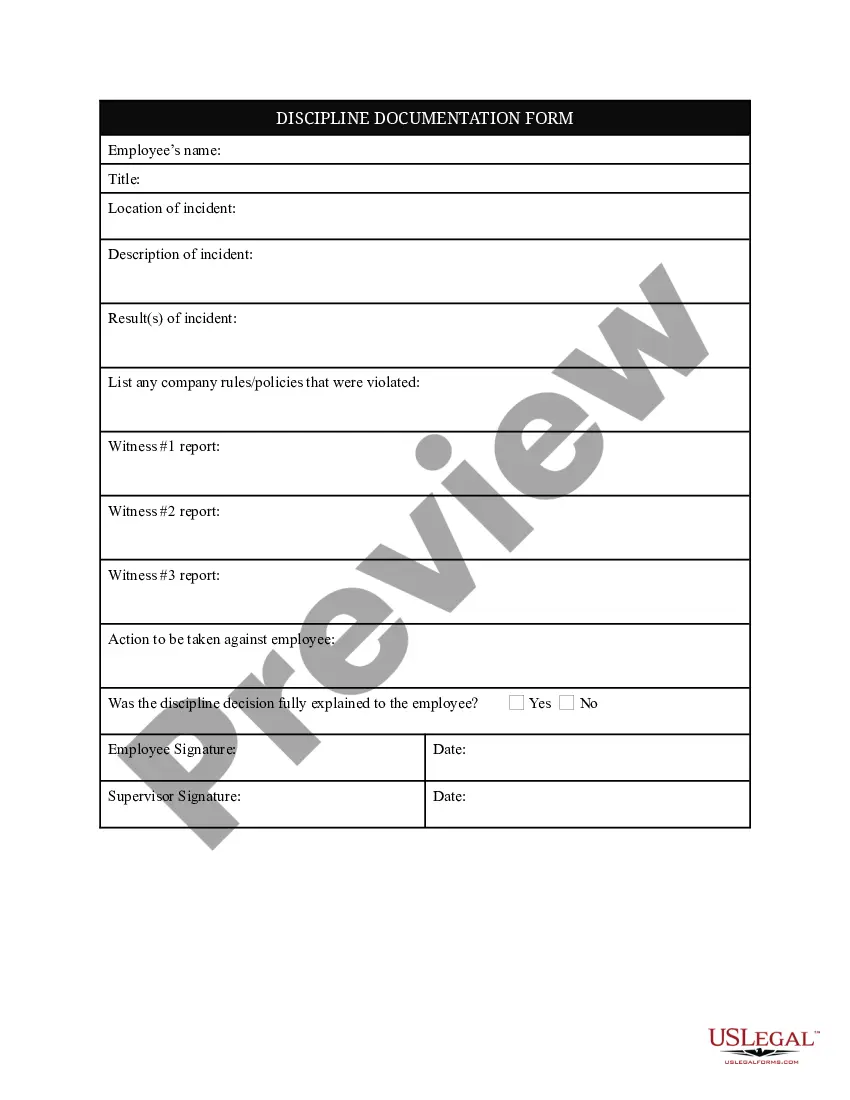
The Employee Action and Behavior Documentation form is used to document discussions between supervisors and employees regarding performance and behavior in the workplace. This form assists in tracking performance issues and ensures a formal record of corrective measures being undertaken. Unlike other employee forms, this documentation focuses specifically on behavioral issues and the steps taken to address them, providing clarity in the disciplinary process.
Main sections of this form
- Employee Name and ID Number: Identifies the employee involved.
- Job Title: Indicates the employee's position within the organization.
- Date of Discussion: Captures when the interaction occurred.
- Performed by: Names the supervisor or individual documenting the conversation.
- Reason for Discussion: Describes the specific behavior or performance issue addressed.
- Highlights of Discussion: Summarizes key points discussed and any agreed-upon actions.
Situations where this form applies
This form should be used when an employee fails to meet expected performance standards or behaves inappropriately at work. It is applicable during disciplinary actions, performance reviews, or when corrective feedback is necessary after prior counseling has not led to improvement. Having a documented record can also protect the organization in case of disputes regarding employment practices.
Who this form is for
- Supervisors and managers responsible for employee performance management.
- Human resources personnel overseeing employee relations.
- Employees who are part of a performance improvement plan.
- Any organization implementing a formal discipline process.
Completing this form step by step
- Fill in the employee's name and ID number at the top of the form.
- Record the employee's job title to establish context for the discussion.
- Enter the date when the discussion took place.
- Provide the name of the supervisor or person conducting the discussion.
- Clearly state the reason for the discussion, detailing the issues being addressed.
- Summarize the highlights of the conversation, including any actions agreed upon or follow-up steps.
Is notarization required?
Notarization is generally not required for this form. However, certain states or situations might demand it. You can complete notarization online through US Legal Forms, powered by Notarize, using a verified video call available anytime.
Get your form ready online
Our built-in tools help you complete, sign, share, and store your documents in one place.
Make edits, fill in missing information, and update formatting in US Legal Forms—just like you would in MS Word.
Download a copy, print it, send it by email, or mail it via USPS—whatever works best for your next step.
Sign and collect signatures with our SignNow integration. Send to multiple recipients, set reminders, and more. Go Premium to unlock E-Sign.
If this form requires notarization, complete it online through a secure video call—no need to meet a notary in person or wait for an appointment.
We protect your documents and personal data by following strict security and privacy standards.

Make edits, fill in missing information, and update formatting in US Legal Forms—just like you would in MS Word.

Download a copy, print it, send it by email, or mail it via USPS—whatever works best for your next step.

Sign and collect signatures with our SignNow integration. Send to multiple recipients, set reminders, and more. Go Premium to unlock E-Sign.

If this form requires notarization, complete it online through a secure video call—no need to meet a notary in person or wait for an appointment.

We protect your documents and personal data by following strict security and privacy standards.
Typical mistakes to avoid
- Failing to document discussions promptly after they occur.
- Using vague language instead of clear, specific examples of the behavior in question.
- Neglecting to include follow-up actions or agreements made during the discussion.
- Leaving out signatures from both the supervisor and the employee involved in the discussion.
Benefits of completing this form online
- Easy access to a structured template that simplifies the documentation process.
- Ability to edit and personalize the form according to specific organizational needs.
- Secure storage, ensuring that records are readily available for future reference.
- Streamlined completion, allowing for faster turnaround times in human resources processes.
Legal use & context
- The form serves as a protective measure for employers, showing documented efforts to address employee concerns.
- Proper documentation can support legal defenses in cases of wrongful termination or disputes over disciplinary actions.
- Misuse of the form can lead to claims of unfair treatment or discrimination if not handled consistently and transparently.
Quick recap
- The Employee Action and Behavior Documentation form is essential for managing employee performance effectively.
- Accurate record-keeping helps ensure organizational accountability and legal compliance.
- Using this form can improve communication between supervisors and employees regarding performance standards.
Looking for another form?

Form popularity
FAQ
The employee's name and the date of the write-up. Clearly state why they are being written up. How many times this employee has been written up. Clearly state details about the problem. Give the employee a deadline to fix the problem. Always have them sign and date the write-up.
Have an employee discipline form. Conduct a full and fair investigation. Get the facts. Be objective. Be clear and specific. Complete the form while the facts are fresh. Get the employee's acknowledgement. Allow the employee to explain the conduct.
Detail the Investigation of Misconduct. Explain the Specific Misconduct. Detail the Improvement Action Plan. Detail the Consequences of Future Misconduct. Detail the Employee's Right to Respond or Appeal.
Listen. Often, when an employee is difficult we stop paying attention to what's actually going on. Give clear, behavioral feedback. Document. Be consistent. Set consequences if things don't change. Work through the company's processes. Don't poison the well. Manage your self-talk.
It should include the date, time and location for the hearing. The disciplinary hearing letter should have details of the allegations against the employee, documentation supporting the incident and the possible outcomes of the procedure.
Have an employee discipline form. Conduct a full and fair investigation. Get the facts. Be objective. Be clear and specific. Complete the form while the facts are fresh. Get the employee's acknowledgement. Allow the employee to explain the conduct.
Stick to the facts and underline expectations. Emphasize behavior. Align records of past performance. Describe proof of misconduct. Identify and present consequences. Meet in person and get a signature.