A patent is a grant of a property right by the Government to an inventor. The United States Constitution gives Congress the right to provide for patent protection in legislation in order to encourage useful inventions. The patent itself provides a detailed description of the invention, and how it is used or how to make it. Thus, if you obtain a patent you cannot keep the matter secret, which is the province of Trade Secret Law. A patent enables the owner to exclude others from making, using or selling the invention for the life of the patent.
Assignment of Rights in Invention Prior to Execution of Application
State:
Multi-State
Control #:
US-02025BG
Format:
Word
Instant download
Description
Free preview
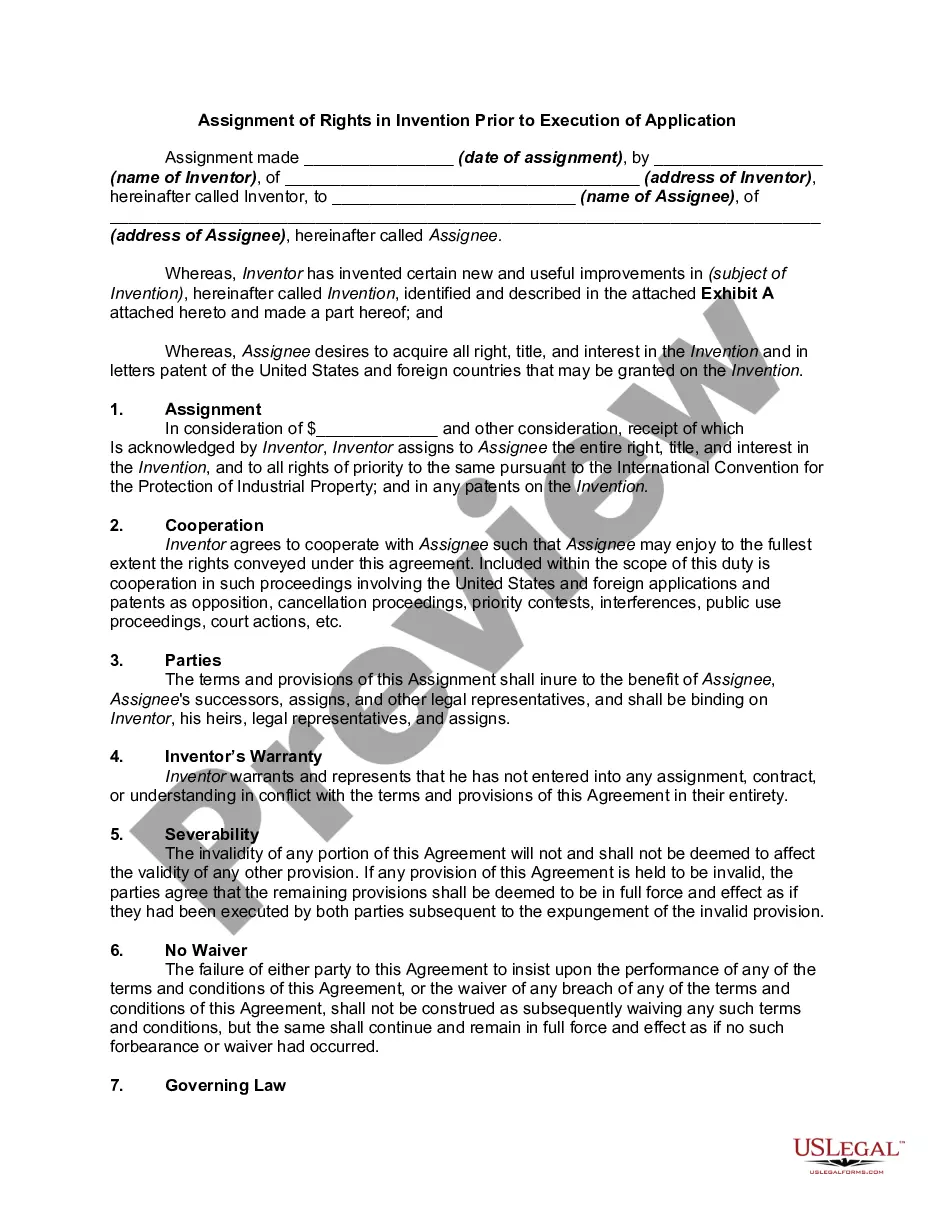
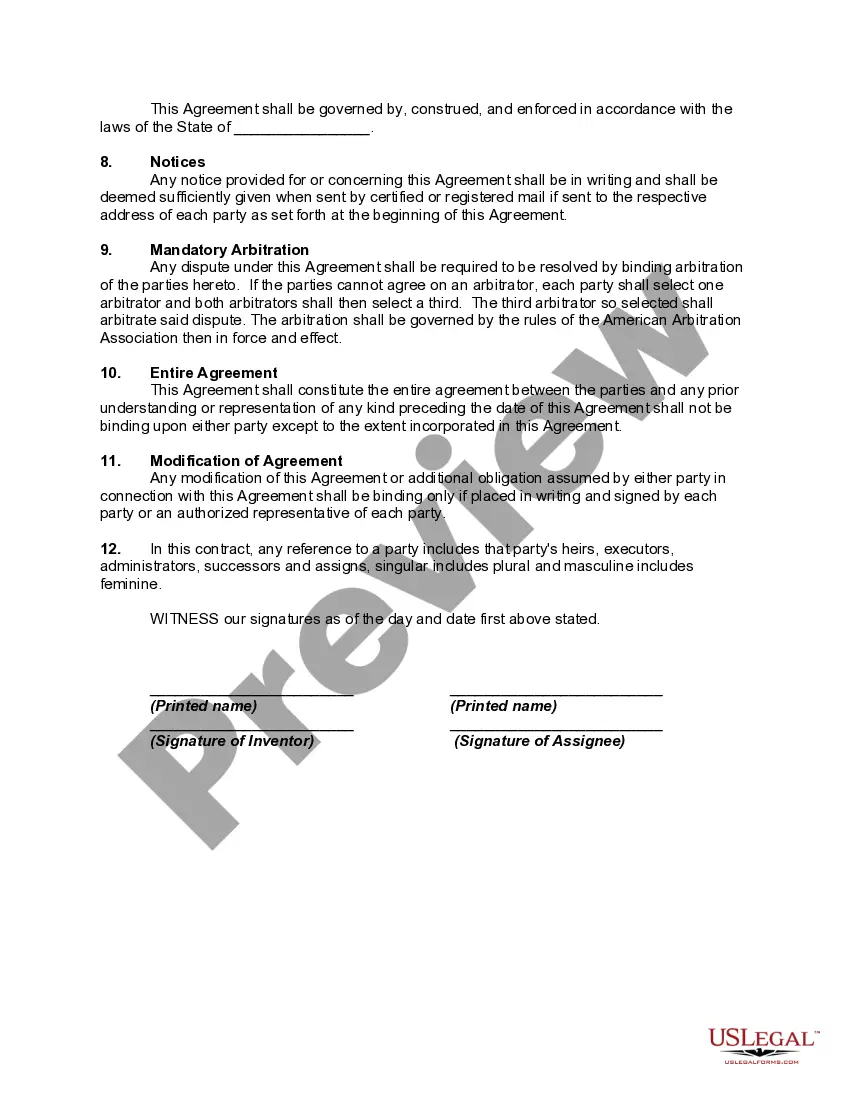
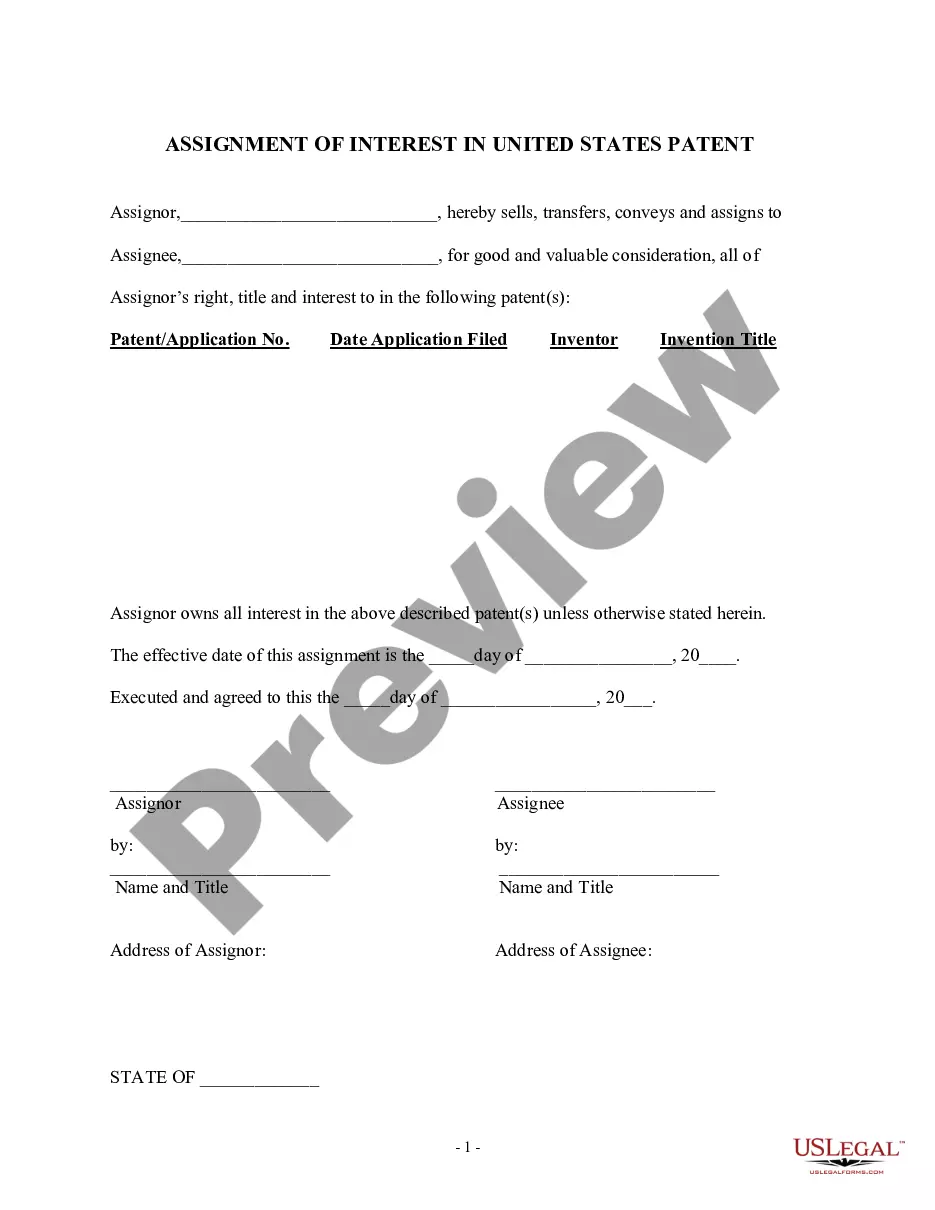
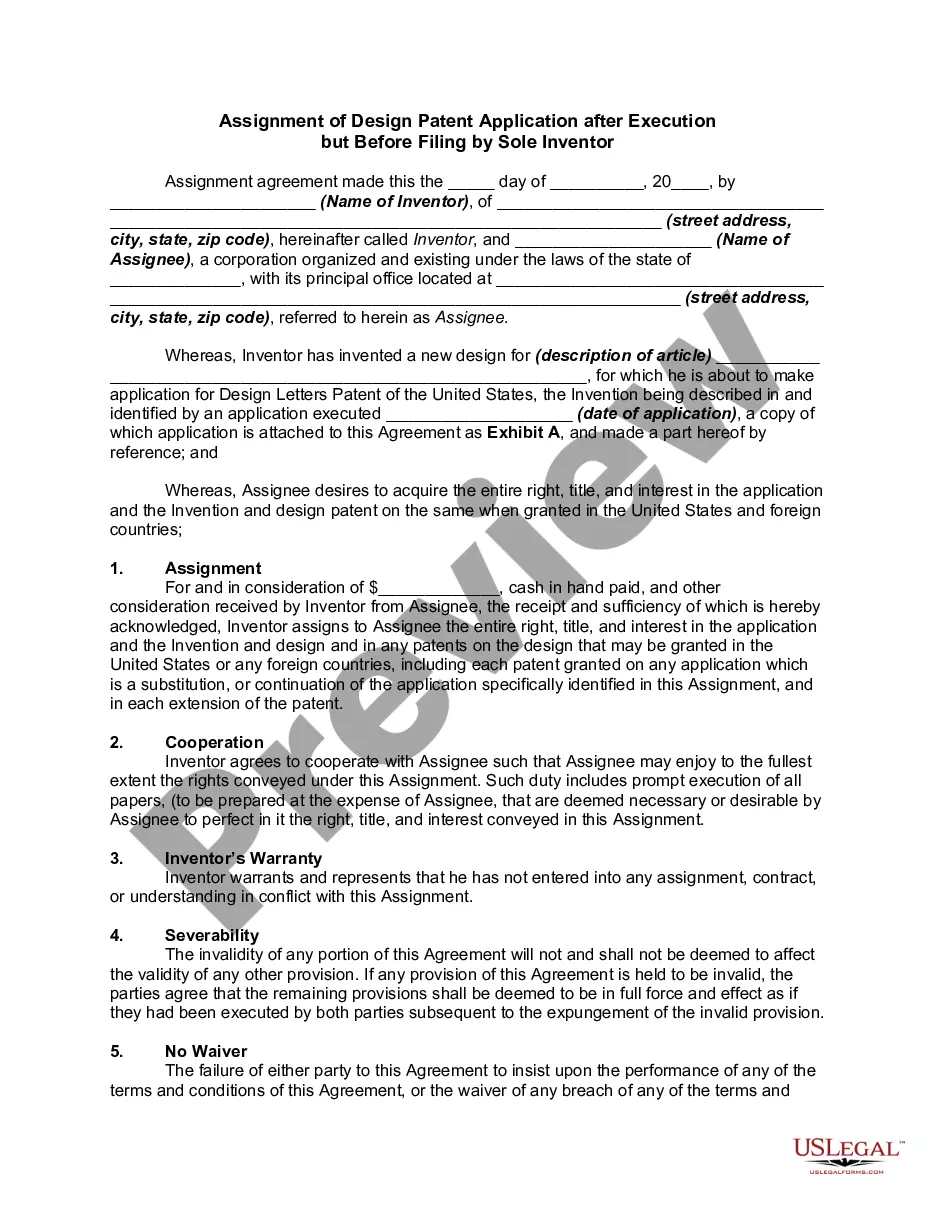
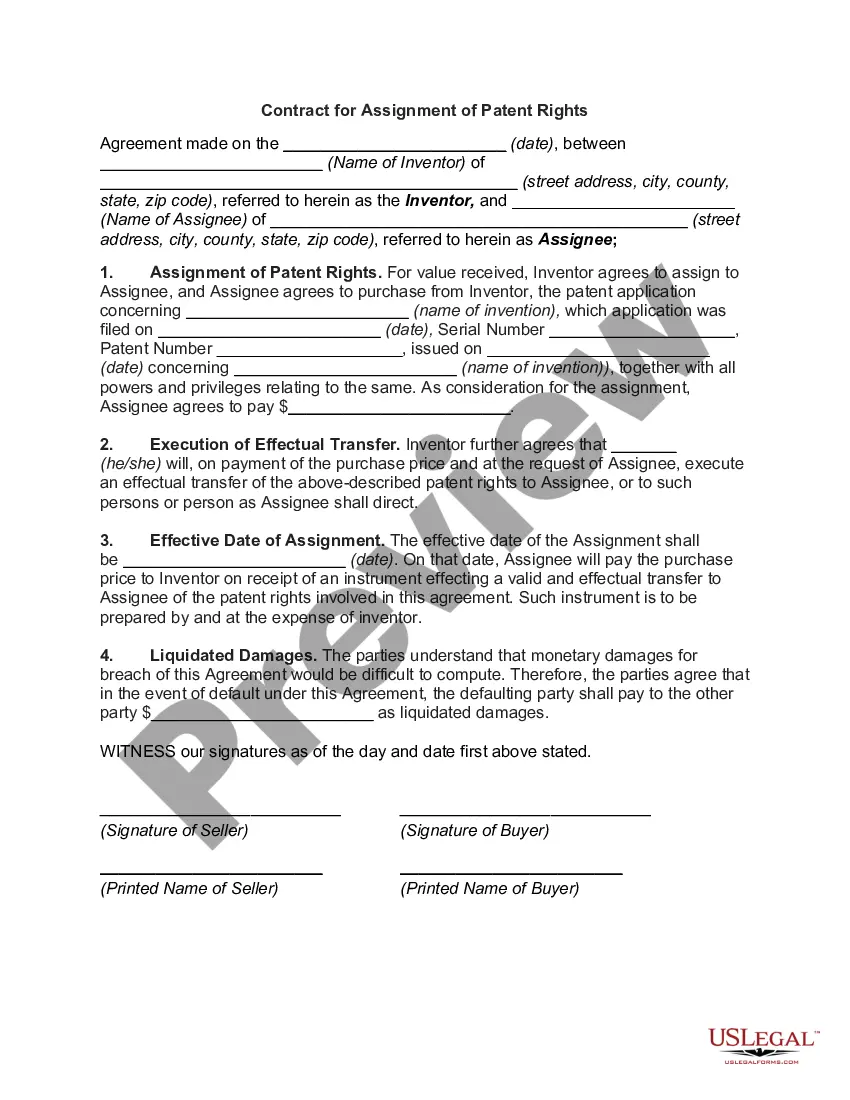
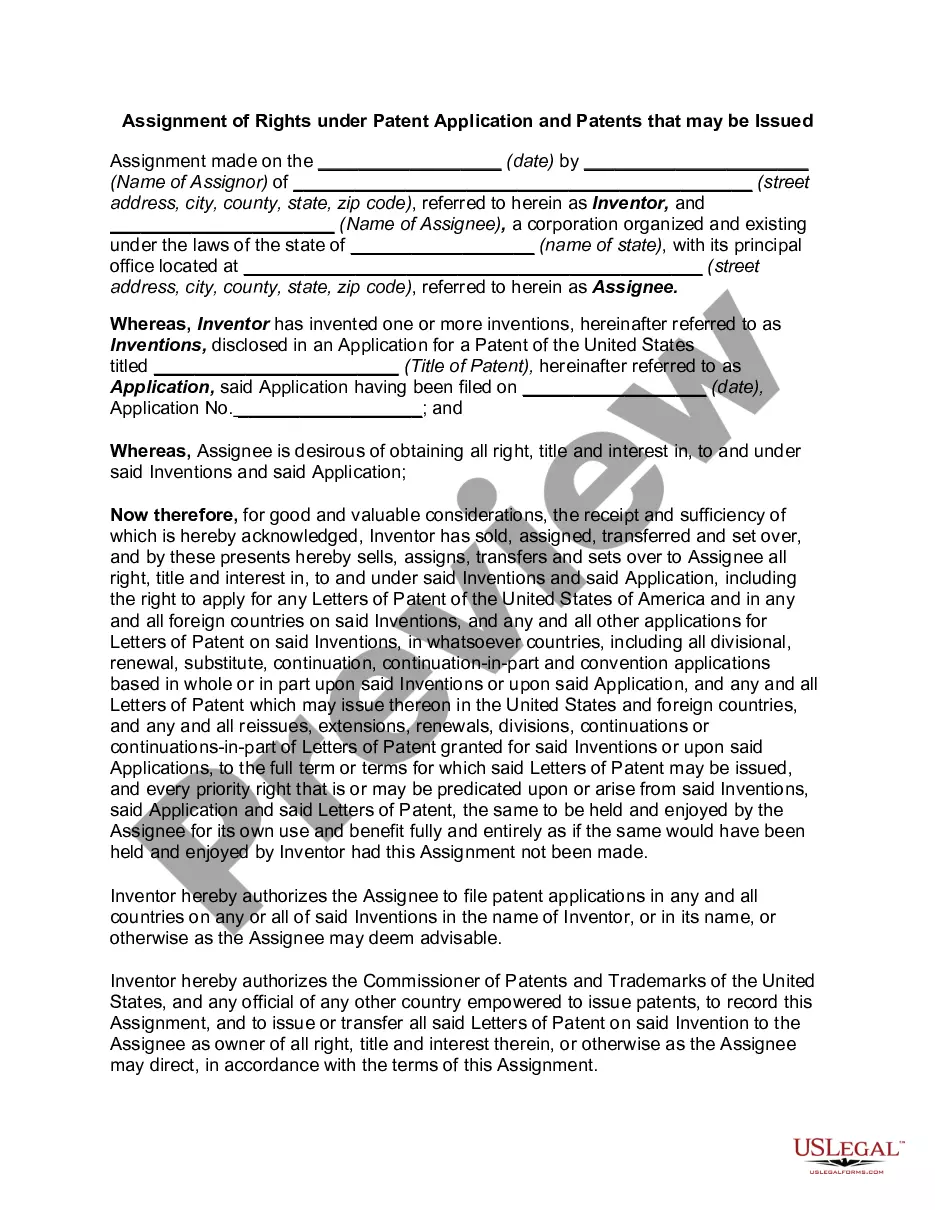
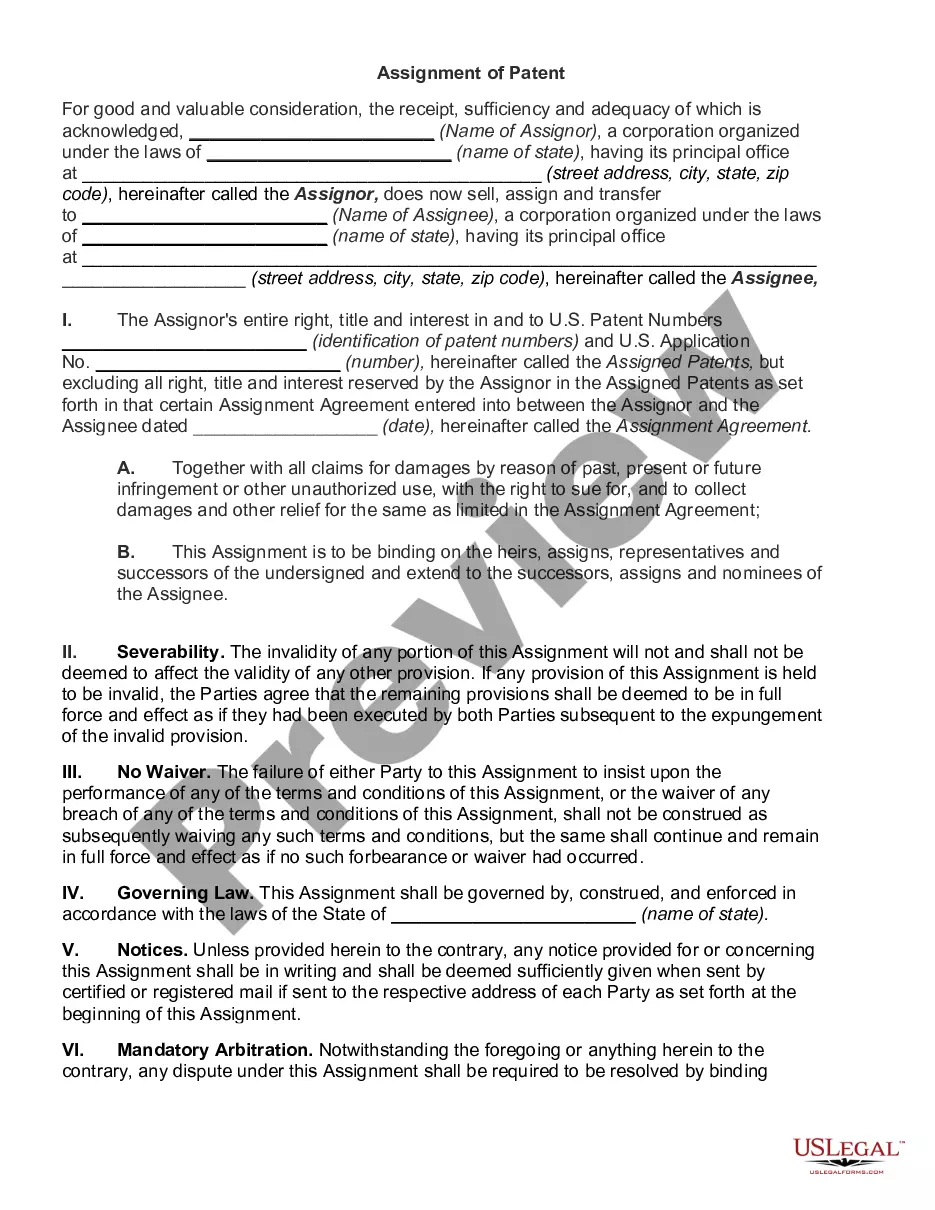
How to fill out Assignment Of Rights In Invention Prior To Execution Of Application?
Aren't you tired of choosing from hundreds of templates each time you want to create a Assignment of Rights in Invention Prior to Execution of Application? US Legal Forms eliminates the lost time numerous Americans spend exploring the internet for perfect tax and legal forms. Our skilled crew of attorneys is constantly changing the state-specific Samples collection, so that it always provides the proper documents for your situation.
If you’re a US Legal Forms subscriber, just log in to your account and click on the Download button. After that, the form are available in the My Forms tab.
Visitors who don't have a subscription should complete easy steps before being able to get access to their Assignment of Rights in Invention Prior to Execution of Application:
- Make use of the Preview function and look at the form description (if available) to make sure that it’s the appropriate document for what you are trying to find.
- Pay attention to the applicability of the sample, meaning make sure it's the right template for your state and situation.
- Use the Search field on top of the page if you need to look for another document.
- Click Buy Now and choose a preferred pricing plan.
- Create an account and pay for the service using a credit card or a PayPal.
- Download your document in a needed format to finish, create a hard copy, and sign the document.
When you have followed the step-by-step instructions above, you'll always be able to sign in and download whatever file you need for whatever state you need it in. With US Legal Forms, finishing Assignment of Rights in Invention Prior to Execution of Application samples or other legal paperwork is not hard. Get started now, and don't forget to look at the samples with certified lawyers!
Form popularity
FAQ
An application form (paper or online form) a description of your invention. claims. an abstract. drawings if they illustrate your invention. an indication of a deposit if the application involves a deposit of biological material as referred to in section 8 a of the Finnish Patents Act.
A Deed of Assignment should be filed with the patent office in the country in which the patent or patent application has been filed. The assignment is then recorded in the patent office register and may be viewed by third parties. Failure to record the assignment may limit its effects against third parties.
US law presumes that a patent application is owned by the individual inventor(s) unless another person or entity is properly identified and substantiated as the patent owner. So, the inventor is assumed the owner unless otherwise indicated.
Legal Assignment: An assignment (or an agreement to assign) of an existing patent is a legal assignment, where the assignee may enter his name as the patent owner. A patent which is created by deed can only be assigned by a deed. A legal assignee entitled as the proprietor of the patent acquires all rights thereof.
In this form, you will have to furnish information, such as, name and address of the inventor(s), name and address of the applicant(s), information corresponding to prior patent applications relating to the current invention, which you or any authorized entity has filed, and some declarations, among other information.
Assignments are transfers of the entire interest in a patent from one entity to another. They are distinguished from licenses, which give another person a limited right to the patent. In the US, there is no requirement that an assignment be notarized.
A patent assignment is an agreement where one entity (the assignor) transfers all or part of their right, title and interest in a patent or application to another entity (the assignee).But under U.S. law, only an inventor or an assignee can own a patent and businesses cannot be listed as an inventor.
A patent or patent application is assignable by an instrument in writing, and the assignment of the patent, or patent application, transfers to the assignee(s) an alienable (transferable) ownership interest in the patent or application. 35 U.S.C. 261.
It is possible for the patent owner to reinstate the patent, if it expires, by paying a surcharge in addition to the maintenance fee. It's also possible for the patent holder to put the expired patent up for sale and sell the patent and their rights to someone else who could renew the expired patent by paying the fees.