Motion in Limine
Overview of this form
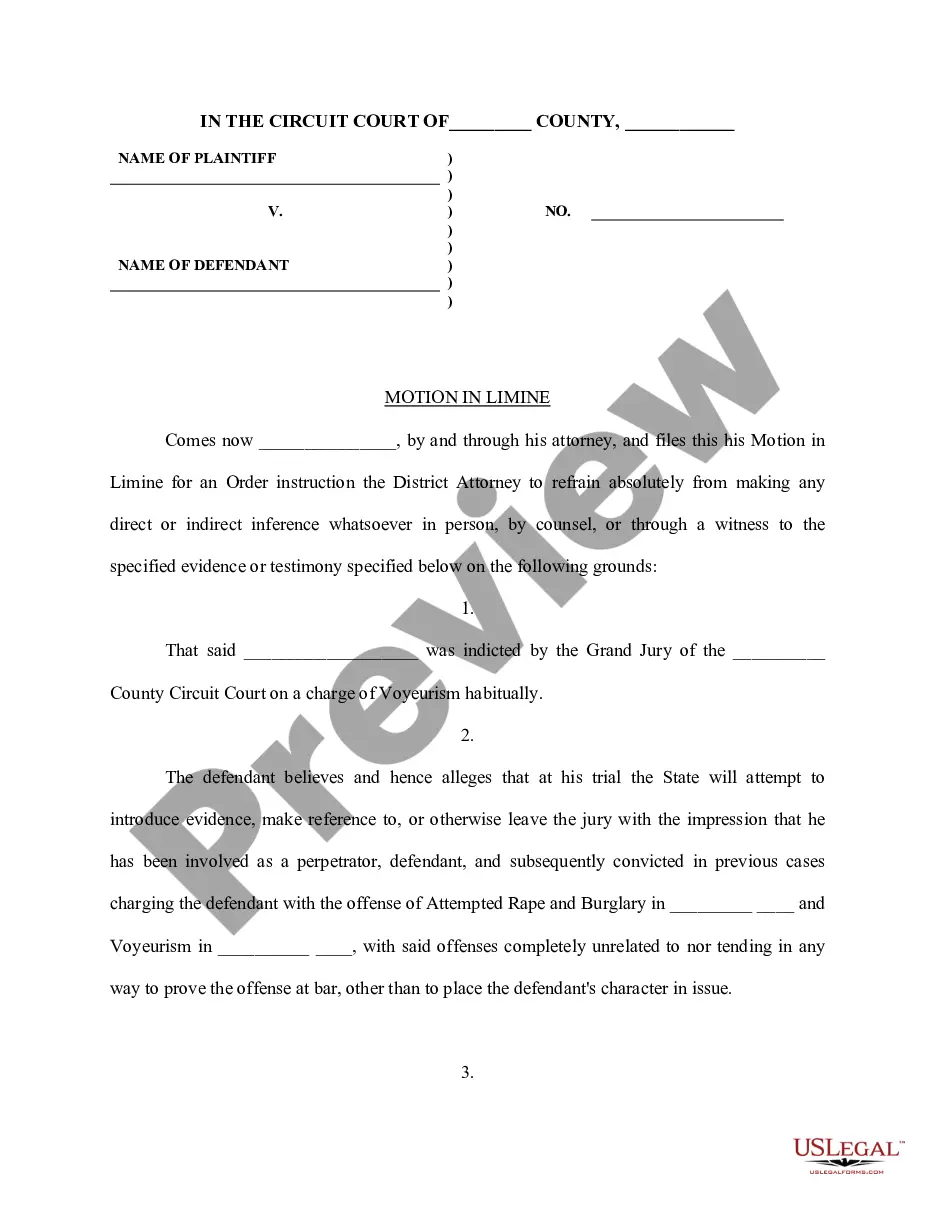
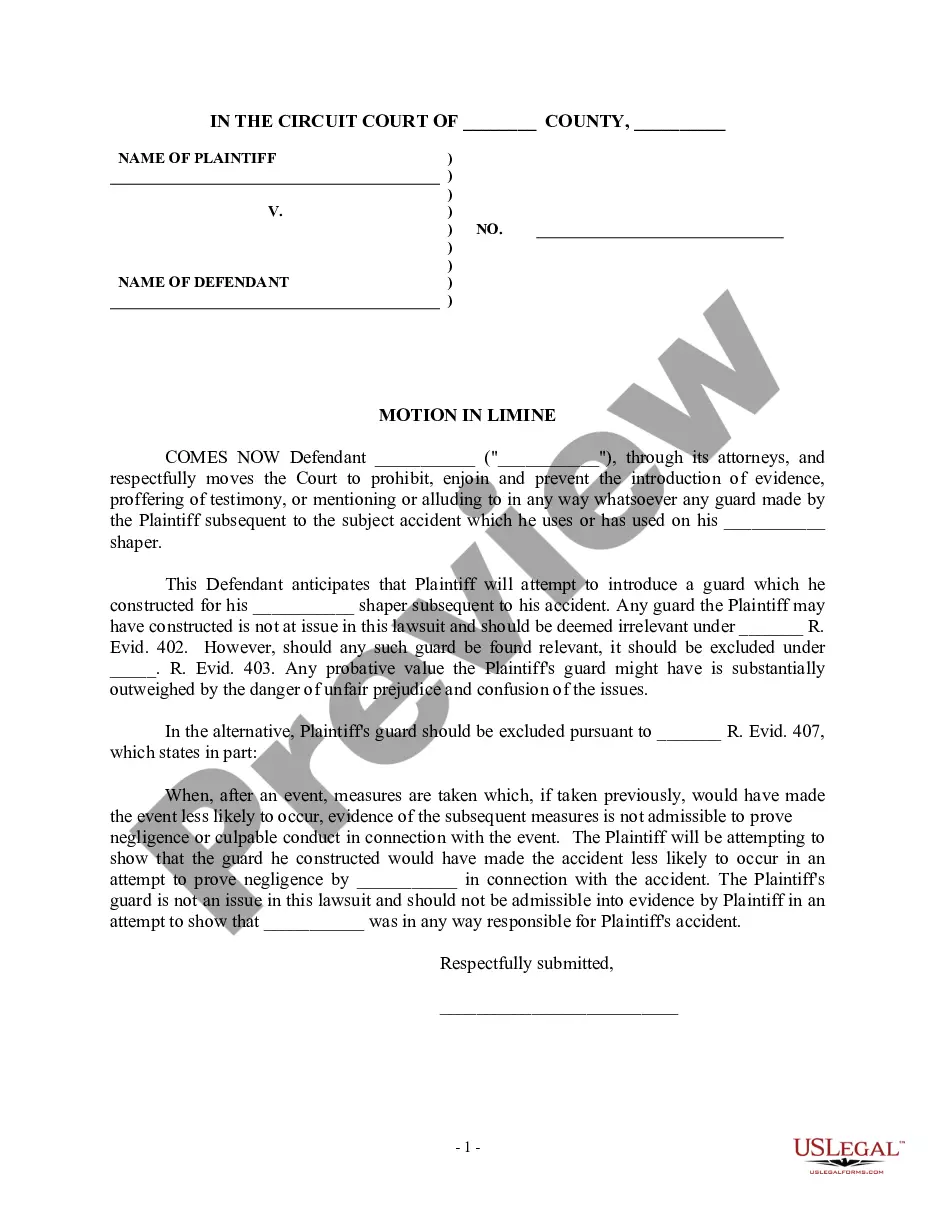
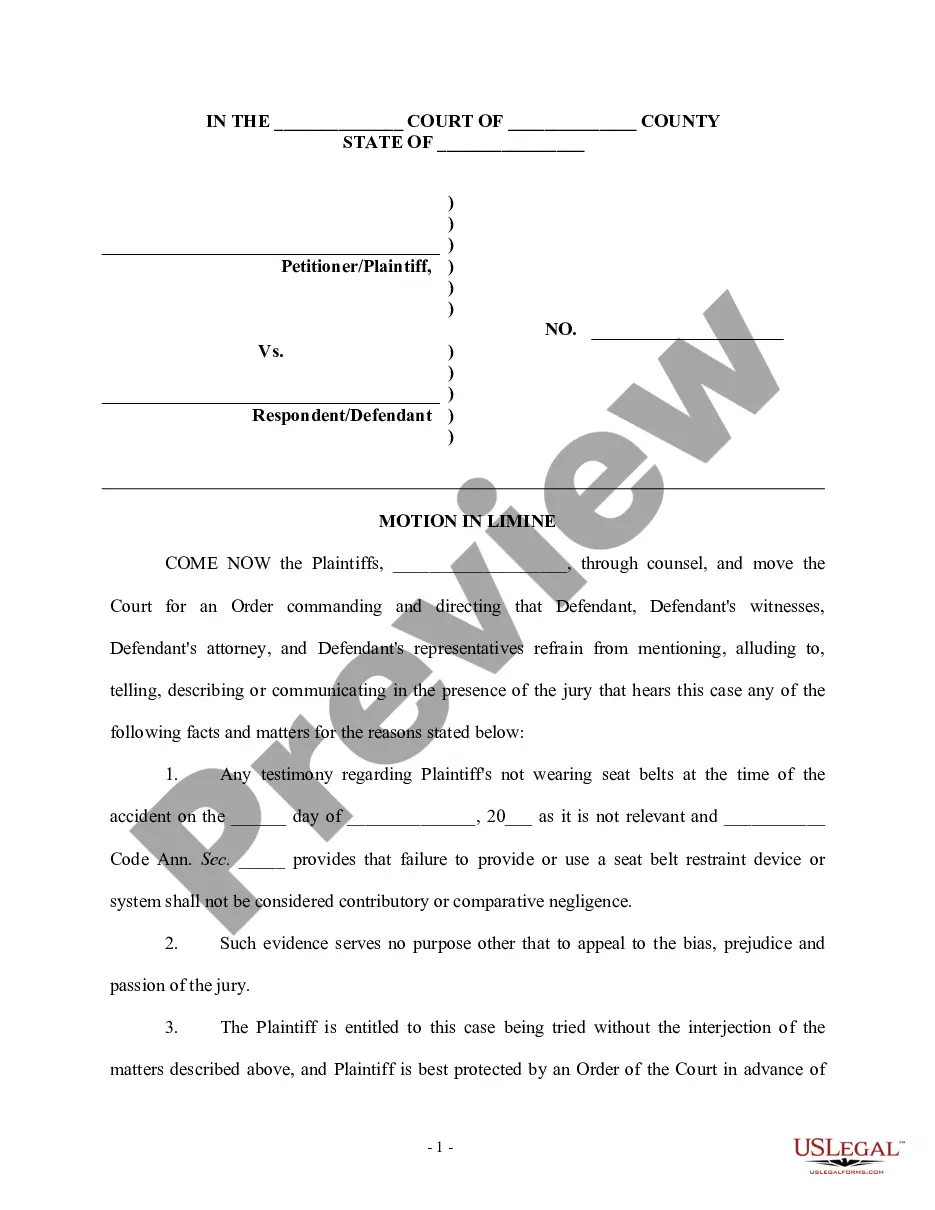
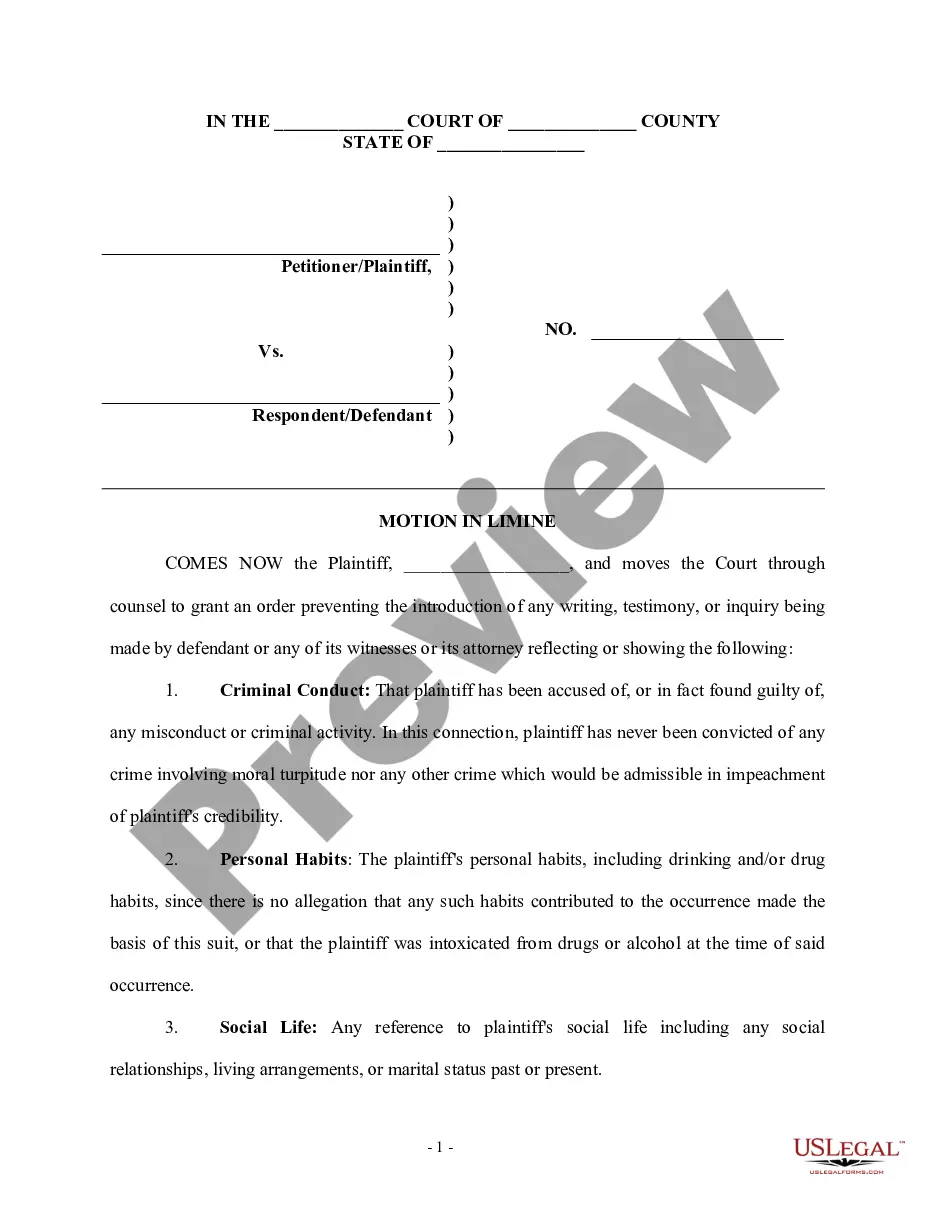
A Motion in Limine is a legal document filed before a trial to prevent certain evidence from being presented to the jury. This specific motion aims to bar any references to the defendant's previous offenses or alleged offenses that may unfairly influence the jury's perception of the defendant's character. By using this form, the defendant seeks to ensure a fair trial by limiting prejudicial information that could arise during the proceedings.
Key components of this form
- Indictment details: Specifies the charge brought against the defendant.
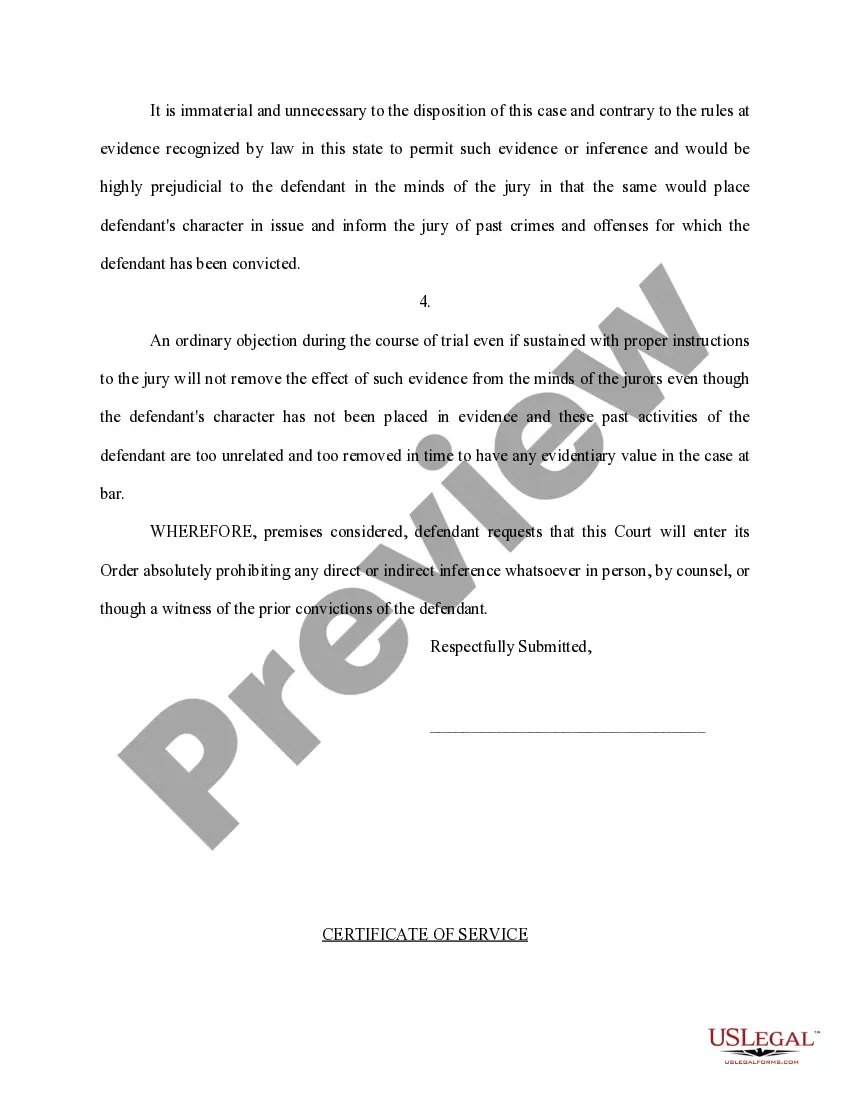
- Argument against admissibility: States reasons for excluding prior offenses from the trial.
- Potential prejudicial effect: Highlights how introducing past crimes could unfairly impact the jury's judgment.
- Request for court order: Formally asks the court to prohibit any mention of prior convictions.
- Certificate of service: Confirms that copies of the motion have been delivered to relevant parties.

Situations where this form applies
This form should be used in criminal cases where the defendant believes that the prosecution might introduce evidence of prior convictions or alleged offenses that are not directly related to the current charge. It is essential when the defendant wants to ensure that such information does not negatively impact the jury's decision-making process, preserving the integrity of the trial.
Who needs this form
- Defendants in criminal cases who face trial.
- Defense attorneys looking to protect their client's rights during trial proceedings.
- Individuals concerned about the introduction of unrelated past offenses in court.
How to prepare this document
- Fill in the indictments and charges relevant to your case in the specified fields.
- Clearly articulate your arguments for the exclusion of previous offenses in the designated section.
- Provide details on how such evidence could prejudice the jury against you.
- Complete the request for the court's order and ensure it is clear and respectful.
- Fill out the certificate of service to indicate that all parties have received a copy of the motion.
Does this form need to be notarized?
This form usually doesn’t need to be notarized. However, local laws or specific transactions may require it. Our online notarization service, powered by Notarize, lets you complete it remotely through a secure video session, available 24/7.
Get your form ready online
Our built-in tools help you complete, sign, share, and store your documents in one place.
Make edits, fill in missing information, and update formatting in US Legal Forms—just like you would in MS Word.
Download a copy, print it, send it by email, or mail it via USPS—whatever works best for your next step.
Sign and collect signatures with our SignNow integration. Send to multiple recipients, set reminders, and more. Go Premium to unlock E-Sign.
If this form requires notarization, complete it online through a secure video call—no need to meet a notary in person or wait for an appointment.
We protect your documents and personal data by following strict security and privacy standards.

Make edits, fill in missing information, and update formatting in US Legal Forms—just like you would in MS Word.

Download a copy, print it, send it by email, or mail it via USPS—whatever works best for your next step.

Sign and collect signatures with our SignNow integration. Send to multiple recipients, set reminders, and more. Go Premium to unlock E-Sign.

If this form requires notarization, complete it online through a secure video call—no need to meet a notary in person or wait for an appointment.

We protect your documents and personal data by following strict security and privacy standards.
Common mistakes
- Failing to adequately explain why prior offenses are irrelevant to the current case.
- Not following local court rules in formatting or filing procedures.
- Inadequate service of the motion to opposing counsel, leading to procedural complications.
Benefits of completing this form online
- Immediate access to a comprehensive motion template created by legal professionals.
- Ability to customize content specifically for your case without legal jargon.
- Convenience of downloading and printing the form for court submission at your convenience.
Legal use & context
- This motion is a crucial part of pre-trial strategy in criminal defense.
- Ensures that jurors make decisions based on relevant evidence only.
- Helps maintain the integrity of the judicial process by limiting prejudicial information.
Summary of main points
- A Motion in Limine protects defendants by excluding irrelevant past offenses during trials.
- It is essential that this motion is tailored to the specific circumstances of each case.
- Submitting the motion on time and following court rules is crucial for successful use.
Looking for another form?
Form popularity
FAQ
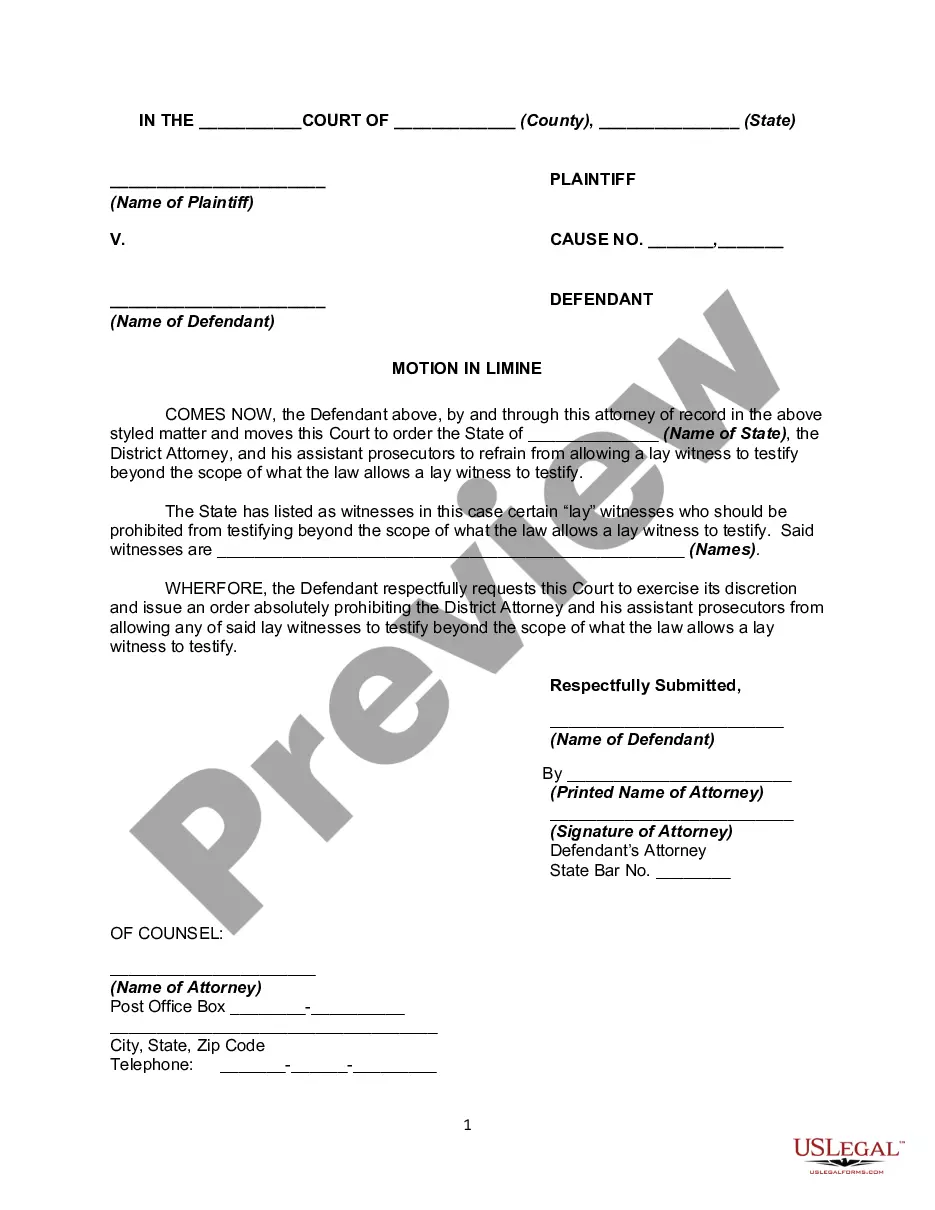
: on the threshold : as a preliminary matter used for motions regarding the admissibility of evidence brought up at a pretrial hearing.
There is also authority for the proposition that if a motion in limine is denied, the party opposing the evidence can be the first to offer the objectionable evidence without waiving the merits of the evidentiary objection on appeal.
Motions in limine should be used only for their original purpose to challenge evidence that is so inadmissible and prejudicial that its mere mention in the presence of the jury would lead to an unfair trial.On appeal this ruling of the trial court was affirmed.
A motion in limine is a powerful weapon for advocates that can alter the entire makeup of the case. This type of motion is a pretrial request of the court to rule on the admissibility of a certain piece of evidence.
Stated in the most general terms, a proper motion in limine is an evidentiary motion that seeks a determination as to whether to exclude (or admit) evidence before it is offered at trial.
Whereas the motion in limine is based on the trial court's inherent discretion to exclude prejudicial evidence, the motion to suppress is based on the court's duty to exclude evidence which has been im- properly Qbtained.
A pretrial motion asking that certain evidence be found inadmissible, and that it not be referred to or offered at trial.
There is also authority for the proposition that if a motion in limine is denied, the party opposing the evidence can be the first to offer the objectionable evidence without waiving the merits of the evidentiary objection on appeal.