Motion in Limine - Civil Trial
Overview of this form
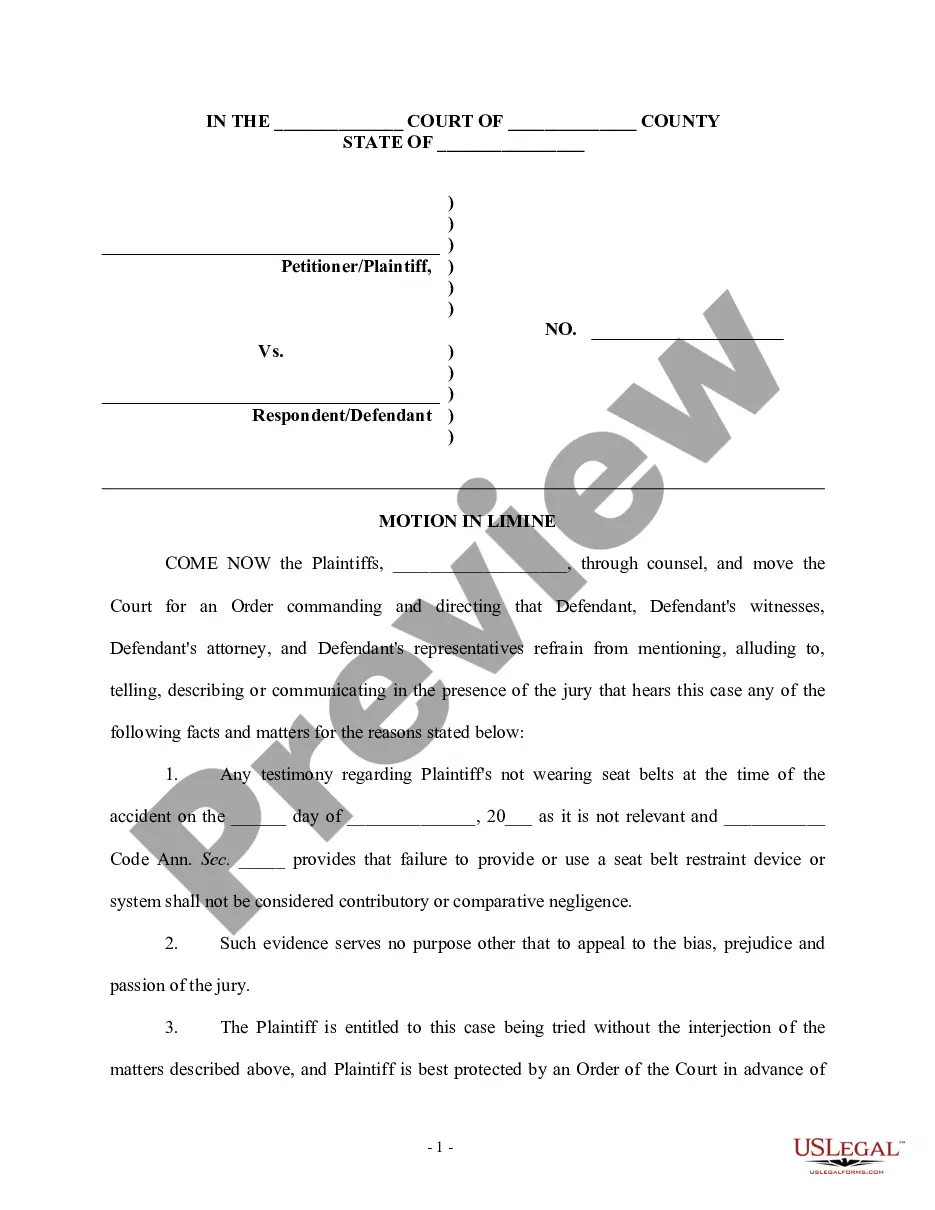
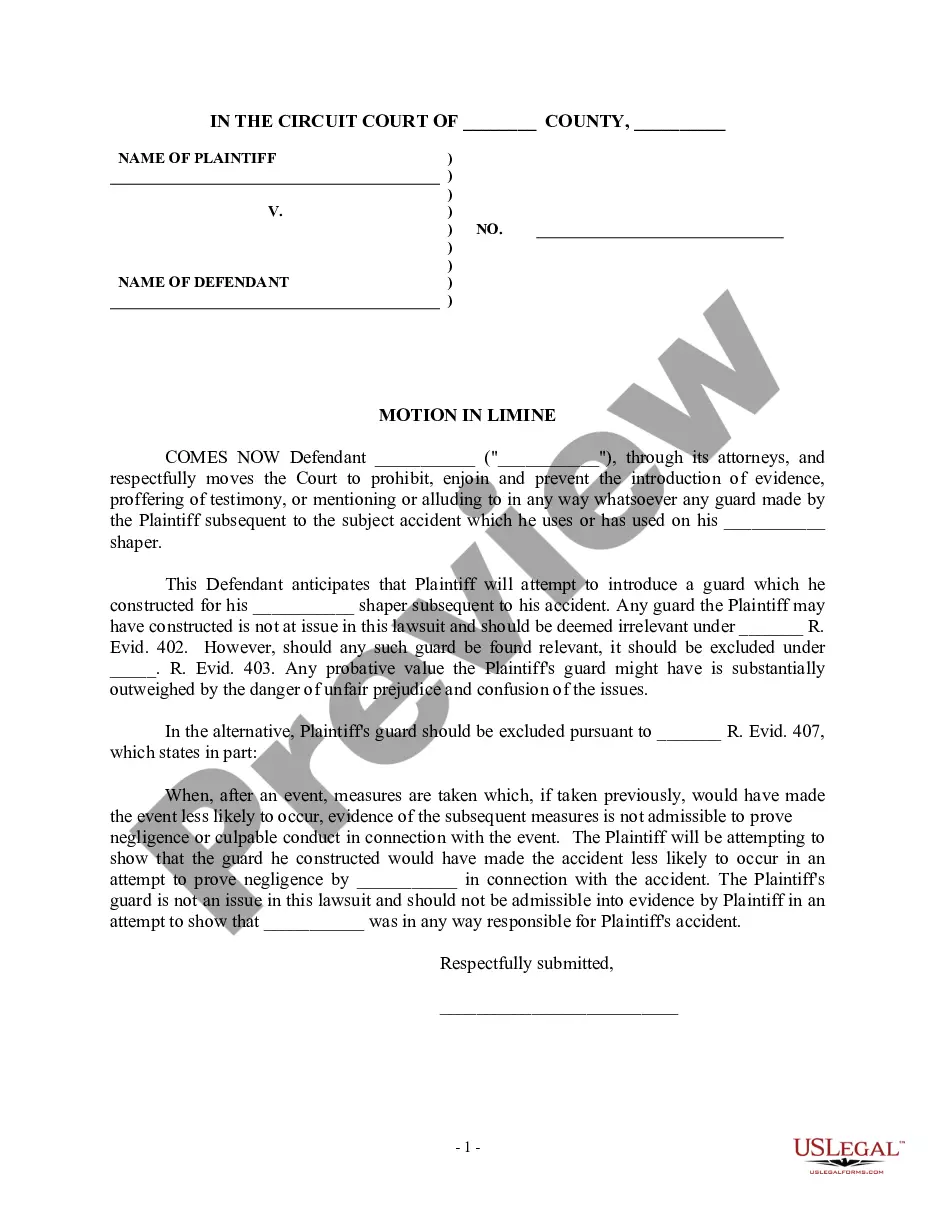
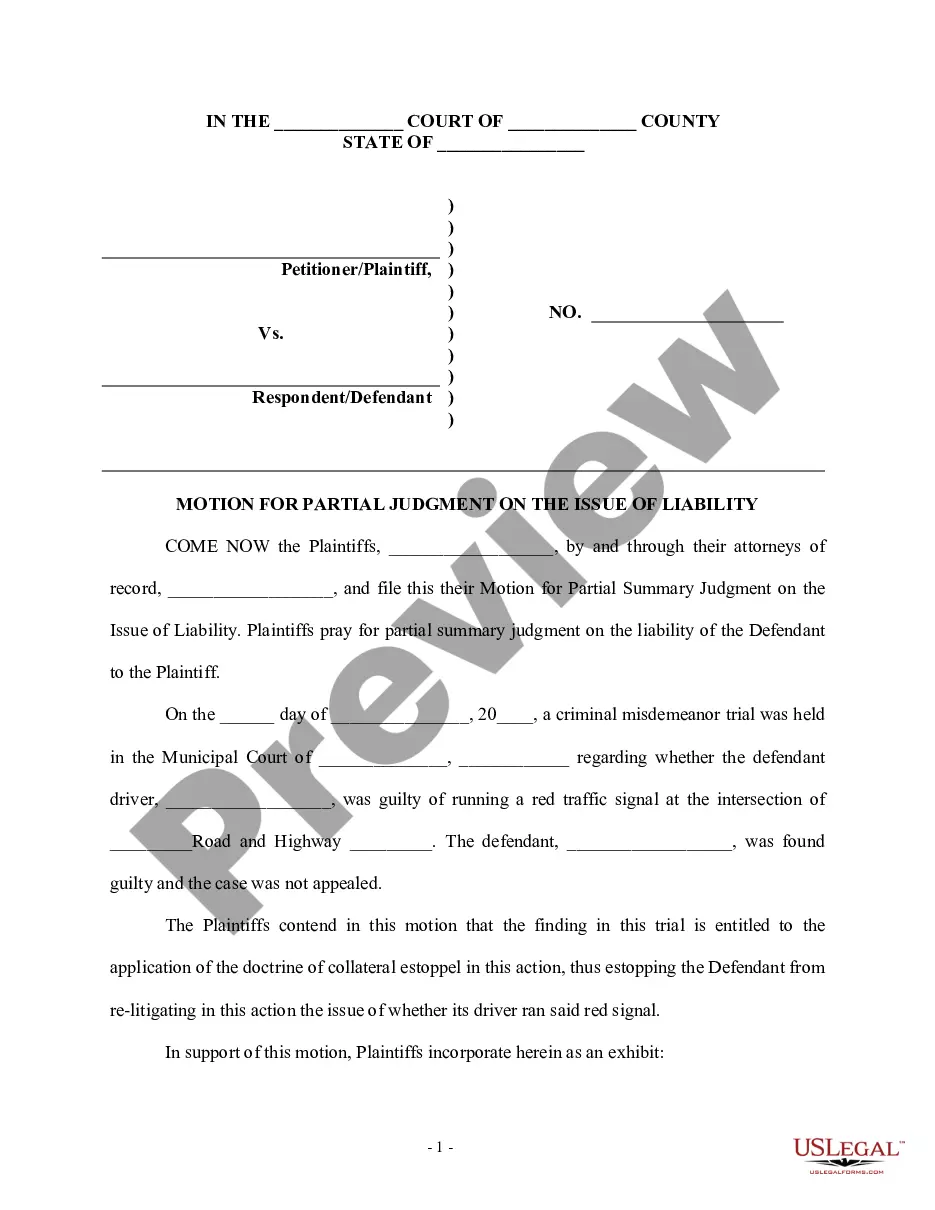
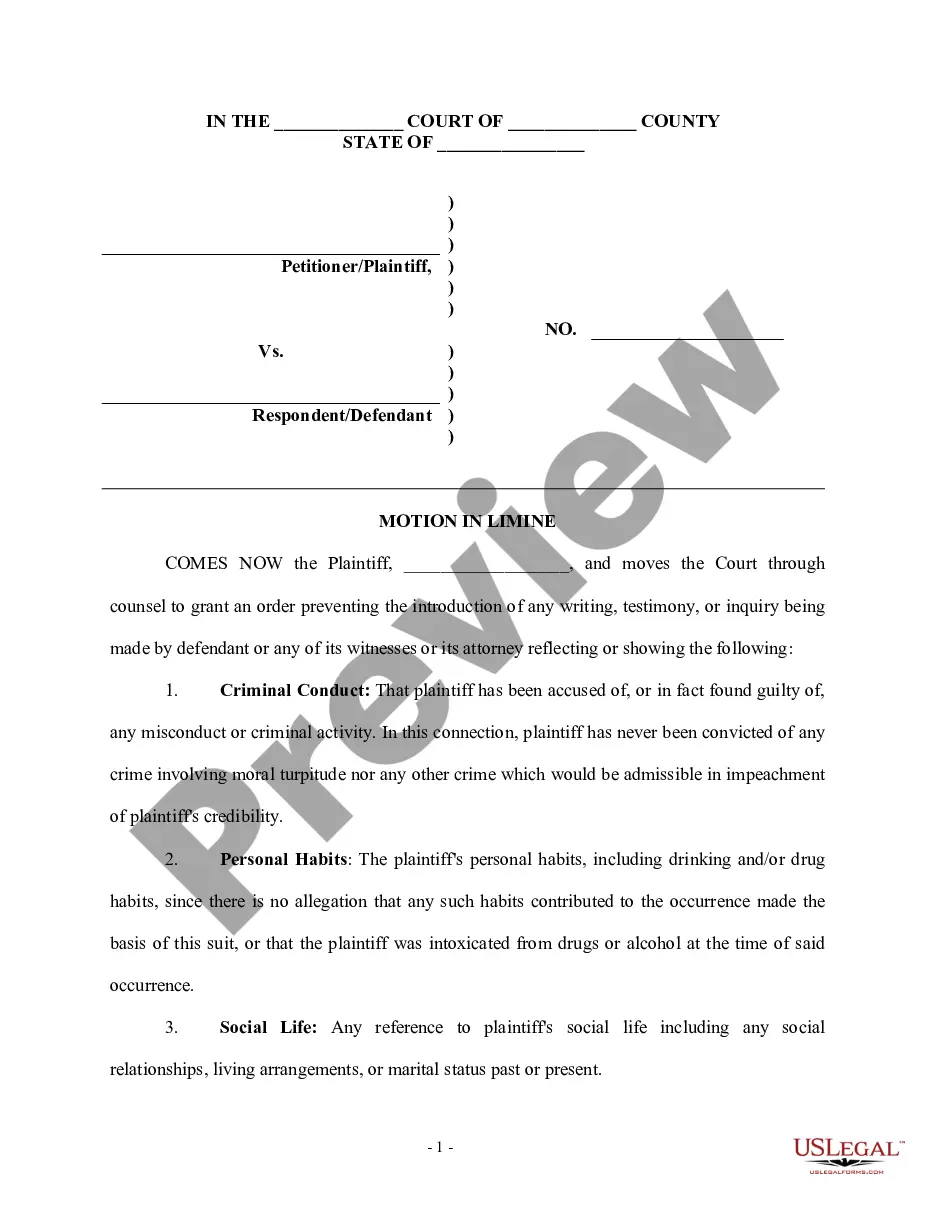
A Motion in Limine is a legal document filed during a civil trial, specifically in personal injury cases. Its purpose is to request the court to prevent certain evidence from being disclosed to the jury. This form is particularly useful for limiting testimonies and evidence that may be prejudicial or irrelevant, allowing for a fair trial without bias. Unlike other legal motions, a motion in limine focuses on issues related to evidence admissibility before the trial begins.
Form components explained
- Identification of specific evidence to be excluded, such as testimony about seat belt usage.
- Explanation of legal grounds under which the evidence is deemed irrelevant or prejudicial.
- Request for a court order to ensure that certain matters are not introduced during trial.
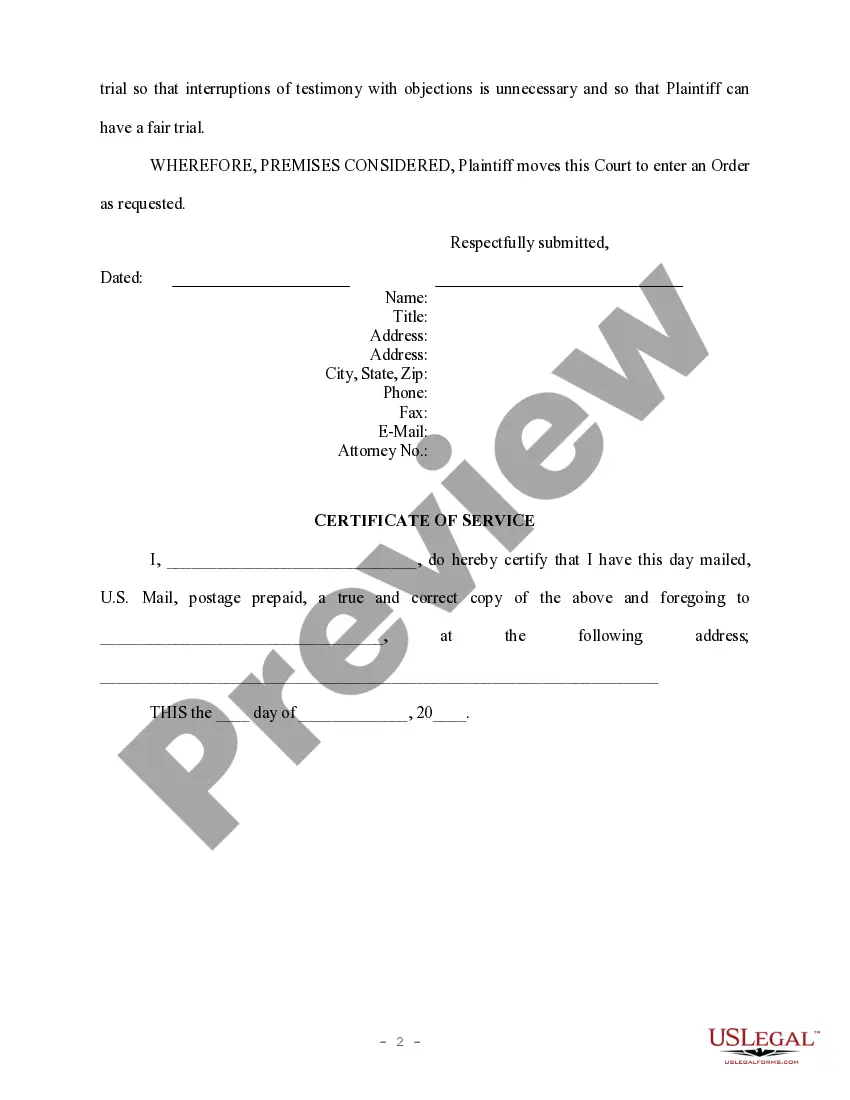
- Certification that a copy of the motion has been sent to the opposing party.
When to use this form
This form should be used in personal injury civil trials when there is a need to restrict certain evidence from being presented. It is particularly relevant when the defense might introduce evidence that could unfairly influence the juryâs perception of the plaintiff, such as prior actions unrelated to the case. By filing a Motion in Limine, you aim to protect the fairness of the trial proceedings.
Who this form is for
- Plaintiffs in personal injury cases who seek to limit the evidence presented against them.
- Attorneys representing clients in civil trials where prejudicial information may arise.
- Individuals involved in litigation who wish to maintain the integrity of their case by excluding irrelevant evidence.
How to prepare this document
- Identify the date of the accident and fill in the blank spaces for clarity.
- Specify the evidence you want to exclude and explain why it is irrelevant.
- Cite relevant state code or law that supports your request to exclude the evidence.
- Include a section to certify that you have sent this motion to the opposing party.
- Sign and date the form for official submission.
Notarization guidance
This form does not typically require notarization unless specified by local law. Always check your jurisdictionâs requirements to ensure compliance before filing.
Get your form ready online
Our built-in tools help you complete, sign, share, and store your documents in one place.
Make edits, fill in missing information, and update formatting in US Legal Forms—just like you would in MS Word.
Download a copy, print it, send it by email, or mail it via USPS—whatever works best for your next step.
Sign and collect signatures with our SignNow integration. Send to multiple recipients, set reminders, and more. Go Premium to unlock E-Sign.
If this form requires notarization, complete it online through a secure video call—no need to meet a notary in person or wait for an appointment.
We protect your documents and personal data by following strict security and privacy standards.

Make edits, fill in missing information, and update formatting in US Legal Forms—just like you would in MS Word.

Download a copy, print it, send it by email, or mail it via USPS—whatever works best for your next step.

Sign and collect signatures with our SignNow integration. Send to multiple recipients, set reminders, and more. Go Premium to unlock E-Sign.

If this form requires notarization, complete it online through a secure video call—no need to meet a notary in person or wait for an appointment.

We protect your documents and personal data by following strict security and privacy standards.
Typical mistakes to avoid
- Failing to cite specific legal grounds for exclusion.
- Missing deadlines for filing the motion before the trial starts.
- Not providing adequate justification for why the evidence is prejudicial.
Benefits of using this form online
- Convenient access to downloadable templates drafted by legal professionals.
- Editable forms allow customization to fit specific case details.
- Reliable format ensuring compliance with legal standards for submission.
Quick recap
- The Motion in Limine helps keep irrelevant and potentially prejudicial information from the jury.
- Understanding when and how to file this motion is crucial for a fair trial.
- Completing the motion accurately can significantly impact the trial's outcome.
Looking for another form?

Form popularity
FAQ
Motion in Limine - Civil Trial is a pretrial evidentiary motion used in civil personal injury cases to ask the court to bar certain evidence from being shown to the jury. It targets prejudicial or irrelevant testimony and items to ensure a fair trial before evidence is presented. The motion identifies the specific evidence, explains its grounds, requests a court order, and includes service certification.
Using a Motion in Limine helps keep the jury from seeing prejudicial or irrelevant evidence, clarifies admissibility issues before trial, and can shorten proceedings. It focuses the court on what may be admitted, supports the plaintiff's case by narrowing the issues, and requires a service-certified order to ensure the opposing party is notified.
Common examples include excluding evidence or testimony about seat belt usage, and other prejudicial topics unrelated to the case. The motion must identify the specific items to be excluded and explain why they are irrelevant or prejudicial.
If granted, the court issues an order barring the identified matters from being introduced at trial. The motion also requires a copy be sent to the opposing party, ensuring both sides are aware of the evidentiary limitation before or during trial.
Generally not a final judgment. A motion in limine addresses specific evidentiary issues for the trial, guiding what may be presented to the jury. It can be revisited or challenged as trial conditions change and does not dispose of the entire case.
It is specifically designed for civil personal injury trials and focuses on admissibility before the trial begins, seeking a court order to prevent certain matters from being introduced. The form requires identifying the excluded evidence, stating legal grounds, and certifying service to the opposing party, distinguishing it from other pretrial or in-trial exclusion requests.