Collateral Assignment of Intellectual Property
What is this form?
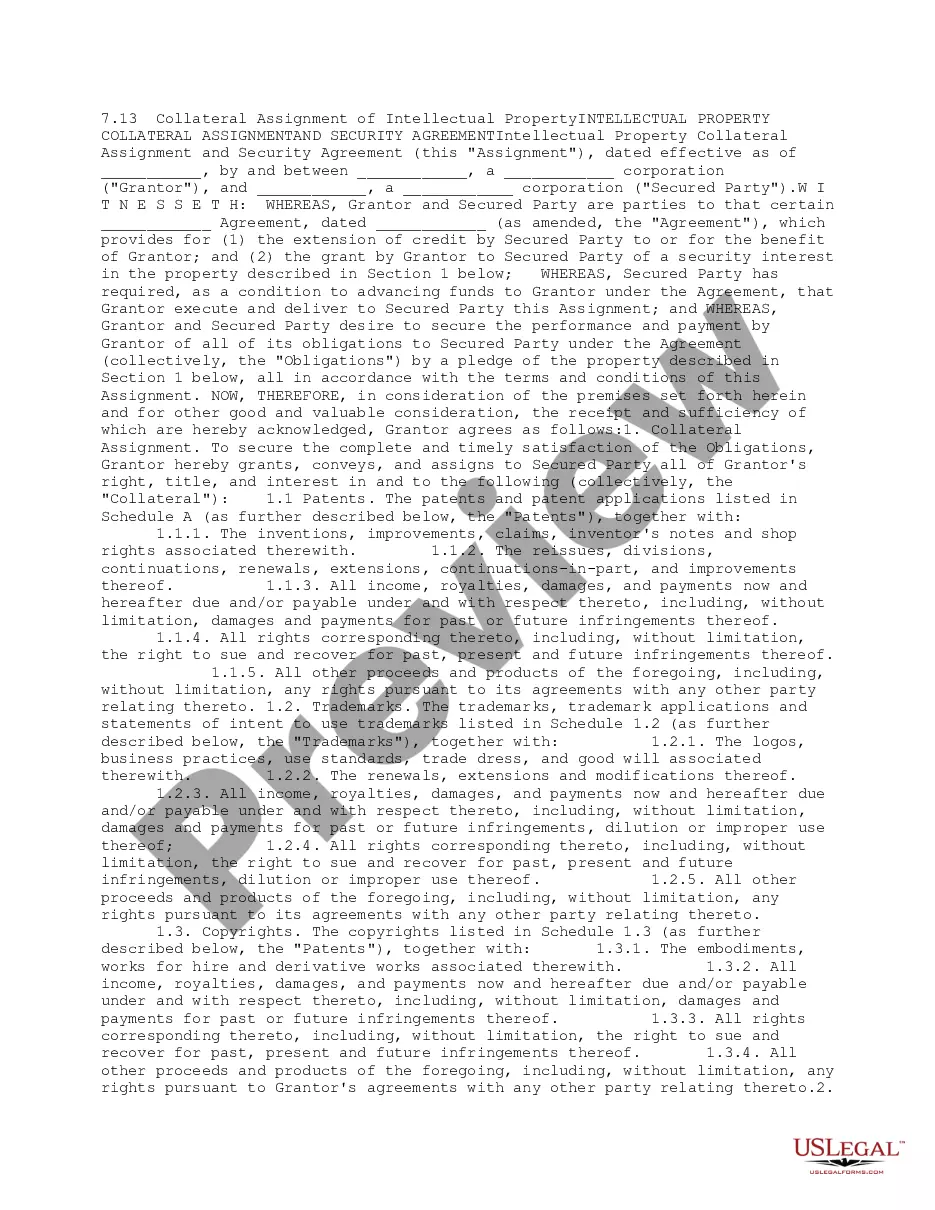
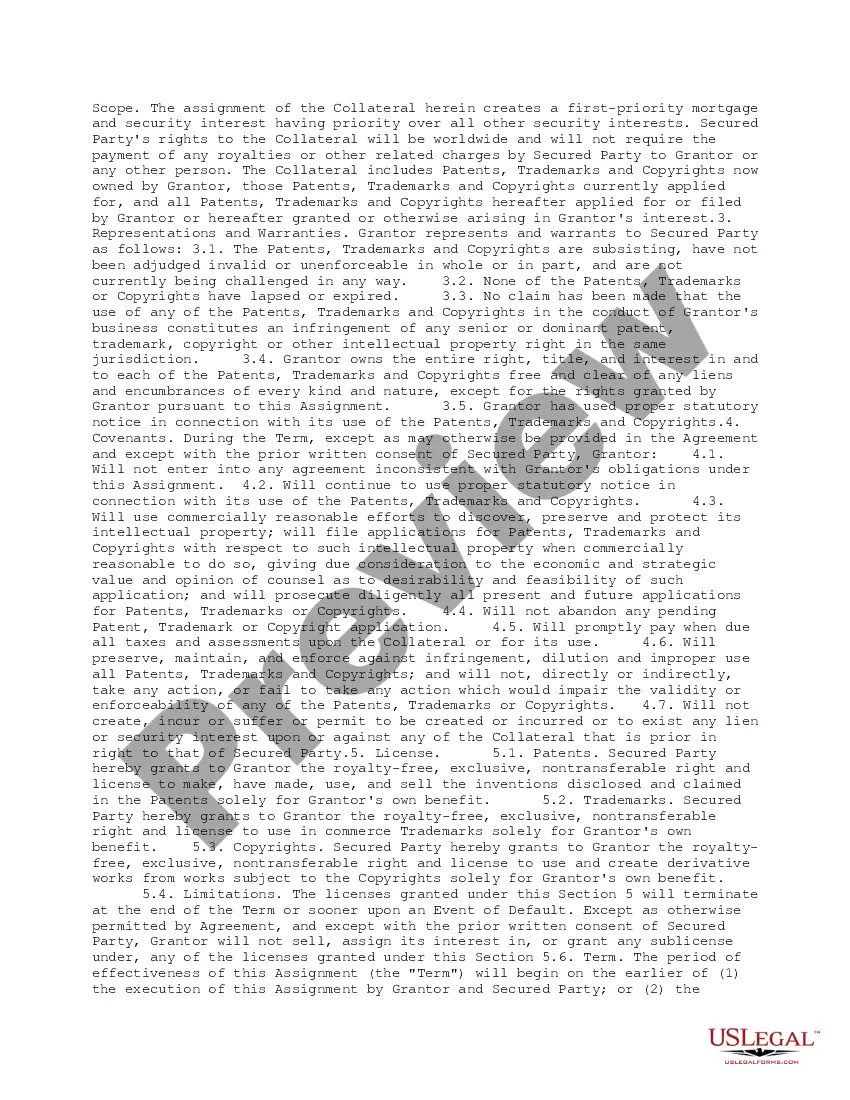
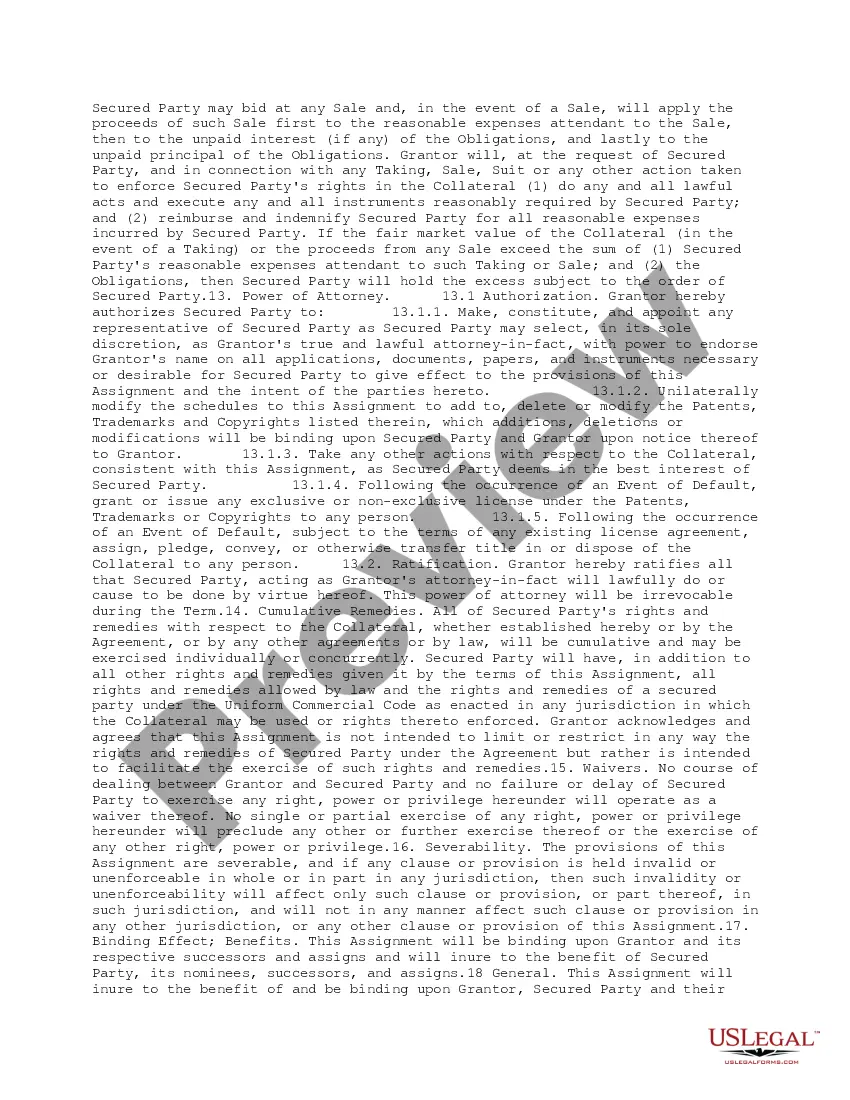
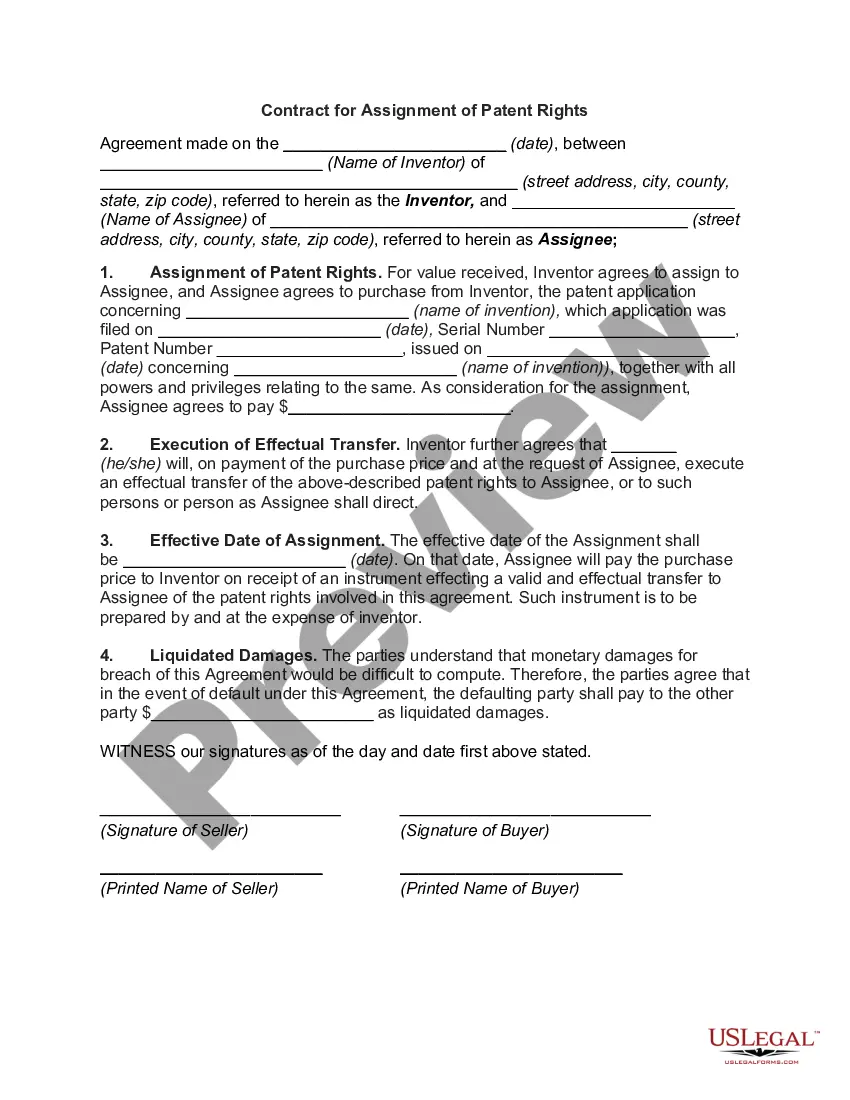
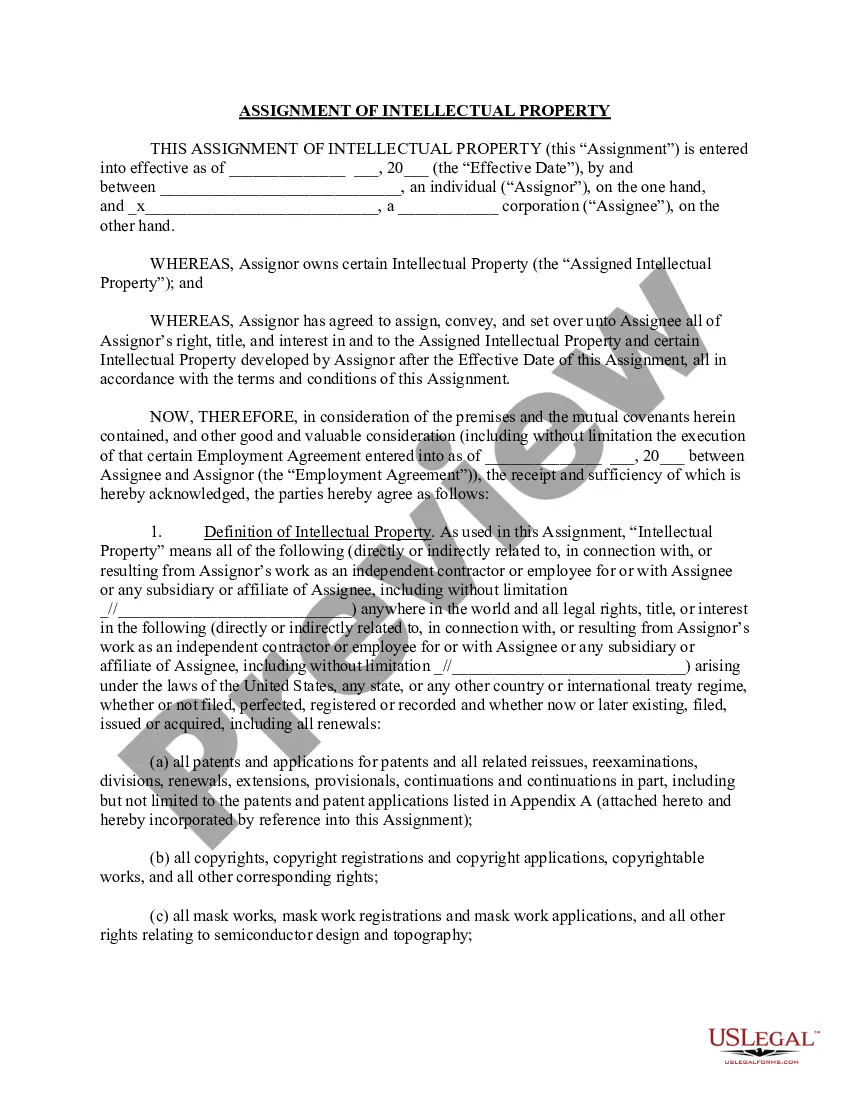
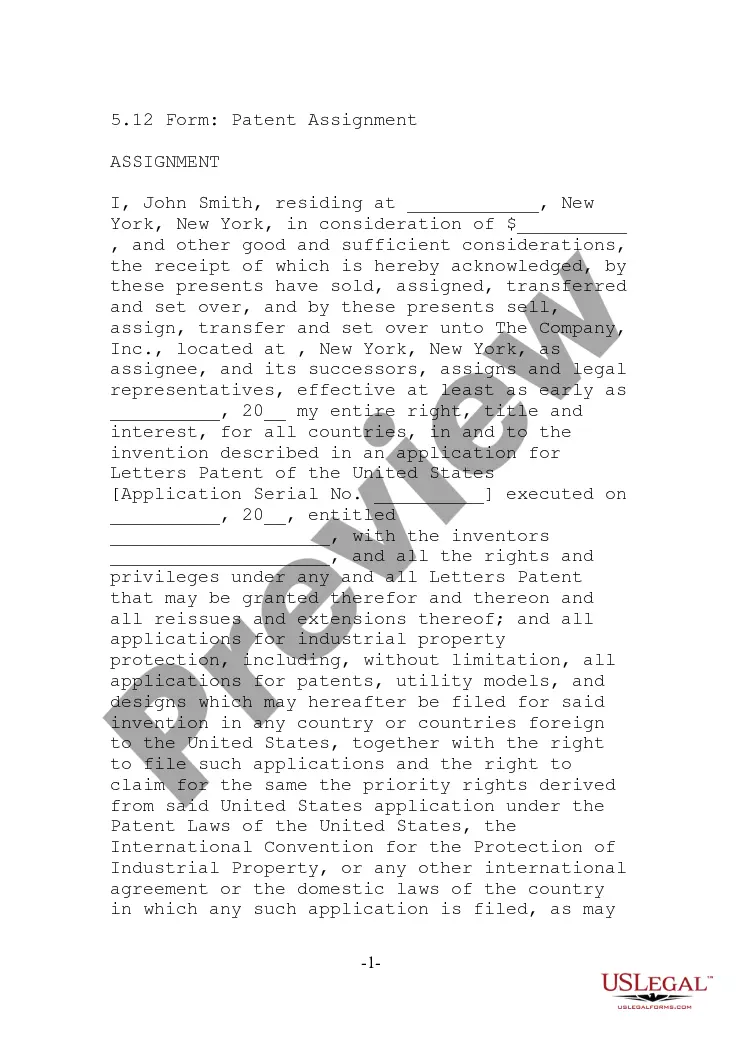
The Collateral Assignment of Intellectual Property is a legal document that transfers rights to intellectual property assets as collateral for a loan or obligation. This form outlines the specifics of the assignment, including the patents, trademarks, and copyrights involved. Unlike other assignment forms, this document is specifically designed to secure a financial obligation by pledging intellectual property rights, ensuring that the lender has a claim over these assets if repayment is not fulfilled.
Form components explained
- Definitions and roles of the Grantor and Secured Party
- Details of the collateral assignment, including specific intellectual property
- Representations and warranties by the Grantor regarding the intellectual property
- Scope of the rights assigned, including priority over other claims
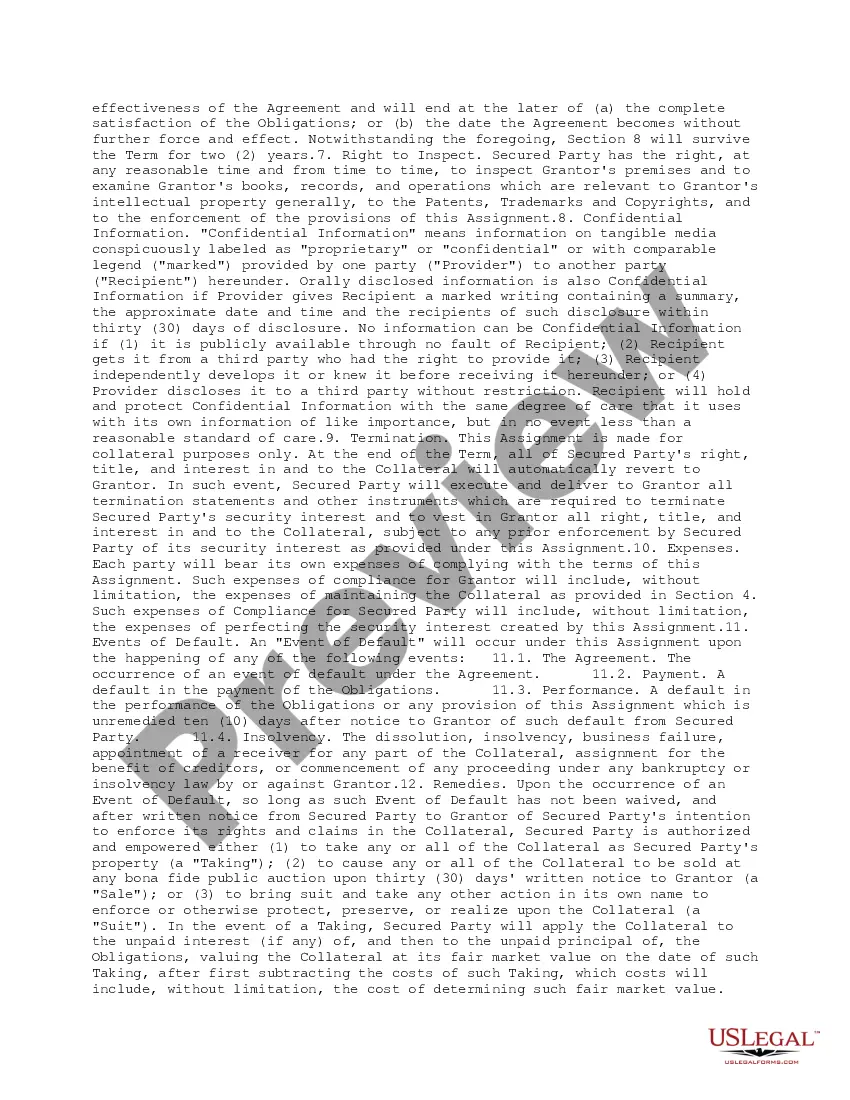
- Default remedies and events that constitute default
- Procedures for inspecting and maintaining the collateral
When to use this document
This form should be used when a business or individual is seeking to secure a loan or financial obligation with their intellectual property. It is ideal for situations where the lender requires assurance that they can claim these assets if the borrower defaults on the agreement. Common scenarios include startups seeking funding, established businesses taking out loans, or creative individuals leveraging their works for capital.
Who needs this form
- Business owners seeking financial support through loans
- Entrepreneurs looking to leverage their intellectual property assets
- Individuals with patents, trademarks, or copyrights needing to secure debt
- Investors or lenders requiring protection for their lending agreements
Completing this form step by step
- Identify the parties involved: List the names of the Grantor and the Secured Party.
- Specify the intellectual property: Clearly define the patents, trademarks, and copyrights being assigned using the schedules provided.
- Detail the obligations: Provide the specific financial obligations that the assignment is securing.
- Enter the effective date: Fill in the date when the agreement takes effect.
- Sign and date the form: Ensure both parties sign and date the document to validate the agreement.
Notarization guidance
This form usually doesn’t need to be notarized. However, local laws or specific transactions may require it. Our online notarization service, powered by Notarize, lets you complete it remotely through a secure video session, available 24/7.
Get your form ready online
Our built-in tools help you complete, sign, share, and store your documents in one place.
Make edits, fill in missing information, and update formatting in US Legal Forms—just like you would in MS Word.
Download a copy, print it, send it by email, or mail it via USPS—whatever works best for your next step.
Sign and collect signatures with our SignNow integration. Send to multiple recipients, set reminders, and more. Go Premium to unlock E-Sign.
If this form requires notarization, complete it online through a secure video call—no need to meet a notary in person or wait for an appointment.
We protect your documents and personal data by following strict security and privacy standards.

Make edits, fill in missing information, and update formatting in US Legal Forms—just like you would in MS Word.

Download a copy, print it, send it by email, or mail it via USPS—whatever works best for your next step.

Sign and collect signatures with our SignNow integration. Send to multiple recipients, set reminders, and more. Go Premium to unlock E-Sign.

If this form requires notarization, complete it online through a secure video call—no need to meet a notary in person or wait for an appointment.

We protect your documents and personal data by following strict security and privacy standards.
Common mistakes
- Failing to accurately list all intellectual property assets in the schedules.
- Not updating the form if additional patents, trademarks, or copyrights are acquired later.
- Omitting required signatures or dates, which can render the document invalid.
- Using vague language that does not clearly establish the obligations secured by the assignment.
Advantages of online completion
- Immediate access to a professionally drafted form tailored to your needs.
- Ability to easily edit and customize the form online to reflect your specific circumstances.
- Secure payment processing and compliance with legal standards.
- Convenient download for quick completion and execution.
Legal use & context
This Collateral Assignment of Intellectual Property can be legally binding if completed and executed properly. Users should ensure that all interests in the intellectual property are valid and free of encumbrances before proceeding with the assignment.
Quick recap
- The Collateral Assignment of Intellectual Property secures loans using intellectual property as collateral.
- Proper completion of the form is crucial to its legal validity.
- Users should be aware of state-specific requirements that may affect the assignment.
Looking for another form?
Form popularity
FAQ
The most common approach to securing a patent as collateral involves the patent owner signing a security agreement with the lender.You must file the security agreement with the United States Patent and Trademark Office, which keeps track of patents used as collateral.
IP-backed loans are similar to their tangible asset-backed counterparts. Under these arrangements, a company can borrow a percentage of the value of certain of their IP assets using these intangible assets as collateral.
Register the Appropriate IP Protection. The strongest protection comes from registering your work. Pursue Foreign Registration. Keep it a Secret. Monitor Your Marketplace. Defend Your Rights if Infringed.
Thus, intangible assets (capitalized and off-the-balance sheet, other than goodwill), such as patents, trademarks, copyrights, trade secrets, customer lists, domain names and proprietary designs, are considered as eligible collateral.
As with trademarks: to perfect a security interest in patents, file a UCC-1 financing statement; and, as icing on the cake, record a short document detailing the security interest with the USPTO within three months of the effective date (like other documents recorded under the Patent Act).
By filing a financing statement with the appropriate public office. by possessing the collateral. by controlling the collateral; or. it's done automatically upon attachment of the security interest.
Cash in a savings account. Cash in a certificate of deposit (CD) account. Car. Boat. Home. Stocks. Bonds. Insurance policy.
When you take out a collateral loan, you agree to give a lender the right to take the property that's securing the loan like a car, home or savings account if you fail to repay it as agreed.Mortgages would use your home as collateral, as would a home equity line of credit.
Real estate. The most common type of collateral used by borrowers is real estate. Cash secured loan. Cash is another common type of collateral because it works very simply. Inventory financing. Invoice collateral. Blanket liens.