Minutes for Partnership
What this document covers
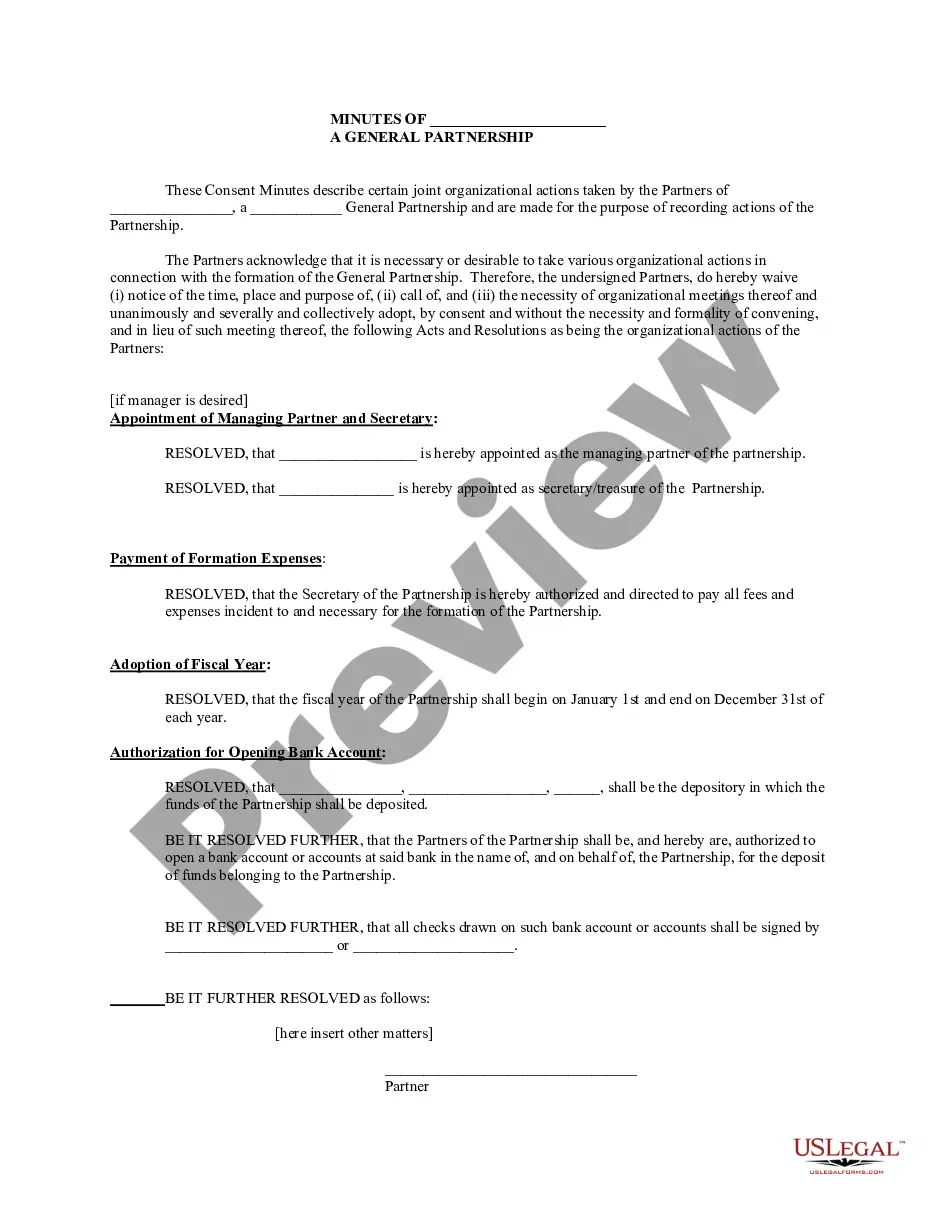
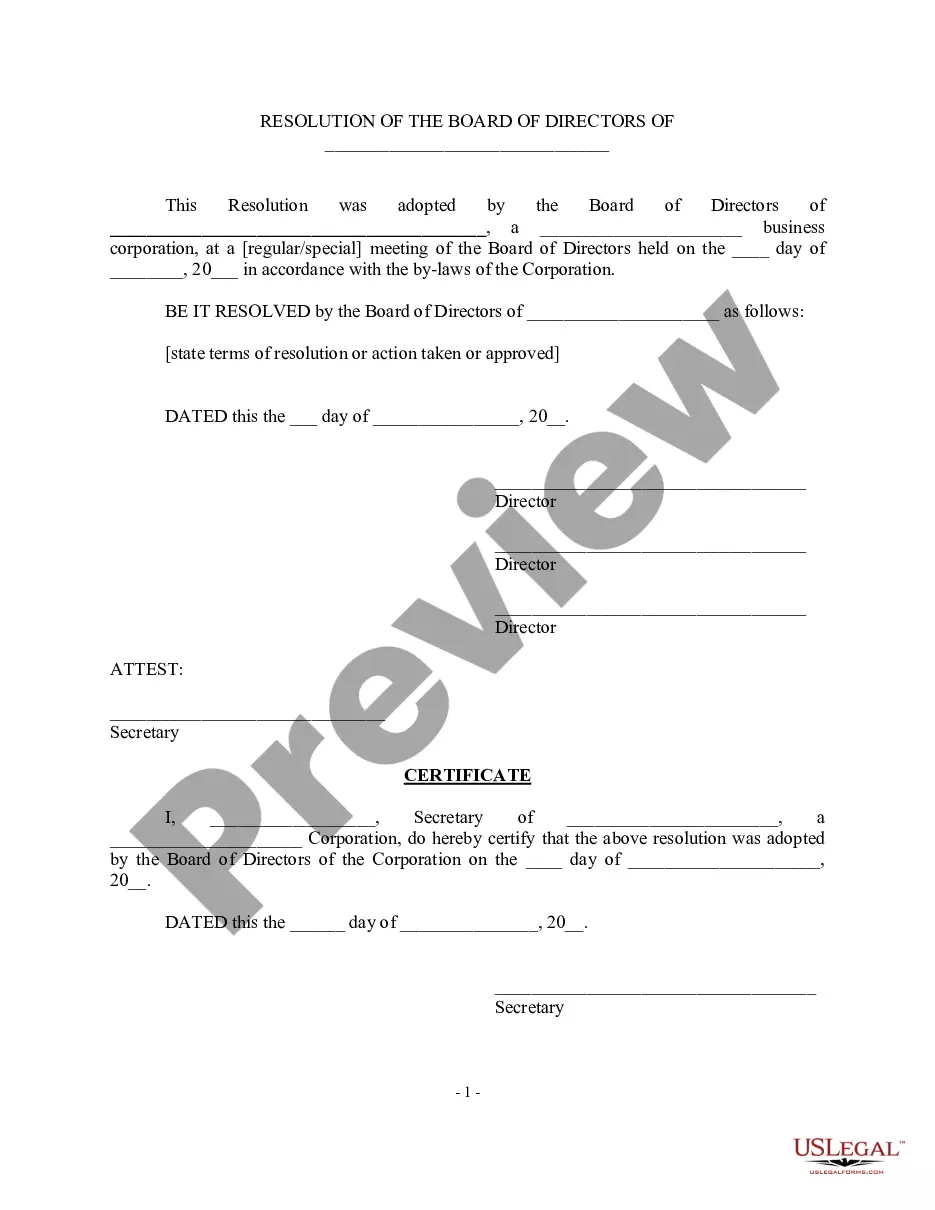
The Minutes for Partnership form is a legal document used by partners in a general partnership to officially record joint organizational actions. This form allows partners to document their decisions and appointments without the need for formal meetings, ensuring clarity and compliance with partnership agreements. Unlike similar forms, these minutes serve as a key record of actions taken, making them essential for legal and business clarity.
Form components explained
- Name of the partnership and type of partnership.
- Identities of the partners involved.
- Resolutions on appointments of the managing partner and secretary.
- Authorization for payment of formation expenses.
- Adoption of the partnership's fiscal year.
- Instructions for opening a bank account on behalf of the partnership.

When to use this document
This form is needed during the formation stage of a general partnership or when significant organizational actions are required. Use it when partners want to document decisions such as appointing management roles, establishing the fiscal year, or authorizing payments related to the partnership. It is particularly useful when partners wish to streamline the decision-making process without convening formal meetings.
Who this form is for
This form is intended for:
- Partners in a general partnership.
- Business owners creating a new partnership.
- Partners making important organizational decisions.
- Individuals who require a formal record of partnership decisions.
How to prepare this document
- Identify the name of the partnership and specify it in the designated sections.
- List the names of all partners involved in the agreement.
- Record the appointments of the managing partner and secretary.
- Authorize the payment of any formation-related expenses.
- Establish the fiscal year dates clearly in the form.
- Provide details for the bank account setup, including the chosen bank and authorized signatories.
Notarization requirements for this form
Notarization is generally not required for this form. However, certain states or situations might demand it. You can complete notarization online through US Legal Forms, powered by Notarize, using a verified video call available anytime.
Get your form ready online
Our built-in tools help you complete, sign, share, and store your documents in one place.
Make edits, fill in missing information, and update formatting in US Legal Forms—just like you would in MS Word.
Download a copy, print it, send it by email, or mail it via USPS—whatever works best for your next step.
Sign and collect signatures with our SignNow integration. Send to multiple recipients, set reminders, and more. Go Premium to unlock E-Sign.
If this form requires notarization, complete it online through a secure video call—no need to meet a notary in person or wait for an appointment.
We protect your documents and personal data by following strict security and privacy standards.

Make edits, fill in missing information, and update formatting in US Legal Forms—just like you would in MS Word.

Download a copy, print it, send it by email, or mail it via USPS—whatever works best for your next step.

Sign and collect signatures with our SignNow integration. Send to multiple recipients, set reminders, and more. Go Premium to unlock E-Sign.

If this form requires notarization, complete it online through a secure video call—no need to meet a notary in person or wait for an appointment.

We protect your documents and personal data by following strict security and privacy standards.
Common mistakes
- Failing to include all partners' names and signatures.
- Not detailing the fiscal year or bank account information correctly.
- Forgetting to record the resolutions in an organized manner.
- Neglecting to update the minutes as changes occur within the partnership.
Benefits of using this form online
- Convenience of immediate access and instant download.
- Easy to edit and customize to fit specific partnership needs.
- Reliability of professionally drafted content by licensed attorneys.
- Time-saving due to the non-requirement of physical meetings for documentation.
Summary of main points
- The Minutes for Partnership documents crucial decisions made by partners.
- Clear records prevent future disputes and misunderstandings among partners.
- Understanding local requirements is crucial for compliance during partnership formation.
Looking for another form?


Form popularity
FAQ
Meeting name and place. Date and time of the meeting. List of meeting participants. Purpose of the meeting. For each agenda items: decisions, action items, and next steps. Next meeting date and place. Documents to be included in the meeting report.
Use a template. Check off attendees as they arrive. Do introductions or circulate an attendance list. Record motions, actions, and decisions as they occur. Ask for clarification as necessary. Write clear, brief notes-not full sentences or verbatim wording.
Plan your agenda. Create an outline around your agenda items and note how much time will be allocated for each item. Brush up on Robert's Rules of Order. Check attendees as they arrive. Clarify decisions. Capture the essential information. Edit for clarity.
The meeting title. Attendee names. The time and date. Any outstanding business from the previous meeting (if necessary) The agenda. Key points discussed during the meeting. Any decisions made during the meeting. Action items (along with assignees for each)
Taking Meeting Notes. Type Meeting Notes - Type up a full version of the meeting minutes. Circulate a Draft - Follow your corporation's policy about who must review the draft notes. Distribute Minutes to Board - Usually in advance of the next meeting.
What's In. The minutes should include the title of the group that is meeting; the date, time, and venue; the names of those in attendance (including staff) and the person recording the minutes; and the agenda.
Meeting name and place. Date and time of the meeting. List of meeting participants. Purpose of the meeting. For each agenda items: decisions, action items, and next steps. Next meeting date and place. Documents to be included in the meeting report.
Date and time of the meeting. Names of the meeting participants and those unable to attend (e.g., regrets) Acceptance or corrections/amendments to previous meeting minutes. Decisions made about each agenda item, for example: Actions taken or agreed to be taken. Next steps.
The minutes of meeting are the legal record of the decisions and actions agreed to by the Board at the meeting. They are, in effect, a legal document as they provide the basis for the discussions as well as record the actual decision that has been made in the form of the resolution that was agreed to.