Price Setting Worksheet
What this document covers
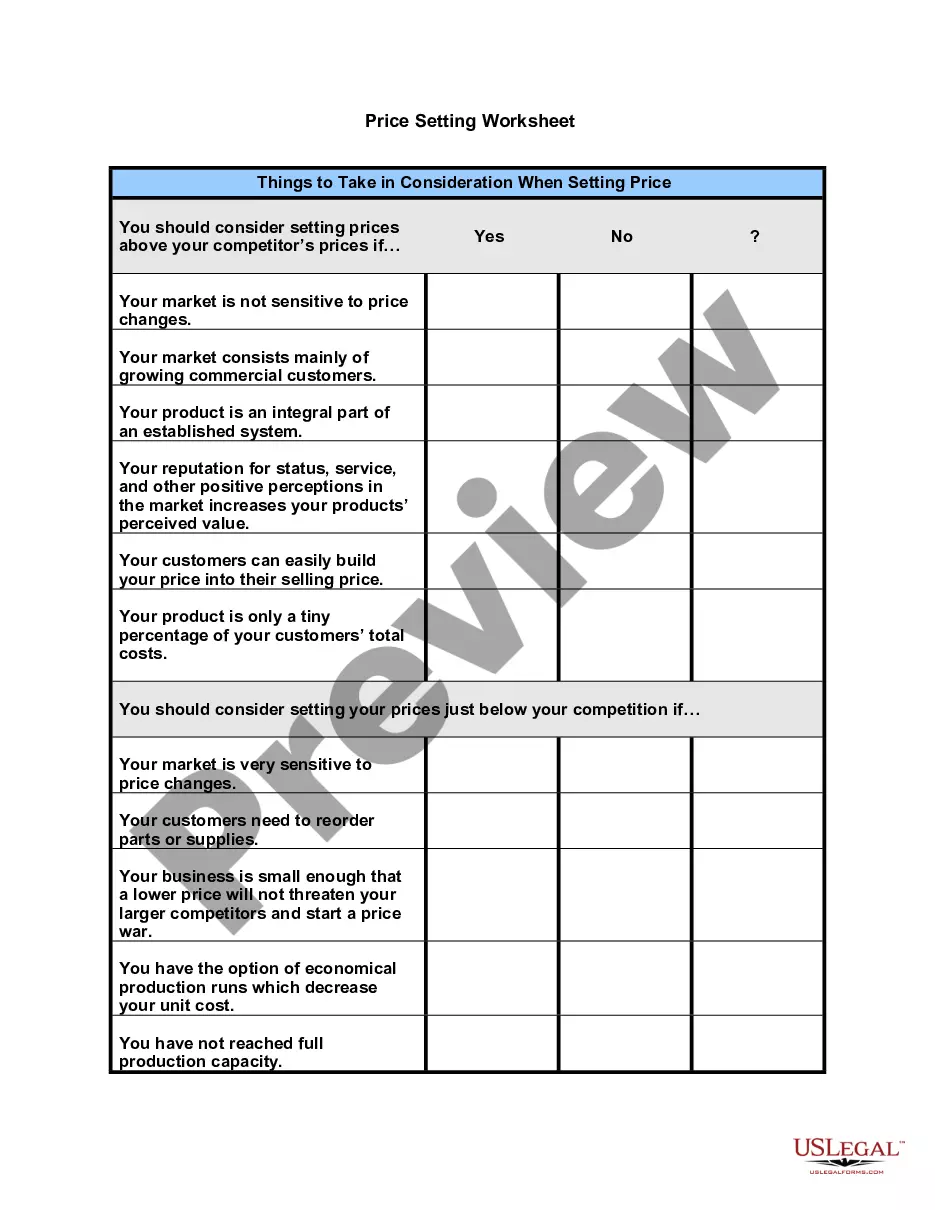
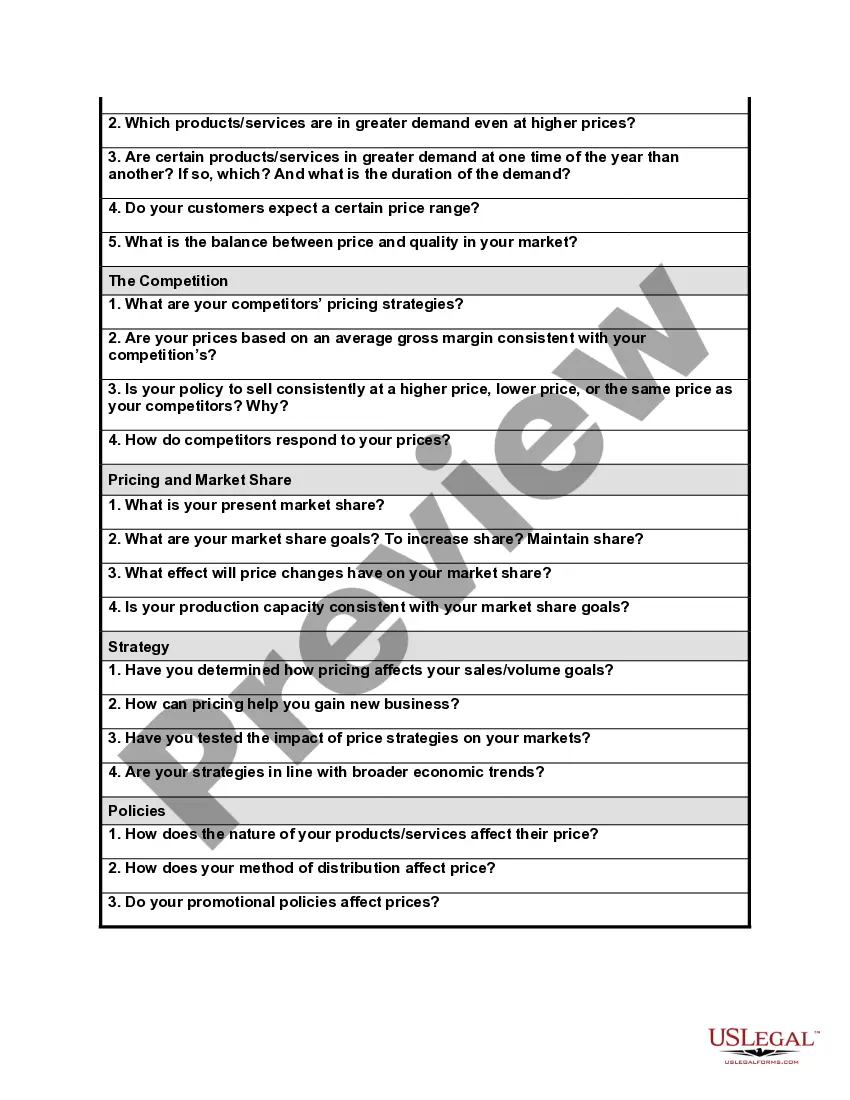
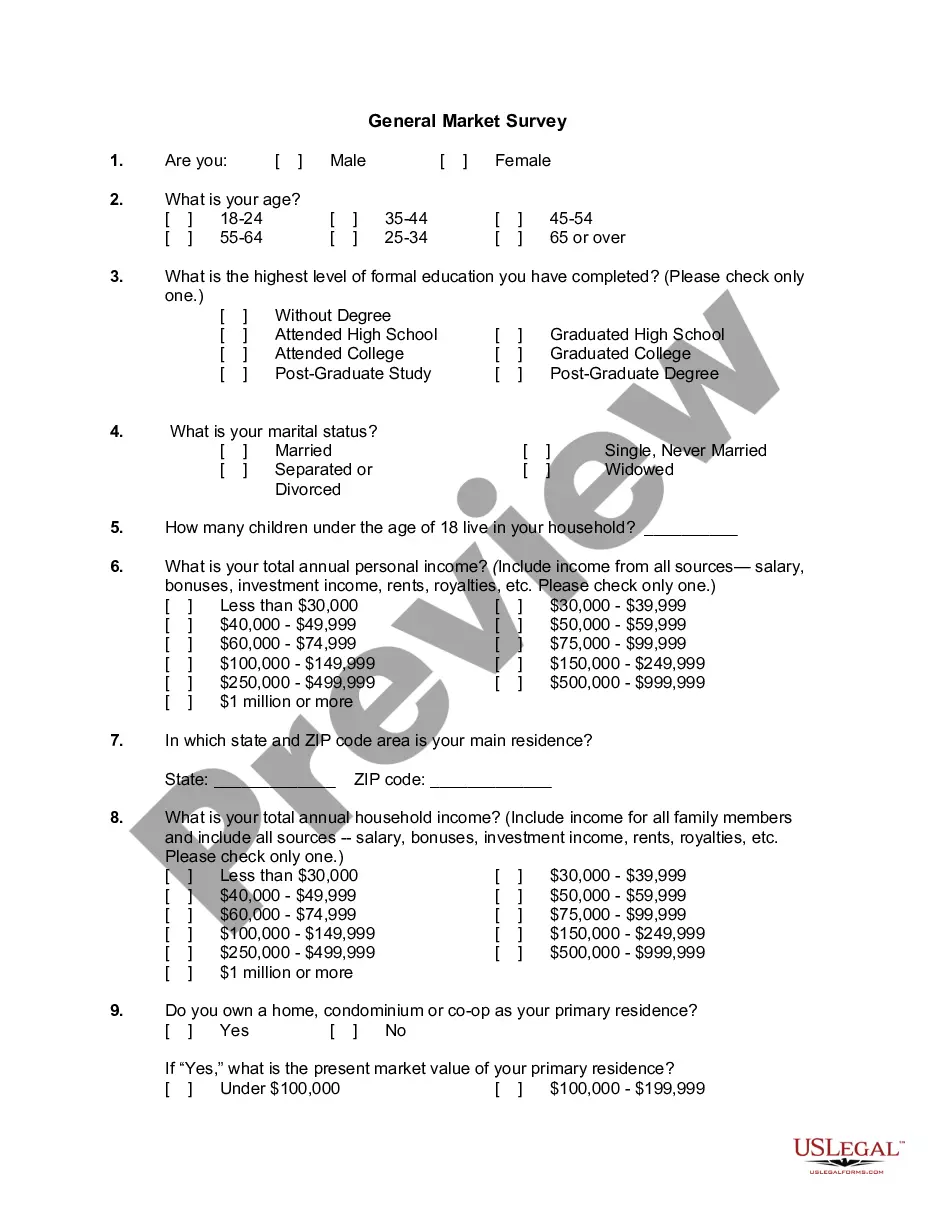
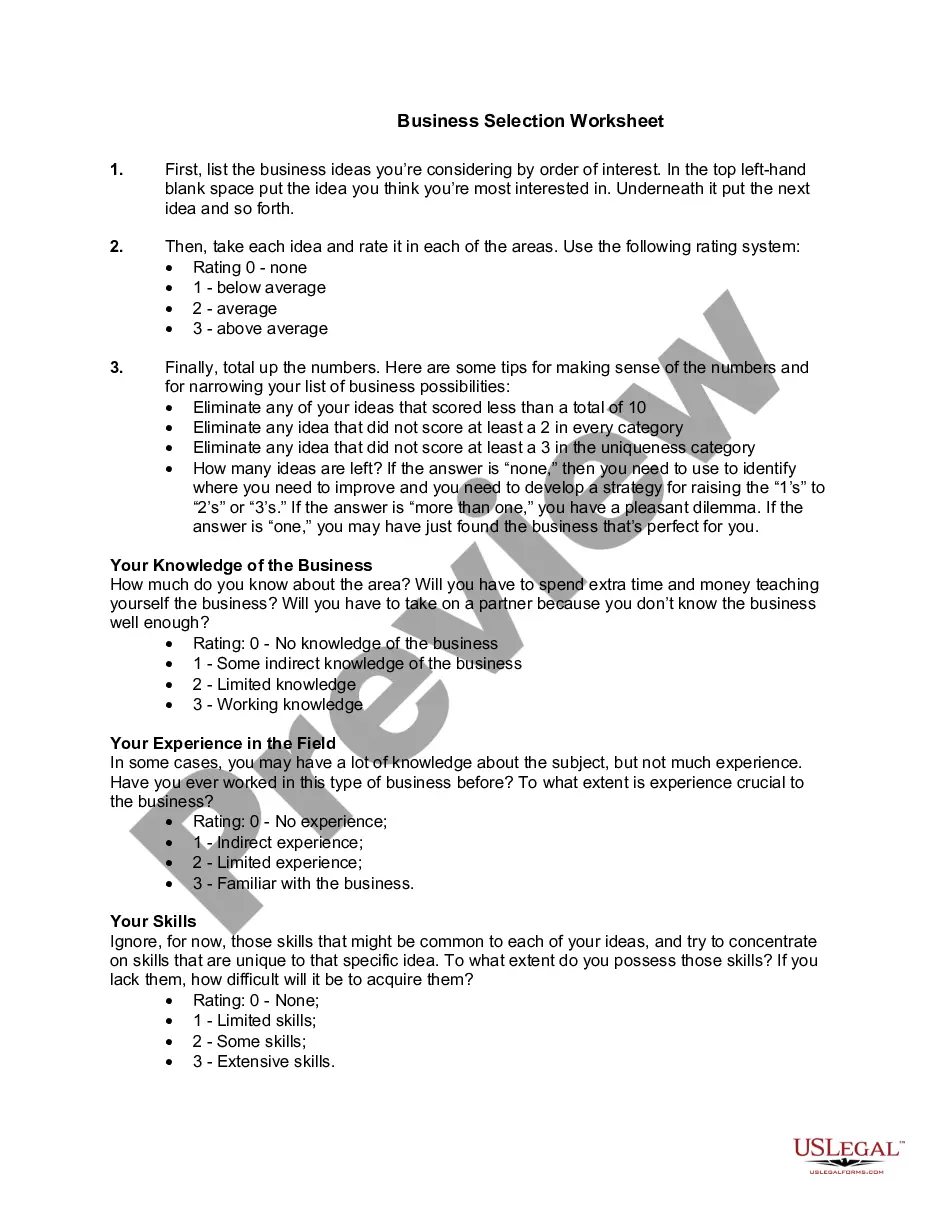
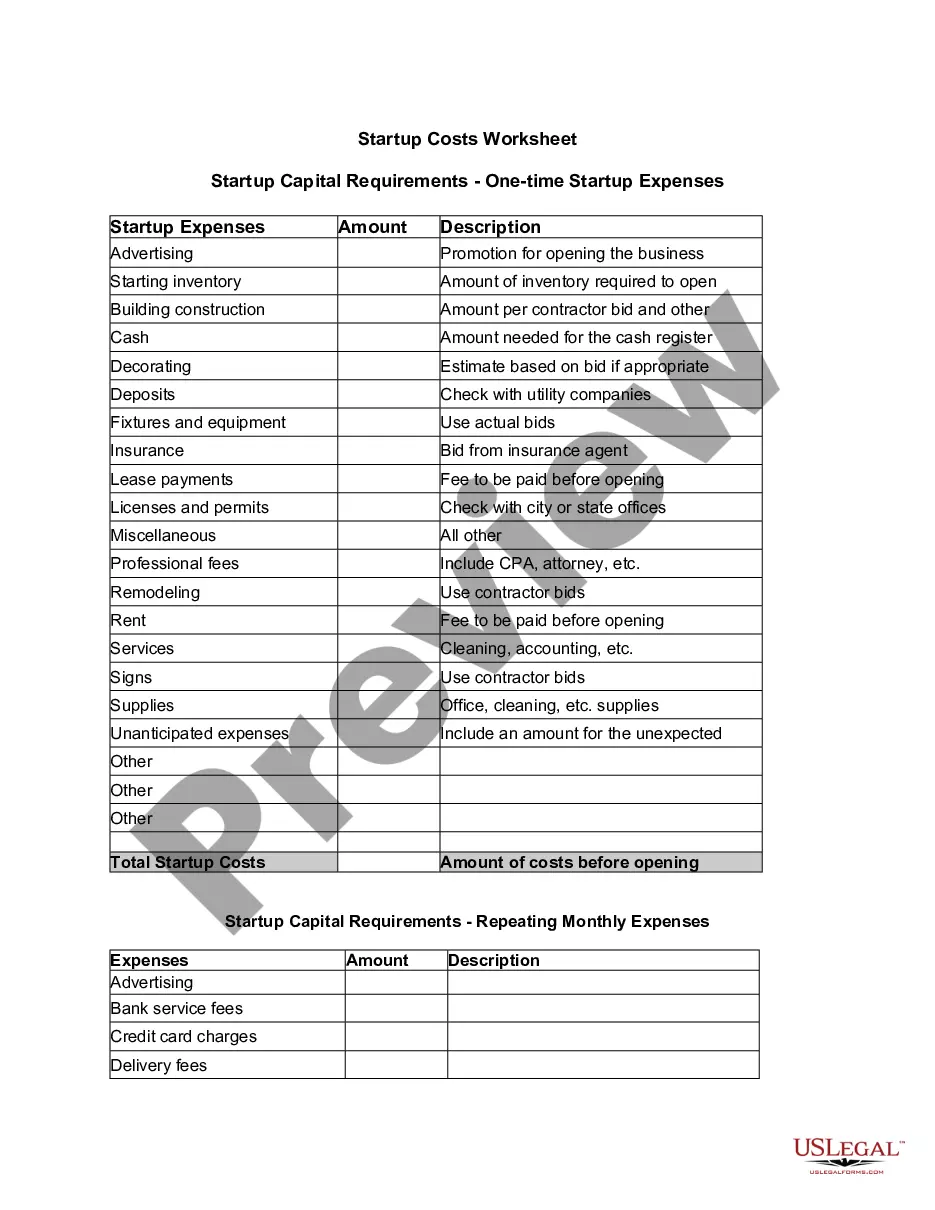
The Price Setting Worksheet is a practical tool designed to assist businesses in determining appropriate pricing strategies. It provides a comprehensive checklist of considerations that help evaluate market conditions, competition, and customer expectations. This worksheet is crucial for setting competitive prices while maximizing profitability, distinguishing it from other forms that might focus solely on cost analysis or sales forecasting.
What’s included in this form
- Considerations for setting prices above or below competitors.
- Guidelines for estimating demand based on customer behavior.
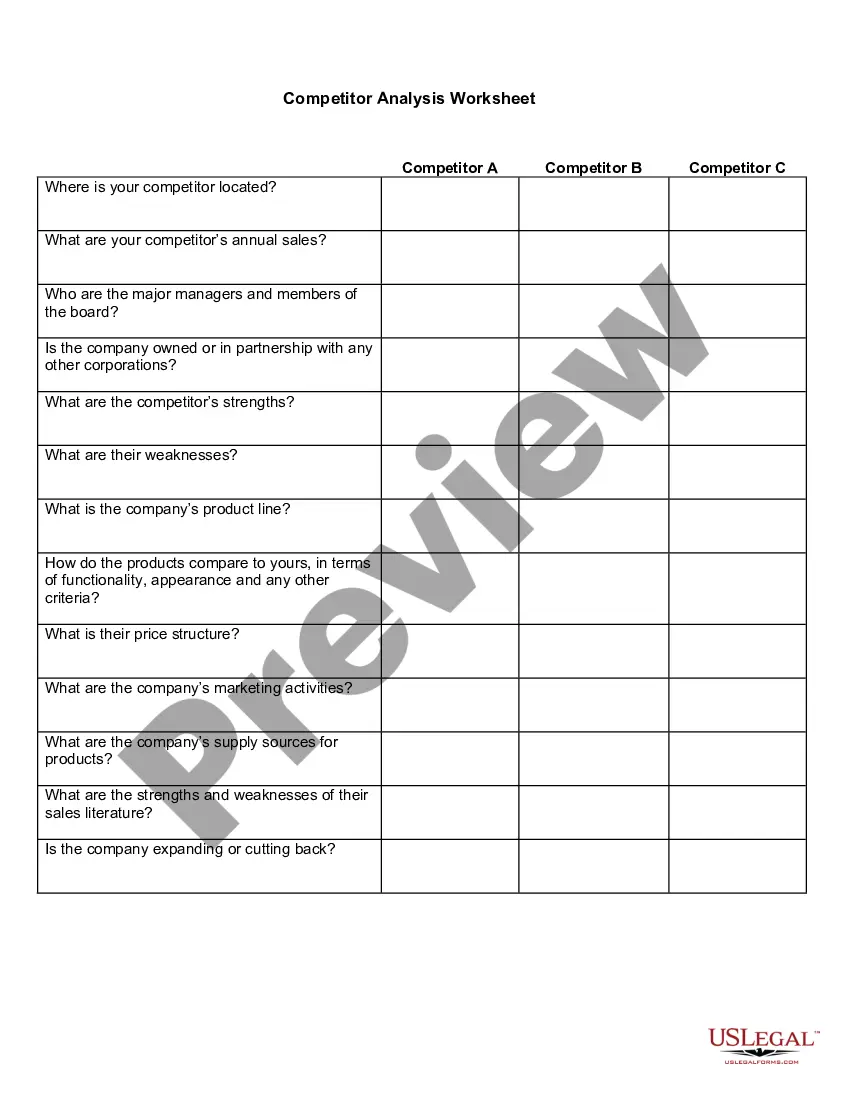
- Analysis of competitive pricing strategies.
- Market share evaluation and goals.
- Strategy development regarding pricing and sales volume.
- Policies impacting product pricing.
Situations where this form applies
This Price Setting Worksheet is essential when launching a new product, adjusting prices of existing offerings, assessing market competition, or when entering new markets. It can also be utilized during strategic planning sessions to ensure pricing aligns with business objectives and market dynamics.
Intended users of this form
- Business owners looking to set or revise product pricing.
- Sales and marketing professionals involved in pricing strategies.
- Entrepreneurs preparing to launch new products or services.
- Financial analysts assessing market trends and price competitiveness.
- Management teams involved in strategic business planning.
How to complete this form
- Review each pricing consideration based on your product and market dynamics.
- Analyze customer demand and behaviors relevant to your offerings.
- Evaluate your competitors' pricing strategies and the impact on your pricing.
- Set clear market share goals and assess how pricing adjustments will affect these goals.
- Craft a pricing strategy that aligns with broader economic trends and your business objectives.
Notarization requirements for this form
Notarization is generally not required for this form. However, certain states or situations might demand it. You can complete notarization online through US Legal Forms, powered by Notarize, using a verified video call available anytime.
Get your form ready online
Our built-in tools help you complete, sign, share, and store your documents in one place.
Make edits, fill in missing information, and update formatting in US Legal Forms—just like you would in MS Word.
Download a copy, print it, send it by email, or mail it via USPS—whatever works best for your next step.
Sign and collect signatures with our SignNow integration. Send to multiple recipients, set reminders, and more. Go Premium to unlock E-Sign.
If this form requires notarization, complete it online through a secure video call—no need to meet a notary in person or wait for an appointment.
We protect your documents and personal data by following strict security and privacy standards.

Make edits, fill in missing information, and update formatting in US Legal Forms—just like you would in MS Word.

Download a copy, print it, send it by email, or mail it via USPS—whatever works best for your next step.

Sign and collect signatures with our SignNow integration. Send to multiple recipients, set reminders, and more. Go Premium to unlock E-Sign.

If this form requires notarization, complete it online through a secure video call—no need to meet a notary in person or wait for an appointment.

We protect your documents and personal data by following strict security and privacy standards.
Common mistakes
- Ignoring market demand and customer expectations.
- Setting prices without thorough competitor analysis.
- Failing to account for production costs when pricing products.
- Neglecting to adjust prices based on economic trends.
Advantages of online completion
- Easy and quick access to a professionally drafted worksheet.
- Ability to edit and customize the worksheet to fit your business needs.
- Reliable guidance based on legal standards and business practices.
Legal use & context
- This worksheet serves as a guideline for setting competitive prices but does not constitute legal advice.
- Ensure compliance with local laws regarding pricing and competition.
What to keep in mind
- Establish clear pricing strategies by evaluating market conditions.
- Always analyze competitors to maintain a competitive edge.
- Regularly review your pricing strategy to adapt to market changes.
- Utilize this worksheet as a starting point for informed pricing decisions.
Looking for another form?

Form popularity
FAQ
Use the following equation: Price = Raw Food Cost of Item / Ideal Food Cost Percentage. You can slightly alter the price to make it a rounder or cleaner number. In the example below, you could change it to a number such as $14.50. Example: Say your ideal food cost percentage is 28%, and your raw food cost is $4.
Include all the items or services you have to offer. Coordinate the items on the list with your store inventory. List all the prices next to the items or services. Group the items into different categories for easy viewing. Proofread your list before you print or send it.
Use Desygner's price list maker to create a stunning price list - even if you have zero design experience.
Step 1: Selecting the Pricing Objective. Step 2: Determining Demand. Step 3: Estimating Costs. Step 4: Analyzing Competitors' Costs, Prices, and Offers. Step 5: Selecting a Pricing Method. Step 6: Selecting the Final Price.
The six stages in the process of setting prices are (1) developing pricing objectives, (2) assessing the target market's evaluation of price, (3) evaluating competitors' prices, (4) choosing a basis for pricing, (5) selecting a pricing strategy, and (6) determining a specific price.
Step 1: Selecting the Pricing Objective. Step 2: Determining Demand. Step 3: Estimating Costs. Step 4: Analyzing Competitors' Costs, Prices, and Offers. Step 5: Selecting a Pricing Method. Step 6: Selecting the Final Price.
The six stages in the process of setting prices are (1) developing pricing objectives, (2) assessing the target market's evaluation of price, (3) evaluating competitors' prices, (4) choosing a basis for pricing, (5) selecting a pricing strategy, and (6) determining a specific price.
5 pricing strategy examples and how to benefit form them. Competition-based pricing. Cost-plus pricing. Dynamic pricing. Penetration pricing. Price skimming.
Make your list the right size. Depending on the number of services/products you offer, your price list could be fairly extensive or relatively simple. Start customizing your price list. Here is the truly fun part of the process. Download and share your new price list.